If you happen to be in possession of a classic car and a penchant for automotive engineering, you generally have two options. One is painstakingly restoring your vehicle to as close to its original condition as possible. The other? Well, that’s the way of the restomod — a blend of vintage design and modern engineering that’s been gaining ground in the automotive world in recent years. In a Road & Track article last year, Jethro Bovingdon declared, “We are officially in the age of the Restomod.”
What makes for a good entry point into this particular world? Bill Schwartz’s new book Restomods: The New World Order of Handcrafted Cars turns the spotlight on the companies around the world that specialize in taking vintage cars and transforming them into something new. It’s also the first book in a new series from publisher ACC Art Books, titled Cars Reimagined. What follows is an excerpt from Schwartz’s book, including a look at two of the companies doing striking engineering work.
Rooted in rebellion, exclusivity, raw exuberance and bragging rights, restomods have become nothing short of a cultural phenomenon; an easy shorthand to describe a type of classic car restoration that preserves the original style while also using modern components.
Converting an old car into a hot rod is nothing new. Neither is putting a big engine in a little classic car, adding wider tires or a louder exhaust. What the founding fathers of the restomod movement have accomplished is the scalable perfectionism that has established an alternative class of car. The result is an altogether different driving experience reflecting a very individualised mode of transportation.
This shift is fuelled by the abundance of capital, the continued design and performance success of leading restomod carmakers, world-class workmanship, and a level of boredom from traditional carmakers. Add the affluent members of society who are weary of crass commercialism, planned obsolescence, mass replication and the continued race for techno effects and gadgets, as well as an underlying aversion to the ‘keeping up with the neighbour’ mentality, and you have the wherewithal and the clients ready for something new.
EVERRATI Superformance Electric GT40
Specifications
Engine: Electric, with a 62.5 kWh battery, reaching a 160-mile range
Power: 800 hp, producing instant 800 Nm of torque
0-60: Less than four seconds
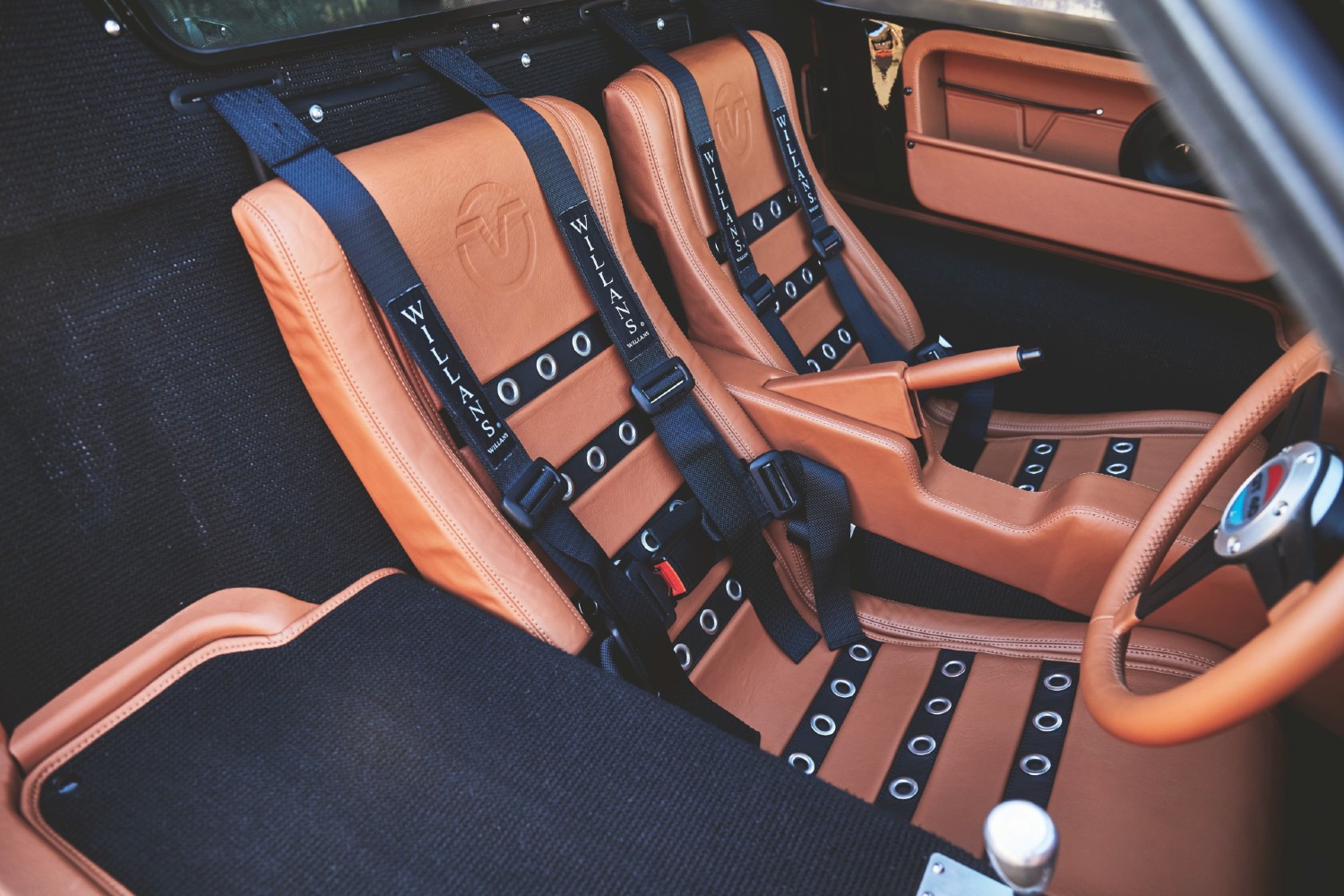
One day in a not-so-distant future, the final bastion of internal combustion will fall and gas-powered classic cars will be permanently grounded, but EV conversion specialist Everrati is ready to carry restomods into the electric era. Everrati was founded in 2019 by entrepreneurs Justin Lunny and Nick Williams to build reimagined classics with electric power plants, preserving their heritage and design but complying to the worldwide cultural and legislative shift towards zero-emissions transportation. The Oxfordshire (UK) company does not simply exist to shove a Tesla powertrain into a perfectly drivable classic. Everrati fully restores, customises, and upgrades donor vehicles in addition to electrifying them, and most importantly, does so in a way that is reversible if need be. The kicker is that each component comes from a world-class specialist. Their GT-40, built in collaboration with continuation builders Superformance, includes vented disc brakes by Wilwood, Everatti’s own 700V electric powertrain system with Direct DC fast-charging as standard, an OEM-proven dual-motor drive unit derived from high-performance hypercar applications, a liquid-cooled battery with rapid discharge performance, and much more.
‘This ethos is epitomized in the unparalleled and dedicated craftsmanship and visionary approach showcased in every Everrati build, including the iconic GT40.’

GTO ENGINEERING 250 California Spyder Revival
Specifications
Price: £1.25m
Engine: 3.0-litre Columbo V-12
Transmission: 4-speed manual transmission, 5 speed optional upgrade
Power: 280 bhp standard, 380 bhp optional upgrade
0-60: 7 seconds; 4.6 seconds with the upgrade
Started in 1983 as an honest Ferrari service and restoration centre, founder Mark Lyon quickly discovered how difficult it was to source parts for the already coveted Ferrari 250 platform. What’s more, his restoration clientele wanted to actually drive their newly restored vintage Ferraris; a beyond risky ask for such a rare family of cars with dwindling replacement parts available. The Revival project was born to re-create the 250 SWB, 250 TR and the famed 250 California Spyder with the essence and feel of a 1960s Ferrari but crafted with contemporary manufacturing processes like laser cutting and 3D printing to add long term durability and reliability. The 250 California Spyder is GTO’s pride and joy, a race-bred revitalization. Despite GTO’s allegiance to originality, owners can option their revival how they see fit – from the engine displacement, suspension and gears to paint colour, audio systems and air conditioning. GTO’s Revival cars are faithful remakes to the 250, built with a 21st-century mindset – but most importantly, they’re made to be driven.

The 10 Books You Should Be Reading This November
Featuring cults, tigers and the science of dreams‘We combine traditional artisanal craftsmanship with state-of-the-art techniques to ensure every component follows specification to period-correctness; alongside optional upgraded and engineered refinements.’
Kevin Jones (Foreman Technician)


This article is excerpted from Restomods: The New World Order of Handcrafted Cars by Bill Schwartz, published by ACC Art Books.

More Like This



This article appeared in an InsideHook newsletter. Sign up for free to get more on travel, wellness, style, drinking, and culture..