Nota bene: All products in this article are independently selected and vetted by InsideHook editors. If you buy something, we may earn an affiliate commission.
The 1950s and 1960s saw an explosion in leisure activities as men returned home from the war, technology proliferated, travel became quicker and more affordable, and wealth accumulated. Chief among these newfound hobbies — and, in certain cases, professions — were SCUBA diving and racing. In both cases, practitioners needed a reliable wristwatch to accompany them under the waves or down the track.
The Best Skeleton and Openworked Watches
These fascinating pieces give a glimpse inside a watch as it’s workingFor the diver, the dive watch with its screw-down caseback and crown, rotating bezel, and luminous dial did the trick. For the driver, a chronograph watch that could record elapsed seconds, minutes and hours was the timekeeper du jour. Of course, the chronograph had existed in wristwatch form since roughly the First World War, though it really began coming into its own in the 1940s. By the early 1960s, it had evolved into a robust and useful tool that not only provided accurate timekeeping, but looked damn good doing it, too.
While it’s difficult to read the minds of the watch designers of the 1960s, it’s possible to make some educated guesses as to their design remits. The chronograph — which contains small subdials (also called “totalizers” or “registers”) that display running seconds, elapsed minutes and elapsed hours — needs to be as legible as possible in order to be useful. One way to accomplish this on a watch measuring between 34mm and 40mm is with color.
Many early chronographs used subdials the same color as the dial background. While this can make for a handsome, uniform aesthetic, it does little to enhance legibility. Sometime around the late 1950s through the early 1960s, certain brands began offering chronographs with contrasting subdials, which not only enhances legibility but makes for a superbly cool-looking watch. Today, we call a white-dialed watch with black subdials a “panda” chronograph, and a black one with white subdials a “reverse panda.” (These naming conventions can also be applied when the two colors aren’t black and white — i.e. cream and blue, for example.)
Brands early to the panda party include Breitling, which debuted its reverse-panda Superocean in 1957 and its Breitling Co-Pilot AVI in 1962. Heuer released its reverse-panda Autavia in 1962, and Rolex debuted its panda-dialed Cosmograph Daytona ref. 6239 in 1963. This latter watch is widely agreed upon as being the first panda chronograph, and regardless of whether any other model or reference preceded it, it’s certainly the most famous. (The auction of Paul Newman’s own ref. 6239 in 2017 for more than $17M saw to that.)
Back in the mid-20th century, many brands still shared dial manufacturers, and much less production was completed in-house. This meant there were numerous watches that were effectively the same reference produced for different brands. One example is the panda/reverse-panda chronograph that can be found with Zodiac, Hamilton, Tradition and other branding on the dial. Handsome and practical, this model is a favorite of vintage watch collectors and one of the best examples of panda and reverse-panda design.
Today, the panda chronograph (and its reverse brother) is still widely regarded as a wonderful mixture of beauty and practicality. The contrast and visual interest created between lighter and darker surfaces on the dial provides both legibility and a sense of dynamism, and brands are still eager to take advantage of this effect. And because such a design can be achieved cheaply and easily, brands from Seiko to Audemars Piguet offer panda and reverse-panda chronographs to legions of loving fans at very different price points.
Check out some of our favorite modern panda and reverse-panda chronographs below.

One of the most affordable panda-dial watches on the market, the sub-$1K Seiko Prospex Speedtimer ref. SSC813 uses a solar-powered movement to keep reliable time. Measuring 39mm in stainless steel and water resistant to 100m, it’s also an incredibly handsome watch with a well-balanced dial featuring a 24-hour indicator, a 60-minute totalizer that doubles as a subtle power reserve indicator, a running seconds display and a date display at 4:30. Also, unlike many other quartz-powered watches, this one has sweep chronograph seconds. Neat!
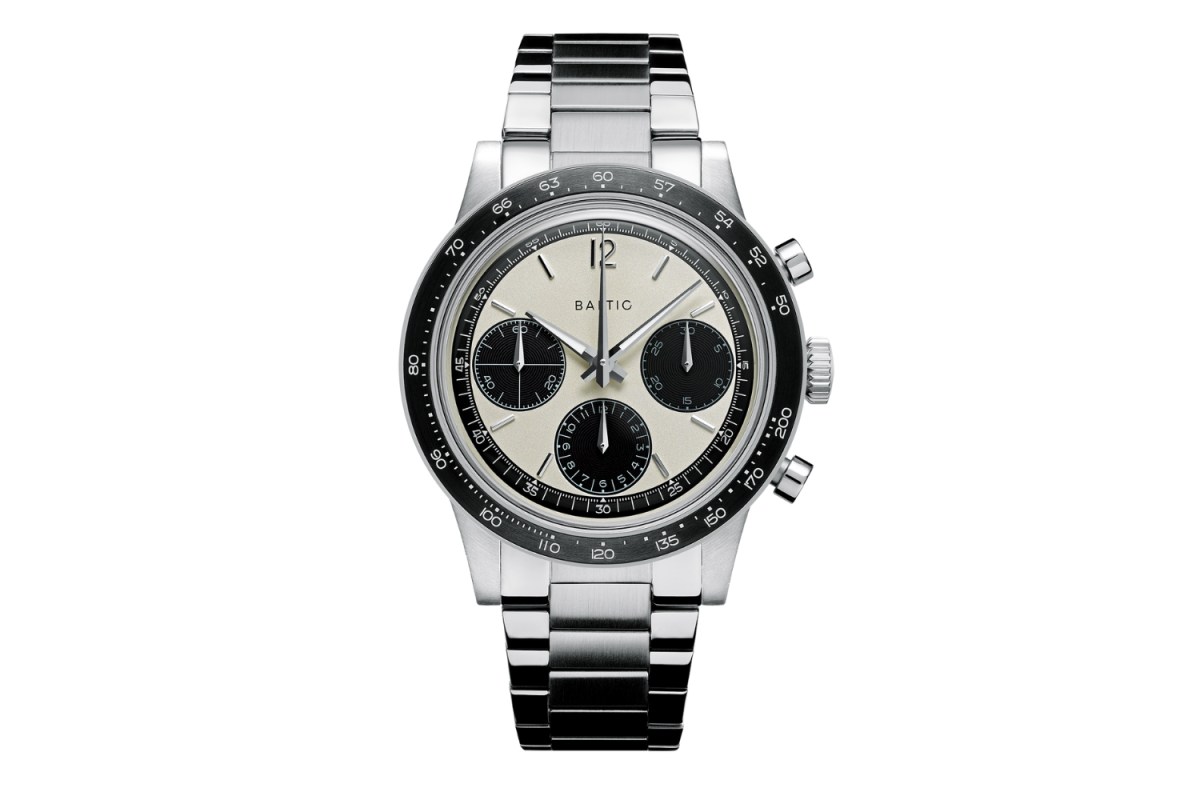
The Scalegraph coalesces vintage watch tropes into a single model without veering into “homage” territory. At 39.5mm in stainless steel, it’s sized for the modern wrist, while an automatic, Swiss-made Sellita movement provides further utility. Available on a cool flat-link or silky beads-of-rice bracelet (or a leather strap), it features a triple-register chronograph display in black or cream subdials surrounded by a cream or black main dial and contrasting outer 1/5th-seconds track. The outer bezel features a classic tachymeter scale for computing output, distance, speed and other common computational needs.
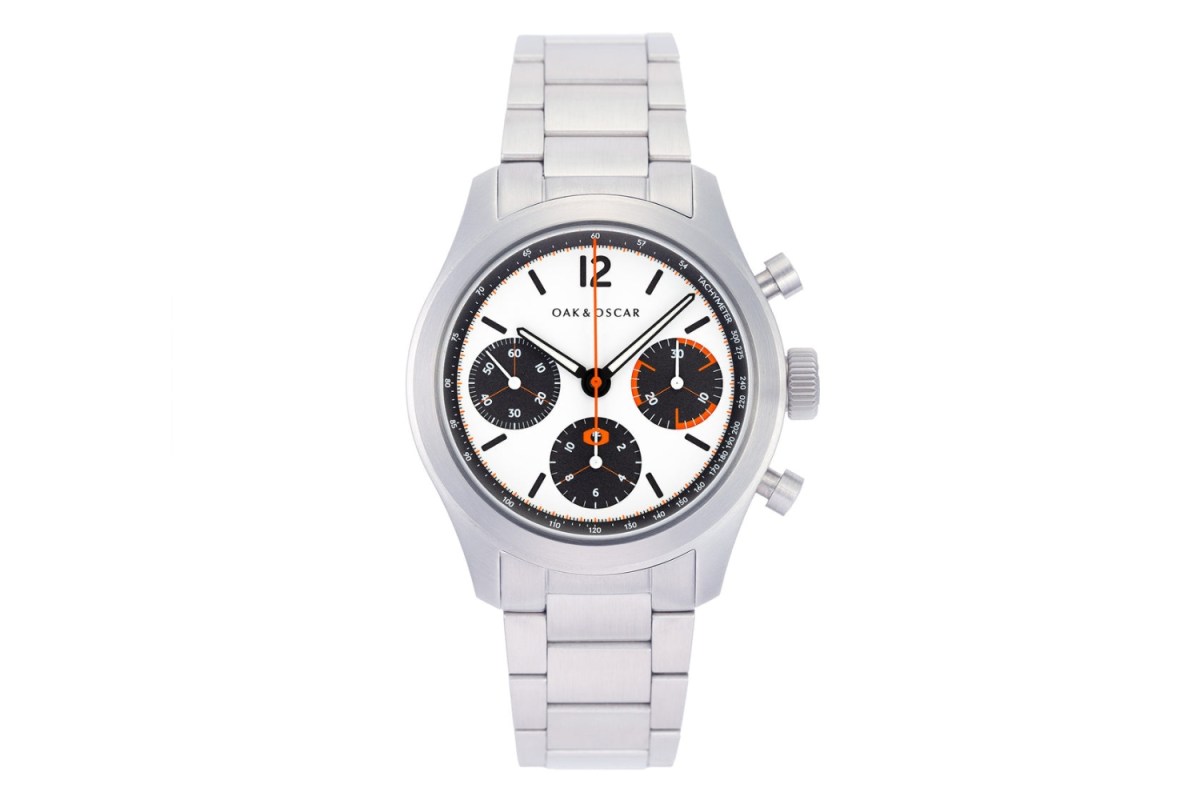
Well-sized and proportioned, undeniably handsome, and offering the aesthetics of an exotic-dial chronograph like the “Paul Newman” Daytona without the price tag, the Oak & Oscar Atwood Chronograph is one of the best buys in panda land. It really doesn’t matter whether you spring for the white panda, navy reverse-panda or charcoal reverse-panda — either way, you’re getting a gorgeous design that mixes the typical panda bi-color scheme with bright pops of orange and a dynamic “sandwich” dial. Plus, it’s hand-wound, which keeps the case depth to 12.9mm.
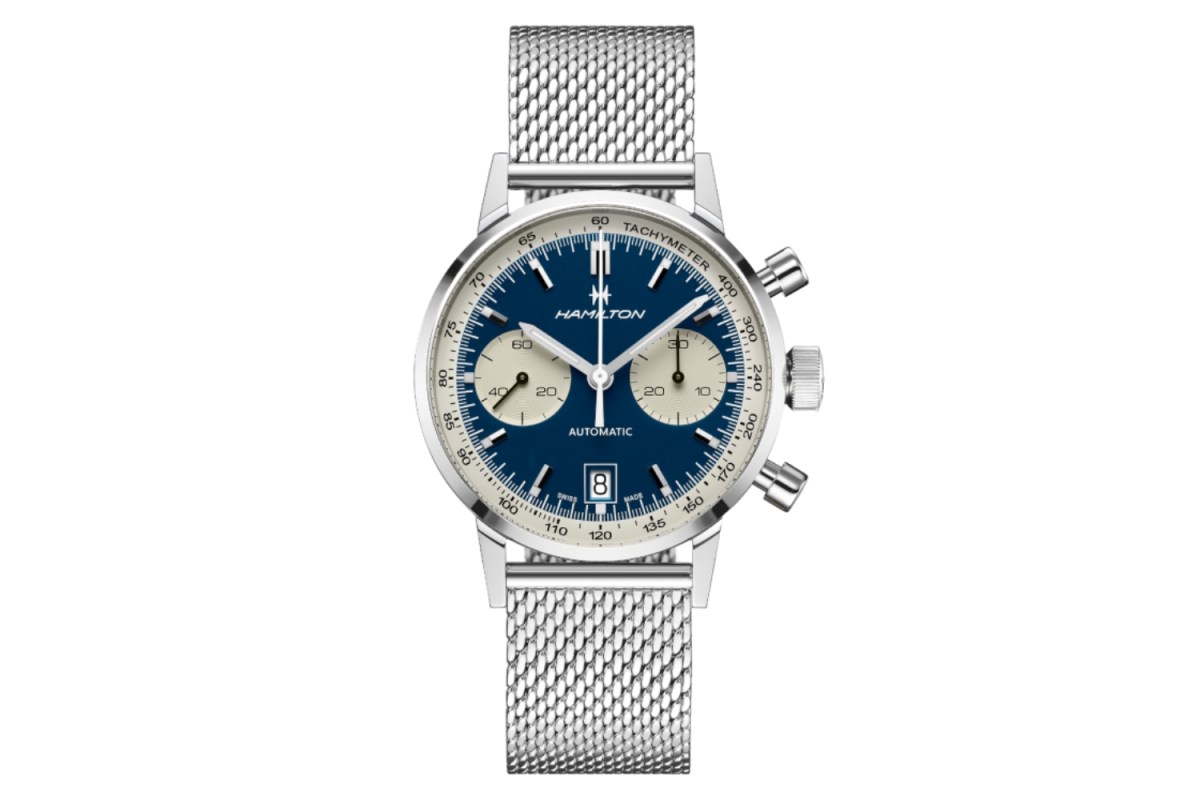
Based upon a classic panda-dial Hamilton chronograph from the late 1960s, the Intra-Matic Auto Chrono — with its dual-register layout, bi-color design, prominent pump pushers and classic Hamilton logo — could easily pass for a vintage watch. But the larger 40mm case, stainless steel mesh bracelet, 6 o’clock date window and Hamilton cal. H-31 automatic movement with 60 hours of power reserve give it away as something entirely more modern. The blue-and-cream version — a colorway that wasn’t available in the original model — is particularly cool.
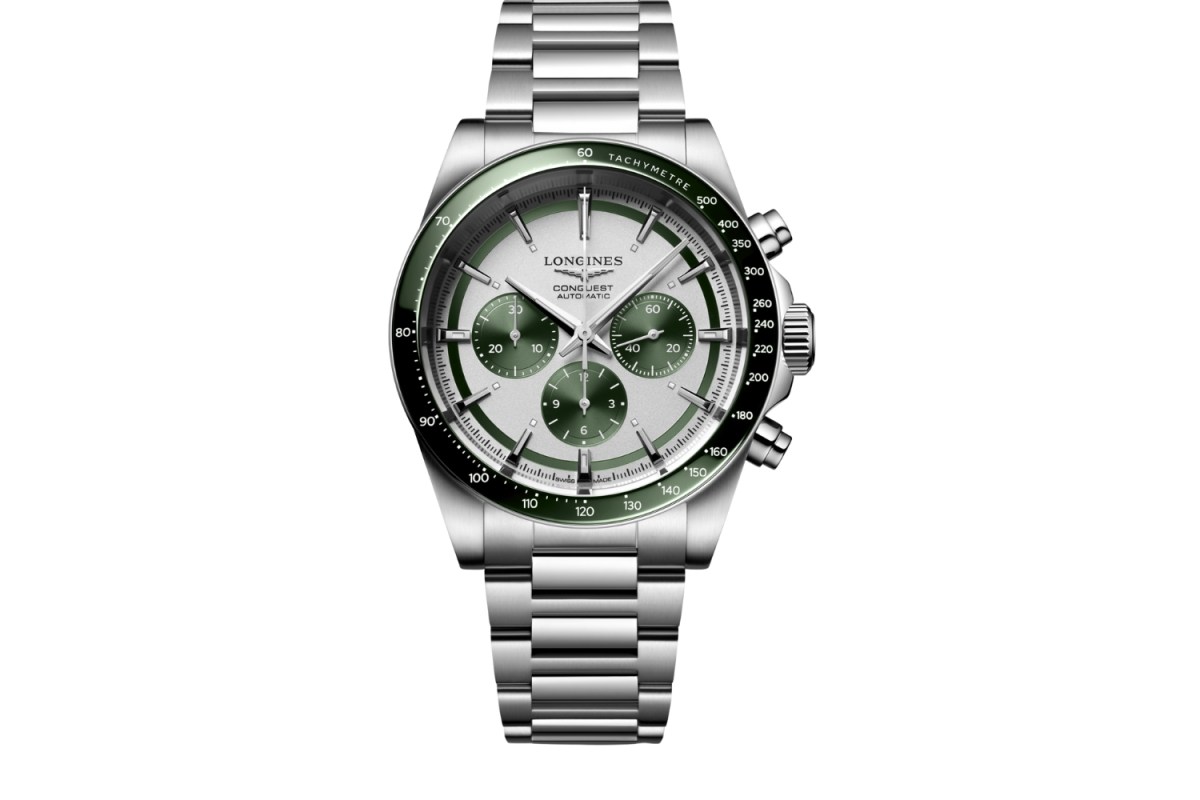
Vintage-influenced but upsized for larger wrists/tastes and outfitted with an automatic movement boasting a silicon balance spring, the Longines Conquest Chronograph comes in a wide variety of panda and reverse-panda colorways. One of the most unusual is the green-silver ref. L3.835.4.02.6: Set within a 42mm stainless steel case with a matching Oyster-like bracelet, it features a silver dial with green chronograph totalizers and a matching outer tachymeter scale. Undeniably handsome, it’s also water-resistant to 100m, making it perfect for everyday wear.
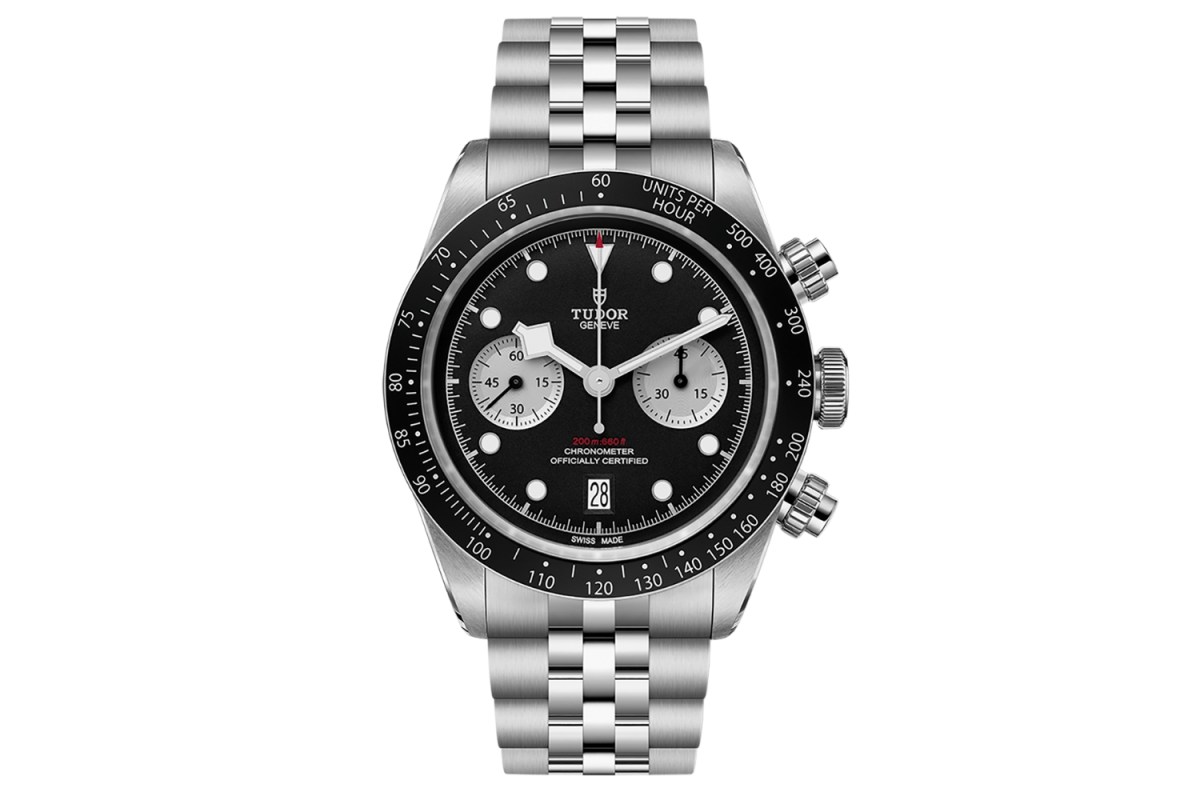
If you’d like to cop some of that Rolex Daytona look but prefer not to drop close to 20 Gs, you could do much worse than Tudor’s Black Bay Chrono. An incredibly handsome watch in its own right, it comes in both panda and reverse-panda looks, plus a slew of other configurations, including blue reverse-panda and steel-and-gold panda and reverse-panda. Chunky at 41mm, it’s also available with various types of steel, leather and fabric bracelets, while 200m of water resistance ensures you can do just about anything in it.
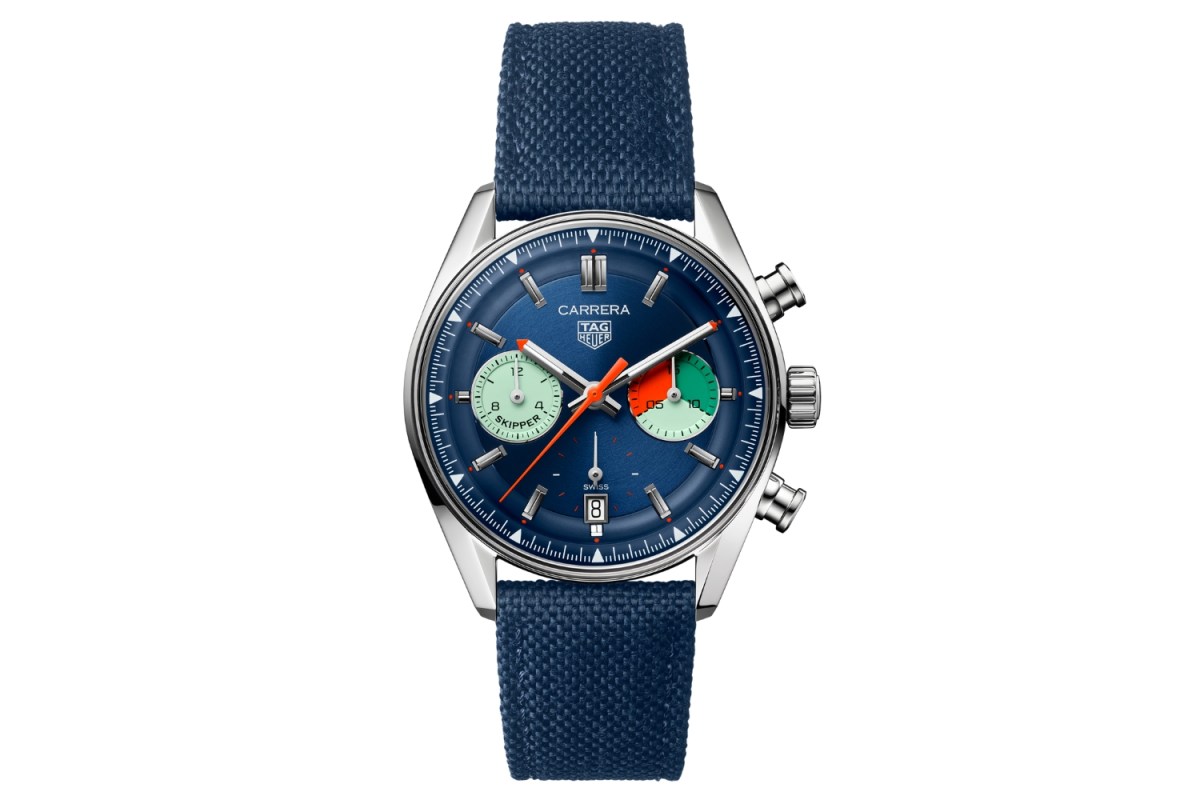
This unique take on the reverse-panda design is based on a watch that honored the Intrepid, a ship that won the America’s Cup back in 1967. The original Skipper — which featured a cool teal color taken directly from the ship’s own paint scheme — was a yachting chronograph and thus features demarcations within its elapsed-minute register to track the time until a race’s start. The modern version carts the entire design over to TAG Heuer’s contemporary “glassbox” case, offering a clean, highly-legible design and a handy date window above 6 o’clock.
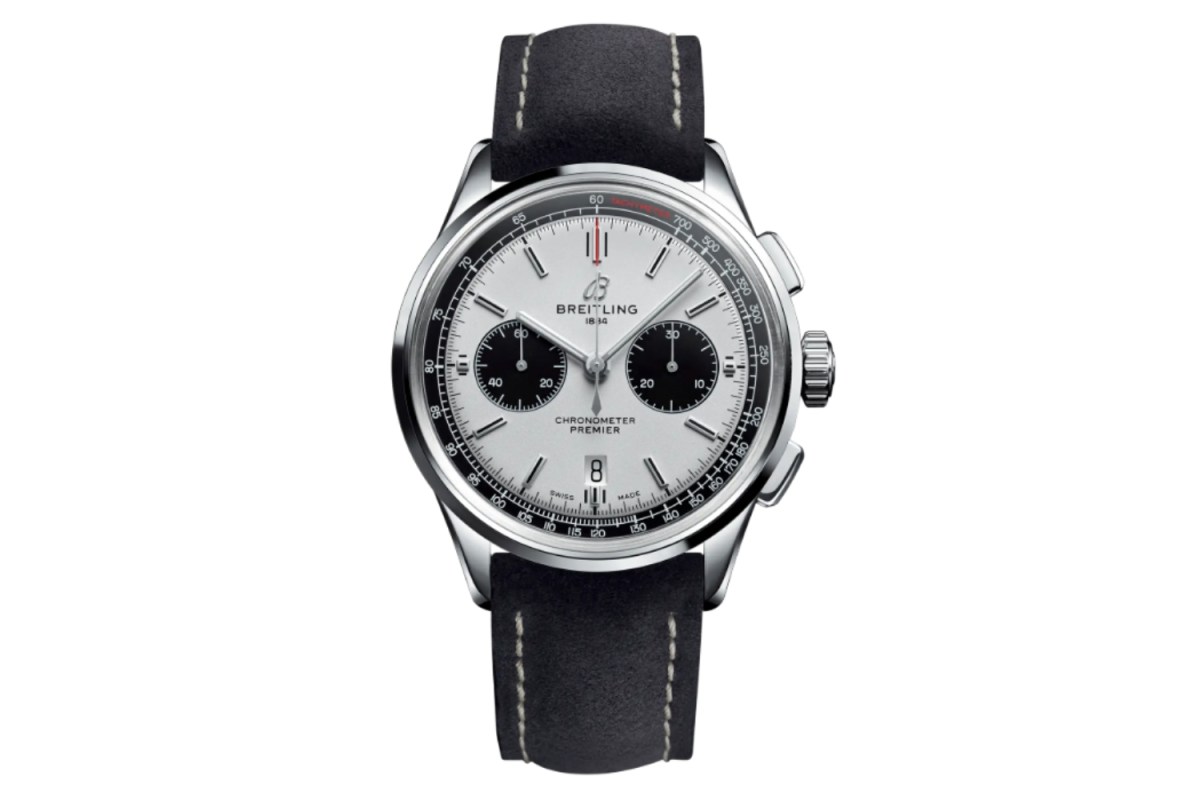
With its stepped bezel, paddle pushers and beautiful dual-register panda dial, the Breitling Premier B01 Chronograph 42 meshes 1940s and 1960s vibes in a single, highly-versatile watch. Though it’s fairly large at 42mm, its elegance is also undeniable. The silver dial with outer black tachymeter scale, black chronograph totalizers, 6 o’clock date window, applied indices, and silver sword handset provide plenty of visual interest, while the Breitling cal. B01 automatic movement keeps it ticking for a full 70 hours. Paired to an anthracite calfskin strap, it looks like something from the prop department of Mad Men.
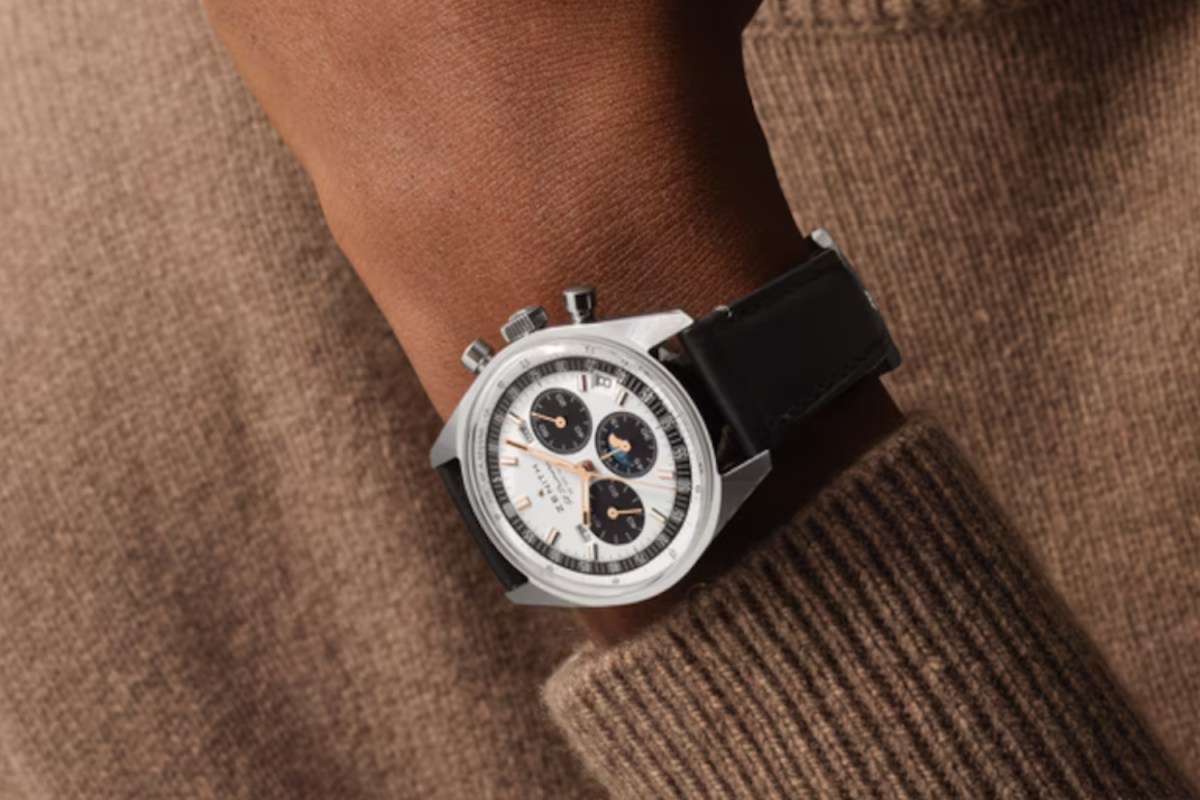
Based on a prototype that wasn’t put into production until 2024, the Zenith Chronomaster Original Triple Calendar features not only a chronograph, but also day, date, month and moonphase indicators. Available in several guises — a few of which are currently sold out — it looks most fetching in its “basic” panda configuration with a sleek white dial, black registers, a black decimal scale and applied gold hour indices with a matching gold sword handset. Powered by the automatic El Primero cal. 3610 movement, it can measure time down to 1/10th of a second.
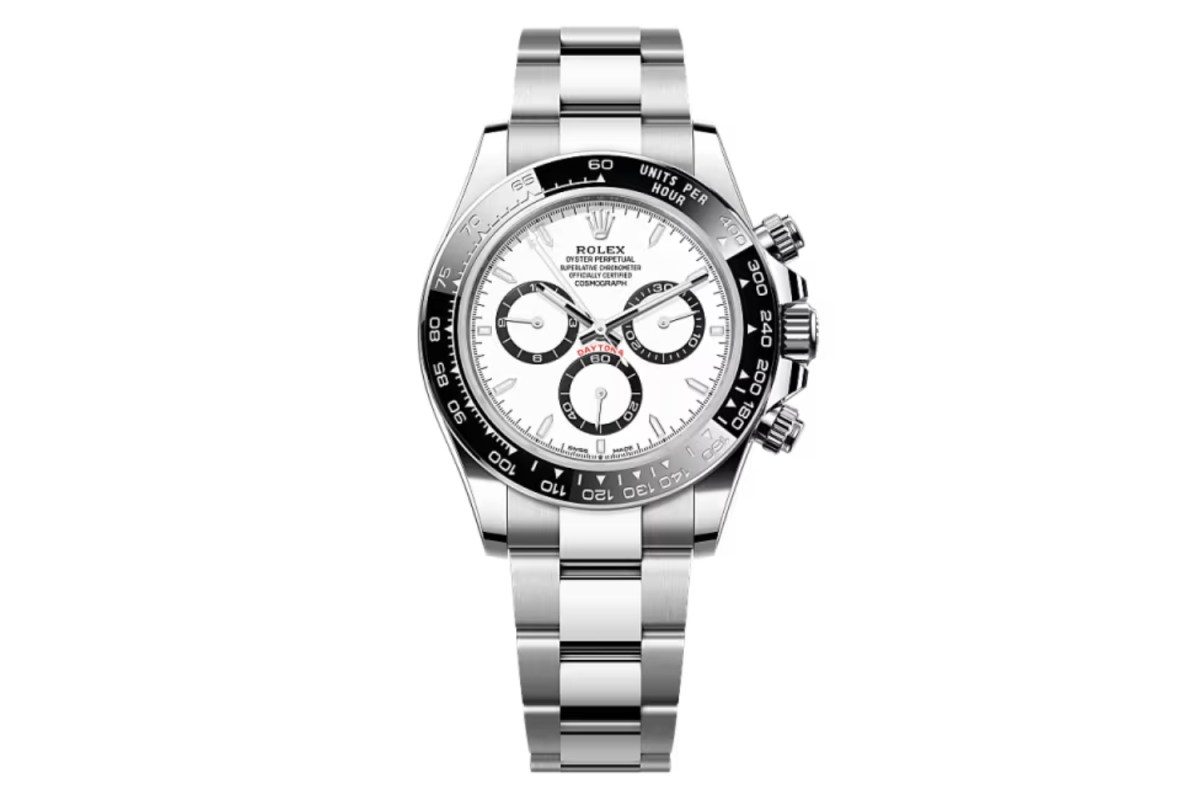
As the OG panda-dial chronograph, the Rolex Cosmograph Daytona continues to capture more of the watch-collecting world’s mindshare than perhaps any other model. Still available in its iconic white-with-black-registers configuration paired to an Oyster bracelet, it also comes in reverse-panda guise and plenty of cool precious-metal configurations. While tariffs have driven up prices across the board, there’s perhaps no other chronograph in the world that holds its value quite like a steel Daytona with contrasting subdials.
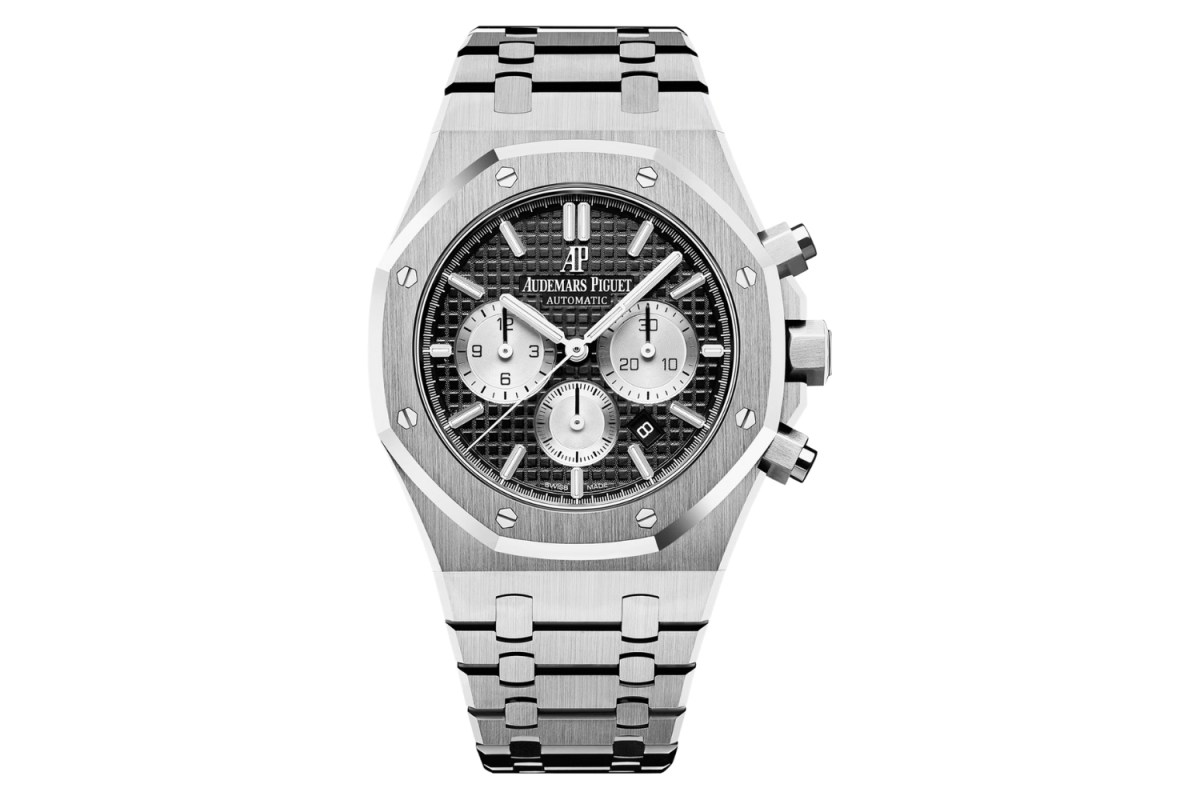
This reference combines the Royal Oak’s signature integrated bracelet, Grande Tapisserie dial texture, octagonal bezel and thin architecture with the appeal of a classic panda dial. Executed in silver with three black chronograph registers — two of which are oversized — and an outer black 1/5th-seconds track, it’s among the most contemporary-feeling of the watches on this list despite the Royal Oak having been around for more than 50 years. Powered by the Audemars Piguet cal. 2385 automatic movement, it packs a power reserve of 40 hours.