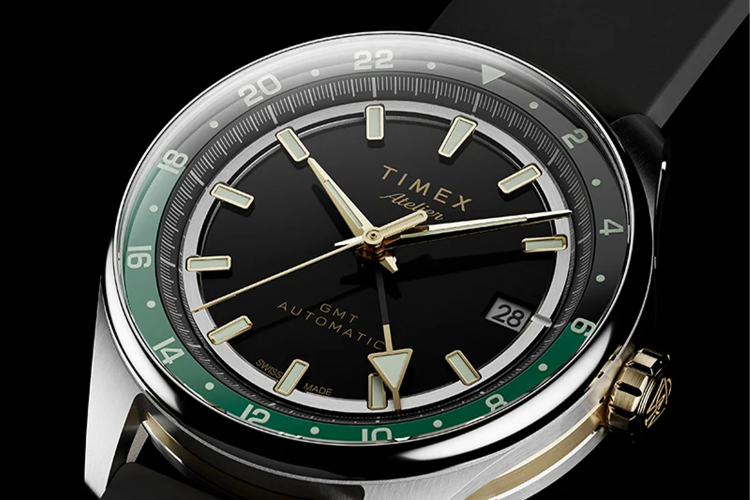
In 1848, an enterprising 23-year-old watchmaker named Louis Brandt established a small workshop in La Chaux-de-Fonds, Switzerland.
Before long, Brandt was selling his timepieces across Europe, and his two sons, Louis-Paul and César, came to work for him. Upon Louis’s death in 1879, Louis-Paul and César took over, operating under the name Louis Brandt & Fils and moving to a larger facility in Biel/Bienne. Producing their first series-made caliber in 1885, the brothers followed this achievement in 1894 with a movement which they dubbed “Omega.”
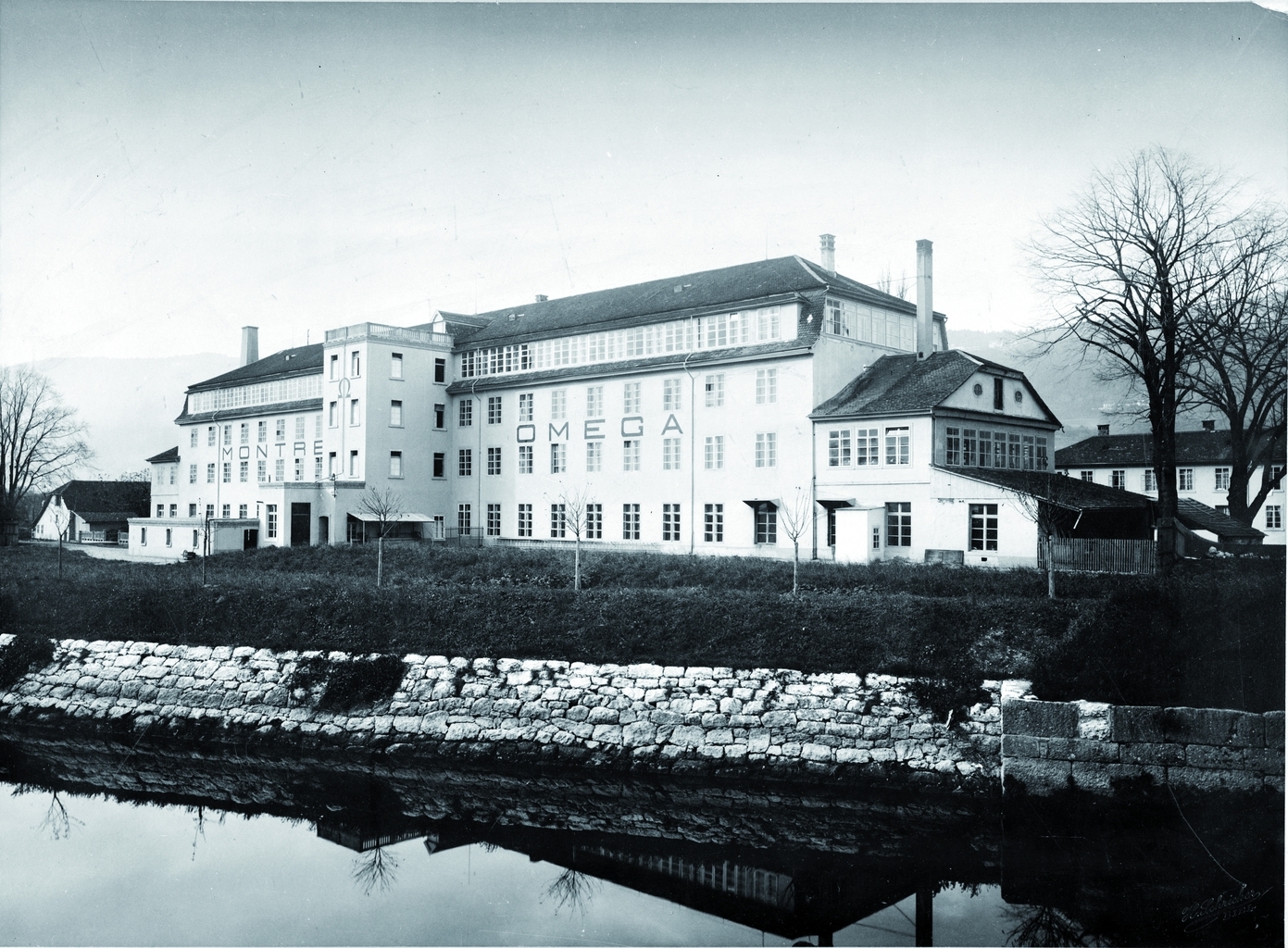
Featuring stem-set winding and setting, this brilliant hand-wound engine could be serviced using interchangeable components by any watchmaker. So revolutionary was this design that in 1903, the company’s official name was changed to Louis Brandt et Frère – Omega Watch & Co.
You probably know the rest — or, at least the highlights: In 1932, Omega timed the Olympic Games in Los Angeles, beginning a tradition that lasts to this day and sees the brand deploy over 300 tons of equipment to each iteration of the global athletic competition. During the Second World War, it produced over 100,000 timepieces for the British Ministry of Defense, many of which were issued to pilots and navigators. In 1957, it released the Speedmaster, Seamaster, and Railmaster, the former of which would become the official NASA kit in 1965 after passing a brutal battery of tests. And in 1995, James Bond became an Omega man, retiring his Rolex Submariner in favor of a Seamaster that he continues to wear today, some 30 years later. In short, Omega (now part of the Swatch Group) is a horological powerhouse, producing over half a million watches per year.
Central Stock
Ever wonder how these watches are made? For this, a trip to Biel/Bienne — on the border of French- and German-speaking Switzerland — is in order.
Still the headquarters of Omega some 145 years after Louis Brandt & Fils moved there in 1879, the area houses production and assembly facilities, the company’s incredible museum, a boutique and more. (Specialized production facilities are located in Villeret and Grenchen.) Watchmaking unfolds as a blend of traditional craft, robotics and an astonishing amount of data. The campus, completed in 2017, brings together assembly, logistics and testing under one roof, employing roughly 300 people and housing a highly automated production infrastructure that quietly runs around the clock.
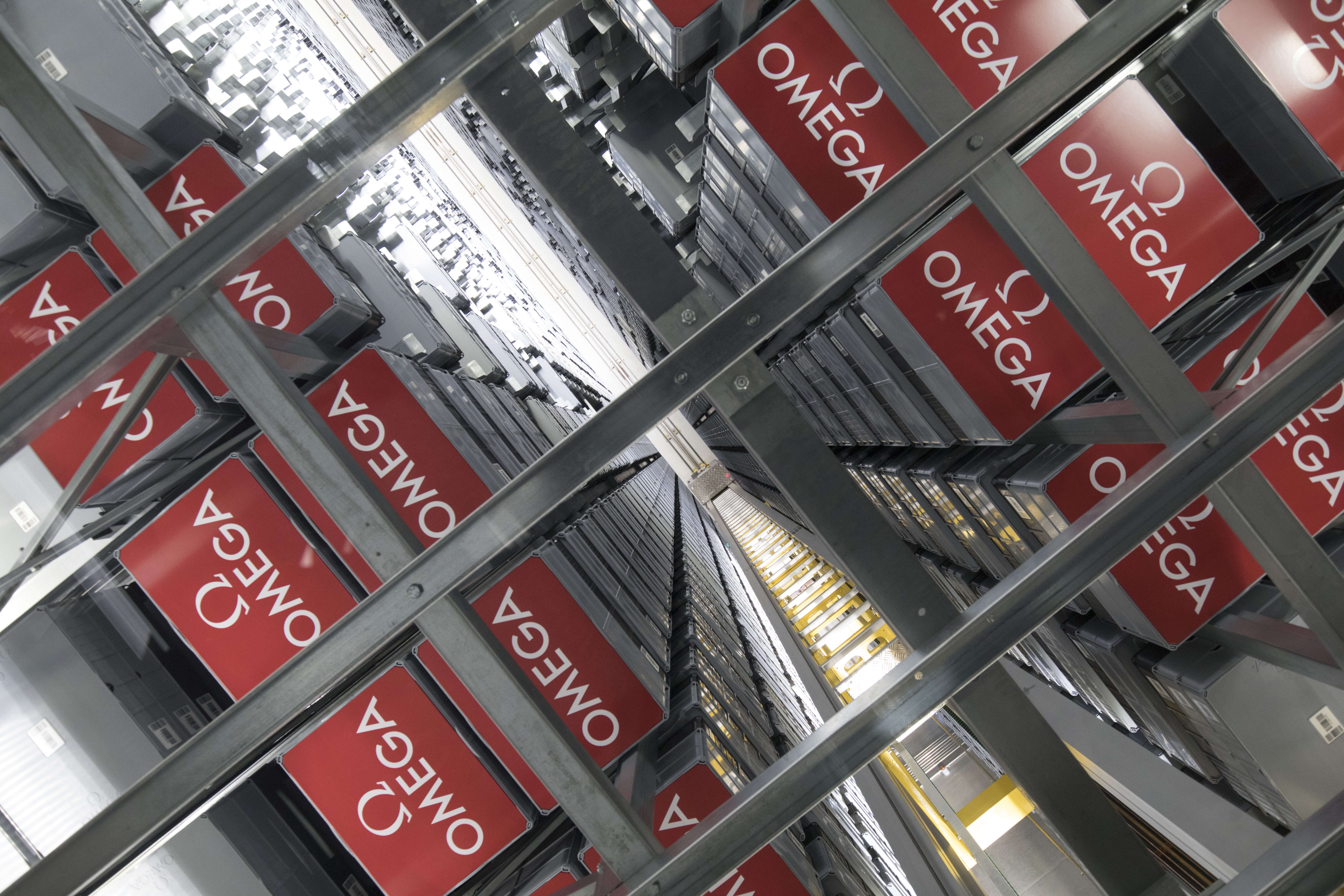
At the heart of the operation is a towering automated storage system known as the central stock. Measuring roughly 30 meters long and plunging 15 meters deep, the stock has space for up to 30,000 boxes containing movements and components; about 26,000 are in use at any given time. Four robots (called “trans-stockers”) zip through the racks 24 hours a day at speeds of up to four meters per second, retrieving boxes for assembly or testing as needed.
Safety considerations here are unusual: the oxygen level inside the storage system is reduced to about 15 percent, similar to the air at an altitude of roughly 3,500 meters. The aim is fire prevention, as smoke contamination would be catastrophic for watch components.
The Assembly Floor
Omega’s assembly process is divided into several stages. Movement components originate at the T0 and T1 levels (with suppliers such as Nivarox and ETA), while the Biel/Bienne facility focuses on T2 assembly — the stage where movements meet dials, hands, and cases.
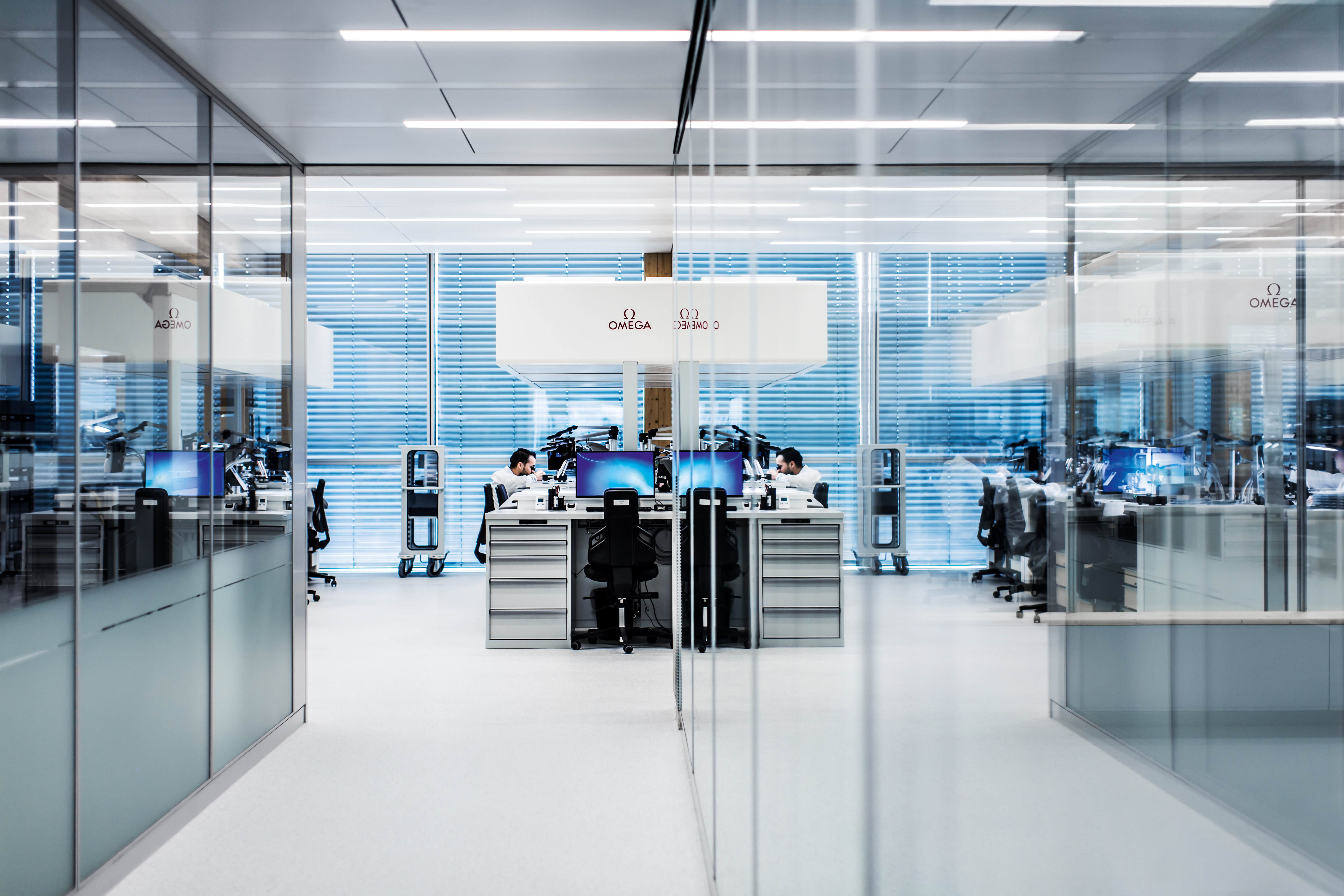
Contrary to romantic notions of rows of watchmakers assembling entire watches, most of the assembly floor operates on a highly specialized production model: Roughly 140 operators work here, each responsible for a single task — installing hands, fitting a dial or casing a movement.
Interestingly, prior watchmaking experience is not required here; Omega instead prioritizes dexterity and fine motor skills. Employees — many of whom are female — come from professions such as hairdressing or nail artistry, trades where hand precision is already second nature. Workers typically begin with quartz watches before progressing to mechanical three-hand models and, eventually, to more complex chronographs.
Cleanliness is crucial, though the environment is not quite a full-on cleanroom. Operators wear synthetic coats that reduce dust by about 40 percent, and overhead systems help limit airborne particles. Hairnets are unnecessary, as any stray hair would be immediately visible on a dial.
After assembly, the watch proceeds to T3 — known internally as “the wedding” — where the bracelet or strap is attached. From there, it moves to packaging and logistics.
Specialty Workshop
One floor above the main assembly line sits a quieter space devoted to Omega’s most celebrated caliber: the manually wound Caliber 321, the movement historically associated with the Speedmaster. (The 321 was reintroduced in 2019 and is now fitted in a startlingly accurate re-edition of the famed ref. 105.003-63, the Speedy worn by astronaut Ed White in 1965.)
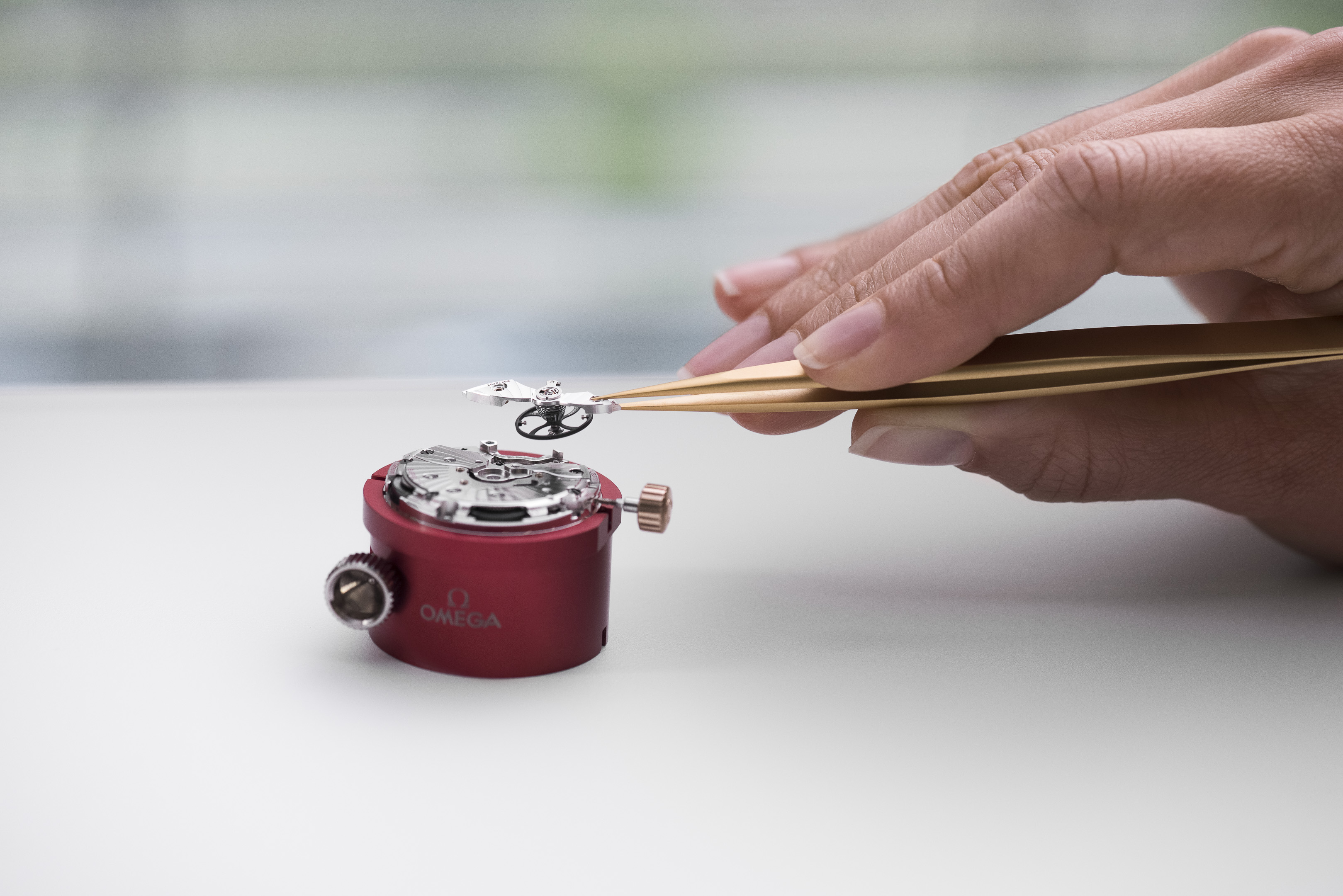
Here, the production philosophy shifts entirely. Each watch is assembled start to finish by a single watchmaker, a process that takes roughly three days. Despite the prestige attached to the movement, many of the watchmakers working here are surprisingly young.
Other high complications — including tourbillons and the remarkable Chrono Chime — are sometimes assembled here in similar fashion, occasionally using vintage machinery adapted with modern technology.
Testing Beyond the Chronometer
If assembly is only part of the story, testing is where Omega’s technical ambitions become especially clear.
Traditional chronometer testing measures the daily rate of a movement twice per day, but Omega wanted more. The result is a proprietary laboratory system developed over five years and now patented, capable of generating enormous volumes of data about a movement’s behavior.
Much of this testing takes place not in Biel/Bienne but at a specialized facility in Villeret (roughly 30 minutes away) called the Laboratoire de Précision, an independent testing unit founded by Omega. (The idea is that the facility can test beyond COSC standards and offer these services to any brand.) There, movements are placed inside specialized wireless containers known internally as “dual metric” testing boxes. Each box holds up to ten movements and continuously transmits information about position, environmental conditions and charging state. QR codes track each movement through the testing process.
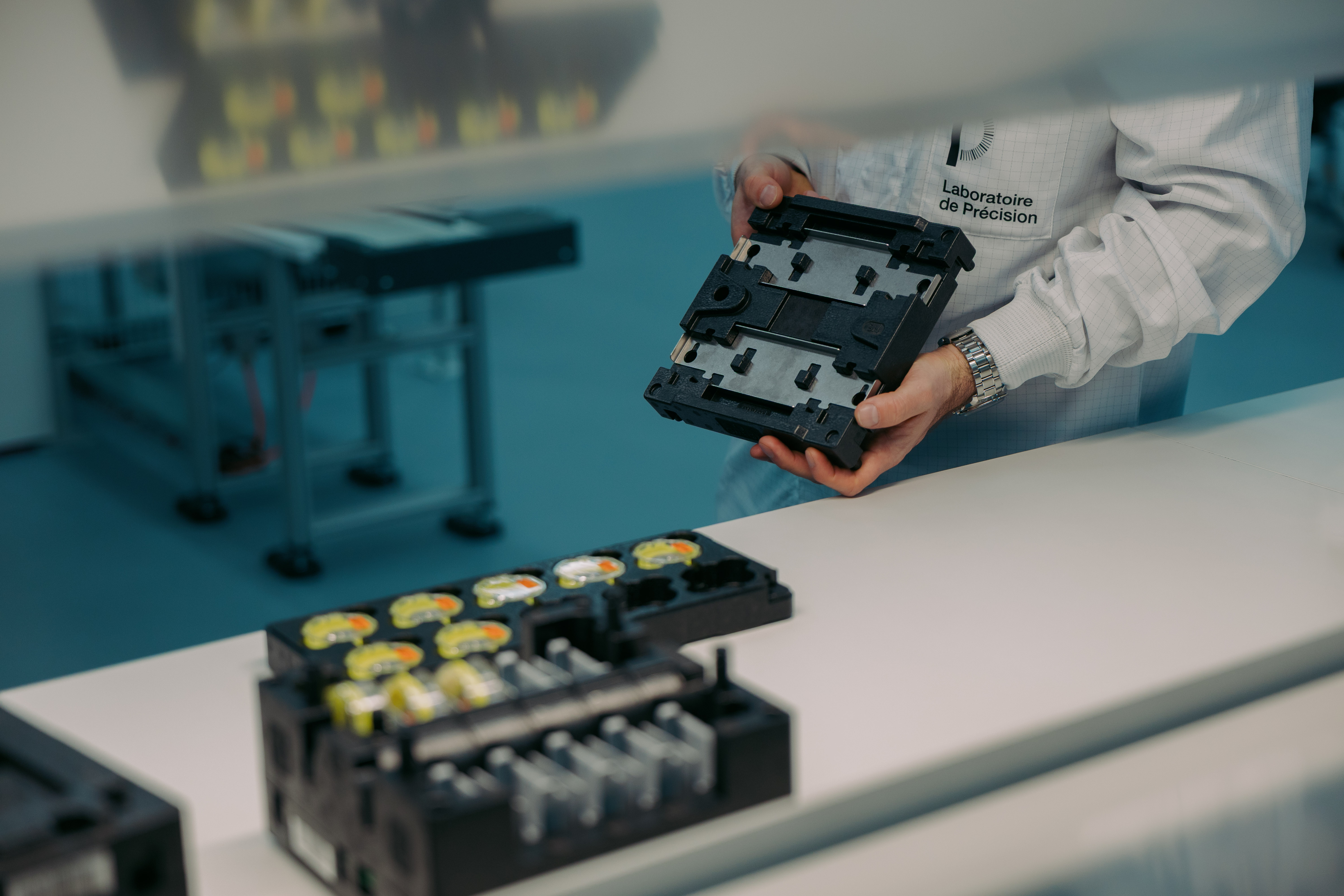
Inside the box sits a thermocompensated quartz reference oscillator. At the start of every 15-day testing cycle, the oscillator calibrates itself against an iridium atomic clock reference for three minutes.
The amount of data generated is extraordinary: each watch produces roughly 5,000 acoustic measurements and 3,000 environmental readings per day, ultimately totaling around 120,000 data points per movement. Contact microphones capture timing information with a resolution as fine as one millisecond per day.
The boxes themselves are partially open so that environmental conditions can reach the movements. They also contain shock-isolation systems to prevent vibration from interfering with measurements.
A 15-Day Ordeal
The testing sequence lasts 15 days: For the first 10 days, the boxes remain in an automated storage system, where robots periodically move them to wind automatic movements or recharge them. Manual-wind watches require human intervention.
On the eleventh day, the box is transferred to a climate chamber set to 8°C. Humidity is gradually reduced over 24 hours to prevent condensation. A few days later, the temperature is raised to 38°C, simulating warm conditions.
The final days of testing return the watches to the automated storage system. Throughout the process, the system continuously monitors orientation and environmental variables.
The Master Chronometer Standard
Once assembled, every Omega watch is tested individually according to the Master Chronometer standard, developed with the Swiss Federal Institute of Metrology (METAS).
The certification examines several factors simultaneously:
- Chronometric precision
- Performance in six positions
- Power reserve
- Water resistance
- Anti-magnetic resistance
Anti-magnetism has been a particular focus for the brand since it developed pilot’s watches during the Second World War. In modern Omega movements, components are designed to withstand magnetic fields of 15,000 gauss, roughly the strength encountered near MRI machines.
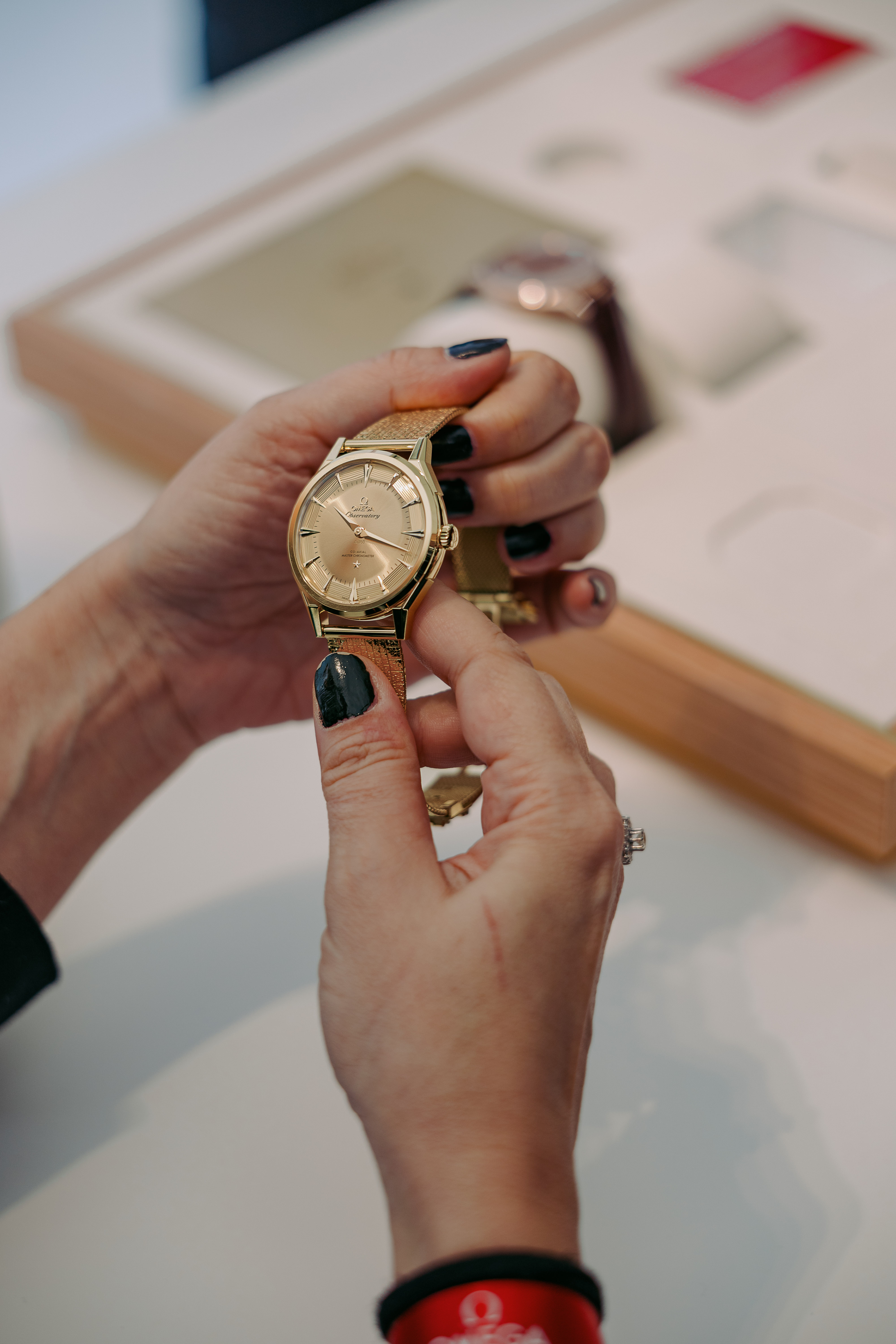
The watches are tested at two temperatures — 23°C and 33°C — representing ambient room conditions and approximate wrist temperature. Precision is measured both at full power reserve and at one-third reserve.
The first watch to carry the certification was the Globemaster, and Omega’s goal is eventually to make nearly all of its mechanical watches Master Chronometer certified. Although the standard was created for broader industry use, only one other brand — Tudor — currently conforms to it in addition to Omega.
METAS inspectors even work on-site in Biel/Bienne, periodically reproducing the tests on random samples rather than requiring watches to be sent elsewhere.
Precision at Industrial Scale
Seen as a whole, Omega’s Biel/Bienne facility represents a distinctive hybrid of industrial production and traditional watchmaking. Robots move components through a 24-hour logistics network while young watchmakers assemble historic calibers by hand just a few floors above.
Meanwhile, just half an hour away in Villeret, Omega’s testing laboratory subjects movements to an extraordinarily detailed regime of measurement and environmental simulation. What unites both worlds is the same goal: extracting as much information — and ultimately as much precision — as possible from every mechanical watch that leaves the manufacture.

For those for whom the notion of a hand-wound chronograph (or even an automatic dive watch) might seem anachronistic, the idea that the brand so thoroughly tests every movement is both compelling and comforting. While the price of a Speedmaster has increased significantly over the past five to 10 years, so has the quality of the product and the testing, ensuring that this — and every other Omega watch — will remain a faithful, wrist-worn companion for decades to come.
Maybe more.

More Like This
We're always on the scene eating, drinking and traveling near and far to bring you the best of what's happening out in the real world. Sign up for IRL now.