Fifty years after the debut of the Laureato, Girard-Perregaux isn’t trying to reinvent its flagship integrated-bracelet sports watch so much as refine it.
In 2026, that feels like a particularly smart move. The luxury sports watch category has matured significantly over the past decade, and the brands generating the most genuine enthusiast excitement right now aren’t necessarily the ones making watches bigger, louder or more aggressive — they’re the ones leaning into craftsmanship, proportion and thoughtful design. The new “Laureato Fifty” collection does exactly that through four new references split across 39mm and newly introduced 36mm sizes, all powered by the new in-house GP4800 automatic caliber.
According to Girard-Perregaux President Marc Michel-Amadry, the Laureato Fifty isn’t merely a celebratory side project, either. “The very first [version] gave the tone of what the future of Laureato would be,” he explained during a recent preview in Los Angeles, describing the original 39mm Laureato Fifty platform that debuted last year. That idea becomes increasingly apparent the more time you spend examining these new references. Rather than pursuing the sort of maximalist anniversary-watch theatrics we’ve come to expect from much of the industry, GP is instead using the Laureato’s fiftieth anniversary to reposition the collection around more sophisticated proportions, elevated finishing and genuinely artisanal dial work.
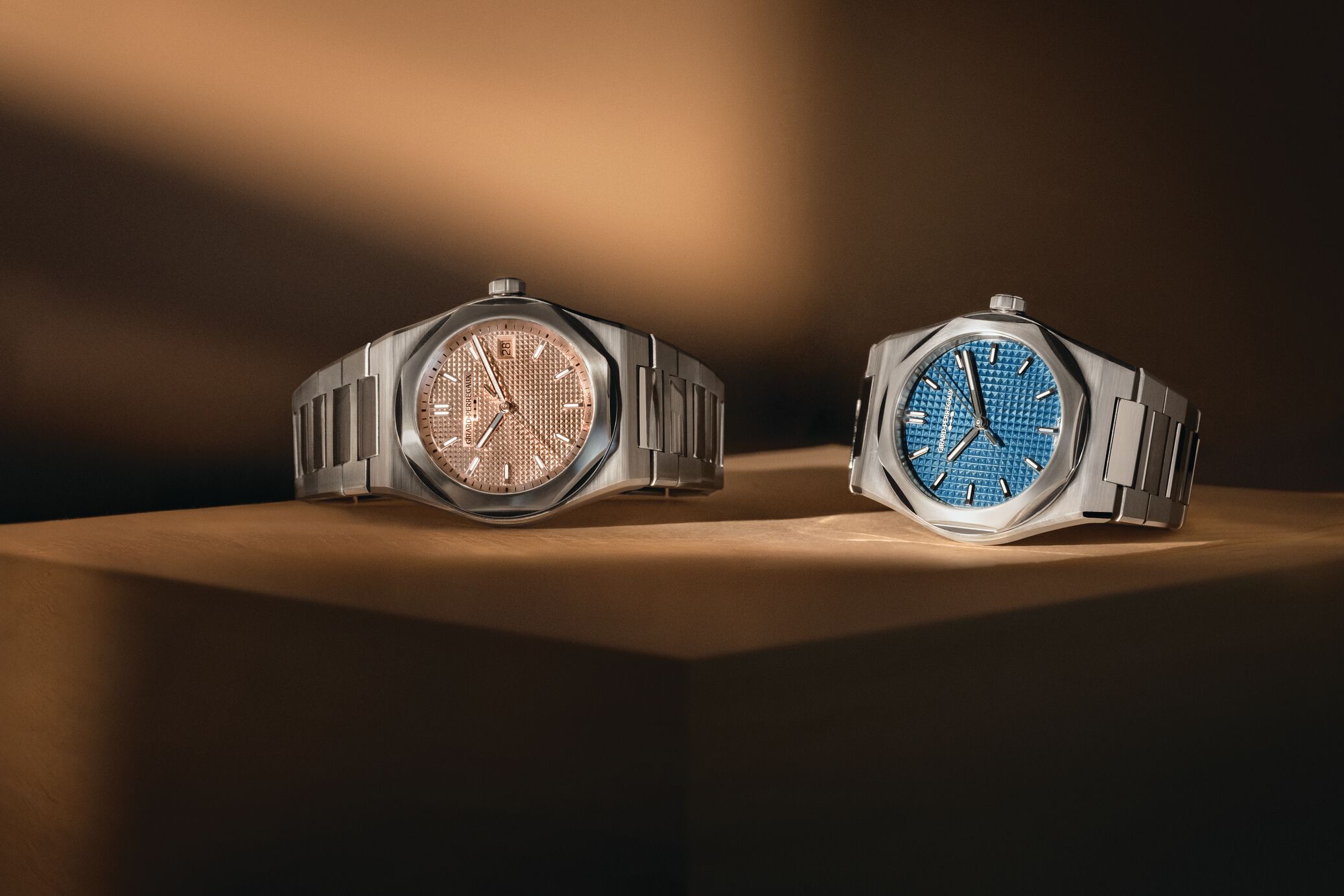
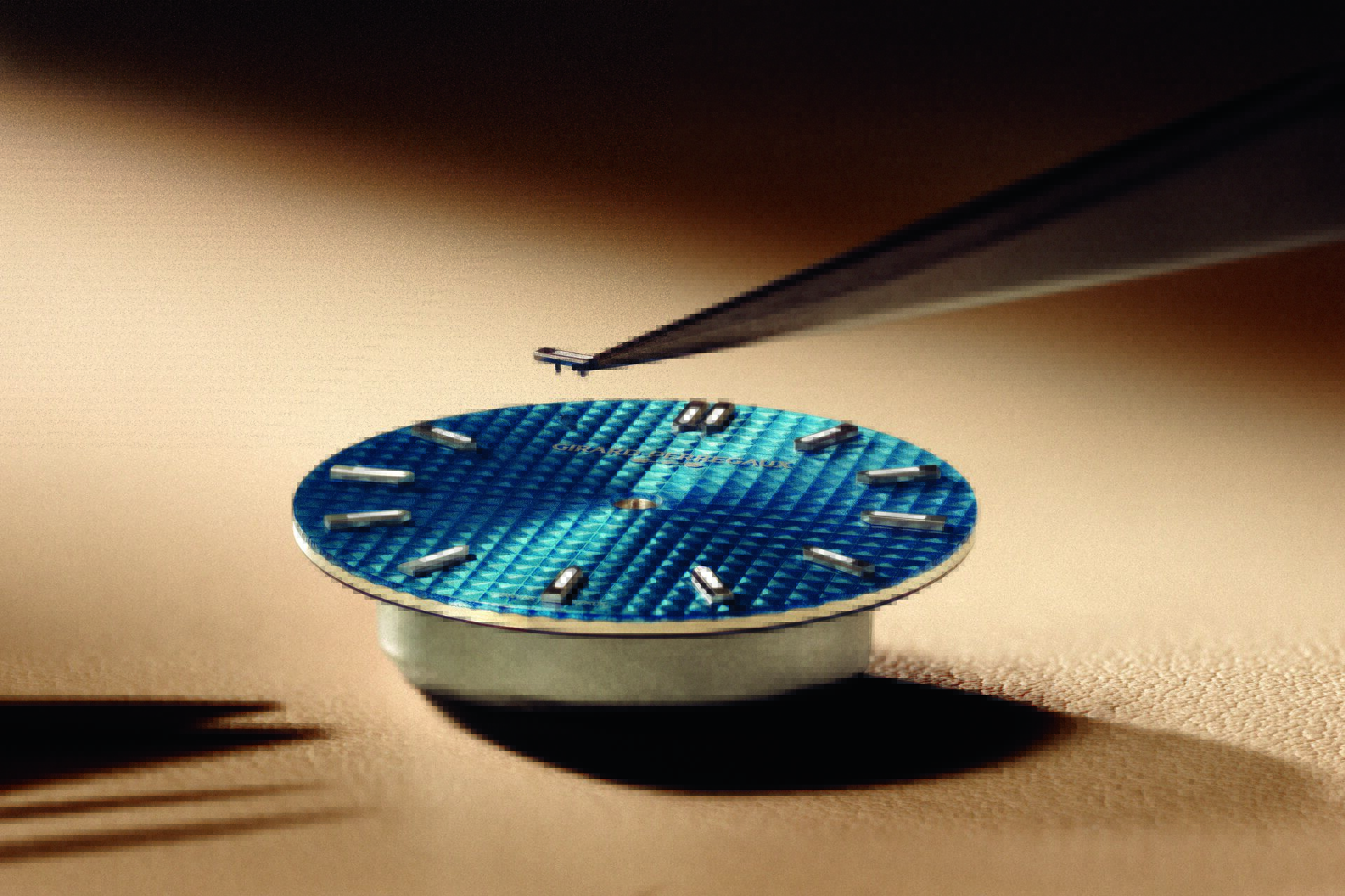
The headline piece is undoubtedly the new blue enamel 39mm reference, which quietly represents one of the more interesting dial executions we’ve seen in the integrated sports category this year. Girard-Perregaux has taken the Laureato’s familiar “Clous de Paris” textured pattern and layered translucent enamel over it, producing a remarkably deep, almost liquid visual effect that shifts dramatically depending on the light. In some angles, it reads as dark navy; in others, nearly black or electric cobalt. The textured motif beneath the enamel creates an added sense of dimensionality and shimmer that feels more artisanal than industrial — an important distinction in a category increasingly obsessed with nuanced finishing and texture rather than outright complications.
Michel-Amadry suggested the execution may be rarer than many collectors realize. “I’m not even sure that it already exists,” he said of the combination of enamel over a Clous de Paris texture. “It’s certainly very seldom.” More significantly, he emphasized that Girard-Perregaux performs its enamel work fully in-house through its own dedicated workshops. “We want to start not with the regular dials, but we want to start slowly, only with exceptional dials and movement execution,” he said, effectively summarizing the entire Laureato Fifty philosophy.
The Laureato has always occupied a slightly different lane from some of its better-known integrated-bracelet rivals. While the category’s biggest names often compete on visibility and cultural ubiquity, Girard-Perregaux seems increasingly comfortable positioning the Laureato as a quieter, more collector-oriented alternative. Michel-Amadry described the brand’s philosophy succinctly: “Our watches are not meant to impress, but to express.” Elsewhere in the conversation, he referred to the brand’s approach not as “quiet luxury” but “confident luxury” — the idea that collectors gravitate toward Girard-Perregaux not because the watches are instantly recognizable across a room, but because they reflect individual taste and genuine enthusiasm for watchmaking.
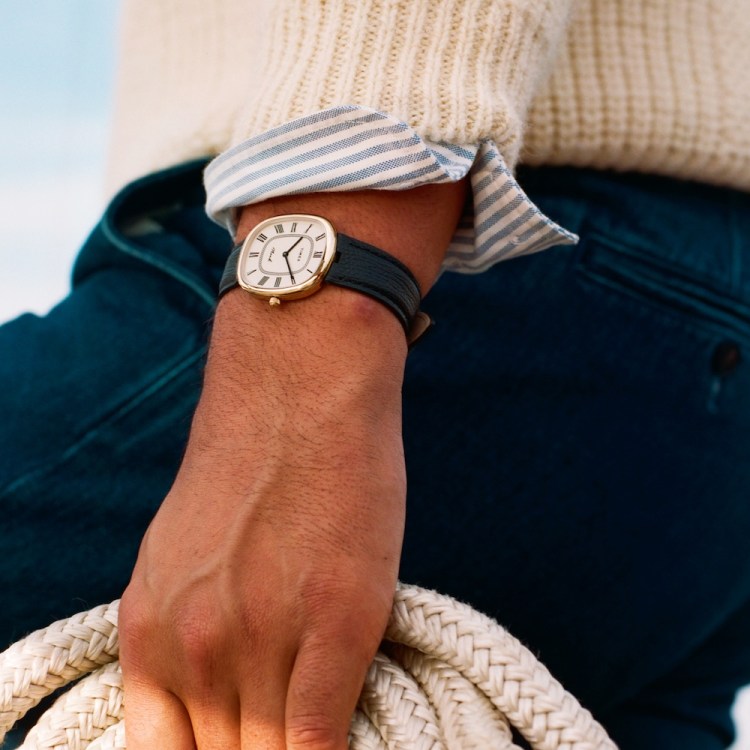
The second 39mm Laureato Fifty reference takes a warmer and slightly more architectural approach, pairing the same Clous de Paris motif with an 18K rose-gold-toned dial that plays heavily with reflected light and shadow. Like the enamel model, it remains impressively slim at just under 10mm thick, preserving one of the Laureato’s long-standing strengths: the fact that it has always worn more elegantly and fluidly than many of its integrated-bracelet contemporaries. GP has also subtly reworked the entire case and bracelet architecture, introducing shorter bracelet links, revised beveling that now extends throughout the bracelet and a more carefully angled case profile intended to improve ergonomics and wrist presence.
But arguably the bigger industry story here isn’t the enamel — it’s the sizing. Over the last several years, the watch world has undergone a significant correction away from 42mm-plus sports watches and back toward smaller, vintage-informed proportions. Integrated-bracelet designs in particular tend to wear larger than their measurements suggest, which has fueled growing demand for sub-40mm options that prioritize balance and comfort over sheer wrist presence. Girard-Perregaux appears acutely aware of that shift, and the Laureato Fifty collection formally expands the line into 36mm territory with two new references that feel less like traditional ladies’ models and more like a deliberate return to the compact elegance of the original 1975 Laureato.
Importantly, the 36mm watches weren’t treated as an afterthought. Michel-Amadry explained that the new GP4800 caliber was intentionally engineered to accommodate smaller case sizes from the very beginning. “Collectors want 40 and below. They want 38, 39, 40, even 36,” he said. That explains why the new movement measures a relatively compact 25.6mm in diameter, a deliberate decision that allowed GP to preserve proper proportions while still using the same movement architecture across the collection.
One of the new 36mm references receives the same rose-gold-toned dial treatment as its larger sibling, while the second adopts a more jewelry-oriented execution with a silver dial and diamond-set bezel. Crucially, though, neither watch feels excessively ornamental. The Laureato’s clean architecture and integrated steel bracelet keep executions squarely within the modern unisex luxury-sports conversation rather than drifting into overtly decorative territory. In many ways, these smaller Laureatos may actually be the purest expression of the collection’s original design language — elegant, architectural and deeply wearable.
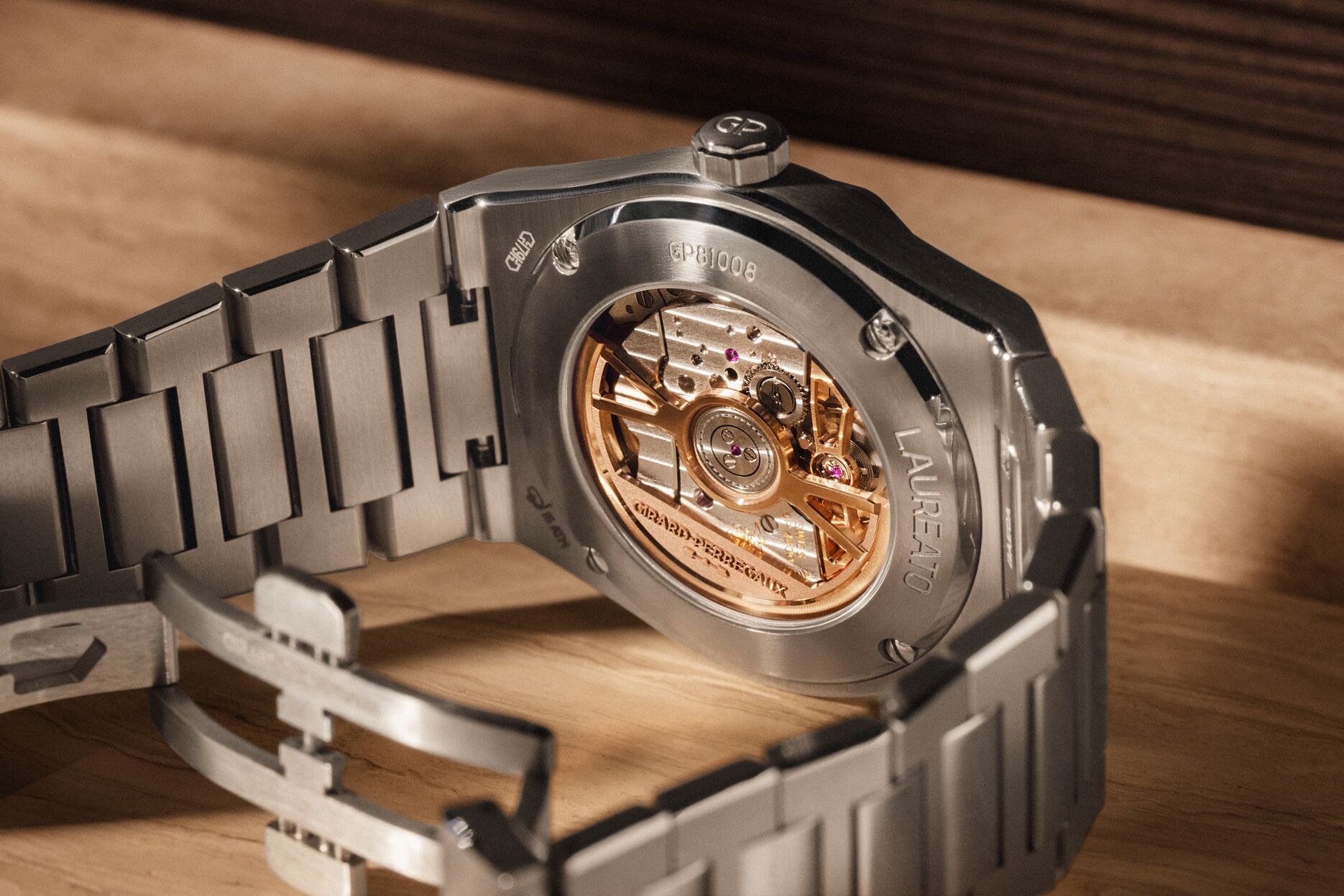
All four Laureato Fifty references receive the new GP4800 automatic movement, visible through a sapphire caseback and distinguished by a pink-gold balance bridge created specifically for the anniversary collection. The architecture itself draws directly from Girard-Perregaux’s historic Three Bridges design language, emphasizing symmetry and visual balance throughout the movement. Operating at 4 Hz with a 60-hour power reserve, the caliber incorporates ten different finishing techniques, including Geneva stripes, anglage, circular graining and satin brushing. Like the collection itself, the movement favors refinement and execution over spec-sheet theatrics.
That philosophy ultimately defines the Laureato Fifty as a whole. In an era when anniversary watches often arrive burdened with oversized cases, loud colors or aggressively limited hype positioning, Girard-Perregaux has instead delivered something considerably more thoughtful: a refined evolution of one of the industry’s most elegant integrated-bracelet sports watches, now rendered in more sophisticated materials, more carefully considered proportions and a level of artisanal execution that suggests the Laureato’s future may ultimately be even more compelling than its past.

More Like This
We're always on the scene eating, drinking and traveling near and far to bring you the best of what's happening out in the real world. Sign up for IRL now.