Welcome to Watchword, a series in which we break down key terminology to help you better understand the lay of the horological land. In this piece, we examine the sector dial, a beautiful design from the early 20th century that’s recently made a comeback.
While an analog watch dial could conceivably take any form, designers tend to prize legibility for a reason. A timepiece, after all, is meant to convey the time quickly and accurately, even if the use case for one has been obviated by the smartphone. To this end, many early dial designs that we consider both classic and aesthetically pleasing have their roots in the quest for legibility.
Take the so-called “sector” or “scientific” dial. Organized into concentric “sectors” that divide the minute, hour and sometimes the subdivided seconds tracks into separate areas, they often (but not always) feature bisecting vertical and horizontal lines that create four equal quadrants. These aesthetically-distinctive dials originated on pocket watches in the early 20th century, carrying over the idea of the “railroad” minute track and merging it somewhat with the curvaceous, decorative geometry of the art deco movement. Add to the equation the proliferation of the man’s wristwatch after the First World War and the rise of the Bauhaus movement (born in 1919), and you have a recipe for a dial type with both a classical and distinctly modernist bent.


It was in the 1930s that sector dials truly came into their own. During an era when établissage — the assembly of parts produced by distinct specialists such as dial makers and case makers — still far outstripped the prevalence of in-house production, watchmakers would often share several key manufacturing partners. So it’s little surprise that similar (if not nearly identical) sector dial watches emerged from famed marques such as Longines, Omega, the International Watch Company and others. Patek Philippe — in which a controlling interest was purchased in 1932 by dial maker Stern Frères — made numerous stunning examples in both its pocket and wristwatch collections during this time. Sector dial designs continued to proliferate throughout the 1940s as the pocket watch gave way to the wristwatch, with the latter often housed in distinctive “stepped” cases whose bezel designs made them appear larger, despite their often diminutive proportions.
By the 1950s, newer, more minimalist design language took hold within the dress watch space, while the spread of recreational scuba diving, mountaineering and other leisure activities led to the rapid of development of specialist “tool” watches with luminescent dials, largely relegating the more intricate sector dials to the past. It wasn’t until the early 2000s that classic marques began mining their archives for inspiration, led by Patek Philippe and its vintage-inspired ref. 5296 Calatrava. (A vintage original certainly wouldn’t have featured a date window, this being strictly a concession to modernity and the contemporary preference for date-equipped watches.) Other brands — JLC with its Master Control, IWC with its Portugieser, etc. — swiftly followed.
Today, the sector dial is still an underdog. Whether because of the relative sophistication of its design and difficulties in printing them or simply that they immediately call to mind an ultra-specific era (the 1930s-1940s) and are considered overly niche, they’re often seen in one of two contexts: As part of a modern reimagining of a specific vintage reference (the Longines Heritage Classic “Sector”) or within an entirely new model that’s heavily influenced by vintage aesthetics more broadly (Baltic’s HMS 003 or MR Roulette). Hopefully, given the incredible beauty of the sector dial design and relative difficulty in sourcing pristine vintage examples, more watchmakers will devise entirely new timepieces that utilize this fascinating motif.
The Best Modern Sector-Dial Watches
- The High-Flying Sector Dial: Longines Heritage Classic “Sector”
- The Approachable Option: Baltic HMS 003
- The Vintage-Inspired Timepiece: Raymond Weil Millesime
- The Refined Calendar Choice: Jaeger-LeCoultre Master Control Calendar
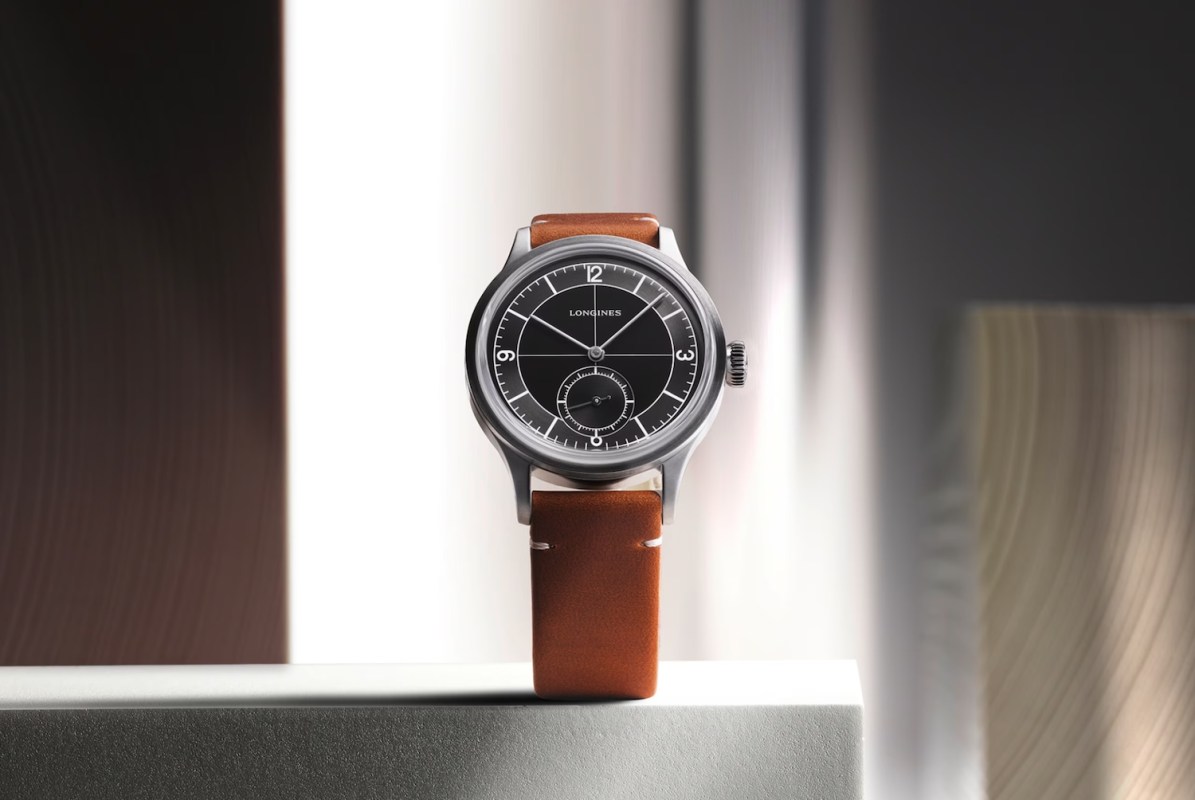
Available in both silver and black, the Longines Heritage Classic “Sector” is a modern reissue of a vintage reference from 1934 that has been upsized and updated for contemporary tastes. Coming in at 38.5mm in stainless steel, it’s significantly largely than the sub-35mm watches the brand was producing in the ‘30s and ‘40s but maintains those pieces’ handsome dial configuration. The outer minute track is connected to the inner sedition by thin rectangular indices, while the latter is cut into quadrants by vertical and horizontal lines. Meanwhile, a sub-seconds display at 6 o’clock is further graduated into 60 equal hashmarks, and the entire thing is powered by a modern automatic movement.
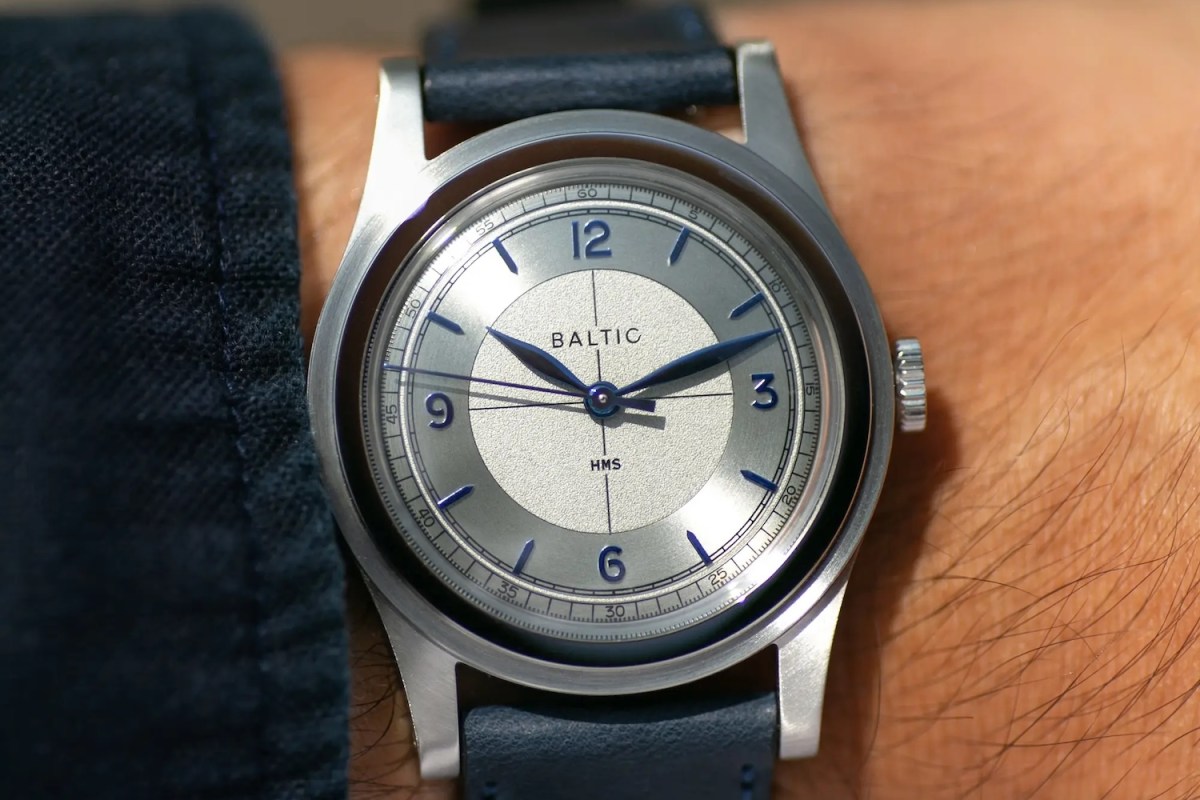
Baltic’s HMS 003 — available in no less than seven different dial configurations — is a spectacular way to get your hands on a sector dial watch for just a few-hundred bucks. In typical Baltic form, it doesn’t imitate (or even approximate) any specific vintage reference but rather cleverly distills 1930s and 1940s design language into a coherent modern form. Unlike many other sector dial watches, it uses applied hour indices whose polished surface contrasts brilliantly with the dial’s brushed and matte sandblasted sectors. Incredibly dynamic and powered by an automatic Japanese movement, it’s an undeniably handsome watch in virtually any configuration.
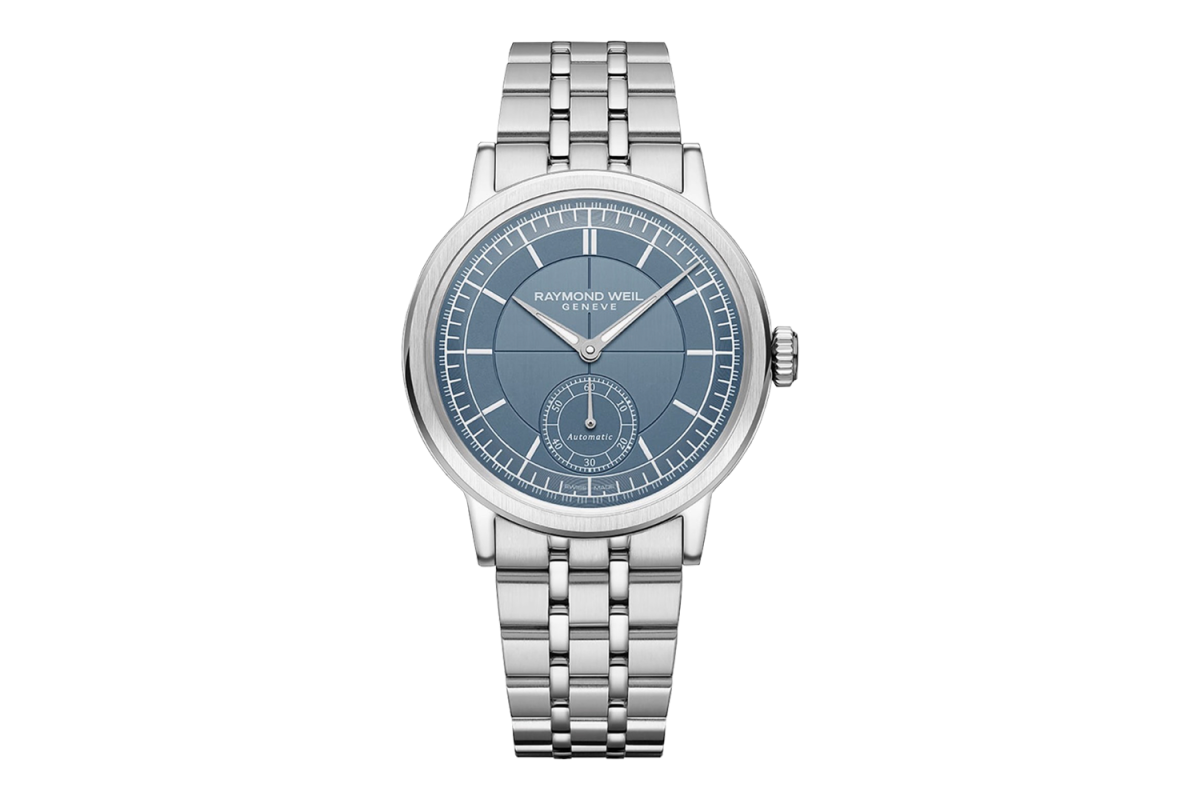
Raymond Weil’s vintage-inspired Millesime collection so delighted collectors when it launched in 2023 that it won the Challenge Prize at that year’s Grand Prix d’Horlogerie de Genève. Much in the mode of Baltic’s HMS series, it distills down the essence of sector dial watches into a modern timepiece without reissuing a specific reference. (Indeed, Raymond Weil was only founded in 1976, well after the original crop of sector dial watches disappeared from the market.) Measuring a modern 39mm in diameter and available in a variety of dial colors, it offers a clean aesthetic, automatic Swiss movement and the option of a matching multi-link bracelet, all for roughly $2,000.
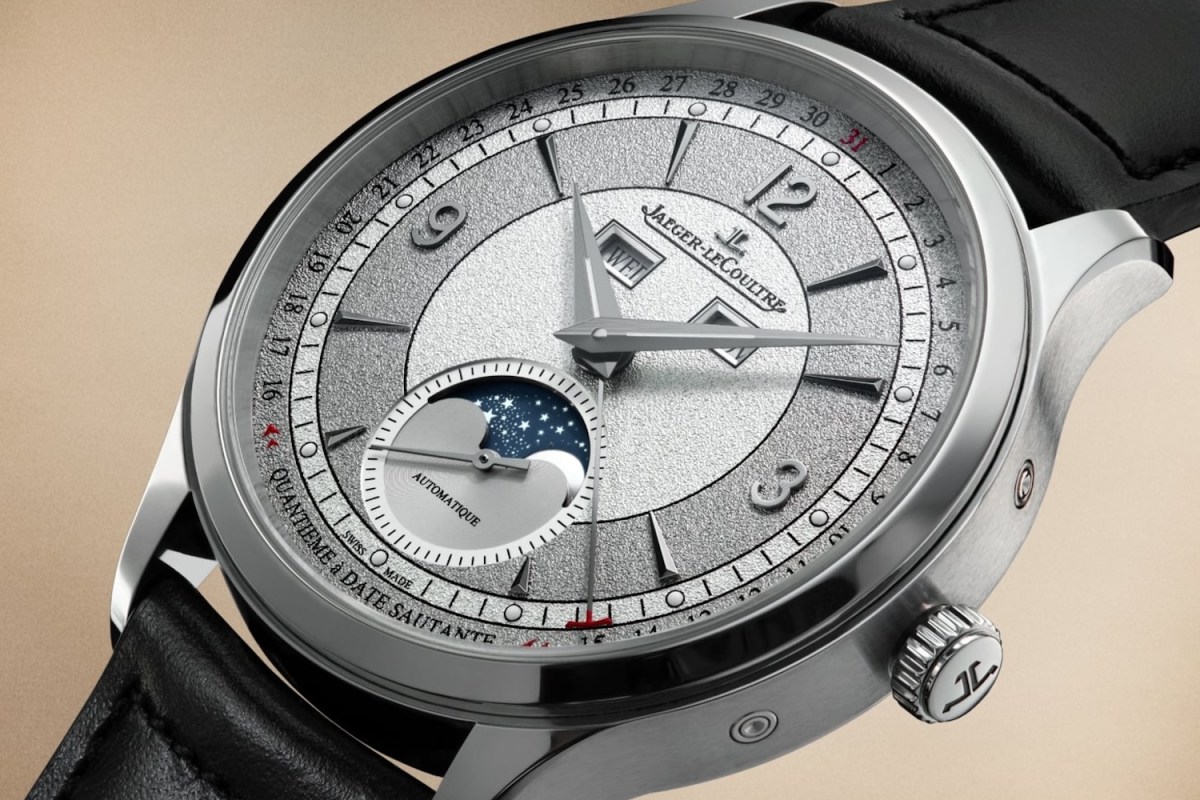
Launched in 1992 and based on the maison’s 1950s output, the Jaeger-LeCoultre Master Control series features modernized takes on classic complications and time-only designs. The Master Control Calendar, measuring 40mm in stainless steel, is unique for its splendid sector dial, which features a grained surface subdivided into different sections of light and dark grey. Conveying a wealth of information, including the day, date, month and moonphase in addition to the time, it retains excellent legibility and even features a neat “jumping” date indicator hand. Powered by an automatic movement, it’s one of the most refined sector dial designs of the modern era.
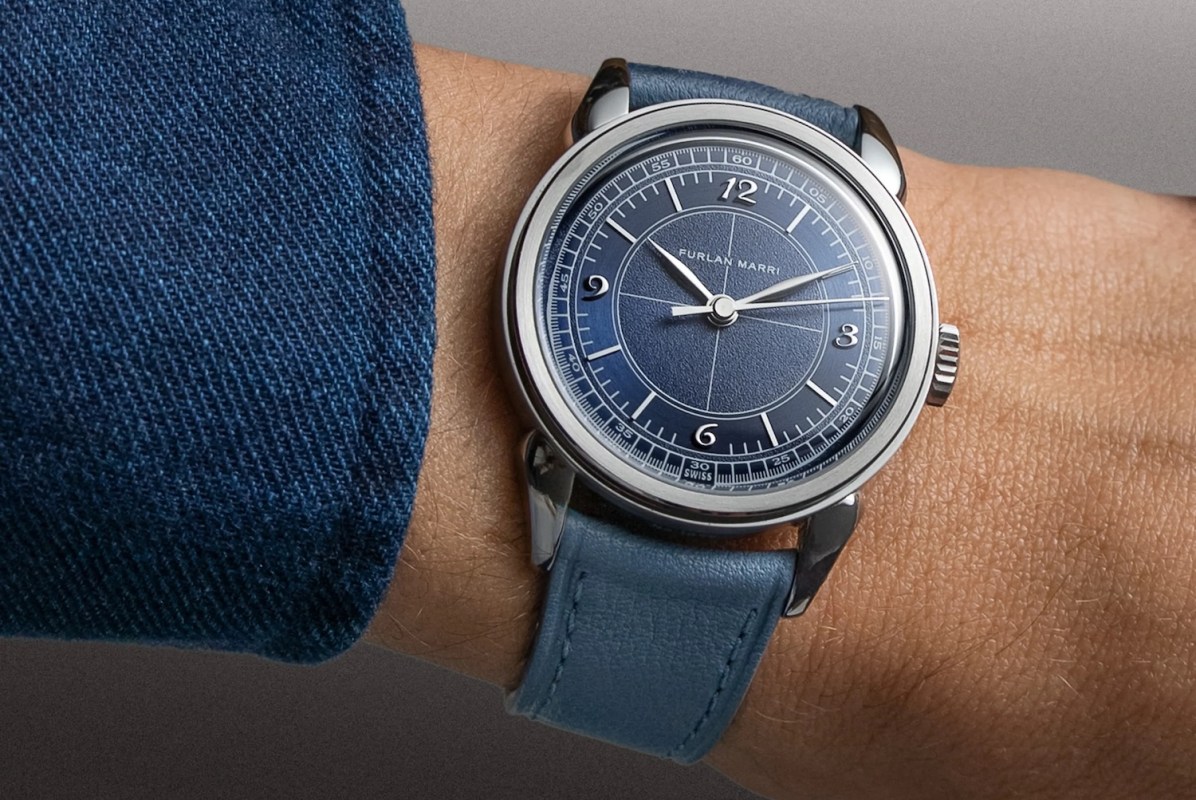
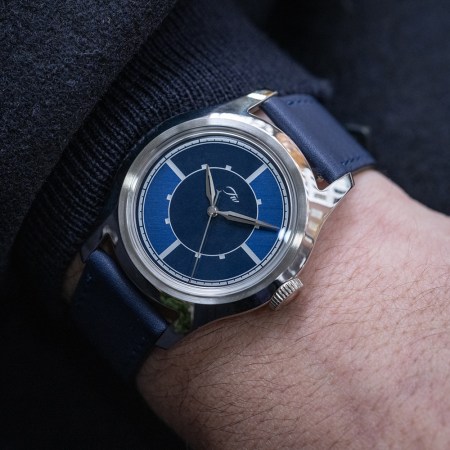
Normally, a watch that marries this many “watch guy” tropes — cornes de vache lugs, Breguet numerals, sector dial, step case — would read like a supplier’s catalog. But much like Baltic, Furlan Marri managed to nail the essence of a 1940s vintage watch without dipping into kitsch. The 37.5mm sizing is truly lovely, while the cornes de vache lugs call to mind classic references from the likes of Vacheron Constantin. Mixed brushed and polished surfaces offer a sense of dynamism. The blue dial, with its outer brushed surface and grained texture within the inner “sectors,” is a thing of beauty, and the applied Breguet-style numerals truly pop.
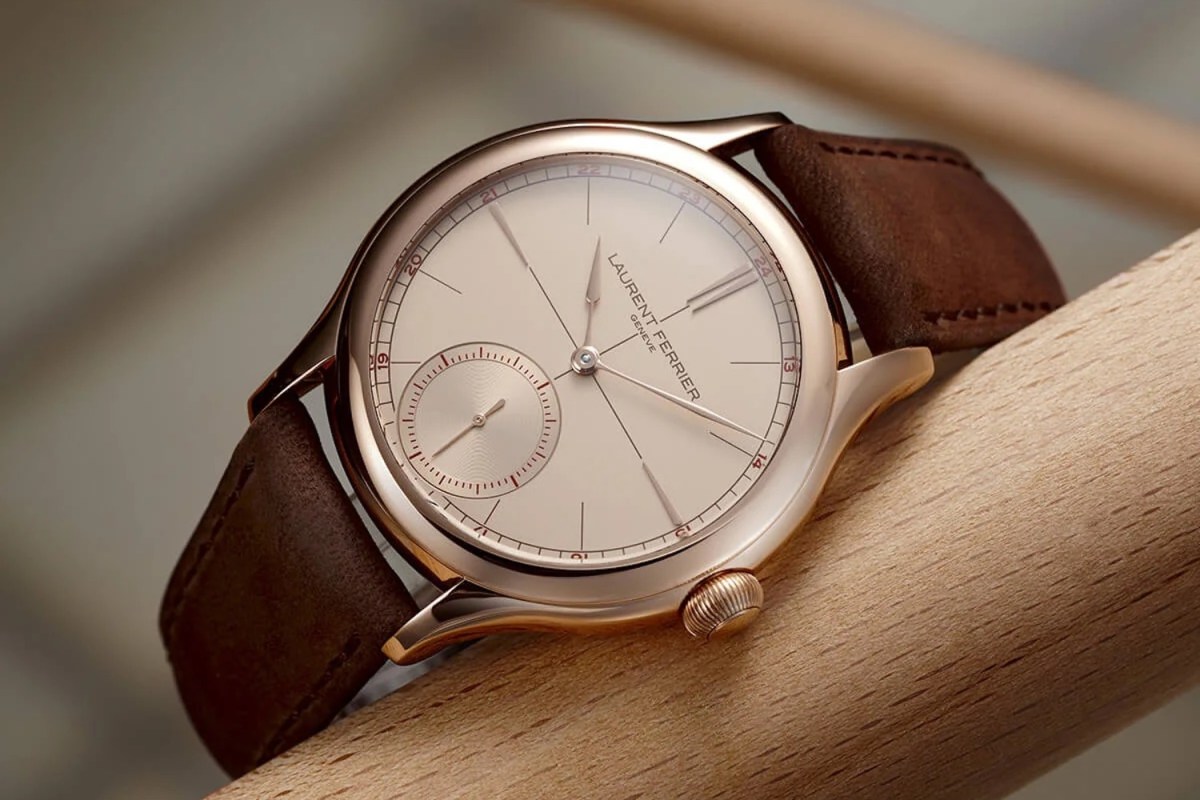
Though it doesn’t feature the telltale circular subdivisions found in most sector dial watches that separate the hour, minute and other tracks, Laurent Ferrier’s Classic Origin Beige does mix an outer “railroad” minute track and intersecting horizontal and vertical lines to splendid effect, resulting in a dial that oozes vintage charm. When combined with LF’s pebble-shaped case and signature Assegai handset, the result is a modern semi-sector dial watch that’s almost certainly a modern classic in the making. Available in multiple colorways, we particularly love the beige version in gleaming 5N red gold.
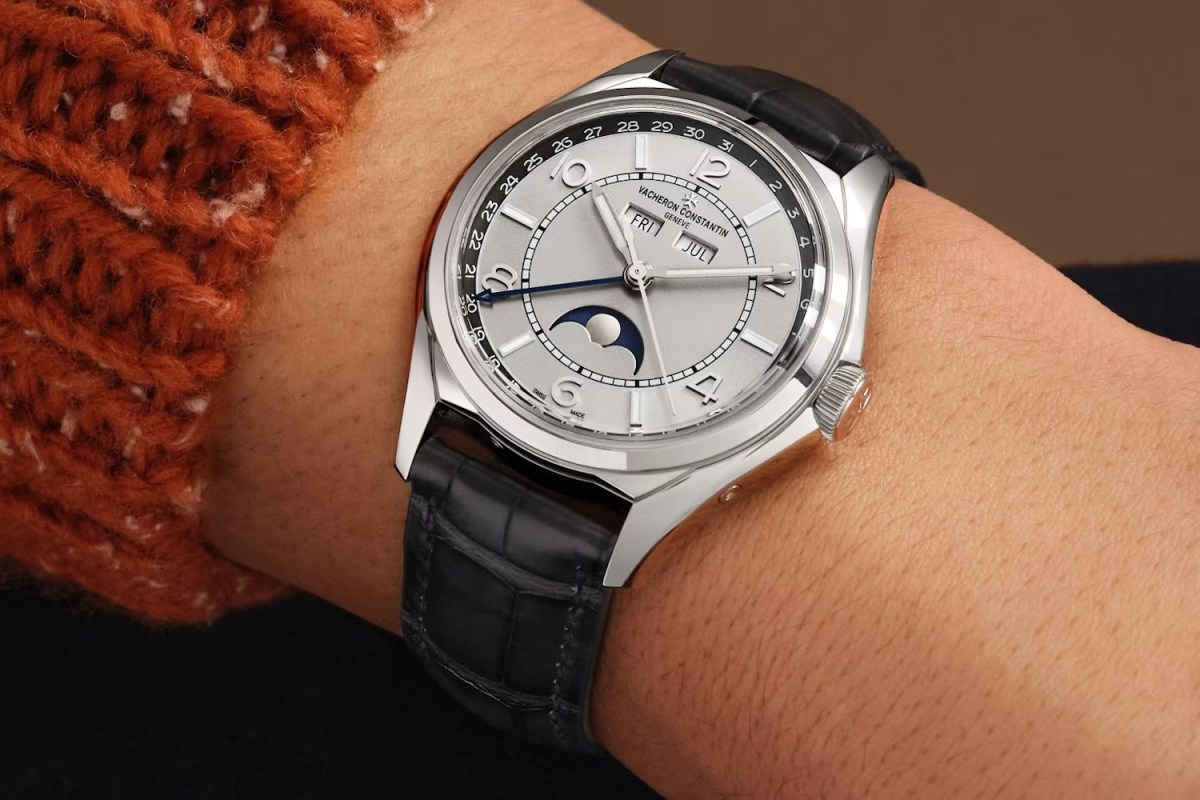
Based on a vintage reference from 1956, the modern Vacheron Constantin Fiftysix collection spans numerous complications, configurations and colorways. Perhaps one of the handsomest executions is the silver-dialed Complete Calendar, whose lovely 40mm case architecture frames a multi-tone dial boasting subtle contrast between sectors: a radial design in dark grey for the outer date track, a brushed pattern for the minute track and a polished light grey section that serves as a background for the day, month and moonphase displays. With its subtle pops of blue and classically-inspired design language, it’s certainly among the more elegant modern sector dial watches from the “Holy Trinity.”
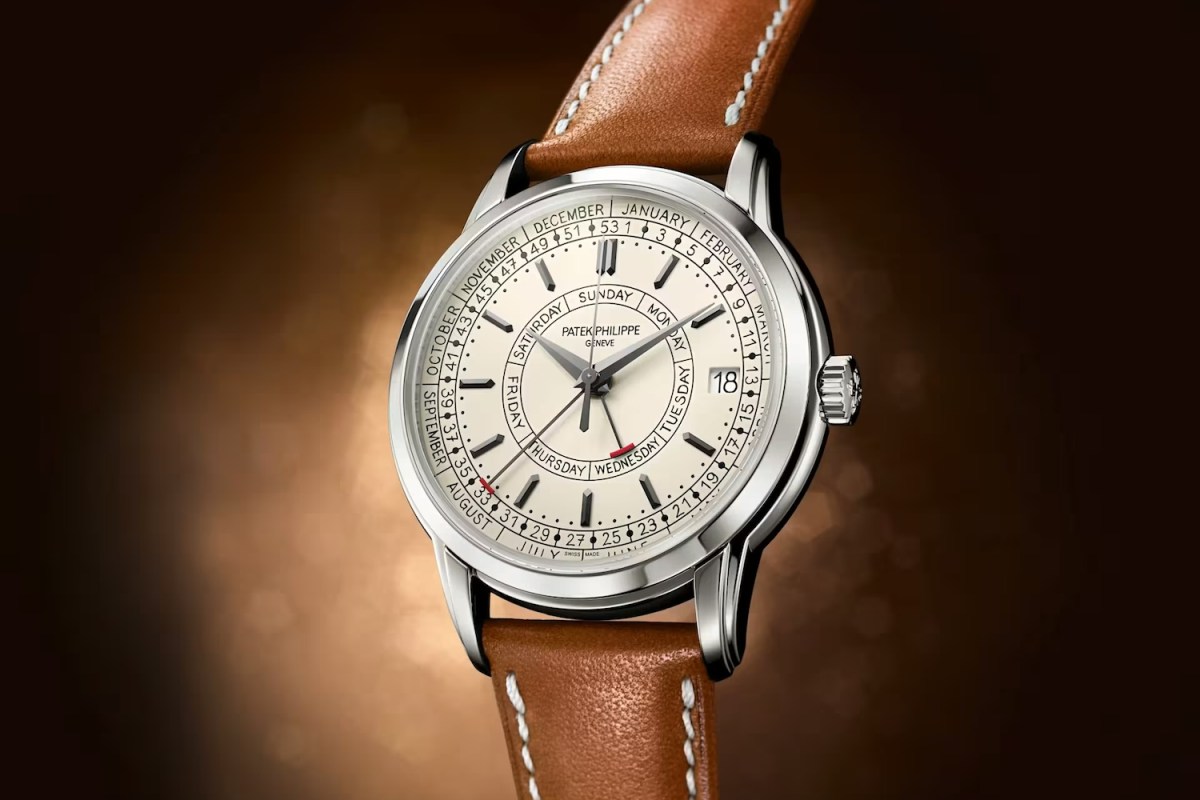
One of the most unusual and compelling designs in the contemporary Patek Philippe catalog, the ref. 5212A-001 is a complicated calendar watch that displays the week number in addition to the day, date and month. Divided into sectors to maintain legibility, the dial is playful and fun, particularly so when one considers that the typography was copied directly from the designer’s handwriting rather than produced by a formal typographer, making each letter different. This being a Patek, however, it offers a beautiful stepped-case design and well-decorated movement with a 21K gold winding rotor.

More Like This

The world of men’s style, from the streets of NYC to the showrooms of Milan, run down weekly by writer and photographer Christopher Fenimore.