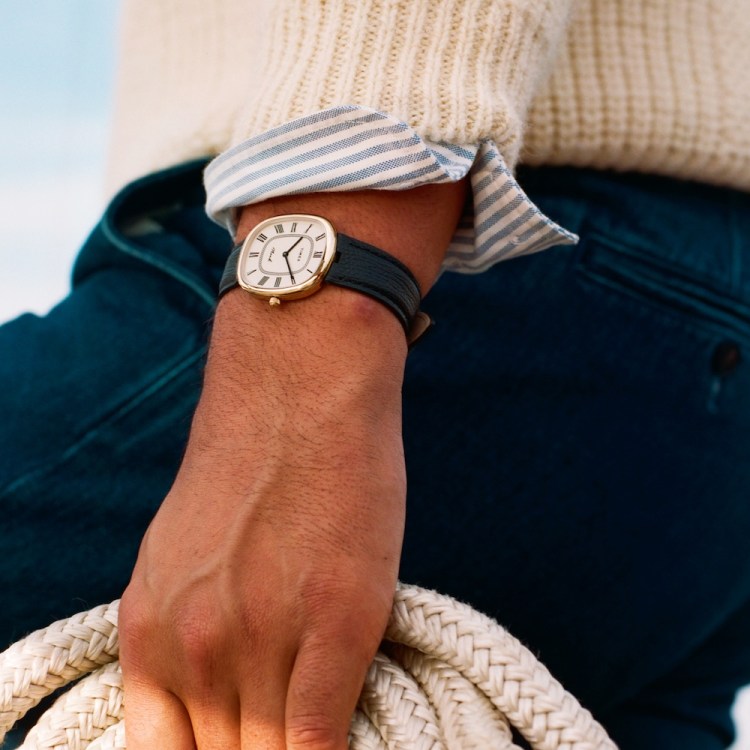
We are firmly ensconced in the era of the gold dress watch, particularly of the vintage varietal. They’re everywhere, from the 31mm Patek Philippe ref. 96 to all manner of stone-dial Piagets, from deep-cut, postwar Cartier to — gasp! — quartz-powered fashion watches from the 1990s. The early 2020s have seen the pendulum swing from stainless steel luxury sports watches back to their categorial opposite, and frankly, we’re here for it. We’ve long evangelized smaller watches, vintage watches and dressier watches, and to see them embraced within the sartorial zeitgeist has been both fun and affirming.
However, one watch’s boom is another watch’s bust, and nowhere is this evidenced more than in the case of the humble chronograph — more specifically, the humble vintage chronograph. Where once old mil-spec models were commanding close to $10,000 on retailers’ websites, their prices have nearly halved. And where just a few years ago a beautiful 36mm piece from a mid-tier Swiss marque would easily have cleared $5,000+, today they’re trading for perhaps $3 to $4K. What does this mean for the open-minded collector? In short, if you’re willing to zig where others zag, you can snag a pretty wonderful watch at a price that was unthinkable for much of the past decade.

Bring Back These Vintage Watches, Please
Yes, we need horological innovation and fresh blood. We’d also love to see these old classics return.James Lamdin, founder of Analog:Shift and vice president of vintage and pre-owned timepieces at Watches of Switzerland, sees thousands of these watches change hands every year.
“While the marketplace has seen untold thousands — possibly millions — of new mechanical watch enthusiasts since the pandemic, a notable generational knowledge gap now exists and is perhaps most felt in the vintage segment,” Lamdin says. “As a result, demand for vintage pieces — particularly sports models from the 1940s to 1980s — has decreased dramatically in the past five years. Prices for these watches fell steeply, and they now represent one of the best values on the market. Regardless of their future valuation — my guess is they will return to pre-Covid levels and then some as the tastes of the newer generation mature — these models represent the very best of form-follows-function design and laid the groundwork for the iconography of an entire category of timepieces.”
Now, don’t get us wrong: This does not mean that Cosmograph Daytonas are suddenly $10,000 on the secondary market and “Ed White” Speedmasters are a dime a dozen. However, certain other leading marques’ wares are more affordable than they’ve been in years. Heuer, for example, made some of the world’s finest chronographs between the 1940s and 1980s, and many of them are now well within the reach of the amateur collector. And if you widen the aperture to include non-chronograph specialists like Girard-Perregaux, Wittnauer, Croton and others, the world is truly your oyster.
12 Vintage Heuer Chronographs Every Collector Should Know
A deep dive into the catalog of one of the world’s greatest watchmakersKeep in mind, of course, that service of a mechanical chronograph — any mechanical chronograph — will necessarily be more expensive than that of a time-only watch (expect a $500+ bill). And understand that sourcing vintage components can be a difficult and expensive and adds to the cost of maintenance and repair. But if you’re a collector of vintage watches more broadly, you’re no doubt used to this reality and accept it as a given. Indeed, for the archaeologically-minded flea-market picker, there’s something alluring about the possibility of bringing a vintage watch back to life. And if you’re the type for whom pushers, totalizers and scales provide a sort of magnetic pull, then you’ve come to the right place.
Here are just a smattering of the cool vintage chronographs available at what we think are excellent prices. We’ve stuck with pieces that come from reputable dealers to offer you peace of mind, though you should always do your own due diligence before buying a vintage or pre-owned piece. Good hunting!
The Best Vintage Watches to Buy Now
- The Original Automatic: Seiko 5 Sports Speed-Timer Ref. 6139-7002, $1,000
- The Candy-Paint Chronograph: LeJour “Lollipop” Chronograph, $1,200
- The ’70s-Era Steal: Wittnauer Professional Chrono-Date Ref. 5009, $1,300
- The Tonneau Taskmaster: Certina Chronolympic Ref. 674.3559.41, $1,950
- The Unsung Icon: Omega Speedmaster Professional Mark II “Racing” Ref. 145.014, $3,500
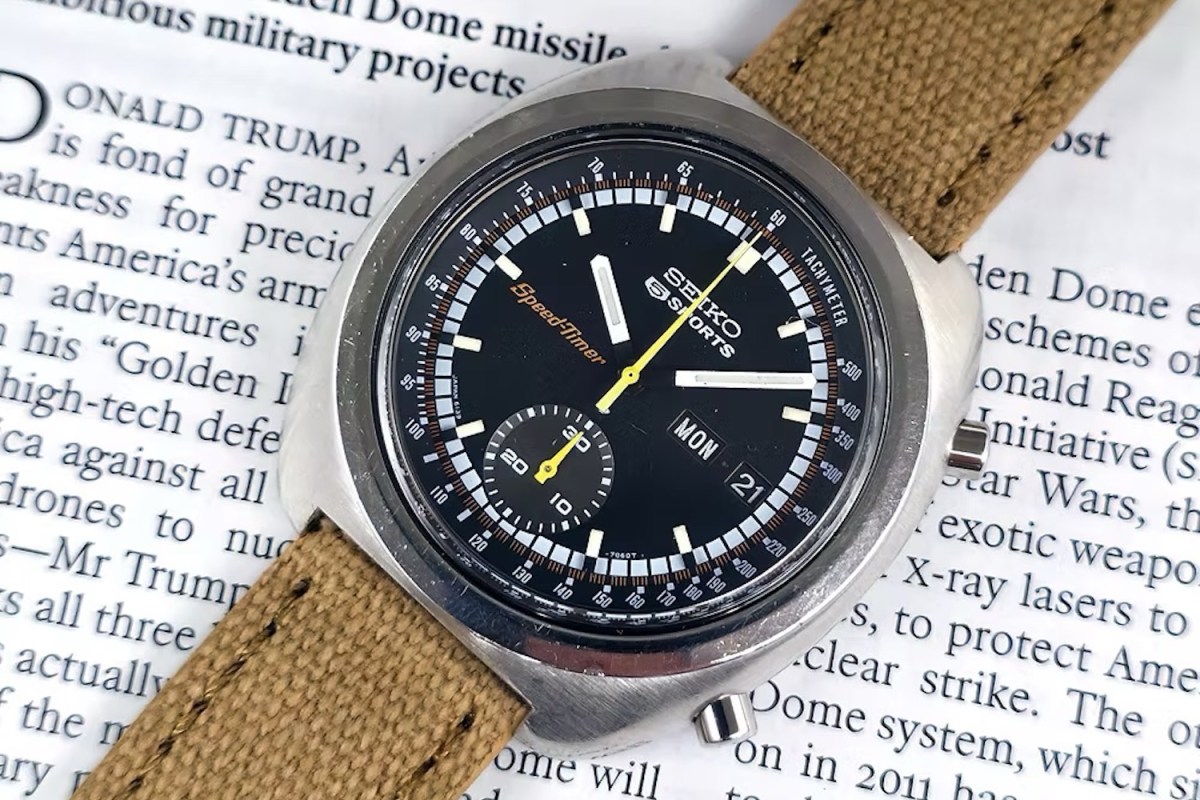
This well-preserved Seiko 5 Sports Speed-Timer ref. 6139-7002 from 1973 uses an early example of one of the world’s first automatic chronograph movements, the Seiko cal. 6139. Unlike its Swiss counterpart in the form of the cal. 11, it features an integrated design rather than a chronograph module atop a conventional automatic movement. It was well ahead of its time. The ref. 6139-7002 itself features a sporty black dial with blocky minute scale and an outer tachymeter track, plus a 30-minute totalizer and a day-date display at 3 o’clock. This quirky combination makes the ref. 6139s highly idiosyncratic and immediately recognizable — not to mention beloved by the collector community.
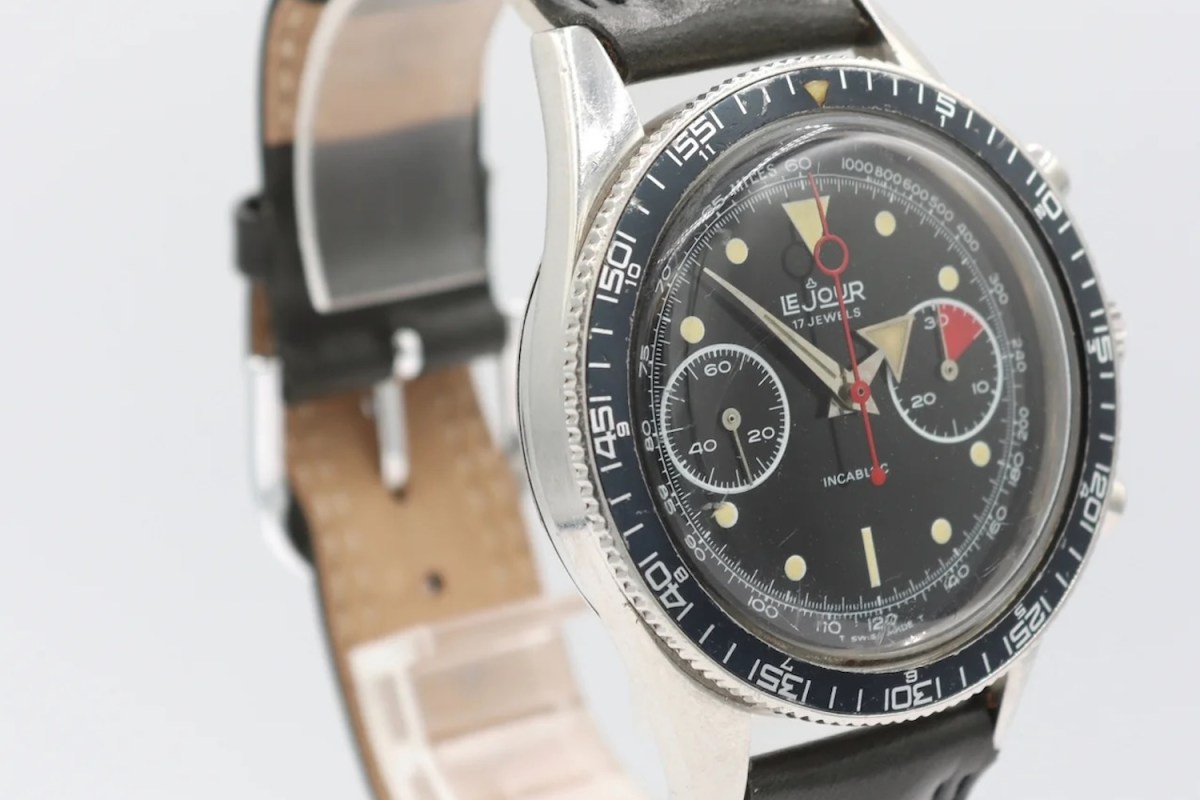
A retailer and distributor for brands such as Heuer and Yema, LeJour also sold watches under its own name, one of which was this cool dual-register chronograph powered by a classic hand-wound Valjoux movement. Measuring 39mm in stainless steel, it was an oversized watch in the 1960s, while its dual elapsed-time/12-hour bezel provided a handy way to time events and track a second time zone. Its dual-register chronograph allows for the recording of up to 30 elapsed minutes, while its outer tachymeter scale is calculated in miles, which is handy for the American consumer. Priced at just $1,200, it’s an absolute steal, even if it’s missing the luminous material in its signature “lollipop” seconds hand.
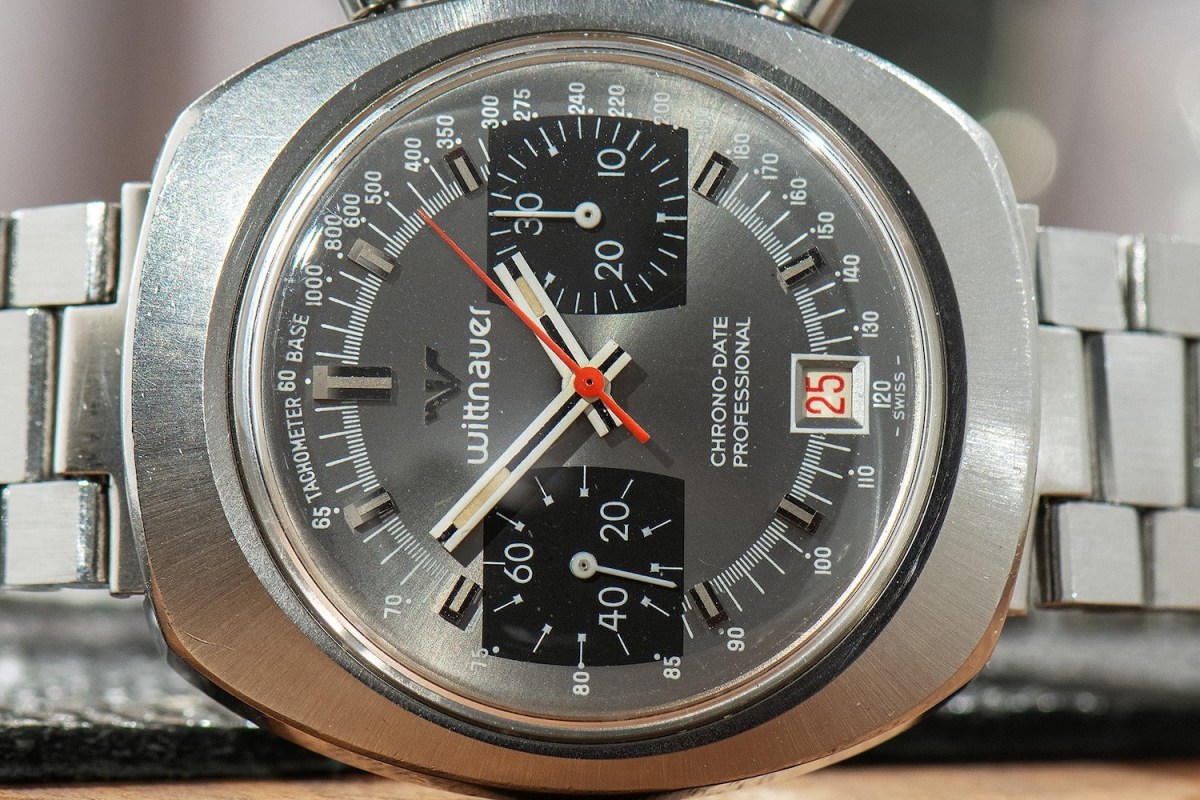
Even if you spend months combing eBay, it’s doubtful you’d find such a steal: This cushion-cased steel chronograph from American-founded brand Wittnauer oozes ‘70s charm. It includes a matching, signed multi-link bracelet and is powered by a classic hand-wound caliber from Valjoux, all for just $1,300. The “exotic” dial is enough to elicit a squeal of delight from collectors. Featuring an outer tachymeter scale, dual “squircle” chronograph registers in black and a handsome gray sunburst-pattern main dial overlaid with crisp white printing, it’s a thing of disco-era beauty. In lovely condition, it’s a perfect entry point into the world of vintage chronos.
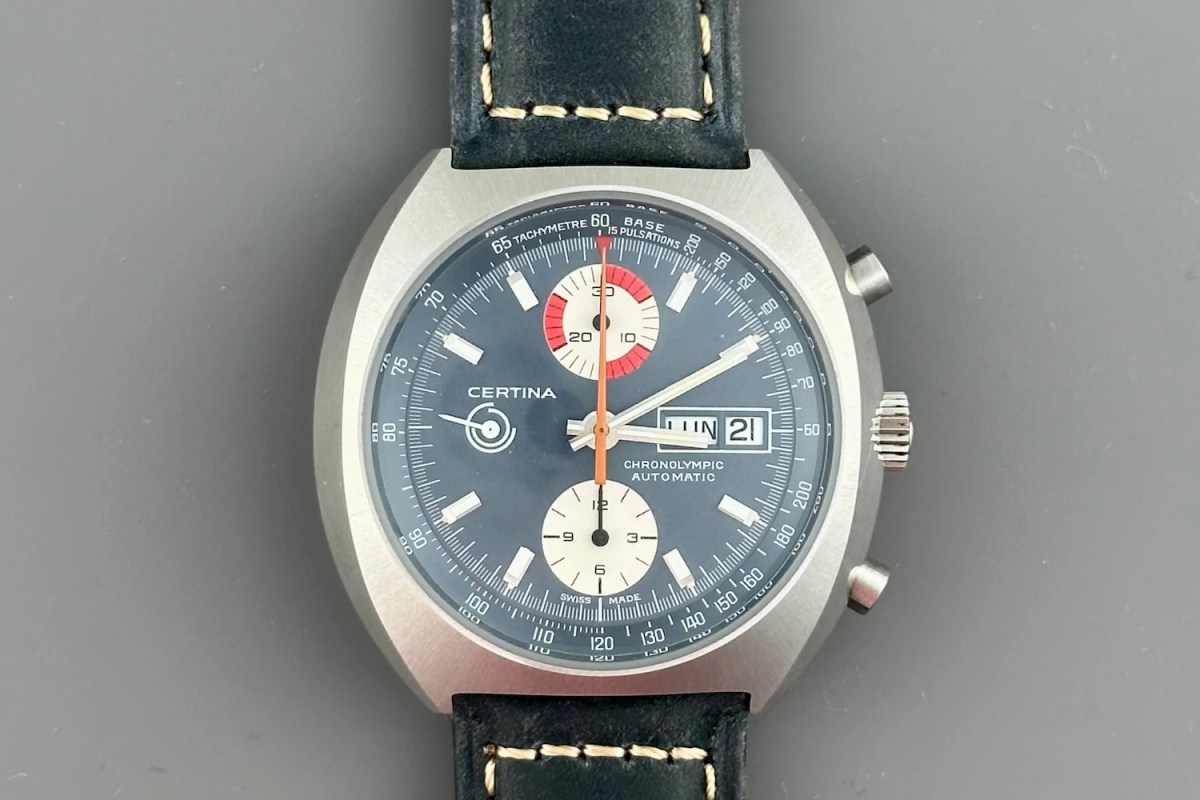
This absolutely minty Certina Chronolymic is proof there are truly wonderful barn finds if you’re patient enough to look. Powered by the famous Valjoux cal. 7750, it mixes the convenience of automatic winding with a dual-register chronograph and a day-date display, making for an incredibly utilitarian package that tool watch devotees are sure to love. Housed in a radially-brushed, 43mm tonneau-shaped case, it also features dual tachymeter and pulsations scales on the dial, meaning you can take your own pulse right after breaking our own land speed record. Nice, eh?
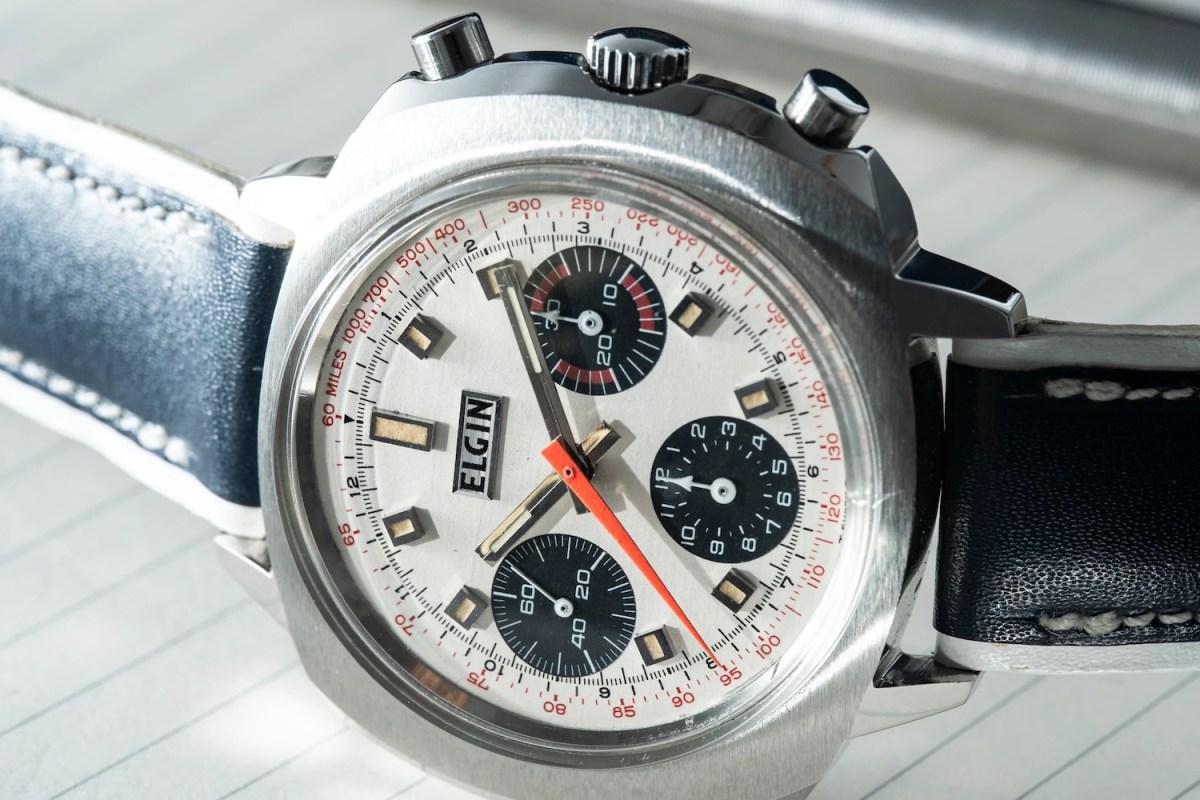
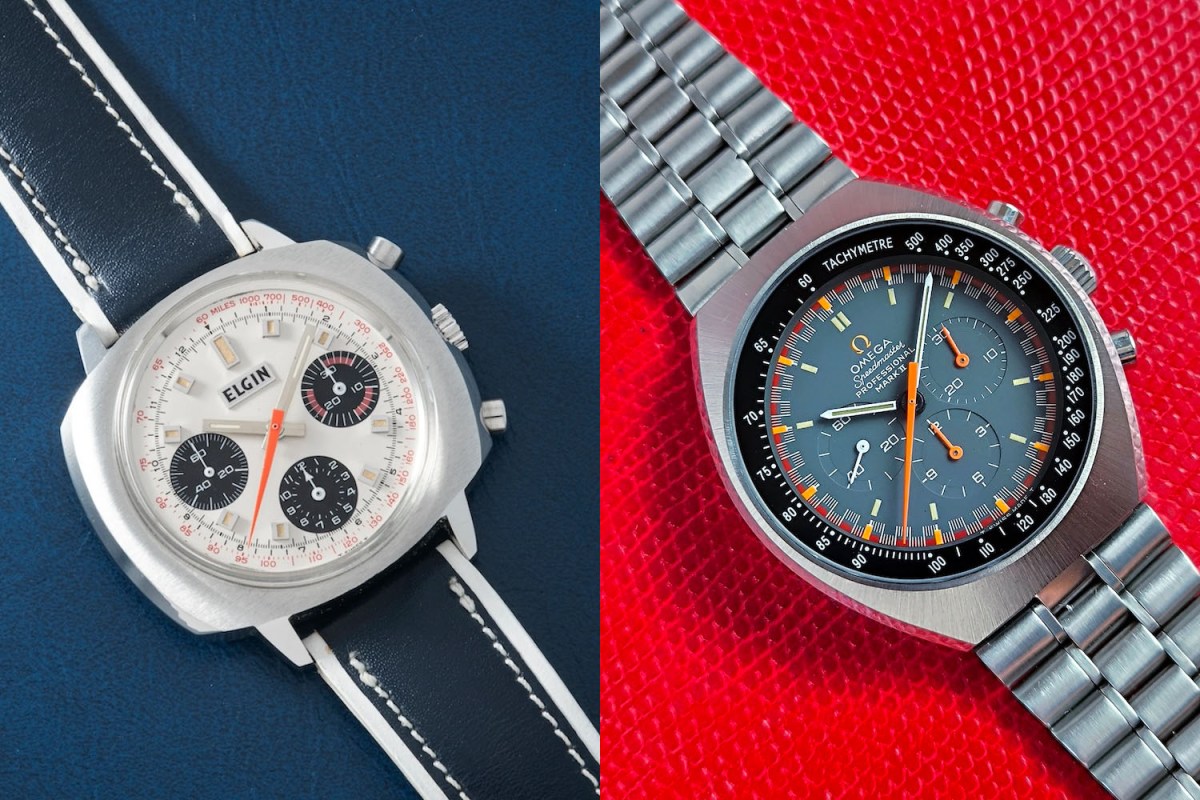
A fine example of adventurous late-1960s watchmaking, this Elgin ref. 7452 combines an oversized stainless steel cushion case with a beautiful dial and another excellent movement from Valjoux. With its protected crown and pushers and screw-down caseback, this piece was meant for hard use. The white dial, however, is a thing of beauty: Set with an outer tachymeter scale in red, it features a triple-register chronograph display with black totalizers, applied rectangular indices with plenty of puffy tritium lume and a baton handset with a neat, bright orange central chronograph seconds hand. Best of all, it comes with a period-correct Elgin leather strap and its correct presentation box.
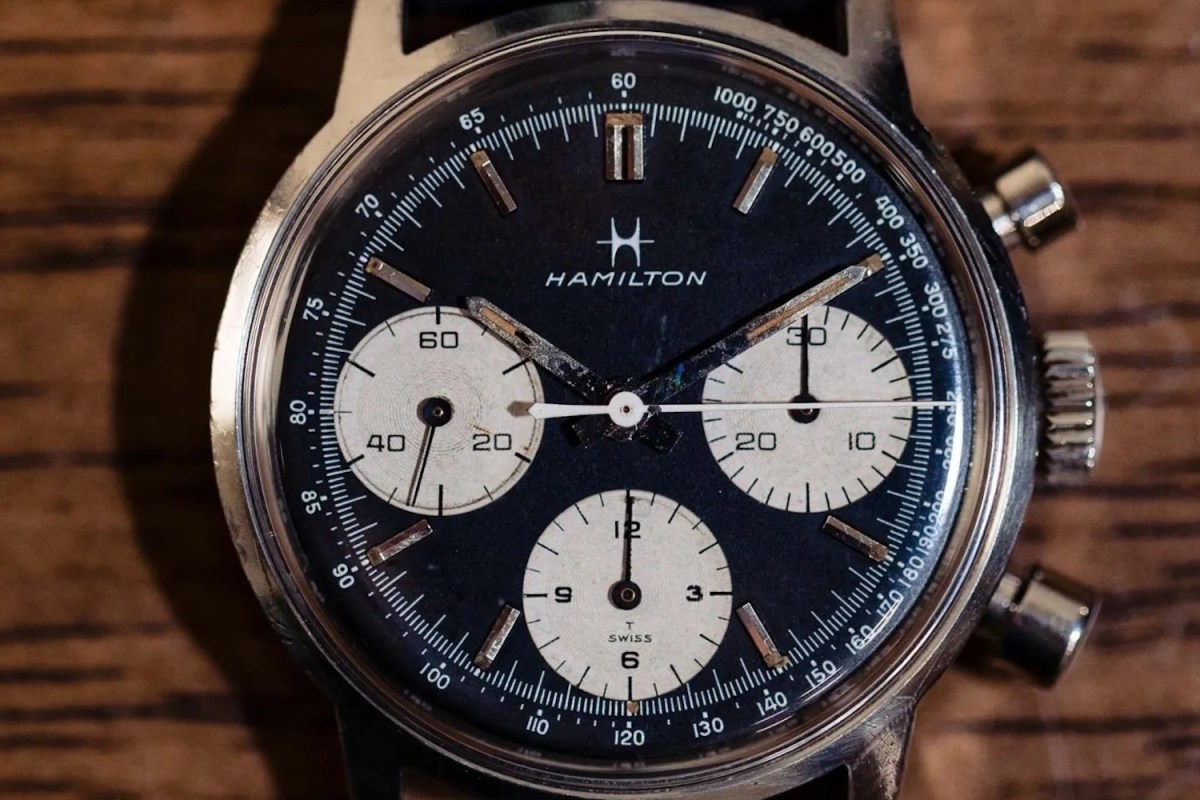
In the late 1960s, watchmaking behemoth Hamilton ceased production in America and moved operations to Switzerland, where it had purchased the watchmaker Buren in 1966. It wasn’t Hamilton, however, that produced these striking “Poor Man’s Carrera” chronographs but rather Heuer, which made them for several companies including Clebar, Zodiac and Tradition. This example is a triple-register execution with a “reverse-panda” dial that collectors love: With a black background offset with silvered totalizers, it mirrors the design of other classic ‘60s models like the Heuer Carrera and the Rolex Cosmograph Daytona.
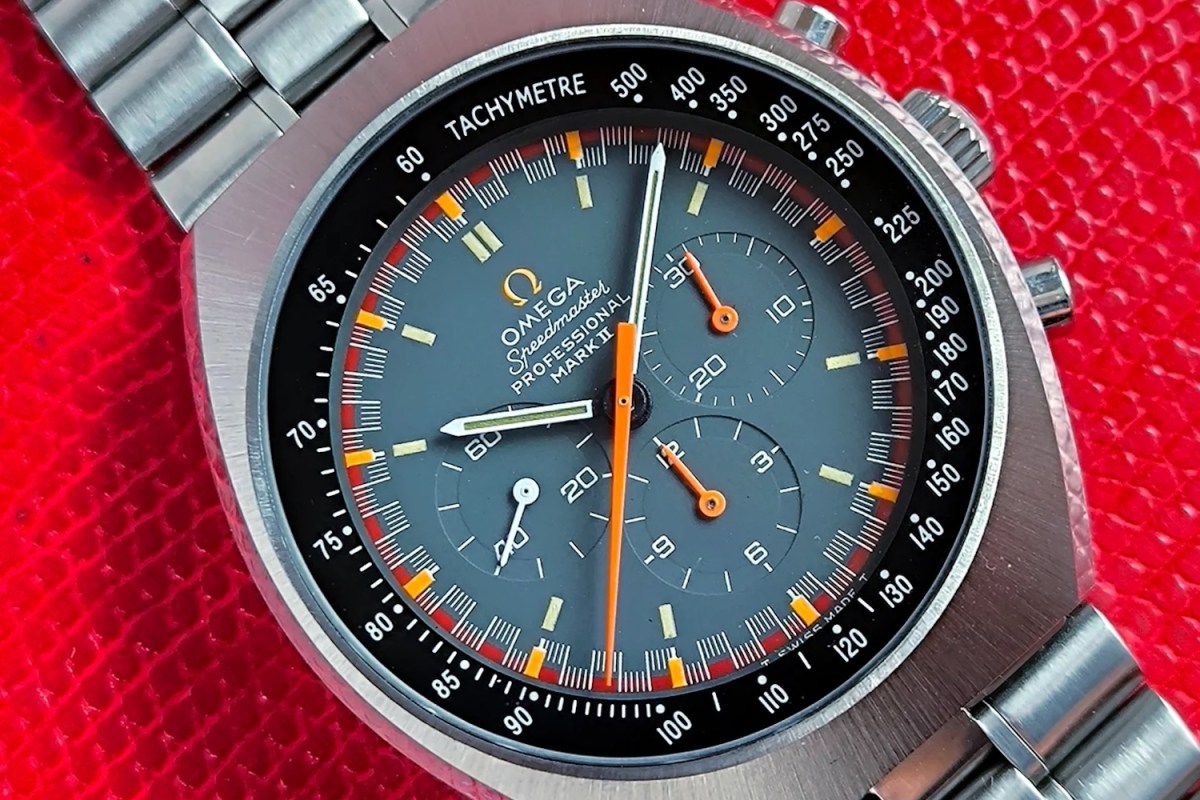
If you think the “Moonwatch” is the only Speedmaster worth owning, think again. Someone searching for an off-kilter and affordable Speedy would do well to investigate the Mark II. Introduced in 1969, it carted over the Moonwatch’s hand-wound cal. 861 movement to a chunky, 42mm tonneau-shaped case. Moving the tachymeter scale from the external bezel — now absent — to the watch’s dial, it added a colorful 1/5th-seconds track to certain “racing” variants that are now beloved by collectors. This particular example, paired to its correct Omega ref. 1159 multi-link bracelet, looks like it just left the factory, even though it dates to 1974.
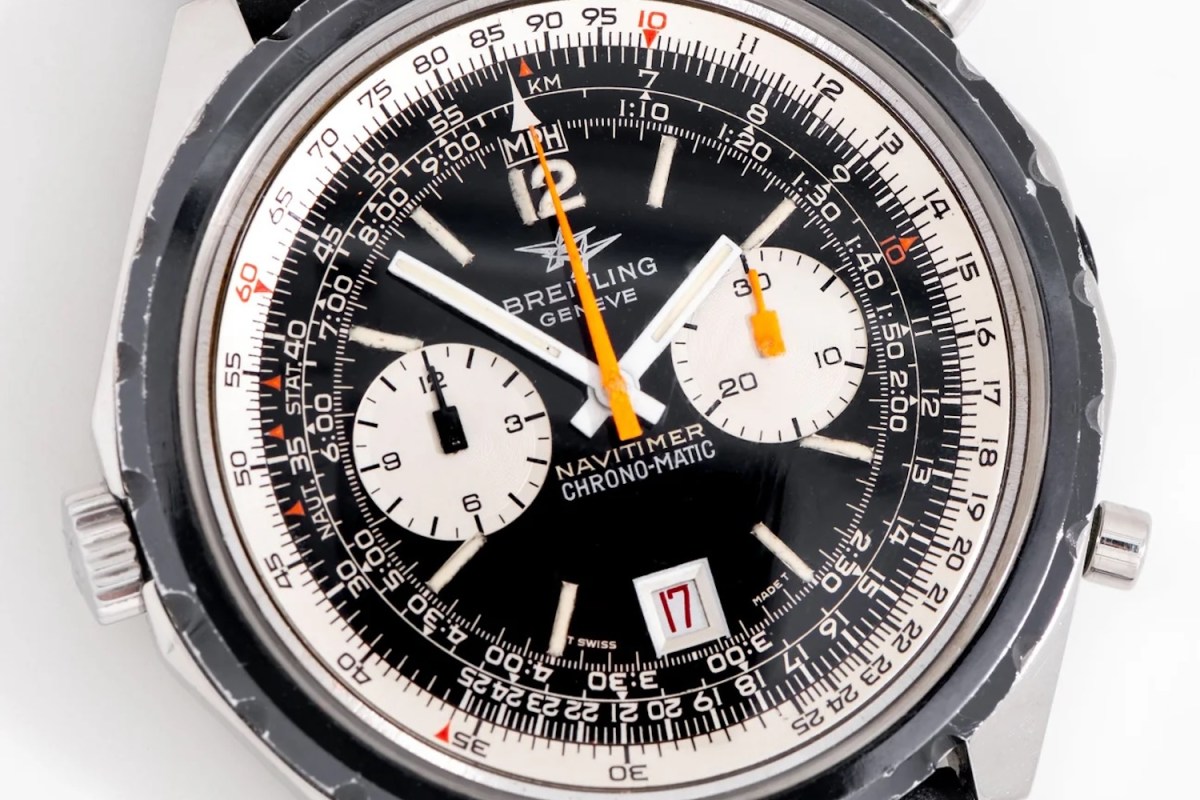
To misquote the Bard, “what chronographs may come when we have shuffled off $5,000 must give us pause.” Truly, the amount of watch for your money here is startling. Within this Breitling Navitimer Chrono-Matic ref. 1806’s absolutely massive 48mm case is the Breitling cal. 12, an early automatic chronograph movement developed with a consortium of brands based on a Buren micro-rotor design. This powers a dial with both 30-minute and 12-hour totalizers and a date window, while Breitling’s signature slide-rule bezel allows for on-the-fly aeronautical calculations like fuel consumption, air speed and more. Moreover, this example is in excellent condition for its age, with clear printing and intact lume plots.
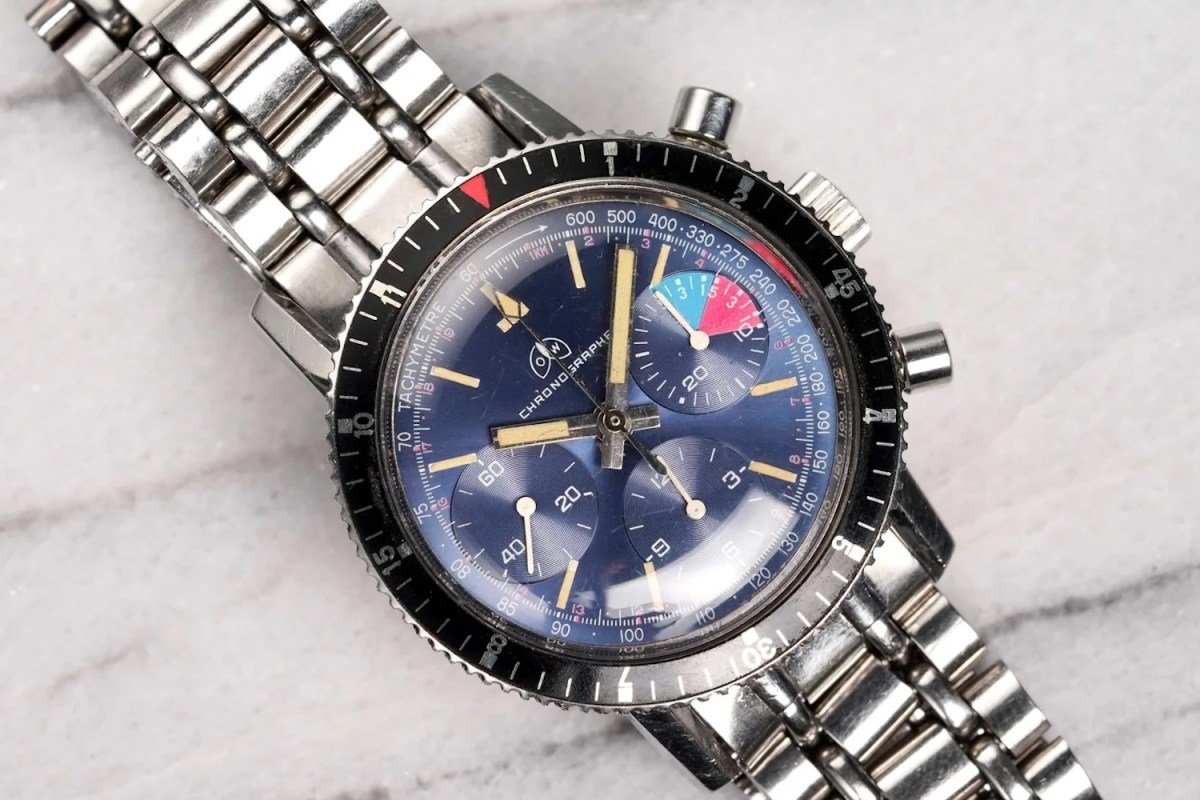
Swiss maker Ollech & Wajs relaunched to much acclaim in 2019, but the brand’s vintage wares still provide plenty of fascinating examples of midcentury watch design for the collector. This Valjoux-powered chronograph is a prime example: Dating to the late 1960s, it features a combination elapsed-time/12-hour bezel surrounding an incredibly vibrant blue-purple sunray dial. Its outer tachymeter scale and triple-register chronograph would certainly provide enough utility on their own, but the added bonus of a colorful yacht-timing feature within the 30-minute register truly seals the deal.
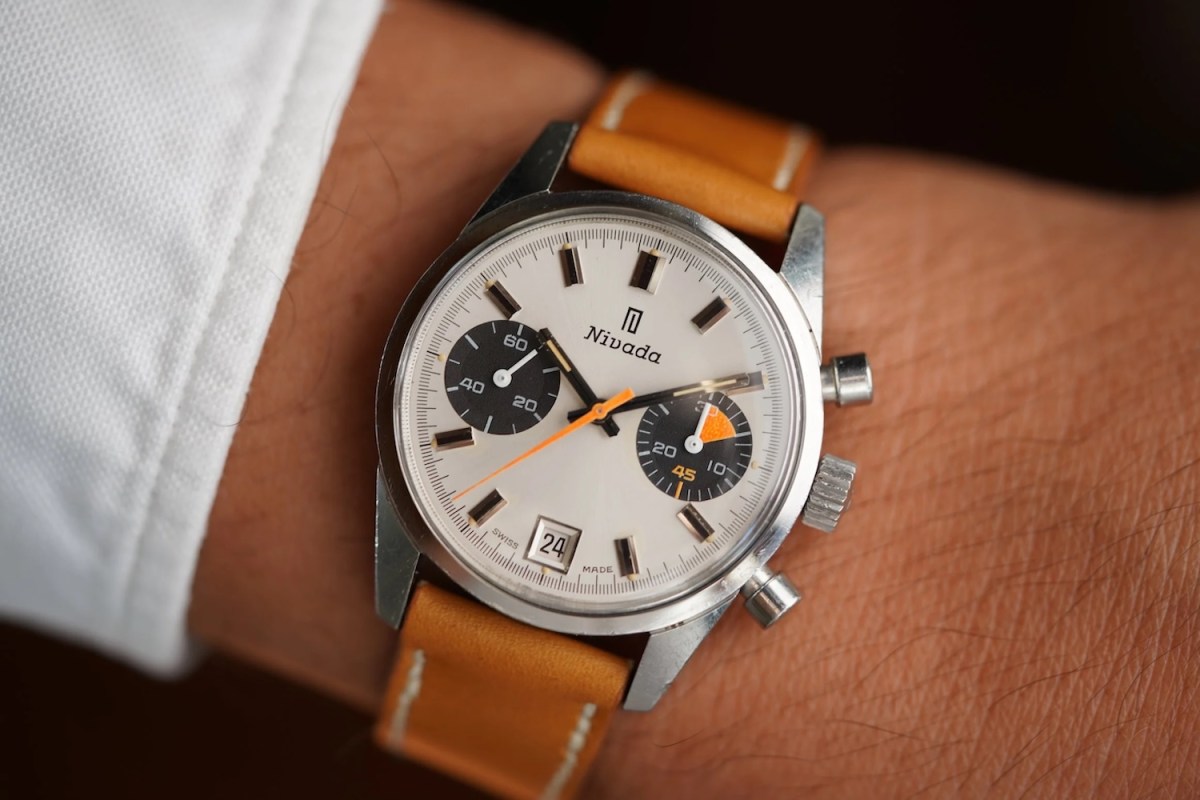
This spectacular Nivada Dato ref. 4368 is proof that if you’re patient enough, you can uncover tremendously cool, well-made pieces from under-the-radar brands that rival those from much larger, more famous marques. Measuring 3.5mm in stainless steel, this beautifully proportioned piece from the ‘60s boasts a simple, dual-register chronograph display and accompanying date window above 6 o’clock. But the devil is in the details, particularly with regards to the orange accents featured throughout the 30/45-minute totalizer and central chronograph seconds hand. When combined with perfectly preserved tritium lume plots, it makes for a wonderful design that looks contemporary, even today.

More Like This

The world of men’s style, from the streets of NYC to the showrooms of Milan, run down weekly by writer and photographer Christopher Fenimore.