Already an innovator in dashboard instruments and chronograph production, Breitling debuted the Chronomat in the early 1940s with a brilliant creation — a bezel featuring a logarithmic scale that, when used in conjunction with the watch’s chronograph function, could perform a wide manner of computations and calculations. Conversion from fuel consumption; distance; conversion from kilometers to miles; climb rates — the Chronomat could do it all, making it a supremely useful tool for the early aviator. When combined with a typical chronograph scale such as a tachymeter, pulsometer or telemeter, it became a sort of wrist-worn mechanical computer.

8 of the Best Vintage Watches From Universal Genève
Ahead of UG’s resurrection under Breitling, let’s revisit some of the classics from this beloved brandA major upgrade came in the early 1950s when Breitling carted over the slide rule bezel and chronograph function to a larger 41mm steel case for AOPA, the U.S. Aircraft Owners and Pilots Association. Originally distributed only to AOPA members, the brand began offering the new Navitimer for sale to the public in 1954, expanding its remit beyond pilots to all sorts of professionals in need of an excellent tool watch. Powered by the three-register, hand-wound Venus 178 movement, this new model proved to be an excellent, lasting design — one that the brand would produce in hand-wound, automatic and quartz versions and that it still produces today. Adopted beyond its intended audience of flyboys and commercial pilots, the Navitimer even found its way onto the wrists of such cultural icons as Serge Gainsbourg and Miles Davis.
As Breitling has been manufacturing the Navitimer for 70 years, there are quite a few versions out there on the market — more than we can possibly categorize here, in fact. Some of the most compelling versions, however, are those from the model’s early years, a time when it was still truly a pure tool watch rather than a luxury product. From the original 1954 “AOPA” to the mid-’60s “Twin Jet” to the first Chrono-Matic from 1969, these O.G. Navitimers are both beautiful timepieces as well as historically important executions that speak to Breitling’s importance in the greater watch industry. Spanning from 1954 through 1988, they represent some of the brand’s most compelling midcentury output.
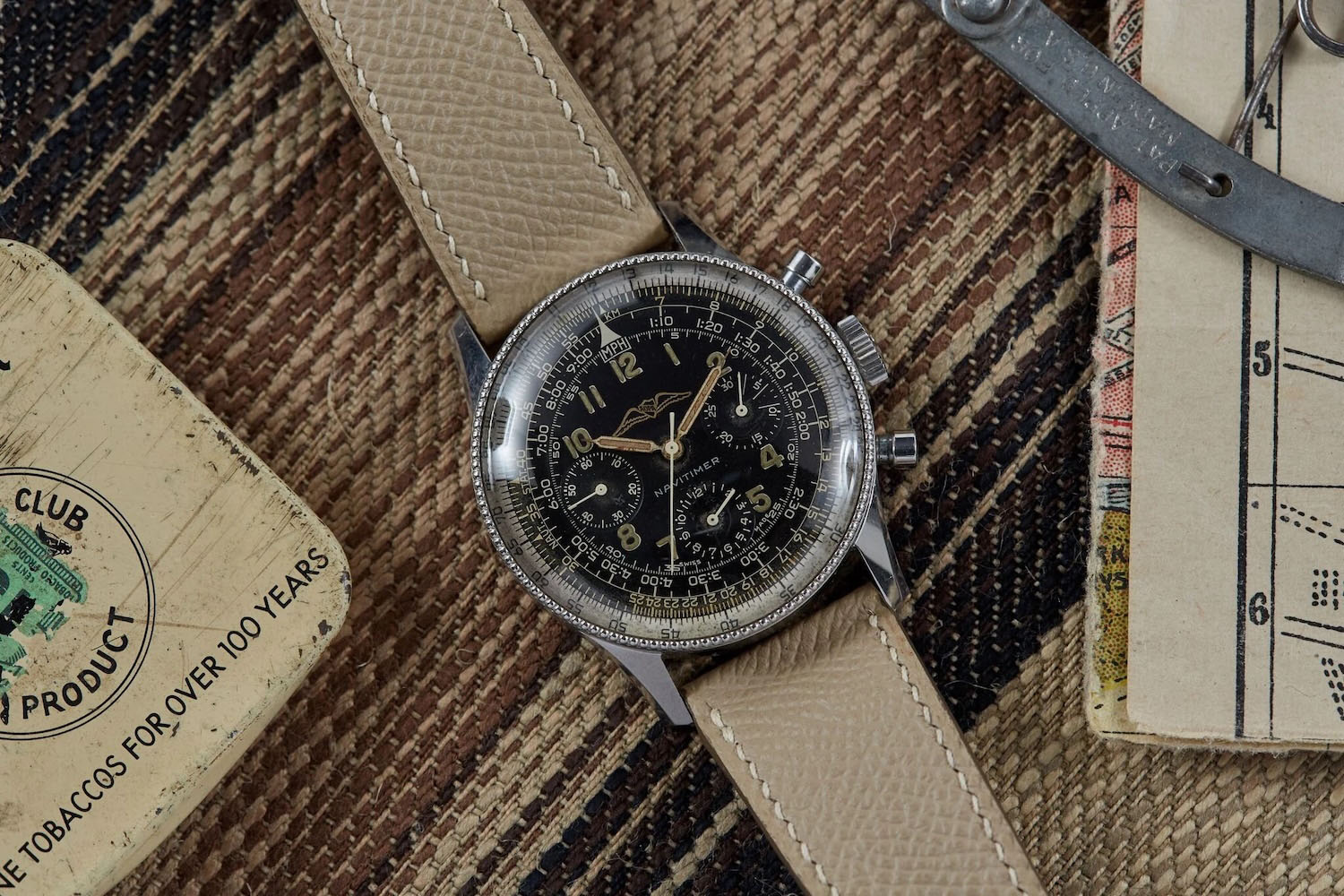
Breitling Navitimer “AOPA” (1954)
Developed for the U.S. Aircraft Owners and Pilots Association (AOPA), the original Navitimer paired the logarithmic slide rule of the brand’s Chronomat with a beaded bezel for easy manipulation, allowing pilots to calculate wind speed, fuel consumption and other crucial information. A 41mm stainless steel case ensured that the dial was large and legible enough to be read easily, while radium provided luminescence at night. Powered by a 17-jewel Venus movement and featuring 30-minute, 12-hour and running seconds registers, the dial was signed with the “AOPA” logo and was only distributed to AOPA members.
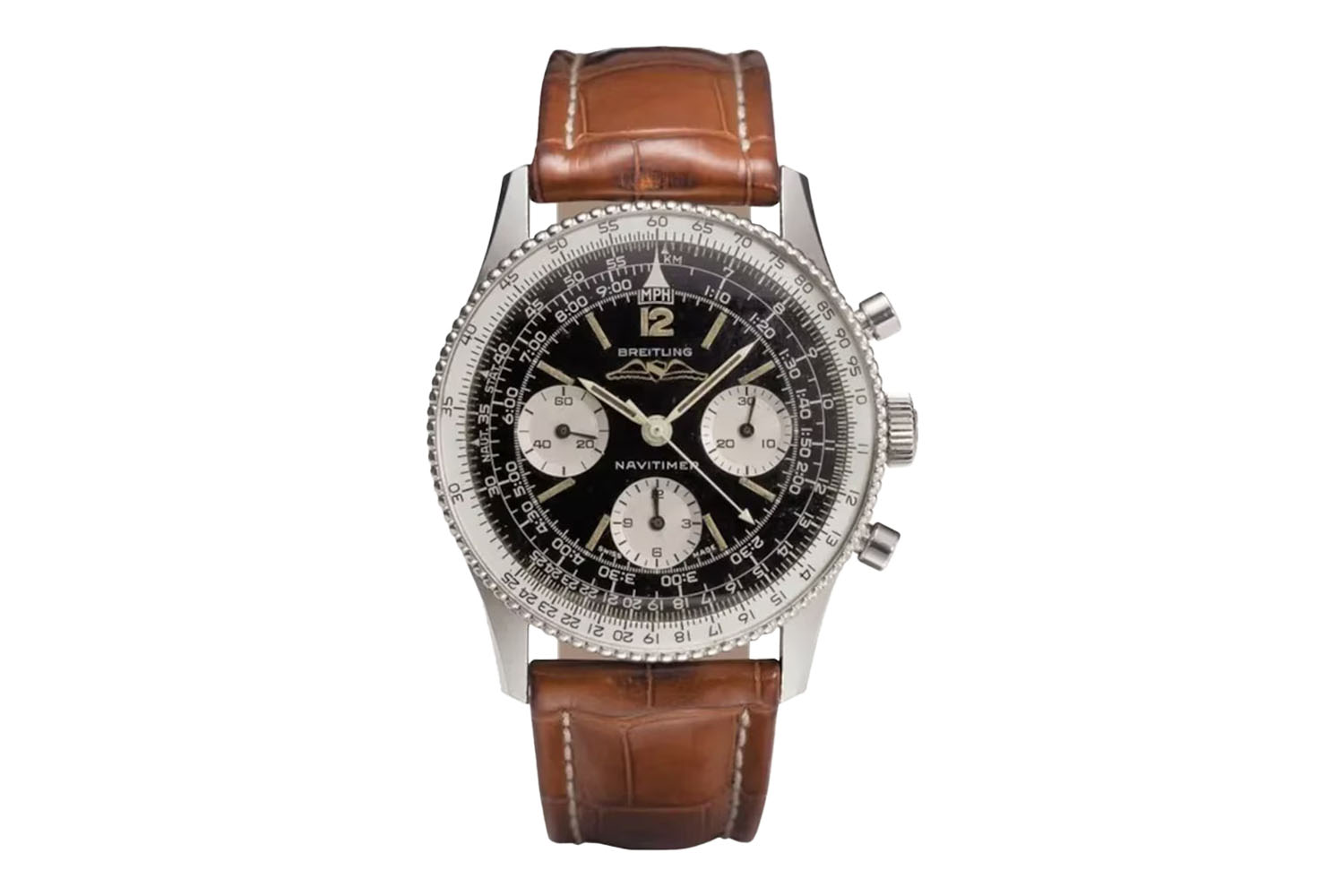
Breitling Navitimer ref. 806 (1956)
Two years after the Navitimer’s debut, the watch was commercialized by removing the AOPA wordmark, adding the Breitling name above a stylized wing logo and receiving the official reference number 806. Otherwise identical to its AOPA counterpart, the ref. 806 has since become a legendary Navitimer reference.
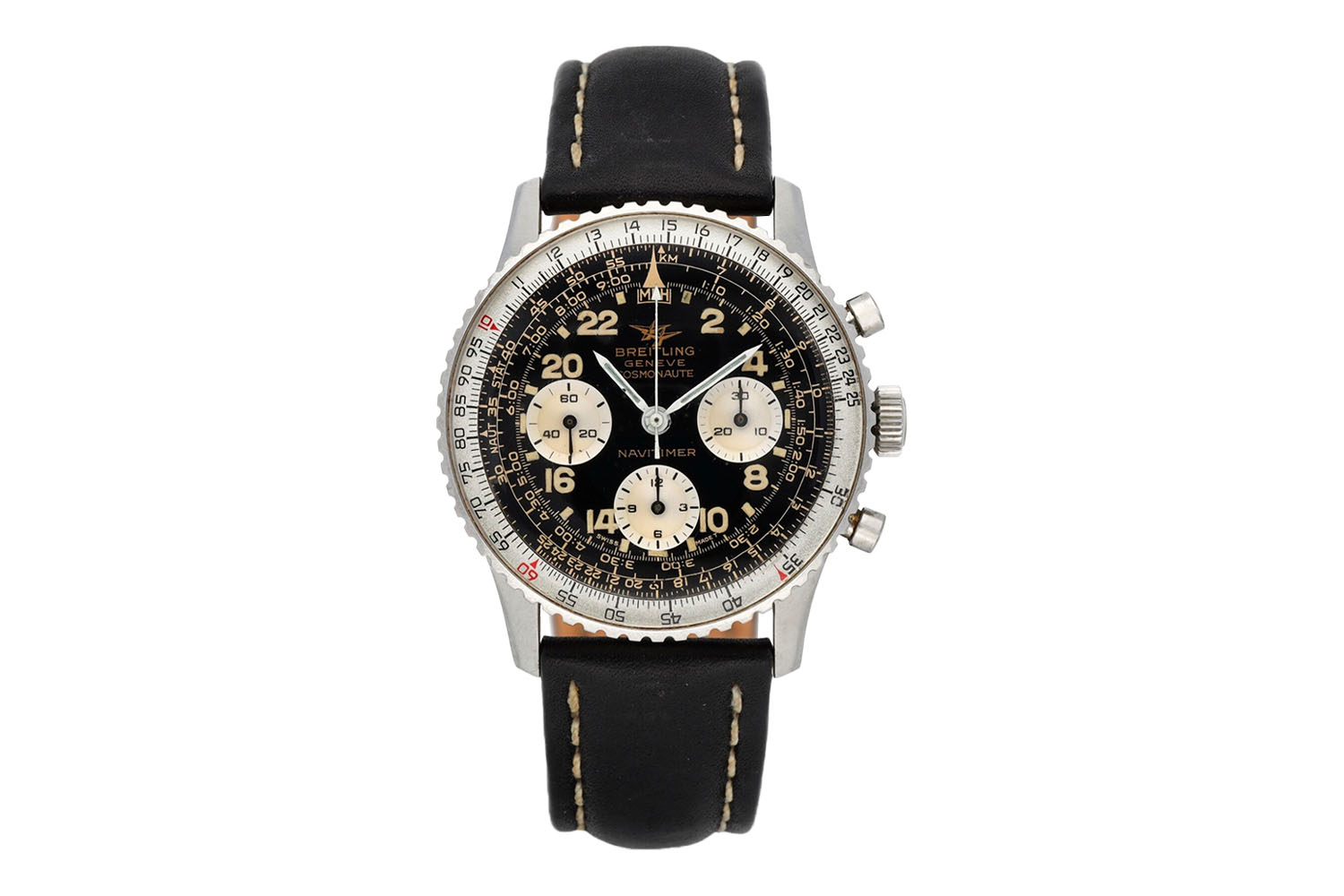
Breitling Cosmonaute (1962)
When American astronaut Scott Carpenter approached Breitling on the eve of his historic space flight, he requested a watch with several special features: namely, a wider bezel, a simplified slide rule and a 24-hour dial. Breitling made Carpenter a pièce unique version of the Navitimer that it then put into serial production following the astronaut’s safe return. Dubbed the Cosmonaute, it measured 42.5mm in stainless steel and featured the same three-register layout and (modified) Venus cal. 178 movement as the Navitimer ref. 806. A serious tool watch with an ultra-specific remit, the Cosmonaute is still produced in special versions alongside the wider Navitimer line.
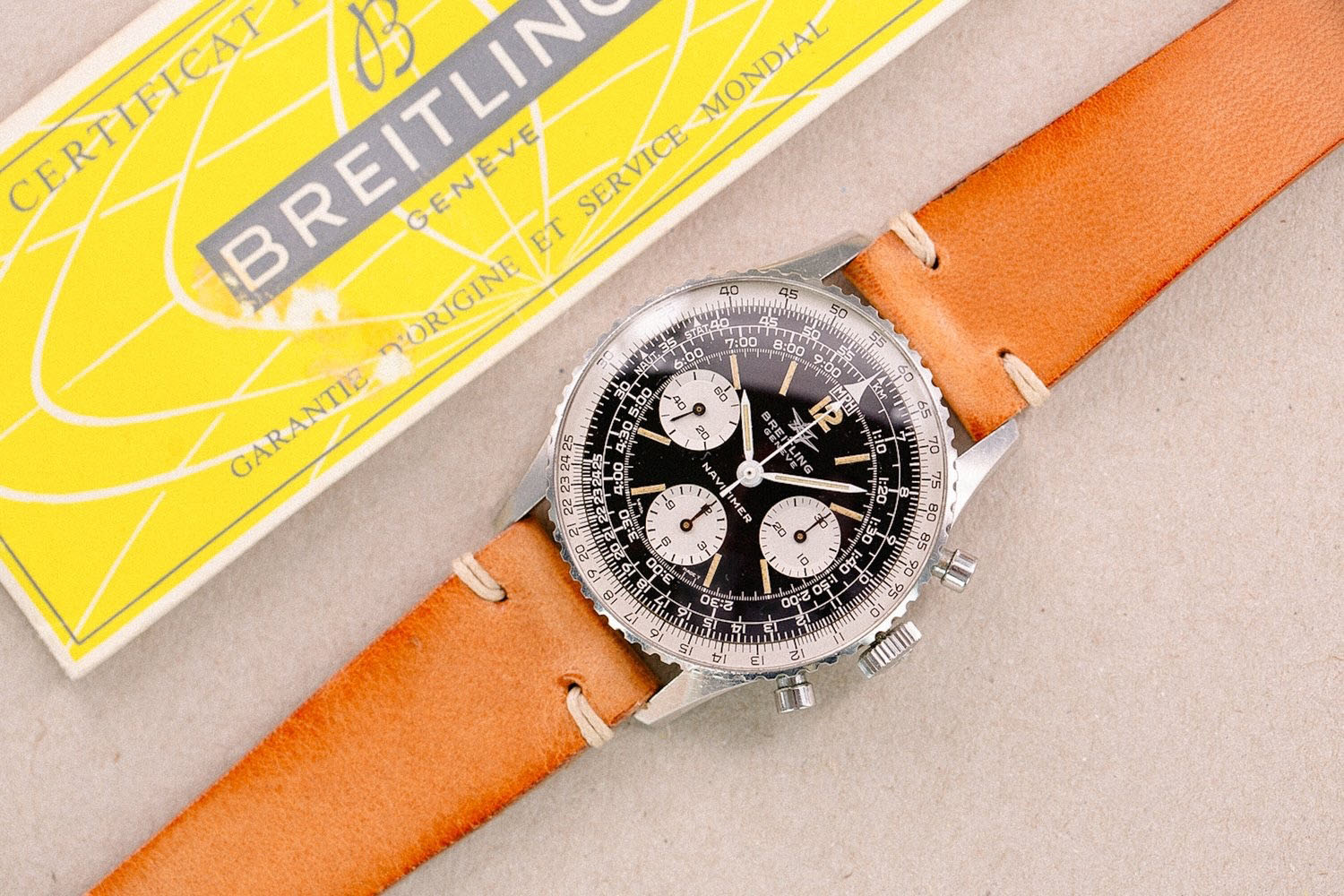
Breitling Navitimer “Twin-Jet” (1965)
In the mid-1960s, Breitling made several small but consequential changes to the Navitimer design: First, it updated the dial with contrasting white chronograph totalizers, bringing the “reverse panda” aesthetic of the Superocean to its iconic pilot’s watch. Secondly, it changed the bezel from a beaded to a serrated design. Thirdly, it swapped out the winged logo for the now-iconic “twin jet” logo of dual aircraft tails, which coincided with the rise of commercial jet air travel. This is the reference famously worn by Miles Davis on a “Bund” leather strap and seen on his wrist at a concert in Paris in 1969.
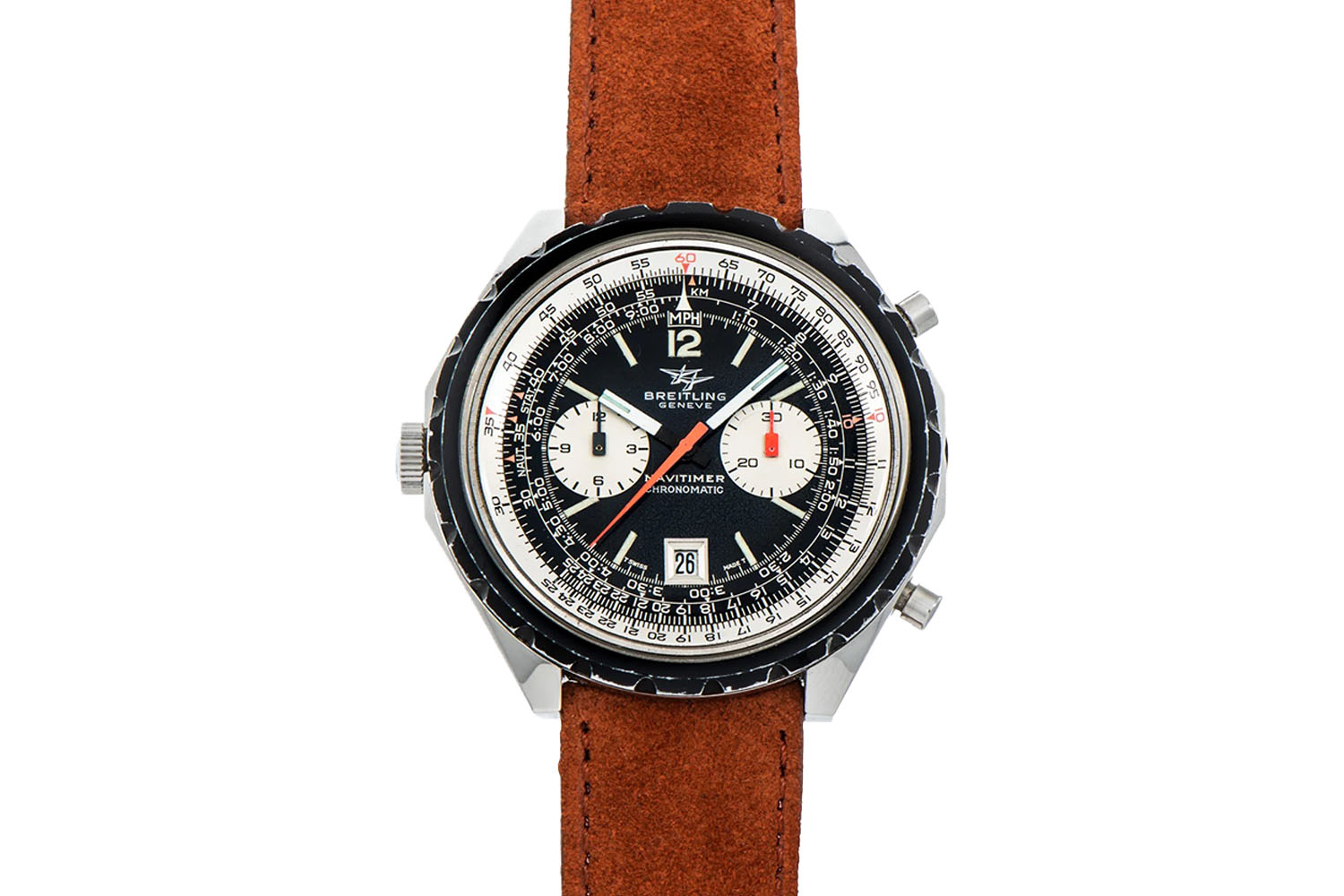
Breitling Navitimer Chrono-Matic ref. 1806 (1969)
Part of the race to develop the world’s first automatic chronograph movement, Breitling partnered with Hamilton-Buren and Heuer-Leonidas in the design of the famed Calibre 11, which it introduced in 1969. This unique automatic movement — which featured a chronograph module superimposed atop an automatic base caliber — was quickly adopted to power multiple automatic Navitimers, both of which funkified the more reserved ‘50s original. The ref. 1806, a 47mm behemoth in stainless steel, features dual pump pushers on the right and a time-setting crown on the left. Its dial, covered in scales just like that of the ref. 806, features dual chronograph totalizers and a 6 o’clock date window.
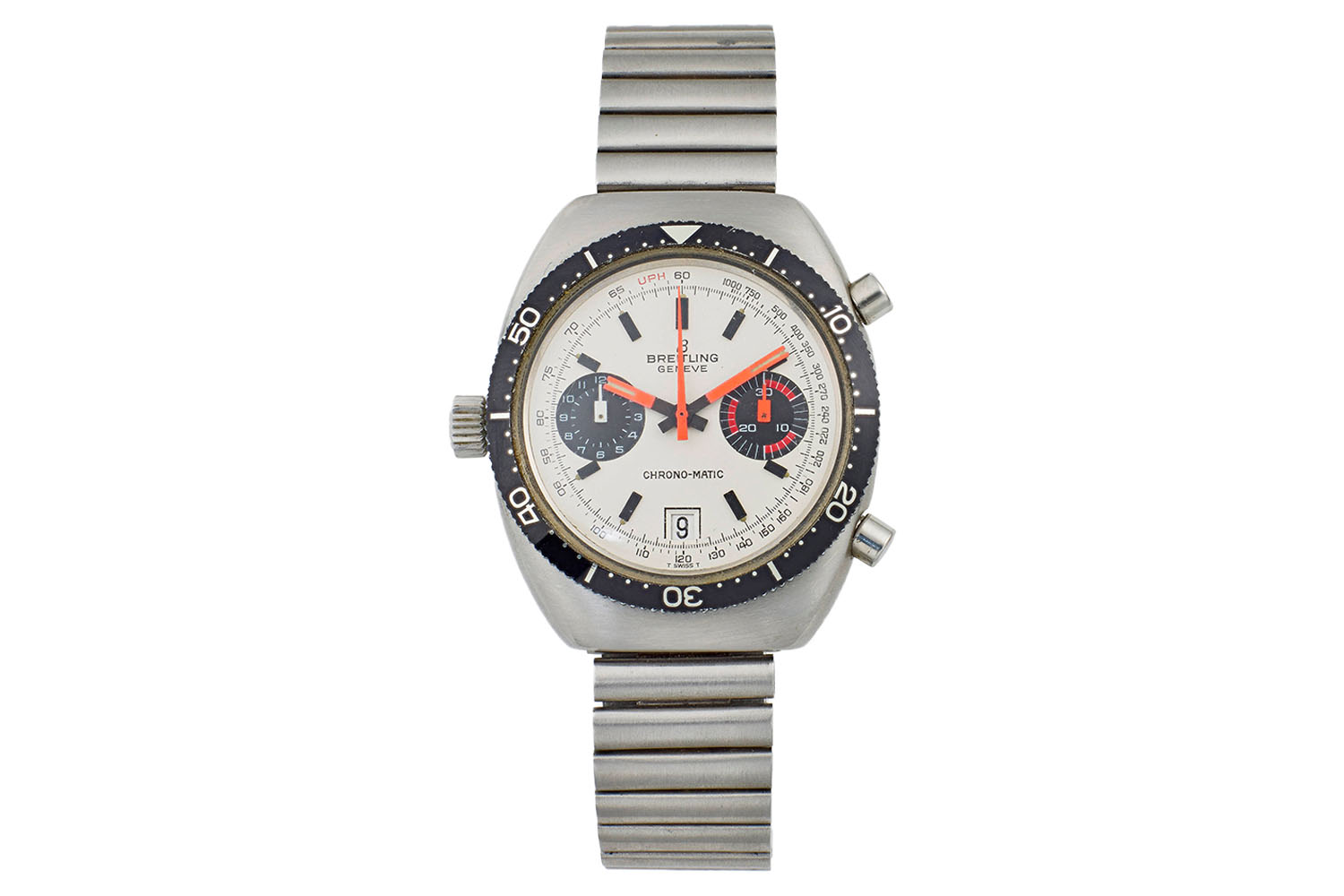
Breitling Navitimer Chrono-Matic ref. 2112 (1969)
While not quite as ungainly as its 47mm cousin, the ref. 2112 was nevertheless still a departure from the round-case 41mm ref. 816. Measuring 37.6mm and housed in a tonneau-shaped case with hooded lugs, it was powered by the brand’s automatic Calibre 11 movement with right-hand pushers and left-hand crown. Outfitted with a rotating timing bezel, it featured an inner timing scale surrounding a dual-register chronograph layout, a 6 o’clock date window, applied indices and a luminous, colorful baton handset. (Certain references featured offset chronograph totalizers and an offset date window.)

Breitling Just Revamped Its Dive Watch Collection
The Superocean Heritage comes in a fresh new range of sizes, colors, and movements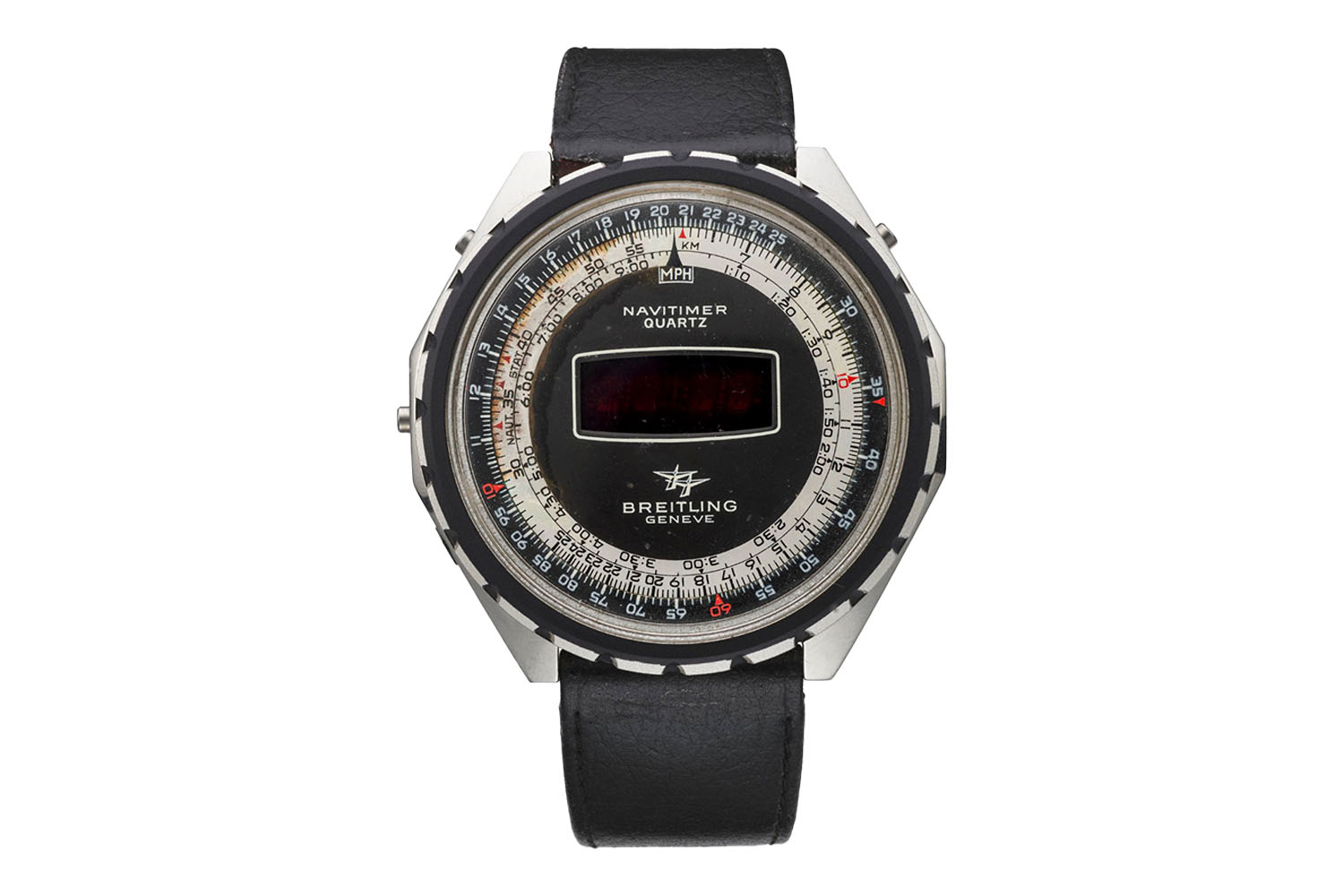
Breitling Navitimer Chrono-Matic ref. 8806 (1973)
In addition to the tonneau-shaped versions, the Navitimer Chrono-Matic was also made in the conventional round case shape inspired by the ref. 816. Measuring 41mm in diameter in stainless steel or 18k yellow gold, it retains the serrated bezel and multiple timing scales of ‘50s/’60s examples but ditches a third chronograph totalizer in favor of the automatic Calibre 12’s 6 o’clock date window. And while certain examples feature the classic reverse-panda colorway, others boast bright orange seconds and minute counter hands in a further embrace of ‘70s disco styling.

Breitling Navitimer Quartz ref. 9106 (1976)
Breitling embraced the Quartz Crisis by simultaneously introducing both LCD and LED versions of the Navitimer. The ref. 9106 LED model, contained in a 49mm stainless steel case with a matching multi-link bracelet, featured the model family’s famous serrated bezel with multiple timing scales — in the center of the dial, however, was a rectangular LED screen in place of the analog model’s handset. In addition to displaying the time, it featured a chronograph function, date function and a split/lap time function. When combined with the computational bezel, the Navitimer Quartz could be used to calculate a wide variety of everyday tasks.
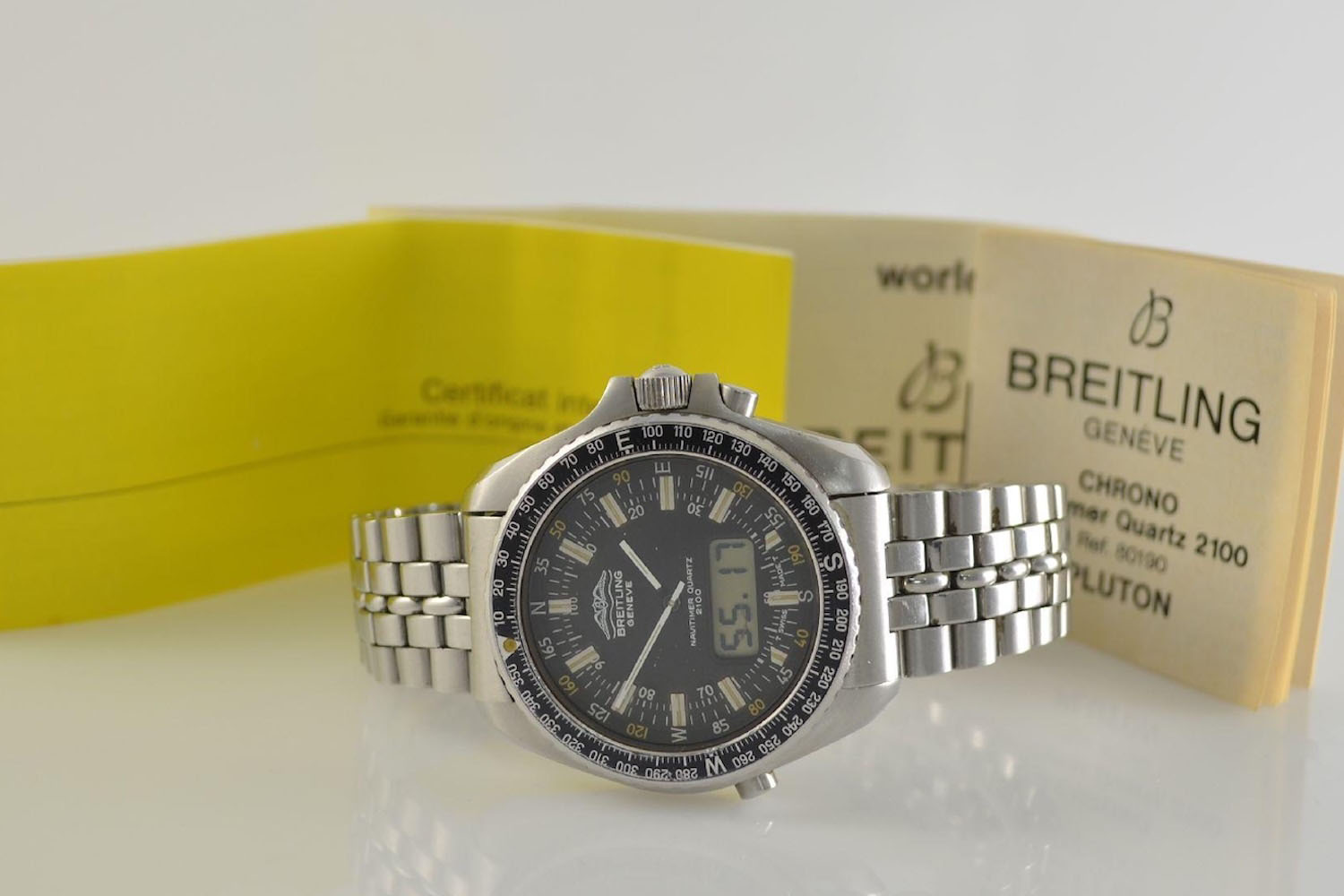
Breitling Navitimer Quartz Pluton ref. 80190 (1980)
In 1980, Breitling introduced the Pluton ref. 80190, an “ana-digi” watch combining both an analog time display with an LCD readout. Housed in a chunky, polished steel case with crown guards, 4 and 8 o’clock pushers and a compass bezel, it mixed vintage Navitimer inspiration with the then-novel idea of an LCD screen: Around the periphery, the compass headings and a decimal scale allowed for on-the-fly calculations, while luminous applied indices, a baton handset and the aforementioned LCD readout above 6 o’clock provided a manner of different timekeeping functions.

Breitling Navitimer Jupiter Pilot ref. 80975 (1988)
The Navitimer Jupiter Pilot ref. 80875 describes an analog-dial Navitimer in the classic mold powered by a quartz movement — a Breitling cal., 59 (Miyota 3S10), more specifically. Produced from 1988 through 1992, it was housed in a round 41.5mm stainless steel case with a 4 o’clock crown and triple chronograph pushers at 2, 8 and 10 o’clock. The bidirectional crown could once again be used for complex computations, while triple-register chronograph displays help track elapsed time. Contrasting subdials and plenty of lume on the sword hands and applied indices made for a legible display.

More Like This




The world of men’s style, from the streets of NYC to the showrooms of Milan, run down weekly by writer and photographer Christopher Fenimore.