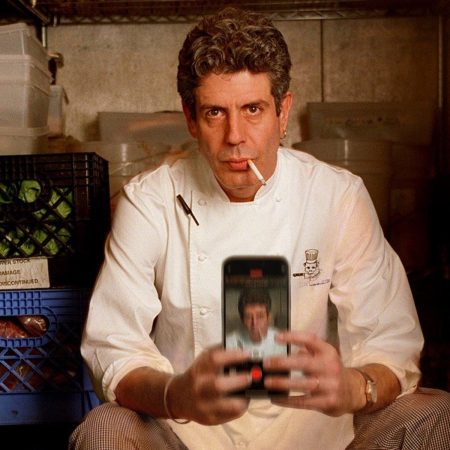
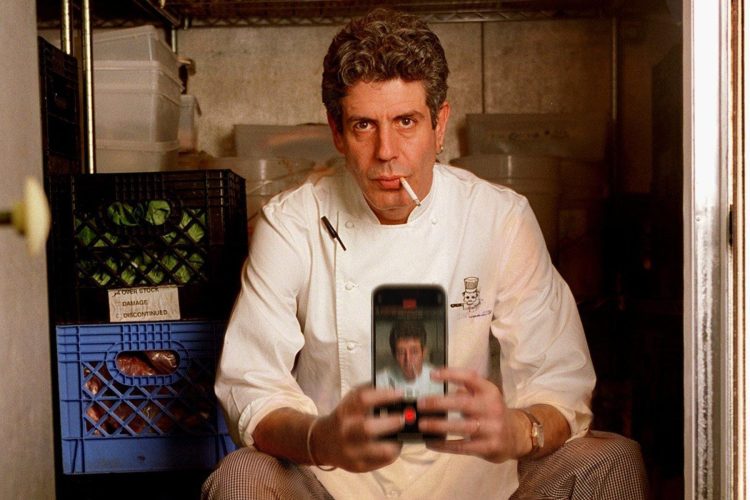
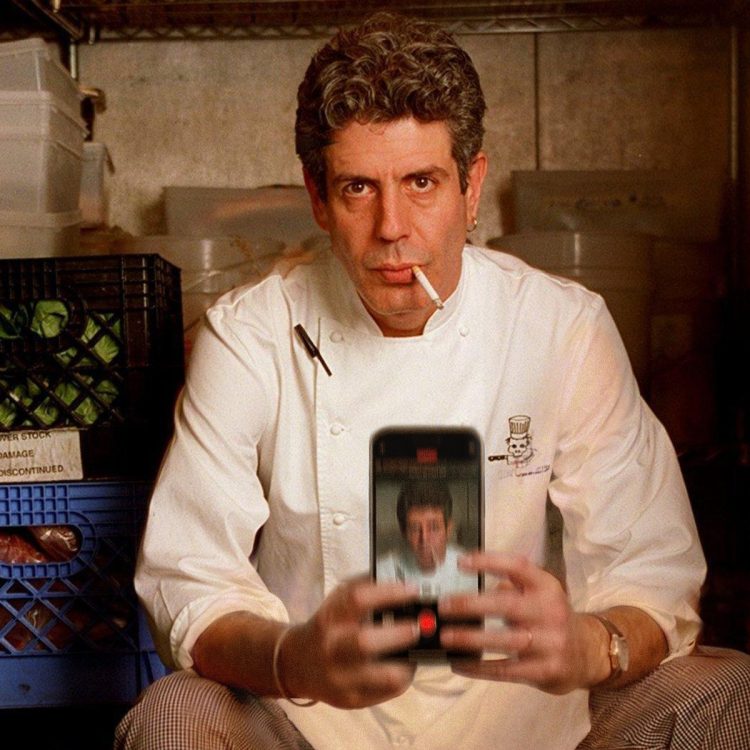
There are few labels cringier than being dubbed a “foodie.” It’s ironic how earnest the designation has become, given that the term supposedly asserts a person’s taste. Still, whole personalities have been built on the title: Anthony Bourdain helped usher the idea into the mainstream, defining the modern foodie as someone both curious of the world and its diverse cuisine, and who is willing to venture out into it.
Another crucial element of the foodie is that they are, in general, a hobbyist. Rarely a formal critic and typically without a formal culinary background, the foodie is someone who seeks out new restaurants for pleasure and curiosity. It’s often impossible to keep that inquisitiveness to themselves — that’s why huge swaths of social media are devoted to chronicling the act of dining out (hey, we don’t judge; we do it ourselves).
Even if you don’t call yourself a foodie, let’s admit it: you probably are one. Everyone eats, and everyone has opinions on the places where they go out to eat, no matter how unrefined that criticism is. That’s what Beli, the restaurant-rating app that caught fire with Gen Z and Millennials this year, is banking on: the simple fact that you eat makes you — and everyone in your orbit — a foodie.
American Menus Are Getting More Unpronounceable (for the Better)
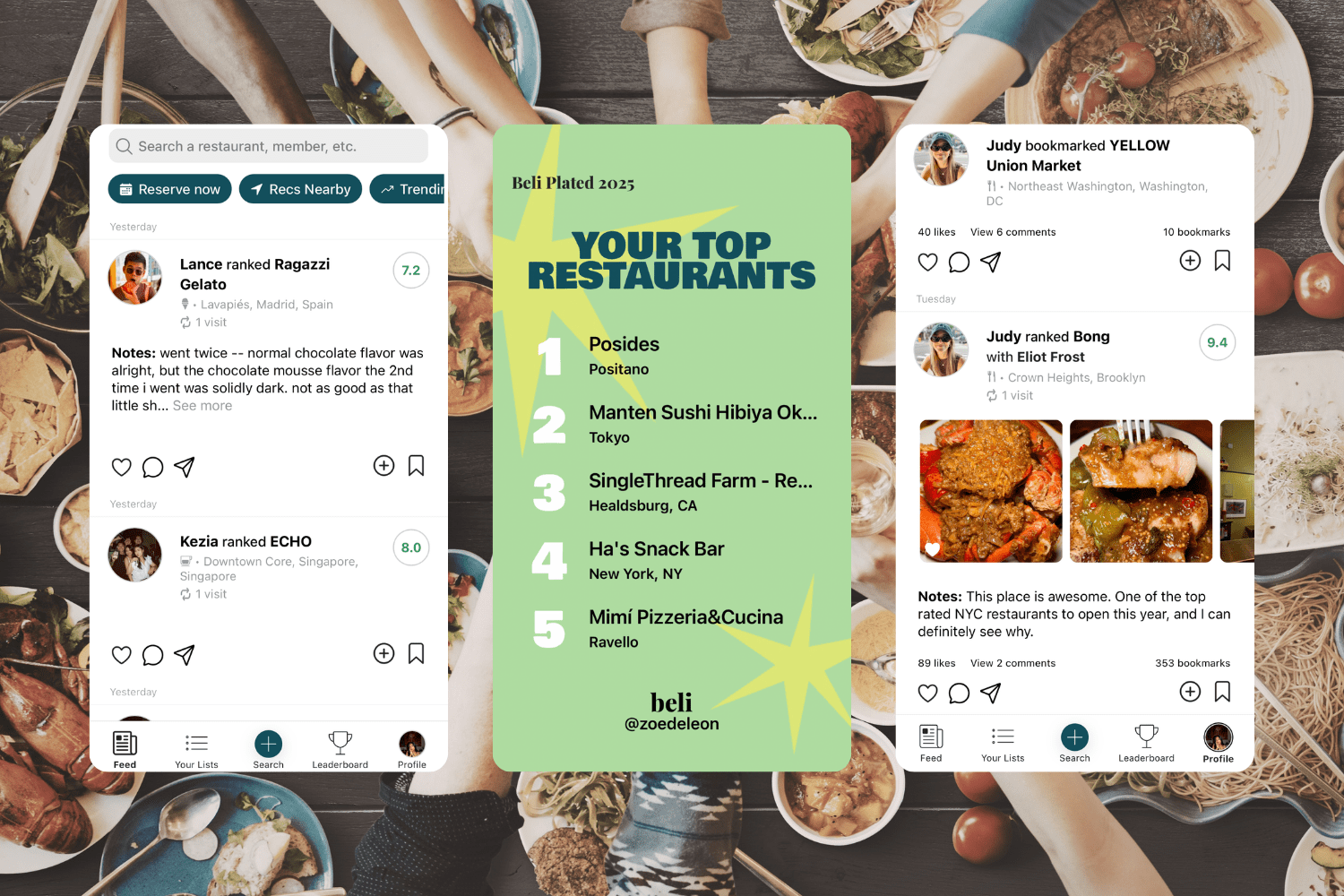
Once defined by gateway dishes like pad thai and pho, Southeast Asian restaurants are boldly showcasing nuance and regionalityLaunched in 2021, Beli sits at the intersection of social media and community recommendation. Users log restaurants — as well as bars, bakeries and cafes — they’ve been to and can flip through where their friends have been. Over time, the algorithm offers recommendations tailored to users’ preferences. Think of it as a cooler, more useful Yelp. Or better yet, the restaurant equivalent to Goodreads.
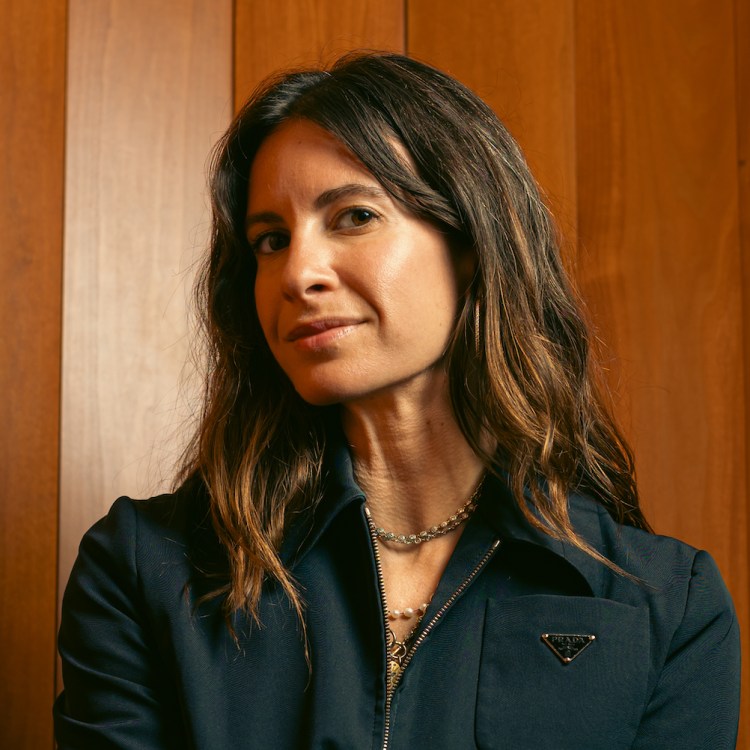
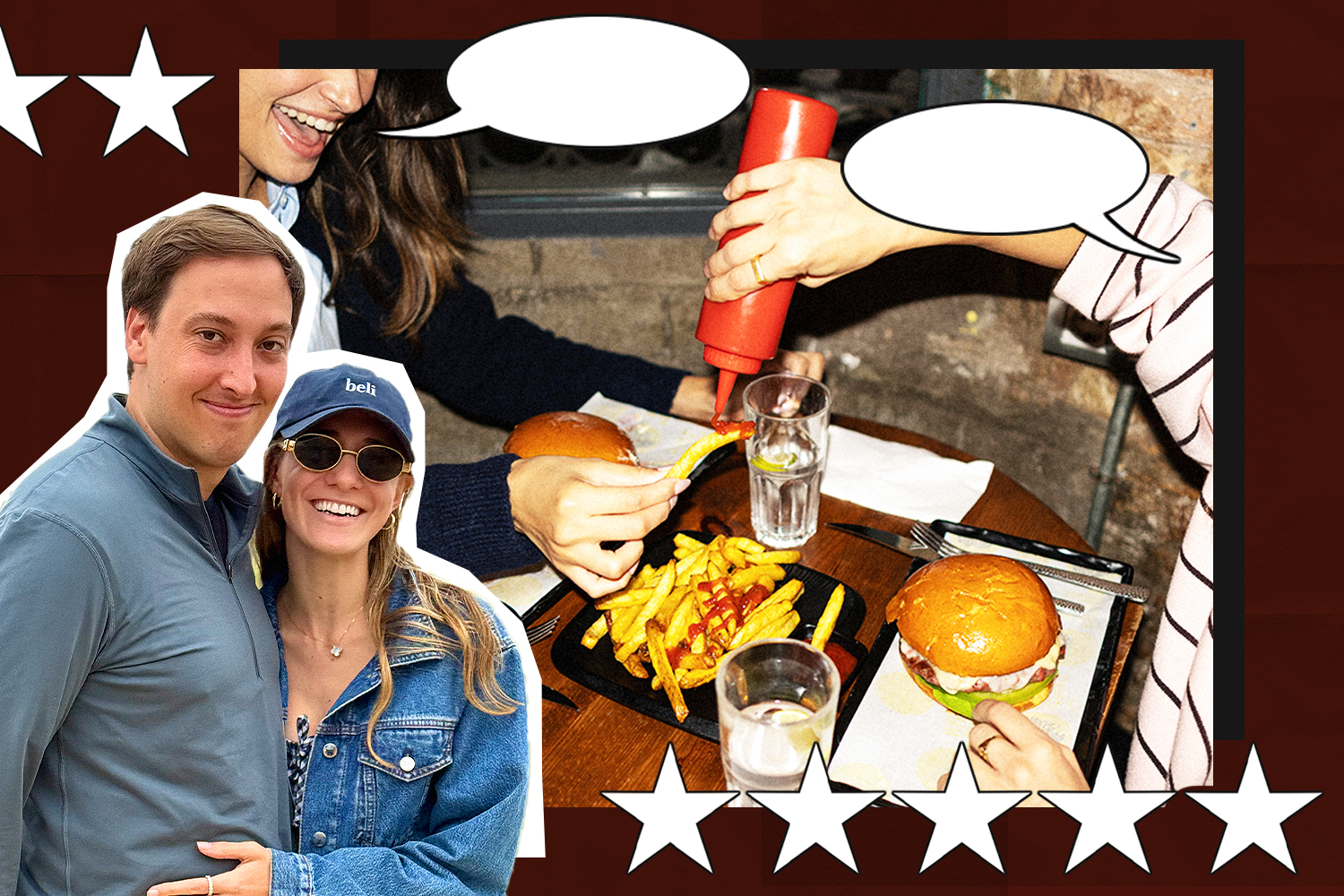
“We were just so obsessed with restaurants and we wanted to build a solution to our own problem,” Judy Thelen, cofounder of Beli, tells InsideHook. Thelen and Eliot Frost, her cofounder and husband, built their relationship around trying new restaurants. “We had this massive Google Map [of restaurants]. It was ranked and color coded. We had notes of our favorite dishes. But it became very clear to us that Google Maps wasn’t built for that purpose.”
Four years after the app’s debut, Beli boasts over 75 million restaurant ratings as of September, making it a legitimate contender to the heavyweights that are Yelp and Google Reviews.
Dinner and a Data Trail
As two unapologetic foodies, Thelen and Frost felt that food discovery should feel more human. “We were going to restaurants that had really good critical reviews, but we just weren’t happy with them ourselves,” says Thelen. She created the app with Frost while the two were at McKinsey and Harvard Business School.
Unlike legacy review sites or editorial lists, Beli doesn’t try to be authoritative. With their shared background in finance and tech, the couple offered a new design: instead of critics, influencers or anonymous haters, users could rely on friends to flood the feed with their latest finds. “That was the idea for Beli,” says Frost. “Let’s bring together all the opinions that matter to you: yours, your friends’ and then ultimately personalized recommendations.” You’re never suggested “posts you might like” or sponsored content — you’re not even shown ads.
“I do think people feel a stronger motivation to share their favorite places with their friends,” Frost adds. The couple emphasizes that core to the app is the idea that taste is personal. “Someone should be able to put out their rating and opinion and not be worried about someone else going ‘That’s wrong.’ Because there’s no right or wrong.”
The result is a sounding board reminiscent of a time when social media was personal and, above all, fun. Scrolling on my own Beli feed, I always know that I’m going to leave it with a new recommendation, or at least a good laugh.
Here’s a recent mix of opinions in my own feed: Amelie, 22, shared highlights from the Four Horsemen in Brooklyn: “Ambiance was stunning. Loved the yuzu vinaigrette on the salad.” Her best friend, Martina, 22, offered practical advice for Taqueria Honorio in Tulum, Mexico: “So gas but bring pesos.” Lance, 24, was more reflective on the Love in Philadelphia: “A meal for all occasions. This restaurant has seen me at my worst, my best, my ugliest, my deepest in thought.” Mario, 29, wrote “No bias” while giving his family’s Chinese restaurant, East Ocean Palace, a perfect score. Others, like Randa, 26, preferred to capture vibes, like this entry about the Parisian bistro Early June: “The waiter kept calling me Bella and I assume he thought I was Bella Hadid.”
Generation Eats
It’s a tale as old as time that Millennials pursue experiences, not material things. Their Gen Z counterparts aren’t so different: Gen Z is eating out more often than any other generation in history. Across the country, restaurants — from white-tablecloth legacies to beloved neighborhood strongholds — are seeing an uptick in diners between the ages of 18 and 35.
“I think the appeal for good dining experiences comes from a place of wanting to feel like an insider,” says Darby Deutsch, a senior publicist at the PR firm Le CollectiveM which represents renowned establishments like Dante and Oiji Mi. “Whether you’re scrolling on Instagram or keeping up with the office chatter, it’s nice to experience bars and restaurants firsthand and leave feeling more connected to a certain cuisine, bartender or neighborhood.”
For Deutsch, she’s noticed a shift in younger diners seeking out high-end dining experiences. “One of my clients, bōm, has seen a massive shift in patron demographics, while still maintaining their more mature guest demographic. And I know they are a favorite on Beli,” she says. “For younger diners, it’s not just about eating. It’s about participating in culture. It’s social, experiential and, in many ways, it’s how this generation taps into their community.”
Frost also believes the pandemic had a huge impact on the habits of younger diners. “I think it made people extra excited to do more things in person, in the real world,” he says.
How Fusion Cuisine Evolved From a Scorned Category to the Future of Dining
For these chefs, bringing together different cultures through cuisine is what food is all aboutMaking, Not Breaking, Restaurants
While young diners thrive on Beli’s community-building nature, Thelen and Frost are hoping to support another group: the restaurants themselves. Reviews, be it on Google or Yelp, are notorious for making or breaking an establishment’s business. On Beli, there’s no definitive score to how a restaurant is performing, only what your friends rank it as well as what the algorithm thinks you might score it. And that’s the point.
“We didn’t want such outsized impact from certain people,” Frost says when I ask about the app’s lack of influencers. “We really like the idea that Beli is democratic and that everyone is contributing.”
“I do think that Beli does a better job of surfacing some lesser-known spots than, say, social media, where one person gets a really big video,” he adds. “Of course, places that go viral on TikTok and Instagram will get a lot of traction on Beli, but there’s just more sources of advice on Beli. You see what your friends are doing and you’re getting your own personalized recommendations. So actually, it pushes you to see new places.”
Speaking of, I couldn’t leave my interview with Thelen and Frost without asking the question we all want to know: what are their favorite restaurants?
They cite Oriole in Chicago, 4 Charles and Quique Crudo in New York City, La Renommée in Paris and the Inn at Little Washington in D.C.
“It’s funny because we should be good at this but we’re so not,” says Thelen. “We can’t name just one, but these are definitely in the top.”
Correction – 12/19/25: This story has been edited to remove wording that said Beli has surpassed Yelp in the number of restaurant ratings on its platform. Yelp does not publicly disclose the number of restaurant ratings.

More Like This

This article appeared in an InsideHook newsletter. Sign up for free to get more on travel, wellness, style, drinking, and culture..