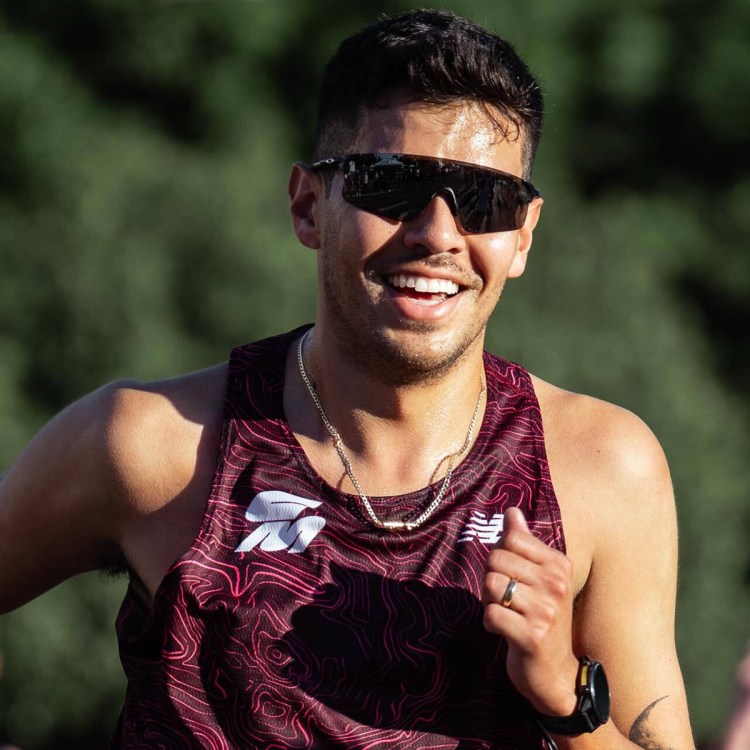
If you’ve stepped outside in the past year, there’s a high probability you’ve found yourself dodging a phalanx of Lycra-clad hotties shuttling themselves up and down your street. Heads high, fitness trackers beeping, $300 carbon-plated shoes strapped to their feet, they are the new fitness elite. Or so their socials would have you believe.
Yes, run clubs are everywhere these days. Everyone with an Instagram account is suddenly a “founder” and everyone who first discovered running during the pandemic has made hanging out with their track comrades their entire personality. Coffee shop owners might be about to retire off that post-run matcha coin, but for the veteran runners among us — those of us who are happy to plod along without even a mild dose of masturbatory Strava posting — run clubs as a performance sport can feel a little tiresome.
All of this to say, while organized sport is great for getting newbs into fitness, run clubs are kind of annoying. Am I being too dramatic? Is it possible we’ll miss this running boom when it inevitably bursts?
To gain a clearer, less cynical understanding of the movement — how the sport got to this point, where it’s headed, and whether or not it can be sustained — I reached out to some of the people putting on awesome events not for the likes, but purely for the love of running.
Why Run Clubs Are So Popular Right Now
“People want a space where they can connect with others, where it’s not just about running, but about belonging,” says Darcy Budworth, the founder of Take The Bridge, a race series that’s spent the last 10 years staging events in the likes of New York, Chicago, Austin and Montreal. “Run crews are the heartbeat of their local scenes, they build community every day. TTB’s role is to bring those crews together and show them how to create a race that feels like an extension of who they are.”
“Run clubs are great when there’s a lack of access to free, inclusive community sports,” adds Lecia Mancini, a runner and coach from Montreal who has ran TTB twice. She started running a decade ago when there were five clubs total on the island (there are now over 50).
“During COVID, I knew people who laced up their seven-year-old running shoes and went out for a jog, not because they suddenly developed an urge to take up running, but because it was something — something physical, accessible and fundamentally grounding,” says Mancini. “When things started opening back up, the solo ritual quickly shifted into something more communal.”

17 Miles in Charleston
We ran through the Holy City, chasing bridge views, salted-lime lagers and lowcountry calmAn Appetite for Alternative Events
“I was bored of traditional races and wanted something that pushed people out of their comfort zones, where they couldn’t just zone out and stare at their watches chasing a pace,” says Budworth, whose race series, as the name suggests, often involves unsanctioned barnstorms of city bridges. “It’s a race that forces you to be fully present, to think on your feet, and often to work with others mid-race to figure things out.
“As for the routes, they’re often chosen because they’re a little off the beaten path,” she adds. “Partly because we want to fly under the radar and avoid getting shut down, but also because I love bringing runners to parts of the city they wouldn’t normally experience. And honestly, if you already know those back routes, it gives you an edge.”
The Downsides of Run Clubs
“There are a few things that keep me up at night,” says Mancini. “’Inclusivity’ is a buzzword often used in run club bios, but social and cultural exclusivity still happens. Cliques form and newcomers can easily feel out of place. Connection often takes time — showing up once or twice isn’t necessarily enough to feel bonded. It feels like it’s become common to skip the process of getting to know new people, and to just start a new run club instead. It’s worth trying a few different clubs multiple times to see if a fit develops. If it doesn’t, starting fresh can make sense.
“Mindful leadership is also essential. It’s easy to assume that just showing up each week is enough, but creating a space where people feel safe, supported and genuinely welcome takes a lot more intention. A club without structure can feel less like a community and more like a free-for-all.
“Lastly, commercialization further complicates things. With brands stepping in to sponsor clubs, the focus sometimes shifts from community to consumerism. Run clubs risk becoming marketing tools pushing gear and curated images, which can make the experience feel less authentic and more homogenized.”

The Year of the Running Photographer
The running boom has become a bonanza. Shutterbugs are the unsung heroes at the very heart of it.How Can Run Clubs Be…Less Annoying?
“It takes self-awareness and respect,” says Jess Movold, an Austin-based run coach. “You can’t just make it about yourself, you have to open the door to the city and incorporate it into the ethos of the group. That means not being an idiot through traffic, moving out of the way of strollers, walkers, dogs…being able to adjust and pivot quickly. That’s what TTB is all about. Running alone while with others. Big, mindless groups that don’t pay attention can be annoying to everyone involved. [But] TTB blends into the city and doesn’t try to stop it.”
“A lot of clubs are focused on being in service to their community,” adds Budworth. “For example, in L.A. during the wildfires, so many clubs stepped up to collect supplies and help those affected. When a club shifts its focus away from ego and towards serving the greater community it’s part of, that’s when it really shines.”
Building the Community
“Culture is huge,” says Mancini. “Strong runners don’t necessarily need to be led or coached — but they do want to run with people who show up on time, know the route and are there to put in the work. It’s not about being fast; it’s about being focused. So creating a vibe where effort is respected, where people are encouraged to push themselves without pressure and where it feels like a team is a strong attractive force.”
“I think a turnoff for ‘decent’ runners is when the group will just trot along and chat the whole time,” says Movold. “If you want to provide a range of challenge and effort, you need to incorporate some seriousness into the vibe that sends the message of ‘We take running seriously,’ though not so intimidating that it make others feel inadequate or too intimidated to show up. You could add in pace leaders, offer workouts, scale the distance options, or like TTB, simply turn it into a race.”
What About Vibes? Marketing? TikTok?
“There’s a time and place for all of that; it comes down to the personality and goals of each person. But if you want to break sub-three in the marathon you’ll need to do more than map out which cafe you want to end up in,” says Movold. “I do think social run groups add a lot of value to life’s experiences, which can be just as important as hitting actual training goals. There’s room for all the types of runners, you just need to do your research to find the vibe that works for you.”
“It’s a love-hate thing,” says Budworth. “I love that they’re bringing fresh energy into running; this sport has never been ‘cool’ before, and now it feels exciting and fun. But you also need the challenge. If a club leans too far in one direction, it risks losing longevity. The magic happens when there’s both: community and pushing yourself to do hard things.”
“TTB has always grown organically, through word of mouth, social media, and more recently, our email list. I intentionally keep it that way because I want it to feel like something you hear about from a friend,” she adds. “It definitely makes the job harder, but it also keeps the race feeling boutique, intimate and a little bit like a secret you’re excited to share.”
“TTB is an IYKYK type of vibe,” agrees Movold, “but it also values marketing that depicts an honest picture of the vibe you’ll experience. There’s style, edge, some thrill, but it’s not going to be over the top or in your face, which I appreciate. I think you have to let the people know you’re there, and once you’ve done that, let the right people find you. TTB has done that.”
Staying Fresh for the Long Road Ahead
“In 10 years of organizing races, I’ve never repeated a course,” says Budworth. “Staying fresh is key. I’m constantly asking the current running community what they’re excited about. Every race starts with the question ‘In your wildest dreams, what would this race look like?’ From there, we build something new together. I always want to be evolving, questioning and pushing what these races can be.”
“I think it really comes down to intention,” adds Mancini. “Are the runs casual inclusive jogs every week, or are you mixing it up, adding some tempo efforts, pushing on the hills or meeting at the track once in a while? When a run has a clear purpose, runners feel it.”
“You have to lead by example,” agrees Movold. “You can’t create it overnight. You have to build trust and let people decide it’s a good hang. [In terms of injuries] you have to provide a safe environment but also let the runners know that they can’t just blindly follow along and not take any responsibility. It’s a balance of seriousness, leadership, direction and vibes. If you’ve ever seen Darcy on the megaphone pre-race, you’ll know she does not fuck around.”

More Like This


Twice a week, you'll find guinea pig features, personal essays and expert interviews on living better — for however long you’re here. Subscribe to Champ now.