Fitness influencers are fond of telling their followers to “do hard things.”
They’re usually armed with specific examples: cold plunges, marathons, early wake-ups, hunger fasts. One of the most viral fitness challenges of the last five years is called 75 Hard (two 45-minute workouts a day, no alcohol or cheat meals, a gallon of water, 10 pages of reading, a progress photo, for 75 straight days). Search “do hard things” in Instagram, meanwhile, and you’ll be brought to an account called @dohardthings365, belonging to a man who once did 10,000 push-ups in a row.
This sort of content generates reliable engagement, but it’s falsely marketed as one-size-fits-all: you’re either willing to tackle my checklist of super-intense tasks to secure your dream life/body, or you aren’t. In reality, cold plunges aren’t for everyone and neither are marathons.
That doesn’t mean the influencers are totally wrong. Just that you should declare your own specifics. Challenging stuff is a prerequisite for personal change and long-term well-being. Meaningful growth usually lies on the other side of a quest — you have to make a commitment and weather repeated failure.
There’s just one big problem: modern adult life doesn’t curve like a hero’s arc anymore. If you’re lucky enough to have a steady job and some free time, it’s more of a straight line.
No Friction, Lots of Problems
Think about it. AI summarizes and replies to our emails. Products that might’ve been purchased around the corner pass through hundreds of miles of checkpoints to our front doors. YouTube and its infamous autoplay now generates more TV viewing time than every single streaming app. An even 75% of Americans say they spend their commutes on their phones.
Cultural critics have leaned on the phrase “frictionless living” to describe this moment we find ourselves in. It’s an evocative and efficient term, with roots in the tech world, but for the sake of human ingenuity, I’ll introduce something different: “shortcut syndrome.” This shifts the focus a bit from the world’s current condition (and who is responsible for it) to our response, our behavior.
I think a lot of us have shortcut syndrome. If I had to define it, I’d say: one’s hour-by-hour outsourcing of labor, insecurity, boredom or creativity to algorithms, chatbots, drugs and workers. More simply: it’s an aversion to personal effort. As others have already pointed out, this sort of lifestyle is already making us more risk-averse. It’s definitely making us less resilient. In the end, I also think it’s making us less interesting.
Start With a Self-Audit
So what can we do about all of this? Start with a self-audit. Sit down, be honest with yourself, and figure out how to make space for hard things in your life.
What are some shortcuts you’re used to taking? What are some shortcuts you’re tempted by? If you already make space for hard things, what are some hard(er) things that scare you, that you’ve been avoiding? How would you rate your clarity, anxiety and creativity, relative to six or seven years ago? Which modern conveniences are saving you time — and which ones seem to be eroding your sense of self?
I’ll share a quick anecdote to get you thinking. My fiancée and I are generally home on a Sunday, but recently, we found ourselves traveling and knew we wouldn’t be back to the apartment until after 3 p.m. We scheduled a food delivery from Whole Foods for the 3 to 5 p.m. window. A man carried five bags of food up four flights of stairs and left them on our doormat, as we read on the couch, recuperating from our commute into the city.
Is that so wrong? On the surface, I don’t think so. (Though various experts might have insights here on the supply chain, carbon costs and labor inequality.) We both marveled at the ease of the whole operation, and divided the groceries into various fridge cabinets and pantry shelves. We imagined doing this all the time.
That’s where something “barked” for me. I don’t look forward to shopping for groceries, but I don’t want to stop doing it. What I mean by that: I like leaving the house, walking to the shops, finding everything I’m supposed to, tossing an unexpected treat into the cart, maybe spotting something weird on the way home. Carrying the bags back up the hill and up those four sets of stairs makes me feel strong.
Perhaps that makes zero sense to you. Perhaps you have kids and each grocery run is a living nightmare. But that’s sort of my point. We have different lives. Let’s stop reaching for the same solutions, and let’s stop aspiring to the same hard things. There are areas in our individual lives that are rife for optimization, and there are areas we need to be more intentional about leaving alone.
Name Your Hard Things
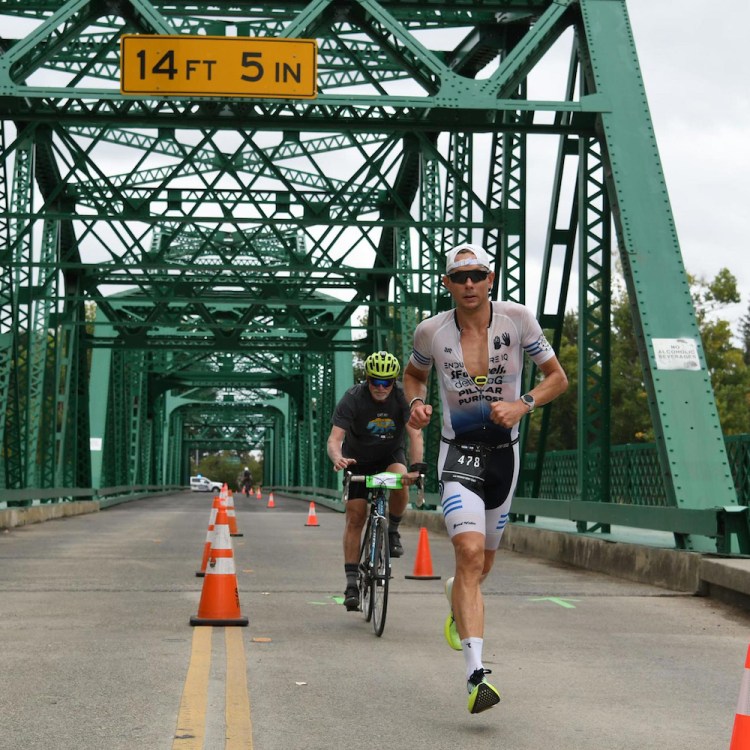
I’m a wellness writer, not a fitness influencer. I agree that finishing a triathlon is amazing, but at the moment, I think a “hard thing” is literally anything done without shortcuts. Here are some ideas for you:
- Cooking meals from scratch
- Hiking a trail
- Attending a workout class
- Volunteering for a cause
- Getting your kids to school
- Learning an instrument
- Reading a book
- Showing up to events you don’t want to attend
- Cleaning your house
- Journaling about your day
- Lifting weights
- Meeting new people
- Going for walks without your phone
- Brainstorming ideas without AI
- Running any distance
- Finishing an article (you did it)
Most of those tasks aren’t that intense or impressive. Many of them are genuinely annoying, requiring you to push your body, show up for others, or finish tasks that could’ve been outsourced to someone (or something) else. But annoying is where real value has always been hiding — hold tight to it before it slips away.
More Like This
Twice a week, you'll find proven advice and tips, expert interviews, deeply reported features and personal essays on living better — for however long you’re here. Subscribe to Champ now.