Climbing into my dry suit, I zipped it on tight, cinched up my personal flotation device and adjusted my helmet. It was time to run the rapids.
Normally, this six-mile stretch of canyon of the Tatshenshini River in Canada’s Youkon Territory is considered Class III whitewater — the International Scale of River Difficulty runs from Class I (flatwater) to Class VI (extremely dangerous/unrunnable) — but on this early summer day, the narrow gorge full of meltwater churned with what our guides said was Class IV whitewater.
Once everyone in the group was kitted out and our gear was strapped in tightly to our 18-foot oar raft, the guides told us it was time to run some whitewater.
Our 11-day Tatshenshini River rafting expedition with Canadian River Expeditions began the previous day in Kwäday Dän Kenji (Long Ago Peoples Place), a recreation of a First Nations village on our way to the spot where we were to launch our boat, or put-in. After handling border crossing formalities for a crossing into Alaska from Canada that would happen in a few days’ time, we made it to the put-in and, from there, slid our rafts into the river.
We navigated calm, Class II water as we made our way to camp for the evening.
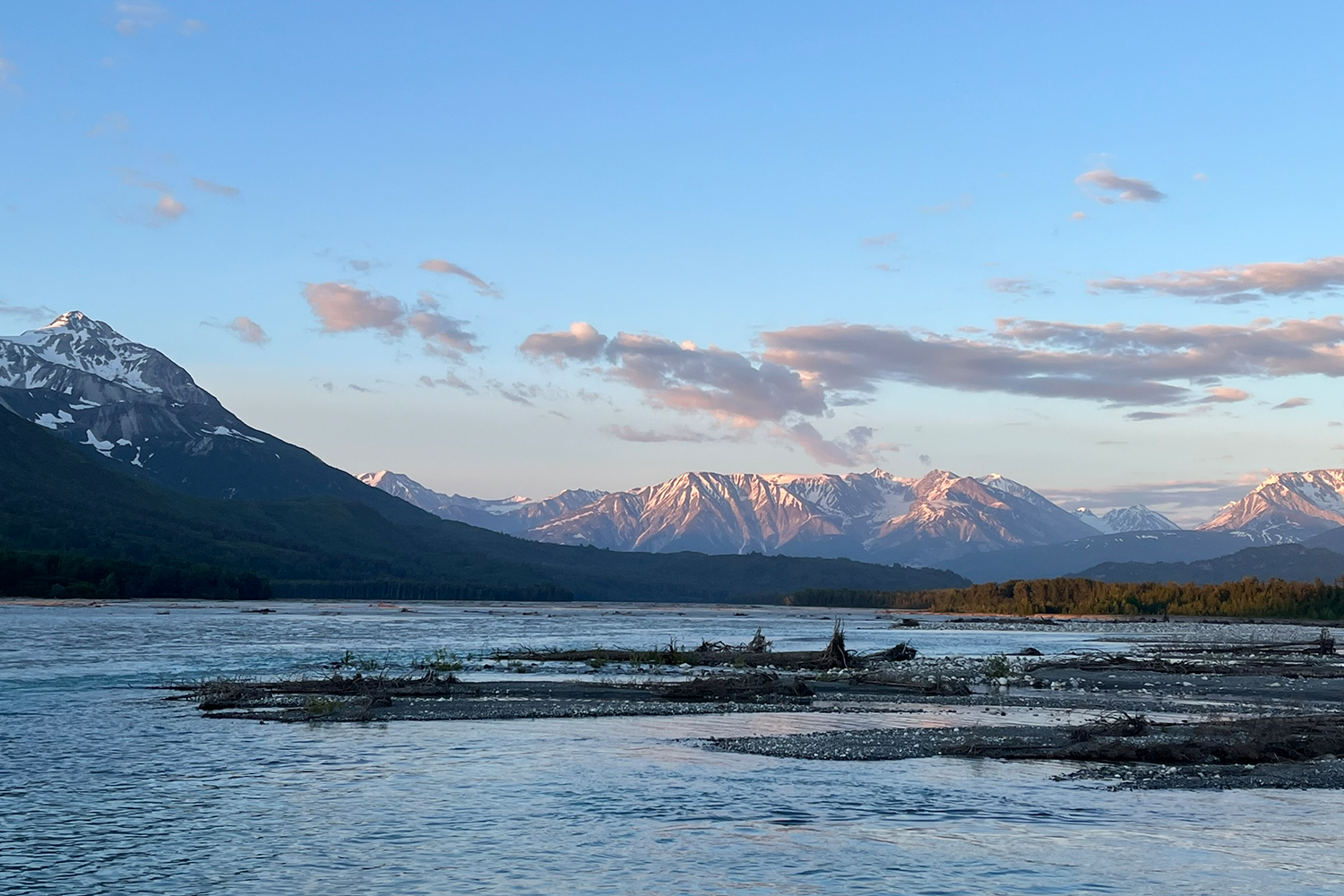
That first night, tired and full after a campfire-cooked dinner of tortellini, I thought about what a week and a half of wilderness and disconnectivity was going to feel like. As a light rain fell softly, washing out the bear and moose tracks one of the guides pointed out, I crawled into my sleeping bag and pictured 11 days without checking my email, answering a phone call or doomscrolling or knowing where my lost luggage ended up. The world would simply have to wait until we ended our river journey and caught a bush plane from a remote Alaskan airstrip back to Whitehorse.
It would be hard to find anywhere on the planet more suited to unplugging, recharging and resetting than the Tatshenshini and Alsek Rivers. Our route traversed through the lands of the Champagne and Aishihik First Nations, through stretches of Yukon, British Columbia and Alaska. We rafted through B.C.’s Tatshenshini-Alsek Provincial Park and Alaska’s Glacier Bay National Park and Preserve, which join Canada’s Kluane National Park and Reserve and Alaska’s Wrangell-St. Elias National Park and Preserve to make up one of the world’s largest protected areas, which is on the UNESCO World Heritage List and contains the world’s largest non-polar icefield.
The area is home to abundant wildlife: grizzlies, black bears and elusive glacier bears — a subset of black bears with blue-gray fur — which are lured to the rivers and their estuaries by salmon, especially in the fall. Moose, bald eagles, mountain goats and Dall sheep are plentiful as well, and we spotted a wealth of the first two over the course of our trip.
“If you zoom out, Tatshenshini-Alsek Provincial Park is situated in the heart of the complex of a lot of other park protected areas,” says Atlin-Tatshenshini Senior Park Ranger Tianna Sturdy. “They are all part of a huge UNESCO World Heritage Site, and that, in and of itself, just creates so much opportunity for incredible connectivity between all those ecosystems.”

The Journey by InsideHook
Join over 100K travelers seeking trip ideas, the latest travel news, and all the inspiration you need for your next vacation.
As we relaxed into the rhythm of rafting by day and camping at night, I took time to simply watch the river flow, appreciating its might as full-sized trees felled by the spring melt floated by. At one camp, we ended up moving our tents and the “groover” backcountry bathroom — our portable toilet system — away from the water’s edge as we watched the rushing river erode the bank in real time, pulling trees and huge rocks into the torrent.
The sounds of rocks tumbling in the current would become a familiar lullaby at night, alongside soft wind and the gentle patter of raindrops on tents, before waking to birdsong and the smells of coffee brewing over a fire. Around camp each night, we shared conversations about our lives, listened to one of our guides recite Robert Service poems, “The Spell of the Yukon” among them, and indulged in plenty of river lore, including tales about the 2017 Red Bull mountain biking film, Riding the Tatshenshini.
During the trip, we spent a few off-river days on land, where I stared at the glacier-carved valleys and snow-capped peaks for hours while sketching camp scenes in my notebook. One of those layover days was spent at Melt Creek, where a cerulean blue stream of snowmelt met the turbid main river, milky and brown with suspended glacial silt.
“It just really reminds me of how small we really are and how you have to let go of your expectations and allow the rhythm of the river and the weather to dictate how a day will unfold,” says Joel Hibbard, owner of Canadian River Expeditions and a raft guide. “It really just forces you to slow down and savor each moment. We can control a lot of things, but in many ways, it’s just a surrender to the natural world and a return to the natural rhythm.”
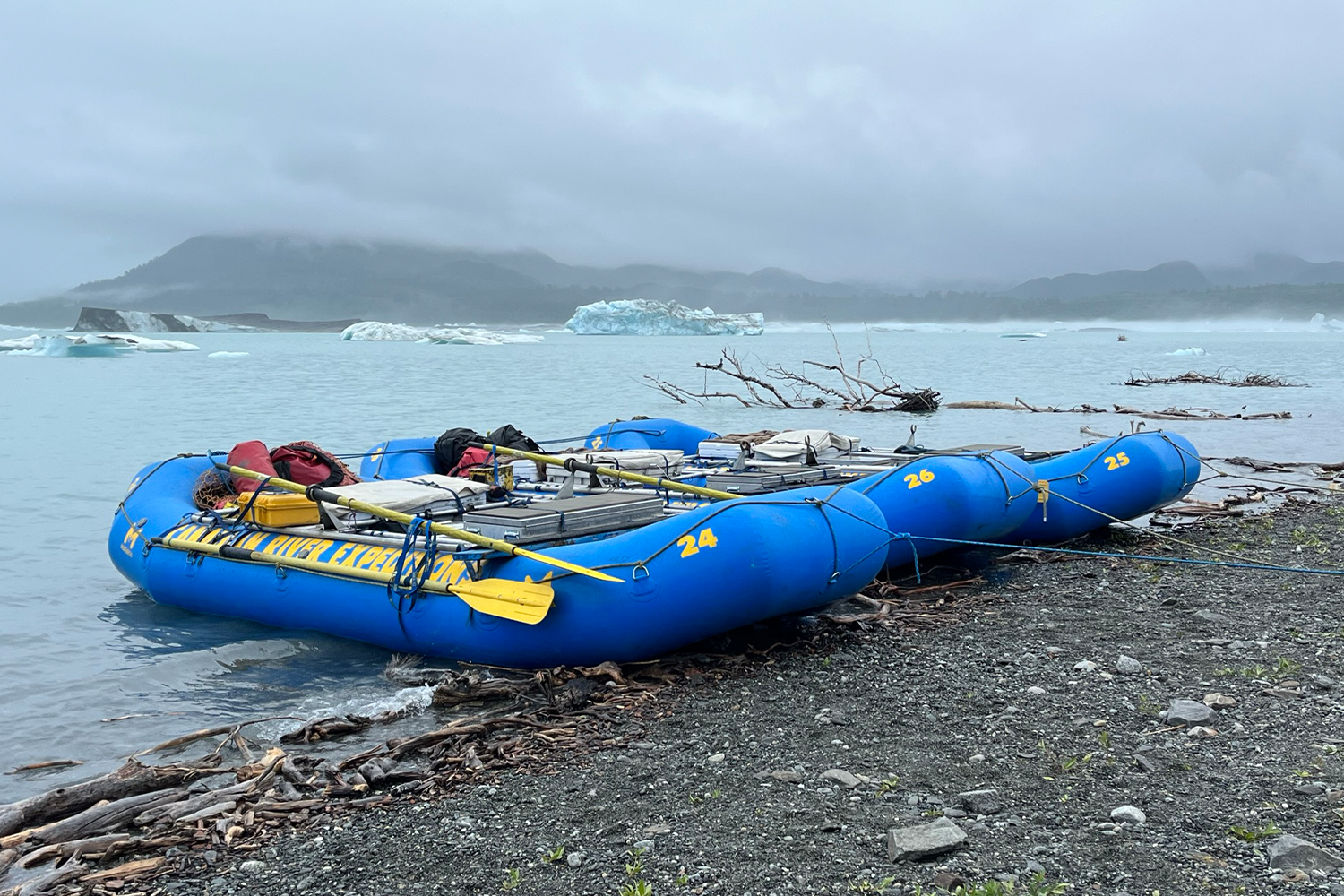
River time passes slowly, but also far too quickly. By day seven, we reached the Tatshenshini’s confluence with the Alsek River and rafted by the 20-foot-wide clearing that designated the border with the U.S., having officially cleared the border days before.
Soon the river flowed into the iceberg-filled Alsek Lake where we watched in silence as glaciers calved, the splash of massive chunks of ice plunging into the water and the lapping waves that followed. That night, the faint cracking and crashing sounds of the calving ice blended with the crackling campfire, and our guides built a sauna to enjoy in combination with an icy dip.
Eventually, the magic had to come to an end. On our last day, we woke in the wee hours for coffee and to pack up camp for the final time. We unloaded the rafts on the riverbank, and walked to the airstrip where our bush plane was due to collect us. The fog and weather were heavy that morning, and at first it looked like we might have to spend a night camped out by the airstrip, but the sky cleared long enough for the pilot to whisk us off to a world of showers, hotels and airports.
While I was happy to take a hot shower, I wasn’t quite ready to deal with my inbox or the lost luggage office. Because for that time on the river when no one could reach us, we were free.
More Like This
We're always on the scene eating, drinking and traveling near and far to bring you the best of what's happening out in the real world. Sign up for IRL now.