
How to Plan the Ultimate Hokkaido Ski Trip
After two months shredding powder, we've mapped out the best of Japan's northernmost island, from hidden routes to steamy onsens
Before making our first turns in Japan, we were already in love.
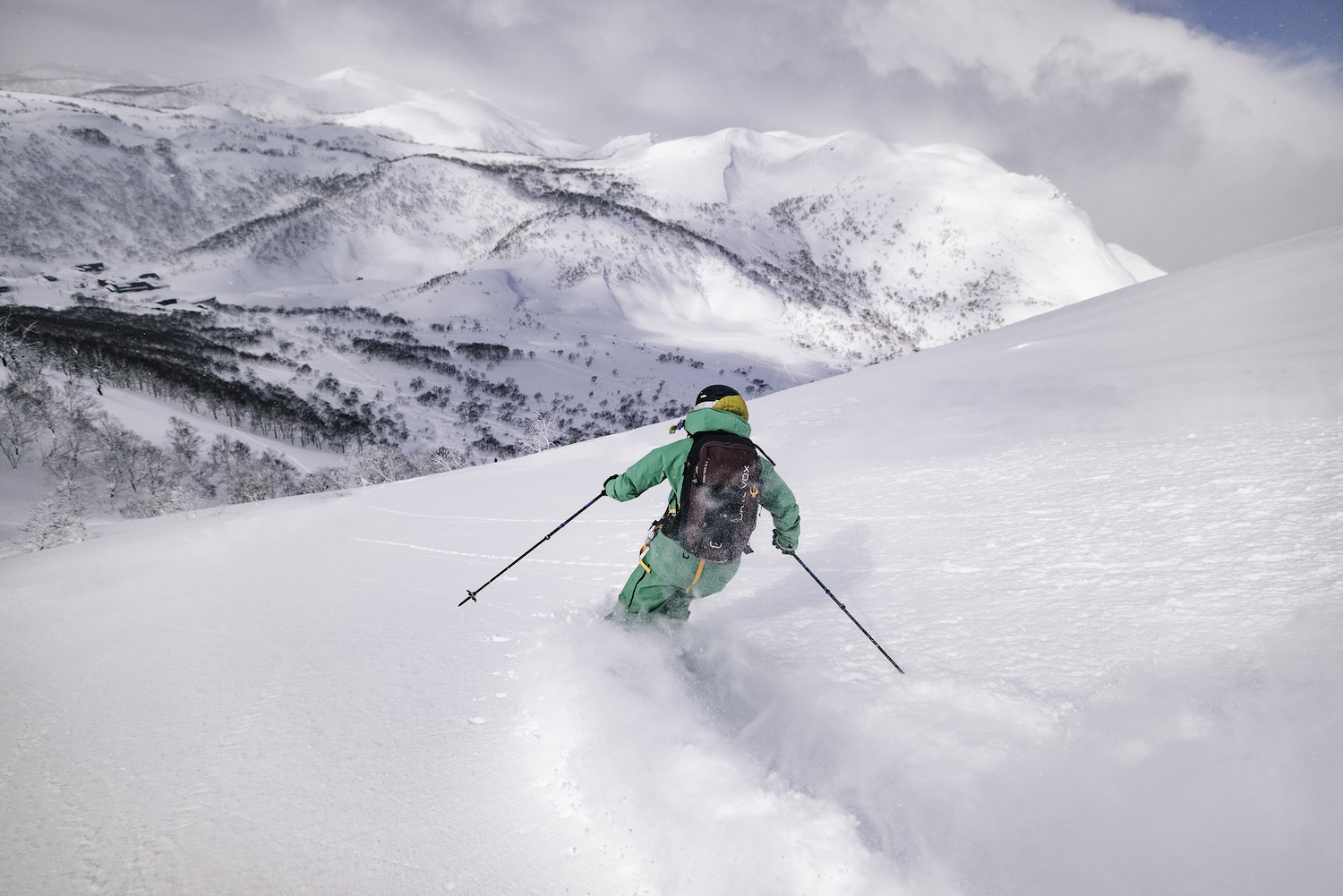
After landing in Sapporo and picking up our RV, we drove two hours to a backcountry zone near the bustling ski town of Furano and headed out for a tour. Hiking through a thick birch forest, we could feel the feather-like snow beneath our skis, but were distracted by a fumarole on the peak above, billowing smoke high into the air. Perhaps it was the jet lag, but in the moment it felt like a dream.
Japan has some of the lightest powder in the world, but what truly sets it apart is how deeply culture and landscape are intertwined. The volcanic peaks that line the islands catch all the moisture that gives skiing life, while the volcanic activity below the surface is what drives the country’s unique onsen culture. The silence of the skin track, the curled trees blanketed in snow, the steamy mountainside hot springs, the savory bowls of ramen served in family-owned shops — these disparate elements all feel part of a natural whole. Even the snacks from konbini, or 24/7 convenience stores, hit a little different in Japan.
After two combined months of shredding in Hokkaido, the northern island of Japan, we compiled this guide for riders who want to get off the beaten path and explore lesser-visited backcountry zones and mountain towns. While there’s no perfect way to experience “Japow,” there are some must-see places and a few things about the culture you need to respect. If you’re planning a trip, we hope this guide will be the perfect way to jump-start your process.
Planes, Trains and Automobiles — and Snowcats!
I started flying with United over a decade ago, because they were one of the first airlines to take ski bags as standard luggage. That made my life a lot easier and the trend has only grown since. Using the United app I can easily track my bags and manage connections, which means less stress even when stopovers are tight. On this year’s trip I leveled up and flew United Polaris on the long haul across the Pacific, giving me a fully flat bed and a better night of sleep, making a huge impact on the first few days of the trip.
Japan’s bullet trains, or Shinkansen, connect major cities like Tokyo, Kyoto and Osaka and travel at speeds around at 200 mph. We used the trains to hop into Tokyo and explore the city for a day, before heading north to Hokkaido. As of 2016, the Seikan Tunnel links the two islands via train; with just one transfer you can get from the capital to the north island in eight hours, with great views of the countryside along the way.
For the last three years, we’ve rented RVs from Hokkaido Nomad Car Rental and can’t recommend them enough. The Nomad staff is easy to work with and make arrangements with RV parks around the island where you can stay for free. They have a large inventory to choose from and can comfortably fit up to parties of five. Depending on the model you rent, they run between around $250 per day. That is equivalent, if not less, than the price of a hotel, while providing the flexibility to go storm chasing.
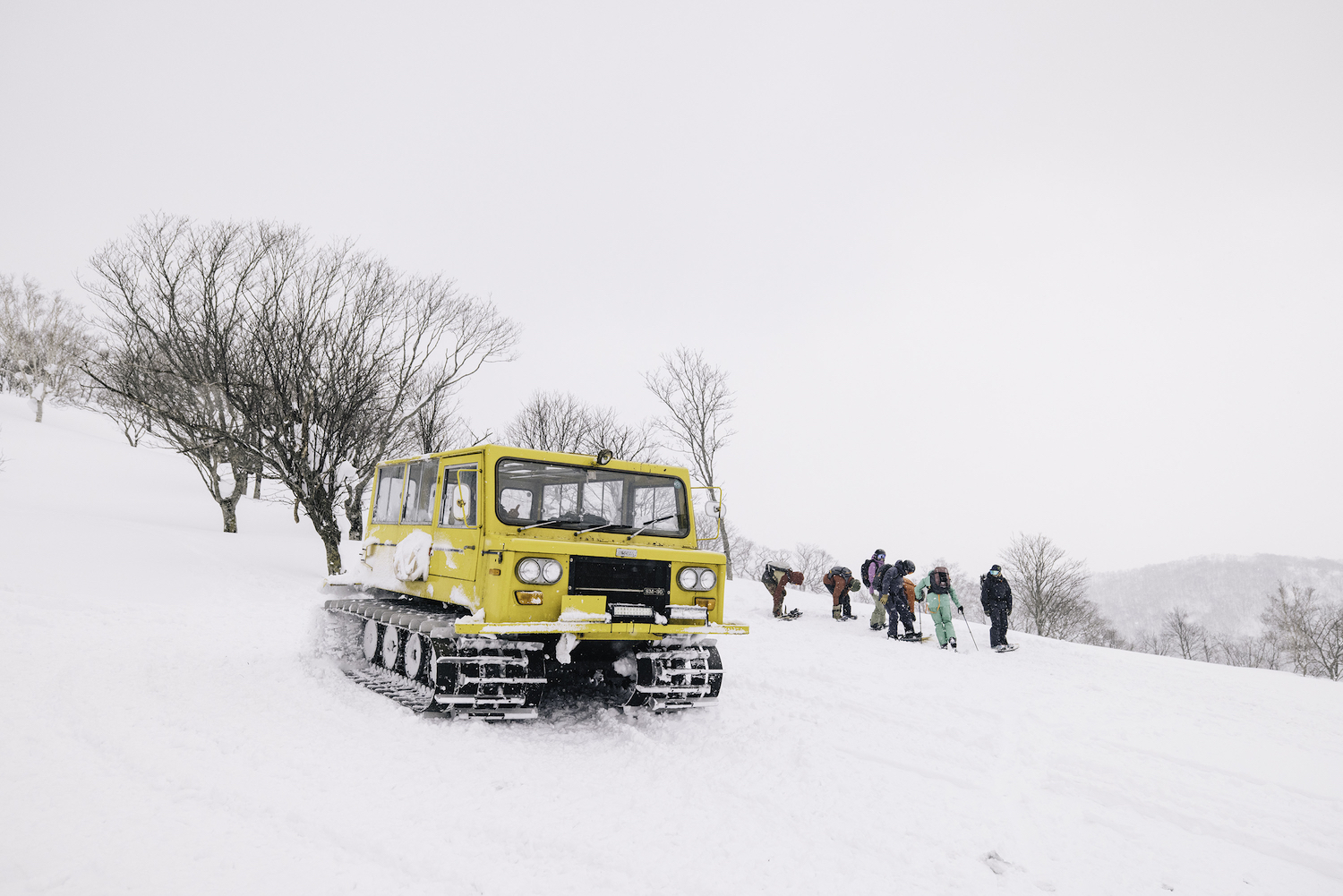
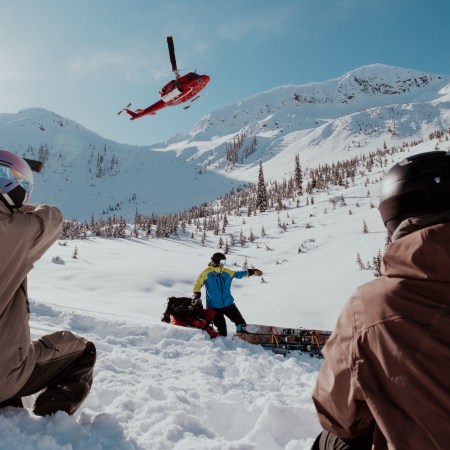
This winter we splurged and spent two days cat-skiing with Type Two Three, which turned out to be our best days in Japan. Based in the small town of Rankoshi, the guides at T23 draw on decades of experience, mixing snowcat-assisted skiing with touring to create the best powder turns of your life. Over two days we did 17 quad-busting laps; ate delicious chili bread bowls, ramen and sushi; and made friends we’ll have for the rest of our lives.
Weather, Tree-Skiing and Avalanche Safety
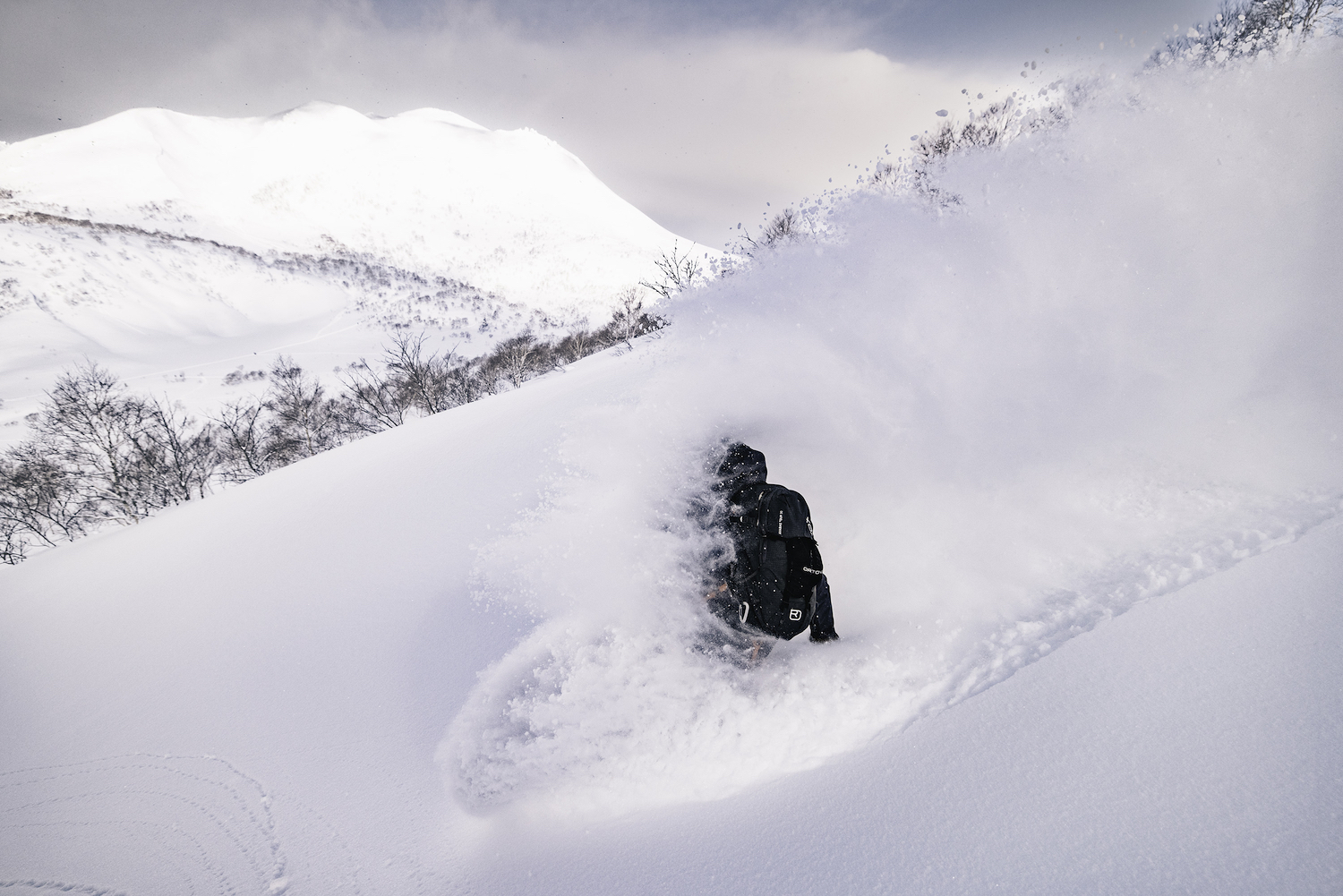
Japow, the fresh powder found on mountains in Japan, is legendary thanks to the unique weather patterns. Cold and dry Siberian air collides with moisture off the Sea of Japan, crashing into the mountains (over 70% of the country is mountainous) to create a light, stable and deep snowpack. Many places see over 50 feet of snow each winter and string together weeks of daily snowfall. While the ocean typically keeps daytime temps in the teens or twenties, be sure to bring all your layers — the humidity makes it feel a lot colder than the thermometer reads.
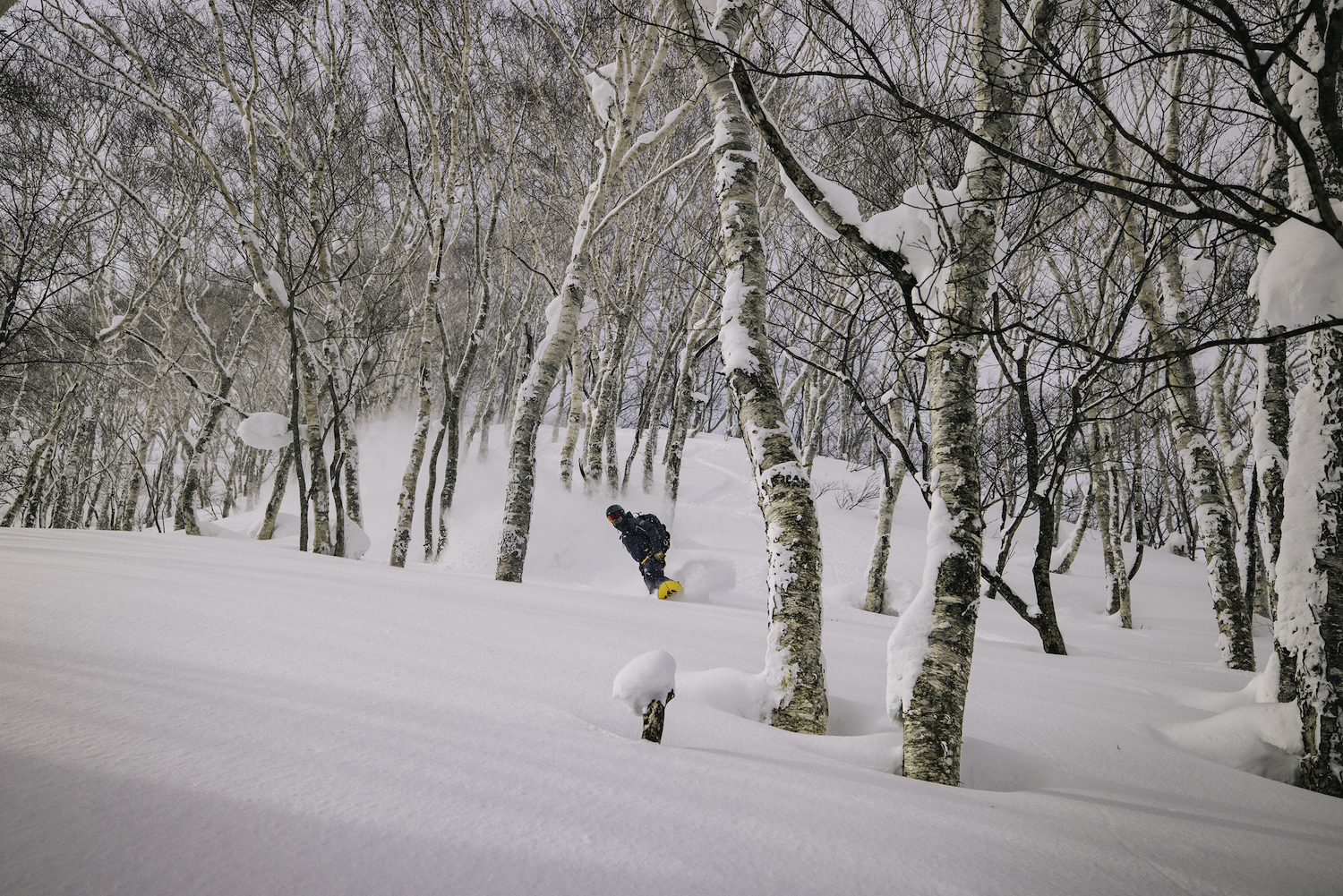
The tree-skiing in Japan is unmatched, due to the almost perfect spacing of the birch and beech, creating a natural slalom course. However, the practice comes with risks. The largest is tree wells, or loose snow around the base of a tree that can trap a fallen skier. Also, while the coastal snowpack in Japan is more stable than other regions, avalanches can still happen. The most common type are glide cracks, which start small but can lead to larger slides, especially in steeper glades and shoots.
For optimal safety while tree-skiing, always try to keep your partner in sight, because tree-well rescues are nearly impossible to do by yourself. Keep an eye out for convexities, where sluffs can knock a skier off their feet. Most sluffs are harmless, but because Japan’s mountains are laden with terrain traps like creek beds and steep micro features, they can be deadly if you are unprepared. Of course, if you plan to ski in the backcountry, always get avalanche training first and bring all the safety tools with you.
Last but not least, the weather in Japan is volatile. Cold fronts hit with intense energy, which can flip bluebird days into full-on whiteouts in minutes. At higher elevations, wind gusts often exceed 60 mph, creating wind slabs, cornices and avalanches. When it’s blowing hard, it’s best to stay below the tree line. Because high winds also raise the risk of frostbite, we’ve had to bail early on more than one day due to a finger or nose tip starting to get white, risking long-term damage.
The Best Places to Ski, On and Off Piste
If you’ve even briefly researched skiing in Japan, chances are that resorts like Niseko and Furano are familiar already. Niseko United is world-renowned for good reason: it touts four connected ski resorts with predictably deep powder, 38 lifts and gondolas, easy access to the sidecountry, and a bustling nightlife that rivals resorts in the U.S. and Europe. Furano is a little more off the beaten path, but still offers a plethora of high-end lodging, a huge variety of skiing and a diverse restaurant scene.
While you can’t go wrong at either of these destinations, the two of us generally prefer to spend time at the smaller resorts and less popular backcountry areas, because we value solitude, exploration and fresh tracks. If you, like us, aren’t concerned with the hottest après scene, here are the resorts we recommend.
- Sapporo Kokusai is a small resort close to Sapporo with great sidecountry access. It’s a little small to be your home base for the entire trip, but it is a great way to break up the drive from the airport to southwest Hokkaido, allowing you to get a bunch of turns your first or last day, which always feels like a solid win.
- Asahidake Ropeway has extremely limited tram capacity and a plethora of terrain, which translates to nearly unlimited fresh tracks for those who are able to score a ticket. Finding a good weather window is challenging, so be sure to have a backup plan for storm days, like ski-touring in the Tokachi Range.
- Rusutsu Resort has a unique vibe; it’s an odd juxtaposition of aging lifts, blaring loudspeakers and high-end hotels all in the same small area. But it also features some of the best lift-accessed tree-skiing in all of Hokkaido and is a good escape from the crowds in Niseko, without having to travel too far.
While the resort skiing in Japan is undoubtedly world class, the backcountry is even better. The great folks at Hokkaido Wilds put an unimaginable amount of time into mapping hundreds of ski tours, including driving directions, route descriptions and detailed maps, all of which are completely free to the public. If you find their library of tours as great as we have, leaving a donation to help them keep up the good work is always appreciated. Here are some of our favorite tours around Hokkaido:
- Mount Yotei, an iconic volcano that lords over Niseko and features routes on almost every aspect. Four thousand feet of vert with a mix of spaced trees, steep canyons and alpine bowls should put it at the top of any backcountry rider’s list. The hardest question on Yotei is whether to push for a summit bid and dip into the crater or turn around at the alpine interface and lap the deep snow that isn’t as affected by wind. In truth, you can’t go wrong. Regardless of which one you choose, plan to get there early to score a parking spot and beat the crowds to the good snow.
- Tokachi Range is a series of jagged mountains in eastern Hokkaido that offers some of the steeper lines on the island, several quick-access points and a handful of nearby onsens. Our favorite zone is near Hakuginso Lodge, where you can access several different routes with a mix of tree-skiing and alpine terrain, before soaking in one of the best onsens on the island, Fukiage, at the end of the day.
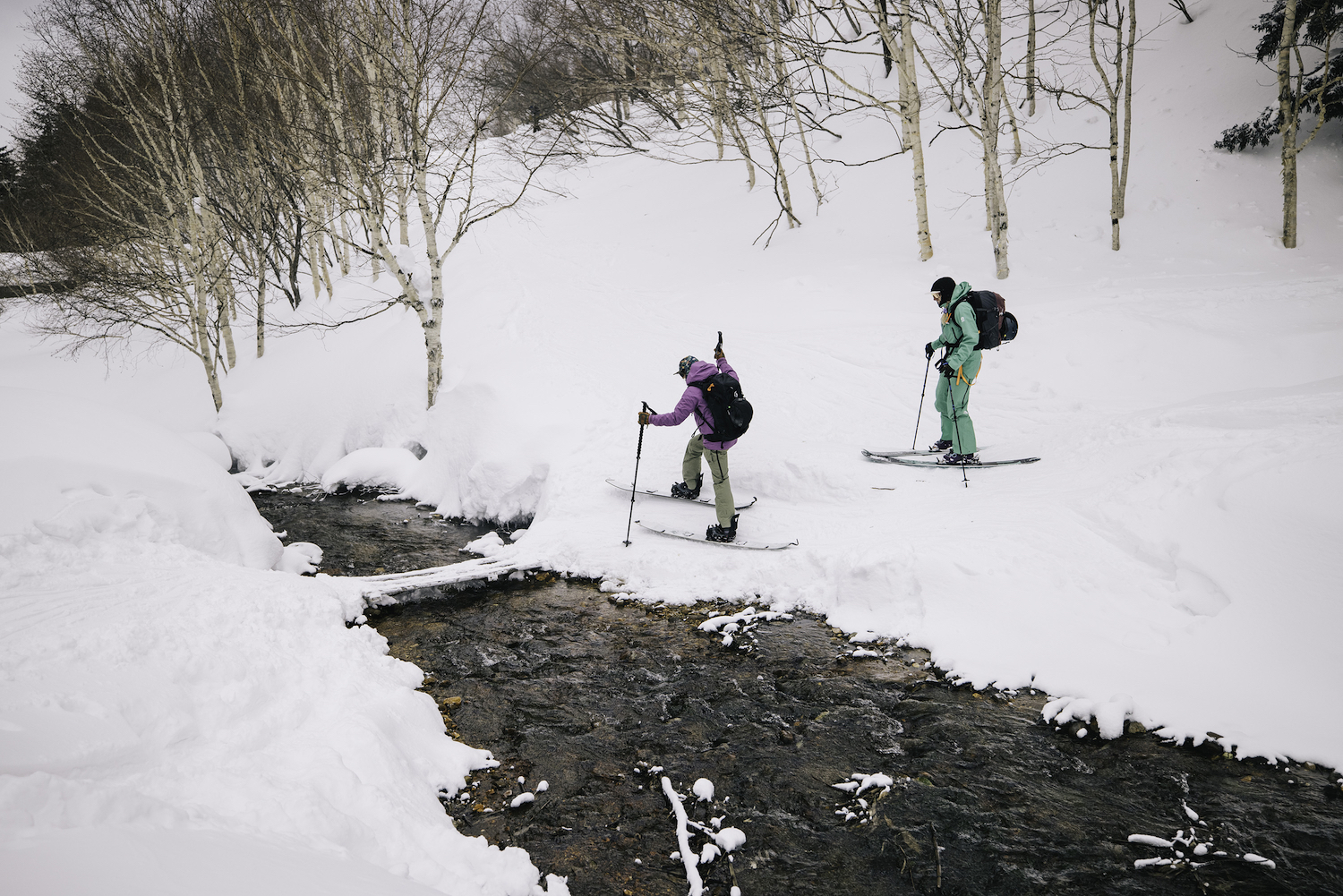
- Kiroro is one of our favorite touring options for the start of a trip, because it is less than two hours from the airport, has plenty of parking and several sidecountry zones good for half days. Like many ski tours in Hokkaido, there are some sketchy creek crossings at the beginning of the route. Don’t get cute, follow the skin track and stay dry — we can assure you, from personal experience, that it’s not worth it.
Cultural Elements to Know
Traveling to any foreign country requires curiosity, patience and a willingness to respect the cultural etiquette of the locals. Stepping off the plane in Japan, one cannot help but notice a sense of order, intentional process and quieter voices in public places almost anywhere you go.
Additionally, eating and drinking while walking around on the street or while riding trains is highly discouraged. There are so many amazing foods to be discovered in Tokyo, but be sure to find a bench and sit down before starting to eat. Once you finish, note that finding trash disposal in Tokyo is nearly impossible, so having a small pack is a smart way to go.
Most onsens, or traditional hot-spring baths, require everyone to be naked (you read that right) and to be completely clean before entering the pools. After stripping off your clothes, sit on a small seat and shower thoroughly before getting in one of the springs. Tattoos are also widely prohibited in many onsens due to their historical association with organized crime, so your options are to either cover up your tattoos with a bandage (if they are small enough) or research private onsens ahead of time.
Outside of Tokyo, we’ve found that communicating in English is not widely practiced, especially in more rural areas. Learning some basic phrases, especially things like thank you (“arigatou gozaimasu”) and excuse me (“sumimasen”) go a long way towards showing respect. These are core tenants of the Japanese hospitality known as omotenashi, which is based on small gestures of reciprocity. As we like to say, a simple smile and an effort to communicate outside of your comfort zone goes a long way. Also, Google Translate is a frequent lifesaver. Make sure you download it ahead of time.
Lastly, it’s worth noting that the same respectful etiquette extends to ski resorts and backcountry riding. Make sure that when you exit resorts for the sidecountry, you’re not violating policies or endangering others. When touring in the backcountry, keep the noise down to respect the harmony of others.
Our Recommended Gear
Nota bene: All products in this article are independently selected and vetted by InsideHook editors. If you buy something, we may earn an affiliate commission.
The North Face Summit Series Tsirku Pro Jacket and Bibs: This 91% recycled Gore-Tex kit is the cream of the crop for the super-cold conditions Japan is famous for. Bombing through trees without having to worry about your jacket holding up to the occasional snag is essential. We also love the helmet-compatible storm hood for windy days, large pit vents for breathability and an array of pockets for extra snacks.
Ortovox DownWool 270 Jacket: Made for the most extreme conditions, DownWool is a blend of 70% down and 30% wool, making it perfect for the damp weather of Japan. It actively absorbs moisture to keep more loft than other down jackets, saving us more than once on cold days. The outside layer is a weather-resistant Pertex that sheds snow, making it great to throw over a shell on storm days.
Le Bent Midweight Baselayers: These are baselayers from a merino blend and designed to not bunch up with ski boots. They’re breathable, stretchy, and somehow remained soft and odorless after a week of nonstop use. The midweight thickness kept me warm even on the coldest days, but for people who run cold, you might consider the heavyweight option for both tops and bottoms.
Jones Frontier 2.0 Splitboard: When choosing the right board for a Japan trip, we zeroed in on the newest iteration of the Frontier for its playfulness and float in deep powder. The Frontier has the directional shape of a freeride board, but rides with enough pop to make almost anyone look good on steep lines, small features and long tree runs. Japan is full of small jumps and side hits, which is perfect for the Frontier.
ThirtyTwo TM-2 Jones Boots: For splitboarders, the TM-2 boots have become the industry standard. They have a medium flex that’s a bit stiffer than a dedicated resort boot, but not uncomfortable on long touring days. Being a splitboard-ready boot, they feature gators to keep the snow out and a true uphill mode that actually works. When Jeremy Jones builds a boot, you know it’s built to handle everything.
Icelantic Saba Pro 117 Skis: If you’re going to take the time to fly to Japan to ski powder, you better bring the right skis. The Saba is designed to surf, pop and send it down the fall line with full confidence. The rocker shape mirrors the sidecut, keeping it incredibly playful and easy to turn. The reverse camber design is ideal in deep powder, while the stiffness helps reduce chatter on windboard and chop.
Folkrm Tahoma Poles: Designed specifically for splitboarders, the Tahoma poles are a lightweight option and break down small enough to stow in your pack on descents. On the uphill, they have a 17-inch grip with the brand’s unique oval shape, which makes you almost forget they’re even there. After a full year of testing, they’re the most durable collapsible poles we’ve ever used in the backcountry.
Ortovox Avabag Litric Tour Backpack: For added safety, we always tour with airbag packs and this is our go-to, thanks to the low weight, intuitive design and electric system that allow us to fly with it on a plane. The Litric system charges fully in a half hour and works in almost any temperature or conditions, which gives us extra peace of mind. We also love how comfortable it is for full day tours, even fully loaded.
The North Face Base Camp Rolling Thunder Luggage: These massive bags are purpose-built to keep all of your gear stored tightly and well organized. They roll through the airport with style, yet are tough enough to drag through the deep Hokkaido snow when transferring between trains, RVs and the occasional snowcat. They truly can take a beating, which is what we love the most about them.


More Like This
Twice a week, you'll find proven advice and tips, expert interviews, deeply reported features and personal essays on living better — for however long you’re here. Subscribe to Champ now.