The Ultimate Guide to Road-Tripping Across South Africa
Roaring lions, mountain peaks and unmatched hospitality: a 4,000-mile odyssey through the Rainbow Nation
Moments after the sun rose on our last day in South Africa, I found myself 30 feet away from a curious hyena. After a few minutes admiring one another, we each sleepily continued on — I towards my first cup of coffee, he towards his den. I imagine he was surprised when we both heard Uncle Gary break the morning silence: “Wild dog! Wild dog!”
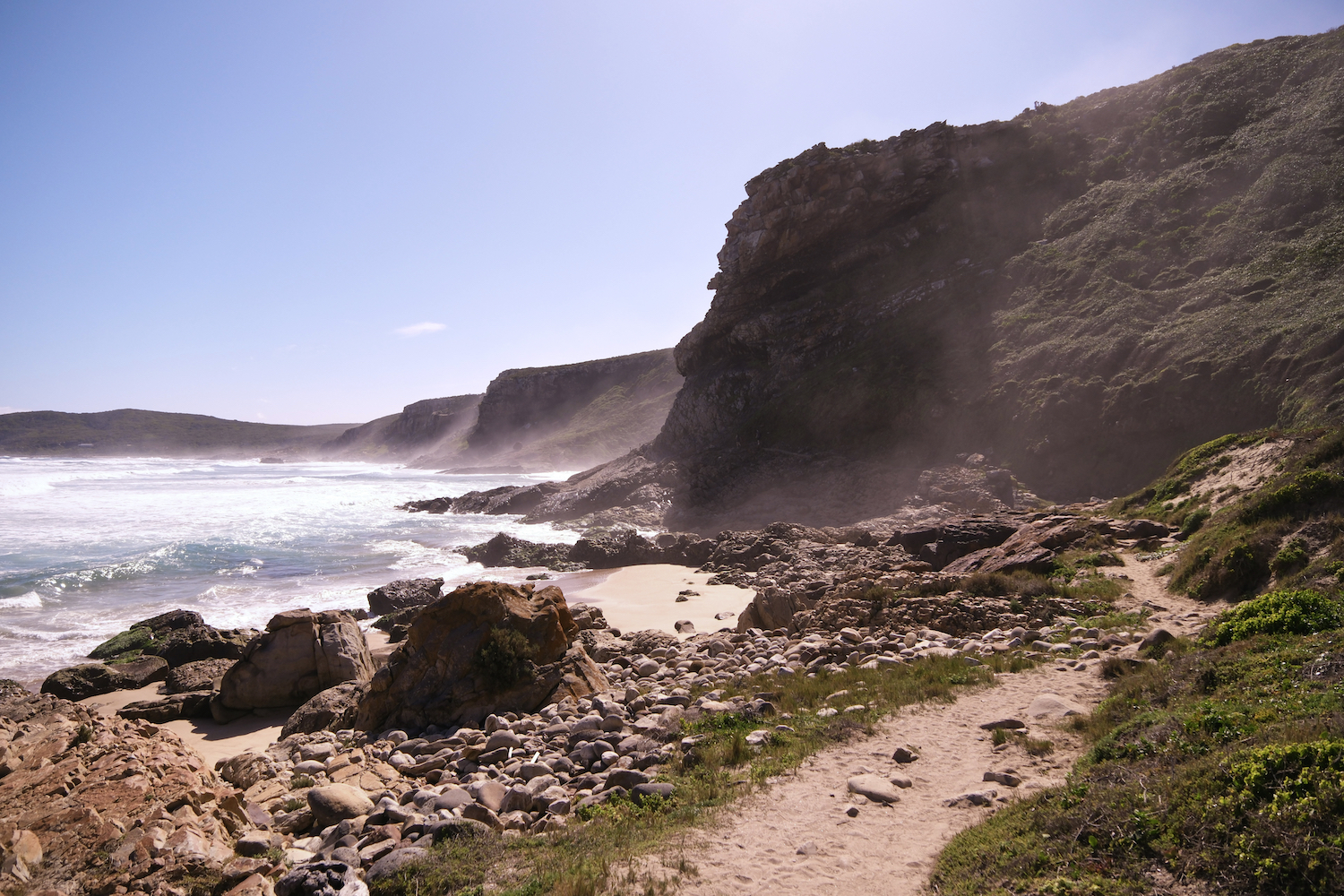
My wife Claire and I had arrived in Cape Town exactly one month before, and these days at Gary Freeman Safaris had been circled on our calendar for a long time. Many of Claire’s core childhood memories were spent here in the Greater Kruger, a huge swath of protected land to the west of Kruger National Park. She first told me about her Uncle Gary’s camp on our first date. Our pilgrimage here took us across Claire’s home country from west to east, through the famed Garden Route, the desolate Karoo and the rugged Drakensberg Mountains.
Our trip was a delayed honeymoon, a homecoming, a family reunion and a dream safari all wrapped up in one, and it culminated here on the banks of the Klaserie River.
South Africa’s footprint is huge — it’s nearly five times larger than my home state of Oregon — so the fact that we covered over 4,000 miles on this trip should come as no surprise. Here’s how we made it happen.
The Open Road: Tips and Tricks
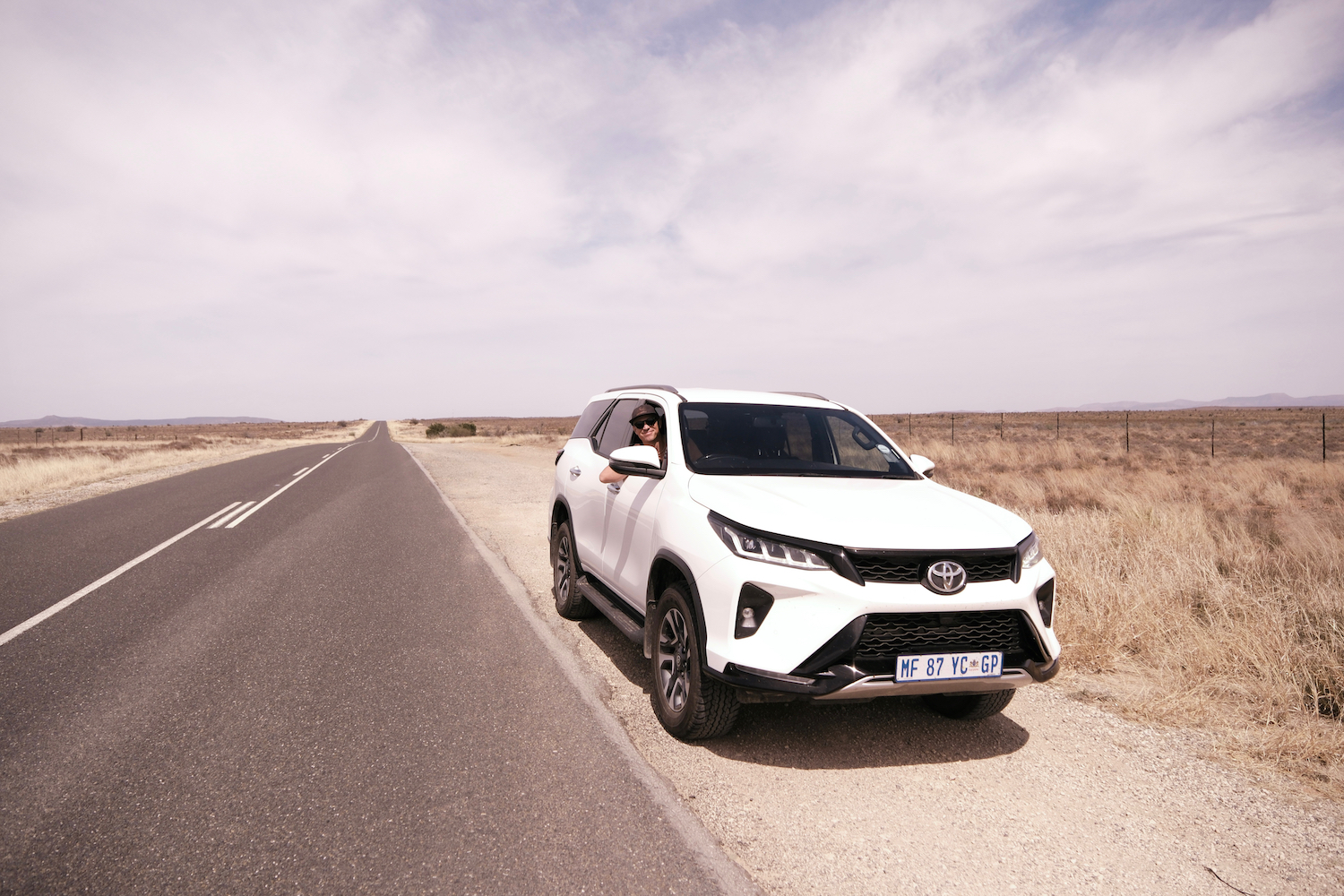
It was important for us to drive ourselves, because we think the best way to see a place is on the road. A bicycle or motorcycle is best, in my opinion, but a car is the next best way to experience both the freedom of exploration and the routines of a different country.
Aside from driving on the opposite side, which takes about 20 seconds to learn once you orient yourself to the new center of the road, there were a few tips and tricks we learned. First: the gas stations are full-service. Attendants will fill your tank, check your fluids and clean your windows. This doesn’t cost any extra, but tipping is customary, so make sure to carry some cash. The best way to get the vibe of a place and find out the local news is to chat with gas station attendants — the playful banter that takes place in these environments is one of my favorite things about a long road trip in a new place.
The next thing you need to know is the yellow line etiquette. Most of the main roads we drove had two lanes with paved shoulders. The yellow line separates the lane and the shoulder. Here’s how it works: if you’re coming up on a car driving slower than you, more often than not they’ll move over and drive on the yellow line — creating enough space for you to pass. If they don’t, feel free to give an encouraging flash. Once you make the pass, turn on your hazards for a moment to say thanks. This small act of mutual respect will make driving through South Africa a lot easier.
Planning the Route: Local Knowledge Is Best
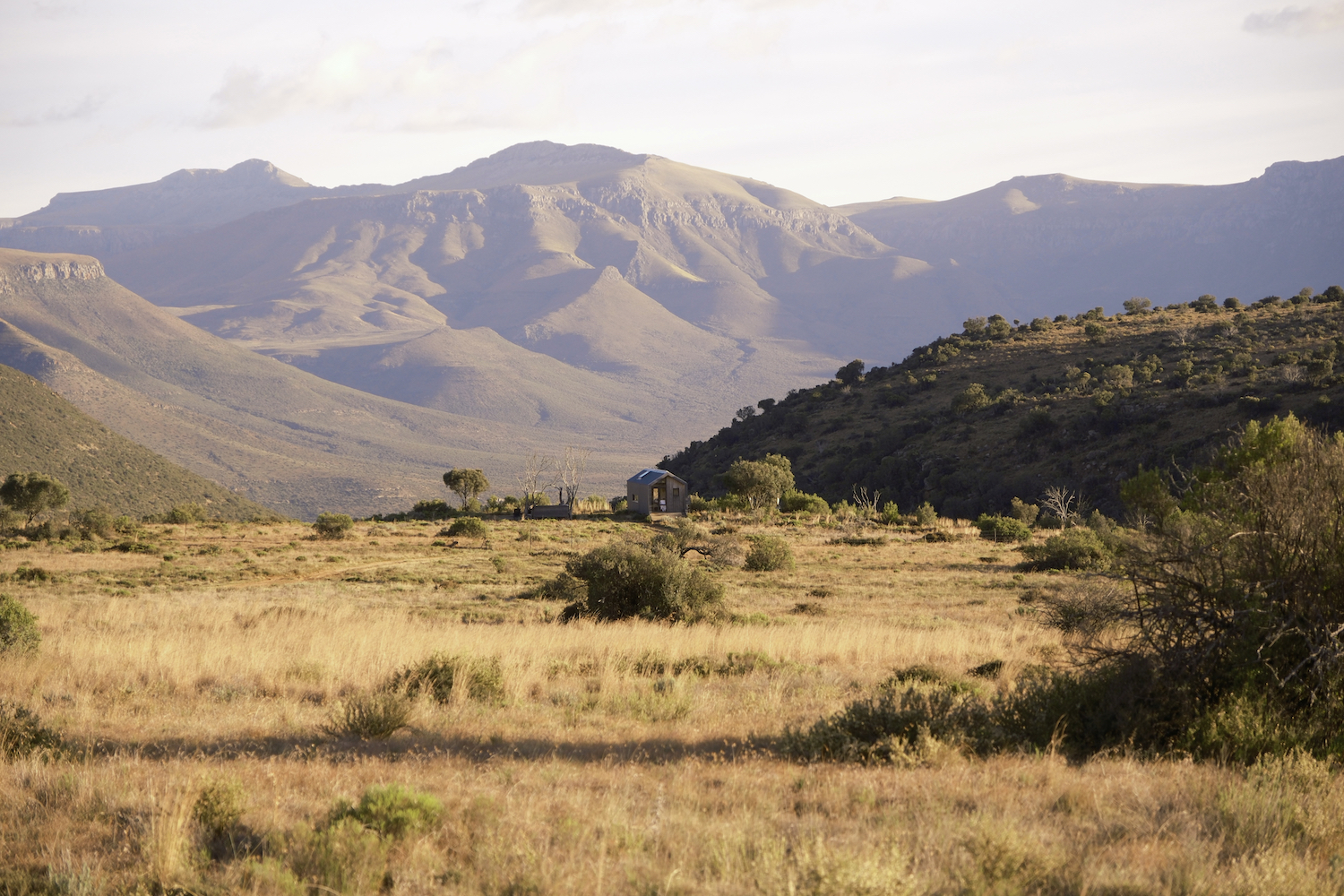
Even with a month on the road, seeing everything was impossible, so we leaned on our South African family and friends to help craft an itinerary that would combine adventure, wildlife and quality time. We began with five days in Cape Town, soaking up all the culture nestled between Table Mountain and the Atlantic, followed by a quick three-day pass through the Garden Route, situated along the southern coast. The trip then pushed inland, requiring a multi-day drive across the immense Karoo desert plateau before heading high into the rugged 11,000-foot peaks of the Drakensberg Mountains.
Our mid-trip destinations included the bush and a few days catching up with family in Johannesburg before the grand finale: a week in and around the awe-inspiring Kruger National Park, which ended with an exclusive walking safari in the Klaserie Private Nature Reserve.
The true highlights of this sojourn, the places that defied all expectations, were plotted with an assist from locals. Instead of sticking to the tourist-heavy Garden Route, we took the advice of a family friend to head inland, which led us to Mount Camdeboo. We went high into the Drakensberg because Claire’s parents have raved about it for years. And of course, our journey was always inching closer towards our ultimate finish line: the legendary Gary Freeman Safaris.
Mount Camdeboo: Lions at the Back Door
When we arrived at Mount Camdeboo Private Game Reserve, we were immediately struck by the remoteness and the severe landscape — and warmly welcomed by the staff with lunch at the lodge.
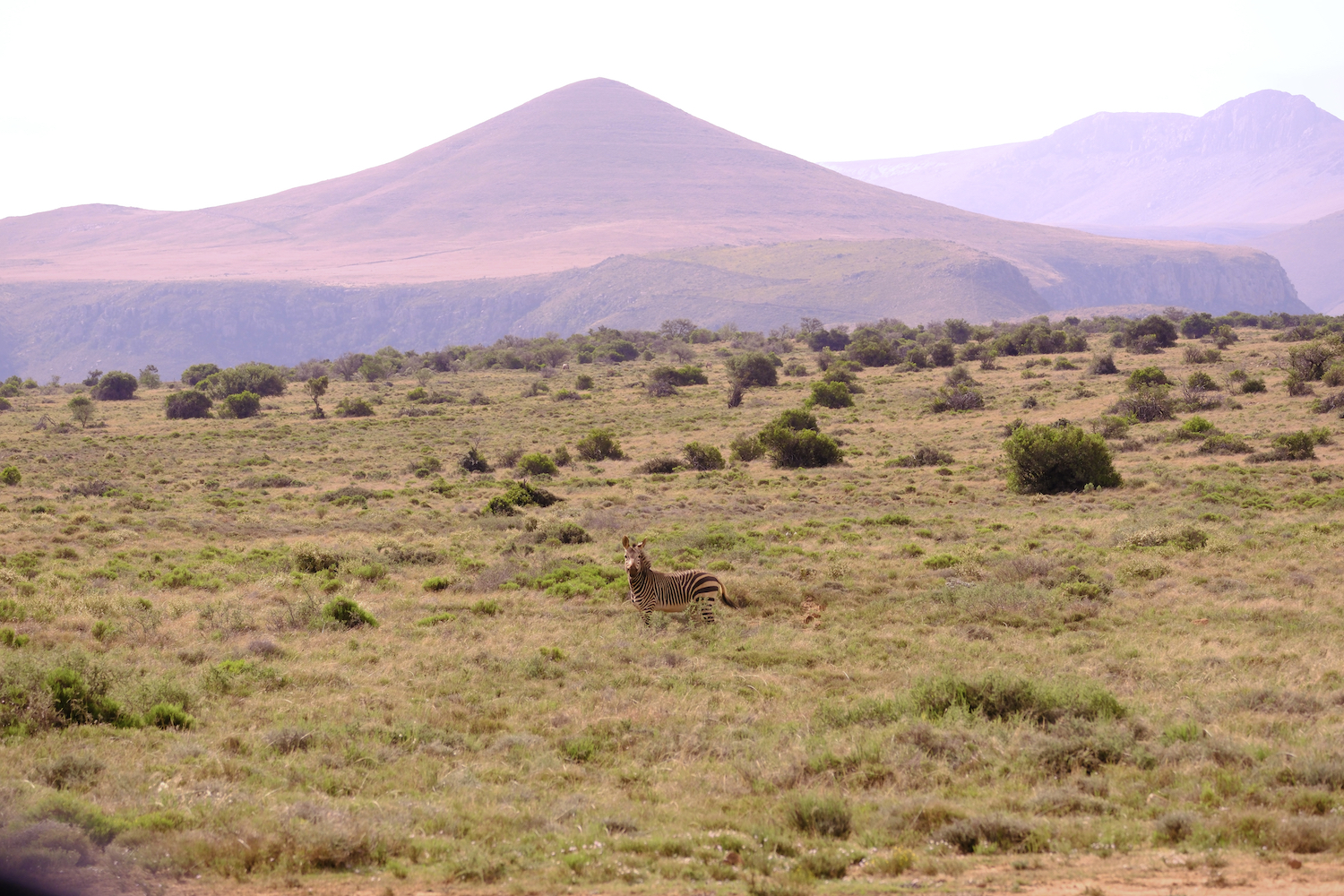
We then met our guide, who drove us 45 minutes higher up into the mountains to our “pod.” On the way we spotted white rhinos, oryx, mountain zebras, southern giraffes, African elephants, springboks, baboons and a magnificent jackal buzzard. The reserve has two pods that are totally private and far from any other humans — if not the animals (more on that later).
The pod is essentially the tiny home of your dreams: kitchenette, queen bed, bathroom and a deck. Next to it is a wood-fired hot tub and fire pit. This place was absolutely idyllic, with views to match. After two nights and two amazing days of game drives, we were pretty bummed to leave and so thankful that a reroute had allowed us to stumble upon this hidden gem.
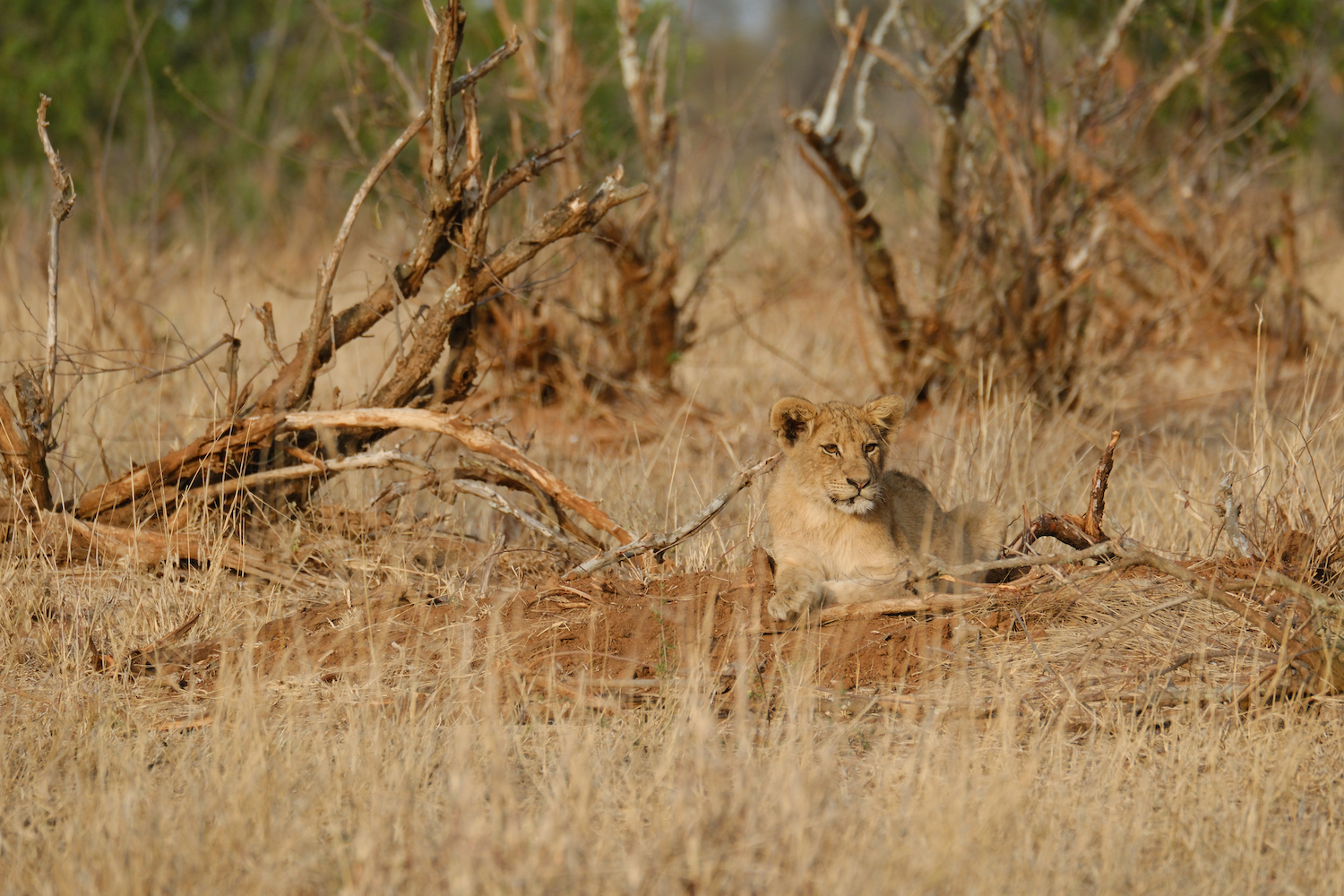
On our last morning we woke up to lions roaring in the distance, making a common contact call often heard in the early morning hours. I was finishing my coffee, walking in from the porch, when Claire said, “Honey! Lions!” We rushed through the pod to get a closer look and, to our delight, there were indeed four lions strolling past our lodgings.
You could spend all day looking for big cats on game drives in South Africa, as many tourists do, or you could just go to Mount Camdeboo and have them stroll past your pod during your morning joe.
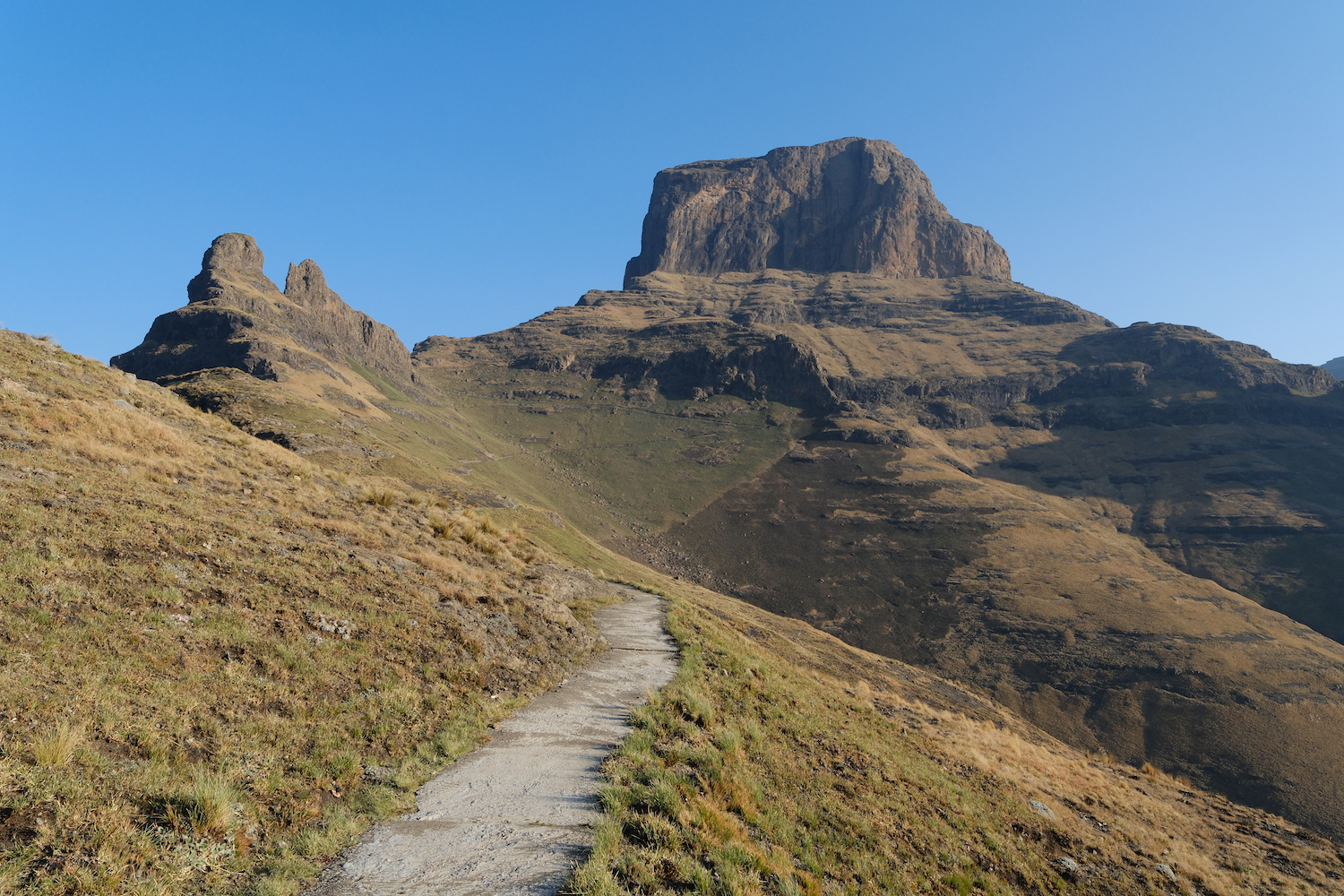
The Drakensberg: Vultures and Waterfalls
There’s this bird called the bearded vulture whose diet is 90% bones. When a bone is too big to swallow in one go, these massive creatures will drop it on a flat rock from 150 feet up so it shatters and the marrow is accessible. Unfortunately, there are only 50 breeding pairs left in Lesotho and South Africa; so when we started our hike up Sentinel Peak in the Drakensberg Mountains, we knew it was a long shot to see one of them in person.
About 300 feet into our hike, we were on a ridgeline with steep drop-offs on either side. To our left was a cliff with dense cloud cover, to our right a steep slope with only a few hundred feet of visibility. Out of nowhere, this unmistakable vulture with a nine-foot wingspan flew 40 feet in front of us — directly at eye level. We spent the remaining eight hours of our time in the high mountains buzzing from the encounter.
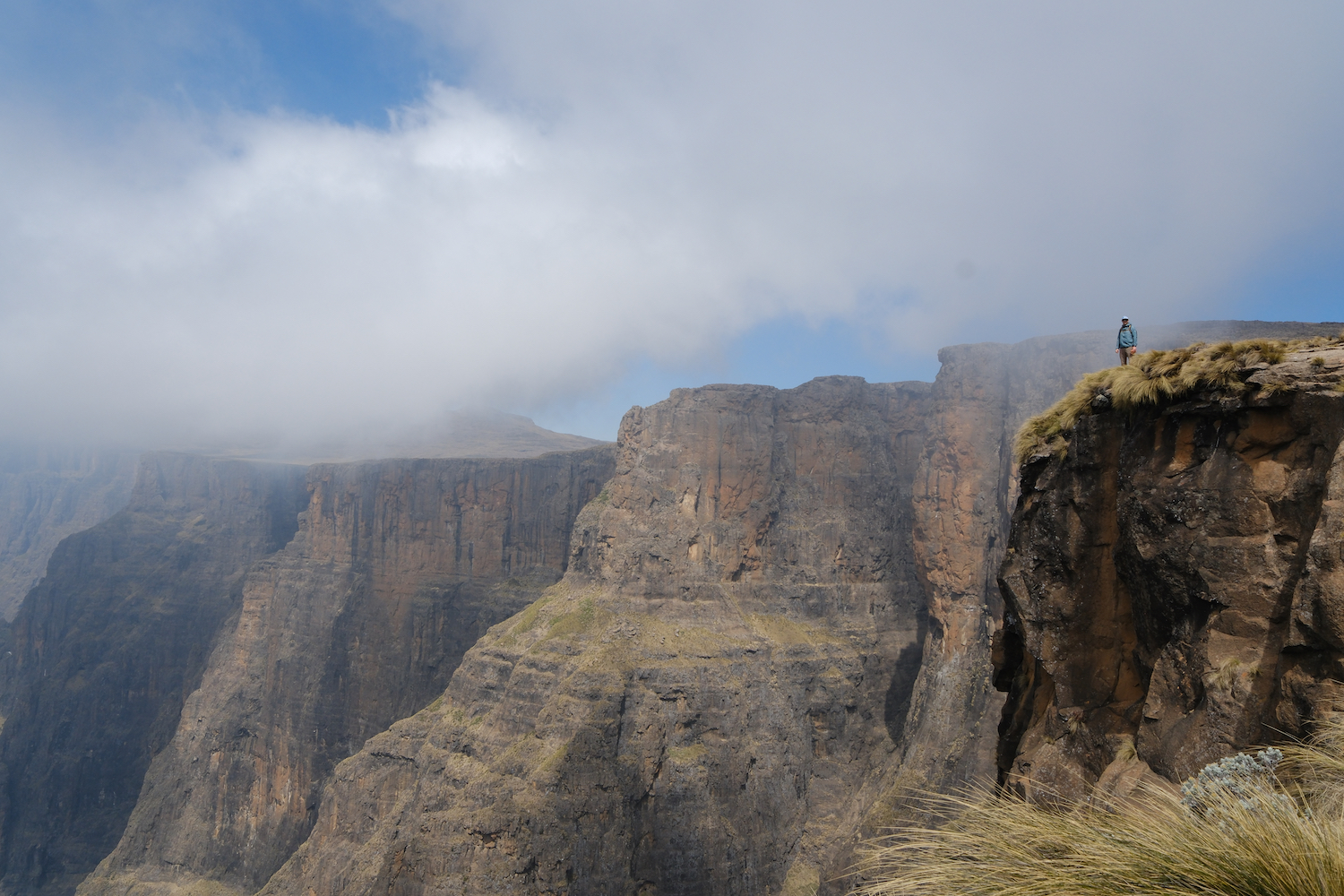
Besides our deep love for mountains and rare birds, the main reason we traveled to this part of the country was to retrace some of the steps taken by Claire’s parents. A photo of Claire’s dad backpacking in these green-carpeted giants is a family classic, so getting the chance to ramble through these same high-mountain passes made it that much more special. As we downclimbed the 250-foot-high cable ladders, we were humbled to remember that Claire’s mom had done this at only 12 years old!
The highlight of our time in the Drakensberg was hiking up to the top of Tugela Falls. With a drop of over 3,000 feet, this is the second tallest waterfall in the world; to attempt to capture the full grandeur of this place would be a fruitless exercise. Just put it on your bucket list.
Gary Freeman Safaris: A Singular Experience
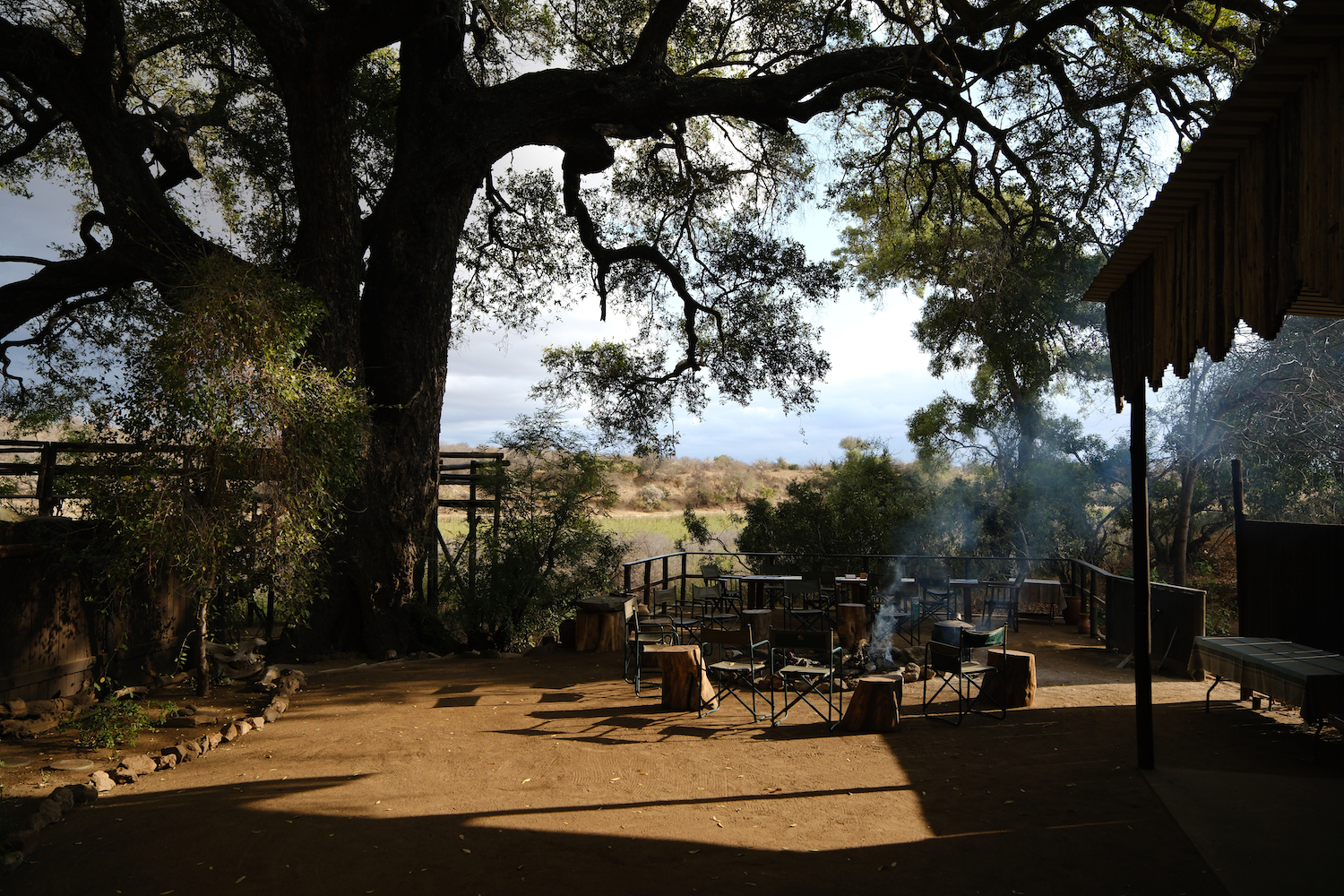
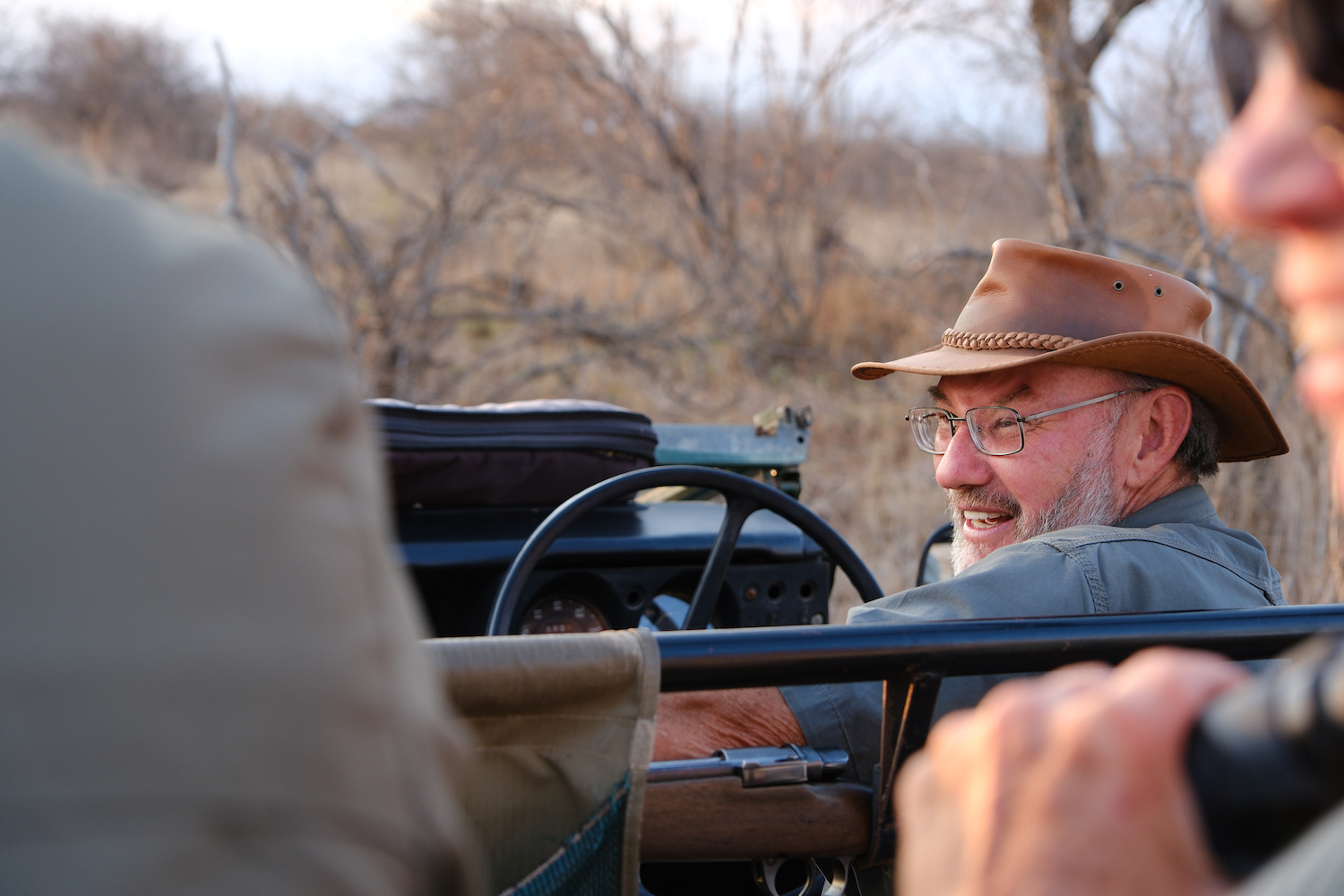
Our final five days were spent in the Klaserie Private Nature Reserve, a 148,000-acre tract that borders Kruger National Park, forming part of the vast Greater Kruger area, where animals travel freely. Claire’s uncle is Gary, of Gary Freeman Safaris, who has been leading walking safaris here along the Klaserie River since 1993. The act of walking through a landscape with someone who has this much expertise is a singular experience.
I understand if you see this as playing favorites, but this is what I’ll say in that regard: I’ve spent hundreds of nights in the African bush over the last 18 years, from sleeping on the ground next to my motorcycle to luxuriating in high-end lodges. Looking back over that diversity of travel, I can objectively say this: the experience offered at Gary Freeman Safaris is firmly at the top of the list.
Days here start with a 5 a.m. wake-up, a quick coffee, and then you’re off for a morning walk. Sometimes you drive a bit, and then walk. Sometimes you walk directly from camp. Based on recent sightings, tracks or the directions of calls heard in the night, you start off through the bush with Gary and his tracker, Dominic. You come back for a big lunch and more often than not there are elephants peacefully moving around the camp. You then relax during the heat of the day, before embarking on another walk or drive — always stopping to watch the sunset with snacks and your drink of choice. Nights are spent enjoying dinner and telling stories around the fire.
Each day at Gary’s camp is fully unique. You don’t know what you’re going to see — that’s where the magic is. We came upon a grumpy bull elephant while walking one morning, and a black rhino that evening. We found a baboon spider in her burrow. We learned which tree provides the best firewood or building material. We saw a magnificent pair of African hawk-eagles, who’d just returned from a winter away. The day before we arrived, there were lions napping next to the outdoor shower. The day after we left? A leopard moved silently through camp. There are no fences here, so each morning the ground would tell the story of who visited while we slept.
Most people come to the bush to see a big cat, but at the top of my list heading into this trip was to see my first wild dog. They boast an astounding hunting success rate: wild dogs are nearly three times more effective than a pride of lions and the most lethal large land predator in Africa.
On that last morning, when we heard the call that a wild dog was in camp, I put down my coffee and ran out. There, beginning to eat an impala that it had taken down only moments before, was a lone wild dog. Over the course of the day, more came to finish the meal, followed by hyenas, and then vultures. The opportunity to see this full cycle happen just steps from camp was magnificent — for everyone but the impala, of course.
The depth of knowledge at Gary Freeman Safaris is remarkable, and being invited into a space of such intimacy with the flora and fauna of the African bush is a privilege. Our entire trip culminated here, and boy did it live up to the hype.
When Everything Goes Right
We left Africa with an overwhelming sense of gratitude. Central to that feeling were the people we met along the way. I’ve had the privilege of working and traveling around the continent for nearly 20 years now, and the thing that makes sub-Saharan Africa my favorite region in the world is the warmth of the people. There’s a rhythm of friendly banter and playfulness that infuses every human interaction. It’s unlike anything I’ve experienced.
We spent weeks in the bush, identified 212 bird species, encountered incredible wildlife and generally had the time of our lives driving across South Africa. We’ve been home a couple of months now; what Claire and I look back on with the most fondness are the marathon driving days in Kruger with Claire’s brother, the late-night chats about adventures past with Uncle Barry, and afternoon tea with Granny Sylvia.
My advice for your trip? Ignore the headlines, rent the car, follow local advice, and have the trip of a lifetime driving across the Rainbow Nation.
Below, I’ve also outlined some of the gear we packed to make our trip such a success.
The Gear That Worked: Safari-Grade Essentials
Nota bene: All products in this article are independently selected and vetted by InsideHook editors. If you buy something, we may earn an affiliate commission.
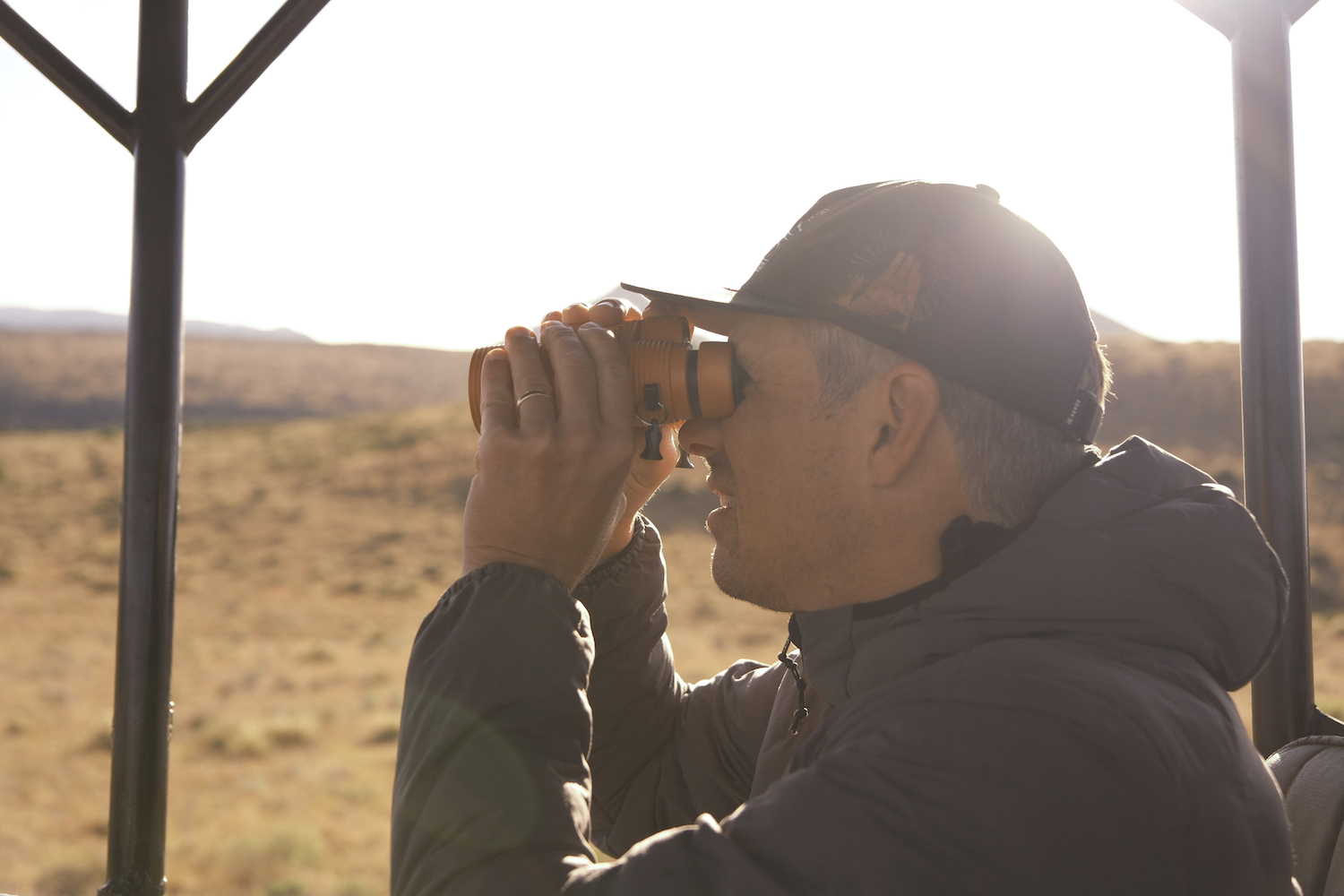
- Nocs Provisions Pro Issue 10×42 Binoculars: Even if you aren’t as obsessed with birds as we are, having a nice pair of binoculars is absolutely essential for wildlife viewing. Claire is a wildlife biologist and this is her favorite pair of binoculars for work and travel. I can’t think of a better endorsement than that.
- Yeti Crossroads Checked Luggage: I spent way too much time researching luggage before this trip — and I’m so glad we landed on Yeti. Both the 73L checked bag and the 35L carry-on had thoughtful internal organization to make living out of a suitcase for a month a breeze. The telescoping handles are easily the burliest I’ve ever used and the wheels rolled well through dirt, sand, gravel and mud.
- Fenix HT32 Flashlight With Red/Green LEDS: On night game drives there’s a fine line between a light being too bright and just right, but the HT32 was the sweet spot and even the envy of our guides throughout the trip. Having a green LED built in was especially useful to avoid spooking shy bush babies and bats. I used the HM65R headlamp every night while in the bush, too. Hands down my favorite headlamp on the market.
- Fujifilm X-T5: We’re amateur photographers, but we wanted a camera that could help us level up our game. The X-T5 camera, paired with the XF 100-400 millimeter lens, was the perfect setup for wildlife photography and allowed us to punch above our weight without breaking the bank.
- Garmin inReach Messenger Plus: Phone service is really good in South Africa, but having a backup satellite communicator on a trip is a nonnegotiable for me. The best part about Garmin’s latest offering is that you can send photo messages too. Texting photos of lions to my 96-year-old grandfather back home was a breeze, even when we were way off the grid.
- Rocky Talkie Mountain Radio: We often found our party split into two cars during game drives and road trips. From communicating about a pack of wild dogs or giving the green light to make a pass on a curvy mountain road, the trip would have been incredibly inefficient without these radios. Plus, having these around camp allowed us to dodge more than one nighttime hyena encounter.
The Gear That Worked: Daily Drivers
- 686 Everywhere Featherlight Chino Short: Lightweight with durable zip pockets, easy to clean in a sink and quick-drying, this was easily my most-worn piece of clothing during the trip. Well, tied with the Let’s Go tee, a near-perfect combo for warm-weather exploring. When the temps dropped or I wanted to avoid acacia thorns cutting me up, I reached for the brand’s Unwork Pant.
- Vuori Villa Shorts: Easily Claire’s most-worn item on the trip, these shorts are elite on the comfort scale, can actually hold a phone, and have a comfy waistband for long car rides and hikes alike. The Pose Fitted Tee was also high on her list of favorites: fitted but breathable, lightweight for warm days, and the perfect base for cooler ones.
- Topo Designs Commuter Backpack: We decided to bring this pack at the last minute — and we used it way more than anticipated. It was Claire’s personal item while flying and she uses it at home as a work backpack, but we ended up using it for scrambles up Table Mountain, city exploration days in Cape Town and day hikes in the Drakensberg. One pack to do it all.
- Outdoor Research Echo Hoodie: Ultralight and complete with a ponytail port in the hood, there’s a reason this is a perennial OR best-seller — and Claire’s favorite outdoor item on the trip. Whether running along sea cliffs or walking on safaris in the blistering sun, the Echo Hoodie excelled across a variety of conditions.
- Ciele VNT Jacket: The first part of the trip was surprisingly cool and breezy, so I’m glad I had this jacket. At 140 grams it doesn’t take up much space. Unlike a lot of windproof running jackets, Ciele’s VNT has vents in the underarms and back for temperature regulation. This feature alone quickly made it my new favorite running jacket. Warm enough in the coastal wind while allowing heat to escape so you don’t get clammy. Big fan!
- Yeti Water Bottle With Yonder Cap: Whether they were in the car cupholder, stashed in a backpack for a hike, or carabiner-ed to the Land Rover on safari, we used these light and indestructible bottles nonstop. A Nalgene for the 2020s.
All photos courtesy of Claire Galaway