
Welcome to 17 Miles, a travel series built on one core belief: the best way to know a city is to run through it. Whether you’re a serious marathoner, business traveler or hungover wedding guest desperate to sweat it out, we’ve personally mapped the best routes — and scouted the right pit stops to match.
Australians wake up at 6:45 in the morning, earlier than anyone in the world, according to global sleep patterns analyzed by the University of Michigan. But I’m guessing a few rogue snoozers have stretched that average later, because I’ve seen Sydney at 5:45 a.m. It’s like a Richard Scarry book for exercise.
There are workout classes storming into coffee shops, dog-walkers listening to podcasts, old fellas doing push-ups on park benches, volunteer lifeguards stretching before their swim-run circuits, surfers slapping butts with a “How ya goin.'” As someone who always feels like he could’ve squeezed more out of a day, this sweaty sight brought a tear to my eye. My people. Australia’s biggest exports are technically iron and coal. But you can make a strong cultural case for exercise and brekkie.
No surprise then, that the running boom is alive and thriving Down Under. There are over 170 run clubs in Sydney, which is a lot even for a city as sprawling as Mexico City and Paris. Sydneysiders are hilariously spoiled for protected coastal trails, from the iconic Bondi-to-Coogee in the Eastern Suburbs, to Spit-to-Manly in the north. There are urban parks, too, including the historic Centennial Parklands. Oh, and there’s a pretty famous bridge you can run over.
Last year, the Sydney Marathon was officially named the latest World Major Marathon, the highest of racing honors. Speed and finisher records were promptly set, and you can expect that to update on an annual basis. Runners chasing “stars” (you get a star for finishing each major) will all but duct-tape themselves to Qantas wings to secure their seventh.
But Sydney is running nirvana for all levels. If you ever make a pilgrimage to the sparkling capital of New South Wales, you’d better pack a pair of runners. Fortunately, the jet lag works in your favor. Assuming you rally through day one (it gets really hard after 4 p.m.) you’ll wake up naturally on day two around 4 or 5 a.m. Get out of bed and go blend in. G’day, g’day.
I last came to town in late December. Here’s where I caught some Zs, fueled up and ran 17 miles.
⇢ SLEEPS ⇢
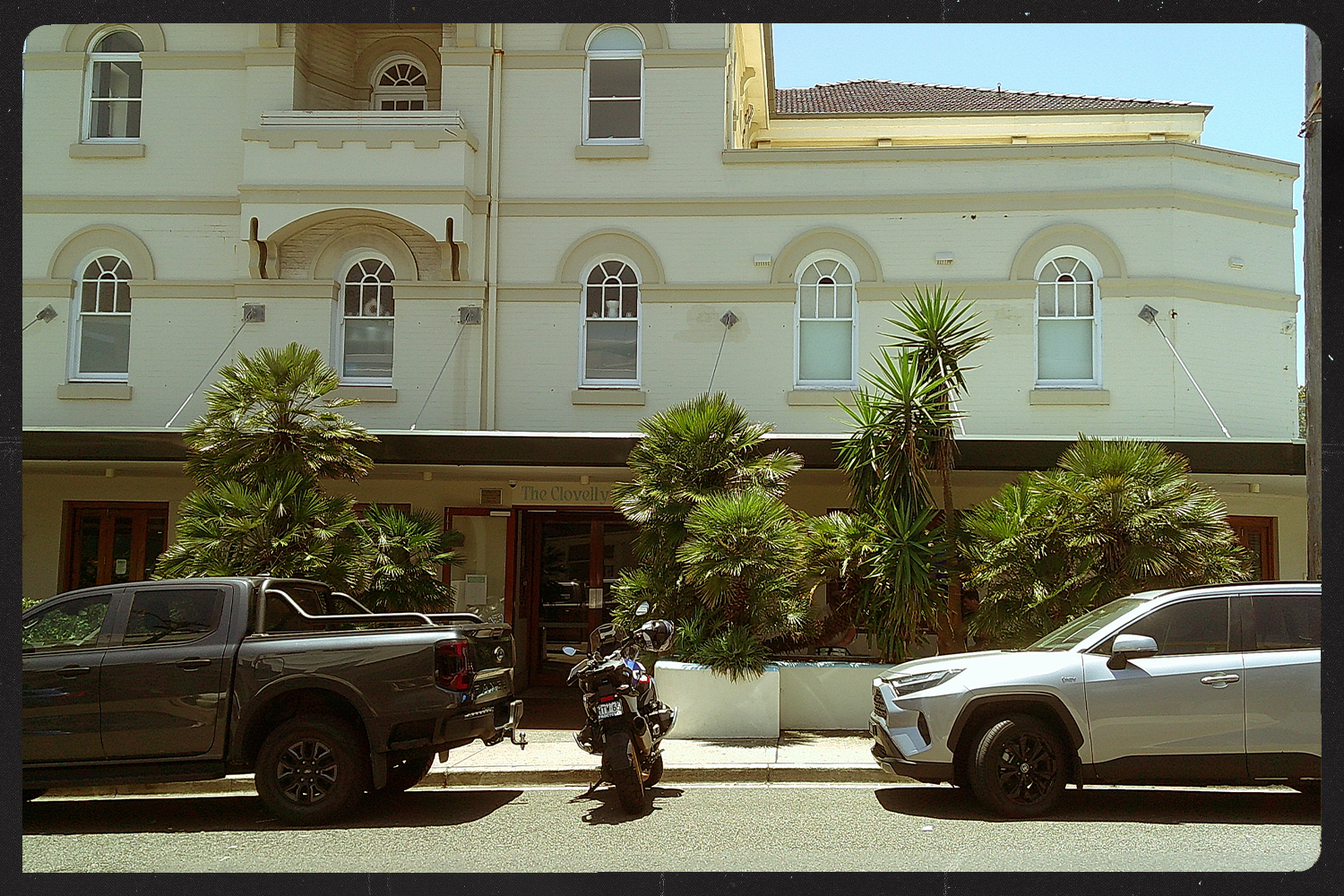
Hotel: The Clovelly Hotel
Where is it: Clovelly, Eastern Suburbs
What works: I have stayed in eight of the 14 rooms at The Clovelly Hotel, which locals affectionately refer to as “the Cloey.” My fiancée, Xanthe, grew up in Sydney and we stay here over Christmas break. I’m not saying that staying in 57% of a hotel’s rooms is a prerequisite for recommendation — but suffice to say, I know this place in and out and love it.
In Australia you’ll find lots of pubs with “hotel” in the name. Until the 1980s, these bars had to operate like English inns in order to obtain a liquor license; they always had a couple rooms upstairs for rent. The Cloey continues this tradition. There is a bar downstairs — and it’s actually a pretty extensive indoor-outdoor biergarten. From Thursday through Sunday, Ubers drop off 20-somethings here for hours of pints, salt-and-pepper squid, pokies and some old-fashioned flirting.
They’re usually watching cricket or AFL, though a couple times I returned to the hotel to find my beloved Knicks splashed across screens. Turns out the NBA, NFL and UFC are all particularly popular in Australia. Yesterday’s marquee American games often sync perfectly with Sydney’s happy hours today.
If you’re worried about falling asleep above this randy scence, I don’t blame you. But a 2010s renovation must’ve included steel-clad soundproofing; I’ve never once had trouble sleeping here. The check-in arrangement is maybe a little too casual (you have to wait for a recent grad to emerge from some corner of the bar with keys), but by the same token, they’re awesome about looking after bags, and will help you explore as much of the area as possible.
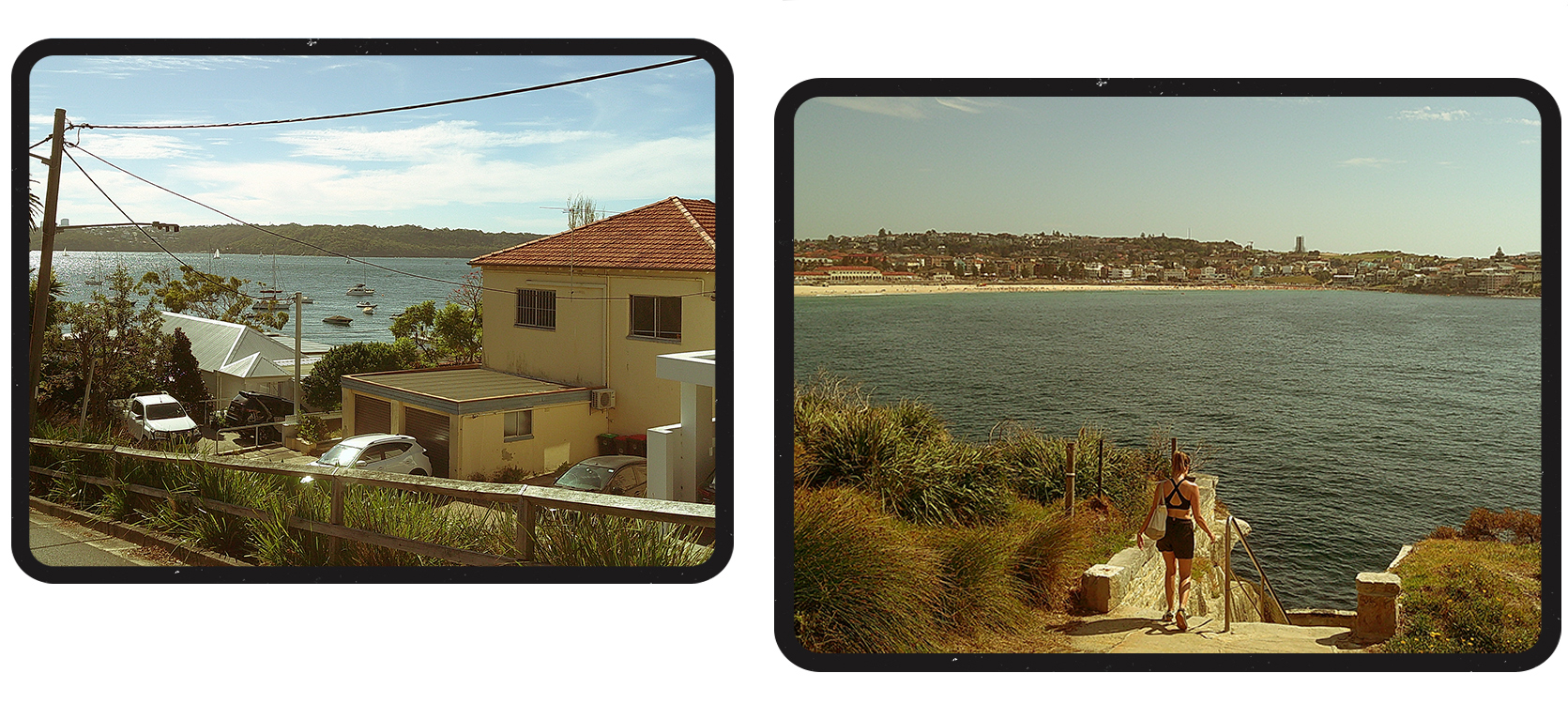
The best part about staying here is its proximity to Clovelly Bay, all of two minutes down the hill. It’s shaped like a horseshoe rotated 90 degrees, and so narrow that workout clubs and volunteer life savers — Clovelly Surf Live Savers is one of the oldest lifeguard clubs in the world — regularly gather here to dive into the water, swim across the bay, run up and around the beach, and repeat. They keep their shoes on for this and their soggy hooves make for a fascinating morning soundtrack.
Personally, I walked down here each day in flip-flops, a sunscreen-stained New Yorker in my back pocket. I’d come through early enough that the world was still monochromatic, a sort of blinding silver, to start my days with a dip. (The Cloey has beach towels. Ask for one.) Then I’d sit and dry for a bit, before walking up to Meet Me at Clovelly for a coffee.
If that all sounds good, you’re really going to like the price. You can spend a week here in the summer for $1,500 AUD (or roughly $1,100 USD).
⇢ MILES ⇢
Run #1: Bondi to Coogee Coastal Path
- Miles: 7.0
- Elevation gain: 809 feet
- Run type: Cliffside coastal boardwalk, sidewalks
- Where to start: Anywhere along the path will work, but Wylie’s Baths, Clovelly Bowling Club and North Bondi Beach are good options
Sydney’s answer to the PCH is a beloved pedestrian pathway that stretches for nearly five miles, faithfully charting every prehistoric swerve and plummet along the Eastern Suburbs coastline. The city laid the groundwork for it back in the 1930s (see some early buttoned-up beachgoers here and here), as beach culture really began to take off, and builders and buyers started shifting their attention away from heritage harbor neighborhoods like Point Piper, Mosman and Bellevue Hill.
These days it’s a vibes highway, an endless procession of walkers, runners, surfers and photographers. Lots of tourists, of course — all sorts of accents and languages are in play — but people who live around here use it nonstop, too. They’ll walk it to meet up with friends, go for a swim, maybe have a first date.
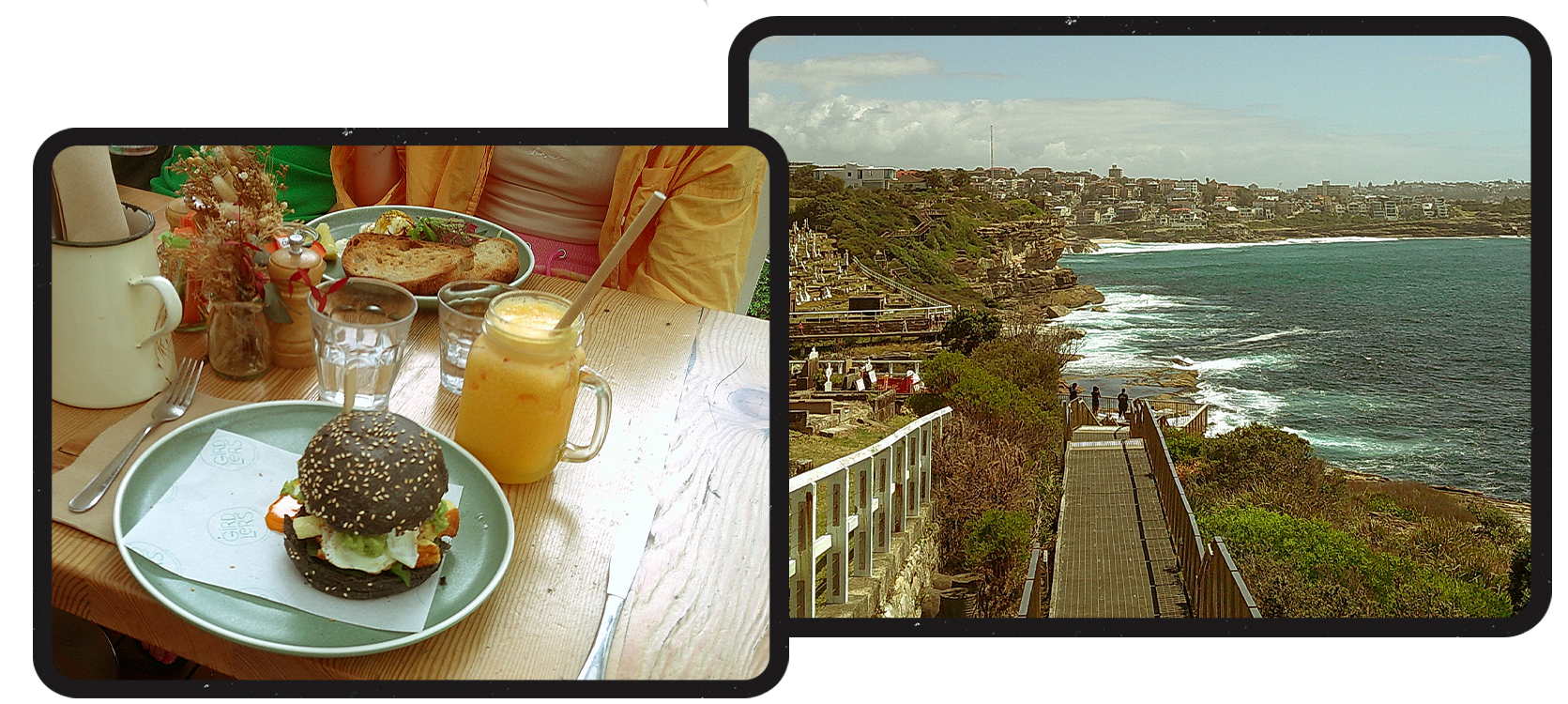
As for the coastal path itself, it’s drop-dead gorgeous, no other way to put it. You feel like you’re halfway to heaven on some of those turns, especially when cruising down into Bronte Beach, or half-mooning around Gordon’s Bay. The first time I walked the path I turned into a total screwball, raving it was “Laguna Beach meets Amalfi meets Daikanyamacho meets…!” Eventually I shut up and came to appreciate that this corner of the planet is simply a one-of-one.
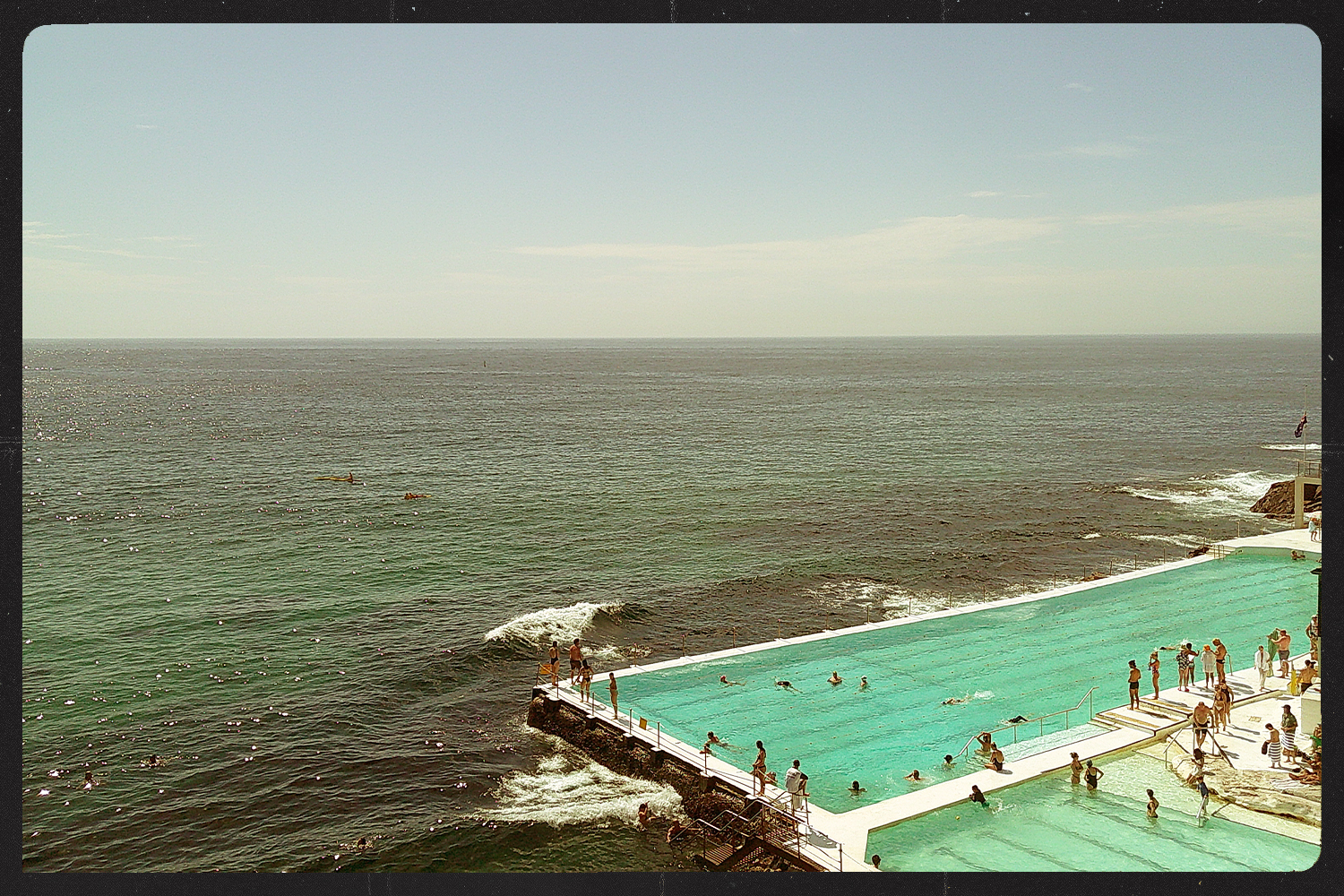
The north terminus is the end of the Bondi Beach promenade. The south terminus is an old lady’s house. In between are fishing coves, a 150-year-old site with perhaps the greatest cemetery views in the world, tidal pools like Icebergs and Wylie’s Baths, the aforementioned bowling club, beaches of entirely different flavors — some residential, some with dangerous rips — and an astonishing surf pavilion that’s an example of inter-war Georgian revival. Every mile or so is a new beach neighborhood (dotted in clifftop homes, I should add). It never gets old.
But it is a lot to take in, so I recommend running this route as slowly as possible. I tend to do a careful out-and-back, and if it’s hot enough, I’ll just jump right into the ocean in my running shorts. To avoid crowds, either go really early (when runners outnumber walkers), or wait for the day to develop a little bit. Because so many visitors anoint this as their activity of the day, the path gets crazy busy in that 8 a.m. to 1 p.m. window. It empties out late in the day, though.
No matter what you decide, expect a fuck ton of stairs. You can’t build a continuous path into headlands this rugged without lots of ’em. They’re not particularly difficult, but they’re another reason to slow down (and maybe a reason to do this route in grippy trail shoes). One last word to the wise: stay left, pass right!
Run #2: Sydney Harbour
- Miles: 5.0
- Elevation gain: 265 feet
- Run type: City sidewalks, waterfront
- Where to start: Art Gallery of New South Wales
This was the first time I’ve done this run and I didn’t expect to enjoy it. I thought I was doing it for the story — figuratively and literally — as Sydney Harbour (and the surrounding central business district) is a rough equivalent to Times Square, or those gloomy shopping streets in every European city where you can most easily find pickpockets and Hard Rock Cafes. Lots of cement and people who don’t know how to walk.
But if you start the run early, and well before the Opera House and Harbour Bridge, you’d be surprised how empty the sidewalks are. Plus, you get much better angles of those showstoppers as you carve up the coast. I had an Uber drop me off at the Art Gallery (worth a visit another day), which is conveniently located on the cusp of the Royal Botanic Gardens. The sprawling site opens at 7 a.m. and even while hugging the seawall, you’ll get a memorable sampling of the country’s unique flora. There’s a rockery with thousands of native flowers, fig trees with trunks bigger than trucks, and rainforest groves that were planted in the 1820s. I breathed in nectar, chuckling as cockatoos screamed their heads off.
Eventually, unfortunately, the garden section of the run had to come to an end; but not before an unforgettable north-facing view that I’d pinpoint to about here on Google Maps.
From there, the run briefly turned into a zombie movie. I zipped up to the Opera House, Rocky’d the steps for good measure, then zigzagged my way around person after person in the Circular Quay neighborhood. It’s a total madhouse on account of the postcard sites, the five ferry stops and the fact that when Western or Asian tourists visit Sydney, they almost always stay in the CBD. (Also, there’s usually a 100,000-ton cruise ship docked adjacent to The Rocks.) It didn’t smell like nectar.
But the run got good again — or at least fascinating and fun — as I searched for the Bridge Stairs. The Rocks is an old part of Sydney, a narrow colonial neighborhood that’s (more or less) survived plagues, gangs and decades of rezoning. There are still heritage pubs and buildings constructed from dinosaur-old sandstone; the whole place feels like a hopeless maze, especially if your calves are starting to bark and you’ve got a bridge climb ahead of you.
Eventually I followed a tunnel which led to a stairwell which carried me up to the tallest steel arch bridge in the world. I’ve run a lot of bridges, and had I been looking down, or even forward, the pedestrian path wouldn’t have been all that special. But c’mon. It’s the Sydney Harbor Bridge. The whole harbor sparkles below.
“How did I get here?” I thought to myself. More than an appreciation of the beauty, I felt a brief and total appreciation of my life, of the choices I’ve made and didn’t, which got me to that precise moment. Then I ran back down to fight through the zombies once more.
Run #3: Centennial Park
- Miles: 5.0
- Elevation gain: 215 feet
- Run type: Multi-use path, park trails
- Where to start: Musgrave Gate
A thought I typically have on these trips: If I actually lived here, where would I run all the time? If I wanted to stack miles for a long run, or do a speed workout without getting hit by a car, would there be a good loop for that?
Enter: the 890-acre Centennial Parklands, an urban oasis encompassing Centennial Park, Moore Park and Queens Park, and about all an everyday runner could ask for. There’s a 2.4-mile perimeter — once covered by marathoners in the 2000 Summer Olympics — which has one of the most thoughtful pedestrian designs I’ve ever seen: five concentric circles reserved, in order, for cycling or rollerblading, driving cars, parking said cars, walking or running, and horse riding. Such order!
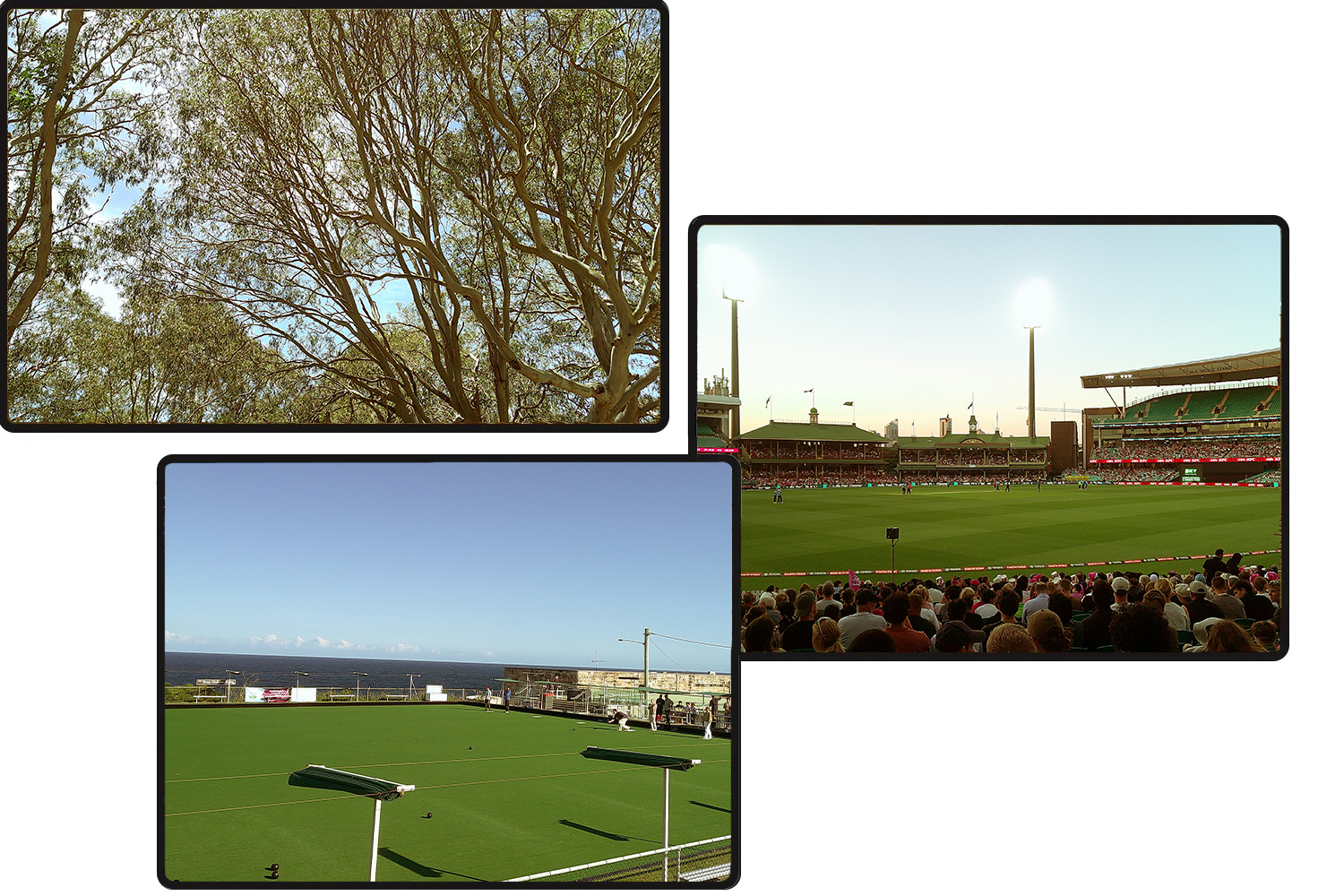
Along the way are little kiosks where cyclists stop for croissants, large grassy ovals for cricket or rugby, and ponds and pavilions built in the Victorian style. The running path is shaded for almost the entire loop, thanks to thousands of eucalyptus and paperbark trees. Gaze into the park during your run and you might spot some wildlife — swans, turtles, that sort of thing. Definitely some bats at night.
If Centennial has a problem, it’s one that exists mostly in my head: this park is a fast place with fit people, and unless you’re ready to submit to the speedsters kitted out in black tops from Pace Athletic, prepare yourself for a perimeter-long pain cave. I was not ready to submit and raced one mustachioed man for so long I ended up battling his ghost. (When I looked over my shoulder he was long gone; I’d been reacting to my own footfalls. Classic.) This is a perfect tactic if you’d like to time your 5K, idiotic if you want a leisurely eight miles.
In other words, arrive with a plan. If you’re game for just one loop, you might extend the run into Queens Park, then up the hill on Darley Road, where you’ll get a unique view of the Sydney skyline. From there you might as well run all the way to Macpherson Street, in Bronte, which is pound for pound one of the best little streets in Sydney. I like getting salmon with fried rice from The Char. If that doesn’t do it for you, don’t fret — I’ve got plenty of additional recs below.
⇢ PIT STOPS ⇢
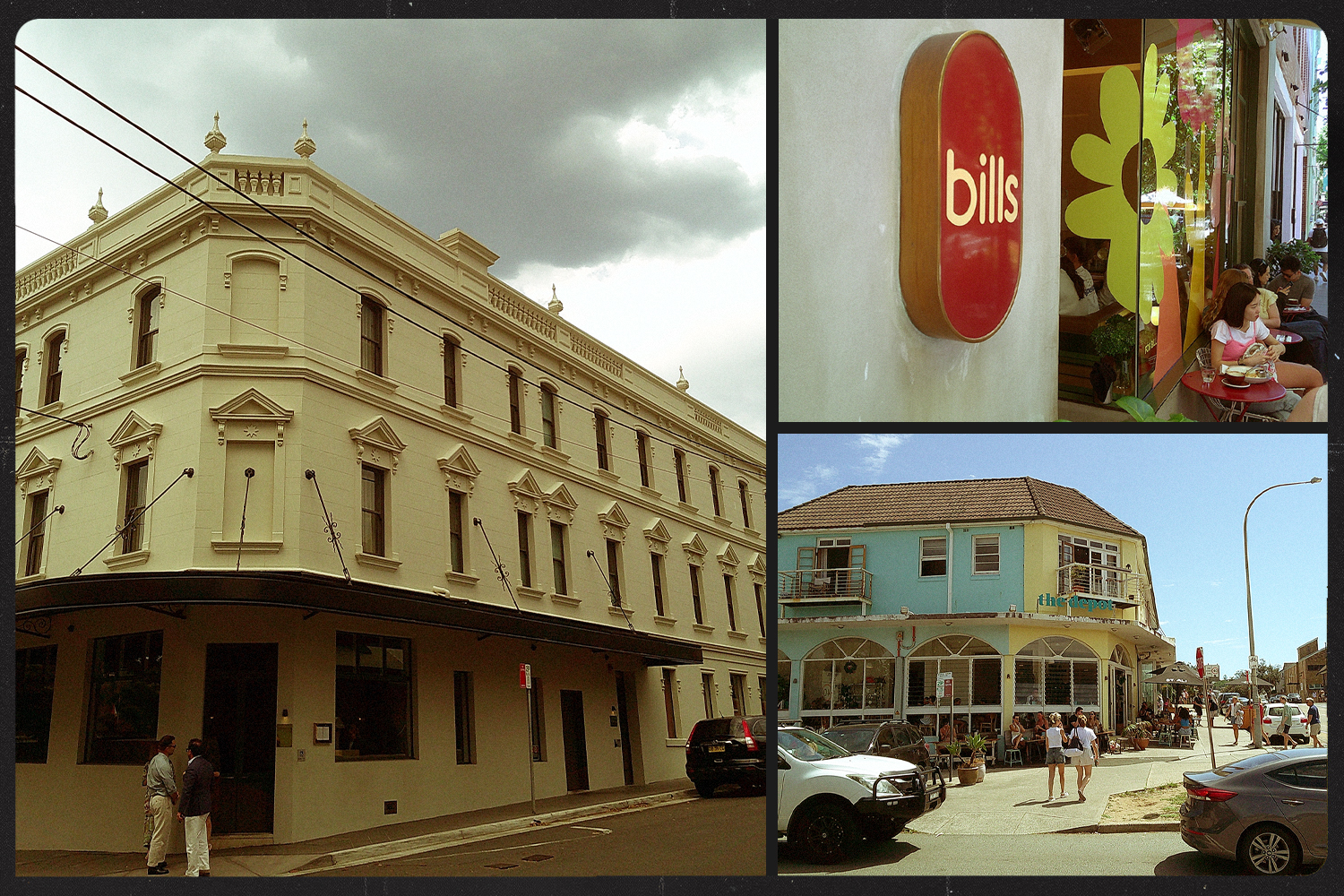
Food & Wine has called Josh Niland the most creative seafood chef in the world. A master in “fish butchery,” his aptly-named Saint Peter occupies an unpretentious space on the ground floor of Paddington’s Grand National Hotel. We came for a celebratory end-of-year lunch, and left with our bellies full of salt and vinegar line-caught blue mackerel, batter-fried John Dory and charcoal yellowbelly flounder rack. The restaurant uses 90% of each fish, which is unheard of in the industry — and also resulted in us eating a custard made of fish eyeballs. I’m planning a triumphant return one day so I can try the Double Yellowfin Tuna & Swordfish Belly Bacon Cheeseburger.
If Saint Peter was the best food I ate the last time I was in Sydney, Louie was the best meal. It’s an effortlessly cool neighborhood spot with one of those Italian-Australian menus I’ve come to know and crave. Arancini with anchovy mayo, eggplant parma, caramelized pumpkin and ricotta agnolotti. We lingered here and ambled down to Coogee Beach afterwards.
Oprah knows about it, so I guess the whole world knows. There are three main locations of this brekkie spot across Sydney; it was founded by Bill Granger, the affable chef and all-around vitalist who “brought avocado toast to the world,” to borrow from his obituary in The New York Times. If you’re in Sydney, you have to set aside a morning for Bills. They specialize in fluffiness. Bring a friend to split their scrambled eggs on sourdough and ricotta pancakes with honey butter.
A brekkie spot that’s less touristy than Bills — you don’t have to make a res, and with a little bit of luck you could be seated in under 10 minutes. It’s towards the far end of Bondi, a sunshine-yellow cafe with the windows usually flung open, waitresses two-stepping around dogs and a deep menu of sandwiches, juices and smoothies. I love their halloumi.
I love this place. Make sure to try the salted caramel and white chocolate (and ogle at their wacky cakes).
I came here for a Big Bash League game one Wednesday evening. I didn’t completely understand what was going on (the BBL is supposed to be an abbreviated, high-offense version of cricket), but it was the last day of school in Sydney, and every time a player hit a “six,” dozens of torches spewed flames into the air, sending little Australians into delirium. Perfect night for a couple tall beers, in an environment that looked like Fenway Park crossed with Churchill Downs. Buy a ticket.
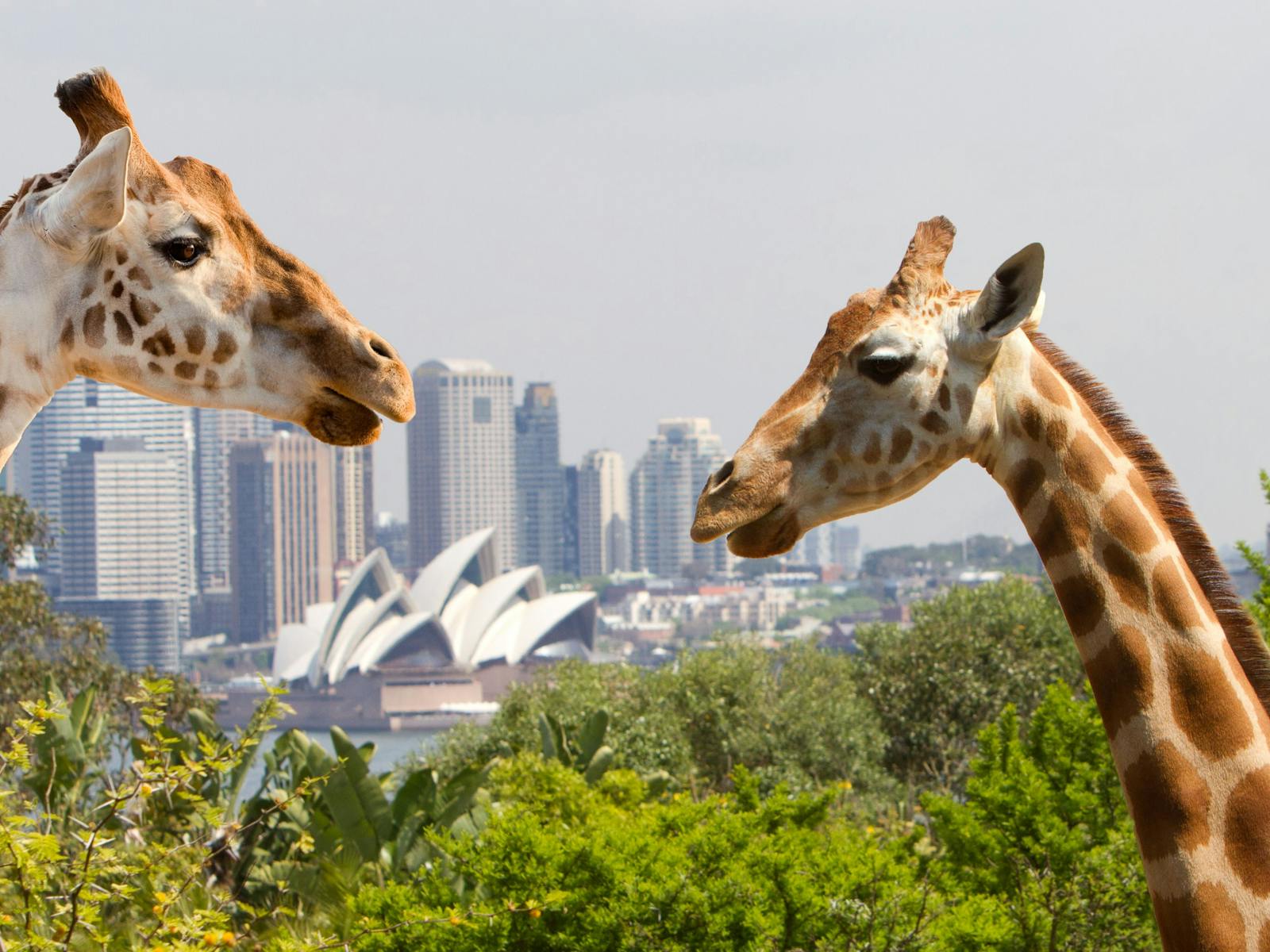
There’s an iconic photo associated with this place, and funnily enough, it doesn’t include a marsupial. Check out these giraffes framing Sydney’s skyline. Taronga is undoubtedly one of the world’s best zoos. Not that I’ve been to that many, but I’ve been to the well-loved San Diego Zoo thrice, and the experience here was on another level. We took an early ferry from the CBD and got our requisite eyeful of kangaroos, platypuses and koalas. The snake section was insane.
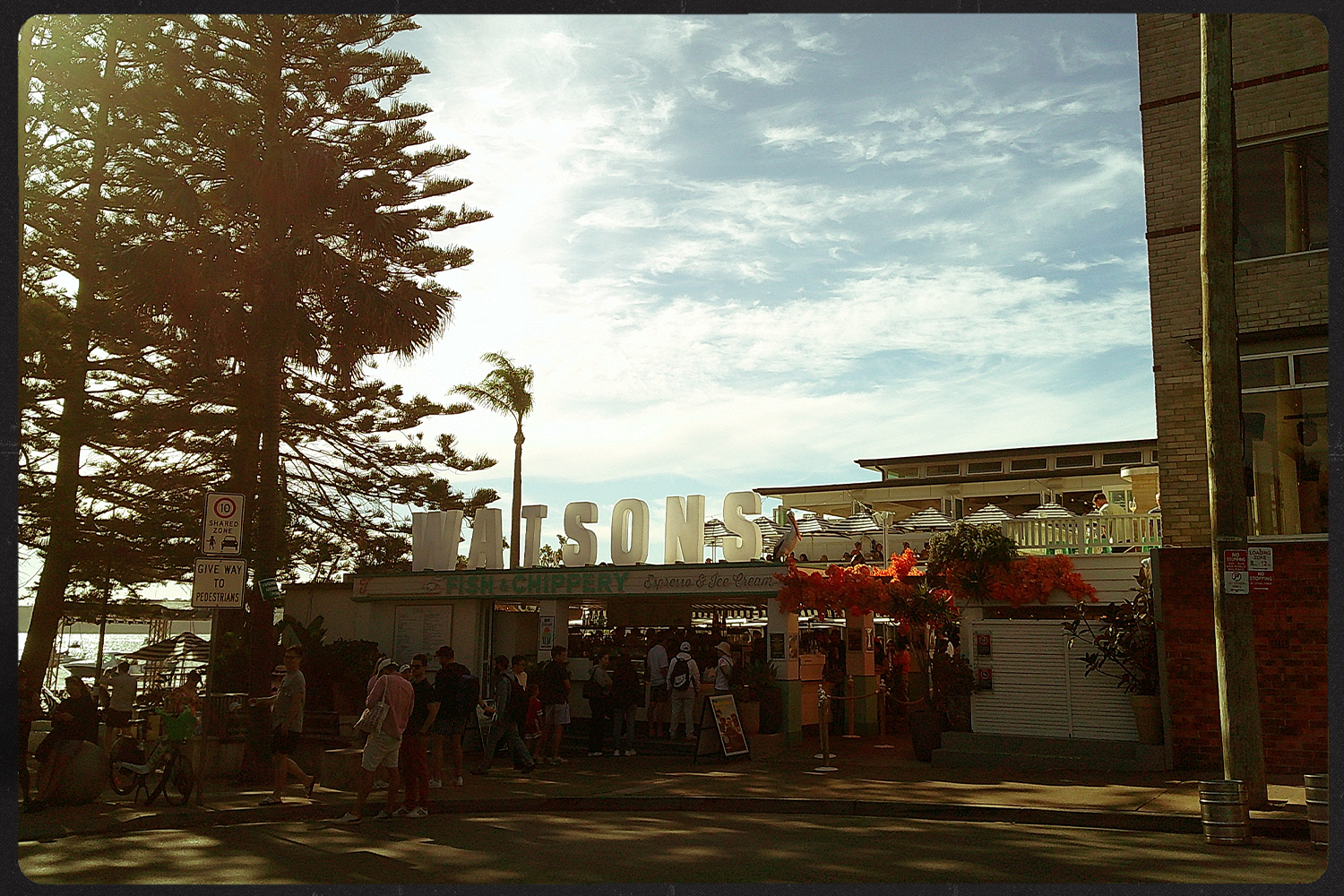
I sandwiched this rec here for a reason: Watsons Bay is an affluent neighborhood at the tippy-top of Sydney’s South Head; you take the ferry here from Taronga, or easily Uber up from Nielsen Park (which I’ll get to in a moment). It’s harborside, so it’s sort of looking back over its shoulder at a massive slice of the city. Watsons Bay Hotel is the perfect perch. While you’re at it, eat something fried, have a few drinks and listen to some tunes.
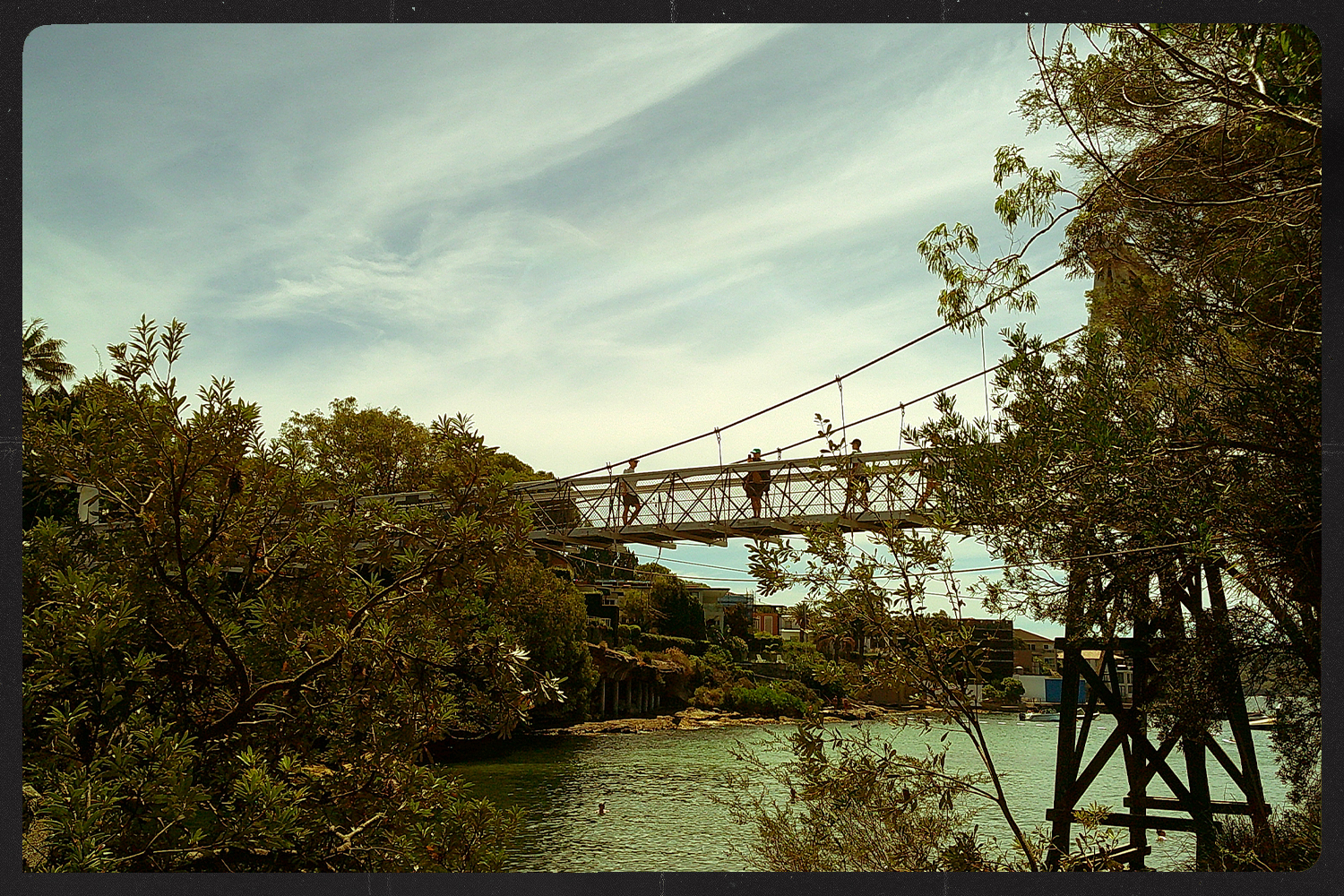
Nielsen is a harbor beach in Vaucluse, an enclave with absurd clifftop homes, also situated on Sydney’s South Head. It’s technically part of a national park, so there’s a big picnic area before you get to the beach, and dotting the grounds are perfect examples of Federation architecture, the dominant style in the early 1900s. I’d schedule this one for a beach-day doubleheader: spend a couple hours here, get lunch at Washoku, then walk to Parsley Bay, a family beach you enter through a rare pedestrian suspension bridge.
Avalon, Newport and Palm Beach make up Sydney’s upper Northern Beaches, a once rough-and-tumble stretch that’s now home to a mix of tradies and second-homers. Palm Beach in particular is an amazing beach for doing absolutely nothing. You wouldn’t think Sydneysiders need a place to get away, and yet here’s Palmy, a layer deeper in the laidback onion.
More Like This




Twice a week, you'll find proven advice and tips, expert interviews, deeply reported features and personal essays on living better — for however long you’re here. Subscribe to Champ now.