
Welcome to 17 Miles, a travel series built on one core belief: the best way to know a city is to run through it. Whether you’re a serious marathoner, a business traveler or a hungover wedding guest desperate to sweat it out, we’ve personally mapped the best routes — and scouted the right stops to match.
So you’d like to see the nation’s capital. You’ve got options.
You could walk your Sambas into a fine pulp. Risk it all on a Lime scooter. Sacrifice your last shreds of dignity to a Segway. There are also guided tours aboard double-decker buses, golf carts and old-timey orange trolleys.
Or: you might stretch out the legs and do your best impersonation of Steve Rogers. That’s Captain America, for you non-nerds. The only thing the man loves more than saving the world is a Tidal Basin run at dawn.
Washington, D.C., has its issues, as you may have been told on television. But running culture is certainly not one of them. The District is a runner’s paradise. It’s a title we don’t hand out lightly, and one earned thanks to the city’s coherent design, endless cultural markers, underrated trail scene and efficient Metro.
It’s customary, when visiting a city, to play the “I could live here” game. In D.C., one feels: “I could run here.” Wherever you reside, a faithful running habit means completing the same routes over and over again — in rain, sleet or 97% humidity (they get a lot of that around the DMV).
But from the National Mall to the Georgetown Waterfront to the newly-constructed Metropolitan Branch Trail, Washingtonians are wealthy in multi-use pathways. And when you need a field trip, well, that’s when you make like Teddy Roosevelt and head for the sun-dappled solitude of Rock Creek Park.
These days, communities like District Running Collective, NoMa Run Club and Northeast Track Club are fueling the local running boom, and the city’s most popular race, the iconic Cherry Blossom Ten Mile, is bigger than ever, drawing 20,000 finishers this past April.
We came to town in early September. Here’s where to catch some Zs, fuel up and run 17 miles.
⇢ SLEEPS ⇢
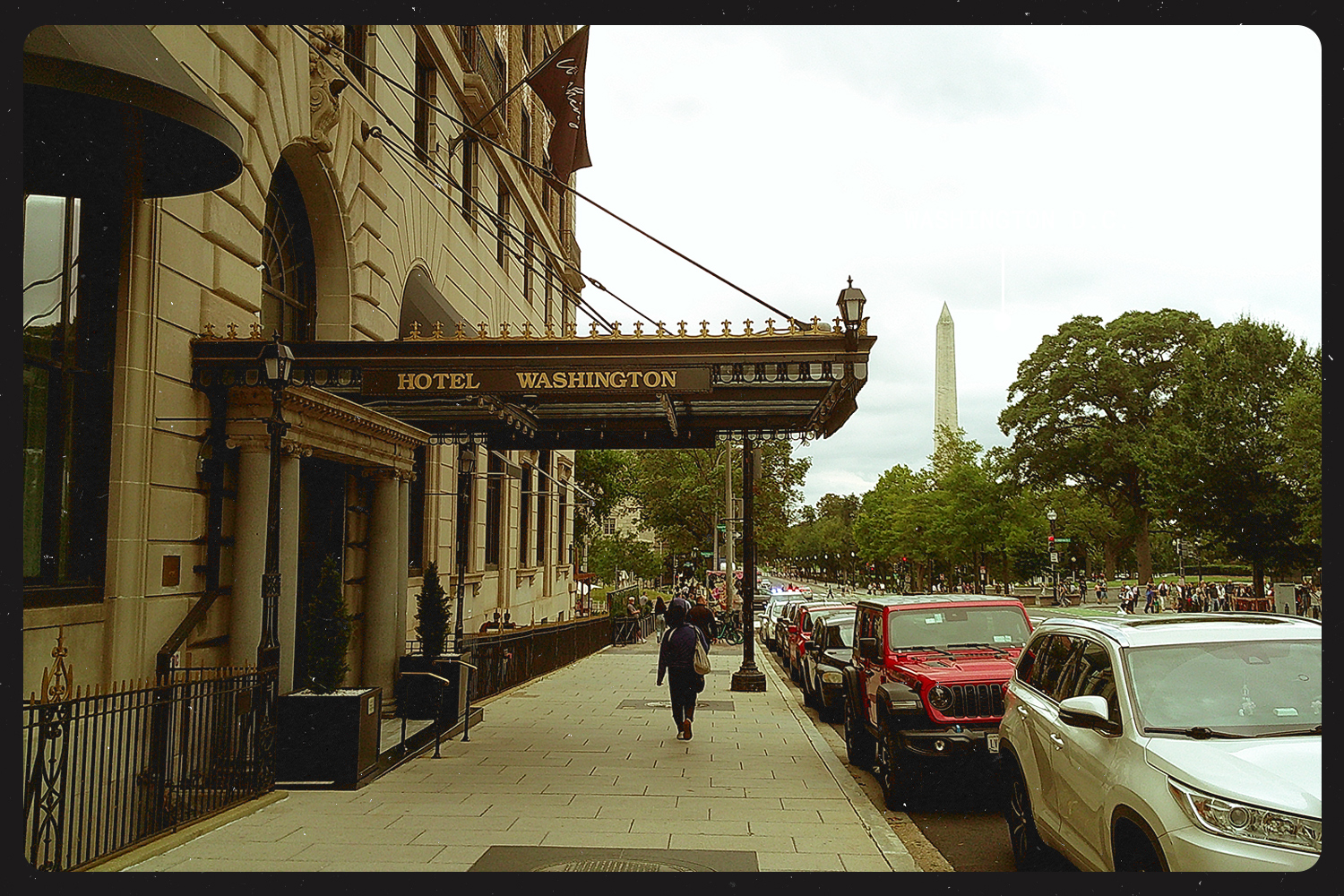
Hotel: Hotel Washington
Where is it: Downtown D.C.
What works: There isn’t much that needs to work when your property is across the street from the White House. But Hotel Washington, founded in 1917 and renovated a hundred years later, hasn’t rested on its laurels or its location.
I arrived on a Sunday afternoon, after a short Metro from Union Station and a not-so-bad Amtrak from New York City. There was some cool art in my room (riffs on cherry blossoms and political cartoons), but I had trouble peeling my eyes away from the window. There was the Washington Monument, framed at an angle I’d never seen it before. I could even see it while taking a bath. I felt like I’d fallen headfirst into a legal thriller.
D.C. is meant to be explored, and Hotel Washington proved an ideal basecamp for that pursuit. But the hotel’s also a worthy destination unto itself. Its rooftop lounge, VUE, is probably the city’s single best perch — and features mid-Atlantic seafood alongside cocktails with names like “Motion to Quench.”
At the other end of the hotel, meanwhile, is a full-service spa. I went for a massage on Monday, after my six-miler, which included hot stones and targeted muscle relief, using the Trager method. I left feeling revitalized and appreciative. When you owe 17 miles, you’ll take all the help you can get.
⇢ MILES ⇢
Run #1: National Mall
- Miles: 6.0
- Elevation gain: 107 feet
- Run type: Gravel, waterfront
- Where to start: The White House
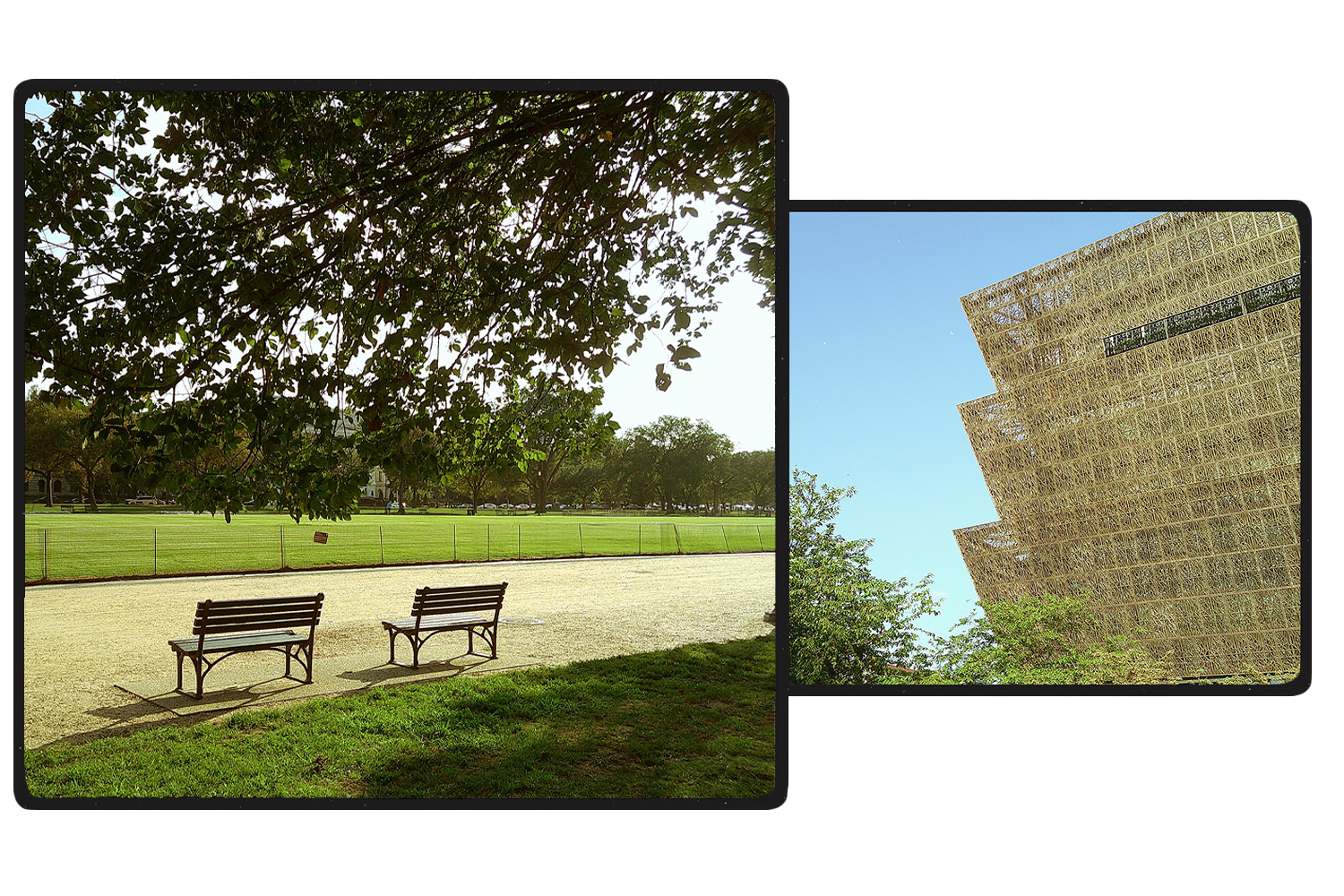
How do they keep the grass on the National Mall so green? That’s not a riddle — just a thought that kept popping into my head during a six-mile sweep of the famous park.
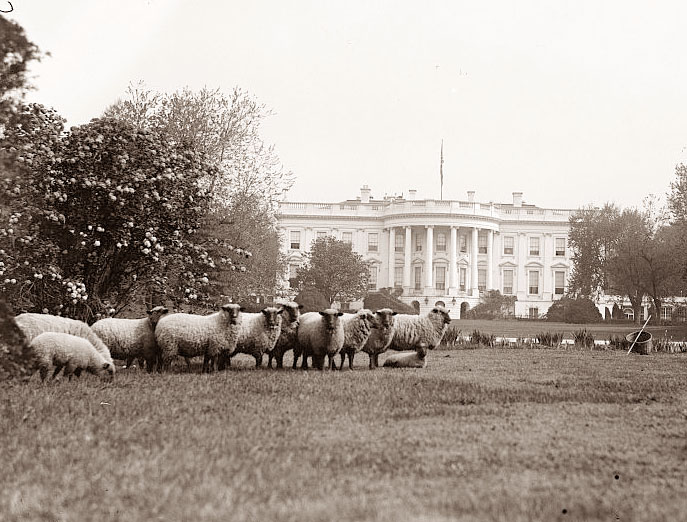
As it turns out, the National Mall Turf (official name!) has come a long way. And not just since the days that sheep and cattle roamed freely across it. Over the last decade-plus, the Mall has received millions in funding and multiple makeovers; its Kentucky bluegrass blend now benefits from improved soils and an advanced irrigation system. There’s also a schedule, depending on where you are within the park, for who can use the grass and when.
I guess it speaks to the job they’ve done that I was even looking at the turf at all. Throughout D.C.’s one can’t-miss run, there were endless points of interest to gander at instead.
Starting at The President’s Park, heading south on 15th St NW, I took a right on Constitution Ave to link up with the Mall’s distinctive beige-pebbled sidewalk. The Washington Monument was on my left. It was within view for every second of this run, and for that reason, by the end of the effort, it began to take on the architectural equivalent of semantic satiation. Wait, why do we have a giant obelisk again?
I darted left towards the World War II Memorial, which is the happiest war memorial you’ll ever see. People stop here to take photos by the pillar inscribed with their home state, or just to enjoy the cacophony of spigots, flinging crystal streams of chlorine into the air. The messaging is clear: we won. Other memorials are more somber (like the Vietnam Wall, where your own face appears amongst the names of the dead) or guarded (like Korean War Veterans, which depicts personnel in action, draped in ponchos and walking through juniper bushes).
Running up the steps of the Lincoln Memorial, I shooed away useless memories of the least-remembered Planet of the Apes remake — the one where Mark Wahlberg returns to Earth to discover a giant chimp sitting on Honest Abe’s chair (43% on Rotten Tomatoes) — and stopped to read the “Gettysburg Address.” It’s one of the most remarkable speeches ever recorded. And it’s right there, you can read it: 272 words on the fragility of democracy. On my way back down the steps, overlooking a peaceful morning in D.C., I passed seven National Guardsmen with semiautomatic rifles.
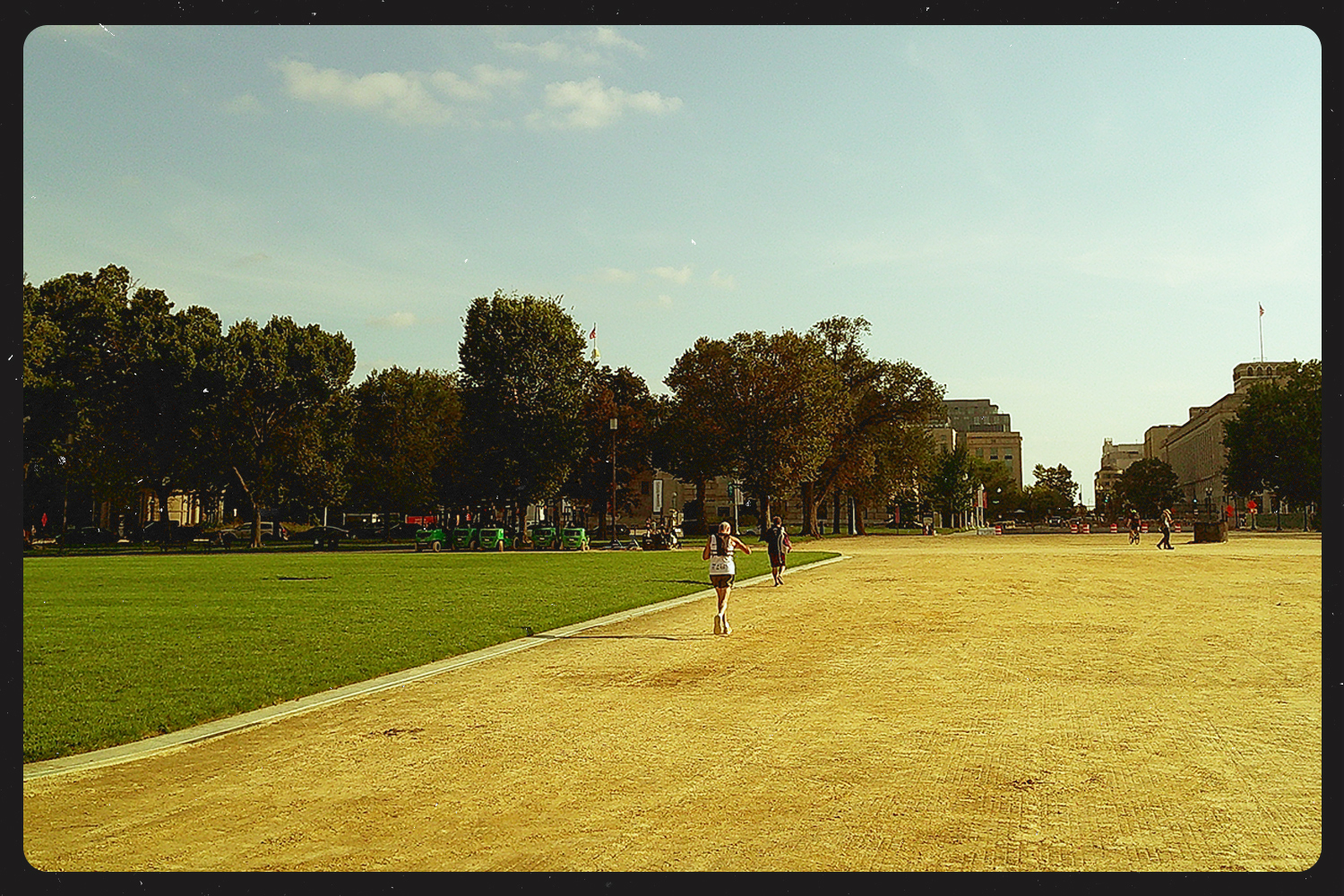
There was construction by the Tidal Basin, but I was still alone for much of the loop. The water scattered the Washington Monument into at least seven shimmery slices. I was deposited back on the National Mall’s main promenade, and four miles into my run, rewarded with a real treat: gravel. Logging miles on asphalt for 350 days of the year, the tactility of tiny crunchy rocks felt delicious to my sneakers and knees. I ran up towards Capitol Hill, veered back just before its reflecting pool and tapped into another gear for the finish near Federal Triangle.
Run #2: Rock Creek Park
- Miles: 7.0
- Elevation gain: 742 feet
- Run type: Woodland trail, technical
- Where to start: Van Ness-UDC
Ah, self-satisfied tech founders with their jiu-jitsu classes and cold plunge classes. Teddy Roosevelt hit the “active brainstorm” first.
The American Lion used to take his Tennis Cabinet on uptempo “scrambles” throughout the 1,754-acre urban park. He often forced bewildered foreign dignitaries to walk with him, and employed a “point-to-point strategy,” meaning he’d basically just point to a cliff and demand his companions of the hour walk in a straight direction to it, thickets in the way be damned. Sometimes he’d even skinny dip in the creek itself, a tributary of the Potomac, which had ice blocks deep into spring. (So I guess he invented the cold plunge, too!)
Roosevelt’s penchant for exercise was extremely ahead of his time — to the point of being a little scandalous — and he had to return to the White House under the cover of nightfall. For that reason, local spooky blog Scary DC suggests “Theodore Roosevelt and his children can be spotted in the twilight still gamboling in the park.”
Fortunately for me, I arrived in the full light of day — and under a gorgeous September sun, no less. I didn’t see any presidential ghosts, though I did see lots of people walking dogs, WFH types taking calls and one elementary school field trip. It’s clear that D.C. uses Rock Creek as a communal backyard. Making that even easier: the park is accessible by multiple Metro stops.
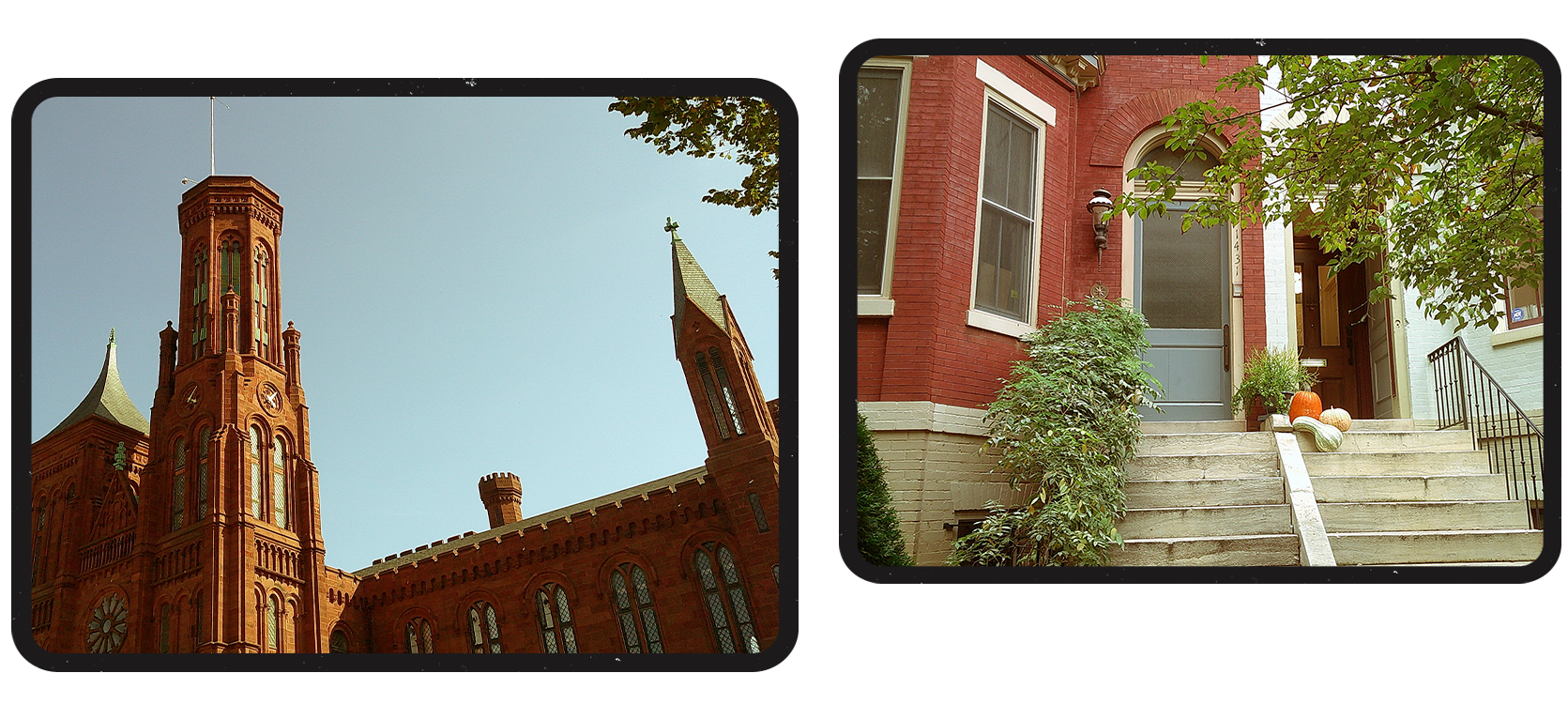
I hitched the Red Line from McPherson Square to Van-Ness UDC, a ride of less than 20 minutes. (In case you were unaware, the WMATA has the second-highest ridership in the United States. It’s pretty much the only other “subway” the country’s got, despite some underground lines in Boston and Chicago.) From there, I entered Soapstone Valley Park — the trailhead’s on an all-American street, with falling leaves and basketball hoops, although, ironically, some of the gated homes are foreign soil. The area is prime real estate for international embassies.
Once in Rock Creek, I crossed Broad Branch Road and began my lengthy clockwise circuit of the park. I don’t think you need to overthink your prep here; there are numerous trails, but they’re self-explanatory, and often open into ballfields, parking lots or visitation centers. It’s very difficult to believe, jogging under a canopy of White Oak and surrounded by so much quiet, that you’re still in a city of over 700,000.
I followed one trail for a while, then crossed a road and switched to another, which climbed to the full height of the park. Here, the terrain got steep and technical; towards the top, at which point I was huffing and puffing, I found placards commemorating Rock Creek’s role in the Civil War. Its forts and batteries, elevated nearly 400 feet above sea level, fired cannons against the Confederates.
It’s the sort of place you could visit six times a year for six completely different runs. A tip I received from a D.C. friend, which I’ll tuck away for another trip: you can even link with the National Zoo directly from Rock Creek. It’s just south, and free. (Though they’ll stop you to fill out a timed entry.) Find more info on how to pull it off here.
Run #3: Georgetown Waterfront
- Miles: 4.0
- Elevation gain: 221 feet
- Run type: Multi-use path, waterfront
- Where to start: Lincoln Memorial
Full disclosure: I went to Georgetown University for undergrad. So I had a personal interest in this route. I liked the idea of trawling up the Potomac, Healy Hall piercing the horizon, making my triumphant homecoming through those O Street gates.
(In the end, spoiler, I didn’t run into any familiar professors on campus, all the college kids looked like they should’ve been in high school and no one gave the sweaty thirty-year-old a second glance. I guess the place has moved on. Maybe I should donate a building.)
The run, though. I started by the Lincoln Memorial, then merged onto Parkway Drive NW, a sidewalk overlooking the Potomac. It gets collegiate very fast around here. If you’re running early, you’re guaranteed to see crew teams carving their way through the blue-brown water. The path along the river has clearly benefited from renovations since I graduated. You can even access it via the newish Kennedy Center footbridge (meaning this run can also start in Foggy Bottom, if you’re so inclined).
On another day, one might incorporate Theodore Roosevelt Island, which has wooded trails and a boardwalk, and is technically in Virginia. You can also easily run to Rosslyn, a downtown corner of Arlington with its own Metro stop, and loop up with Fort Bennett Park.
But my heart was feeling nostalgic, and after 13 miles across the first two days, my legs were feeling heavy. So I barreled through the Georgetown Waterfront, which, despite its “abominable” seventies architecture, still attracts singles determined to spend $70 on a bucket of hard seltzers on Saturday afternoons. Past the commercial section, the actual national park begins, and it’s the last bit of flat terrain before the charge to the Hilltop.
I crossed over the Chesapeake and Ohio Canal. It’s currently dry on account of a preservation project, but a century ago, there were gondoliers, and a decade ago, I watched Hoyas play pond hockey on a snow day. I then made my way down M Street; its rowdy, Reagan-era bars are no more, replaced with the suspects typical of a ritzy corner with high foot traffic: Patagonia, Aesop, Skims.
Down by the Key Bridge, where M Street morphs into a highway, there’s a gas station adjacent to a tall, narrow stairwell: these are the infamous Exorcist Steps, named for the 1973 movie. I somehow still haven’t seen the film, though I’m aware a priest falls down all 75 of the steps. At Georgetown, varsity athletes typically have to run intervals up and down the stairwell, and looking to honor that energy, I drove my knees hard and high.
From there, I was in cruise control, loping past The Tombs — a perfect dungeon with oarsman memorabilia and a lacquered horseshoe bar — then heart-clogging sandwich shop Wisemiller’s, then all the dorms I’ve known before. The lawns were mostly empty, class seemed to be in session, and my last few sneezes of mileage were a pleasant blur. I ran past buildings I’d never seen, fanned out the back exit and finished on one of the brick-laden side streets where the homes have looked the same for centuries, only the horse buggies have been replaced with Range Rovers.
Honorable Mention
Also known as the “how the hell did he miss that” section. Don’t worry — I’ve done my extra research. If you’re looking to pick up some extra mileage, check out the Metropolitan Brand Trail, a pathway occupying an old rail trail, which stretches from D.C.’s Union Station all the way to Silver Spring, Maryland.
It strikes me as one of those local projects that’s taken forever (it was conceived back in 1988) and given a bunch of people a bunch of headaches. But you don’t have to worry about that! It’s a full eight miles, perfect for an out-and-back. Just mind the cyclists. If you’re really jonesing for a loop, try the 451-acre National Arboretum, where running is allowed and glorious.
⇢ PITSTOPS ⇢
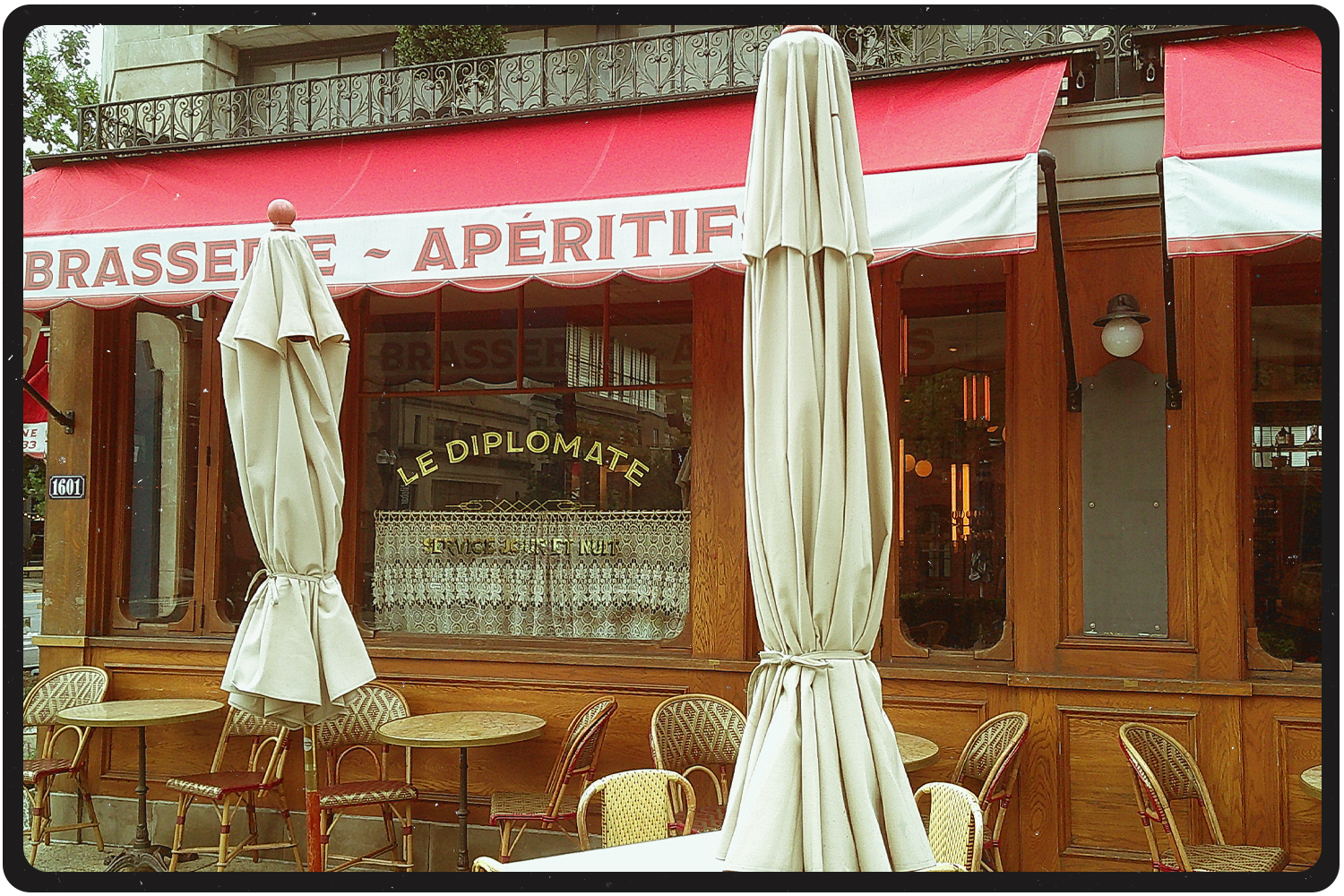
The do-it-all French cafe on 14th Street, where people wine and dine their friends, coworkers, parents, you name it. You’re within spitting distance of Adams Morgan for a nightcap, or you could stay local and hit Jane Jane.
I wish I had taken a photo of this place’s printed menu, so forgive my paraphrasing, but it said something like Head Chef Carlos Delgado “goes to extraordinary measures” to get the best fish possible. Keep doing what you’re doing, chef. It’s working. A two-in-one Peruvian restaurant with a James Beard award and a Michelin star to its name.
There are a few locations scattered throughout D.C. I went to the one in Dupont Circle, a zero-faff happy hour haunt with shrimp po’boys, crab cake sandwiches and of course lots of oysters. Get the eastern shore crab dip…it goes crazy.
The District’s done a lot of work over the last 15 years rebuilding the Navy Yard — that’s where the Washington Nationals play — and The Wharf, where I went to see British singer/songwriter Sam Fender at The Anthem. It’s a giant venue that opened in 2022. I could see it being a little too sanitized (Hudson Yards-y is the official term, I believe) for those used to Black Cat or the 9:30 Club, but give their schedule a look. If you’re on the Atlantic Seaboard, it might be the extra push you need to make the trip.
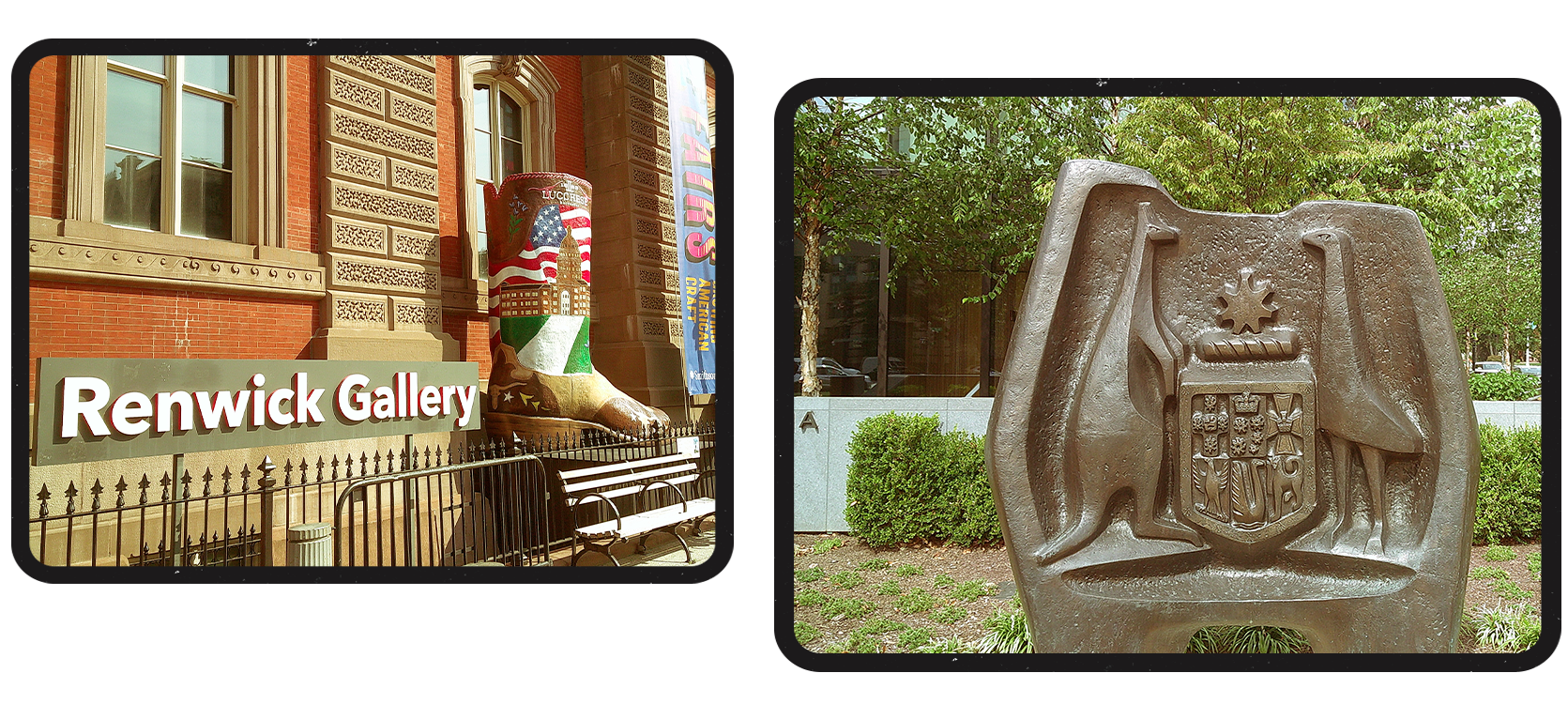
I had a chance to tour the Australian Embassy during my trip. (My friend is an Aussie diplomat stationed in D.C.) It’s one of the newer embassies, opened in 2023, and absolutely stunning. Try to see the interior of one, if you can — they’re often built with materials from their home countries, and some feature walk-in galleries, host concerts or even offer dance lessons. (Argentina!) Your best shot is in May, using Passport DC, but Canada and Sweden are pretty lax about visitors throughout the year.
Once known as “the American Louvre,” the Renwick features works from the last 200 years. There’s currently a giant pair of boots outside the gallery — the latest exhibit is all about the offbeat stuff artists submit to state fairs. There is a butter sculpture, yes.

More Like This



Twice a week, you'll find guinea pig features, personal essays and expert interviews on living better — for however long you’re here. Subscribe to Champ now.