
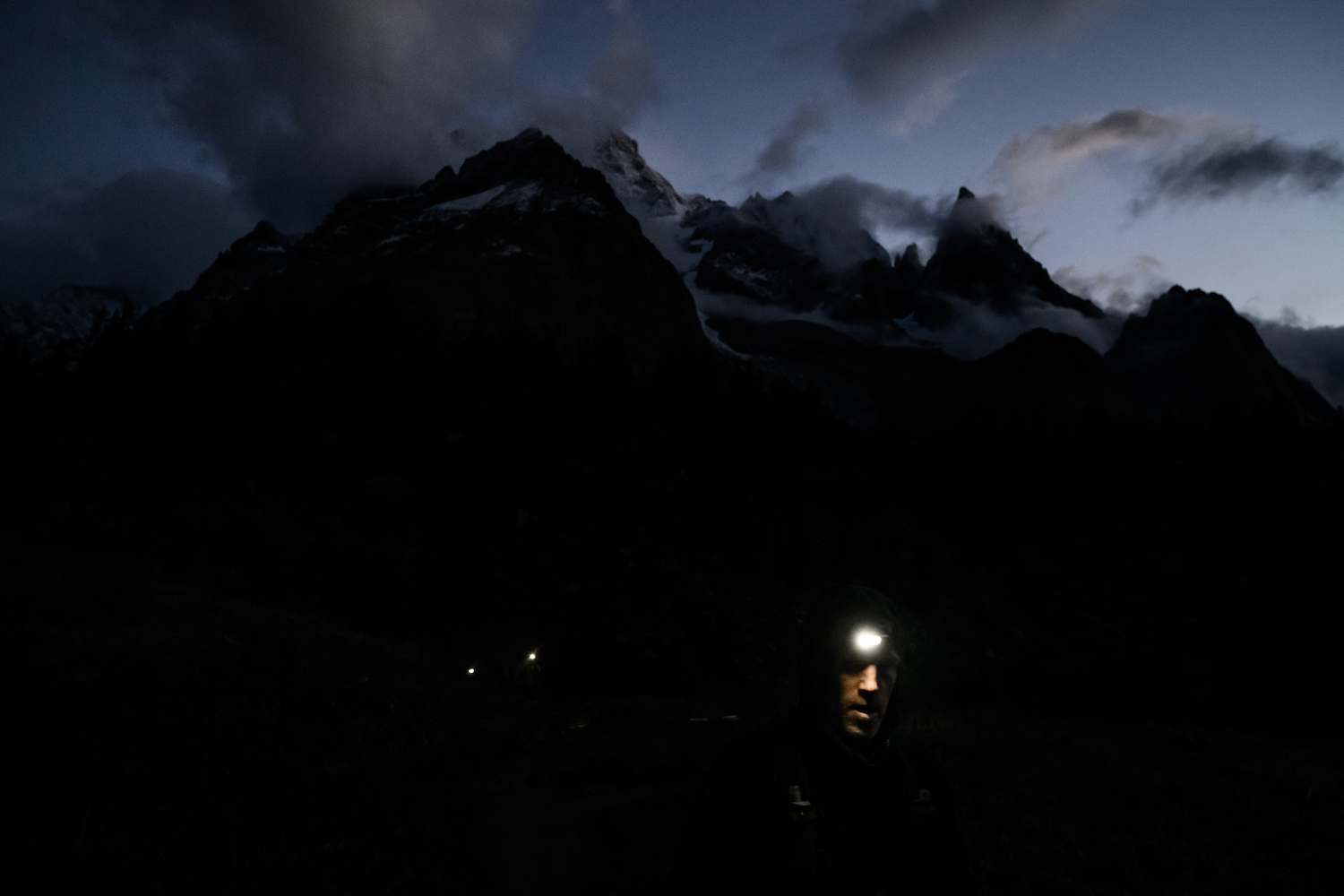
Each light is a runner, and each runner is a human, a human with their own reasons for doing this. That light has been to war. That light lost a loved one. That light’s brain won’t shut off when they go to sleep. That light’s weathering an expensive midlife crisis. That light just wants to put dinner on the table.
One after another, these lights round the corner and head for the hill. Bobbing and blurring, buoys in the black forest, staggering into delirium. Screams and flares, cowbells, the splash of wine on rain jackets, bannermen swinging the red-and-white shields of Savoy, at least one wearing an armet helmet, looking like he’s returned from the frontlines of the Crusades only to flop his arms in unison to “Freed From Desire.”
Allez is the word of the day — yelled three times fast. I lose track of how many runners pass us. Some fly by, all business. Some have camera crews. Some stop to pull out their own phones and record the fracas. Their bibs show flags for Ireland, Japan, the United States, Nepal. A long and lonely night awaits. For many: two nights, or an early van back to Chamonix. Three capital letters next to their name. Here, the thin air is still thick with hope. Who can blame them for taking it all in?
They say that 900 years ago, a hermit took up residence in this gorge, to provide shelter for weary travelers. The dominions were different in his time — this would’ve been a corner of the Kingdom of Burgundy, not a prelude to the Franco-Italian border. But the land has stayed the same. A full marathon into their race, the runners begin their 2,700-foot ascent of the Croix du Bonhomme. Morning in Italy is somewhere on the other side.
Standing at the bottom of the hill, at the mouth of the chute, it’s the least I can do to rattle the bell’s heart against its body until my hand has lost all feeling. What one light deserves, so do the rest. The hermit’s sanctuary was established for St. Anthony, patron saint of travelers, sailors and mule drivers, and the place hasn’t forgotten its pious past. An onion-domed chapel sits below the treeline, but it’s gone dark. I’ve lost track of time. I hustle down the side of the path, nearly eating it on the slick gravel.
Now jogging down the road, I’m trying to recall the direction of the parking lot. Touchpoints from four hours before blink into view: low stone barns that look like World War II bunkers, a row of porta-potties. I get lucky. There’s exactly one bus left containing anyone with any clue of who I am. It’s an hour back to Chamonix, and I crash into the felt seat, drunk and invigorated, achey and alive. High up in those mountains, far from aid stations and film crews, I wonder what will become of those runners. Tonight, the only way into the underworld is uphill.
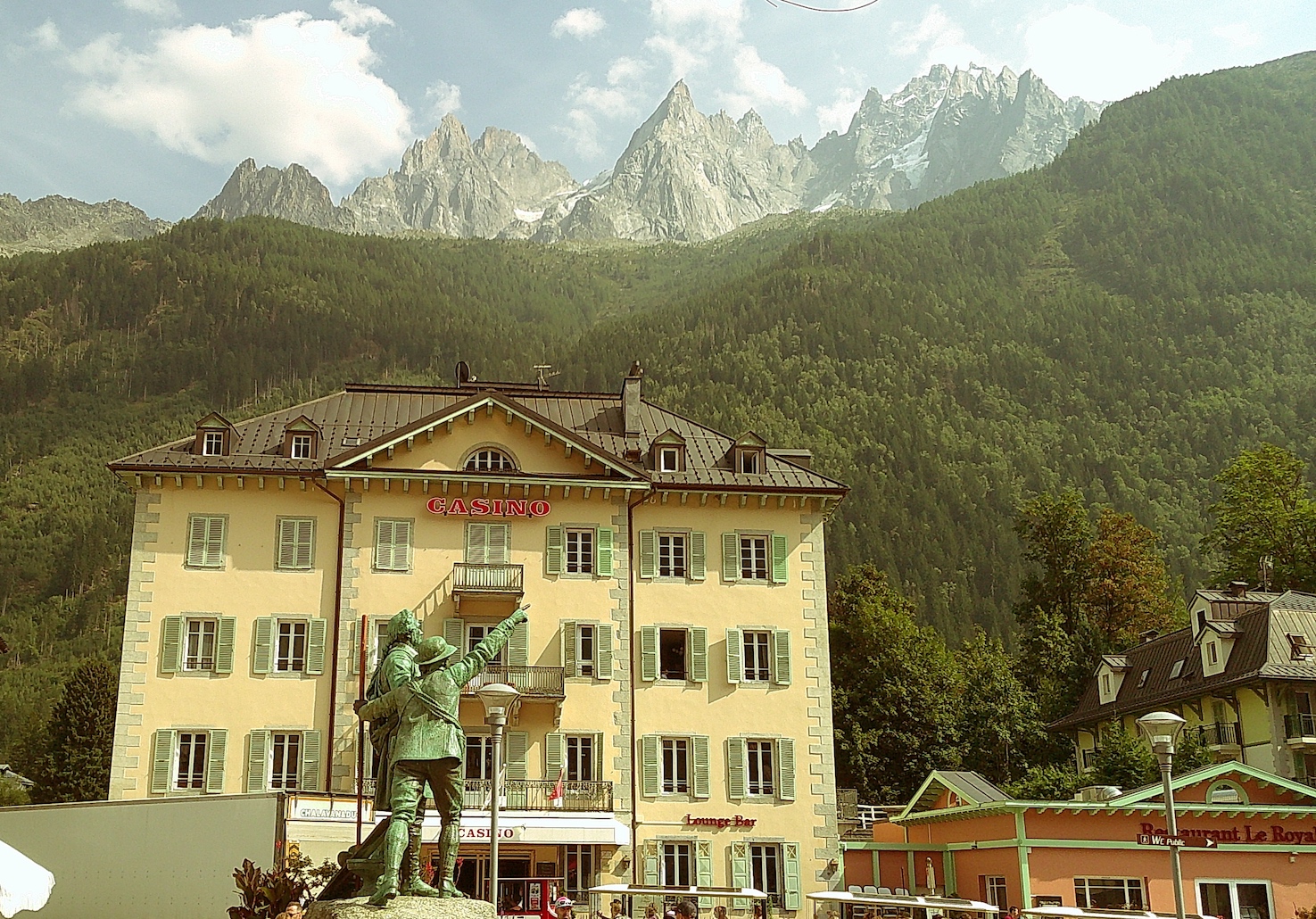
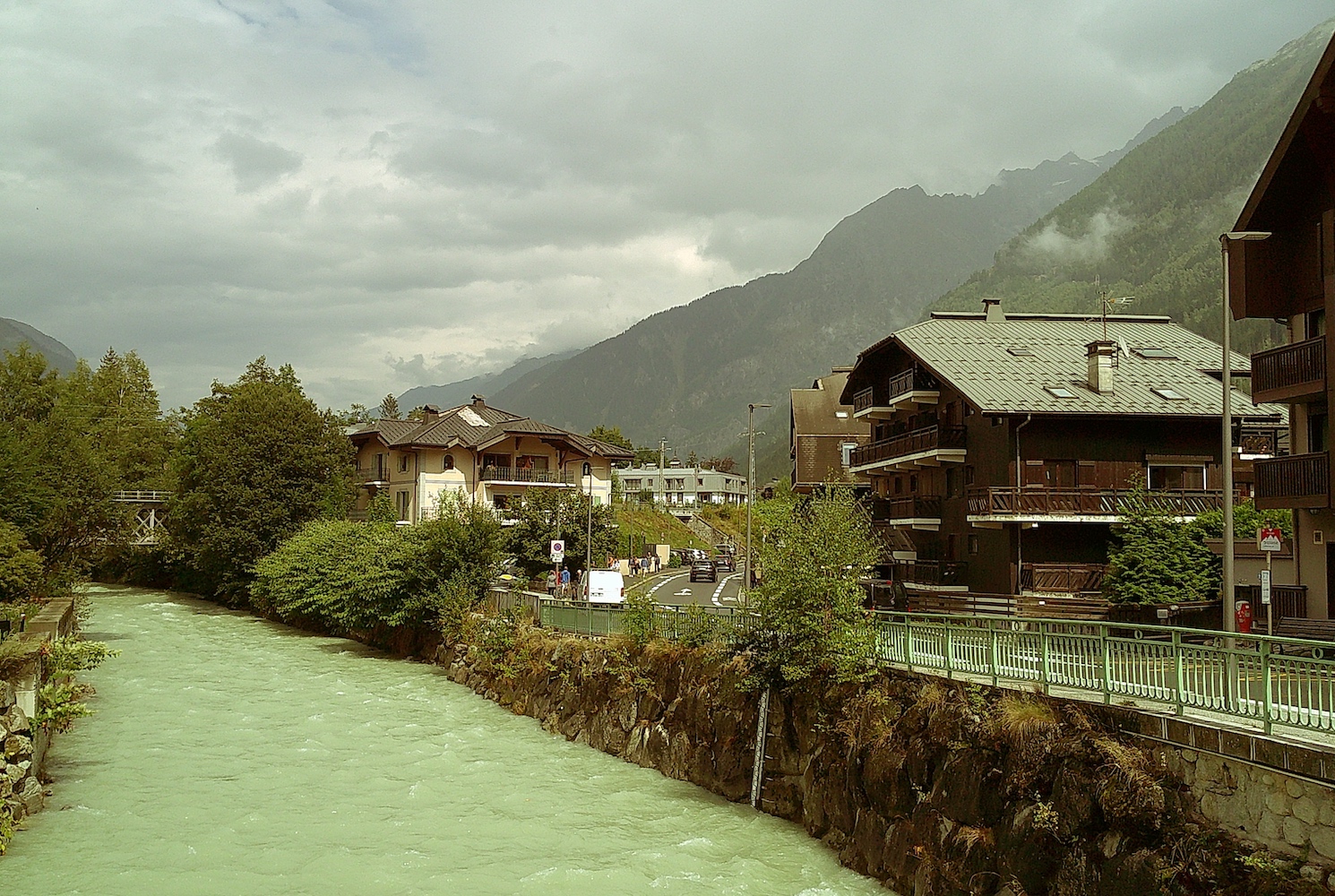
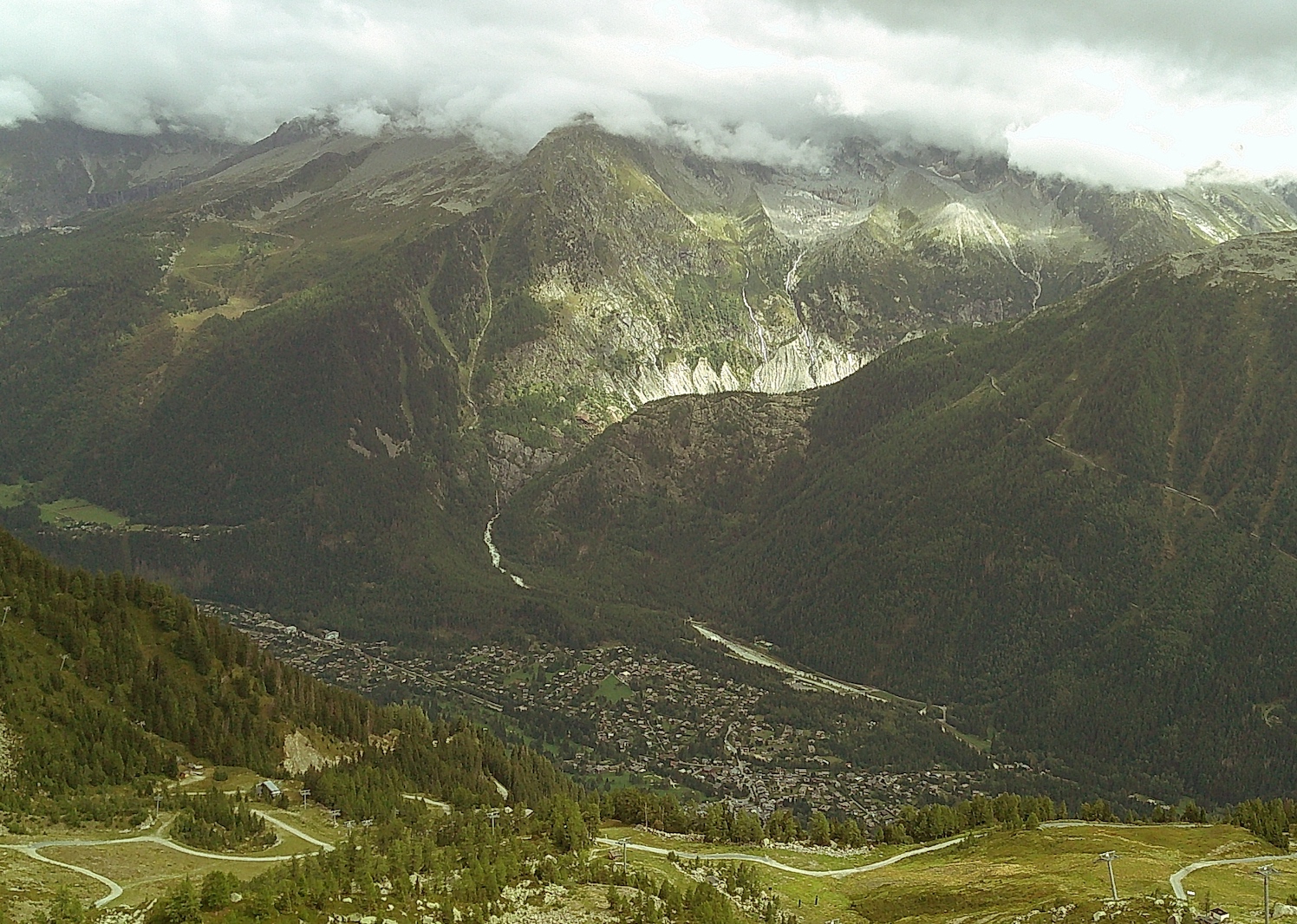
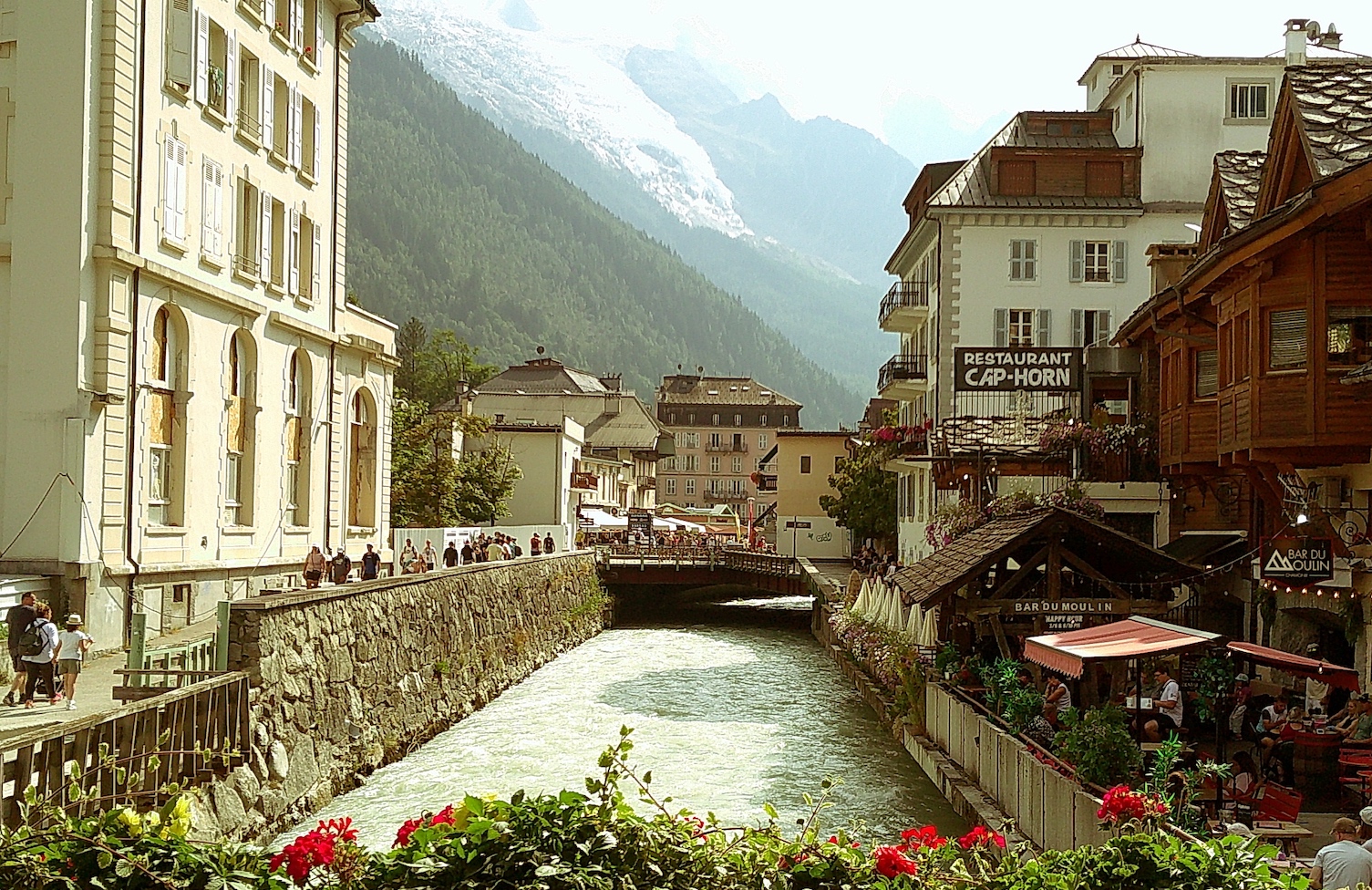
Chamonix is a ski resort town at the base of Mont Blanc, the tallest mountain in western Europe. Its Belle Époque low-rises and holiday hotels collect around the ice-green River Arve, with several footbridges peppered throughout the 10-mile-long valley, though in some sections the stream is so narrow that it could easily be cleared by a jumping horse.
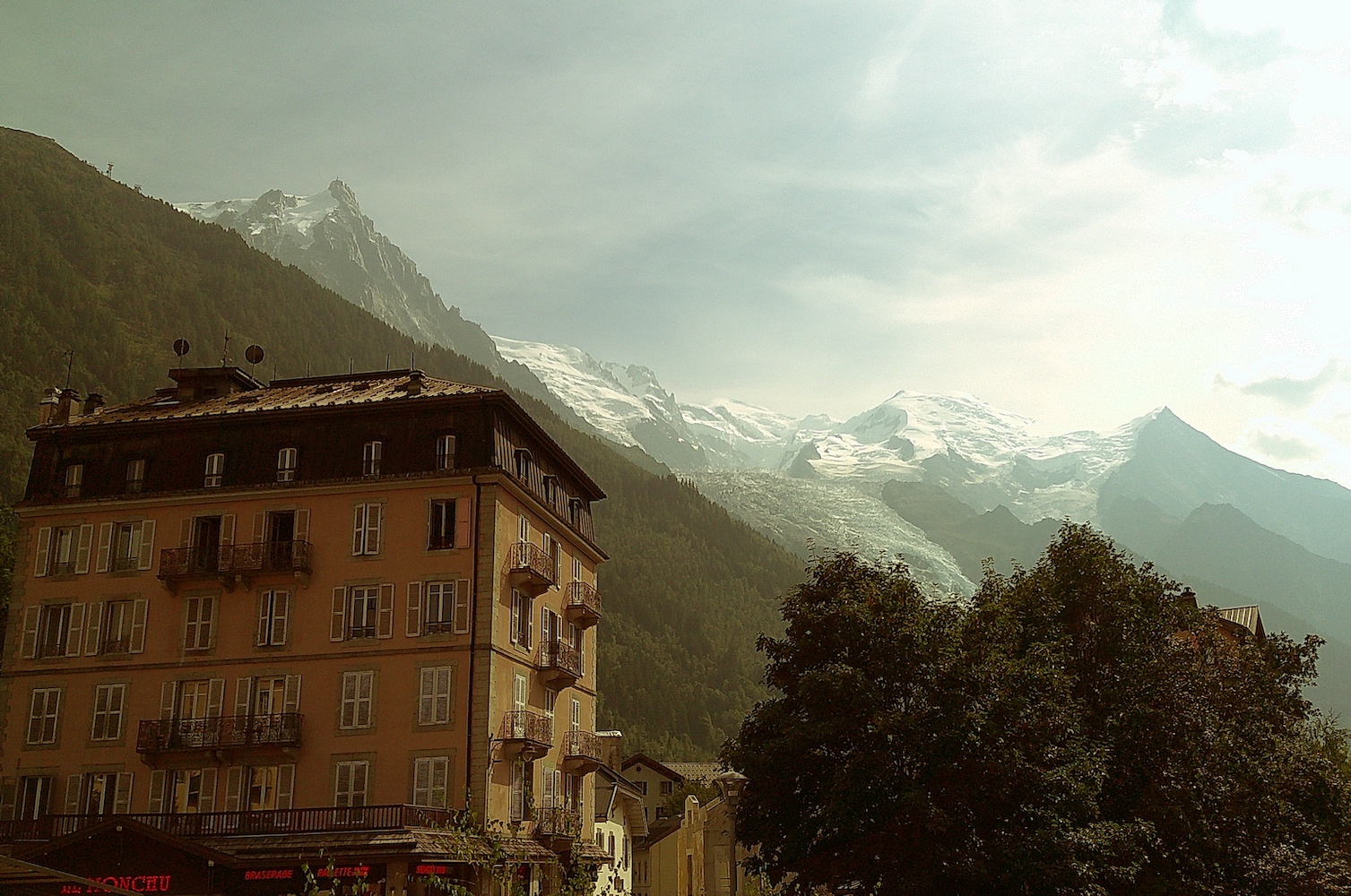
While the village is around 3,000 feet above sea level, the Mont Blanc massif is over 13,000 feet in the sky — jagged, snow-capped and encircled by clouds like rings around Saturn, the exact sort of mountain a fourth grader might draw for art class. The world’s highest vertical cable ascent, in operation since 1955, ferries half a million visitors up the the Aiguille du Midi each year.
Such trips were once unthinkable. Until the 1700s, the Alps engendered dread; the mountains were associated with devils, monsters and dragons. Mont Maudit, part of the Mont Blanc massif, literally translates to “Cursed Mountain.” But in 1767, a multi-hyphenate scientist named Horace Benedict de Saussure completed a circumnavigation of the massif, following the footsteps of ancient shepherds. In 1786, a pair named Michel-Gabriel Paccard and Jacques Balmat staged a frostbitten first ascent of the highest point in the Alps. Paccard, a scientist, considered instrument readings the ultimate reward. Balmat, a crystal and chamois hunter, wanted the prize money (which he was actually paid by an aging Saussure).
When Mary Shelley visited Chamonix in 1816, she made the place a protagonist unto itself: multiple scenes in Frankenstein orbit the Mer de Glace, the gorgeous (and now disappearing) glacier above the valley. The novel is a historical inflection point. The scientist walks onto the ice, entering into open dialogue with the monster. For better or worse, the mountains are no longer foes.
Perhaps they were even put there for man: “The very winds whispered in soothing accents, and maternal Nature bade me weep no more.” There are endless pictorials of early explorers, wearing top hats or dresses, bearing canes, walking cautiously out onto the ice. It’s the sort of image you’re likely to see in restaurant bathrooms around Chamonix. Once the expeditions began, they never stopped.
Some of the world’s first high-altitude equipment — ice picks and crampons, sleds and carabiners — came from forges in Chamonix, all of it designed to handle crevasses, seracs and the pervasive risk of avalanche. The village hosted the first Winter Olympics in 1924, and during World War II, the Germans fought French forces for dominion over the Vallée Blanche. The very patrols that these resistance mountain guides performed in the early 1940s are now part of Chamonix’s recreational core — to this day, Chamonix-Mont Blanc (its official name) is an off-piste skier’s paradise and a mountaineer’s proving ground.
In the adrenaline age, with performance tech and social media pushing the boundaries of the possible, the Alps play host to stunning athletic achievements. This past June, a skiing duo climbed all four faces of Mont Blanc in 21 hours. The pair covered 24,000 feet of elevation across their ascents. And in recent years — especially since 2003, the very first year of the mountain ultramarathon Ultra-Trail du Mont-Blanc — ambition and competition have come for another alpine pastime: the trail run.
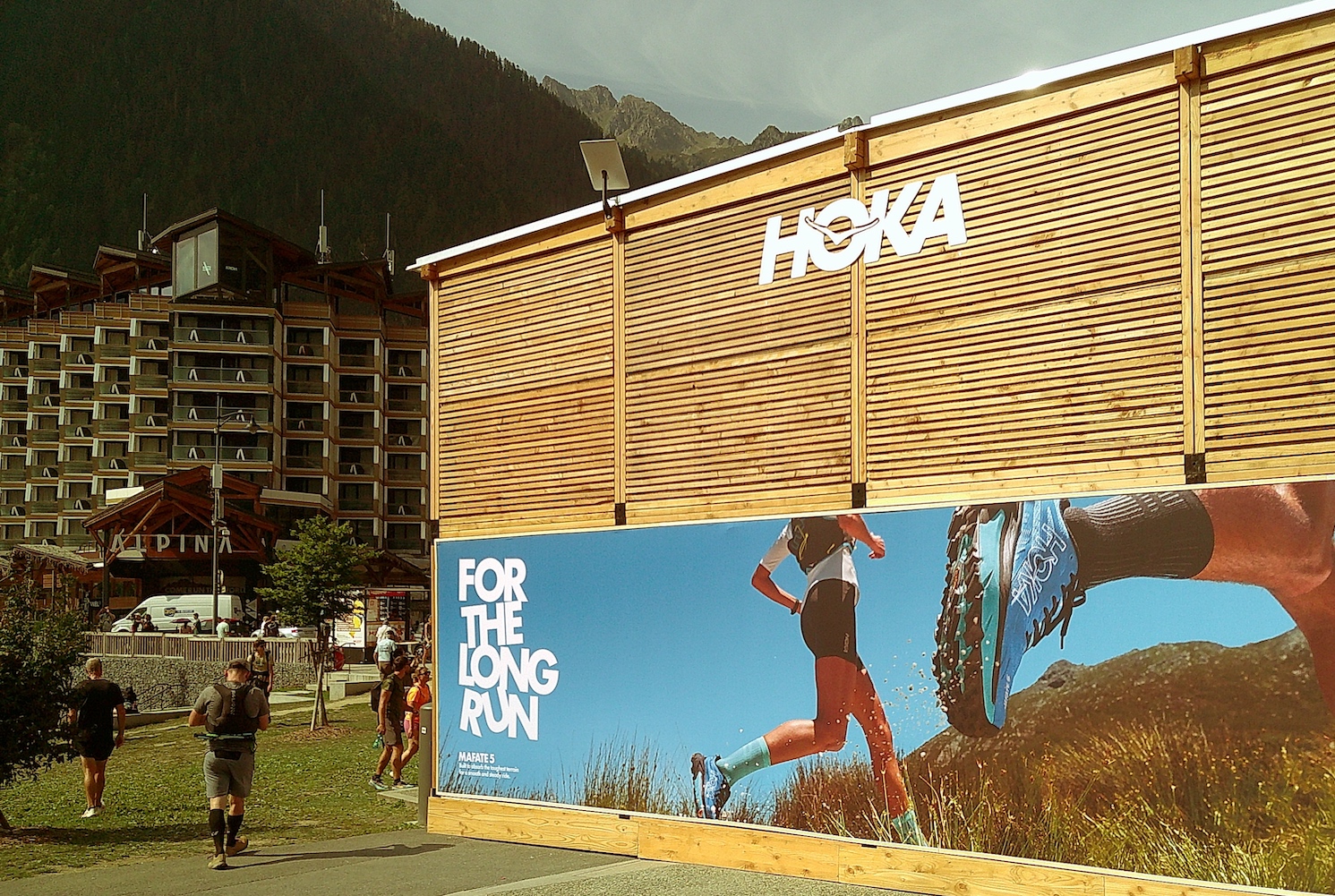
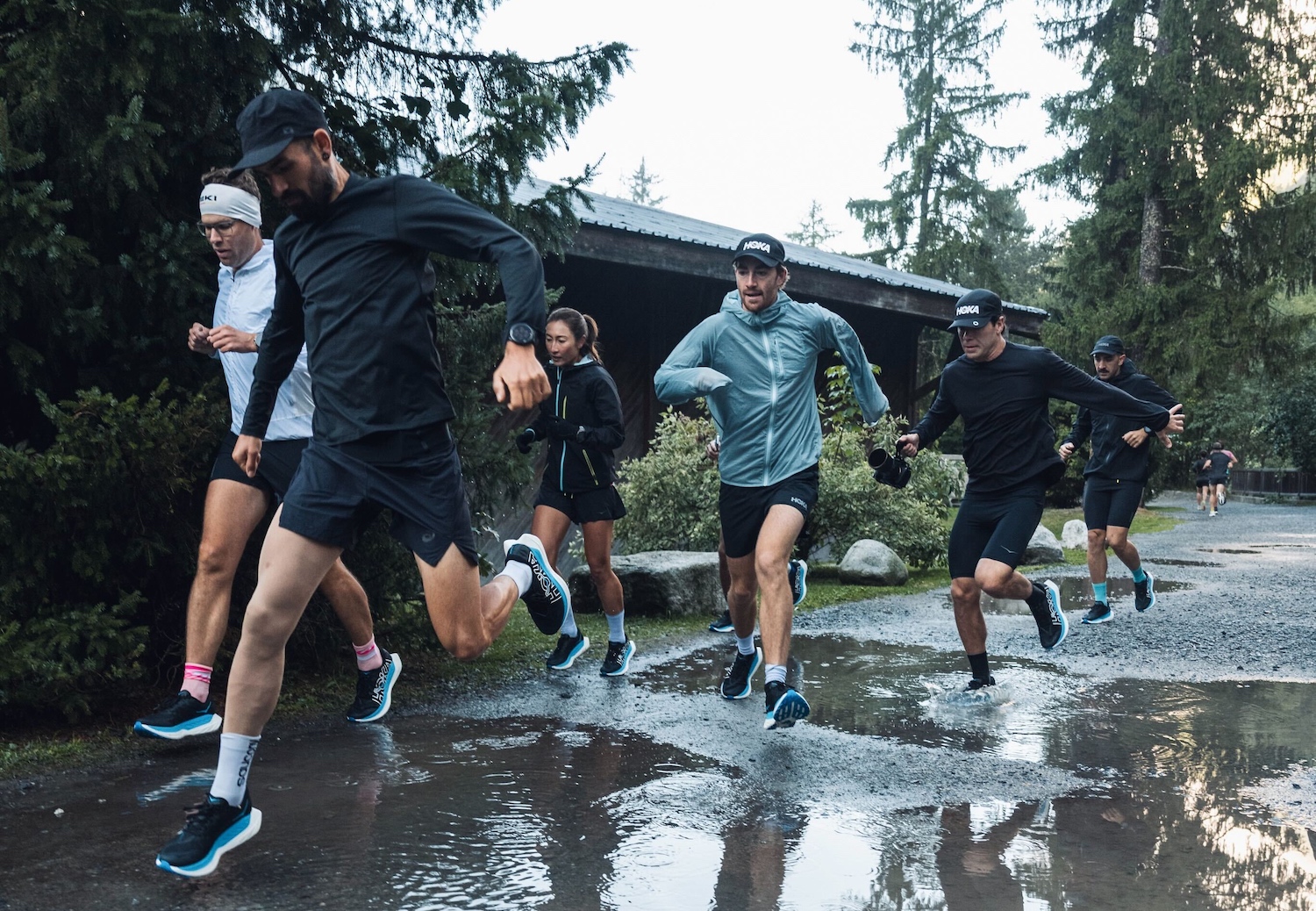
I arrive in town on Monday, the massif sparkling in full view of my hotel room terrace. Next door, goats bleat against a grassy knoll while high above, paragliders take their time floating down into town. I’m here with HOKA, the event’s titular sponsor — and also one of its key players: HOKA athletes like Jim Walmsley, Francesco Puppi and Katharina Hartmuth will podium in the the brand’s latest and lightest this week.
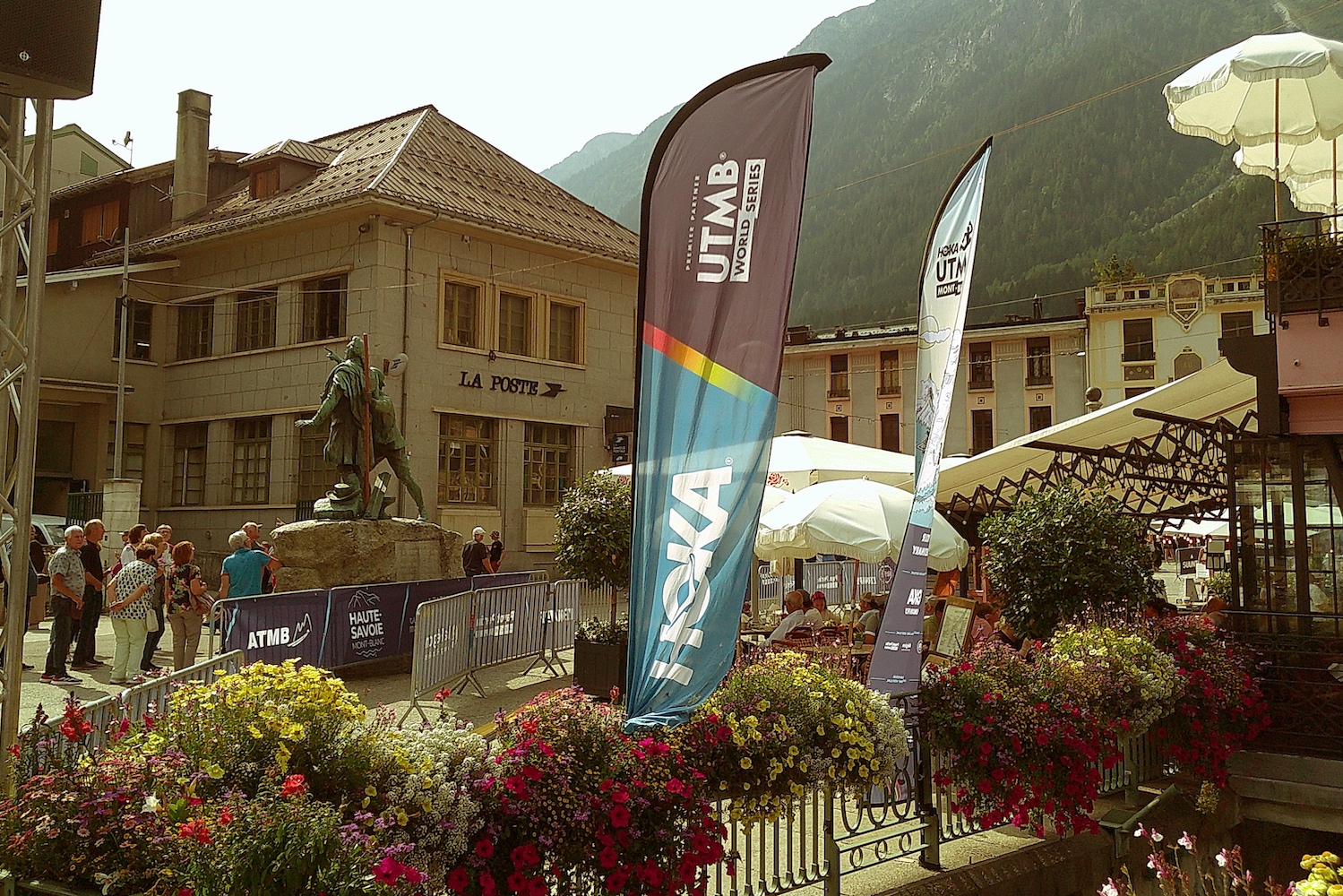
Like so many other trail running brands (Salomon, Nike ACG, Brooks, Altra), HOKA leverages the budding sport’s biggest event for a variety of purposes. UTMB is a testing lab, a content incubator, a press junket. It’s also a block party, a chance for HOKA employees to rub shoulders with colleagues they may rarely see in person, go for group runs and take turns dipping bread into molten mountain cheeses.
For so many in the trail running world, late August of 2025 is a sign of how far their long-niche sport has come, and a glimpse into its potentially meteoric future. For some of the locals, I hear, the running carnival that comes to town at the end of each summer still seems crazy. (That they’ve somehow made their peace with skiing that looks like this is none of my business.) But fair enough, yes: UTMB sort of is crazy.
Colin Ingram, Vice President of Global Product at Hoka
Running is definitely the coolest thing on earth right now.
Watching a major marathon is like getting punched in the face — in the most pleasurable way. For one day, over six hours or so, people cede their city streets and civility to stomp, cheer and cry. But then it’s over, quick as it came; it’s time for the open-bar afterparties, for volunteers to sweep up Gatorade cups.
UTMB is different. It’s like getting mauled for five straight days. Before the event’s premier race — the 108-miler that starts on Friday at 5 p.m. — a series of different races are in play at all hours of day and evening. Which means that you could be out for a morning trail run, tucking into an aperitif or wandering back from the cable car, and likely spot some muddied athlete finishing some preposterously long race. Unbelievably, a runner who might’ve begun a journey in Italy 26 hours ago sometimes has to weave around backpackers ordering gelato, or a garbage truck in reverse, to complete their final kilometer.
But these runners are rarely a few seconds removed from cheers and high-fives. If the timing works well, some will even find eager escorts to the finish line, in the form of significant others and children. Which, of course, leaves the rest of us on high alert. You’d only wanted to step out of your hotel room for a breather before bed. Now you’re fighting tears.
UTMB traces one of Europe’s most legendary long-distance walks, the Tour du Mont Blanc. The loop spans three countries — France, Italy, Switzerland — and is traditionally broken down into 11 stages, which hikers traverse counter-clockwise, over a span of two weeks. But UTMB runners cover the same amount of ground in two days. The elites, like Tom Evans, who takes the crown when I’m in town, finish in 19 hours and change.
As journalist and trail runner Doug Mayer details in his book The Race That Changed Running: The Inside Story of UTMB, there’d been amateur runners bopping around this loop for decades, with “multi-stage club relay races” gaining popularity in the late 1980s. But it wasn’t until 2003 that a Parisian couple named Catherine and Michel Poletti hosted the very first iteration of UTMB, expecting a few lunatics to show up. Seven-hundred runners competed.
Not that ultras were born in the aughts. Far from it — 100-mile endurance runs have a long and prestigious history in the United States. Races like the Western States 100 and the Leadville Trail 100 will celebrate their 50th birthdays in the next few years. The Dipsea Race — a much shorter trail race at just 7.4 miles, though no less iconic — has been around since 1905. It took much longer for this sort of structure to make landfall in Europe (and for American ultrarunners to fly over the pond to compete, in kind). But once UTMB was established, there was no going back.
As Brian Metzler explores in Run, Outside’s digital running magazine, the “appetite for running a race around Mt. Blanc quickly became an insatiable quest.” Not to mention: “UTMB had the ability to expand and meet that growing global demand without land agency restrictions that limit American races.” In the United States, ultras typically take place on federally-managed public lands, and governing interests have limited the size of these events. It’s an example of how Europe and the States approach environmental recreation and conservation differently. You might call it NIMBY-ism for the endurance world.
However we got here, UTMB has emerged as the race at the same time that professional trail running has exploded. It’s the one that all the most famous faces of the sport show up for — like Kilian Jornet, who’s won the race four times, or Courtney Dauwalter, who, in 2023, won UTMB, Western States and the Hardrock 100 in the same year. An ever-growing multimedia framework coalesces around the event, from podcasts to influencers to UTMB’s own livestream channel.
UTMB is objectively the Super Bowl of trail running, but race officials brand it under the banner of “UTMB World Series.” They’ve had expansion on the brain for the last decade. One source tells me this is for environmental reasons: UTMB officials want to take some carbon-emitting stress off the back of Chamonix. (They don’t temper the hoopla around the event, though…which makes this hard to believe.) At any rate, UTMB claims an extensive shelf of events in locales across the world. There are over 50 currently, scattered from Slovenia to Thailand, and completing specific races helps hopefuls tally “Running Stones” in their Arthurian quest to run the biggest event of them all. Collect enough, and you’re eligible for the Chamonix lottery.
The system is…complicated enough that if you’re interested, you can do your own research here. But suffice to say: people want this, bad. And UTMB knows they’ve got it made. “Each Running Stone reflects your commitment and dedication to this exceptional adventure,” the site reads.
I meet Colin Ingram, HOKA’s Vice President of Global Product, on the back veranda of La Folie Douce. In the wintertime, at this hour of day, this would be full of apres clubbers, sipping vin chaud and vibing out to Dutch EDM. For this week, it’s HOKA HQ — the company’s executives, engineers, marketers and fleet of content creators are scattered across the property, sending emails, prepping for the next activation or just catching their breath.
“A lot of the ideas, the briefing, the storytelling, it starts here,” Ingram says. “Literally here. Chamonix, for us, is this place where we all sort of recharge our batteries. You come out inspired to do the next thing. We come here to find that initial spark. To brief the shoe — to design it, develop it and test it. This is where we begin to bring the story to life for a consumer.”
Ingram is in his early forties. He ran cross country and track at Dartmouth and worked at a run shop called Runner’s Alley in Portsmouth, New Hampshire before landing his first job in the industry, peddling bags of Mizuno running shoes around New England. That was nearly two decades ago, and the running industrial complex looks completely different.
Here’s a woefully incomplete appraisal: the advent (and now unavoidability) of Strava, explosions in run clubs and marathon participation, AI run coaches, all sorts of “unsanctioned” races and relays (people racing bridges in the middle of the night, teams tagging across deserts over a weekend). Running as skate culture, as streetwear, as influencer kingmaker.
“Running is definitely the coolest thing on earth right now,” Ingram says. “Whether that’s a boom or not? It certainly feels like it. It feels different.” At the same time, Ingram’s mentality hasn’t really changed. He can trace a through line from his gig at the specialty run shop to his work in HOKA’s office in Portland, Oregon, which is now the shoe tech epicenter of the United States. “People would come in and say ‘I’m not a runner like you are,’ or ‘I’m not as fast as you are.’ As soon as I heard that, my goal was for them to leave in a completely different state of mind. You adapt based on what you know of ‘the menu’ — the shoes that are on the wall. What sort of ride or experience do they want to get? I still use that terminology today at HOKA.”
During race week, all of Chamonix is eligible for brand peacocking and user experimentation. Nike ACG takes over a local shop, under the name “Sentier” (that’s French for path). Salomon’s outpost lets you leave your shoes in a locker, and take their new Ultra Glide 1.5s out for a ride. Satisfy opens a concept store in a chalet on the outskirts of town (and drives around in this burnt-copper four-wheeler for good measure). Dozens of other brands maintain stalls in a temporary mini village, which reminds me of the Bryant Park holiday market.
HOKA has the FlyLab. It’s a two-story, indoor-outdoor cabin with a coffee shop and placards tracing the etymology and evolution of the brand’s Mafate series. The latest shoe, Ingram tells me, was tested all over the world: the Alps, the Rockies, Hong Kong’s Lantau Island. As running’s heritage brands, those brands’ challengers and those challengers’ challengers all coalesce around trail, the sport’s next great frontier, it’s difficult to ignore Chamonix’s role as corporate cash cow, its glittering streets the perfect launching pad for clicks and conversions. But it’s also undeniable: competition is creating more interest, larger purses and more innovative shoes — comfier, grippier and faster in the mountains.
Shoe wars aside, look around Chamonix and there’s the same brand of raw joy in people’s eyes. I can’t help but feel it. Why do I like banging that cowbell so much, this far from home? I think because it brings me back to the New Jersey cross country meets of my youth, when I was all singlet and collarbones, freezing my ass off on the starting line. The mud, the hills, the chute at the finish. The bus ride home.
“Runners keep going because there’s some sort of reward to it,” Ingram says. “That’s the same reason we’re all here in the industry. There’s something about the sport itself that proves something you didn’t think you could do but you did. A group you didn’t think you belonged with but you do.”
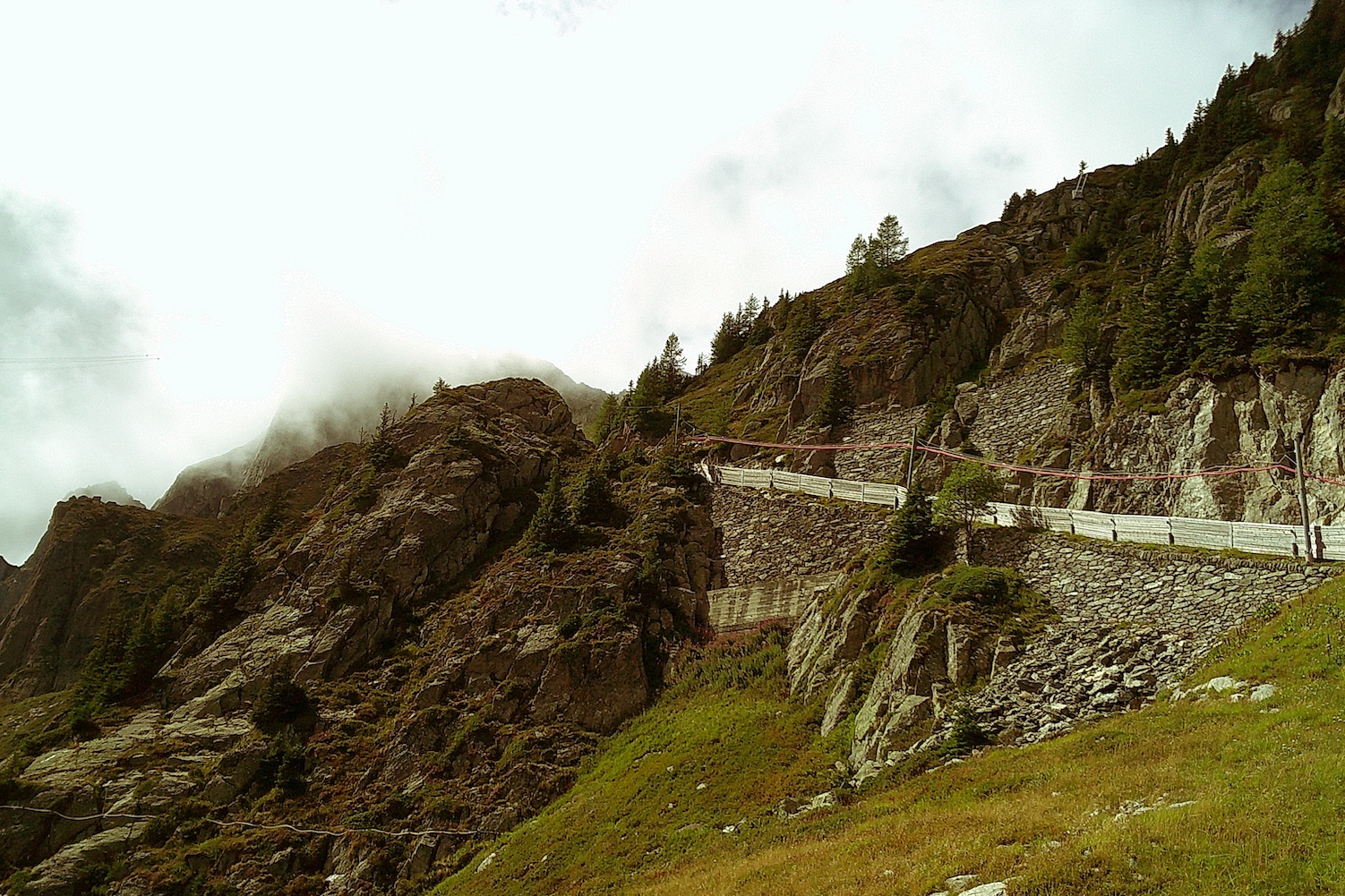

On Wednesday, I run up the hill behind Hôtel le Prieuré, which turns into another hill, which turns into a series of punishing switchbacks in the shadow of a cable car. It occurs to me that I’ve never really gone on a trail run — or at least never one in air this thin, and it takes me 12 minutes to complete a mile. I duck left into the woods, gasping, humbled, and finally things things start to even out — both the terrain and my breath. I’m a talented runner, capable of running a 10K in 36 minutes, and a committed one, too: I’ll clear 1,000 miles this year, for the third year in a row. But a couple kilometers in the Alps bring me to my knees, like a smug pickleballer forced to suddenly trade volleys with Jannik Sinner.
Later on, a different HOKA rep will school me on the finer points of competitive trail running, explaining that even elite runners rarely charge up a hill, arms pumping. The sport is one of grade-adjusted pacing, of trekking poles, of gastrointestinal gameplay and strategic stops — sometimes, during a race, a runner may camp at the side of the trail for a five-minute power nap. This makes me think of Rip Van Winkle snoozing in the Catskills.
The air is cool up here, the woods still carrying the scent of last night’s rain, and save for a photographer I spot on a crest some 20 feet above me, the trail is completely empty. This makes complete sense; there are over 400 miles of well-marked trails in the foothills around Chamonix, but still, it feels unlikely, almost too good to be true, after days of waiting on long lines for a croissant and coffee. The trail curves into a series of what my old cross country team used to call “roller coasters” — a succession of quick up-and-downs — which put the HOKA Mafate 5s on my feet to test.
It’s the latest generation of HOKA’s very first runner, with more soft foam at the bottom of the shoe than ever before. The company was founded 35 miles west of here, in the Alpine lake town of Annecy, back in 2009, by Jean-Luc Diard and Nicolas Mermoud. The duo designed their first shoes in opposition to the late-aughts market, which favored minimalism, low stack height and ground feel. Remember when people were running around in “shoes” that looked like dishwashing gloves? HOKA zagged, hard — essentially carving a canoe out of a huge hunk of foam. The idea was to make downhill trail running faster (and more tolerable). It’s hard to move with much passion when your heel keeps smashing against roots and rocks.
A decade and a half later, HOKA has made inroads into road running, not to mention most corners of daily life: its shock-absorbing sneaks are easily spotted in hospitals, airports, parking garages, Disney World. Now owned by Deckers and based outside Santa Barbara, it pulls in nearly $2 billion in revenue each year. But trail is the brand’s birthright — its core “why,” its game to lose. Some experts have estimated its market share at 33%, at the same time that trail running has absolutely exploded.
Last year’s State of Trail Running report detailed 12% year-over-year growth since 2010, fueling a now-$20-billion sector. There are nearly 15 million trail runners around the world, and there are probably more. People don’t seem to know that they’re trail runners, as David Callahan, the co-CEO of UltraSignup, outlined in a recent LinkedIn post concerning the sport’s “self-identity problem.” It’s similar to Ingram’s point on road-running newcomers in the early 2000s.
Callahan writes, in part: “I’ve been having this conversation on repeat for years now. Someone discovers I work in the trail running world and they start telling me about their weekend adventures on local singletrack, and then comes the disclaimer: ‘But I’m not really a trail runner.’ What is it about trail running that makes people gatekeep themselves?” Callahan suggests that the spectacle around ultras “consumes” the sport’s mainstream narrative. But if and when this mindset shifts, the sport is only going to get bigger. And why shouldn’t it get bigger?
It doesn’t take long for me to get a feel for the Mafate 5s. My peripheries blur to a pinpoint, as if the trail ahead is a walled-off portal, separate from time, and all there’s left to do is sight-read the terrain. Land…there, yep, leap here, good, plant, twist, wide berth on that turn. It’s way more lateral movement than I’m used to (and my Brooklyn neighborhood is full of young parents pushing strollers). It feels so good. After 10 minutes of this, it occurs to me that I make the rules. So I stop for a while, cold sweat collecting on my forearms, to look at the massif. The mountain never gets old — especially because it cycles in and out of visibility. When the hour’s clear, you’d be a fool not to give it an audience. Eventually, I motor myself back to life, thinking: Huh. So this is trail running.
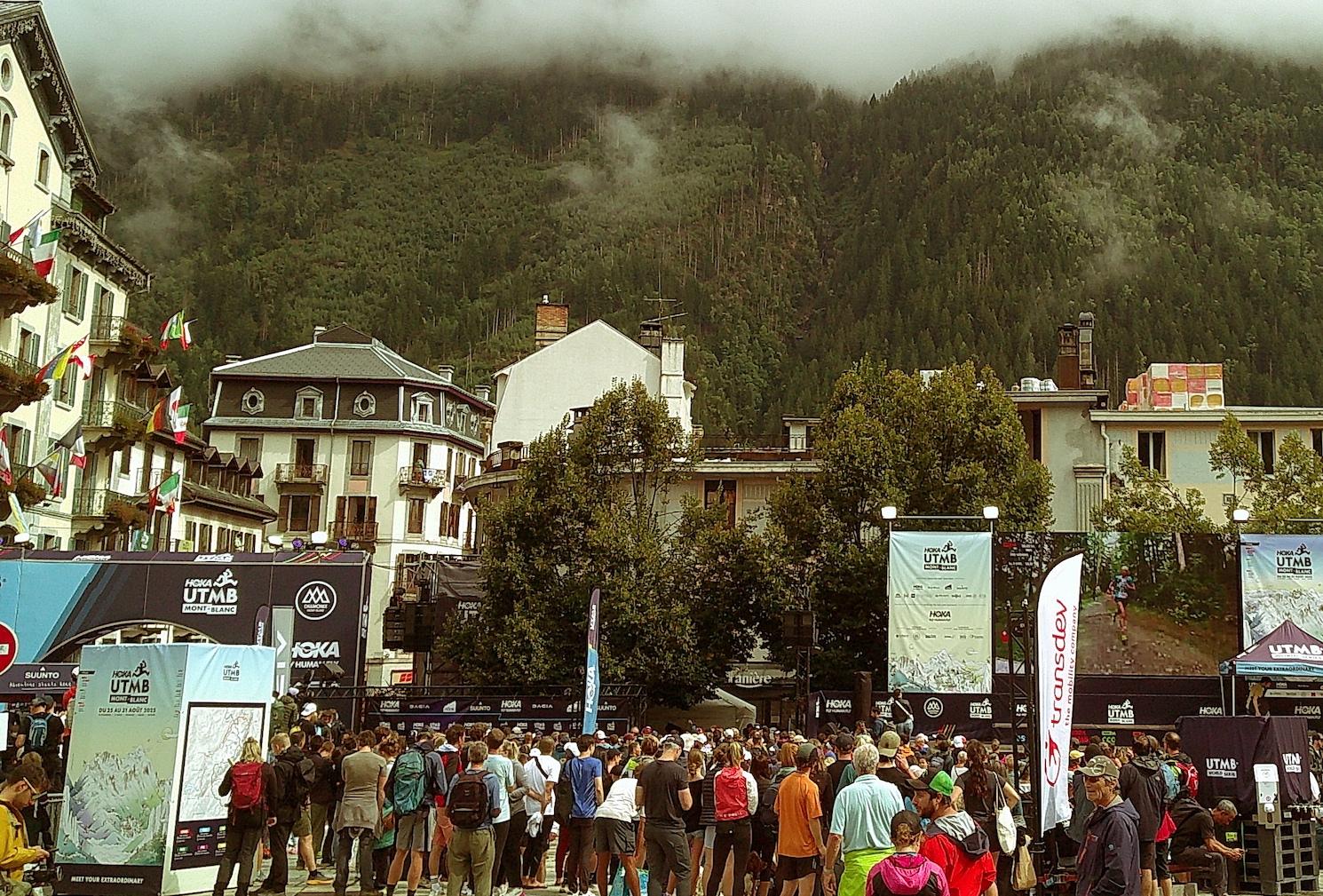

Tom Evans does a shoey. The former British Army captain crosses the finish line just after 1 p.m. on Saturday, then turns around to salute a canyon of thousands of screaming spectators. For the last 90 minutes, there have been thunder claps, chants, at least two plays of “Footloose” from the loud speakers. When a runner gets within the final kilometer of the finish line, the sound system abruptly cuts to the official UTMB theme song, “Conquest of Paradise” by Vangelis, a ridiculously melodramatic song that calls to mind a bunch of men heaving a ship to shore.
Evans is caked in mud, and his Asics runners must contain more bacteria than a Parisian pissoir, but he dumps a can of Red Bull into one sneaker anyway and shoots it, to the horror and delight of the crowd. The day feels like a party. A coronation day. Everyone in sweatshirts and sunglasses, nudging for the best view, bubbles of beer catching the sun. Evans sits down, and to my great surprise, conducts a lucid — even enlightened — interview over the PA system. I suppose public speaking is nothing to fear when you’re accustomed to military training and 100-mile races, but still.
“We had rain, we had snow,” he says. “When myself, Ben Dhiman and Jonathan Alva were together, we just had to keep checking in with each other, because it was so bad. Then it was okay…but what makes this race so special is all the supporters out there. To every single person who has come today: you don’t believe how incredibly special you’ve made it. I’ve had two DNFs in the last two years. To take the victory today hopefully proves to everyone that if you put your mind to it, anything is achievable.”
Before I race down to the finish line to cheer Evans in, I catch livestream footage of him at the final aid station in La Flégère, filling his hydration pack with cola and stopping to thank the volunteers for their efforts. The gratitude is so genuine, you can’t help but wonder what this feels like. Two years of exiting the race early, and now he’s heading into the final descent, no one within a half hour of him. After Evans finishes comes Dhiman, his Asics teammate. From a “market share” perspective, this is an upset. Asics owns the roads but is still an upstart on the trail. And yet there are bigger, more human ideas to entertain for the time being.
I was speaking to the camera runner in French. I said: ‘I’m nothing. I have nothing left. No gas. He’s going to catch me.’ That’s not even like me. I never say things like that, really. But it was coming out. It’s coming out on the climb. Sometimes it’s nice to have the camera runners. You have a personal therapist with you.
Ben Dhiman to irunfar
Like Dhiman’s incredible rise: a Cincinnati native, who played two years of Division III soccer at Emory, then worked at Chipotle in Atlanta, before throwing himself headfirst into endurance adventurism. In 2018, with a thru-hike of the Appalachian Trail and multiple ultras already under his belt, Dhiman walked 745 miles across Nepal. When he compared UTMB’s 2025 bitter conditions to the wind and sludge of the Himalayas, people realized it was serious. The man knew exactly what he was talking about.
At 4:40 p.m., Ruth Croft, the 36-year-old Kiwi, takes the women’s title. She’s a crowd favorite around here, having won UTMB’s CCC and OCC races in the past. She’d gotten hypothermia before, racing through the mountains of the Canary Islands, so she came prepared this weekend, pulling on a big Gore-Tex jacket and cross-country ski gloves when the weather turned hellish. “I just didn’t want to DNF UTMB because of something that I could’ve had control over,” she says. “I was like, ‘I just need to survive the night.'”
How do they survive? It’s not just mettle and motor. Fueling is paramount, the game within the game. Dhiman takes turns eating sushi rice, riz au lait (French rice pudding), crêpes and crackers. He downs large high-fructose gels before climbs and small high-energy gel before descents. He drinks extra salt every 90 minutes. Then there’s the crew — top-line runners typically employ a personal navigator, a logistics coordinator and a mountain-biking videographer. There’s also an “emotional lieutenant” of sorts — perhaps a coach, often a significant other — whose job is to meet them at aid stations in Italy and Switzerland and say the right things as the runner tries everything in their power to peck at a piece of bread.
These are the same people who ran by us last night, I have to keep telling myself. The lights. By the time I saw some of them again, I’d taken a bus home, slept seven hours in a bed, gone for a run, had my morning coffee, packed my room, gone out for lunch. But there’s a key phrase there: “some of them.” Over eight hours separate Evans and the 100th finisher. By that time of night, I’m out to dinner at Cap Horn, my cheeks hot on red wine. They will keep coming, hour after hour, until just past the 46-hour mark, or Sunday at 3 p.m., at which point my plane is just south of Iceland.
Before I go to sleep on Saturday night, and right after hitting Chamonix’s pocket-sized nightclubs with some friends I made throughout the week, we return to the finish line to cheer in a lone runner. Window terraces from which viewers had cheered hours earlier are now dead and dark, the shutters closed. No UTMB theme song for this fellow. Just a ragtag troupe of Americans who only five minutes earlier had been standing on a table. I slap the side of the crowd control barricade, wishing I could do more for him. But I realize I’m missing the point. Of the 2,492 runners who started the race, 827 don’t finish. He did. Time for bed.
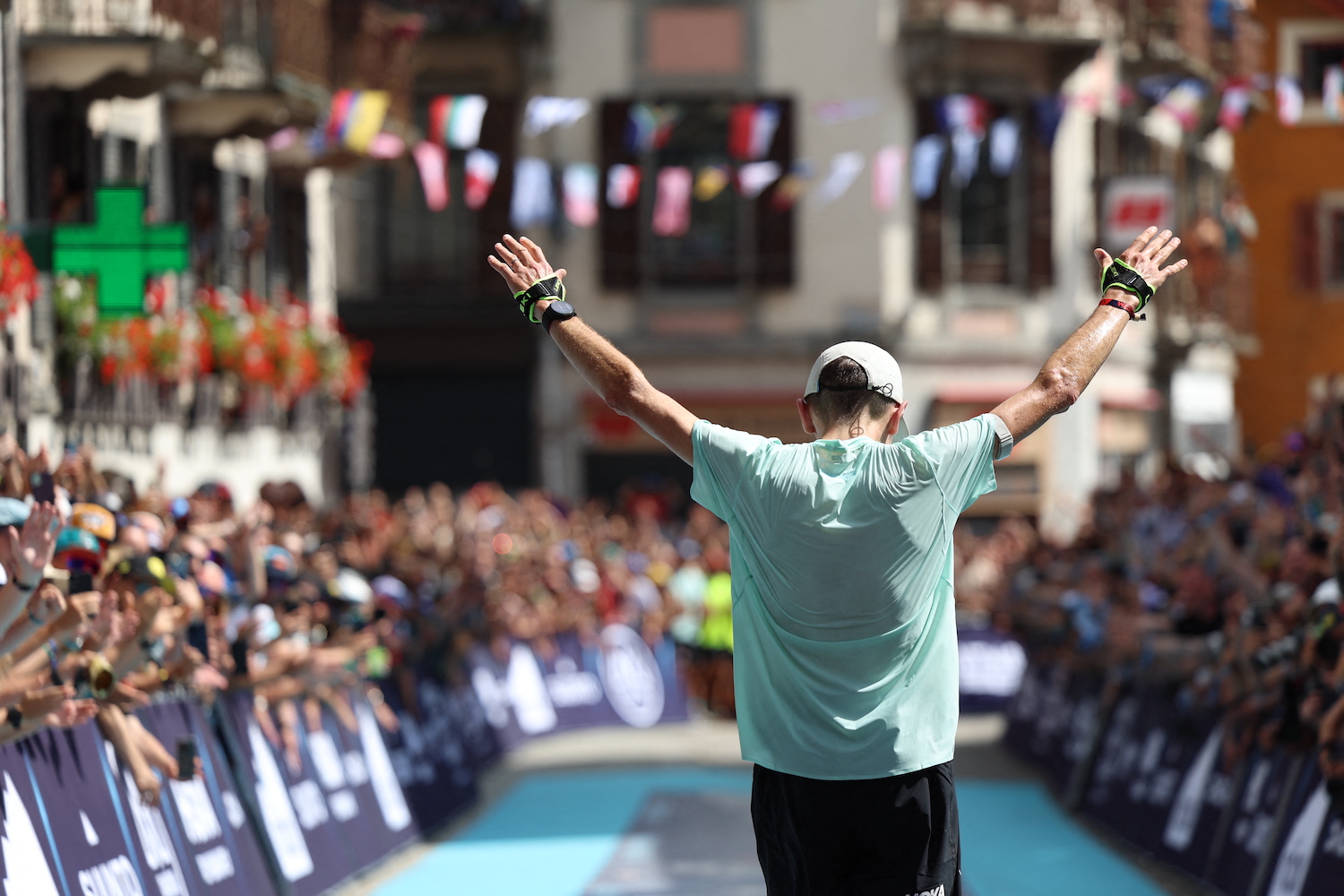
Last year, a shoe engineer named Vincent Bouillard won UTMB. He ran with no sponsor and crossed the finish line a half hour ahead of the second place finisher. The result shocked the trail running world. (It really shocked his employer: HOKA. They’ve since signed him to a professional contract.) How on earth did a former intern, who used to walk around Chamonix taking notes, run down the blue carpet with a single fist in the air? For one: he’s always been very, very fast. You can read his entire training protocol here. But I like Bouillard’s answer. Ostensibly: let’s not make such a fuss.
“I think my story is pretty boring!” he wrote in an Instagram post last year, his very first, which racked up tens of thousands of likes. “You most likely have gotten it all already: I was born and raised in the French Alps, got into sports at a young age, became a footwear engineer, and this year against the odds I won perhaps the largest event in the (still-growing) world of trail running. Voilà.”
Bouillard doesn’t run UTMB this year; he took a swing at Western States earlier in 2025, and is currently training for Worlds, which will take place in the Pyrenees later this month. There have been sightings, though. He walks around Chamonix with a black cap down low, a niche mega-celebrity on the very streets he used to walk freely. A companion on my trip, out for a long run as he trains for the Twin Cities Marathon, says he spots Bouillard putting himself through punishing hill repeats on a steep trail. Such sightings are a hallmark of the populist adrenaline sports: climbing, surfing, skiing and now trail running. Look to your left, and you could be right next to one of the best athletes on the planet.
In Bouillard, trail running doesn’t just have a sensational story, but a worthy steward — a deep thinker who outlined three core questions for the future of the sport in that same debut Instagram post. “How can trail running grow responsibly in the face of climate and social justice challenges?” he wrote. “As it evolves, how do we celebrate its spirit and ensure it inspires everyone it welcomes? What role should athletes play in shaping the sport within this context?”
They’re good ones. Is UTMB really an environmental ally, when it flies in runners, crews, corporations and content creators from all around the world to the doorsteps of the Alps? As the sport’s profile continues to rise, will ultrarunners — not to mention the sort of trail-running amateurs who haunt AllTrails and Reddit — welcome newcomers, or blame them for whatever issues were likely already in place? Where does UTMB end and a regular old trail run begin?
There’s whispers of a reward out there, up and over the hill. Chase it, and change is inevitable — a reckoning is possible. But for now, UTMB lives in the forever present. Its light is red-hot, burning up the gravel by the gorge, high on cowbells and cheers. Allez, allez, allez.
More Like This



All uncredited photos by Tanner Garrity for InsideHook.
Twice a week, you'll find guinea pig features, personal essays and expert interviews on living better — for however long you’re here. Subscribe to Champ now.