20 Trends That Will Define the Lives of American Men in 2026
We assembled our panel of experts. Here are their predictions for your dating life, your wardrobe, your fitness regimen and more.
Before I introduce our expert panel for our annual rendezvous with the crystal ball, I’ve got a few questions I’d like all the men reading this to answer. 1. How often do you listen to podcasts? 2. How many hours of the day do you spend scrolling on your phone? 3. If you find yourself with downtime, what’s your default reaction: A) let your mind wander or B) grab your phone out of your pocket?
You could also skip those and answer one simple question that gets at the heart of my year-end query: how often do you think for yourself anymore?
I’m not trying to goad you. You can blame our wellness editor Tanner Garrity for egging me on here. I’ve been thinking about a story he wrote a couple weeks back in which he discusses a topic that’s also been on my mind a lot lately: our constant digital connection is making the world feel thinner. At least, it’s making my world feel thinner, and considering this other feature from Tanner that also delves into this issue was one of our most-read stories of the year, the same is probably true for you.
Instead of sitting with our own thoughts, we drown them out with Joe Rogan and Ira Glass. Instead of letting our minds wander, we’ve let our devices, our apps, our feeds become the new mental resting point. If you’re feeling lonely or isolated or disenchanted or any of the other depressing buzzwords that researchers like to define our current times with, maybe you need to pull out your earbuds and start living your life with intention again.
After helping compile this list of the 20 trends that will define the lives of American men in 2026, as predicted by our staff who specialize in fields ranging from style to travel to tech, I found that the thread that runs through them is intention. For a few years now, Americans in general, and men in particular (myself included), seem to have allowed others to dictate how we move through the world, knowingly or not.
Next year, we’re forecasting shifts big and small. Whether it’s not letting your social life be hamstrung by the whims of reservation apps, or ditching social media in order to revive your dating life, or getting involved in your community so you know when the AI data centers come to town, many of our predictions are predicated on the idea of you bucking the status quo. Changing your habits. Jumping off the train and starting to walk using your own two feet again.
In other words, we’re betting on you in 2026. Think you can handle it? I thought so. Now, onto our predictions…
— Alex Lauer, Features Editor

You’re going to track some gross metrics…
The next frontier of wellness tracking can be boiled down to three unsavory “S” words: stool, sweat and spit. Throne clings to your toilet and uses “advanced optical and acoustic sensors” to send a post-poop report to your phone. Flowbio is an armband sensor that recommends workout and recovery programming based on your sodium loss. Eli uses a saliva collection cartridge to help you track your cortisol levels on demand.
Adults already tracking more conventional metrics — like exercise (Strava), sleep (Oura) and glucose levels (Supersapiens) — will provide an eager market for the wellness industry’s newest, increasingly invasive data-miners. If you’re fully committed to optimizing your performance, why stop? What’s another $70 annual subscription? Give it six months and the HYROX hive will be confidently discussing their bowel robots in Othership’s public sauna. — Tanner Garrity, Senior Editor
…and start working out like the Japanese
In 2024, we started working out like the Australians. In 2025, we started working out like the Scandinavians. In 2026, I predict we’ll borrow more wellness concepts from the Japanese.
A quick rewind: the Aussie swell arrived in the form of social fitness. Down Under, it’s extremely rare to work out alone — a vestige of a nationwide sports-centric upbringing — and collectives like Training Mate and The Athletic Clubs helped capitalize on Americans’ desire to exercise in groups. A year later, Scandi concepts like cold-weather running and aufguss became mainstream, while Nrthrn Strong, a cross-country skiing workout, burst onto the New York scene.
Now, in an age where men are finally focusing on preventative health, we’re ready for the Japanese take on wellness. Japan’s riding a massive tourism boom, and people I speak to inevitably return with a few impressions: A) everybody walks and B) there are no gyms. Expect American men to embrace morning mobility flows (if not radio taiso, something like it), elements of dementia prevention and the sort of everyday movement chores — like carrying groceries — that’ll sharpen their brains and bodies into 2027 and beyond. — TG

You’ll get off social media, and watch your dating life boom…
About five years ago, I penned a piece asking the question: Why is a man with no social media so appealing? The internet looked different back then. We had pre-Elon Musk Twitter, social media platforms weren’t overrun with AI slop, and the algorithm, while still scarily sophisticated, didn’t feel outwardly predatory. In 2021, not having social media sparked curiosity in potential partners. It also made women trust you more. “I never once had to worry about him liking other girls’ pictures or DMing other girls behind my back,” one woman told me at the time.
Now, at the end of 2025, I can firmly say: social media isn’t fun anymore. Community has been replaced with content. It’s designed to trap you into endless doomscrolling cycles. And it’s filled with losers trying to convince you AI is better than human-created art. Taking a social media break isn’t just a cool thing that makes you intriguing to potential partners anymore; it’s all but necessary to ensure you remain a socially adept human being who women want to date.
Now, what could you do instead? Get a hobby. In an effort to combat AI-induced brain rot, people are pivoting towards hands-on activities in 2026. These can include solitary pursuits, like getting into pottery or film photography, but I would encourage you to try something that involves socializing with other people, especially if you’re single. Go to concerts alone, host dinner parties (and tell your friends to bring friends!), join a club. Anytime you step outside and force yourself to be social, you’ve allowed yourself to meet the love of your life (or at the very least, someone who wants to kiss you). — Logan Mahan, Commerce Editor
…and it’ll be the horniest year of your life, if you want it to be
For years, we’ve been lambasted by reports that no one is having sex. That everyone is beautiful and no one is horny. I’m not disputing these previous claims (I mean, who is in the mood to fuck when the world is ending?), but there is something horny in the air for 2026. How do I know this? Well, because every woman I know is watching and reading smut.
One of the most popular shows on HBO is a gay hockey story with extremely steamy sex scenes. The number of romance books sold has more than doubled in the last four years; and dedicated romance bookstores have cropped up across the country, with customers spending more time per visit in these themed, independently-owned stores than in Barnes & Nobles.
What does this have to do with you, a man? Well, we know that women are exploring desire through fantasy, suggesting they’re yearning for a more intense experience in their sexual and romantic lives. Instead of dismissing or mocking women’s interests (as men tend to do), you could learn a thing or two from the media they consume. I can’t 100% guarantee it’ll get you a hornier year, but it certainly won’t hurt. — LM
You’ll lean on AI as your shopping concierge…
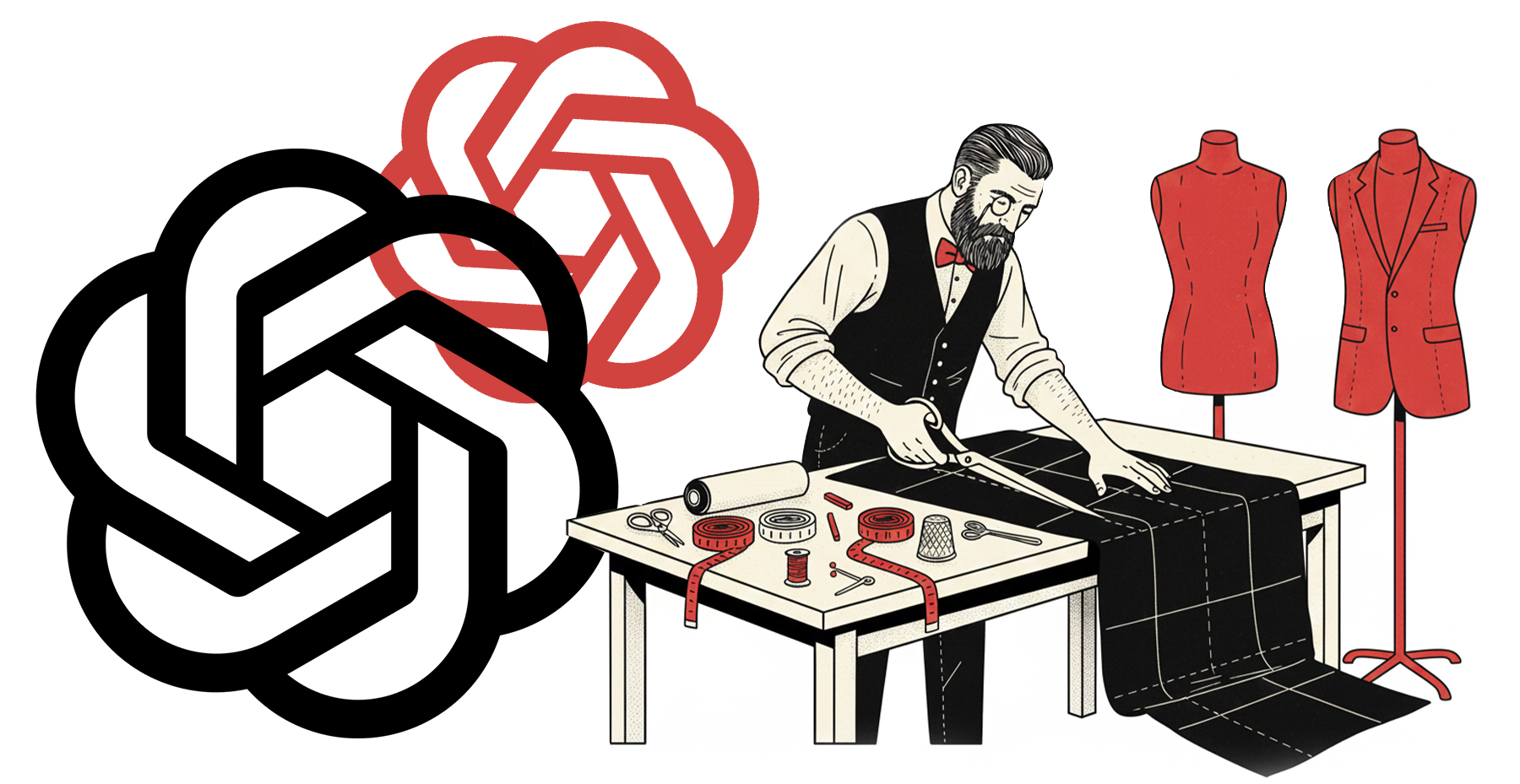
Among the many ways AI is uprooting our lives — quietly and very, very loudly — the way we shop remained relatively untouched in 2025. But by the end of the year, that started to drastically change, and there’s more to come. With recent data indicating triple-digit (like, 500%) growth in AI-assisted shopping this holiday season, chatbots like OpenAI’s ChatGPT and Google’s Gemini are promising to further streamline the e-commerce experience.
Aggregating reviews, dredging up a product’s pricing history, predicting sales — these are all the tip of the iceberg. Gemini just released a new feature that allows you to try on clothing virtually via a selfie, whereas blue-chip brands — Ralph Lauren and Walmart chief among them — have tried to cash in on the hype with personal stylist chatbots to assist with purchases. ChatGPT has gone so far as to integrate the ability to purchase directly in the chat stream, without leaving the platform.
What does this all add up to? At its best, an empowered consumer…or, if the tech alarmists are to be believed, yet another way to take autonomy, individualism and the highly personal experience that is shopping and forfeit it over to the singularity. — Paolo Sandoval, Style Editor
…but demand for made-to-order menswear will skyrocket
The concerns about algorithm-induced homogenization, a phenomenon that journalist Kyle Chayka coined a “flattening of culture,” are in no way unfounded. (The evidence is on TikTok for all to see.) That said, the savvy consumer has never had more access — or more of a desire to look “unique” — when it comes to establishing and maintaining a personal style.
For the “buy less, buy better” crowd, made-to-order (and its doubly serious cousin, bespoke) clothing is poised for a banner year in 2026, in large part due to the proliferation of thrilling options. More traditional suiting brands a la J.Mueser out of New York City, or London-based Carter Young, have recently provided made-to-measure ‘fits for the likes of Paul Mescal and George Daniel. (Young recently spoke about the booming interest in the brand’s MTM program in an interview with Throwing Fits.) Modern menswear-leaning brands like Stoffa and Saman Amel have also carried the mantle of custom clothing, and U.K.-based retailer John Lewis reported a 23% rise in personal stylist appointments among men. Meanwhile, luxury retailers Prada and Dolce & Gabbana have opened new flagships, with a focus on made-to-measure tailoring. The investment of money and time won’t be for everyone…just anyone looking to stand out from the crowd. — PS
Your electricity bill will spike thanks to AI, coal and climate change
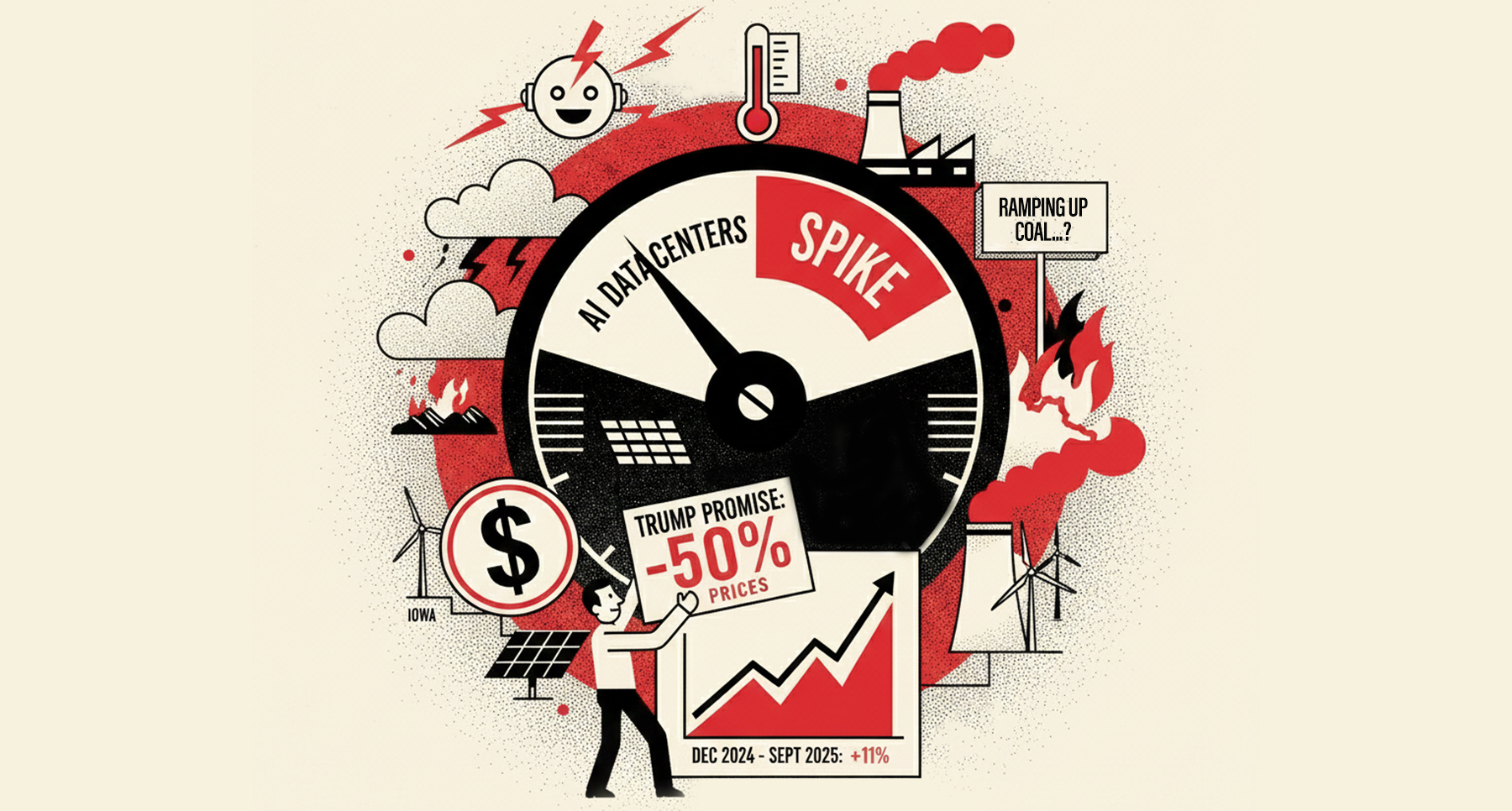
During a rally in August 2024, Donald Trump promised to rapidly lower electricity prices if he won the presidency again. “We intend to slash prices by half within 12 months, at a maximum 18 months,” he said. We’re almost 12 months in, so how’s he doing? Electricity prices were up 11% overall between December 2024 and September 2025, according to the most recent data. That’s compared to just a 4% increase between the start and end of 2024. And this drain on monthly budgets is only expected to get worse in 2026.
The administration has a plan: ramp up coal, slash renewables. This may have worked 20 years ago when coal power was at an all-time high and wind and solar were just starting out, but these days, this “strategy” is a recipe for continued, debilitating price spikes for many Americans next year and beyond. Different states have different electricity needs, but a few things are clear: renewables are leading to drastically lower energy costs in some states (see: South Dakota, Iowa and Montana, all of which went for Trump) and AI data centers (which Trump is gung-ho for) are pushing prices sky-high. Meanwhile, storms, wildfires and heat waves exacerbated by climate change are leading to huge price increases in the form of replacing and hardening utility systems. It’s time to take off the rose-colored glasses and have a serious conversation about this escalating economic crisis. — AL
If you buy an EV, it won’t be a Tesla (and not just for anti-Musk reasons)
If you only looked at the stock market, you’d think Tesla was doing gangbusters. But recent bets on Elon Musk’s automaker have everything to do with speculation on its in-development robotaxis and nothing to do with car sales. After hitting its domestic sales peak in 2023 with about 672,000 electric vehicles, Tesla limped to a figure of 634,000 sales in 2024. This year, the outlook is even bleaker: U.S. sales hit a four-year low in November, partly due to federal EV tax credits expiring at the end of September.
The other factor here is obvious: Musk is driving away buyers all by himself. Whether it’s thinly not-at-all-veiled Nazi gestures, endorsing posts that defend Hitler or tweaking his Grok chatbot which led to it calling itself “MechaHitler,” Musk is seemingly hell-bent on making himself (and Tesla vehicles by extension) as radioactive as possible. According to a recent working paper, Musk’s polarizing actions have cost Tesla up to 1.26 million sales in the last three years and boosted competitor sales by up to 22%. Even if CEO behavior doesn’t influence your purchasing decisions, Tesla likely will not release a brand new model anytime soon, while other EV makers are planning cars, trucks and SUVs up and down the price spectrum (from Chevrolet to Rivian to Ferrari) that will entice all you early electric adopters and new converts alike in 2026. — AL
You’ll drink way more vodka, and not just in Espresso Martinis…
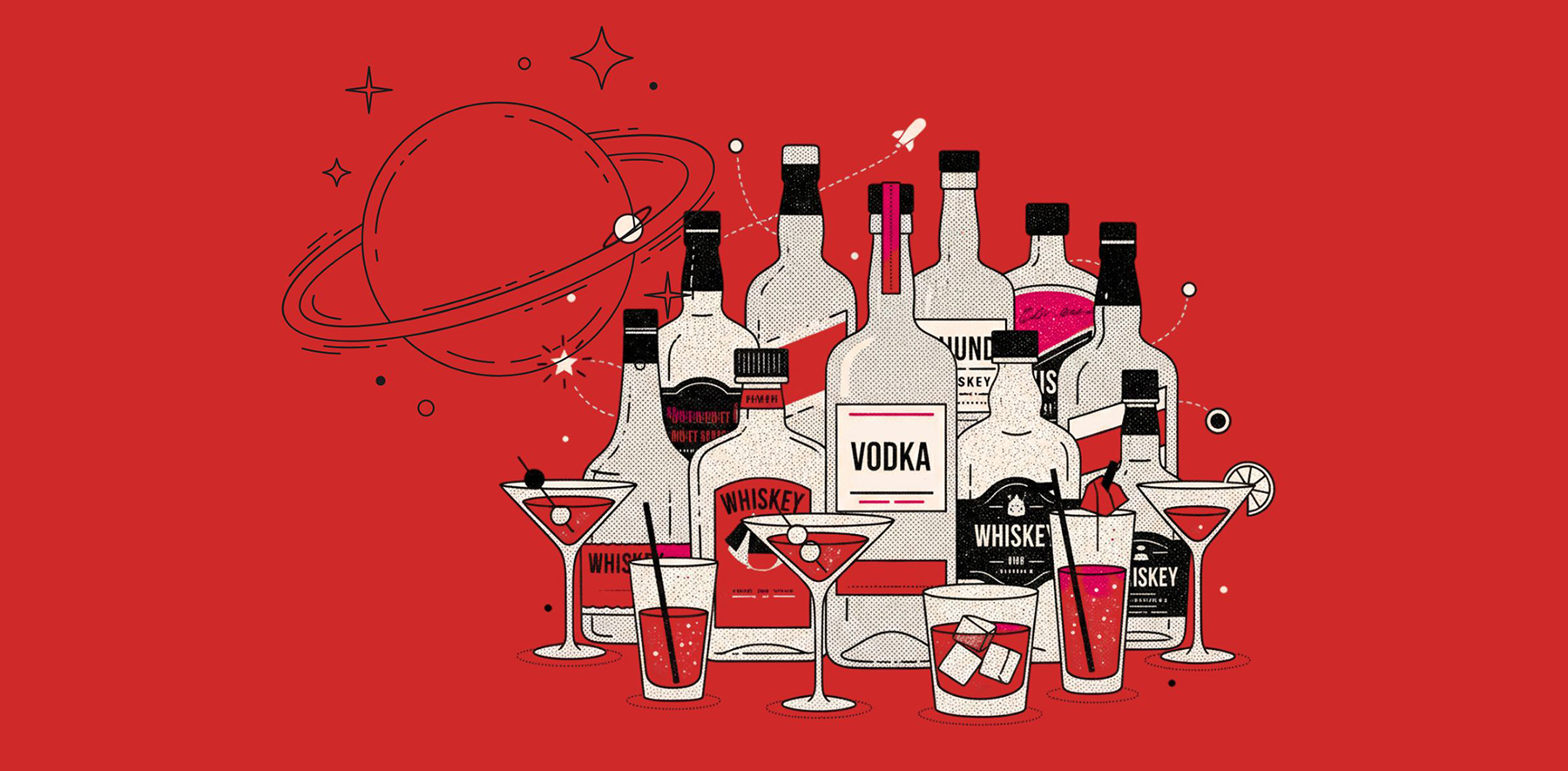
People love to hate vodka. And I get it. You probably think vodka is uncool, flavorless or goes down like a wire brush. But it’s time to get over yourself. Vodka was scorned in the early aughts because the overly saccharine cocktails of the ‘80s and ‘90s gave it a bad rap. But with the astounding popularity of Martinis going nowhere, vodka is going to step back into the spotlight as a spirit that can be elevated, especially with the slew of both big and craft brands currently on the shelves. If you haven’t tried Haku, Holiday, Chopin or Kástra Elión, I urge you to do so before one more “I like everything but vodka” comes out of your mouth.
There was a time when bartenders rebelled against vodka, and I’d argue it was necessary for people to step out of their comfort zones and try something new. But we’ve finally made it! Even bartenders recognize vodka should be welcomed back into the fold. “At Canes & Tales, we recently introduced Tomiki Vodka,” Dominic Dijkstra, director of mixology at Waldorf Astoria Osaka, tells me. “When guests first try it, they’re often surprised by its delicate, refined character — a vodka that tells a story of craftsmanship and place. For me, it’s a perfect example of how vodka can feel modern, local and experiential all at once.”
Kristine Gutierrez, partner and general manager of Kabin, similarly sees vodka’s resurgence riding the wave of more compelling bottles. “As mezcal and smaller liqueurs like Chartreuse have grown in popularity, vodka’s return to the limelight is ushered by producers who bring quality to the table, which encourages bartenders to make drinks that respect that quality,” she says. “I would have never ordered a vodka cocktail from a bar 10 years ago — vodka drinks were seen as basic, so they were built basic. Now, some of our most interesting drinks use vodka as the base.” Keep an eye out on cocktail menus, and don’t be afraid to inquire about new bottles you see behind the bar. — Amanda Gabriele, Senior Editor
…and whiskey will rebound on the back of a viral moment
Let’s get to the bad news first: Bourbon production is down 28% and is now at 2018 levels. We have an oversupply of whiskey worldwide that’s extremely troublesome because whiskey is “different from other consumer goods, like sneakers or watches, [in] that whiskey can’t respond to market trends instantaneously.” And every day it seems we’re hearing about bottling shutdowns, production halts, temporary distillery closings, hostile takeovers and liquidations.
Now, take a deep breath. According to the Distilled Spirits Council of the United States, whiskey — at least American whiskey — is weathering the current drinking slowdown better than other spirits, and “premiumization” is helping keep things above water (basically, we’re buying rarer, better and more expensive stuff). We could be one viral trend away from having the industry back on the upswing.
Think about it. In two years, Guinness has gone from closing a production facility to production shortages, thanks to a few viral trends: Splitting the G, 60/40, Turbo Guinness and the rapid success of Guinness 0.0. They even landed a Netflix series! Other drinks brands and cocktails have found sudden success with a little social media push.
What can whiskey do? Unfortunately, going viral isn’t always planned. Having Jim Gaffigan — funny guy! — promoting a bourbon-themed comedy special isn’t quite going to do it. That said, the industry seems willing to look outside of its normal consumer base and try new things to reach new audiences. Hopefully somebody’s going to take a chance and hit like Mad Men did nearly 20 years ago. Will it be through a style collaboration? Beyoncé’s continued endorsement? Partnerships with reality stars and pop singers? Actually considering the thoughts of women and Gen Z? My thoughts: it’s going to be something in the flavored category. Sorry, purists! — Kirk Miller, Senior Lifestyle Editor

Your local movie theater will convince you to go back…
The film industry got a rude awakening this October: box-office numbers that month were the lowest they’ve been since 1997 (excluding 2020, an outlier due to the COVID lockdown). That nearly 30-year low included several big, unexpected flops, including the Jeremy Allen White-fronted Springsteen biopic Deliver Me From Nowhere and Dwyane “The Rock” Johnson’s transformation in a piece of Oscar bait titled The Smashing Machine. Not even buzzworthy performances from A-list actors could lure people to movie theaters, it seemed.
It’s perhaps unnecessary to point out that people simply aren’t going to the movies the same way they used to. Part of that is due to the rise of streaming, but the economy is also to blame. According to new research from management consulting firm Bain & Co, “Ticket prices in real terms are close to flat since 2010, but the cost of a [movie theater] visit has risen as the increase in concessions revenue per patron has outpaced inflation. As a result, consumers now see cinema as expensive.” And with fewer and fewer people going to the movies, theaters are struggling to stay afloat. According to the New York Times, the number of screens operating in the U.S. dropped 12% between 2019 and 2023.
The situation seems dire, but movie fans are making a concerted effort to keep them afloat. One solution? Some independent theaters, such as the Triplex Theater in Great Barrington, Mass., are now operating as nonprofits. But even those still adhering to traditional business models will have to adapt in 2026 if they want to stay in business by offering something audiences can’t get at home on a streaming service. Don’t be surprised if you see theaters leaning in to live experiences — director Q&As, special screenings, panels or interactive events like Alamo Drafthouse’s “movie parties” — to lure people away from their Netflix queues. — Bonnie Stiernberg, Managing Editor
…while streaming will come full circle and turn into cable again
It turns out the way for all the streaming services to avoid going belly-up, a trend we predicted last year, was to join forces and merge into one giant streamer. We’re not quite there yet, but the last few months have seen some extremely high-profile mergers that’ll send ripples through the entertainment industry — most notably, Netflix’s $87.2 billion purchase (which already has its own very thorough Wikipedia page) of Warner Bros. Discovery, the home of HBO Max. Just last week, Warner Bros. rejected a hostile $108.4 billion takeover bid from Paramount, a company who itself merged with Skydance back in August in a deal that may have led to the cancellation of The Late Show With Stephen Colbert. This year also saw Disney fully acquire Comcast’s stake in Hulu, giving them full control of the platform.
In short, the big streamers are gobbling up the smaller ones, and we’re inching closer and closer to a world where all streaming content is owned by one massive, multi-billion-dollar corporation. If all content winds up falling under one umbrella, cord-cutters who opted to subscribe to a handful of streamers instead of paying for hundreds of cable channels might soon find themselves in the exact situation they sought to avoid, forking over $100 a month to one company in exchange for access to a bunch of stuff they’ll never watch. That’s annoying from an economic perspective, but it also stifles creativity when one small group of C-suite suits controls the majority of the nation’s entertainment. Fingers crossed those antitrust laws do their thing. — BS
You will play a video game made (at least partially) by AI…
According to a report by Activate Consulting, generative AI will “increasingly transform every layer of the gaming ecosystem,” affecting everything from game creation to commerce to the in-game experience. Some of that generative content will be co-creations between AI and users (finally, a fun use for vibe coding). What actually interests me is the idea of procedural content generation, where an artificial intelligence program (like Microsoft Muse) could automatically generate levels, maps, quests and environments, even personalizing the experiences for gamers.
It won’t be an overnight change, and it’ll be a costly endeavor. To be clear, AI has already been a part of the gaming landscape, especially if you’ve ever played generative environments of No Man’s Sky, which came out in [checks calendar] 2016. But some cool new ideas are in the works. As Forbes notes, AI could help personalize dialogue from non-playing characters, create gaming environments based on your excitement levels and greatly improve augmented-reality games, which mix real and digital worlds.
Still, there are obstacles beyond cost: LLMs require a lot of memory that consoles can’t currently offer. There are real worries that AI will replace video game talent (both in voice roles and in game creation staff). That said, more than 50% of game development companies are already using generative AI, and in some cases, it’s accelerating production and decreasing costs. Hopefully there will be an ethical solution that’ll get me some cool new Halo multiplayer levels. — KM
…but the hottest books will be 200 (or 2,000) years old
For the past few years now, there’s been one movie that takes over pop culture with a kind of mass cultural reawakening. In 2023, it was Barbie. In 2024 (and 2025), it was Wicked. So what’s in store for 2026?
With Christopher Nolan’s The Odyssey and Emerald Fennell’s Wuthering Heights on the horizon — and already inspiring endless hot takes off posters and teaser trailers alone — the coming year is primed for a classic-literature takeover. Chronically online people, readers and chronically online readers are going to step away from the modern tropes of “romantasy” and “dark academia” in favor of rediscovering the greats, and it’ll snowball from there. You’ll feel like you’re back in high school English class. The bestselling books will be hundreds of years old, couples will yearn for passion like Heathcliff and Catherine, and men will turn away from podcasters and back to the ancient Greeks for enlightenment. — Joanna Sommer, Editorial Assistant
The reservation bubble will finally burst
When I moved to New York City in 2009, not only could you get a restaurant reservation the morning of, you could also walk into a spot on Friday night and get a table — and if that table didn’t work out, there was definitely one around the corner waiting for you. I don’t have to tell you that is not the case today: The culture of restaurant reservations has gotten completely out of control. Even my mom in Canton, Ohio, tells me that if she doesn’t make a res two weeks in advance, she’s not getting into the spot she wants.
Reservation culture shifted dramatically after COVID, making things worse for both the diner and the restaurant. Unless you’re glued to your phone, stalking the reservation apps and waiting for the “notify” alert that a table is available, you’re probably not going to eat at a normal time. And inconsiderate assholes are making the whole problem worse for everyone by hoarding reservations and then not showing up for them, leaving establishments with empty tables they can’t fill.
There are a lot of articles out there that talk about how frustrated people are with the system. I hear it firsthand every single day. The apps make it too easy for people to stockpile reservations, only to let them go at the last minute when it’s too late for both restaurants and other diners. You know what would change the game? Making people pick up the phone. It’s difficult to hoard reservations when you have to answer to a real person. I know this is probably extra work for the restaurants, but isn’t it worth it if it means less ghosting on your tables? Just like in a lot of other areas, we’re going to get off the apps this year, and dining out is going to be so much better for it. — AG
You’ll watch more tournaments, and wager on them all
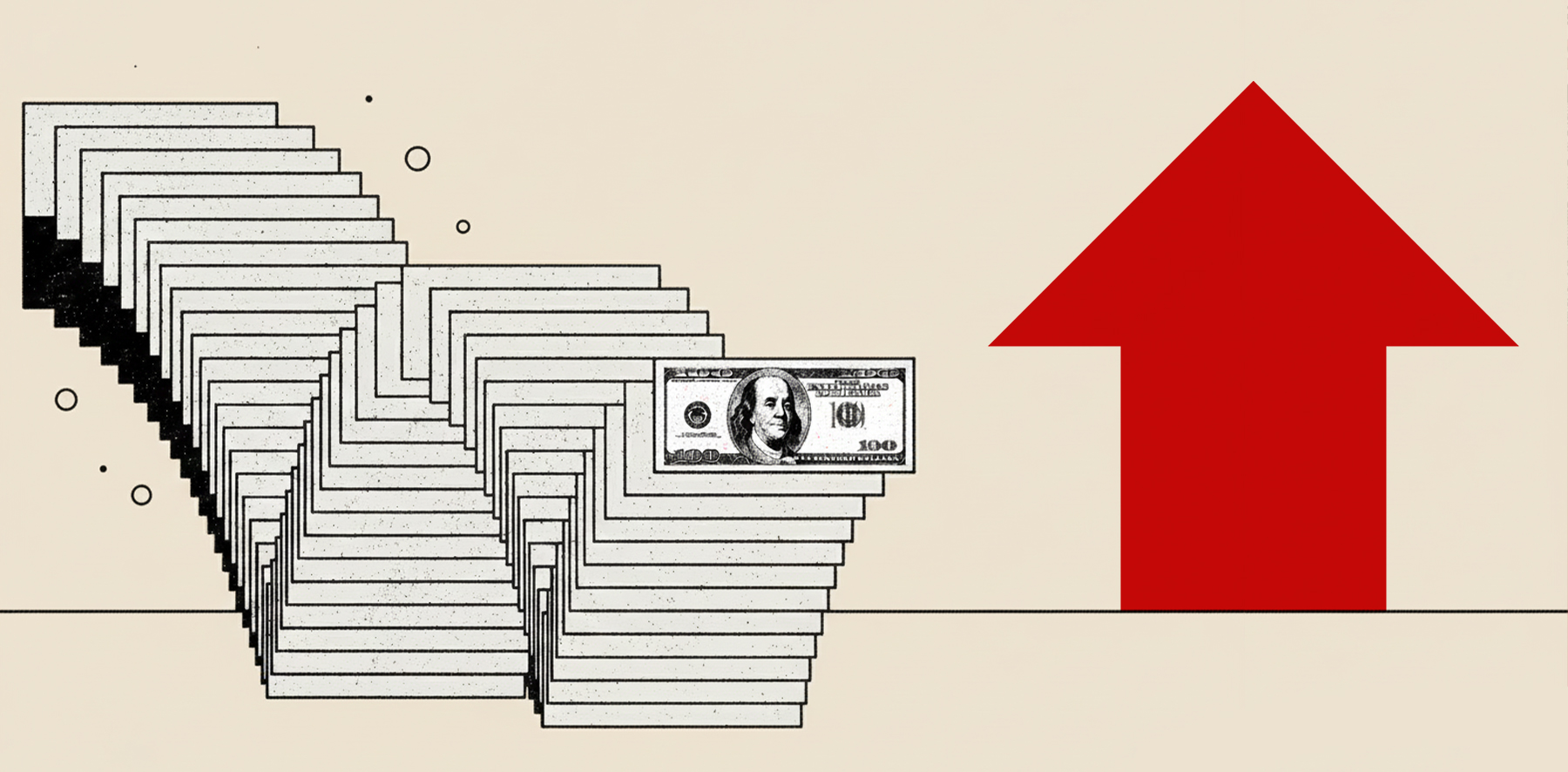
In 2023, NBA commissioner Adam Silver debuted the NBA Cup, the league’s first in-season tournament, designed to “create new games of consequence,” and make a little money doing it. A year later, gambling partner BetMGM reported a 70% uptick in NBA bets, reportedly driven by a spike in Cup action. MGM parlayed by adding new prediction markets across the tournament and the WNBA Commissioner’s Cup.
Despite their zero-tolerance policy for internal gambling, the major leagues are begging you to play. In the NFL’s inaugural gambling contract, DraftKings, FanDuel and Caesars pledged nearly $1 billion to the most-bet league in the nation. On the consumer side, these blockbuster agreements mean more markets, more deals (“$200 in free credits for NHL betting”) and third parties pushing for gigs like the NBA Cup. They also mean an ESPN Bet logo in the corner of the screen as Adam Silver chastises athletes for playing poker.
This year alone, NASCAR introduced its DraftKings In-Season Challenge, the NHL played its first 4 Nations Face-Off (FanDuel, DraftKings, ESPN Bet) and the FIFA (Betano) World Cup built its largest-ever field of 48 teams. Those adds aren’t solely owed to betting, but the promise of a home-grown, parlay-fed cash cow sure sweetened the pot. So get ready for more tournaments — many more tournaments — in 2026, plus betting influence across the major leagues, expansion across the college games and plenty of free tokens when you toss 50 bucks at FanDuel. — Aaron Cohen, InsideHook Contributor and Assistant Editor at Hoops HQ
You’ll take a solo trip, with a bunch of strangers…
Solo travel has been booming for years, especially among younger travelers. According to Grand View Research, the U.S. solo travel market was valued at $95 billion in 2024 and is projected to surpass $190 billion by 2030. Airbnb’s 2026 travel predictions echo that momentum, noting that “solo travel is experiencing a renaissance, fueled by online conversations that encourage self-discovery over relationship status.” But the way people travel by themselves will shift. Rather than seeking isolation, many solo travelers will prioritize connection — often with strangers. Think: group trips designed specifically for those traveling alone.
That shift makes sense when you consider that women account for roughly 71% of solo travelers. Group settings offer a built-in safety net, something women traveling alone are understandably drawn to. But the appeal extends to men as well. You still get the satisfaction of setting out on your own, paired with the upside of instant community, cross-cultural exchange and someone to grab a drink with after a long day of exploring. I got to experience this type of travel on a recent trip to Nepal and India. Highly recommend. — Lindsay Rogers, Travel Editor
….and plan a vacation based on a book (or TV show, or movie)
This year saw a continued rise in set-jetting, with travelers flocking to destinations tied to the stories they love, whether that’s a buzzy TV series or a cult-classic film. Think Thailand, courtesy of The White Lotus. According to Expedia Group’s 2026 Set-Jetting Forecast, 81% of Gen Z and Millennial travelers now plan trips around locations featured in film and television. But after ticking off their screen-inspired bucket lists, many travelers are starting to look elsewhere for their next spark.
Enter: literary travel. While book-inspired journeys long predate set-jetting — Condé Nast Traveller notes that Lord Byron’s poem Childe Harold’s Pilgrimage helped fuel European “Grand Tour” travel as early as the 19th century — the trend is getting a modern revival thanks to BookTok. Younger travelers in particular are driving renewed interest, to the point that operators are now rolling out BookTok-inspired itineraries to meet demand. So if you finish a book in 2026 and feel suddenly compelled to see its setting for yourself, don’t be surprised if you see a fellow traveler clutching the novel on the plane ride there. — LR
You will finally break your doomscrolling habit…
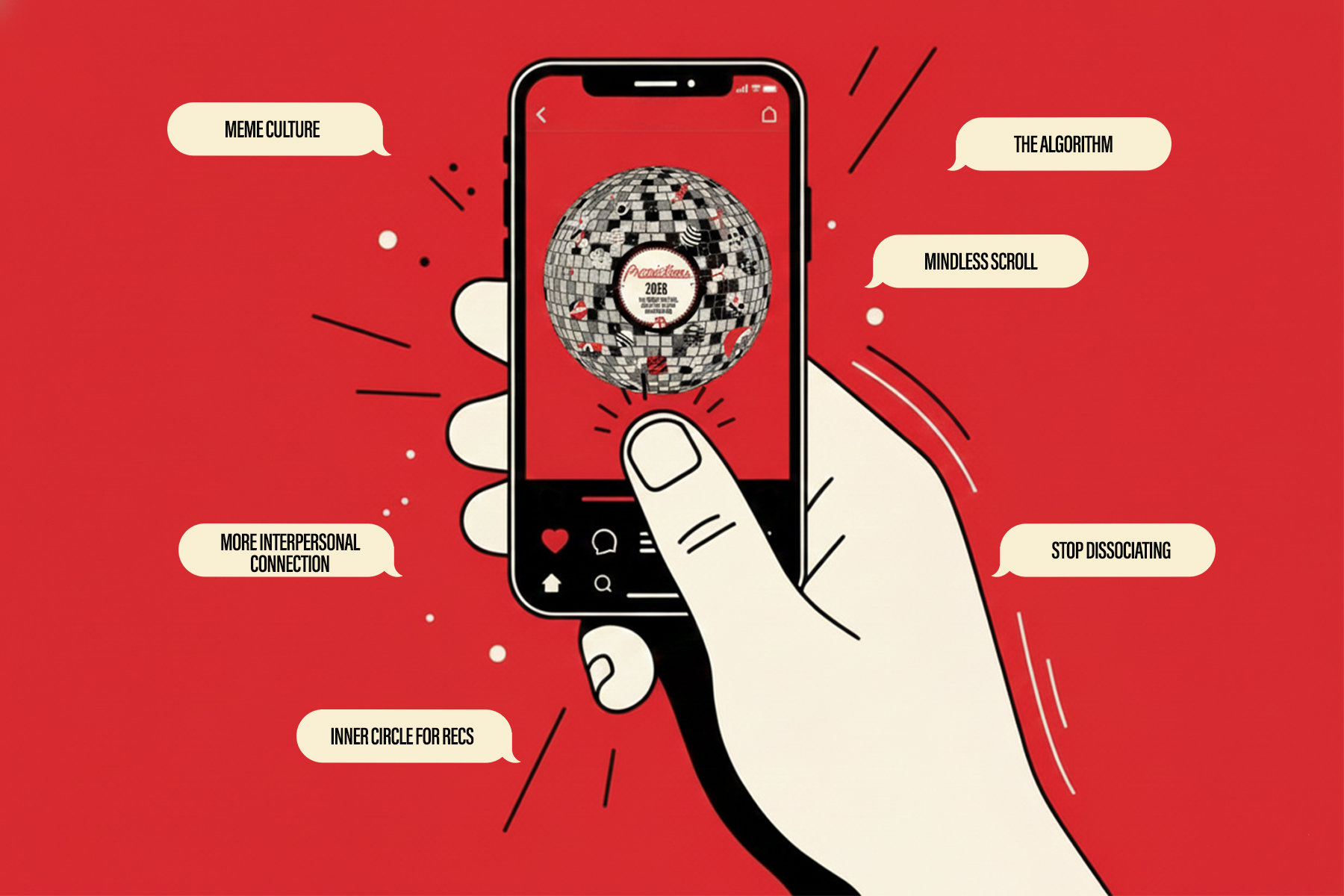
The internet is having an identity crisis. Between meme culture taking a hit, the continuous fragmentation of social media and AI slop farms diluting algorithms, the mindless scroll is in danger. And you know what? That’s a good thing.
When content becomes meaningless, the doomscroll becomes even more pointless than it has always been. (I mean, really, there are only so many AI-generated toast-scraping videos one person can watch.) From the deterioration of your social feeds to the increasingly specific ads based on social listening tools, the comforting escape that social media once was has vanished. In its absence, people want to stop dissociating from the world. They’re craving interpersonal connection.
From run clubs to watch parties for hit shows, people are going back to using the internet as a tool to kickstart conversations with the hopes of coming together IRL, rather than using it as the meeting place itself. Bad news for Zuck.— Hanna Agro, Assistant Editor
…and you’ll ditch Instagram, Yelp and Apple News for AmiGo, Beli and blogs
You’ve heard of private membership clubs and application-based dating apps. In what The Economist has described as an age where exclusivity signals taste, 2026 will push digital discovery further behind velvet ropes. Search won’t feel broken so much as gated, shaped by insider networks and trusted recommendations rather than open algorithms.
Hyper-niche Substacks already point to this shift, signaling the cultural IYKYK movement. Rising travel guides like AmiGo formalize it, tapping tastemakers across industries: Sicilian photographers sharing Florentine escapes, matcha entrepreneurs mapping Tokyo’s best shops. Even Beli, a restaurant-rating competitor to Yelp and Google, proves the same idea: people are looking to their inner circle for recommendations. As these platforms grow, expect more of this guardrailing: the best information will not be searchable, but something you’ll be let in on. — Zoe de Leon, Social Editor

More Like This


Twice a week, you'll find guinea pig features, personal essays and expert interviews on living better — for however long you’re here. Subscribe to Champ now.