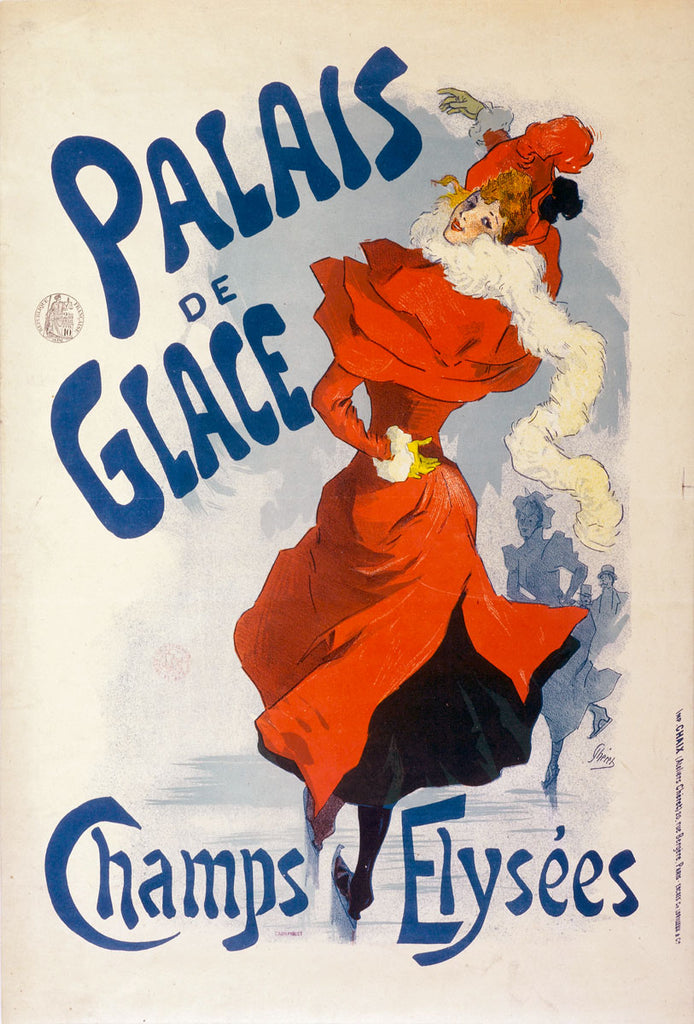
Musée d’Orsay hosted an exhibit last year called “Art is in the Street,” which cataloged “the spectacular rise of the illustrated poster in Paris during the second half of the 19th century.” The prints were lithographs — drawings made on limestone with greasy pencils, which were then exposed to water and inverted onto sheets of paper. Typically, each color got its own stone. The finished product was a firework of oily yellows and reds.
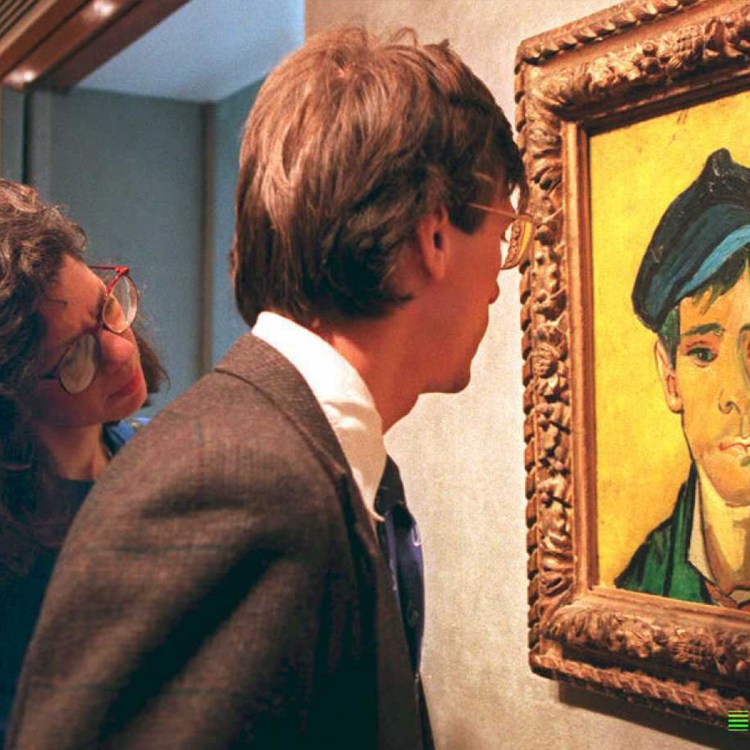
I visited last May and tried to take in as many of the 230 posters as I could. A couple times, I had to remind myself that these were ads — they were quiet now, framed and under the same roof as the likes of van Gogh and Renoir — but they’d once filled the dark-green Morris columns throughout the city, caterwauling at passersby. The museum wrote of the collection: “[This] proliferation of images took over the smallest bit of empty space…such supports constituted the exhibition walls of a new visual world.”
I remember thinking: for people who only recently had not been subject to these ads, their proliferation must have been pretty exhilarating. Pissoirs showing dancing women in pointy shoes; newsstands heaving open a window to China and Japan; every corner wanting to sell you a bicycle or “silver polish,” inviting you to the coast or a charity casino night.
These posters anticipated Parisians’ needs, and invented desires they hadn’t dreamt of. But consumerism was too green a concept for people to feel targeted. As the Musée d’Orsay put it, these Belle Époque street ads gave voice and color to the “fantasies and realities” of Parisian life, such as sports, cabaret and even anarchist cries for social upheaval. They attracted artists of the hour, most notably Jules Chéret, and provided a rare visible platform for bohemian concerns, while helping build the middle class.
New York, 2026
I’ve thought a lot about “Art is in the Street” over the last few months, specifically the inherent dignity of those earliest outside-of-home advertisements, which took time to make, which had no clue who you were, which couldn’t follow you home. I’ve thought a lot about how far we’ve come since Paris, 1886, and what New York, 2026 may or may not be doing to my mind.
I’m astonished by the number of times and variety of ways I now experience advertising. When I pause a movie to use the bathroom and return to find my living room awash in pink and orange (Dunkin’). When my news podcast says they’ll be back after this and I’m trying to make sense of the latest ICE brutality but they also want me to buy tickets to this Broadway show. When I try to watch an awards show but the commercials are just gambling apps and GLP-1s passing each other the ball. When I wake up my Kindle, look up in the subway, check my texts on Thanksgiving or visit a verified Instagram page.
Did you know there are ads in movie theaters now? Not just the usual pre-show promos. I mean random, unrelated ads from pharmaceutical companies that you have to watch right before Marty Supreme. There are ads in cars, on those giant tablets screwed into the dashboard where we used to just have radios. There could soon be QR codes mixing with our constellations.
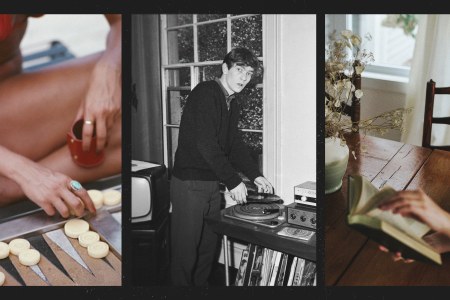
The Analog Life: 50 Ways to Unplug and Feel Human Again
There’s life beyond the infinite scroll. We put together a toolkit of habits, routines and products to help you live more intentionally.“Human Fracking”
There’s a new book that came out in January called Attensity! — written by the Friends of Attention, a nonprofit coalition of “attention activists” — which delineates how a few tech companies successfully created a $7 trillion system in which we are the product. “[M]ost of us spend more than half our waking hours on devices designed to keep us enthralled to the taps and swipes of the attention economy,” the book’s three co-editors wrote in an essay for The New York Times.
One of the book’s primary analogies is fracking, a method for extracting hard-to-reach fossil fuels. The slurry is worth the squeeze, so long as the oil and gas companies are willing to pump millions of gallons of chemicals into the ground to get what they need. Modern digital advertisers follow a similar model: “You need a lot of human eyeballs to make any profit in the advertising industry,” The Friends of Attention write. “Homo sapiens have been going about their business being interested in the world and each other for about two hundred thousand years. Getting them all to look at ten square inches of backlit glass for eight or nine hours a day isn’t that easy.”
The ad industry’s solution? Slow-drip, full-scale invasion. Place the ads absolutely everywhere and money will eventually flow to the surface. Advertisers have shifted from space (those Morris columns of yore) to time (any moment in any person’s day that might otherwise have led to conversation, reflection, reverie or just a bit of quiet). It’s amounted to a coup of the soul. Or to borrow another sentence from the book: “Petroleum fracking is doing irreversible damage to our external environment…while the human frackers are verifiably destroying our interior environment (our minds and hearts, our ability to be and to sit with ourselves and the people we love).”
I felt this acutely a few months back over Thanksgiving break, when text marketers blew up my phone with discounts for days straight. Companies I’d forgotten I’d given my information to, stressing me out with sweetheart deals. Knowing that I could throw my phone in a river, but it doesn’t really matter what I do. I’m just a teaspoon of crude oil; they’re sucking my friends and family and everybody else up the hose anyway.
Black Friday has put a damper on Thanksgiving’s communal spirit for decades, but adults stampeding into Best Buy back in 2005 feels almost quaint now. At least those people were living in the world, taking (however drastic) action to get the things they wanted. There’s something more sinister about family members sitting alone in different corners of the house, selling away their time.
What Do We Do?
Years ago, frustrated by the omnipresence of phones, I told myself that if someone refused to look up from their screen while I was talking to them, I’d stop talking and just wait, like I was a passive-aggressive elementary school teacher. It didn’t really work, likely pissed people off…and I undermined my mission by sometimes committing the crime myself.
As many leaders in this space have pointed out, solitary protests can’t really defeat a collective-action problem. In a similar vein, I don’t think we can beat ads by gritting our teeth and scrolling away anytime we see one. We should acknowledge their existence. Take note, take a deep breath. In an ideal world, we’ve got bigger fish to attentionally fry.
Just this once in my goddamn life, allow me to invoke Merriam-Webster, which includes the following definitions for attention: 1a) “the act or state of applying the mind to something” and 1b) “a condition of readiness for such attention involving especially a selective narrowing or focusing of consciousness and receptivity.” I like the phrases “applying the mind,” “selective narrowing” and “receptivity.” To me, those words are reaching for something sacred.
Today’s advertisers seem to think that attention is nothing more than a twitchy squirrel. Your quick click constitutes confirmation of interest — be it eager or autonomic, who cares. The “smallest bits of empty space” they’re intent on invading are the empty seconds of your day.
Instead of playing defense against their ads, I’d suggest playing offense with your attention. Populate the time you have with intentional decisions. Commit to doing something and linger long enough in whatever that is until the urge to be elsewhere has the opportunity to evaporate. These are generally the things worth doing with your life, anyway.
I can give you examples, if you need them, but you know your life better than anyone else, and if you’ve made it this far in the article (sorry about the ads, by the way), you’re already living one of them. Set aside time to read, to make dinner, to engage in directionless, agenda-less conversation with old friends. Get out of your house. Build things. Listen to kids talk. Treasure all the things that necessitate the “application of the mind,” ideally for long stretches of time.
This isn’t Paris, 1886. They’re not wasting their good oil paints on you. Extraction has become much cheaper than persuasion. The daily work of deciding what matters is entirely up to us.

More Like This



Twice a week, you'll find proven advice and tips, expert interviews, deeply reported features and personal essays on living better — for however long you’re here. Subscribe to Champ now.