One Sunday about two weeks ago, I was suffering from a violent hangover and did the only thing a violently hungover person could do: lie horizontal and scroll for hours and hours on TikTok.
As I accepted that I was going to brain-rot the day away, I was served this fan edit on my “For You” page for a show called Heated Rivalry. Set to Lorde’s “What Was That,” the short video spliced clips of two Grecian god-like men kissing, sweating, touching each other and playing hockey. I must’ve rewatched the clip a few times because my algorithm began showing me more edits from this show I had never heard of. With each new video, I grew more obsessed. I had fallen down a horny rabbit hole. Soon, I was searching for full-length clips of the show, desperately trying to figure out the story, who these characters were and what they would do next. And let’s be honest: I was very into watching these two men fuck each other.
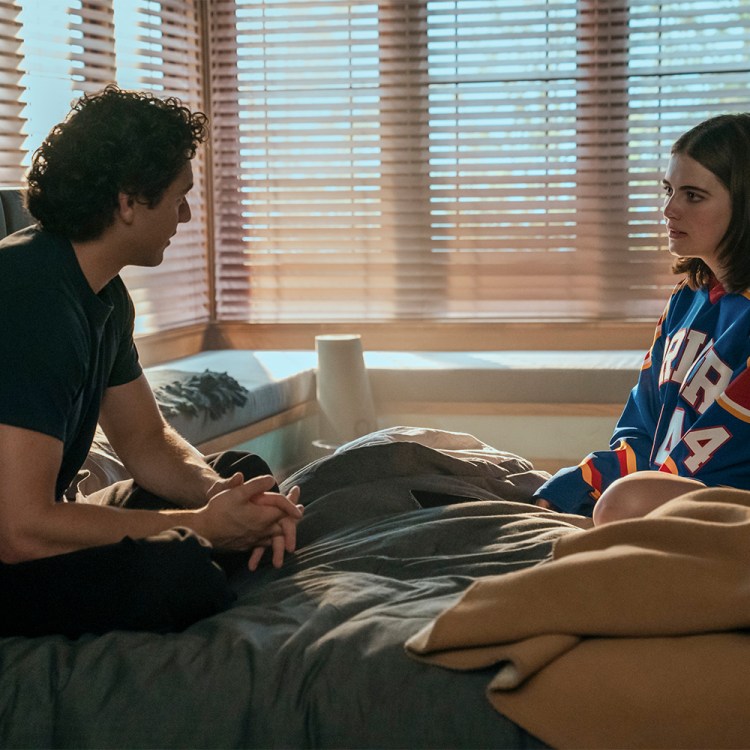
Heated Rivalry has become an overnight sensation. The Canadian romance drama is based on a novel from author Rachel Reid’s series of Male/Male hockey romance books, and was written and produced by Jacob Tierney for Crave, a Canadian streaming service (think Canada’s Netflix). The six-episode series follows a couple of different storylines, but mainly focuses on the characters Shane Hollander and Ilya Rozanov, two rival hockey stars. The show premiered on Nov. 28 on multiple platforms beyond Crave, including HBO Max, and in a matter of two weeks, it was renewed for a second season, presumably because of the overwhelmingly positive reaction from viewers (and the gazillion fan edits circulating the internet).
When I say I haven’t stopped thinking about this show and its characters, I am not being facetious. That Sunday, as I lay in bed at hour six consuming endless Heated Rivalry content, I kept asking myself, a 27-year-old heterosexual woman with a boyfriend: “What is wrong with me?” I haven’t felt these levels of fangirl obsession since I was 13 running a One Direction Tumblr blog.
I had quickly learned that I wasn’t alone in my newfound addiction. Interspersed between Heated Rivalry fan edits set to songs “Maneater” and “Sweet Dreams (Are Made of This)” were videos from users asking themselves that very same question. This show had become all-consuming, notably for straight women, lesbians and gay men.
“…this is actually starting to actively affect my life because there is not a moment that I am awake that I am not thinking about the gay hockey show…” said one user. “How am I supposed to do my job at work when this edit of Shane and Ilya is all I can think about,” asked another. One woman simply screamed into her camera: “Release me.”
As with anything that goes viral, Heated Rivalry has now taken a prominent stake in online discourse. One question that’s been asked and discussed repeatedly is why straight women, in particular, are so drawn to a male-centered, gay romance. As I was foaming at the mouth, telling anyone who’d listen to me obsess over the new gay hockey show with men who have pectorals the size of my head, a male friend asked me a question: “But you know these men would want nothing to do with you romantically or sexually, right?” Obviously, I knew that. The fantasy of big, hypermasculine men enthralled me. I loved watching the tension build between these two characters and their yearning for one another. And I liked that it had absolutely nothing to do with me.
Heated Rivalry is the perfect combination of the stories, characters and tropes women enjoy consuming. As mentioned, the show is based on Rachel Reid’s series of M/M hockey romances. While the market for romance books has been growing since 2021, this year, “the volume for romance books has more than doubled compared to four years ago, with 51 million units sold in the past 12 months,” according to a June 2025 report from Circana, with romance subjects like fantasy romance and sports romance, “experiencing triple-digit growth.”
Casey Tanner, Lelo sexpert and certified sex therapist, tells InsideHook that sports romances, and hockey in particular, help give a plot a framework for high stakes and intensified emotion that hooks readers. “Teams, rivalries, championships, injuries — these all provide built-in external obstacles to layer on top of internal, emotional ones,” she says.
Societally, hockey is viewed as a very hardcore, hypermasculine sport. It’s fast-paced, it’s aggressive and its large-muscled, brutish players are allowed to slam each other into boards and physically fight one another.
“Hockey is an intense world of male strength, size and physical aggression,” says Nic DiDomizio, the author of Nearlywed, The Gay Best Friend and A Murder Most Camp.
“From a purely sexual standpoint, that brand of exaggerated masculinity is just inherently hot to a lot of women and gays, and from a romantic standpoint, readers love the idea that a hypermasculine hockey star can have another side to him that’s softer and more emotionally accessible without coming off as insecure or weak,” he explains. “It’s like this simultaneous fulfillment of two disparate fantasies that rarely converge in real life.”
“That hyper-masculine backdrop makes it especially satisfying when tenderness, vulnerability or queerness show up in that world,” adds Tanner, who also says that women gravitate to these stories because they, too, want to be desired as feverishly and desperately as the characters they see love, lust for and admire one another.
They’re also watching men demonstrate a level of emotion not regularly expressed by the straight men they encounter IRL.
“For many women, the fascination with Heated Rivalry is about watching men express a level of desire and emotional exposure that they rarely see modeled in their own lives,” says Tanner. “Seeing two men orient their lives so strongly around each other can tap into a deep longing to feel prioritized and cherished.”
“In real life, a lot of hypermasculine straight men struggle to achieve true emotional closeness with women, possibly because it would be deemed feminine or ‘gay’ to open up too much,” echoes DiDomizio. “I could imagine that reading about two such men finally allowing themselves to open up — to the point that they literally start having gay sex with each other — could make for a titillating and weirdly validating reading experience.”
For female readers, an M/M romance, and its coveted smut, may also tap into voyeuristic tendencies for women and avoid some of the pressures they might feel in straight narratives. As mentioned, I enjoy Heated Rivalry because I’m irrelevant. I can just sit back and watch two extremely sexy men long for — and bang — each other.
“There are no bodies to compare ourselves to, no anxious anticipation of being objectified,” adds Tanner. “Instead, [women] can simply witness the intensity, the chemistry and the emotional stakes. The turn-on is usually less about the fact that the characters are two men and more about the way desire is depicted — direct, persistent and emotionally invested.”
Gay smut also sidesteps the real-life questions and confrontations surrounding patriarchy, misogyny and oppression women may struggle with when consuming raunchier straight narratives.
“There’s always been an element of fetishizing masculinity in romance, but M/M romance of the Heated Rivalry variety makes for a particularly modern and safe space for women to do so,” says DiDomizio.
“When the hero in a straight romance is an alpha, there are so many gender roles and power dynamics automatically baked in — even if the author is making an effort to comment on them or subvert them,” he adds. “I can imagine that takes away from the fantasy of it all, and I could understand how a woman might have a subconscious sense that the only way to command respect from a man like that is to be a man herself — and reading a book like Heated Rivalry is a way to imagine what that might be like.”
I also can’t understate how well-executed the show itself is.
Typically, I find contemporary romance novel adaptations to be total cringefests. We get the glossy, overlit Netflix treatment, complete with corny dialogue and bad acting, which I turn off halfway through due to secondhand embarrassment.
However, Tierney’s production is refreshingly different. He’s cast relatively unknown, talented actors — Hudson Williams and Connor Storrie — who master every micro expression and sensual line delivery. There’s an electrifying score (a remix of t.A.T.u.’s “All the Things She Said” during the pivotal club scene in the show propelled the song to the number nine spot on the U.S. iTunes chart this week) that heightens the emotions displayed onscreen. Viewers like to watch their favorite tropes and fantasies play out, sure, but they notice when the material they love is taken seriously. Women also like when their partners take what they love seriously.
If you’re a straight man and have made it this far (thank you, I’m impressed!), it’s important to understand that your partner’s enthusiasm for this show has almost nothing to do with them not wanting you or wishing you were a super-jacked, gay hockey player. More likely, it could signal a desire for a more intense and connected emotional experience in your romantic and sexual lives.
Women’s enjoyment of romance novels — whether it’s fairie smut, regency or queer hockey romances — suggests that they are treating fantasy as a space for exploration.
“Women engaging with content like Heated Rivalry are saying, ‘I want to understand what lights me up, even if it doesn’t look like the relationship I’m in or the label I use today,’” says Tanner.
This is something you can capitalize on, instead of feeling insecure about it or shaming your partner.
“Rather than feeling threatened, men can treat this as a roadmap and a conversation starter. Asking questions like, ‘What parts of this dynamic turn you on?’ or ‘What do you wish we had more of that you see in this show?’ can lead to helpful insights,” she explains.
For years, the romance genre has been instructing men on how to get the girl: Be straightforward about your feelings, apologize sincerely, initiate affection and check in on consent. These are all deeply attractive behaviors. Also yearning. You should yearn more.
“Men who are willing to learn from that, rather than dismiss it or be threatened by it, are likely to have richer, more connected sex lives,” says Tanner.
And when your partner asks you to watch the gay hockey show with her this Friday, respond “yes” with enthusiasm.

More Like This


This article appeared in an InsideHook newsletter. Sign up for free to get more on travel, wellness, style, drinking, and culture..