
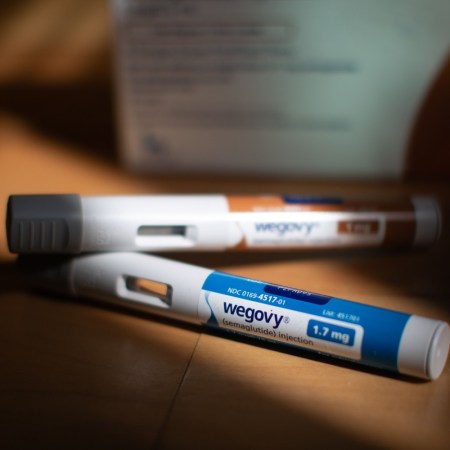
There’s plenty of encouraging news for people taking GLP-1 drugs like Ozempic to lose weight and reduce the risk of diabetes: countless people who have lost weight while using it and seen other health benefits as a result. But along with the good news come some bleaker aspects, with some people taking these drugs and reporting feelings of nausea as a result.
As NPR’s Jon Hamilton reports, a group of neurologists are putting their skills to the test to see if there’s any way to reduce the literally stomach-churning side effects that some patients experience. NPR details a number of presentations made at Neuroscience 2025, the annual meeting of the Society for Neuroscience, in which different experts proposed an array of solutions to GLP-1 drugs’ nausea problems.
One of the more intriguing proposals came from University of Washington researcher Ernie Blevins. Hamilton describes the method that Blevins and his colleagues used on rats: giving them GLP-1 drugs to reduce their appetite, and then giving them small doses of oxytocin, a hormone that can be used to reduce nausea.

Chinese Companies Are Developing Advanced GLP-1 Drugs
There’s plenty of research happening around the worldFinding a way to counteract these side effects of GLP-1 drugs are not the only avenue that researchers are pursuing to refine this class of medication. Earlier this week, The Lancet published the results of a study on an oral GLP-1 medication, orforglipron, that showed promising results: tests in 10 countries found that it outperformed a placebo.
“The opportunity for an oral GLP-1 medication with highly effective weight loss that is simpler to take may provide increased access and opportunities for better health for our patients with obesity and diabetes,” said the study’s lead author, UTHeath Houston’s Deborah Horn, in a statement. GLP-1 medication has been a game-changer for many people — but that doesn’t mean it isn’t going to keep evolving.

More Like This



Twice a week, you'll find guinea pig features, personal essays and expert interviews on living better — for however long you’re here. Subscribe to Champ now.