“Selling coals to Newcastle” is an expression in British English meaning an attempt to sell something to a place already rich in that item (Newcastle has long been a major site for mining in the U.K.). So what to make of Braden Saunders, co-founder of the London-based distillery Doghouse — the capital’s only vodka producer — and its launching of a “bourbon” in the United States?
Saunders is quick to make an important legal correction here: His spirit is “bourbon-like” or an “American-style” spirit because bourbon — like Scotch or Champagne — is a protected category. “But just because America has the history in bourbon, just because it was first to make it and owns the word, that doesn’t mean it owns the category,” says Saunders, an Australian who helped build and sell a chemicals company before opening Brisbane’s first craft beer pub and dabbling in craft beer production. He then decamped to London to go into spirits and launched Doghouse in 2017.

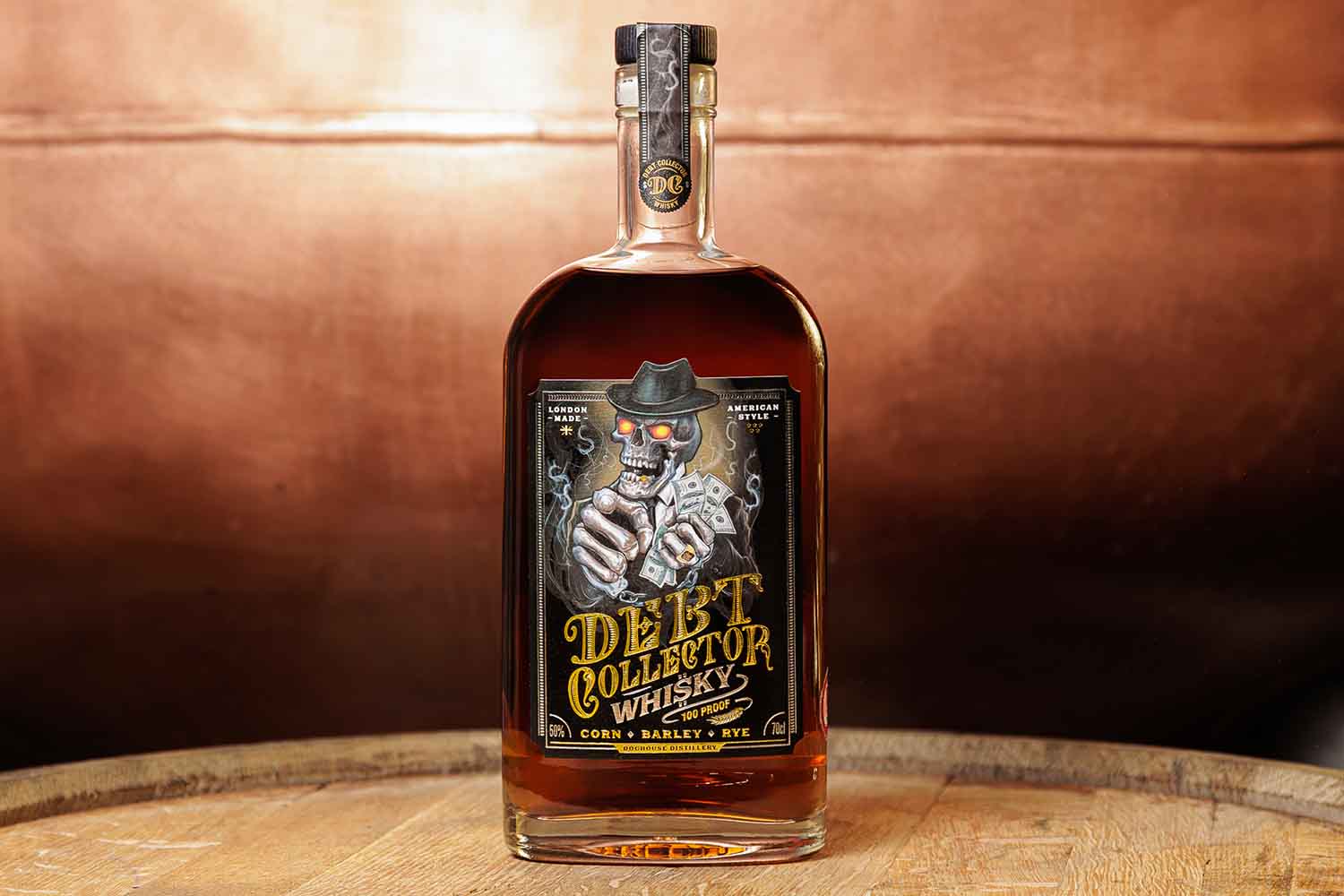
His new “bourbon-like” spirit is named Debt Collector, a nod to the Prohibition era and “a salute to bourbon’s forefathers.” It’s a multi-grain whisky (they’re keeping the British spelling) composed of barley, rye and 75% corn. It’s only matured for about three years, so it’s relatively young, but Saunders argues that much of the flavor in a bourbon comes from those virgin American oak casks, so age is less important.
At 50% ABV, or 100 proof, Debt Collector is also less diluted than many mainstream American bourbons. It’ll cost around $65 a bottle when it goes on sale in the United States towards the end of the year, with the first batch of 5,000 bottles exclusively available in the U.K. (and already sold out). Saunders doesn’t hold back on hyping Debt Collector’s quality. “In blind taste tests, I’d say it matches anything on the market,” he says. Expect a fresh, vibrant flavor: crisp cherry, a vanilla and caramel middle, and a spicy, smoky end.
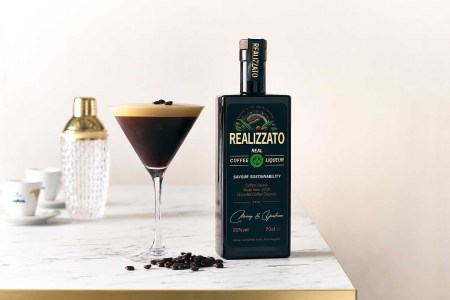
Can This Coffee Liqueur Change the Booze Industry?
Crafted from upcycled coffee grounds, Realizzato might be the beginning of a grander sustainability movementSaunders concedes he might be taking a gamble going up against monolithic brands like Jack Daniel’s or Jim Beam, not just as a small fry but as an outsider, too. He’s certainly been careful not to ape their look. With its heavy metal-ish skeleton graphic, Debt Collector’s labeling consciously takes “a more fun approach,” Saunders says. “The spirits industry, and the whisk(e)y industry especially, tends to be so boring with its labeling.”
After a research tour of Tennessee and Kentucky, Saunders believes the success of Debt Collector in the United States will have a lot to do with its Britishness. “Bars kept telling me that when they have 400 American bourbons, a British one is going to stand out,” he says. “It’s a talking point for the bar staff. Of course, it’s not going to be bought just because it’s British. What makes it distinctive is being very good and British.”
Saunders argues that two trends are working in his favor for Debt Collector’s success, both in the U.K. and abroad. At home, he believes the growing tendency among local consumers to skew towards buying local products works in his favor, at least when those products reach a certain quality level. “Just 10 years ago, English wine was pathetic, but look at it now: It’s up there with some of the best wines in the world,” he says.
When it comes to selling his whisky overseas, the age-old connections between certain products and their national origins are ties that are loosening. The United States is Scotch’s largest export market by far, with 132 million bottles that went there last year, making it the fourth largest of all exported products from the U.K. to the United States (after cars, aircraft components and medicine). Nonetheless, malt whiskies of comparable quality are now being made in India or in his native Australia.
Of course, there is a tension between those two trends. But, he argues, there is a growing number of more experienced drinkers out there who know what a good spirit is, regardless of where it comes from. “That whole idea is breaking down in consumers’ minds now,” Saunders says. “That process will take longer with spirits [than with wine] perhaps, but there’s an early adopter out there who’s open to trying versions of these drinks from other than their original homes.”
Meet your guide

More Like This
Every Thursday, our resident experts see to it that you’re up to date on the latest from the world of drinks. Trend reports, bottle reviews, cocktail recipes and more. Sign up for THE SPILL now.