I was nine weeks or so into marathon training when I rolled my ankle playing pickleball. I let out a sharp howl, like a dog after a desk chair rolled over its tail. The pain wasn’t actually that bad — but I was terrified I’d injured myself, that months of training would go up in smoke.
I ended up a-okay. Still, that was the last time I played pickleball that fall. It joined the scrap heap of all my other deactivated activities: lifting, basketball, soccer, longboarding. One by one, I’d abandoned these things in deference to my marathon protocol. I didn’t want to risk a freak injury, and frankly, I just didn’t have the calories to spare. Fifty-mile weeks do a number on a man.
After my 26.2 came and went, I found my way back to playing sports and throwing weight around in the gym. I even went for longer lunch walks because my calves weren’t so shredded all the time. I inevitably lost some of the superhuman endurance I’d worked so hard for over the previous months, but I felt freer and more like myself.
That’s not to begrudge marathoners — or anyone who devotes the majority of their time to a specific movement pattern. But I’ve come to appreciate a bit of variety. And so too, apparently, do exercise physiologists.
When Did You Stop Playing Sports? It Matters.
There’s a certain age most Americans call it quits. But the longer you delay, the longer you live.Variety Is Your Friend
A prospective cohort study that tracked over 100,000 adults for decades found that “the group with the highest physical activity variety…had a 19% lower all cause mortality and 13-41% lower mortality from cardiovascular disease, cancer, respiratory disease, and other causes.”
According to the authors, “habitual engagement” across “most types of physical activity” is a life-extending strategy. Why? Because the benefits of most individual activities plateau after a certain point. There are diminishing returns to doing more and more of the same thing.
But you can stay within the “beneficial threshold” of several different activities — and then stack them on top of one another, as you see fit.
Not to mention: different movement patterns accomplish genuinely different things. There’s obviously a split between aerobic exercise and strength training. But even running and cycling have “different ventilatory responses, blood flow, skeletal muscle oxidative capacity, and central and peripheral innervation,” the authors explain.
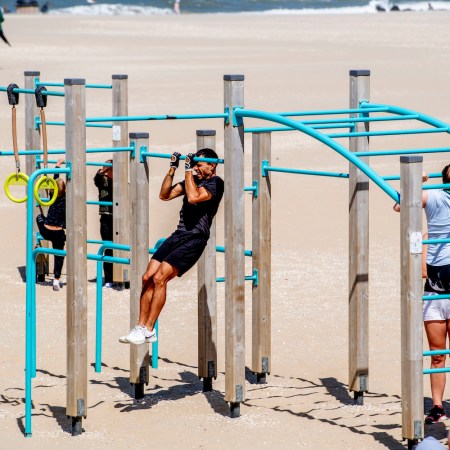
A commitment to what I’ll call “movement generalism” helps you cast a wider net, improving a variety of important metrics (e.g., VO2 max, grip strength, mobility and speed) while fighting back against the aging surge that dogs adults in their late 30s.
Is There a Perfect Activity Stack?
The study looks under the hood of various exercises — racquet sports, swimming, walking and even gardening — to determine how each individually contributes to longevity. Tennis punched above its weight again (remember that Copenhagen Heart Study?) and so did walking.
Is it possible that a longevity-obsessive could curate a perfect cocktail of movement patterns? Perhaps. But that’s not really the takeaway here. Despite 19% statistic, which is already getting attention on social media, I’m not sure the point of “movement generalism” should be to increase one’s life expectancy.
On the contrary, this study is an excellent invitation to broaden, challenge and casualize your everyday relationship to movement. It makes the case for trying new activities (even if you suck at them) and resuscitating ones you abandoned in adulthood.
Movement > Exercise
Ultimately, this approach grants your brain a break, so your main activity doesn’t become a pressure-cooked chore.
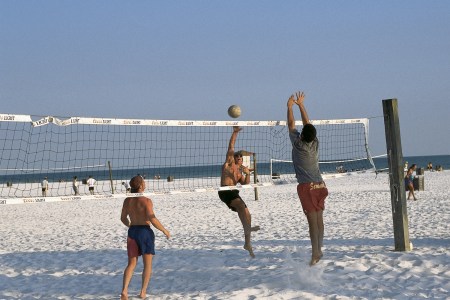
It helps you avoid repetitive-use injuries, makes you a more interesting person (suddenly you’re not just talking about running all the time), and also makes you a more social person. Many activities, from volleyball to soccer to golf, require coordination, teamwork and a bit of logistics. That’s healthy stuff in a disconnected age. Putting yourself out there could lead to post-game hangouts and friendships.
Movement generalism could even be a self-efficacy booster: you increasingly see yourself as someone capable of doing things. Pilates wasn’t so scary. Why not give surfing a shot?
Most importantly, though, a life with all these activities sidesteps the compartmentalization trap, whereby we view exercise as something to be wedged into a 15-to-60-minute box of your otherwise very busy day.
I’d contend that the more you exercise, the less likely you are to call it exercise. You just start to think of it as movement. You start to recognize that playing with your kids is movement. Walking the dogs is movement. Racing for the train, playing Spikeball on the beach or hauling your ass up the stairs are all movement. The more of it you get, the better. You can’t imagine life without it. (And little wonder you get more life as a result.)
I wouldn’t trade my marathon medal for the world. That experience taught me so much about sacrifice, commitment and purpose, and I’ll probably race another one someday. But until then — and well after that — I’ll be spreading the wealth, moving in as many ways as I possibly can.

More Like This

Twice a week, you'll find guinea pig features, personal essays and expert interviews on living better — for however long you’re here. Subscribe to Champ now.