According to one recent study, the average American spends just 47 minutes in the gym per session. This means one of two things: We’re either so dialed in that we’re smashing our workouts in no time, or we simply don’t have the time to hit everything we need to.
I sympathize with the latter. Whatever time of day I hit the gym, it seems to be full of teenagers doing eight sets on every machine, to the tune of approximately 300 reps, with five minutes of TikTok for every rest period. Not exactly an environment conducive to efficiency.
A simple solve might be getting up at dawn and beating those teens to the door, but life tends to get in the way before long. What can you do when work, family and social commitments tie up most of your time, and you inevitably have to squeeze your lifts into weight-room rush hour? The solution doesn’t have to be finding a better time slot, or spending more time in the gym — what’s more important is knowing how best to use the time (and space) you have.
We’ve compiled six different training programs to help you maximize efficiency when equipment is sparse. Pick and choose from these trainer-certified strategies to make the most of your next 45-minute session.
1. Rest/Pause Training
A rest/pause protocol involves taking your set to near-failure (usually 10-12 reps), resting for around 20-30 seconds, then pushing a little bit harder, tacking on several mini-sets of 3-5 reps until you get to around 30-40 reps total.
In theory, the short rest intervals increase both tension and metabolic stress, stimulating growth. “In a 12-week study of recreationally trained men, rest/pause training increased the levels of growth hormone IGF-1 and other hormones linked to hypertrophy,” explains Adam Enaz, a personal trainer specializing in helping busy men get strong and lean.
Enaz prefers using machines for this, asking his clients to perform 12 reps at 80% of their one-rep max, rest for 20 seconds, then perform another five rounds of 3-5 reps. “This way, you can train an entire area, like the chest, in one extended set,” he says.

12 Animal Exercises for Building Full-Body Strength
If you want to get in shape, get back on the jungle floor2. Tempo Training
Tempo training is about how fast (or slow) you perform each rep. Typically, a tempo plan for a given exercise is written out using four numbers: 3-0-1-0, representing, in seconds, the speed of the lowering phase, the pause at the bottom, the speed of the lifting phase, and the pause at the top.
For Harry Cox, founder of the gym ClubQ, it’s a great way of punishing your muscles when time is short. “Tempo training is extremely effective at improving technique and reducing risk of injury,” he says. “One of the best applications is when someone’s grabbed all the heavy weights but you still need a pump. Using this method can still stimulate muscle growth without a massive load.”
If you normally do the chest press with 50-pound dumbbells but somebody’s hogging them, Cox recommends you grab the 40-pounders and work at a 4-2-1-0 tempo to earn an effective pump.
3. Isometric Training
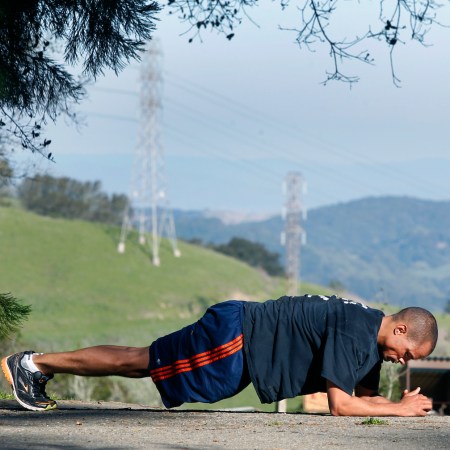
Isometric training is basically all of the static stuff you hate. Think planks or wall sits. “It’s a great way of intensifying simple exercises, helping to develop power, increase muscle size and improve mobility,” says Cox.
Studies have even suggested it’s as effective as dynamic resistance training when it comes to improving strength. The strategy puts your body through maximum torture with minimal equipment. All you need is a quiet corner of the gym and you can get to work.
“When it comes to strength gains, try and grab a dumbbell and aim for maximum-intensity (near-failure) holds for as little as 1-5 seconds,” says Cox. “If you’re aiming for hypertrophy, try lower-intensity bodyweight holds for 5-30 seconds.”
4. Antagonistic Supersets
Performing two exercises back to back is a staple of any time-pressed gym routine — and it works. A 2025 meta-analysis published in the journal Sports Medicine found that supersets don’t just speed up gym sessions by 37%, they also carry the same benefits as traditional sets.
For the best results, Enaz recommends you go “antagonistic,” pairing opposing muscle groups such as chest and back. “This method lets one muscle recover while the other works,” he explains. “That same Sports Medicine review [found this to] preserve training volume better than supersets targeting the same muscle.”
If the gym is rammed with trainees doing chest day, consider supersetting the dumbbell bench press with bent-over dumbbell rows to beat the crowds. “Do 8-12 reps on the bench, then, after a short 45-second break, hit 8-12 reps of rows,” says Enaz. Rest for two minutes between sets, and repeat until finished.
5. Circuits
Hitting four or more exercises back to back with minimal rest is a great way to speed up a workout, and keep your heart rate and calorie burn high while you’re at it. “Circuit training’s greatest benefit is the sheer number of exercises it allows you to do in such a short period of time,” says Cox. “You could complete your entire workout with one circuit and blitz your whole body in the process.”
Cox shared his go-to circuit below, which only requires a pair of dumbbells. If the weights are taken, no problem — just stick to a bodyweight session by cutting steps four and five. “For the best results, complete four rounds with minimal rest between exercises,” he advises.
- Alternating lunges, 10 reps per side
- Push-ups, 10 reps
- Squats, 10 reps
- Dumbbell shoulder press, 10 reps
- Bent-over dumbbell rows, 10 reps
- Plank, 30 seconds
6. Drop Sets
The premise of a drop set is simple: “Perform a set to failure, drop the weight by 20-25% and immediately continue for more reps, adding in one or two more weight drops along the way,” Enaz explains. Your entire session might consist of drop sets, or if you’re sharing a piece of machinery with someone else, you might switch to drop sets halfway through to speed things up without sacrificing your pump.
“They work by extending your time under tension and metabolic stress,” Enaz says. In fact, a 2023 meta-analysis in Sports Medicine found that drop sets produced similar hypertrophy results as regular sets, but in up to half the time.
“To get started, try the lat pulldown,” Enaz suggests. “Do 8-10 reps at around 75% of 1RM until failure, reduce the weight by 20%, then perform as many reps as possible. Drop the weights a final time for one last set, then dust off your hands, and get out of there. You’re done.”

More Like This


Twice a week, you'll find guinea pig features, personal essays and expert interviews on living better — for however long you’re here. Subscribe to Champ now.