Everybody loves recovery fitness. Consumers now spend $1.5 billion on massage guns a year, to say nothing of sleep trackers, compression boots, foam rollers, nerve stimulators and stretch sleeves.
Meanwhile, contrast therapy spas like Bathhouse, Othership, and Remedy Place keep raising money from the VC world and generating impressions on social media. They’re joined by increasingly creative concepts — just look at Fjord, a fledgling floating sauna on San Francisco Bay.
Many of today’s leading recovery methods aren’t just for sale; they tend to orbit themes of passive self-care. Had a long week of running? You could try and supercharge yourself back to life with supplements. But recovery fitness doesn’t have to cost you a cent, and it’s often best deployed as active recovery.
Instead of leveraging one total rest day a week, your training volume might benefit from integrating active recovery days on a regular basis. This sort of programming prevents burnout, mitigates your risk of injury and, as I’ll lay out here, just feels really good.
According to a 2022 study published in the Strength and Conditioning Journal, various active recovery protocols showed “alleviation of soreness, prevention of muscle strength loss, improvement in flexibility and a decrease in inflammation.” Instead of shutting down the body completely — or worse, never taking any sort of recovery — days with gentle, intentional movement can keep your blood flowing and your brain fresh.
That’s because active recovery helps clear blood lactate, the pesky metabolic byproduct that builds up during exercise and contributes to muscle fatigue. In a perfect world, you’re also doing a bit of active recovery on the day of your actual workout (this would be the cooldown section of your Peloton class) to get a head start.
Active recovery offers other benefits, too: improved range of motion, expedited tissue repair and even mental clarity. That 2022 study noted that an efficient active recovery regimen fosters “positive perceptual and psychological considerations.” In other words, it’ll make sure exercise remains a labor of love, not a boogeyman.
Below, I dive into seven viable strategies for incorporating active recovery into your week. All are fairly simple, and none will involve you shelling out loads of cash. All you need is a willingness to rethink what rest looks like.

Lie Down in the Ammortal Chamber. It’s Time for Your Factory Reset.
I went inside the $170K recovery pod beloved by Shohei Ohtani, Matthew Stafford and tech CEOs1. Walk Around Town
This is the easiest protocol for you to implement tomorrow — and it also might be the most effective. Walking aids in nutrient delivery, clears the mind and lubricates the joints. One study found that walking six miles a week can ease (or even prevent) arthritis-related pain.
If you’re a high-mileage runner, jogging could serve a similar purpose here. But for trainees of any stripe, penciling in a day with three or four dedicated walks — to equal, say, 15,000 steps — is a no-brainer. Pro tip: go for one in the morning dressed in exercise clothes. That should help you legitimize it as a worthy “workout” for your morning routine.
2. Go for a Spin
If your training routine has you on your feet all the time, an active recovery day is a good chance to sit on a stationary bike, spin bike or assault bike (that’s the one that puts your arms to work, too). There’s a reason we’re used to seeing professional athletes hop on these things after workout sessions or even during games. They help kickstart the body’s “flush” process, without adding any stress to the body.
Aim for the 70-90 RPM range, avoid elevation and look to stay on the bike for 20 to 45 minutes. Go by feel. (In fancier terms: “autoregulate” accordingly.) And try to stay in that Zone 1 range, which is 50-60% of your max heart rate. If you’d rather not go to the gym on your active recovery day, either put an e-bike to good use, or bring a standard two-wheeler somewhere nice and flat.
It’s Never Too Late to Start Pilates. Here’s How.
It looks gentle, but it torches the muscles that matter. No wonder Pilates is recruiting (and humbling) men everywhere. Here’s why it works — and how to stick with it.3. Get in the Pool
One study of triathletes found that a “recovery swim” was able to enhance the next day’s difficult running session. How? As the researchers suggested: “[This is] possibly due to the hydrostatic properties of water and its associated influence on inflammation.”
You don’t have to swim, though. Just get into the pool (or pond) and move around. Tread water, push it with your hands, try running with an aqua belt. In order to reduce inflammation, the key is to just move around. Meanwhile, sitting in an ice bath, however trendy, might actually be detrimental to muscle performance and recovery.
4. Take a Yin Yoga Class
Historically, yoga is an excellent example of active recovery. But these days there are some pretty intense classes on offer. Think: sculpt yoga, or hot yoga, which deploy chaturanga-heavy power flows soundtracked by top-40 hits. You’ll want to read the fine print before signing up.
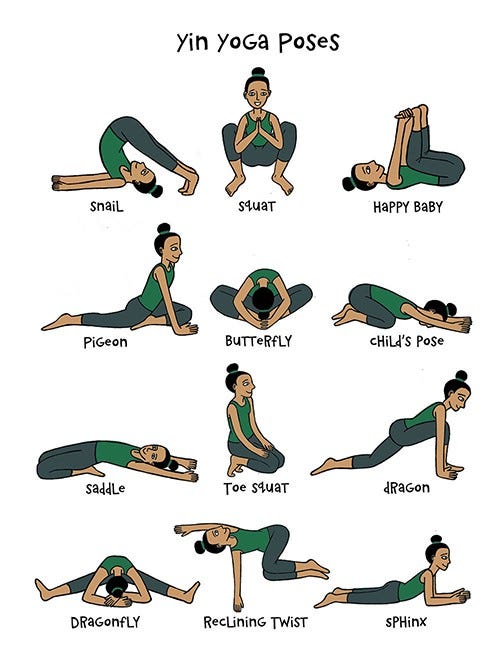
I’d aim for restorative or “yin” yoga, a meditative style that prioritizes deep holds of three minutes or more. These sorts of postures are a great way to encourage circulation without overtaxing the body, and your instructor will usually put a large emphasis on breathwork and mind-muscle connection. (If you’re lucky, you’ll even fall asleep towards the end.)
5. Learn to Prehab
If you’re not familiar with the term prehab yet, you’re about to see it everywhere. We’re entering an era of prehab studios, places like Myo and Phy Health, which specialize in “futureproofing” the body. In so many words, they combine mobility tests and body scans to detect — and correct — kinetic disfunction. The idea is to help you exercise forever.
I recommend looking into it if you have the time and money. But there loads of simple prehab-inspired moves that you can perform at home, on your own, completely free of charge, like band walks, step downs and Copenhagen planks. Check out this great YouTube tutorial to get your routine off the ground.
6. Play a Sport
I know, this one seems a little risky. It’s such a cliche for runners to crank 30 miles a week then get hurt playing 30 minutes of soccer. Certain sports’ lateral cuts and unexpected collisions are a violent change of pace for the body. General training gets you in shape to play a sport, but not necessarily to leave the field unscathed.
But they key word above is “certain.” By now, I’d hope, you know the sports that take a disporportiante toll on your body and the ones that simply feel good. Remember, the goal is just a bit of off-day movement, so aim small. Retirement-community games like golf and pickleball are great. And you don’t even have to play a game; you could just pick an action from a sport, like shooting hoops, taking some shots on goal, or volleying back and forth on the tennis court.
7. Tinker With Technique
It’s easy to get so swept up in training progressions that you forget to check in on your form. Little irregularities in how you run or lift things could harden into actual issues (and over time, injuries).
So consider this the shadowboxing equivalent for whatever exercise you spend the lion’s share of your time doing. A chance to slow down and rebuild better movement patterns. That could mean: filming your squat, running strides at a football field or practicing your transition between swim strokes. Perhaps the most boring option, but like every other idea on this list, it’ll pay dividends down the line.

More Like This


Twice a week, you'll find proven advice and tips, expert interviews, deeply reported features and personal essays on living better — for however long you’re here. Subscribe to Champ now.