Farmer’s carries get all the attention on fitness podcasts. Fireman’s carries get all the glory in combat challenges. But the humble suitcase carry deserves its day in the sun, too.
The lift is dynamite for strengthening the core and addressing imbalances in the body, like pelvis tilts and shoulder drops. We break down what it is, why it works wonders and how training the movement in the gym can help you accomplish everyday tasks for the long haul.
What’s a Suitcase Carry?
Chances are high you’ve performed one in the last couple days. The suitcase carry is a unilateral farmer’s carry. Instead of walking with kettlebells in both hands, you’re walking with one weight against just one side. The movement pops up a lot in everyday life:
- Walking home with a single bag of groceries
- Carrying a gym bag by its handle
- Bringing a bag of trash outside
- Lifting a bike onto a train
- Heaving your surfboard to the water
And so on and so forth. By its very nature, a suitcase carry is off-kilter, teetering you towards one side. It feels sort of wrong. For instance, when I’m walking home from the store with one very full bag — wishing the weight was distributed across two bags for a simple farmer’s carry — I tend to resolve the issue by hugging the bag in both arms. That’s called a goblet carry, which is certainly useful in its own right, as it reinforces bodily symmetry and good posture.
But your other option is to welcome the suitcase carry. After all, some of the objects listed above don’t really lend themselves to a goblet carry. (Who wants to hug their trash?) And if you learn to intermittently switch hands every 30 seconds or so, a suitcase carry can convey big-time benefits.

A Guide to Sprinting After the Age of 30
According to internet lore, there’s a point where adults never hit their max speed again. Let’s change the narrative.The Quest for Functional Balance
When performing a suitcase carry — whether with a duffel bag on the sidewalk or a kettlebell in the gym — the same do’s and don’ts apply. You want to maintain a vertical spine and pull your shoulders back, ideally keeping them “packed” down. They’ll be keen to inch up towards your ears, just as your whole side will attempt to tilt towards the weight. Resist both by bracing your obliques, tightening your glutes and keeping your hips square. Minimize daylight — the weight should be brushing your thigh as you go.
It’s a deceptively simple prescription because as you’ve likely gathered by now, we all perform suitcase carries all the time (and the movement often features simultaneous challenges, like hauling ass up the subway stairs). We grit our teeth and get through these difficult little moments of the day, often sacrificing form to just be done with it.
But that casual dereliction has consequences. Over the years, our shoulder and trunk symmetry slowly spin out of whack, while the muscles that stabilize the pelvis grow uneven. For instance, if you perform unilateral loads, say, 75% of the time with your preferred hand, you’ve inadvertently created a side that’s simultaneously dominant and drooping in one direction.
Penciling It Into Your Strength Routine
Done right, functional exercise is a circular enterprise. If you pepper some suitcase carries into your gym routine, it’s really going to pay off next time you’re chugging through an airport or bringing leaves down the driveway. Which will keep you primed for your next gym session.
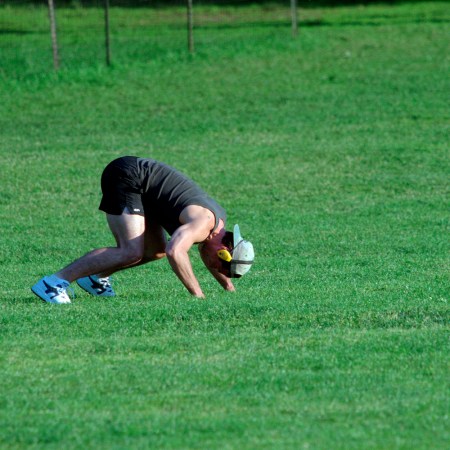
To get started, grab a single dumbbell or kettlebell and find at least 10 yards of continuous walking space. (You could also bring the exercise to a football field.) Start really light with the weight — it’s crucial you first “retrain” your relationship to the movement pattern before going for any records (think 25 to 40 pounds). Walk the full length, switch hands, walk back. Repeat.
Over time, aim to increase the weight and the distance. Here’s a great long-term goal, courtesy of a strength coach: the “three-minute suitcase carry test.” Walk with one-third of your body weight (for me, that’s nearly 60 pounds) in one hand, for up to three minutes at a time. That’s a pretty tough assignment. But think about what a cakewalk all of life’s carries would then feel in comparison.
Once you get to that level of weight and length, the hardest bit might be keeping your grip. As we’ve covered in the past, grip strength is closely associated with longevity. That’s mainly because people who can walk around with heavy things have healthy hearts and stronger bones — not to mention more independence as the years pile up. Plugging in suitcase carries now is an excellent bulwark against aging.
Finally, it’s worth integrating some mobility work to complement your suitcase carries. Strength without length often results in stiffness or pain. Consider this quadratus lumborum stretch and this oblique stretch to keep your lateral regions in fighting shape.

More Like This

Twice a week, you'll find guinea pig features, personal essays and expert interviews on living better — for however long you’re here. Subscribe to Champ now.