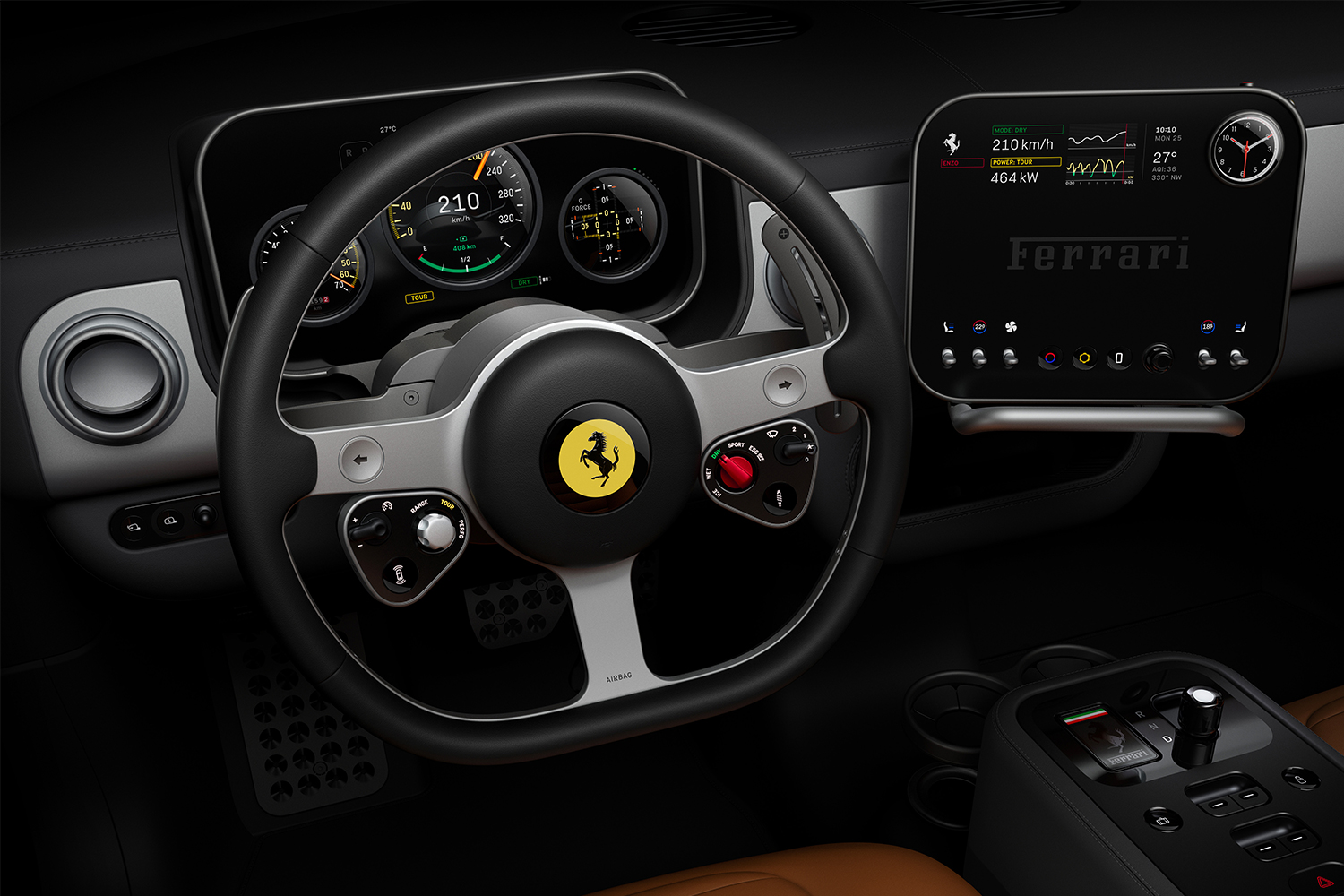
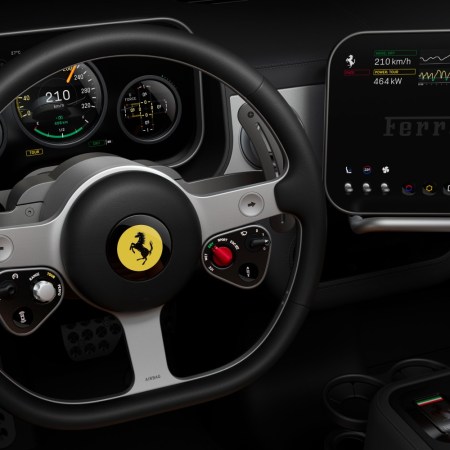
Ferrari is on the verge of unveiling its first all-electric car, the Luce. When the big reveal happens on May 25, it will cement electrification at the highest levels of automotive performance, and show how even a staunch defender of the internal combustion engine like Ferrari can find a way to accommodate its decades-old traditions inside the new energy framework that is gradually becoming the face of modern transportation.
That’s not to say all Ferrari’s brand history will be simply repackaged into an EV. The glimpses of the Luce that have been released so far are causing quite a stir due to its radically new design language. For that, you can thank Marc Newson.
Newson is one of the designers Ferrari tapped to make sure the Luce wasn’t just another forgettable electric car; along with famed Apple designer Jony Ive and LoveFrom, the creative studio he founded with Newson, they’ve “been collaborating with Ferrari for five years on every dimension of the new car’s design,” per the automaker.
You may not know Newson’s name, but you certainly know his work. His celebrated industrial designs have included high-end furniture, clothing, consumer goods, cameras, shotguns, even space planes. While he does have a history with Ferrari, their previous collaborations weren’t on actual vehicles: In 2018, he designed an aluminum engine case, complete with exhaust header “legs,” that held a book about the legendary Italian automaker.
Just as the Ferrari Luce isn’t Newson’s first dance with the luxury stalwart, it’s also not his first time sculpting sheet metal. But you have to cast your gaze back to a very different era, and an entirely separate set of economic expectations to find his original automotive effort — one which has been largely forgotten, but whose ideas have proved to be prophetic.
Marc Newson’s Ford 021C
At the end of the 1990s, Ford was keen on exploring ways to get people excited about small cars — or at the very least, draw eyeballs to a compact car that was fresh and enticing in a way that these more affordable models often weren’t.
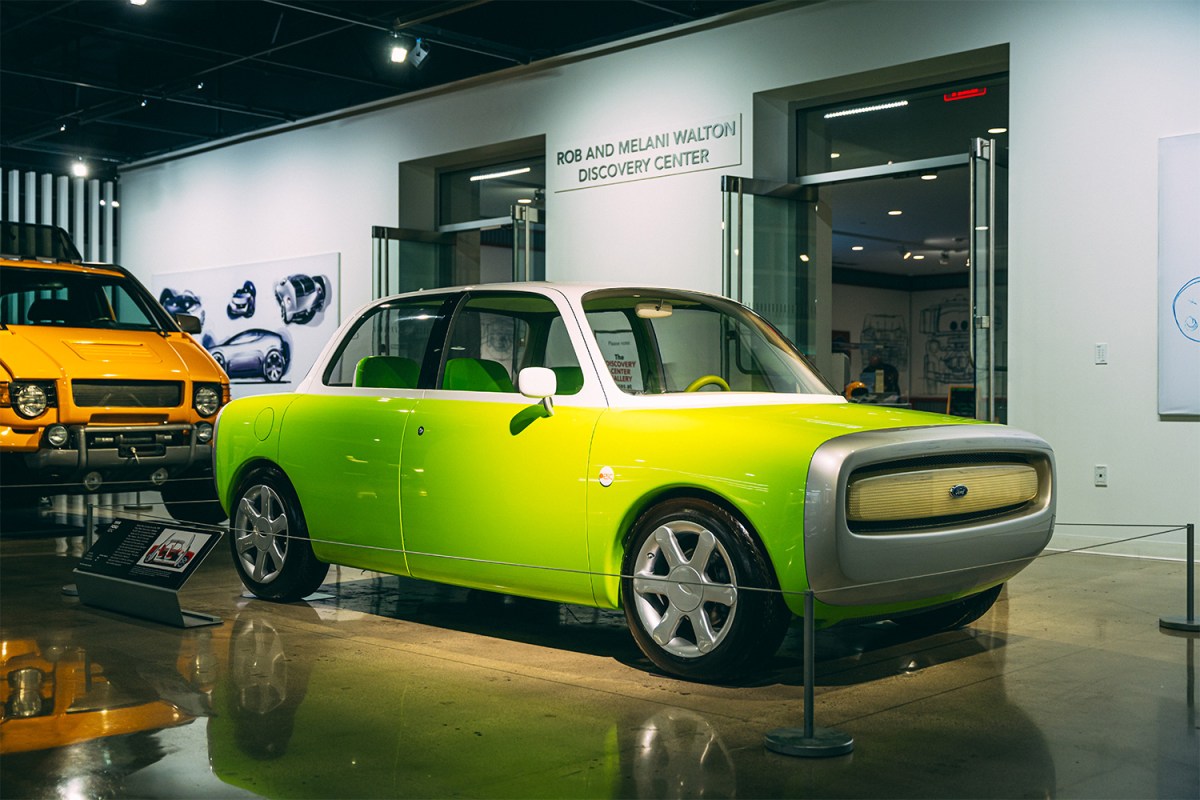
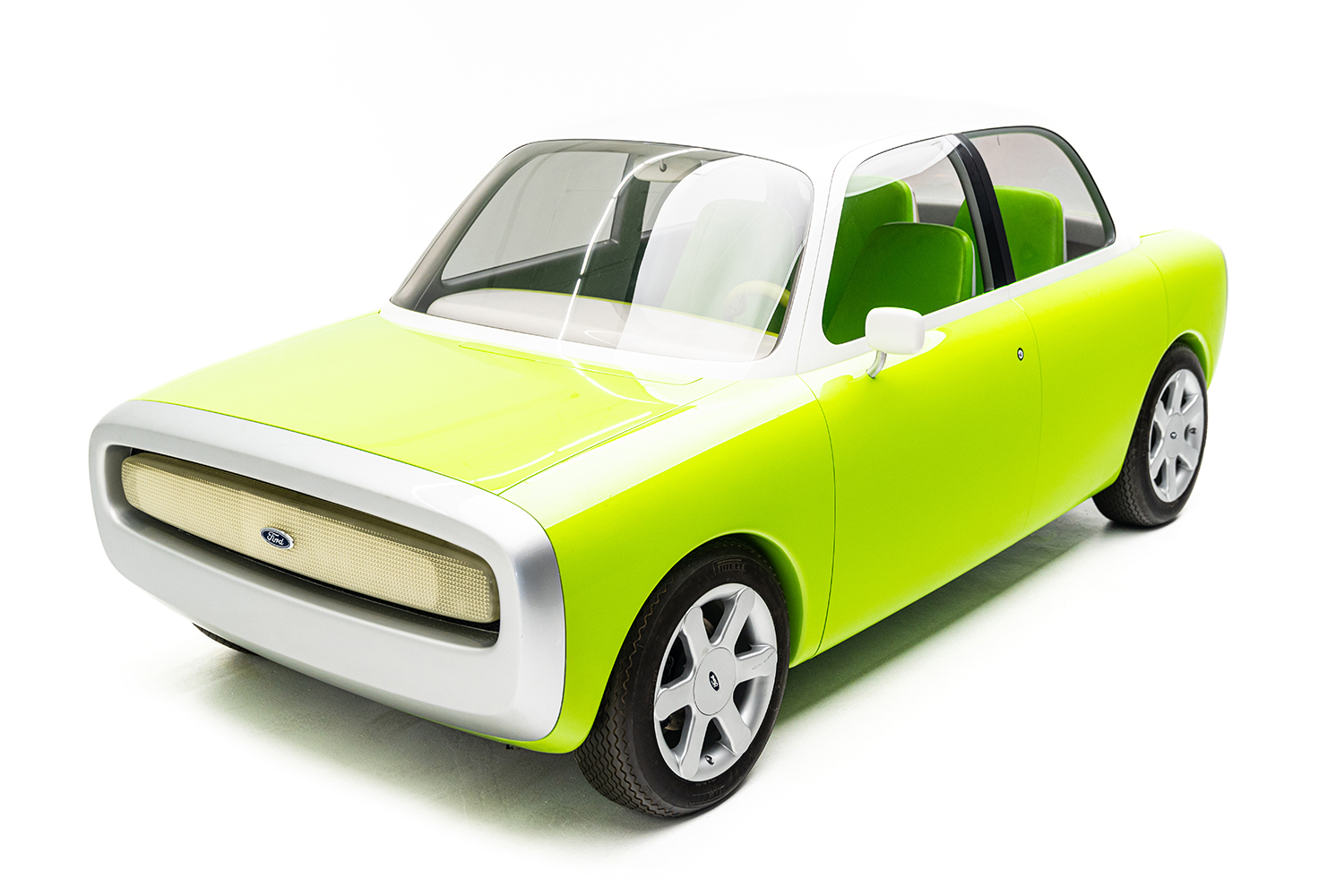
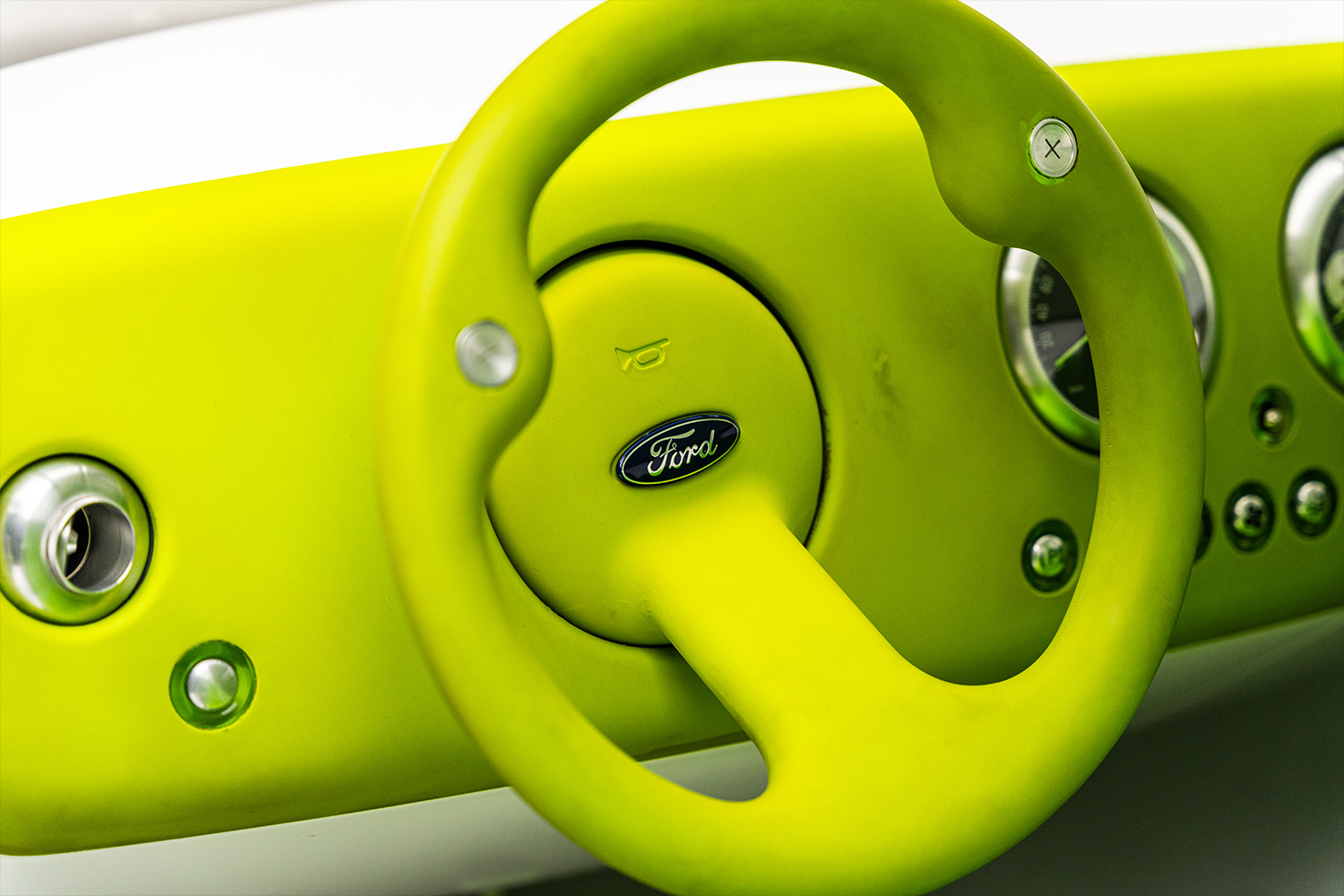
To this end, it commissioned the 021C concept, tying the name to the Pantone color code for the searing shade of orange it was originally painted in (the vehicle has since been re-hued in a lime green). To bring this car to life, it tagged in Marc Newson, who at that point was an automotive-design neophyte.
Why would a major car company bring in a total newcomer to tackle a concept that would be shown around the world? Curator Jonee Eisen of Los Angeles’s Petersen Automotive Museum, which included the 021C in its recent “Modern Concepts” exhibit, says part of the reason was to truly push the envelope.
“One of the things Marc wanted to do was design every aspect of the car,” says Eisen. “We actually got from his studio some of his sketches. And he designed everything — the seats, the door-release latches, the dashboard, the knobs for the radio. So absolutely he was drawing on his other experiences [in industrial design] because the car is a collection of different pieces of technology and different devices.”
Pulling someone into an unfamiliar milieu is a great way to have it be seen with new eyes, and history is replete with industrial designers like Brooks Stevens and Raymond Loewy who created iconic vehicles for brands like Jeep and Studebaker despite focusing most of their design efforts elsewhere.
Outsized Influence
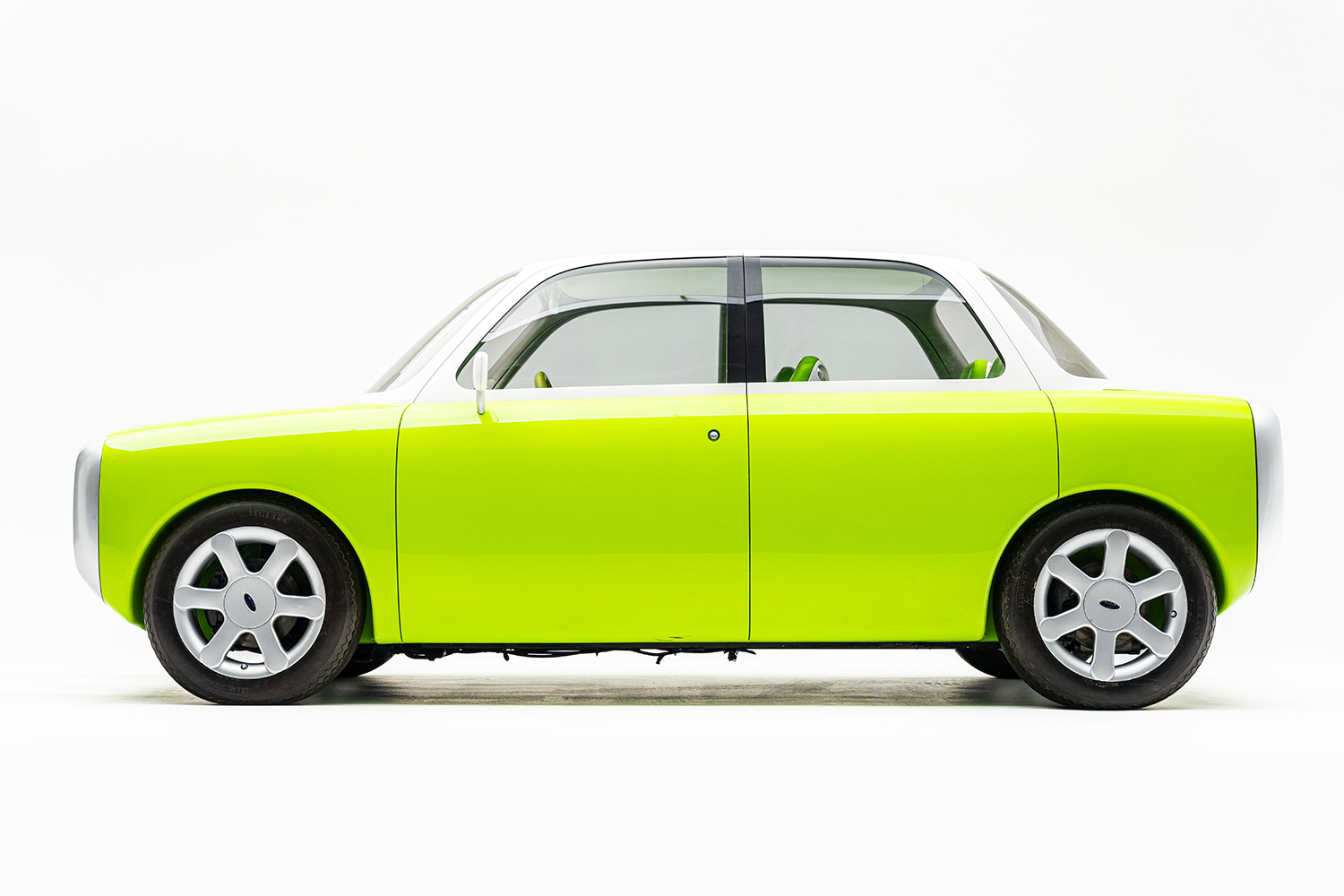
Looking at the 021C, it’s easy to see how much of a standout the vehicle was when it debuted in 1999 at the Tokyo Motor Show. The shape feels both futuristic and organic, with a stubby, three-box shape highlighted by a generous greenhouse. It was intended to evoke a “familiar and comfortable object,” like something a child would draw when asked to depict a car, according to Newson.
“When you get close to the car, you see how beautifully thought out it is,” says Eisen. “It’s boxes, but boxes without any sharpness, like the subtle curve where it moves from the horizontal flat planes to the vertical slabs sides of the car. It’s the kind of car you want to touch. When it showed up [at the Petersen], we all wanted to caress this thing.”
That seemingly simple shape hides some innovative and interesting details. Eisen points to the LED bar at the front of the car, which presages today’s lighting trends by nearly 20 years, as well as the sliding rear trunk.
“It’s a drawer, right? And for the most part, that’s not a very practical way to build a trunk, but it looks really neat,” he says. “That’s the freedom of making a concept car. You don’t have to think about consumers, you don’t have to think about manufacturing yet. You have a blank slate. You don’t have to worry, ‘How much is this going to cost?’”
How One ’90s Concept Car Saved Porsche as We Know It
It’s time to give the Boxster the respect it deservesResponse to the Ford 021C was mixed. It won an award as an outstanding concept in Tokyo, but the fact that it looked like nothing else on the road polarized attendees, with most reactions split along love/hate lines.
While a majority of concept cars are left in the dustbin of history, Newson’s Ford anticipated what the future would look like to an impressive degree. Moving beyond its front-facing LED panel, there are clear lifts from the 021C design in concept cars like the Nissan IDx more than a decade later.
Its influence is also clear when looking at the range of small EVs that proliferated towards the end of the 2010s, and continue until today, with vehicles like the Honda N-One and the Citroen Ami hailing from a similar visual philosophy.
Ferrari’s Chance to Define the Future
It’s less likely that Newson’s 021C will have as direct an impact on the design of the Ferrari Luce. The brand already has a strong visual identity, and the vehicle, although electric, will be aimed at clientele with considerably deeper pockets than the original intention of Ford’s cute compact.
Still, the fact that Newson has had a hand in such disparate segments of the automotive market, more than a quarter century apart, is noteworthy. Given how prescient the 021C turned out to be, there’s a strong chance that the Luce could turn out to be a similar bellwether for the future of exotic cars.
In a realm increasingly shaped by active aero equipment and wind-tunnel pressures, Ferrari could be looking at setting a new design standard that slips the surly bonds of science to touch the soul in a way few ultra-performance machinery seems capable of today.
Meet your guide

More Like This
This article appeared in an InsideHook newsletter. Sign up for free to get more on travel, wellness, style, drinking, and culture..