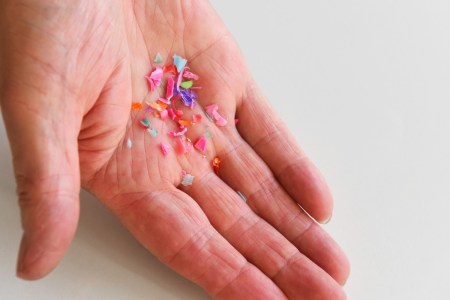
Microplastics’ presence in places from remote locations on Earth to parts of the human body is like the worst treasure hunt imaginable. Experts are looking into what the impact of microplastics on our health can be, and have — as The New York Times reported earlier this year — seen alarming results from studies conducted on animals. And the latest discovery of microplastics is one that might hit beer drinkers especially hard.
In a study published in the August 2025 issue of Journal of Food Composition and Analysis, the authors sought to determine, as they phrased it, “the level of microplastic contamination in water, soft drinks, beer and wine.” The authors focused on different types of beverages sold in France. Among their findings were that beverages in glass bottles had the highest levels of microplastics, with beer having some of the highest levels of microplastics per liter in the study.
Their observations led to a surprising conclusion. “Caps were suspected to be the main source of contamination, as the majority of particles isolated in beverages were identical to the color of caps and shared the composition of the outer paint,” the authors wrote.
Turns Out Microplastics Are Also Bad for Plants
And that has an impact on our food supplyAs The Guardian‘s Tom Perkins pointed out, there’s one very surprising aspect to the researchers’ findings: microplastics levels were higher in glass bottles than in plastic bottles.
One of the study’s authors, Alexandre Dehaut, told The Guardian that he believes the microplastics levels were due in part to the way that bottle caps are stored after they are made, and offered one method that might work to reduce those levels. As with many a scientific study, there’s still more research to be done into how these specific microplastics affect human health.
Meet your guide

More Like This



Every Thursday, our resident experts see to it that you’re up to date on the latest from the world of drinks. Trend reports, bottle reviews, cocktail recipes and more. Sign up for THE SPILL now.