In the world of vintage watches, momentum matters. And right now, the momentum behind the auction market feels undeniable.
Earlier this month, Phillips Watches shattered records in Geneva, achieving the highest-grossing watch auction in history with a staggering CHF 74.8 million (~$96.3 million USD) realized across The Geneva Watch Auction: XXIII. Fourteen watches crossed the CHF 1 million mark, with extraordinary results not only for perennial blue-chip names like Patek Philippe and Rolex, but also for independent makers and historically important pocket watches from lesser-known corners of horology.
More importantly, the sale reinforced something collectors have increasingly understood over the past several years: While the broader secondary market for modern luxury watches may have normalized after the speculative highs of the pandemic era, truly exceptional watches — rare, fresh-to-market examples with scholarship, provenance and condition on their side — continue to command extraordinary enthusiasm. At the very top of the market, demand appears as strong as ever.
Watchword: Cocktail Watches
Once the province of ladies’ formalwear, the cocktail watch is now decidedly everywhereFew people understand that landscape better than Paul Boutros. As deputy chairman, watches and head of watches, Americas at Phillips, Boutros has become one of the defining figures of the modern vintage watch world, helping shape not only the tastes of contemporary collectors but also the scholarship and storytelling that increasingly underpin the auction market itself. During the last decade, Phillips — in association with Bacs & Russo — has cemented itself as the dominant force in high-end watch auctions, regularly handling many of the hobby’s most important trophy pieces while cultivating a collector community that spans seasoned connoisseurs and newer entrants alike.
That momentum now carries into The New York Watch Auction: XIV, taking place June 13–14 at 432 Park Avenue. The sale arrives with what Phillips describes as the highest estimate for a New York watch auction in company history and features an impressive cross section of vintage and contemporary collecting. Leading the sale is an extraordinary F.P. Journe Souscription Résonance No. 007, alongside a museum-quality pink gold Patek Philippe Ref. 1518, multiple “Paul Newman” Daytonas from Rolex, historically important Nautilus references, and rare modern independents from names like Kari Voutilainen and Roger Smith.
Ahead of Phillips’ upcoming New York Watch Auction: XIV this June, I spoke with Boutros about the state of today’s vintage watch market, the psychology of collectors in uncertain economic times and the watches defining what may be the strongest New York sale the auction house has ever assembled. The conversation came on the heels of Phillips’ record-setting Geneva Watch Auction: XXIII, which realized nearly $100 million and further reinforced the strength of the high-end auction market.
At a moment when parts of the broader luxury-watch secondary market have cooled from the dizzying heights of COVID-era horological madness, the very top of the vintage world — rare, fresh-to-market watches with exceptional condition, provenance and scholarship behind them — appears more resilient than ever. Boutros believes several macroeconomic forces have converged to create unusually favorable conditions for auction houses, particularly in New York.
“We saw in November and December 2025 pretty much the highest results we’ve ever seen across the board,” Boutros says. “We thought tariffs would have a negative impact on results, but in fact — especially for New York — it turned out to be very beneficial for domestic auctions because there are no tariffs whatsoever for watches sold in New York.”
Combined with a relatively weak U.S. dollar, those conditions created what Boutros describes as an unusually attractive environment for foreign buyers. “International bidders whose currencies aren’t pegged to the U.S. dollar viewed U.S. dollar-based auctions as a bargain,” he explains. “So that drove spectacularly high results in New York — our highest auction total ever. The highest auction total in history in the U.S. was $43.5 million for us in December.”
Importantly, Boutros sees little evidence that those dynamics are changing anytime soon. “Uncertainty, socioeconomic and geopolitical instability, plus a weak U.S. dollar plus the existence of tariffs — those same conditions still exist right now,” he says. “So far this year in our online auctions, we’ve had very strong results and expect the same coming into our live auction season.” (Our conversation took place before the Geneva Watch Auction: XXIII, further reinforcing Boutros’s point.)
More broadly, Boutros argues that watches occupy a uniquely durable place within the larger world of collectibles because they tend to perform well under seemingly opposing economic conditions. “When the market is on a tear, people have more disposable income,” he says. “And in turbulent times of uncertainty, collectibles tend to do well.”
In his view, the only truly dangerous moment for the market is the direct aftermath of a financial shock, when buyers temporarily retreat altogether. “It’s the transition point — immediately after an economic calamity — when everyone is frozen,” he says. “That’s when we see softer prices.” Otherwise, he notes, important collectibles have historically benefited both from exuberance and instability alike, much like fine art or collector automobiles.
That confidence appears reflected in the scale of The New York Watch Auction: XIV itself. The sale comprises 156 watches with a total estimate between $17.5 million and $35 million, by far the largest estimate range Phillips has ever brought to New York. “This is for us a very special and important auction,” Boutros says. “I will say it is the best selection we’ve ever had in New York.”
Among the headline lots is a museum-quality pink gold Patek Philippe Ref. 1518 that Boutros repeatedly returned to during our conversation — not only because of its rarity but because of its extraordinary preservation. “The case has hardly ever been worn,” he says. “It’s like the benchmark for what a case should look like after it left the factory in the 1940s.”
Fresh to market and previously unknown to most collectors, the watch originated with a Brazilian owner before quietly passing through private hands without ever appearing publicly at auction. “Very, very few people knew of its existence, simply because it never was publicly offered anywhere,” Boutros says. “The current owner never wore it. It’s really a remarkable time capsule.” The watch carries an estimated value of between $1.2 million and $2.4 million.
Elsewhere in the sale are several of the scholarship-driven, provenance-rich watches that have increasingly become synonymous with Phillips’ approach to auction curation. Boutros highlighted a Tiffany-signed Patek Philippe Nautilus Ref. 3700 — one of only four known — alongside an oversized Tiffany-signed rectangular Patek Philippe rectangular watch formerly owned by Paul Starrett, the builder of the Empire State Building.
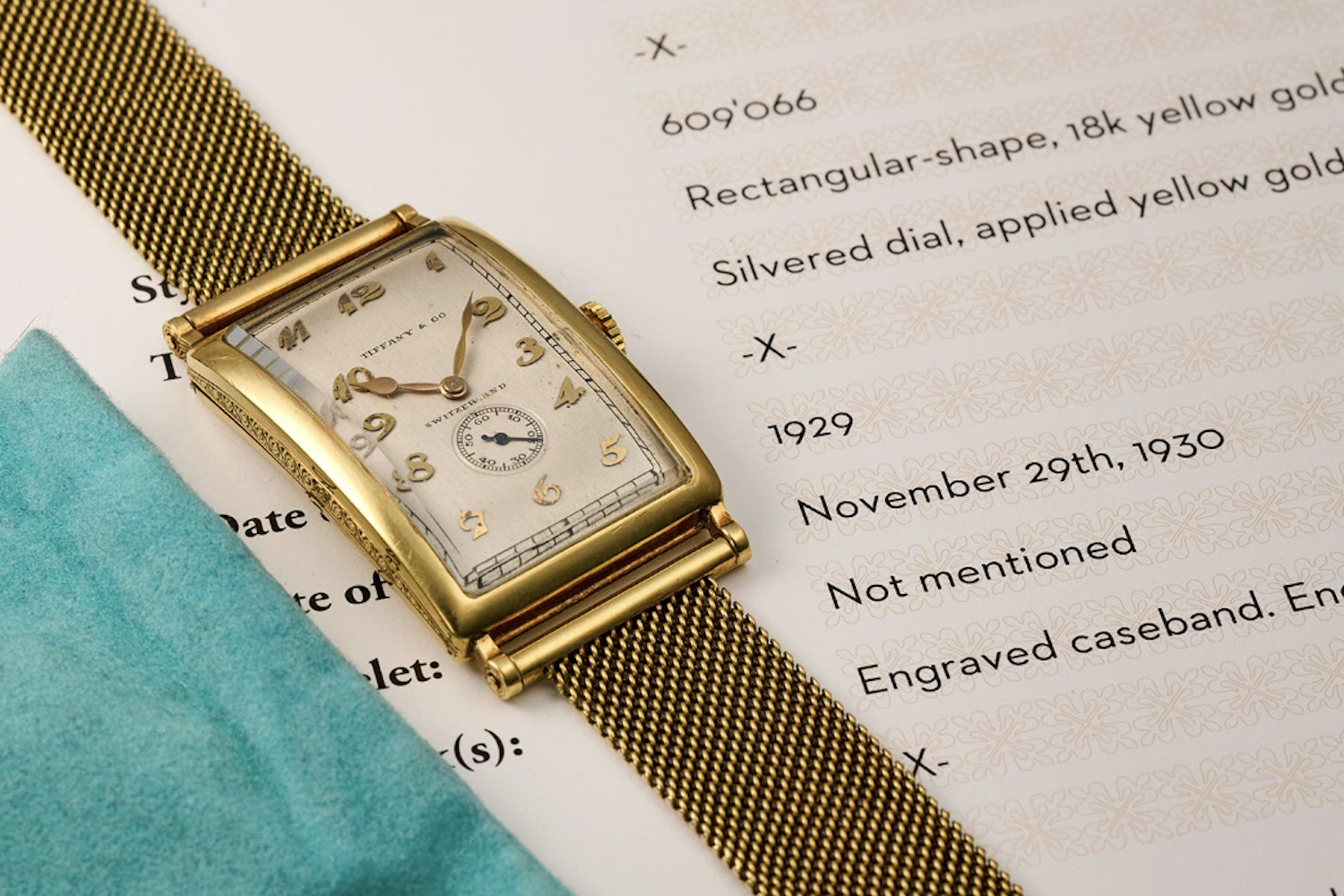
“He probably bought the watch after receiving one of his first payments for building the Empire State Building,” Boutros says. “The watch is absolutely mint.” The sale also leans heavily into celebrity and musical provenance, a category that continues to resonate strongly with collectors.
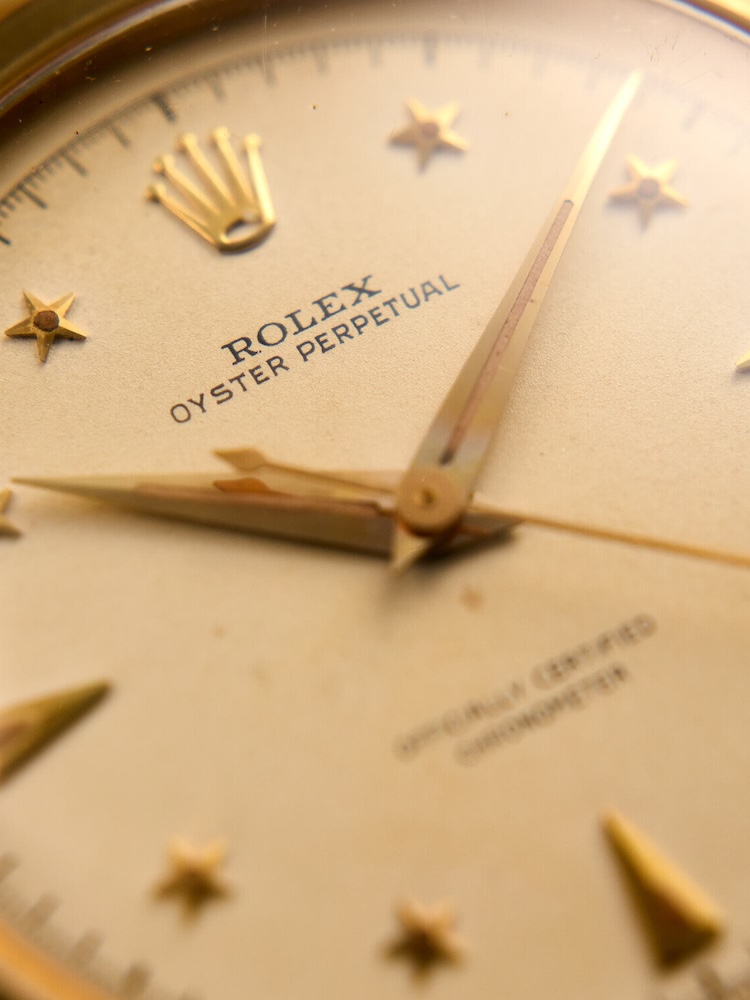
One especially unusual lot is a Rolex King Midas tied to Elvis Presley and the Houston Livestock Show and Rodeo organization. After Presley performed at the Houston Astrodome in 1970, he was gifted a King Midas by the organization. Two years later, an almost identical example was presented to its president, Buddy Bray. “Every single bracelet link on the back is engraved with members of the organization,” Boutros says. “I’ve never seen anything like it.”
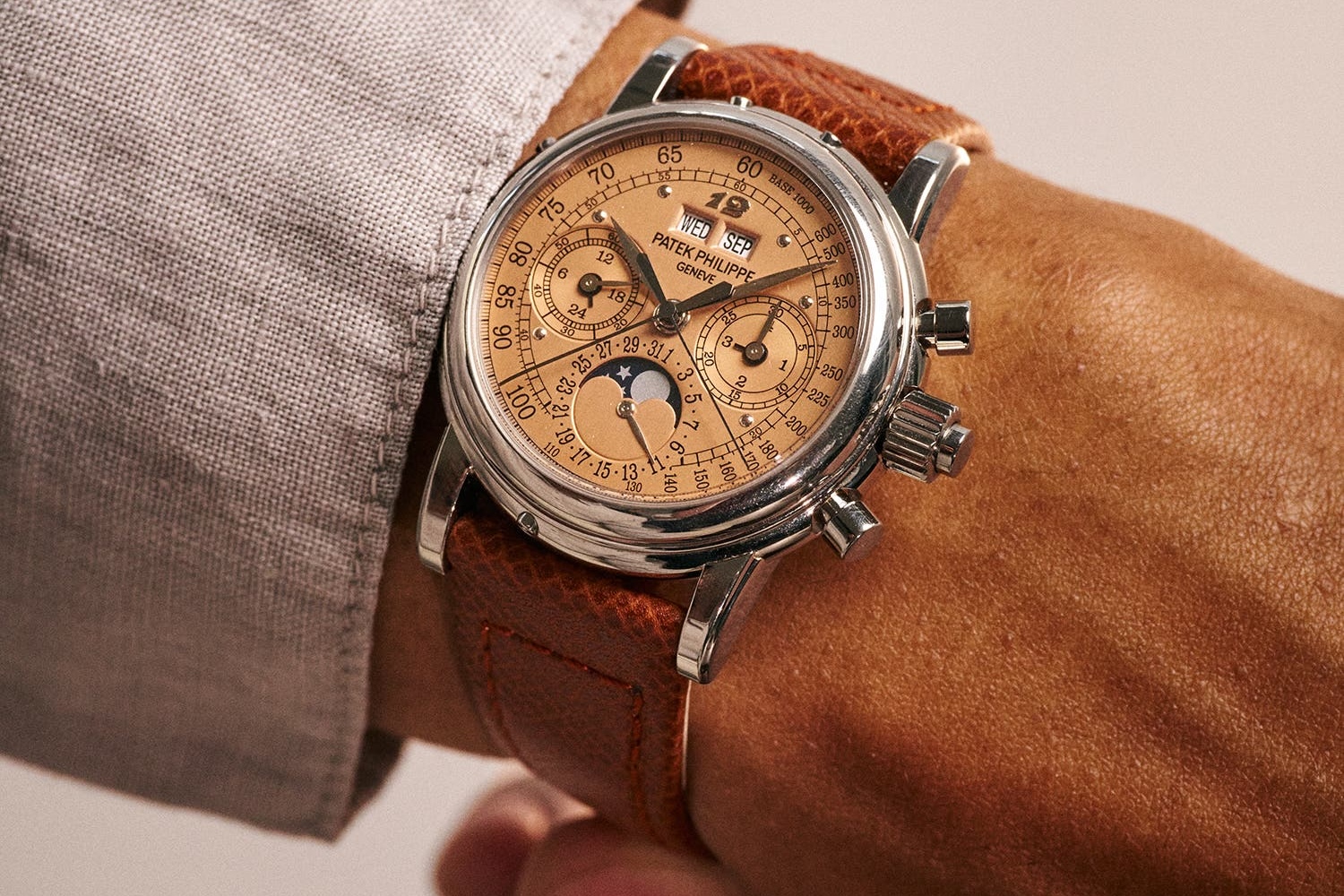
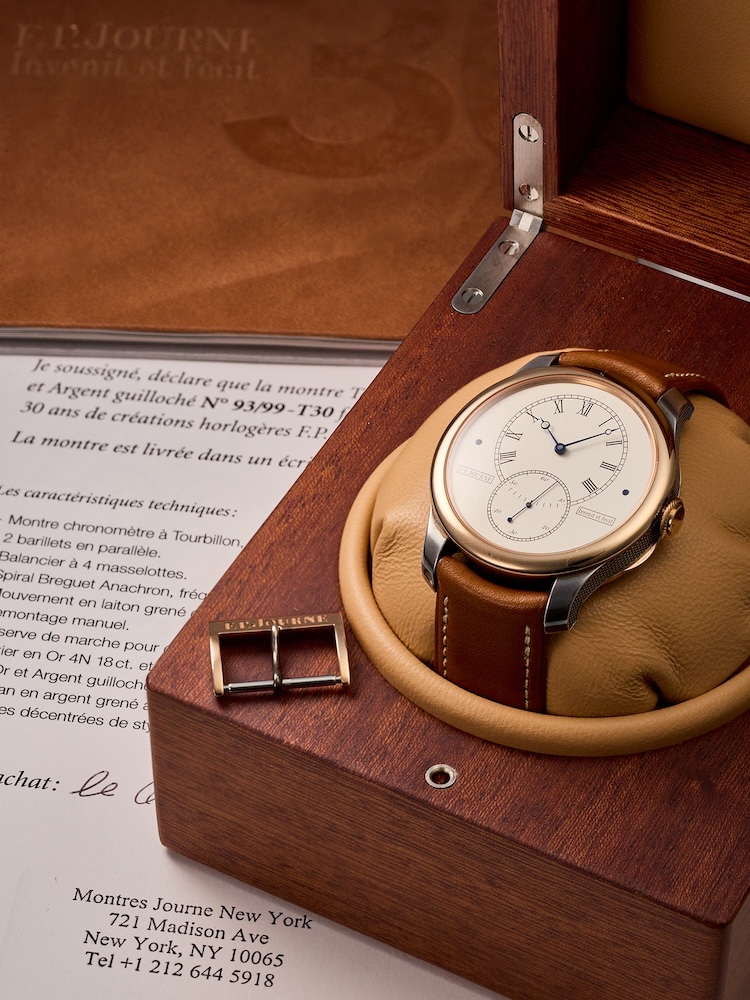
Additional highlights include a special salmon-dial Patek Philippe Ref. 5004 that was formerly owned by Eric Clapton, an early yellow-gold Rolex Daytona Ref. 6239 “Paul Newman” Daytona and a highly coveted F.P. Journe T30 that Boutros describes as “a grail piece for Journe collectors.”
Asked which watch he would personally buy from the sale if money were no object, Boutros answers immediately: “The 1518 for sure.” But his second choice reveals the increasingly important role that independent watchmaking now plays at the very top of the market. “A close second would be the T30 by Journe,” he says. “Especially the movement design. It’s just spectacular.”
For Boutros, the continued strength of the market ultimately comes down to a simple reality: Vintage watch collecting still feels remarkably young. “Every season we have more and more new buyers and new registered bidders,” he says. “There’s still so much more potential for growth in this watch market.”
Compared with the centuries-old art market, modern wristwatch collecting remains a relatively recent phenomenon. “Wristwatch collecting is only about 40 or 50 years old, having begun in the 1980s,” Boutros says. Increasingly, that growth is being fueled by crossover collectors arriving from the art world itself.
“More and more art collectors are coming into the world of watches,” Boutros adds. “They look at watches as a relative bargain to the art they were buying.” In particular, Boutros sees independent watchmakers resonating deeply with those buyers because the connection between creator and object feels more personal and direct. “They’re fascinated with the independents because the maker’s name is on the dial,” he says. “Just like the art pieces they buy have the signature of the artist.”

More Like This

The world of men’s style, from the streets of NYC to the showrooms of Milan, run down weekly by writer and photographer Christopher Fenimore.