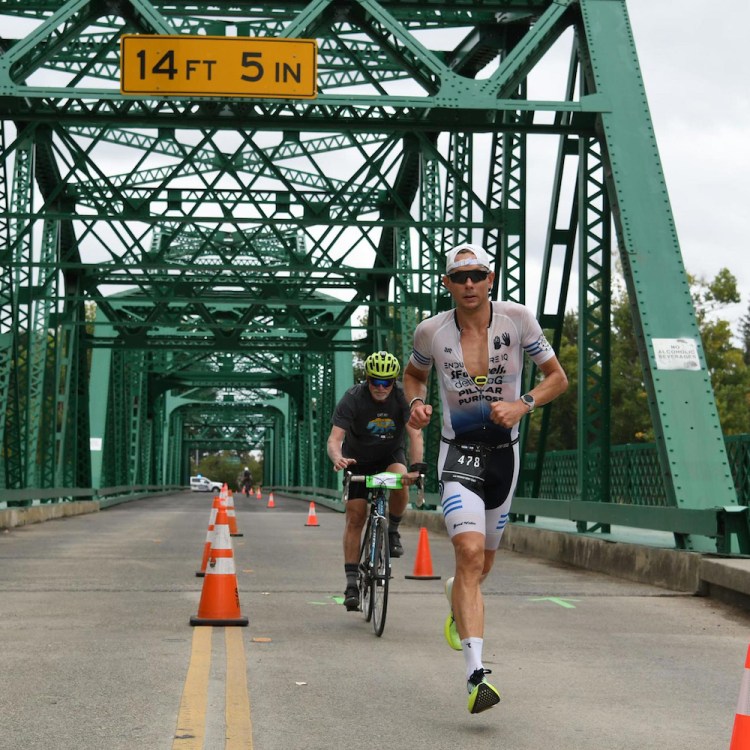
Casper Stornes might be the most exciting athlete in the sport of Ironman. The 29-year-old Norwegian triathlete is a relaxed guy in conversation, but he obliterates courses on race day. Last September in Nice, France, he recorded a sensational 7:51:39, anchored by a 2:29:25 marathon, to win the Ironman World Championship.
Read that again: a 2:29:25 marathon. That’s near impossible for all but the world’s elite marathon runners, but he pulled it off in the middle of an Ironman, after already swimming and cycling over 114 miles.
To top it off, Nice was his full-distance triathlon debut, making it one of the most dominant flag-plants in the sport’s history.
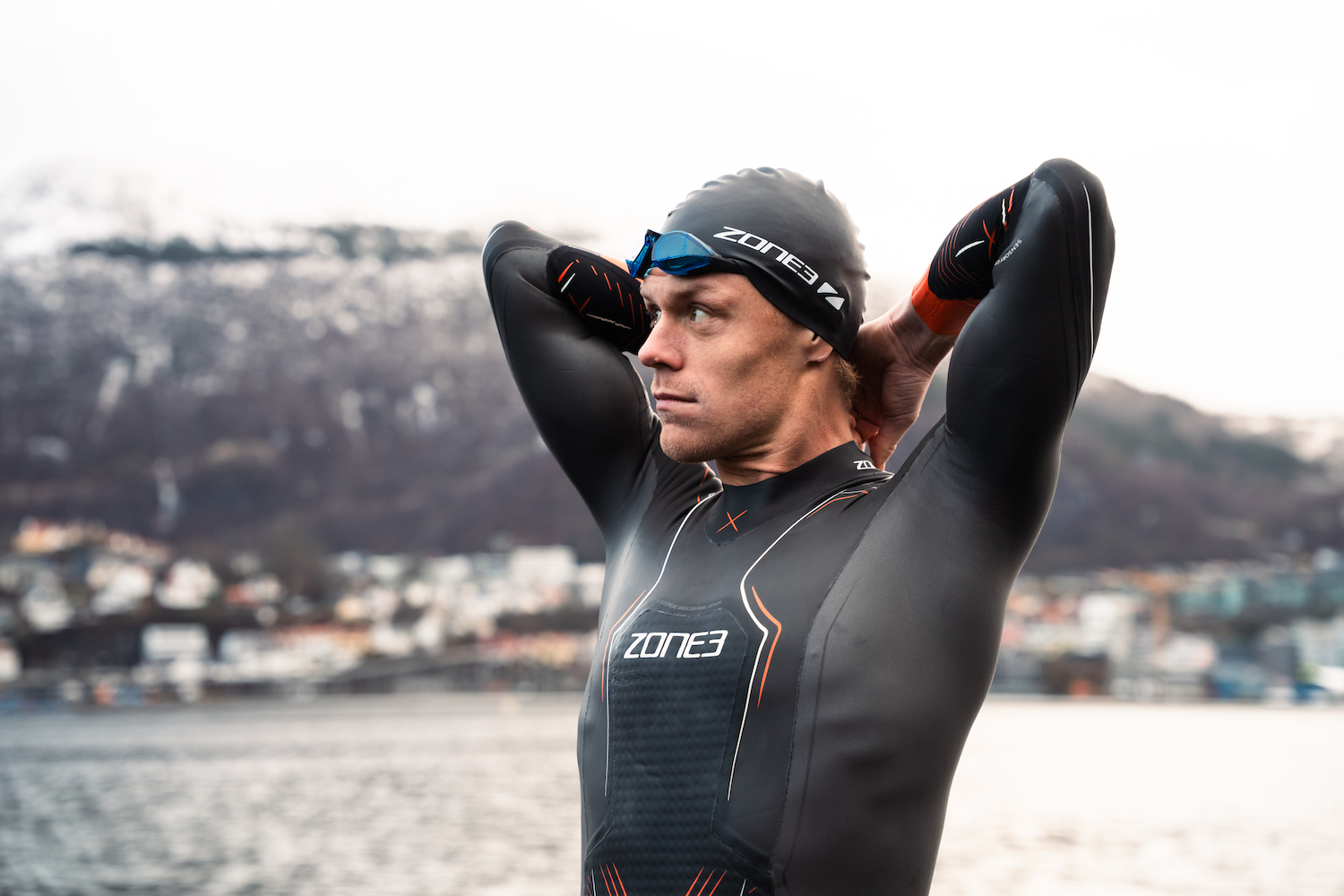
A newly signed Zone3 athlete, Stornes joined us from his home in Bergen to explain what it takes to build a champion in his sport(s) of choice. You may not be as preternaturally gifted or be able to squeeze in seven hours of training a day, but every athlete across the spectrum can learn from his six illuminating lessons.
1. Find Your Team
Stornes first made a name for himself with a third-place finish at the Ironman 70.3 Middle East Championships in 2018, coming in just behind his countrymen Gustav Iden and Kristian Blummenfelt. Today, the trio form a team, with Gus and Kris serving as Stornes’s coaches since late 2024.
Coming up through the junior system, and then the Tokyo Olympics, Stornes says he learned a lot from his early coaches but that going out on his own — or at least into a less formal, self-coached team of athletes — allowed him to take more responsibility over his work. “[Training myself] does put pressure on me, it means I can’t just program easy sessions,” he laughs. “But Gus, Kris and I all have the same philosophy, so it works well. We’re three guys from the same city, with the same lifestyle, so it’s all quite relaxed.”
7 Lessons in Mental Toughness From World Champion Triathlete Hayden Wilde
The Olympic medalist, fresh off a win in the T100 World Tour, offers advice on staying hungry for the long haul2. Show Up Every Day
Oftentimes, setting records isn’t about spur-of-the-moment decisions, or the latest gear powering you to a finish. It’s about putting in the hard yards, day after day, week after week. Stornes’s training is no different. He modestly describes his training plan as “a very simple, standard week.” The focus is on consistency and volume above all else. Here’s how he breaks it down:
- Monday: “This is a half rest day, so we do up to 5K in the pool, then 75-90 minutes of running, followed by some strength training.”
- Tuesday: “We do a long, hard threshold bike of 70-80 minutes, then a hard 3/4K swim, followed by an easy hour run.”
- Wednesday: “Six or seven hours of training focused on high volume. This includes six 1K swims, an hour run, then four hours on the bike.”
- Thursday: “I do some threshold work on the run, swim 5K in the pool, then spend 90-120 minutes on the bike.”
- Friday: “This is the same as Monday, with a focus on gearing up for the weekend.”
- Saturday: “If we’re back home in Bergen, it might be three to three and a half hours running in the mountains. I like to listen to Deadmau5. And if I feel like biking we might do that, but usually not. Then swim and return home.”
- Sunday: “It’s 60-70 minutes on the bike, then 7-9 miles of running.”
3. Look Forward to Fuel and Recovery
With such a heavy training regimen, you might expect Stornes’s nutrition to be dialed down to the microgram. Not so. “I’m not strict at all,” he smiles guiltily. Nutella in oat milk coffee is how he likes to start the day. (“It’s rocket fuel,” he says.) Carbonara disappears by the plate-load in his presence. And should he need to top up a few extra calories, he isn’t afraid to reach for candy.
When he isn’t eating or training, he’s most likely sleeping. Stornes doesn’t hit a sauna or ice bath, but he uses a foam roller regularly. When he can grab a spare 30 minutes, his eye mask will come out for a power nap.
4. Quiet the Mind Through Practice
Anyone who’s ever tried to maintain a given pace during a run (even a 100-meter dash) knows that at some point, your mind will start working against you. How does Stornes get around this to run a sub-2:30 marathon in the middle of an Ironman? He refuses to deviate from the plan.
Unsurprisingly for a top athlete, Stornes’s races are meticulously planned. He knows what the wind will be like, which places he can speed up, which places might slow him down, at what mile he can unleash his full power and so on. Nice was no different.
“Never take yourself by surprise on race day,” he advises. “Practice and know you’re gonna run at this pace, this pace and this pace. It’s about being as efficient as you can and getting used to that speed in training.” Crucially, don’t get distracted if your opponent lets the hammer down just five miles in, either. Instead of flying off after him, remember the tortoise and the hare, know you’ve trained for a given pace and trust that consistency beats a jittery runner every time.
5. Don’t Neglect the Hips
The thing about being a record-breaking, multi-disciplined, super-fast dynamo like Stornes is that it can be hell on your hips. Alongside leg training and core training (upper body isn’t so important in Ironman, swimming aside), Stornes makes sure to spend a good bit of time each week working on hip flexibility and strength.
“I work on the hips and hamstrings at home,” he says. “In heavy training periods of 30-35 hours per week, I can struggle to keep my form right.” He adds that, because his hips take the brunt of the work and provide most of his power, he has a strategy when they feel slightly locked up: he brings his calves into play to drive him forward. The key is not overstretching. “You still need a little bit of snappiness in the calves,” he says. “You don’t want to be too loose.”
6. Find the Fun
If his weekly training plan above feels exhausting, it’s good to know that Stornes feels the same. It’s a lot of volume. But if he’d rather be doing something else, he doesn’t show it.
“I really enjoy being outside and using my body and being active,” he says. “Plus, when I’m with Gus and Kris, it’s like being at camp with my friends. It’s much easier to do a four-hour ride when you’re sore if your friends are there.”

More Like This



Twice a week, you'll find proven advice and tips, expert interviews, deeply reported features and personal essays on living better — for however long you’re here. Subscribe to Champ now.