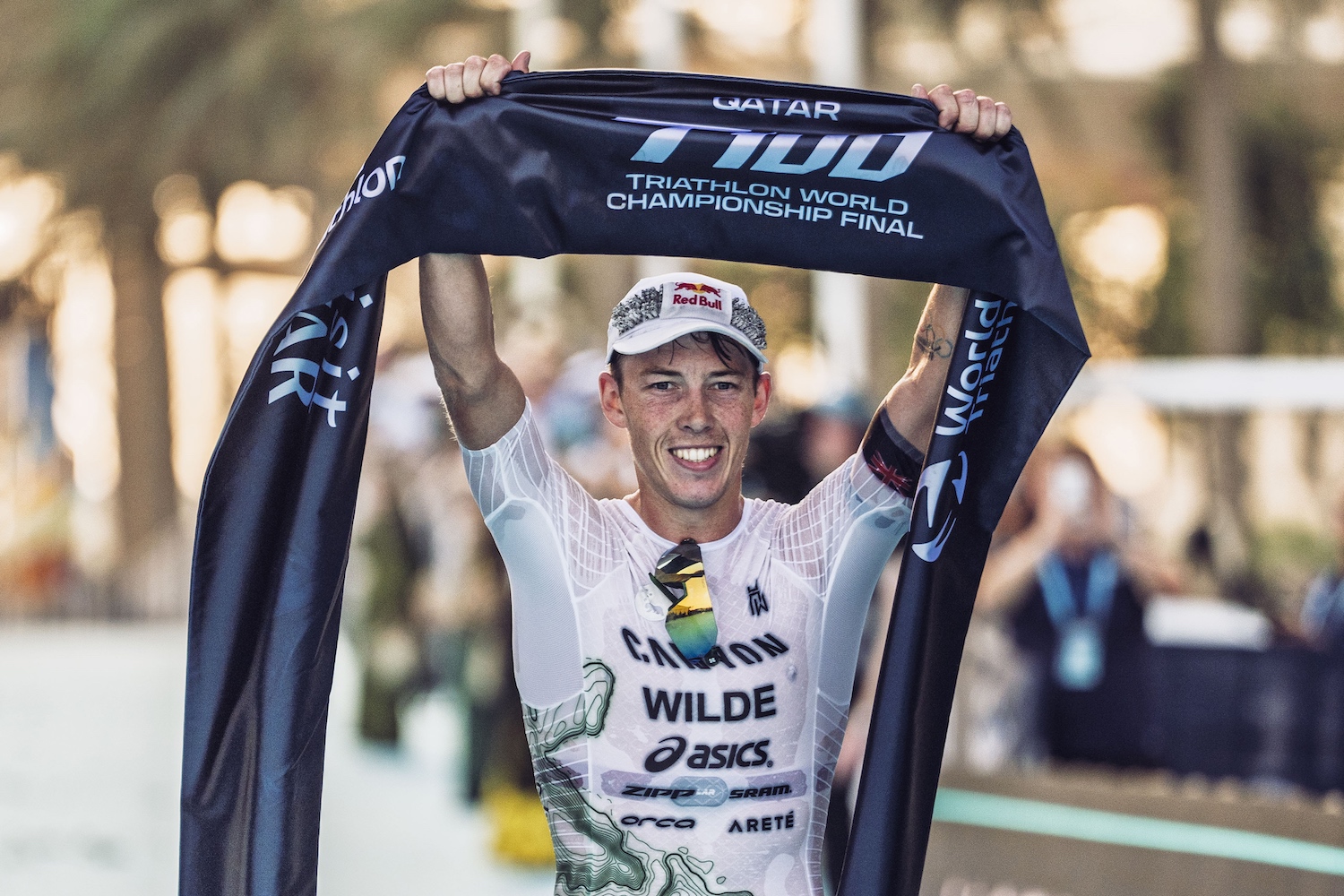
Triathlete Hayden Wilde is on a tear. He took bronze at the Tokyo Olympics, upgraded to silver in Paris and will be looking to complete the set with a gold in Los Angeles.
Until then, the 28-year-old Kiwi has been keeping busy. He recently became the world champion in the sport’s most important series, the T100 World Tour (that’s a 1.25-mile swim, a 50-mile bike, and an 11-mile run, for those taking notes), after winning five consecutive races during the season. You’d be forgiven for thinking it’s all plain sailing for Wilde, what with his laidback and affable demeanor, but behind each victory is a handful of early defeats, and behind every trophy are months of grueling training sessions and hard-earned lessons.
Based in Abu Dhabi, Wilde joined InsideHook via video call for an early morning catch-up to discuss how he stays motivated, inspired and hungry when circumstances, competitors and even his own body conspire to shut him down.
1. Borrow From the Best
“I grew up in a little place called Whakatāne on the east coast of the North Island in New Zealand. Originally, I was playing football and hockey, and then I got into event racing, which led to triathlon and my first world championships in Maui. We only have about 30,000 people in our town but it’s a very sporty community. I used to train with Lisa Carrington, New Zealand’s most successful Olympian. She’s a canoeist and at the time I was doing quite a lot of kayaking for my multi-sport side. Having top athletes coming from a small town gives you the belief that anything is possible. You learn from them and you copy their patterns and integrate them into your sport.”
2. Make the Grind Work for You
“After a few world champs, I moved 45 minutes away to a bigger town with better facilities called Tauranga. I was working in landscaping, doing 30 hours per week with 20 hours of training. Everyone I worked with did sport so it was a good vibe. You had to treat those landscaping days as gym days. The first few months were pretty fatiguing, but your body gets used to it. It definitely helped teach me to be resilient and just get the work done. They were some hard years, but I enjoyed the grind with the boys.”
3. Changes of Plans Aren’t Setbacks
“I hadn’t been good enough to get into the Commonwealth Games in 2018, but I did get accepted into [the 2020 Tokyo Olympics]. Then the pandemic hit and everything was postponed. In both instances, I was given extra time to hone my craft and, especially with the pandemic, having no races for almost a year gave me the chance to get into some really hard training, which gave me the opportunity to get my body ready for the Olympics.”

The Adventurer’s Guide to Staying Calm in Any Situation
They’ve led Everest expeditions and escaped shark-infested caves. Here are their 6 lessons on keeping your cool.4. Control What You Can
“When I did Tokyo I would have been happy to come in eighth, so medaling was unexpected. That put pressure on Paris, but I enjoy pressure. More recently, heading into the T100 and being five for five, I thought, ‘You could easily relax and step off the gas. Or, you could choose to really dig in and see what you can get out of yourself.’ I dug in and put my foot down. Control what you can, and move forward to get the best result.”
5. Failure Is Fuel
“If a race doesn’t go to plan, I watch the replay, then give myself a day to reflect on what I can do better. I always feel more fired up for the next race if I don’t get the result I want. I do sometimes work with a sports psychologist — staying open to external advice as an athlete is a good way to get out of your own way. It’s also helped me realize that you can’t have a good day every single every day. Bad days aren’t failures, they’re a chance to learn from mistakes.”
6. Remember Your Rivals
“I’ll train up to four times per day, with roughly six bike sessions per a week, six swims and maybe five runs. It’s intense, but this is my job. Like any job, you do have those days where you feel pretty unmotivated and you’d rather just chill. On days like that, I just message a mate to see if they want to come along. It helps get me out the door, which is the hardest step when you’re feeling unmotivated. You always have to remember that your competitors aren’t resting, they’re out there getting it done.”
7. Give It Up (From Time to Time)
“I’m definitely not the type of person to listen to a triathlon podcast in my downtime. You need to relax and get out of the sport. It’s like being a workaholic, you need that time away. I might fire up some video games, have a coffee with a mate. And while I do have a good diet, if I get a coffee I’m probably getting a slice of carrot cake, too. I need the calories. I don’t think it’s super healthy if you just live and breathe a sport. You need some time out, so you can come back stronger.”

More Like This
Twice a week, you'll find guinea pig features, personal essays and expert interviews on living better — for however long you’re here. Subscribe to Champ now.