
A Pilgrimage to Portillo, South America’s Hidden Skiing Paradise
Slingshot lifts, Pisco Sours and a legendary yellow hotel. Welcome to heaven on earth.
If you’re a skier, you’ve probably heard about the legend of Portillo, the bright yellow hotel hidden in the Andes, but few have had the opportunity to visit. So I’m going to take you behind the scenes to show you why this is one bucket-list resort worth prioritizing.
Here’s what a full day looks like in Chile in mid-August, peak ski season for the Southern Hemisphere.
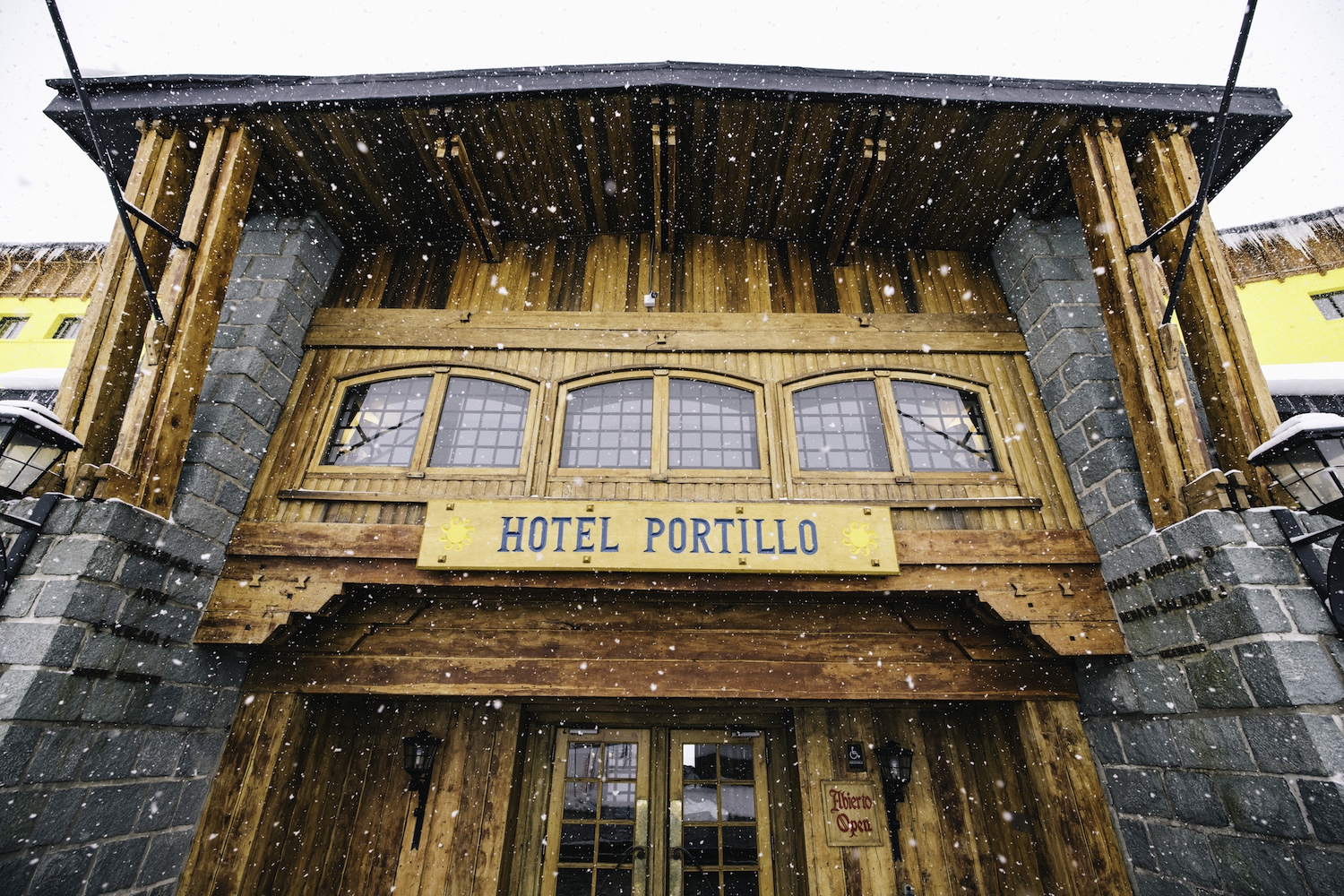
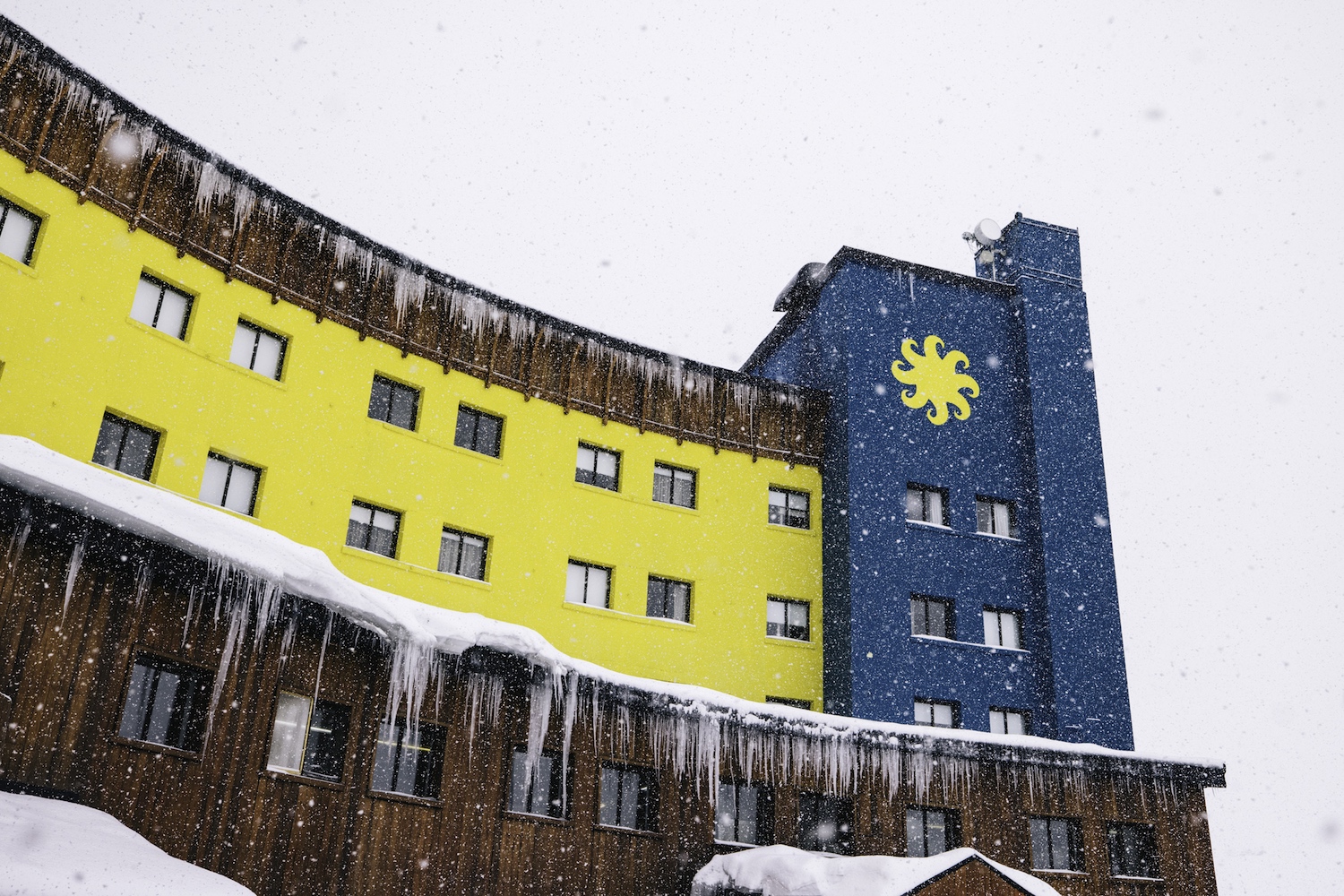
Above the 30 hairpin switchbacks of the treacherous Los Caracoles highway, and a mere kilometer from the Argentina-Chile border, is the legendary yellow hotel and ski resort known as Portillo. As this is the oldest ski area in South America, you might assume that other outfits have popped up nearby, looking for the same champagne powder that have helped make the hotel famous. But that isn’t the case.
Due to the high altitude, remoteness and challenging terrain, the closest ski area in Chile is 100 miles away, which affords Portillo guests the sense of being in the middle of nowhere. From the moment you arrive at the front door, it’s hard to deny that the small resort has held onto some of the magic that others have lost.
After landing in Santiago on a red-eye from Los Angeles, my wife Jenny and I found our ski bags, met our shuttle driver and sped out of the city and into the mountains. For the previous three days, a major storm had been hammering the Andes, dropping multiple feet of snow and closing most roads, including the route to Portillo. We arrived right as the system was pushing through and were one of the first cars permitted up the highway — lucky timing even if it meant we would start the day with low visibility.
Ski-Touring the Southern Wallowas, the “Swiss Alps of Oregon”
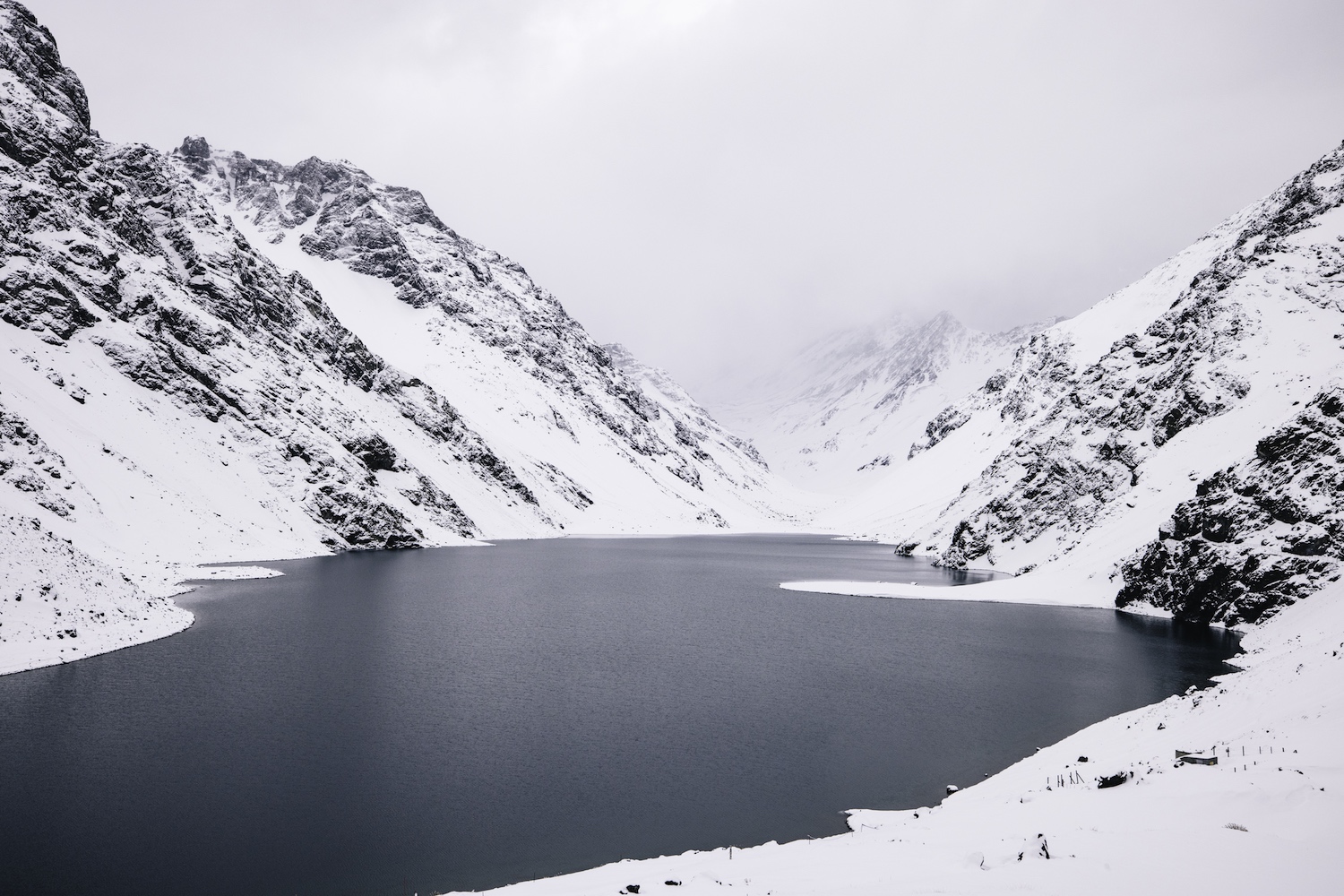
Backcountry yurts, snowboard charcuterie and not another soul in sightAfter checking in with the hotel concierge, we changed into our ski kits in the common area, not wanting to wait until our room was open in a few hours. Walking out the back door of the resort, we were shocked by the deep blue of Laguna del Inca, a historic lake for the Inca Empire. We clicked into our bindings and made easy turns to the base of Plateau Lift, having not been on skis for many months. Remembering how to carve came soon enough and in minutes we were at the top of a black diamond that Olympians from across the globe use to train during the Northern Hemisphere’s summer months
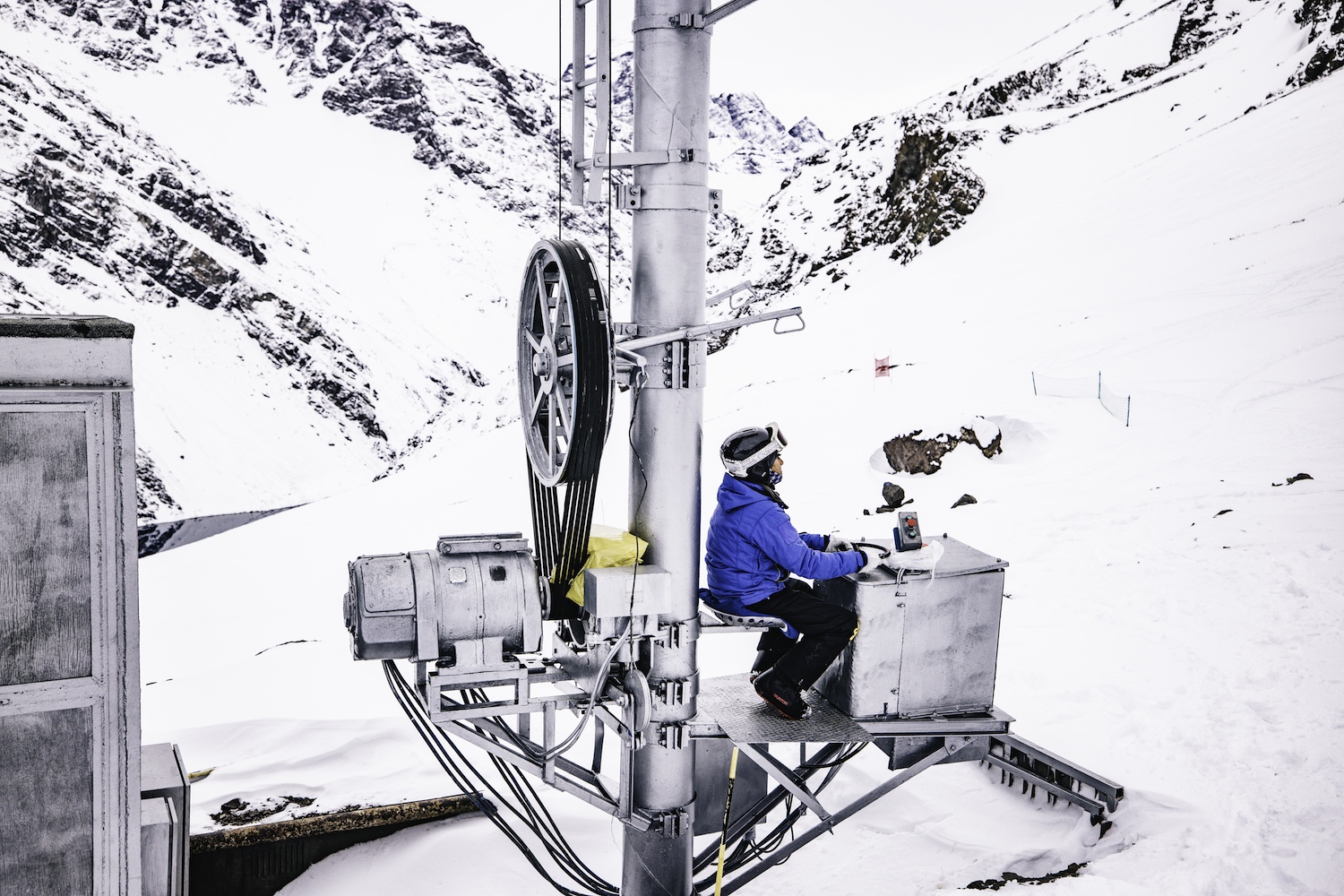
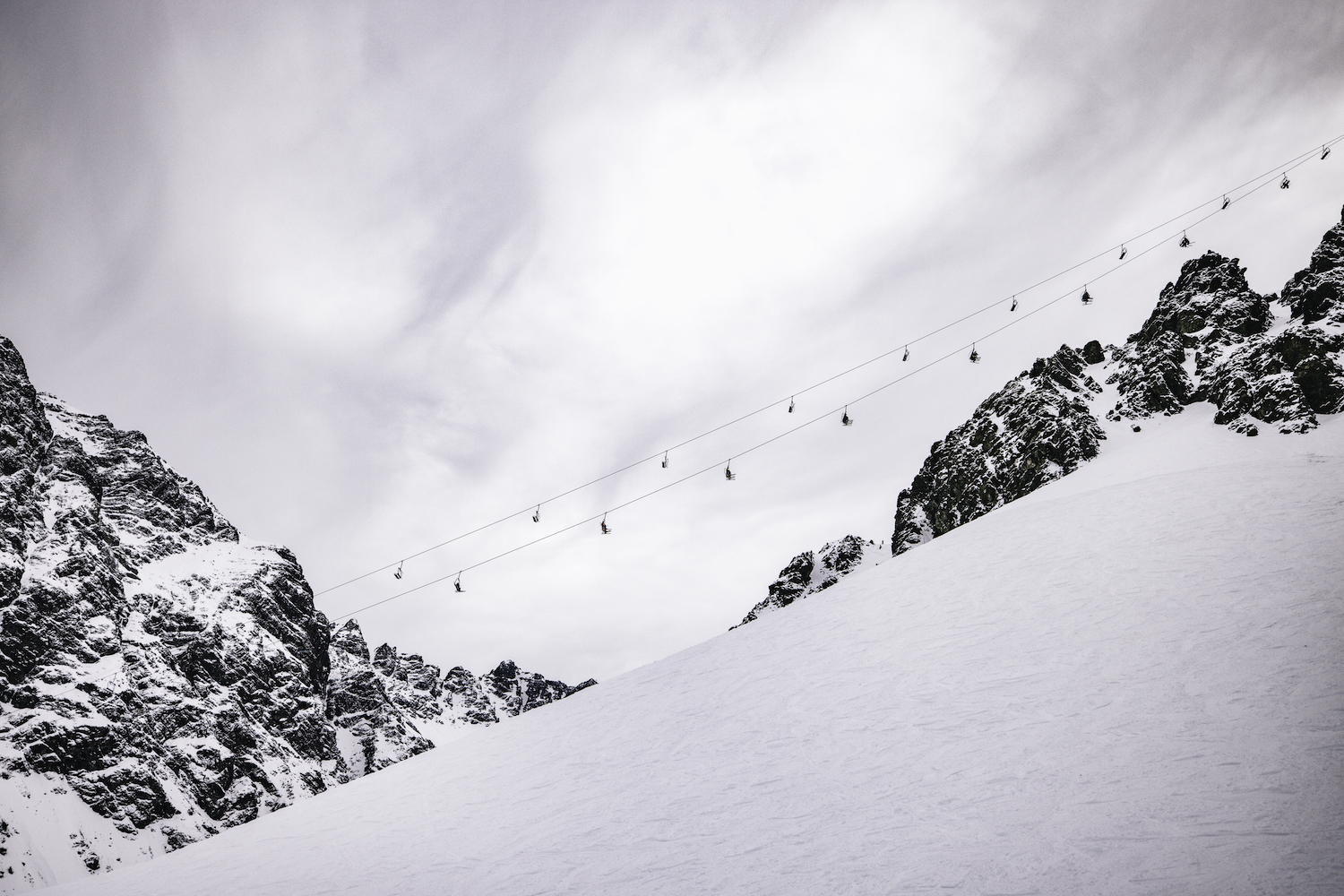
Our guide for the day, Lucas, pointed us to Condor, a four-person slingshot lift that would take us even higher up the mountain to find the best snow possible. He promised that going early was the secret to fresh tracks in this zone. As it was our first time at Portillo, we were inclined to follow his lead. The catch, of course, was that Jenny and I had no clue what a slingshot was — let alone knew how to ride one.
There are only four slingshot lifts left in the world and they’re all at Portillo. Manufactured in 1960, and kept alive by the clever engineers at the resort, slingshots are designed to haul skiers up avalanche chutes where a standard chairlift wouldn’t survive a full season. In short, they are a unique tool to access hard-to-reach places — basically a T-bar on steroids. We immediately learned how fun they are to ride.
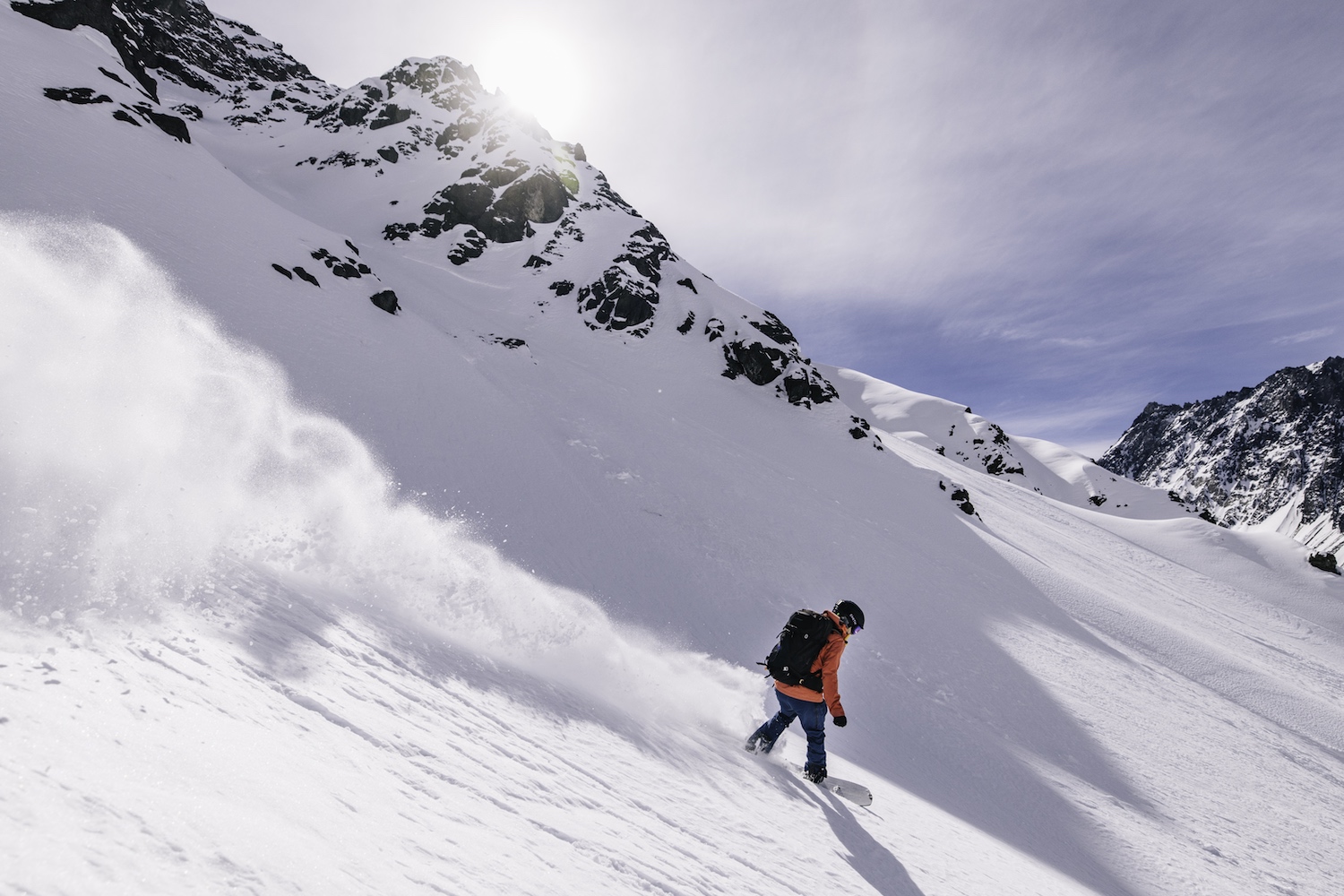
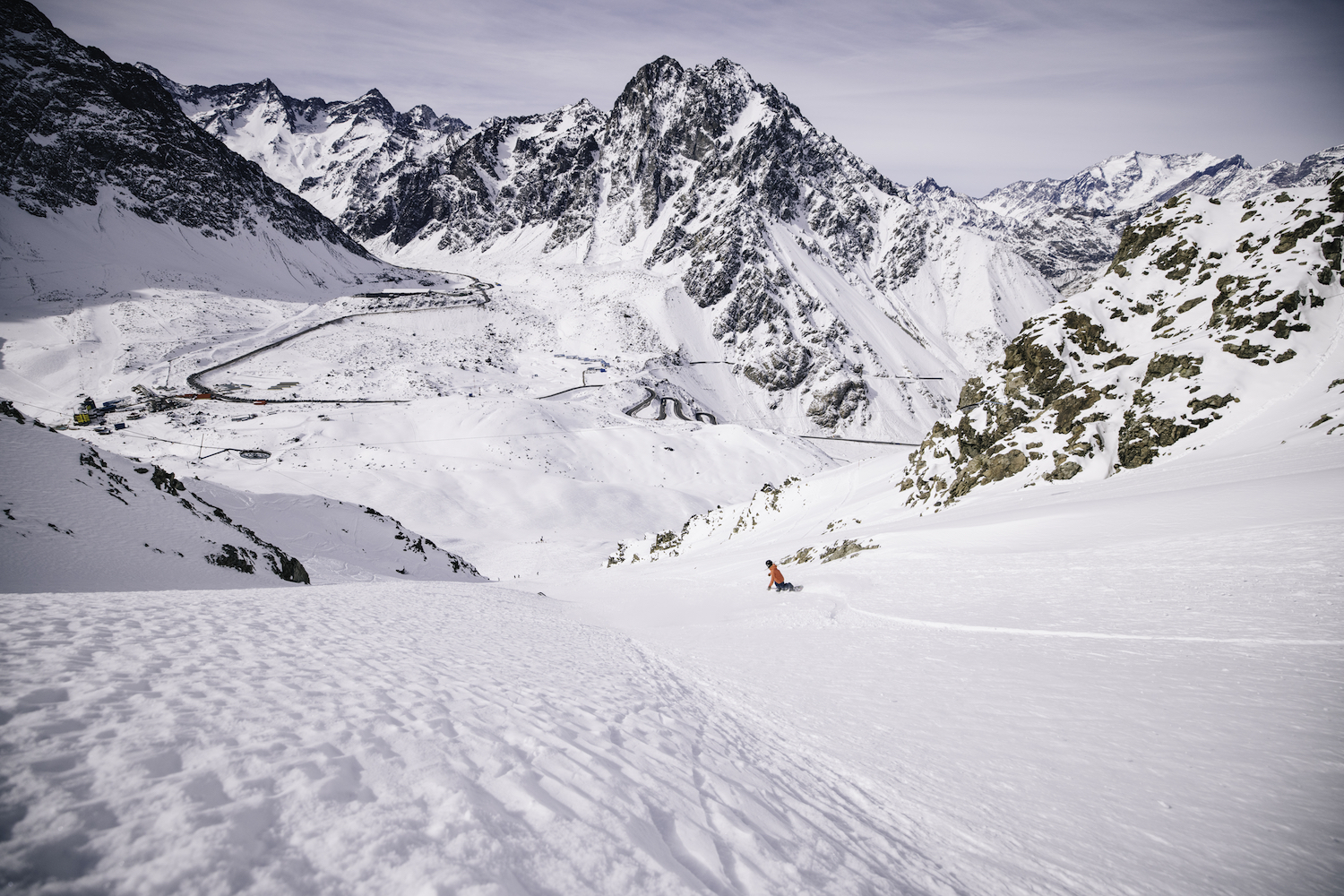
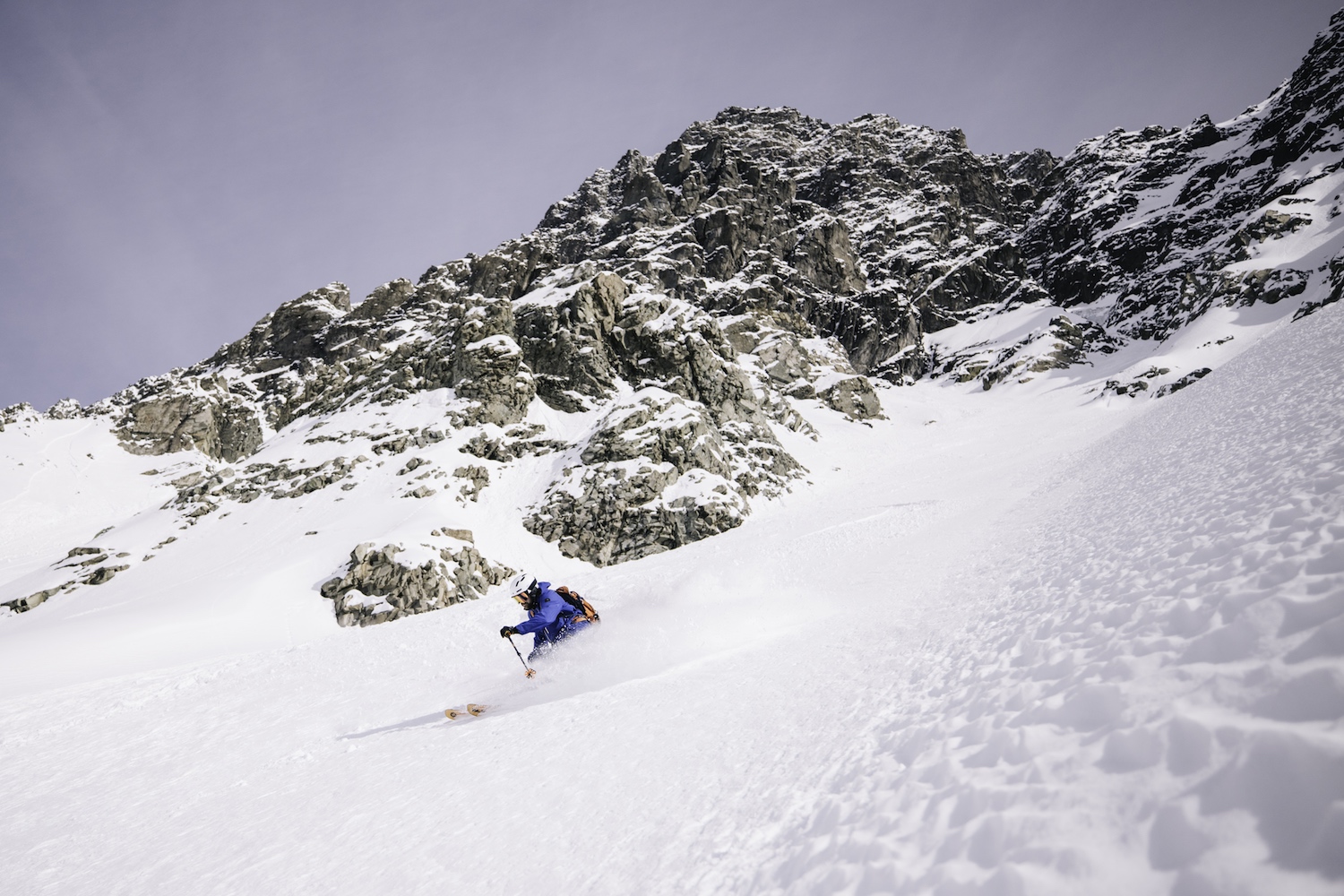
After a few runs up Condor and down knee-deep snow, we came to appreciate how special Portillo was. It was still peak summer in the States and yet here we were, skiing blower powder by ourselves. Now happy to the point of being slightly overwhelmed, Lucas led us towards the western flanks of the resort, with the goal of showing us more terrain and chasing fresh tracks.
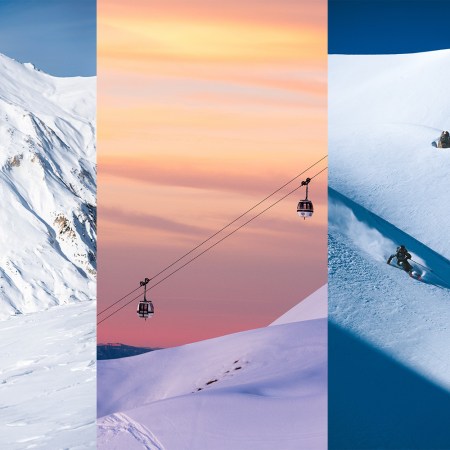
We rode to the top of La Laguna lift as the sun broke through the clouds, a great sign for the hours ahead, and followed him to Cara Cara, another slingshot, which had no line to wait in. While a rarity in American ski resorts, a lack of lines is remarkably common in Portillo. With a max of 450 guests staying at the resort at one time, there was a prevailing sense that we had the ski area to ourselves.
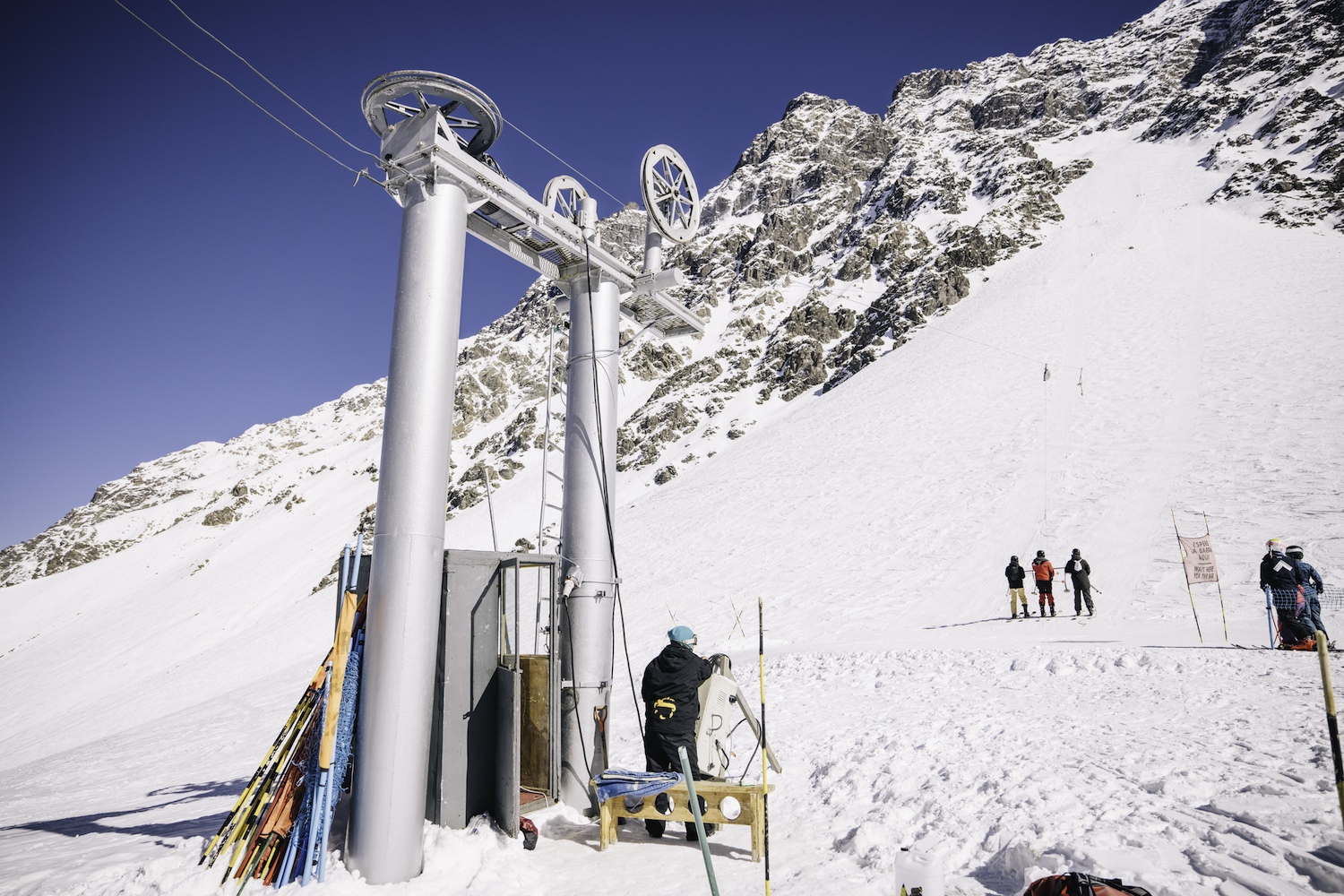
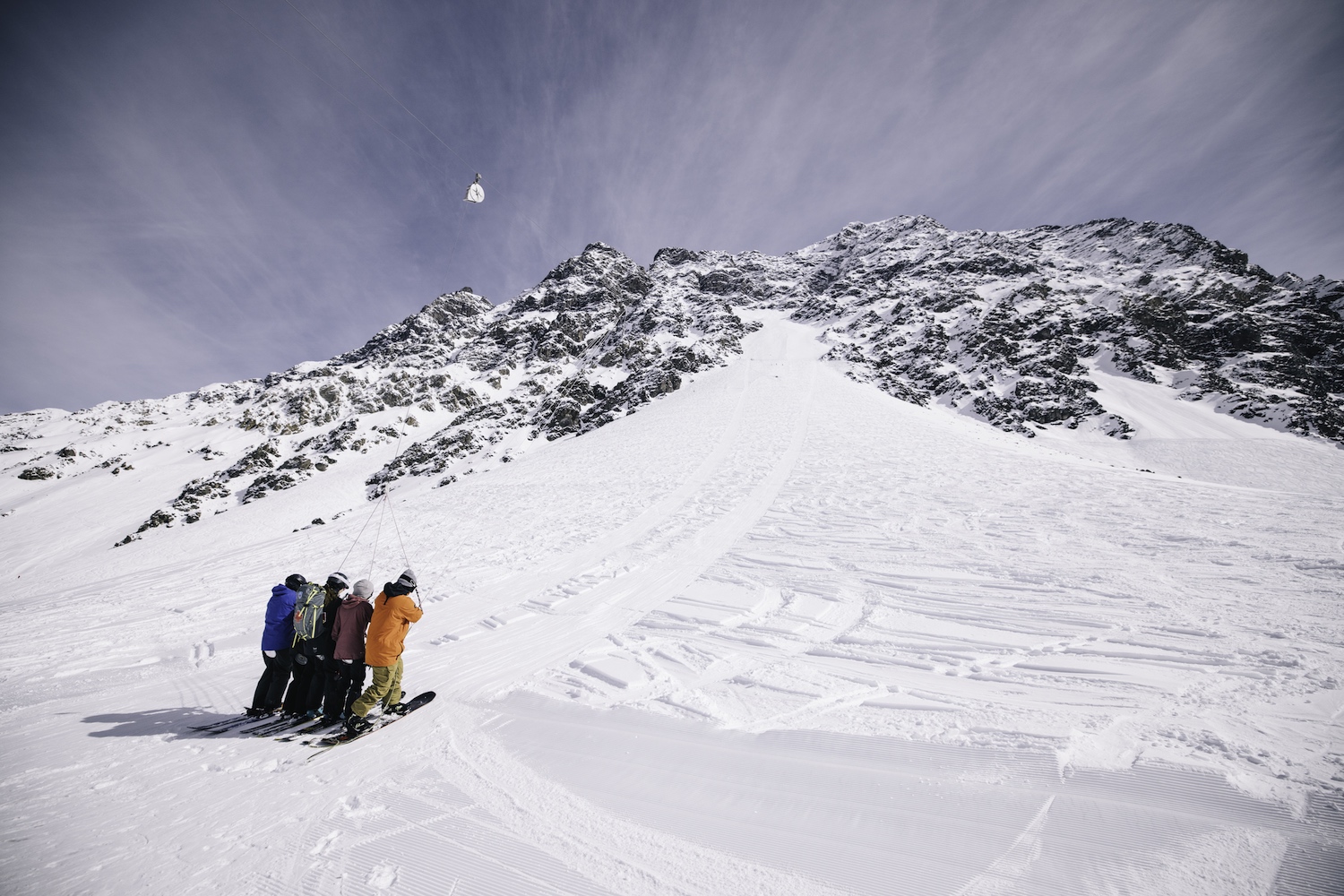
Jenny and I were beginning to feel more comfortable with the hold-on-for-dear-life nature of the slingshots as Lucas led us to Roca Jack, the longest and fastest of them all, which hauls riders up over a thousand vertical feet in less than a minute. To make it more challenging, the track was filled with large whoops from the previous night’s wind, forcing us to hold on tight or risk falling off halfway up the slope.
With a mix of skill and luck we made it to the top and dismounted in sequence, the secret to not taking out the other skiers. Unlike Condor or Cara Cara, however, this was just the start of our journey to the top of our next run, with Lucas aiming to show us his favorite lines around the resort.
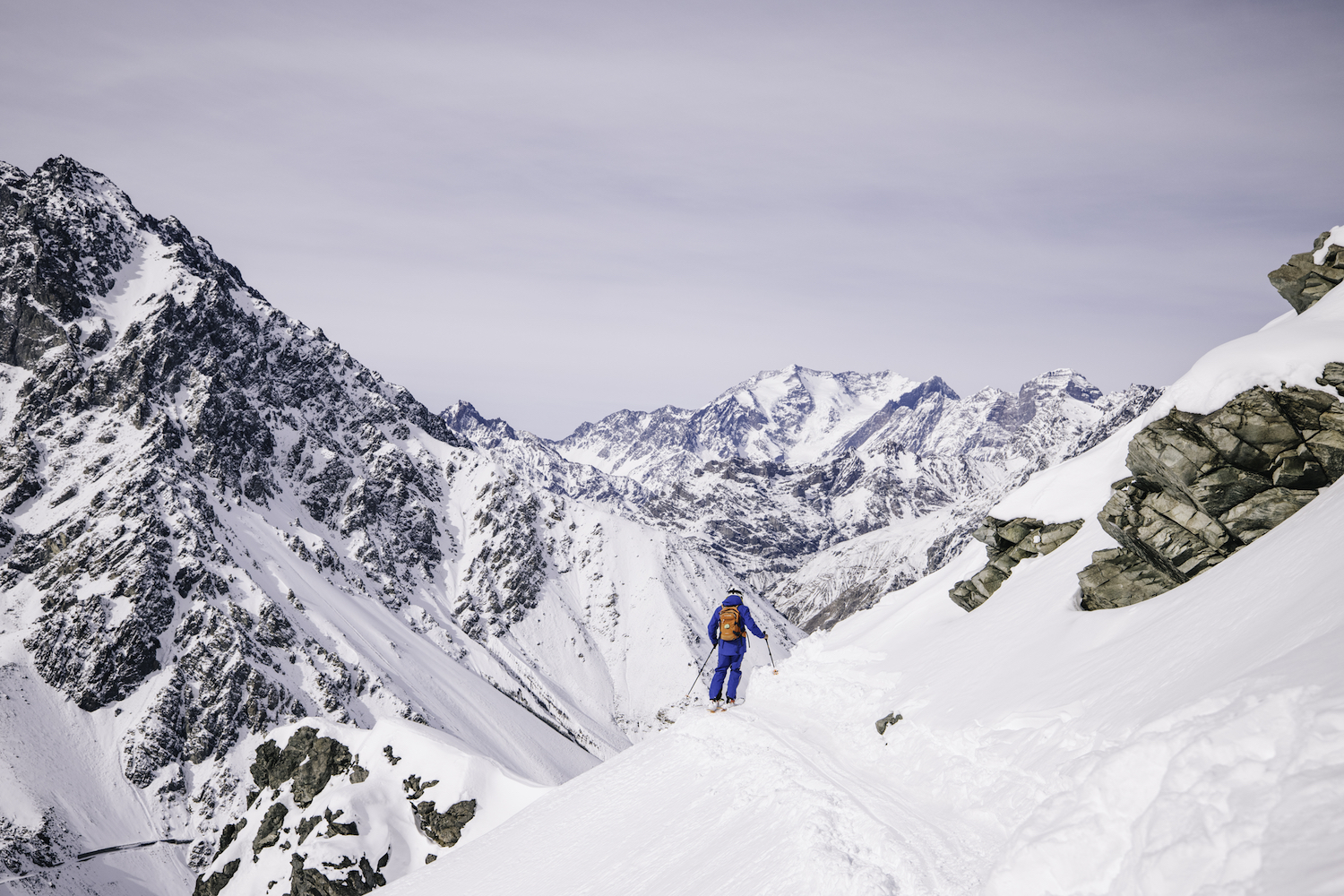
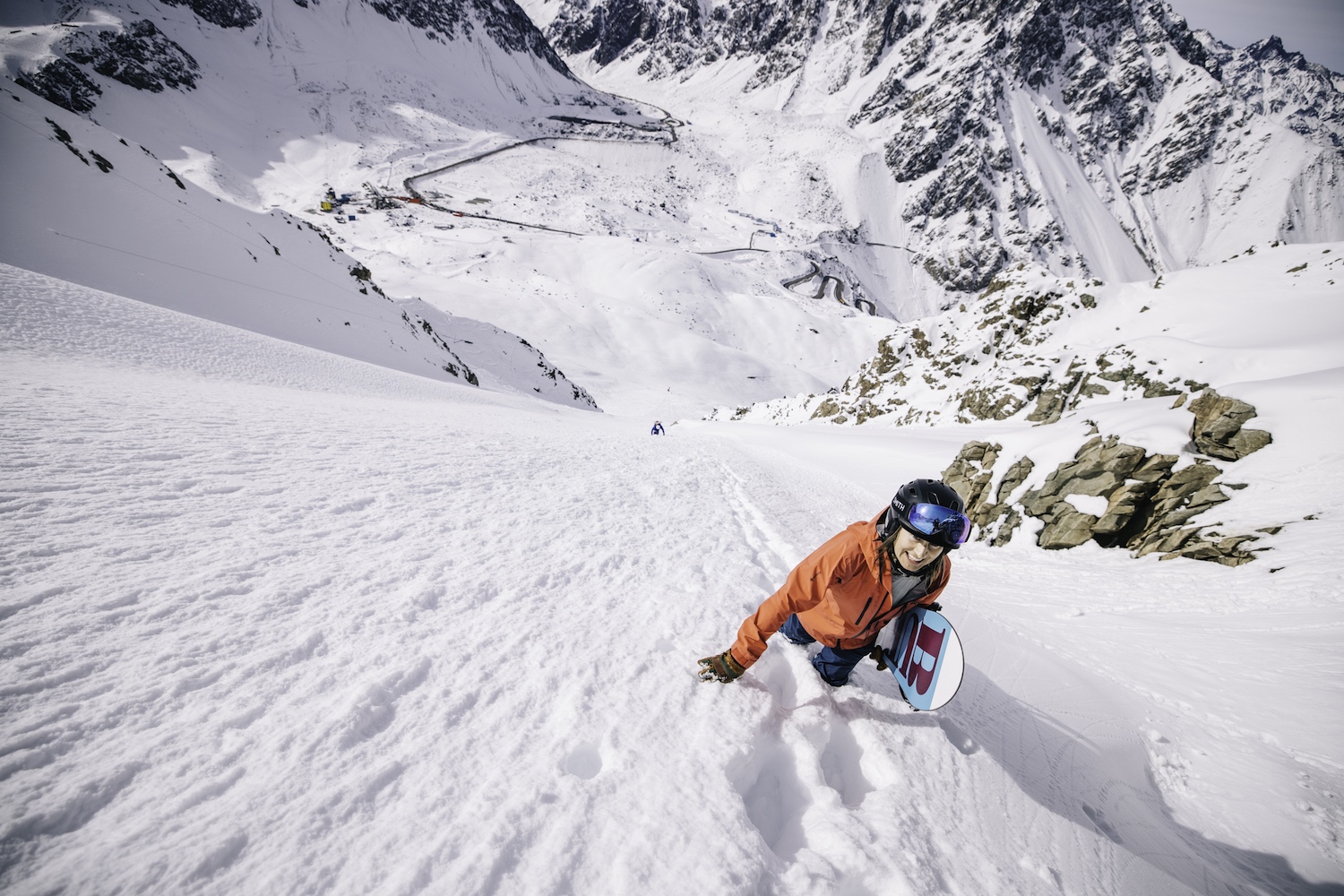
After sidestepping a dozen feet upwards, we entered the High Traverse, which had been opened by ski patrollers just minutes earlier. The traverse is exactly what it sounds like: a narrow and exposed path above a series of cliff bands with many no-fall zones. Trusting our ski edges and instincts, we agreed to just go for it and avoid looking down.
The traverse ends in a large sidecountry bowl called the Stadium, which could have been the start of a good run. However, we opted to bootpack higher, carrying our skis to maximize every inch of potential. Ten minutes later we were at the top of a small couloir, staring down 2,000 feet of untracked snow.
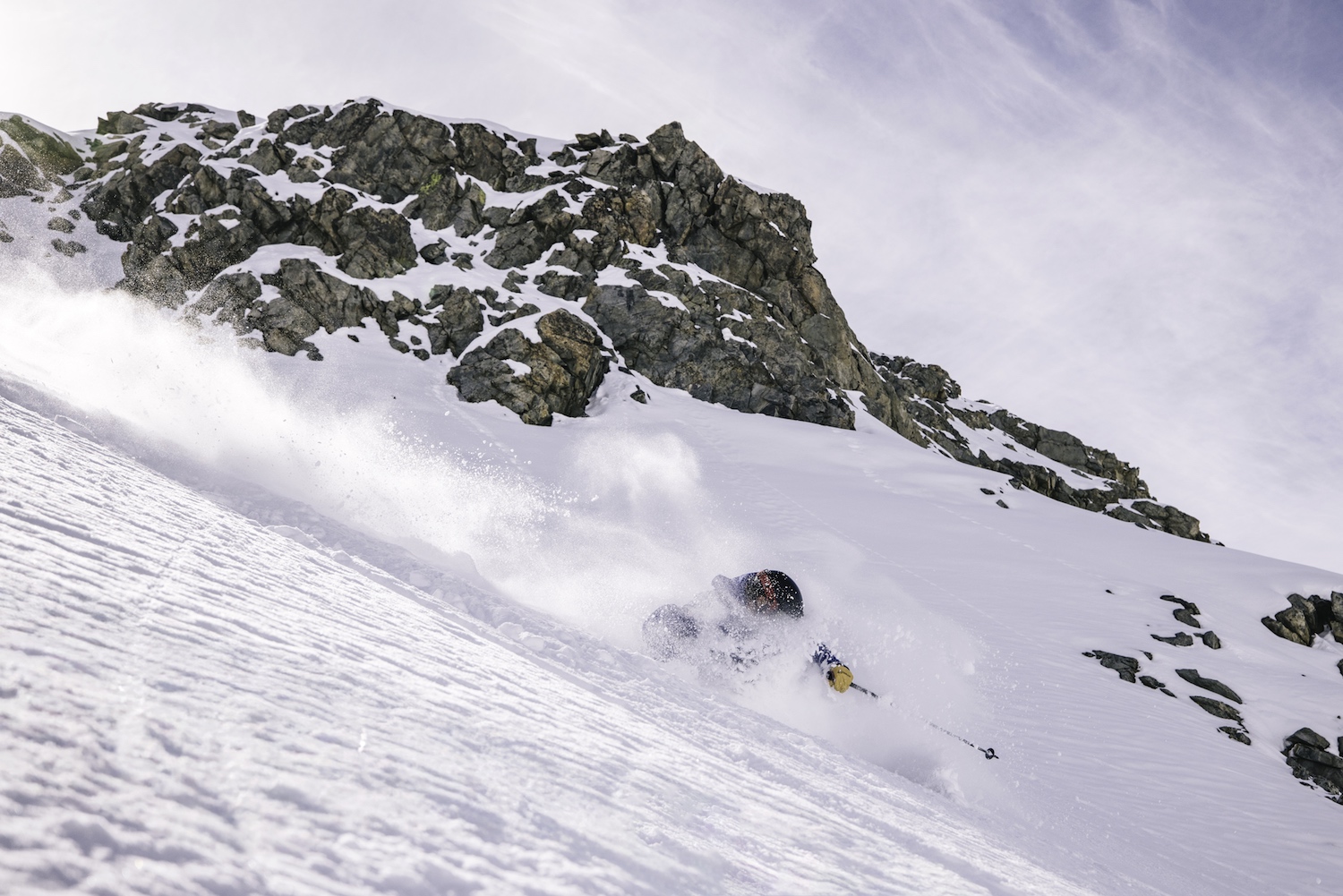
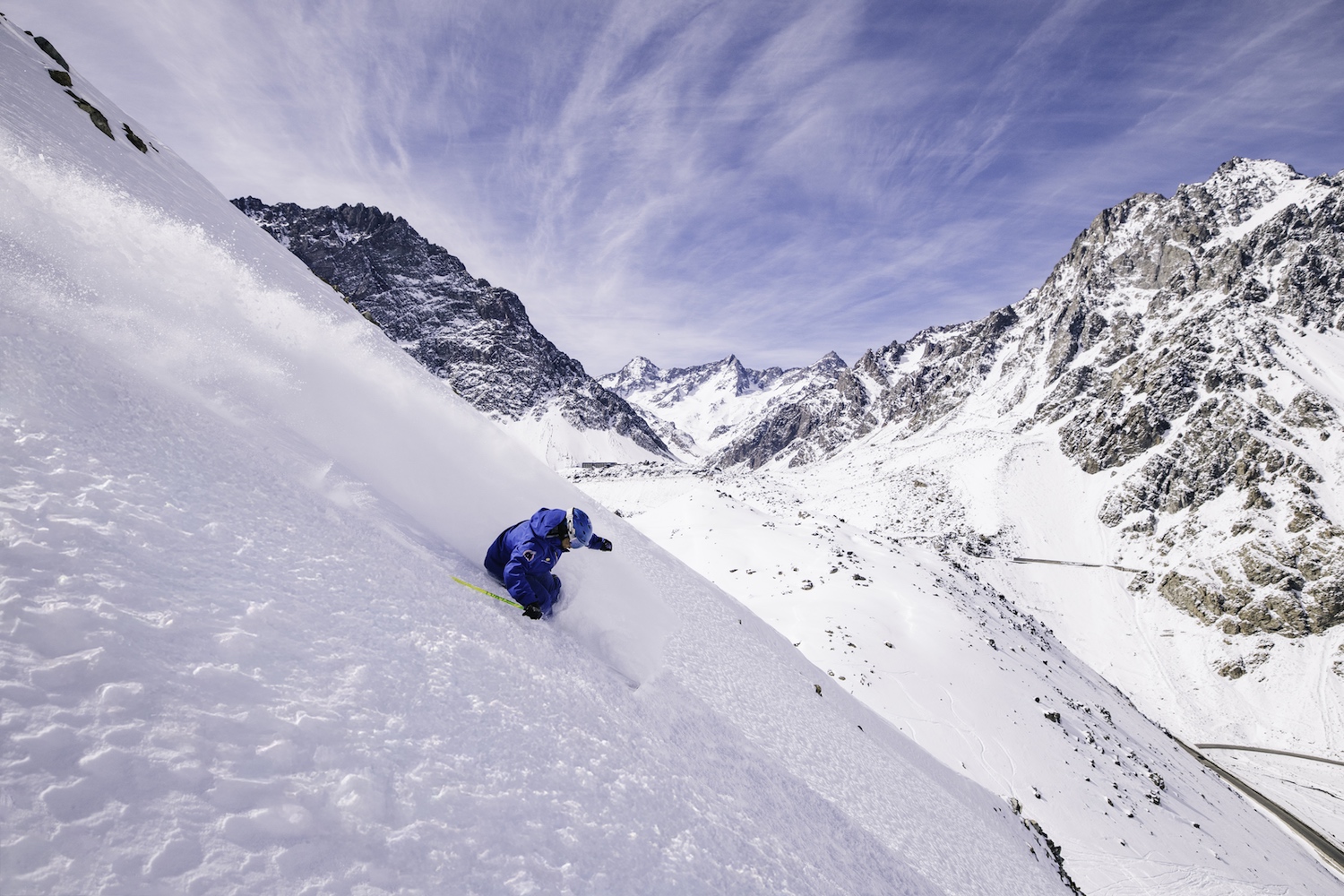
Moments before we dropped in, Lucas heard someone call from the exit of the traverse. Recognizing the helmets and jackets of three coworkers, he gave a holler back. We skied down to them and said hello, learning they had finished showing guests around the mountain and were taking a few laps for fun.
As someone who has spent a decent part of my life at ski resorts, I know there is no better sign of good snow than a group of off-duty instructors all skiing in one place. This was the literal jackpot. So, we dropped into the slope together, hooting and hollering and making big turns all the way to the bottom. I could write a million clichés about this moment, but one will do: it was heaven on earth.
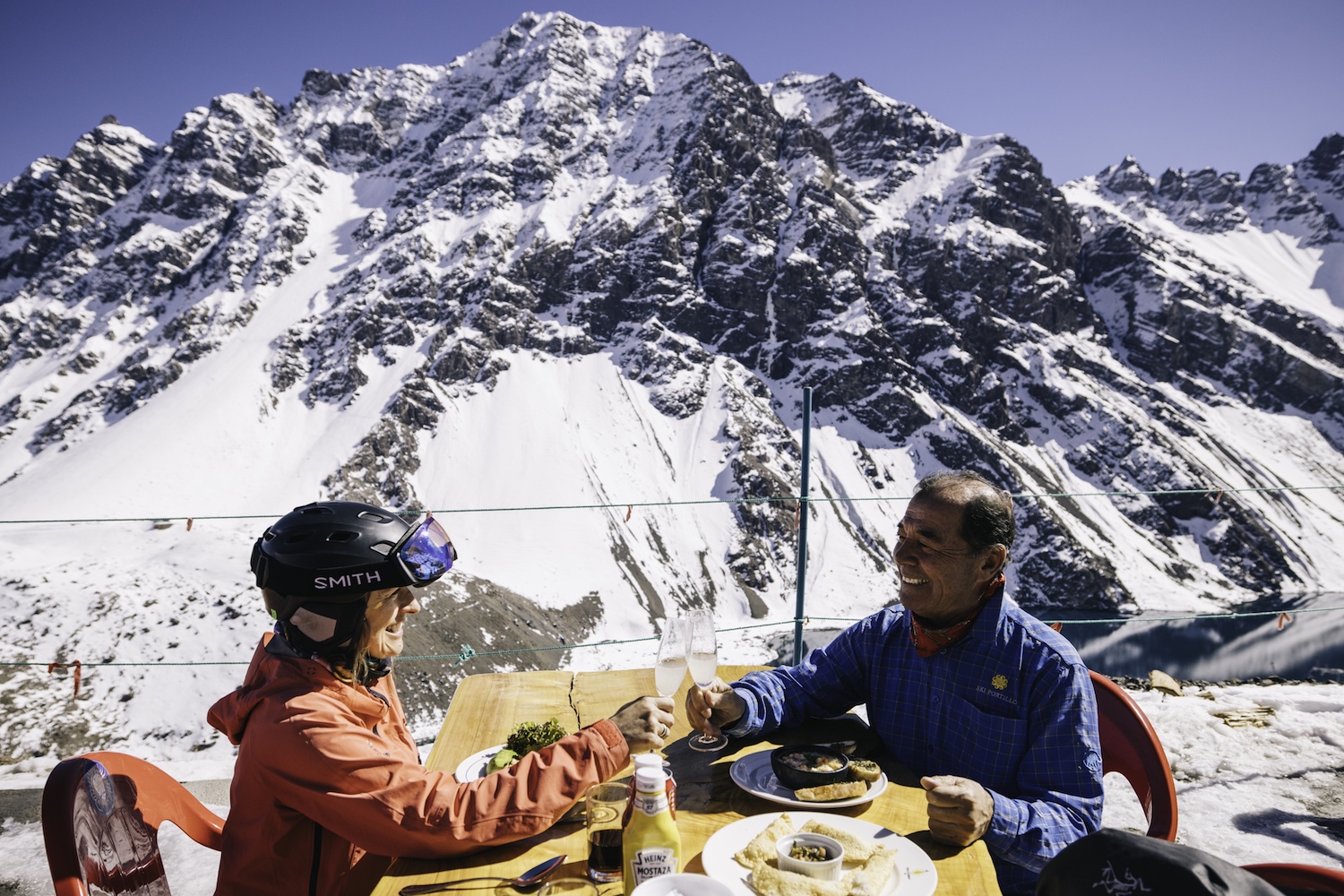
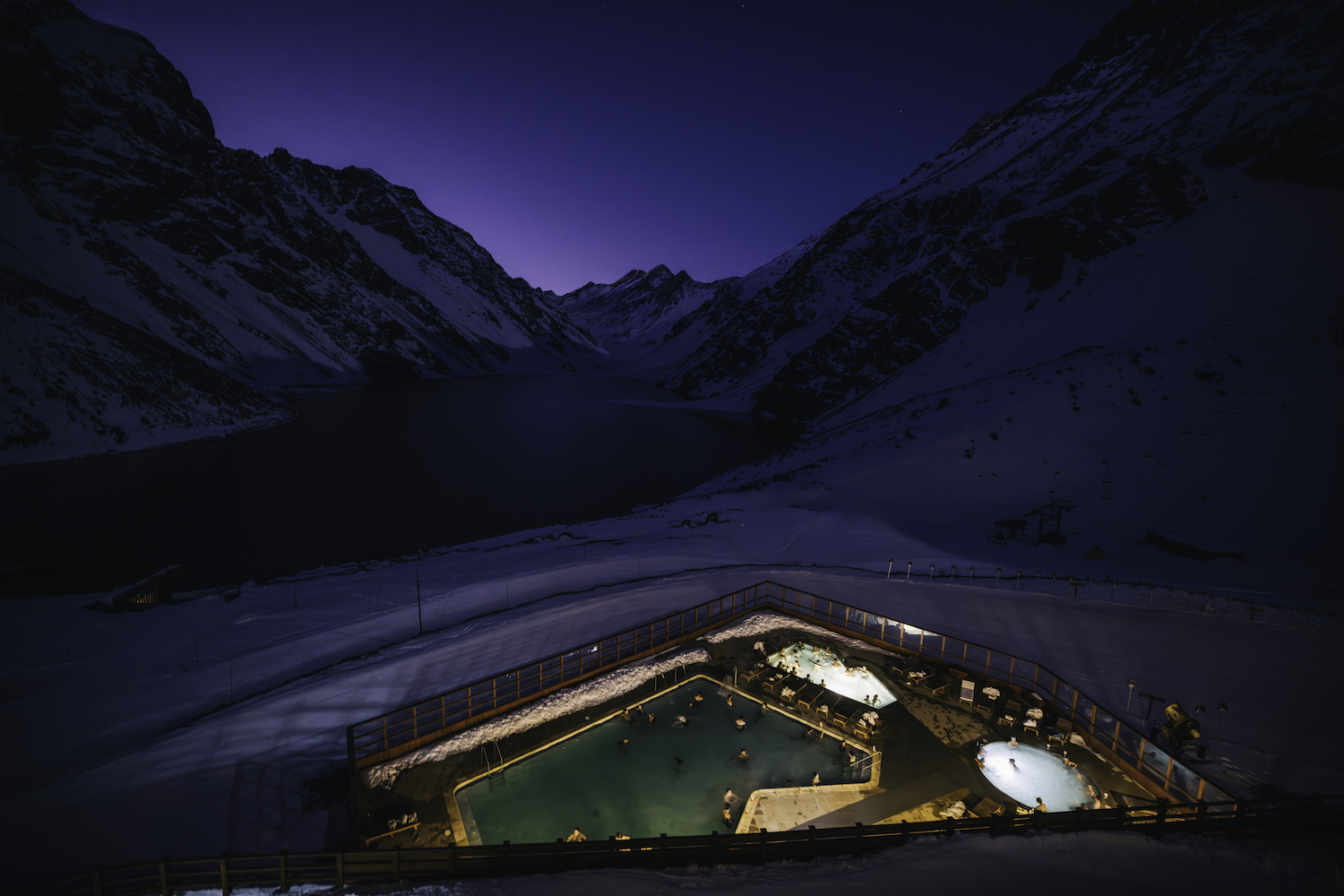
After skiing to the very bottom of the resort and riding the Juncalillo lift back up, Jenny and I had to rush back to Plateau to meet up with Felipe Lopez, who is known as the “cruise director of the big yellow boat.” We agreed to a late-afternoon rendezvous at Tio Bob’s, an outdoor bar near the top of the lift, with views of the entire resort and lake. Lopez, who has worked at Portillo for 50 years, arrived at the same time, wearing ski boots. Even the host of the entire resort has to ski when the snow is this good.
After a few Pisco Sours, sharing stories and laughs, we said goodbye and skied back to the hotel. At long last, we checked into our room and immediately changed into our swimsuits before rushing to the outdoor pool. The sun was setting behind the mountains as we found a spot in the tub, sending rays of red and orange across the entire sky.
This was a moment I’ll never forget, even if I forgot my camera in the rush to get downstairs. I mostly believe in the phrase “A picture is worth a thousand words,” but there are some moments — the most important ones — that are nearly impossible to capture on camera. Even I, a photographer by trade, prefer it that way.

More Like This
Twice a week, you'll find proven advice and tips, expert interviews, deeply reported features and personal essays on living better — for however long you’re here. Subscribe to Champ now.