It isn’t exactly news that plastic is a problem, but just how quickly that problem is growing may shock you. According to a recent report published by Pew Charitable Trusts, between now and 2040, plastic pollution is projected to more than double; plastic-spurred health impacts will rise by 75%, and plastic-related emissions will rise by 58%. Another alarming statistic? Microplastic pollution is expected to grow by more than 50% and, at least in high-income communities, it will account for 79% of all plastic pollution.
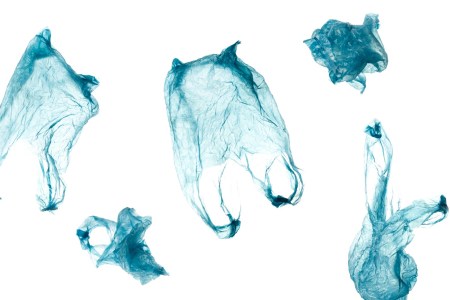
Just How Effective Are Plastic Bag Bans?
A new study explored the environmental impact of these policiesAh, the dreaded microplastics. It’s hard to pinpoint exactly when the craze around these tiny bits of plastic began. One could go back all the way to 2004, when marine biologist Richard Thompson coined the term in his research, referring to the microscopic particles of plastic debris floating around the ocean. But the concern around this type of pollution has certainly ramped up in recent years as studies found them in human blood, lungs and stool samples. Then, in February 2025, a key paper in the journal Nature Medicine reported finding these tiny plastic pieces in human brains, at much higher levels than elsewhere in the body. (How much? Try a spoon’s worth.) The presence of microplastics was linked to dementia, reproductive dysfunction, inflammation, heart attacks and cancer.
So last week when The Guardian published a story claiming that a “bombshell” doubt had been cast on the previous years’ studies about the presence of microplastics in our bodies, a collective sigh of relief was heard across the internet — and with it, a bit of righteous indignation from those microplastics deniers who had long claimed they didn’t believe these microscopic bits of polyethylenes were doing any real damage to their brains or bodies. Dr. Dušan Materić of the Helmholtz Center for Environmental Research in Germany called the aforementioned 2025 plastic-in-brain study a “joke,” noting that since fats can often sound false alarms as certain types of plastics, the reported heightened presence of plastics in the brain could be attributed to its higher fat content — 60% as compared to the liver’s 5%, for example — and rising obesity rates.
That paper is not the only one that has been called into question. Critics have disputed major studies reporting dangerous plastic particles in our hearts, our blood, our arteries, and yes, even our reproductive organs, on the grounds of imperfect detection procedures and a lack of control testing, going as far as to call some results “fundamentally unreliable.”
Does this mean we can simply cast the presence of microplastics off as nothing more than a scientific fantasy, built on faulty experimental methods, irreproducible conjecture and bioanalytic false positives? Not so fast. As much as we may feel helpless in the face of an invisible threat found in the clothes we wear, food we eat and air we breathe, and welcome any suggestion that it may not affect us, the real takeaway from all this criticism shouldn’t be that microplastics aren’t a problem, it’s that we simply don’t have all the answers.
A certain sort of sensationalism has been characteristic of reporting on microplastics for a while now. From various “spoonful” images to this viral chart, a variety of institutions have driven home the perils of a microplastic crisis. It is that same impulse to aggrandize, it seems, that is spurring reporters at outlets like The Guardian and Climate Crisis 247 to frame these serious — but uncertain — scientific qualms as a “bombshell” debunking event (it is important to note that the word “bombshell,” which has been rampant in recent headlines, is taken from a quote given to The Guardian by Roger Kuhlman, a chemist who spent 20 years at Dow Chemical Company, a global leader in plastics production). Kuhlman goes on to say of the recent criticism: “This is really forcing us to re-evaluate everything we think we know about microplastics in the body. Which, it turns out, is really not very much.”
Kuhlman is right about at least one thing here: we really don’t know much. While critical researchers have raised serious methodological concerns about the studies, no counter-research has yet been presented to definitively prove their invalidity.
Uncertainty is a near-perfect catalyst for paranoia — especially when we’re talking about industrial matter in our brains. Over at Vox, Dylan Scott gives us good, if somewhat impossible advice: We have to stop freaking out about every new microplastics study. He finishes with a succinct, useful call to action: “Do what you can, don’t freak out at every new headline, and let the researchers keep working” — which is great advice, except letting the researchers keep working is getting more precarious each day. The Trump administration has thrown science and medicine research into chaos through budget and staffing cuts. Paranoia has been weaponized against inert actors like the food pyramid and Tylenol. Just last week, the EPA announced that it is going to stop taking the dollar value of lives saved and healthcare funds circumvented into account when reevaluating air-pollution regulations. The regulations in question deal specifically with ozone pollution and “fine particulate matter smaller than 2.5 microns,” a category to which microplastics belong.
Even if, when all of the nanoparticles settle, it does turn out that microplastics are relatively harmless, there always looms the possibility that this small reprieve could serve as justification for rolling back regulations on plastic-producing corporations, in line with, say, September’s EPA proposal to rescind 2009’s Greenhouse Gas Endangerment Finding. Don’t be fooled: the crisis of plastic pollution is only getting worse, even if a handful of the thousands of studies about its many ill effects turn out to be rubbish.
Meet your guide

More Like This



Twice a week, you'll find guinea pig features, personal essays and expert interviews on living better — for however long you’re here. Subscribe to Champ now.