In 2018, H. Moser & Cie — the Schaffhausen-based high-end independent watchmaker known for both its classical design inspiration and its humor — debuted the Endeavour Flying Hours. Developed in the mid-17th century for Pope Alexander VII, the flying hours system originally utilized a semi-circular axis and an aperture to indicate the quarter-hours, the purpose of which was to mitigate the sound of the clockwork, which disturbed the Pope’s sleep. However, watchmakers soon adopted it for use in pocket watches, and by the 19th century, the design had been altered to use a 120-degree arc, followed by a 360-degree system in which the hour indicators revolved around the dial.
Placed into a more practical wristwatch by Audemars Piguet in the early 1990s, the wandering hours complication has since proliferated somewhat throughout the high-end independent world. Difficult to engineer and fit within the constraints of a wristwatch, it makes for a highly-visually, engaging way to display the time, with several wheels revolving in concert. Now, H. Moser & Cie is fitting the complication to its Pioneer collection, which celebrates its 10th year within the brand’s catalog. The H. Moser Pioneer Flying Hours, available in both stainless steel and in 5N red gold with black DLC titanium inserts, measures a hefty 42.8mm in diameter — large enough to provide plenty of dial real estate but not so big as to prove uncomfortable.
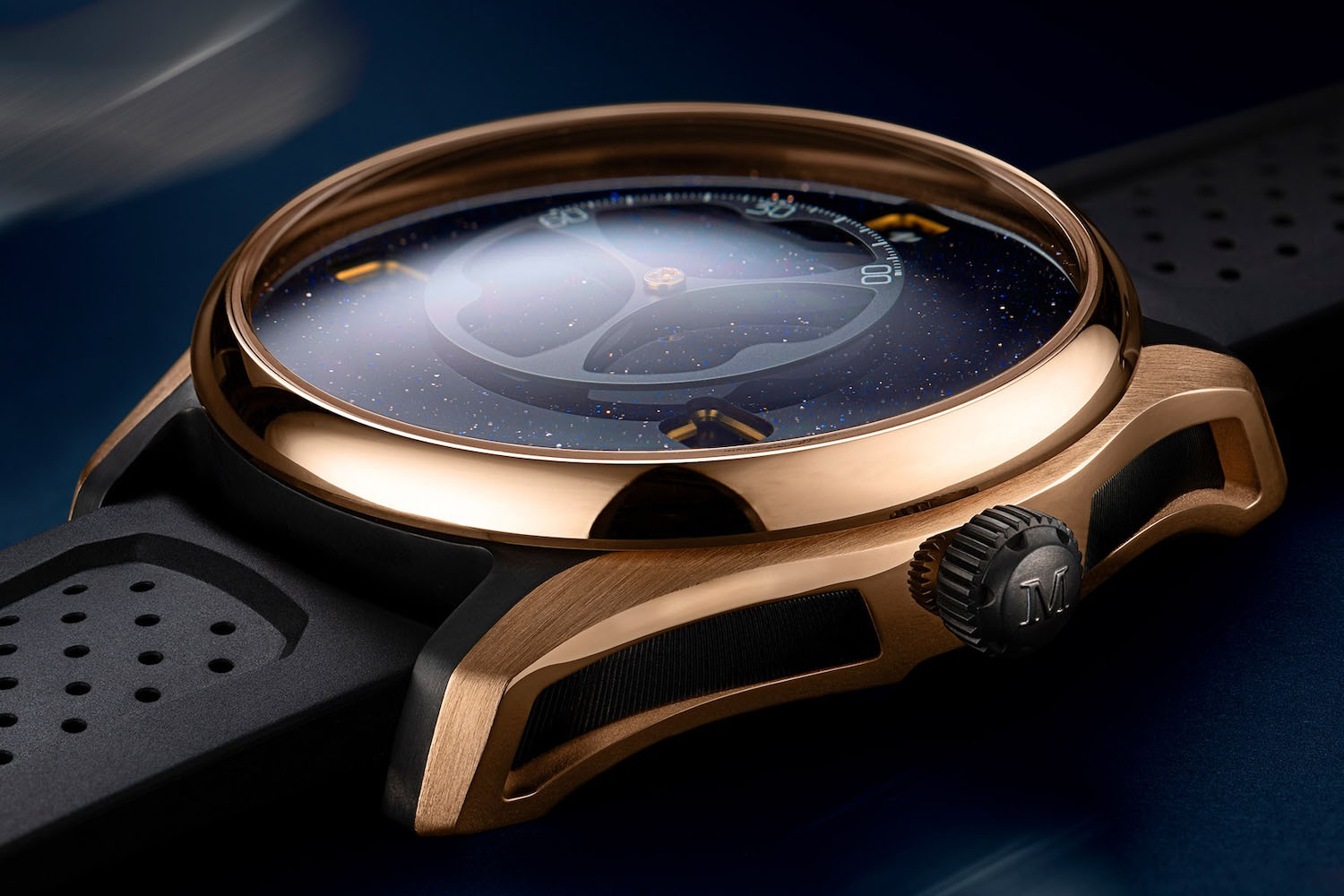
In typical Moser fashion, the case of each Pioneer Flying Hours melds pocket watch architecture — thin, smooth bezel; no crown guards; large, easily grippable crown — with modern tool watch tastes, featuring thick lugs and uniform brushing throughout most of the surfaces. Water resistant to 120m, the case is paired to either a black (red gold reference) or gray (steel reference) rubber strap, while the casebacks feature sapphire display backs to show off the movement (more on this in a moment).
The dials are simply beautiful. On the red gold version, a blue aventurine background features a skeletonized central minute disc that rotates across an arc of 120 degrees. Meanwhile, three subsidiary discs — which are hidden beneath the dial — rotate on separate axes and reveal the appropriate hour numeral within framed gold windows. On the stainless steel reference’s white fumé dial, the system is rendered with a blued central disc (it also lacks the frames of the gold reference). Notably, the hour discs are instantaneously jumping, a departure from the brand’s previous system in which the hours gradually made their way through the display windows.
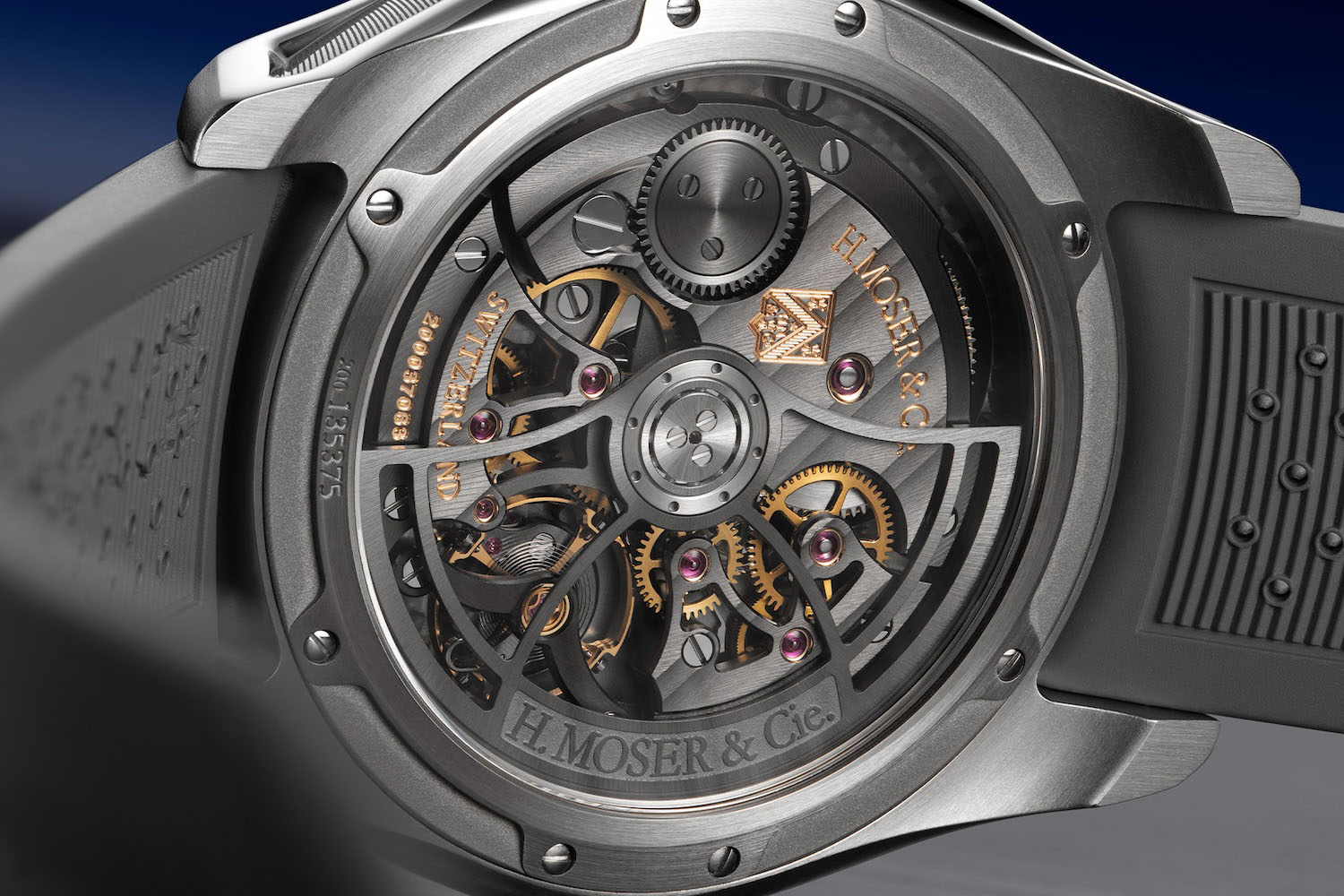
Devoid of any extraneous writing, logos or wordmarks, both dials put the flying hours complication front and center. Though in typical Moser fashion, the other half of the story is contained within the magnificent in-house movement cranking away within. The automatic cal. HMC 240 features bi-directional winding via a solid red gold or tungsten rotor, providing the watch with a power reserve of three days. The movement’s bridges and plates, meanwhile, feature an anthracite finish and handsome striping.
Limited to 100 pieces in red gold and unlimited in steel, the H. Moser Pioneer Flying Hours is certainly not for everyone — at 42.8mm wide and 16.1mm tall, it requires a large wrist and plenty of confidence — but its fascinating mechanism, beautiful, minimalist design and marriage of classical and modern influences make it a clear winner. And though it’s a bit late for consideration for this year’s GPHG Awards, there’s little doubt it’ll find its way into next year’s crop.

H. Moser Pioneer Flying Hours Aventurine
Diameter: 42.8mm
Movement: H. Moser & Cie HMC 240 automatic
Water Resistance: 120m

H. Moser Pioneer Flying Hours White Fumé
Diameter: 42.8mm
Movement: H. Moser & Cie HMC 240 automatic
Water Resistance: 120m
Meet your guide

More Like This



This article appeared in an InsideHook newsletter. Sign up for free to get more on travel, wellness, style, drinking, and culture..