In 1833, Swiss-born watchmaker Antoine LeCoultre established what would become the Vallée de Joux’s first watchmaking manufacture, though he didn’t know it at the time.
Based in a small barn, the firm that would become Jaeger-LeCoultre began humbly, with a precision-obsessed LeCoultre fashioning his own tools. Effectively ignoring the time-honored Swiss system of établissage — wherein specialist makers each fashioned different parts which were then assembled into a watch — LeCoultre brought together all manufacturing functions under one roof. By 1888, he ran not only the most important watchmaking concern in the region, but also one of the largest, with nearly 500 workers, leading to the company’s nickname, “La Grande Maison.”
A challenge issued by one man to another would change the course of the company’s history. In 1903, French watchmaker Edmond Jaeger dared Jacques-David LeCoultre, son of Antoine, to manufacture an ultra-thin movement that he had designed himself. The two joined forces, delivering that svelte pocket watch by 1907 and forming the basis for a partnership that would be formally cemented in 1937, when the firm would change its name to Jaeger-LeCoultre.
In the interim, the younger LeCoultre would partner with another individual who would alter the fate of JLC — businessman César de Trey. When the two, along with French inventor René-Alfred Chauvot and Jaeger, created a watch with a swiveling case that would protect the dial, they knew they had something unique on their hands. The resulting watch, dubbed the “Reverso,” is still the most famous model from the maison.
Though it has faced headwinds over the past two years as both sales and profits have shrunk within Richemont’s Specialist Watchmaking division, Jaeger-LeCoultre remains a potent force within the greater watchmaking industry, with turnover of some CHF 524 million in 2024.
Beyond the famed Reverso, La Grande Maison offers seven other watch collections, plus the nearly century-old Atmos, an ingenious clock that winds itself through changes in atmospheric pressure. From the Polaris alarm watch to the minuscule Calibre 101 — still the world’s smallest mechanical watch movement — JLC continues to captivate collectors with its potent mix of history, considerable design chops and expertise in both complications and metiers d’art.
Reverso
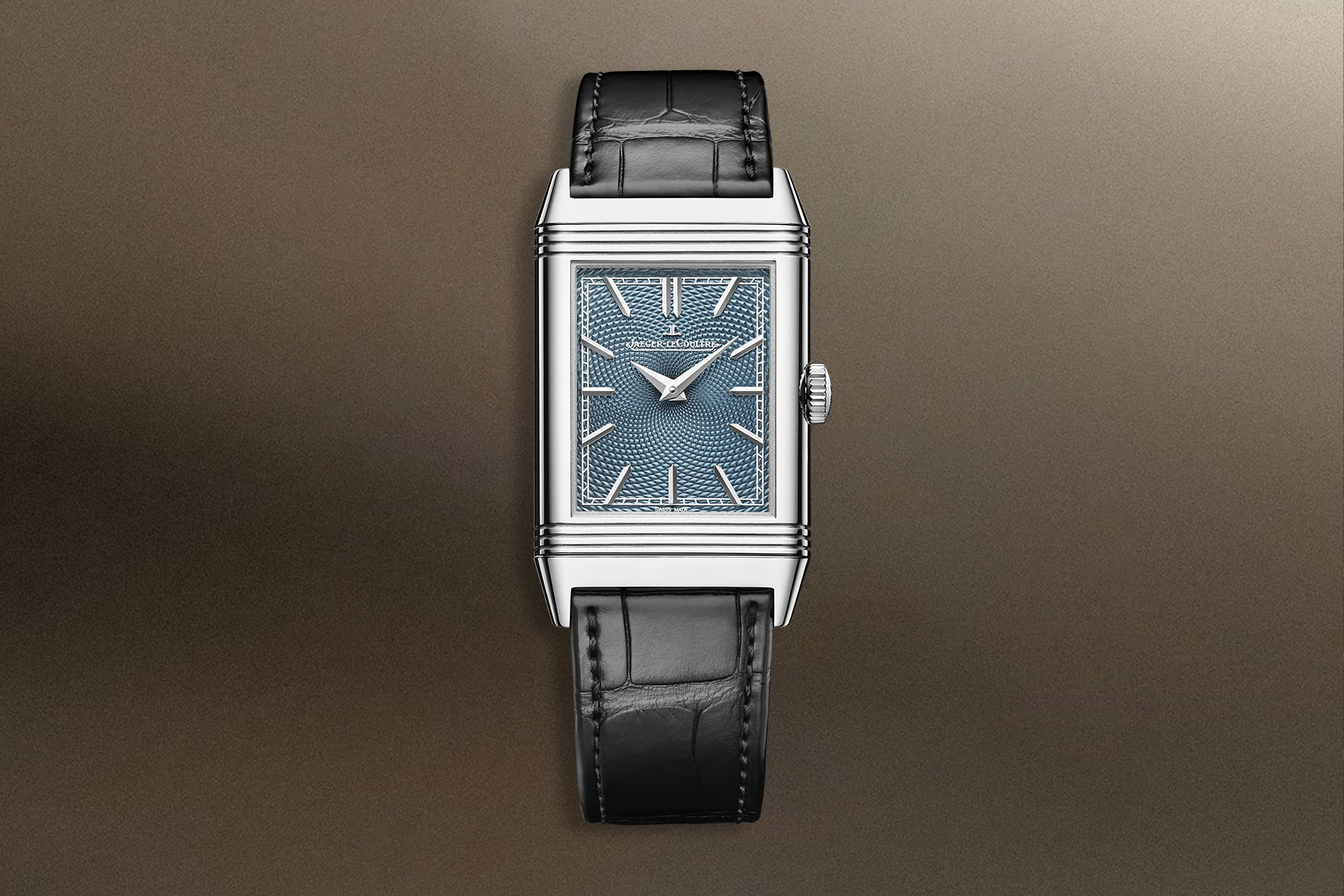
Born in 1931, the Reverso collection is most emblematic of La Grande Maison in the minds of collectors. As the story goes, César de Trey was traveling in India when British officers posed a challenge: They needed a watch that wouldn’t break during their frequent games of polo. Enlisting watchmaker Jacques-David LeCoultre and designer René-Alfred Chauvot, they created a watch with a swiveling case that would protect the dial during play. Famously personalizable via caseback engravings, the Reverso now includes all manner of dual-face models housing innovative complications such as world timers, tourbillons and calendars. Nearly a century after its birth, it remains one of the watch world’s most important designs.
Polaris
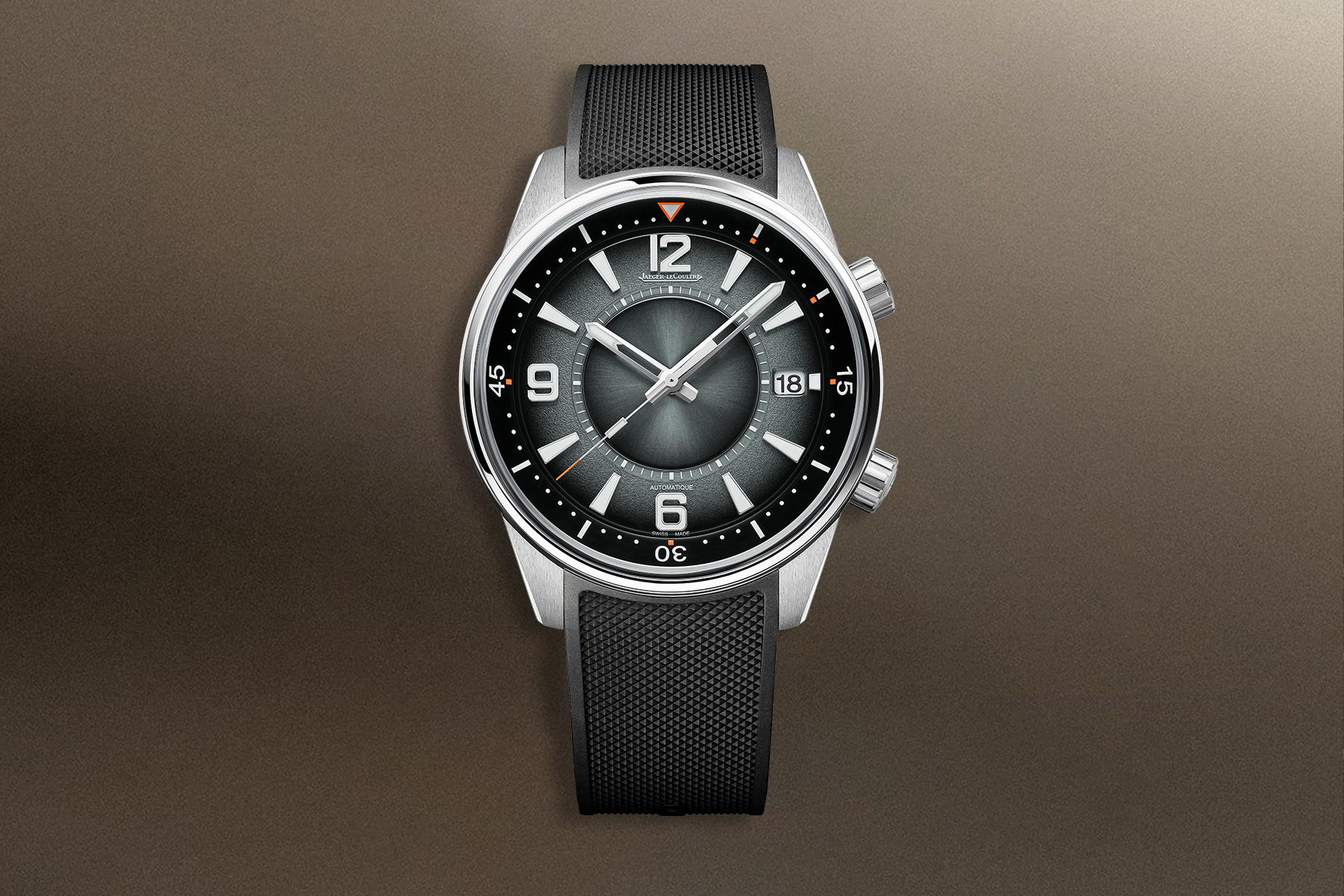
In 1950, Jaeger-LeCoultre released the Memovox, a wrist-worn timepiece with a handy mechanical alarm feature. In 1959, it adopted the alarm complication into a dive watch platform, which it dubbed the Deep Sea Alarm. The final evolution in this innovative turn of events was the Polaris, which perfected the design with a compressor-style case. Consisting of three parts, it featured dual casebacks — one to protect the movement, and another with holes bored into it to magnify the volume of the alarm. Today, this stellar design forms the basis of a wide-ranging collection that includes all manner of chronographs, calendars and other complicated pieces.

A Beginner’s Guide to the Patek Philippe Catalog
Breaking down the famed watchmaker’s 10 product families, from the classic Calatrava to the new Cubitus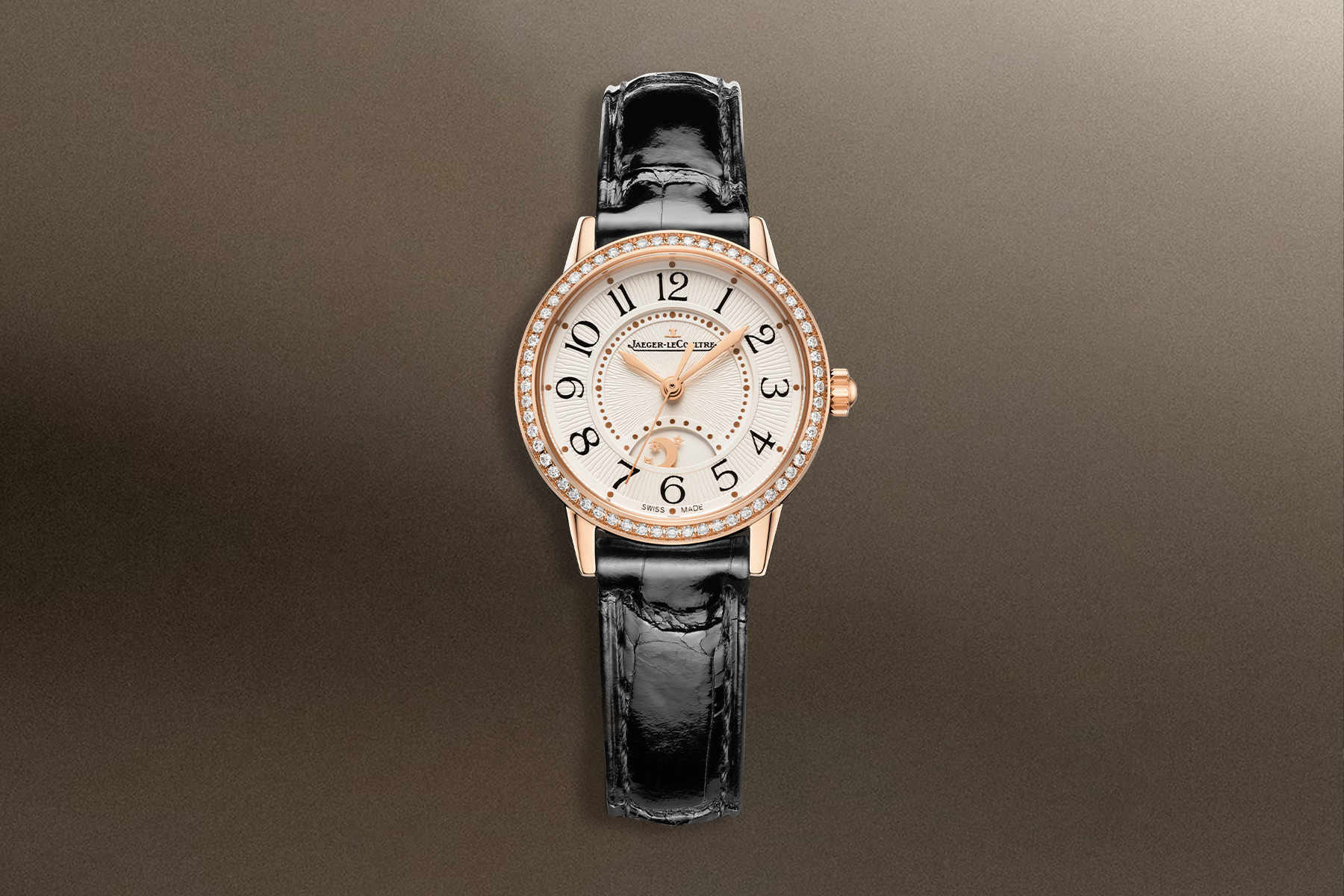
Rendez-Vous
Dating to 2012, Rendez-Vous is one of the newest collections within the JLC oeuvre, but it builds upon a mighty history of crafting beautiful women’s watches that feature excellent in-house movements. Unlike those of many other maisons, Rendez-Vous models clearly receive just as much consideration as those designed specifically for men. Automatic movements abound, as do complications, gem-setting and intricate dials. In fact, the Rendez-Vous watches house some of the brand’s best celestial complications, including moonphases and a lovely “shooting star” complication. The simplest model in steel features a handy day/night indicator and comes on either a leather strap or a steel bracelet.
Master Ultra Thin
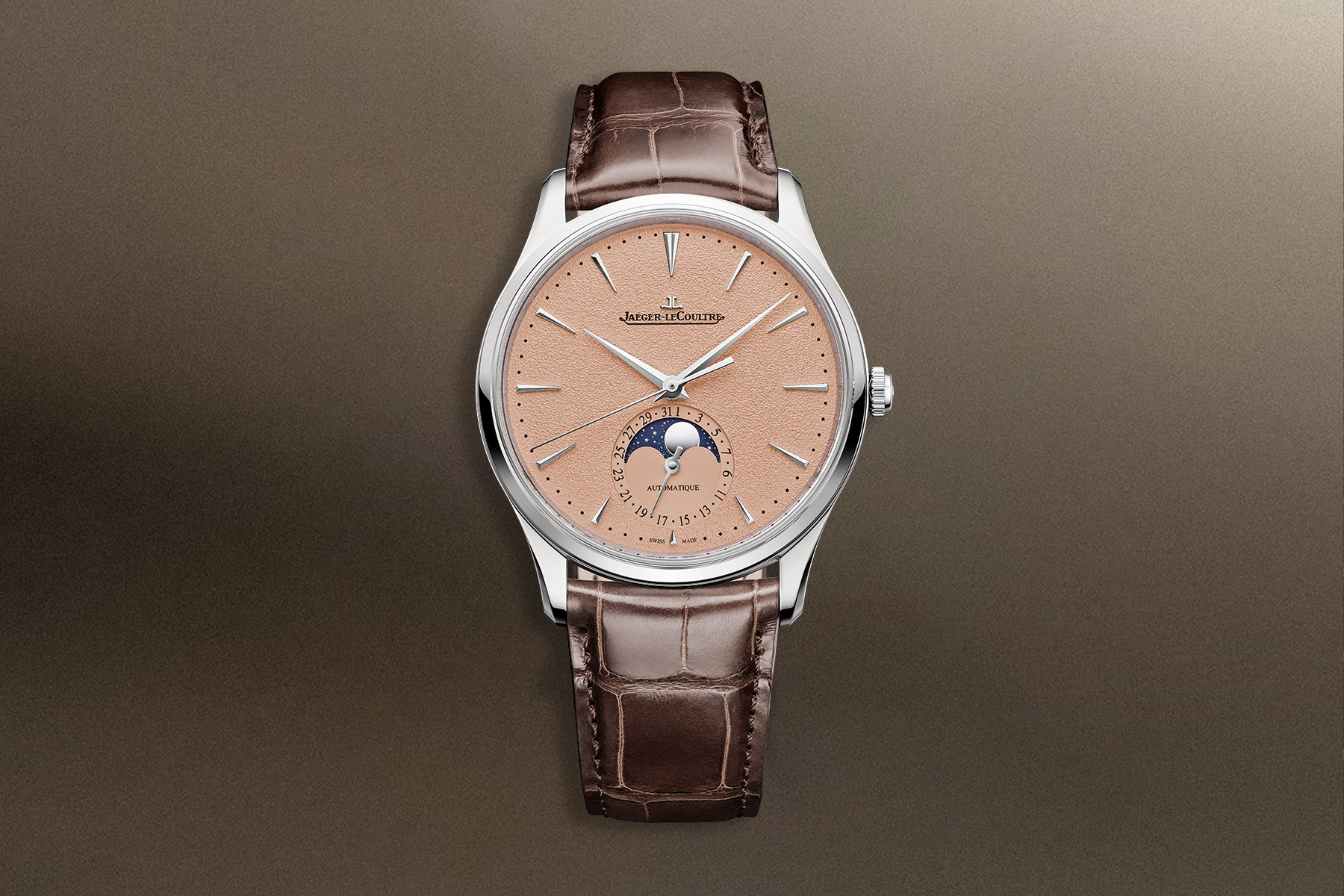
If you’re on the hunt for a modern automatic dress watch with mid-20th-century looks, then turn your attention to JLC’s Master Ultra Thin. Based upon the design of a slim pocket watch from 1907, the collection dates to 1993 and includes a variety of elegant three-hander and complicated models on simple leather straps. The moon references are among the best value in manufacture-caliber moonphase watches within the haute horlogerie space, while the beautiful perpetual calendar references are stunning feats of micro-mechanical engineering. For a simple time-and-date model, the basic Master Ultra Thin Date can’t be beat.
Master Control
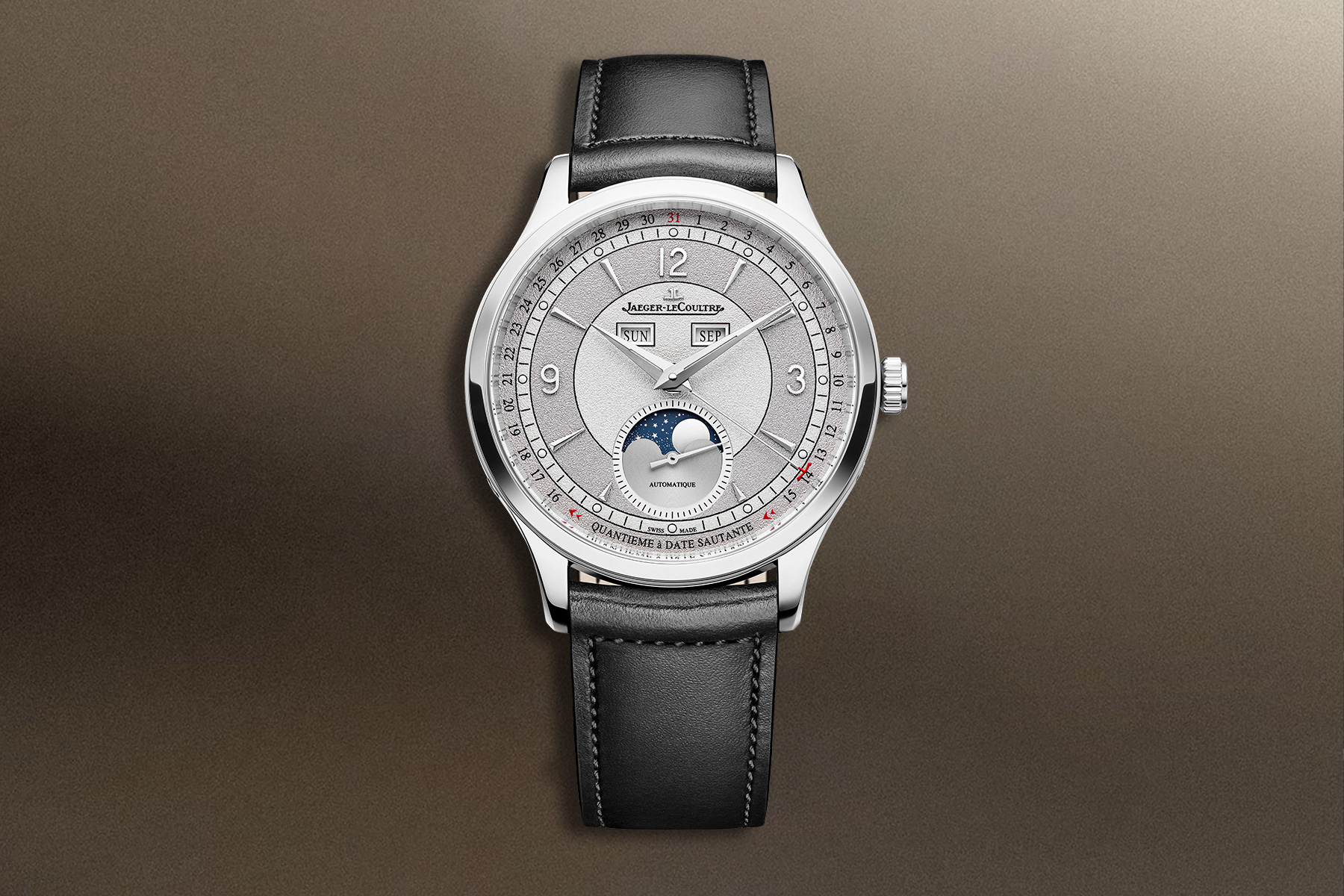
Taking visual inspiration from 1950s JLC models such as the Memovox, the Master Control uses a set of common attributes — a 40mm case, elongated triangular indices, dauphine hands — to offer a modern assemblage of midcentury-style dress watches. (A new 36mm time-and-date offering indicates an exciting possible move into true 1950s sizing, however.) In addition to a Memovox model, there are also several gorgeous complete calendar watches, chronograph-calendar references, and the Geographic, a traveler’s watch that includes world time, date, power reserve, second time zone and day/night indications. The new Master Control Calendar with a multi-tone grey and silver dial is a particularly striking watch, and proof of JLC’s considerable design chops.
Duometre
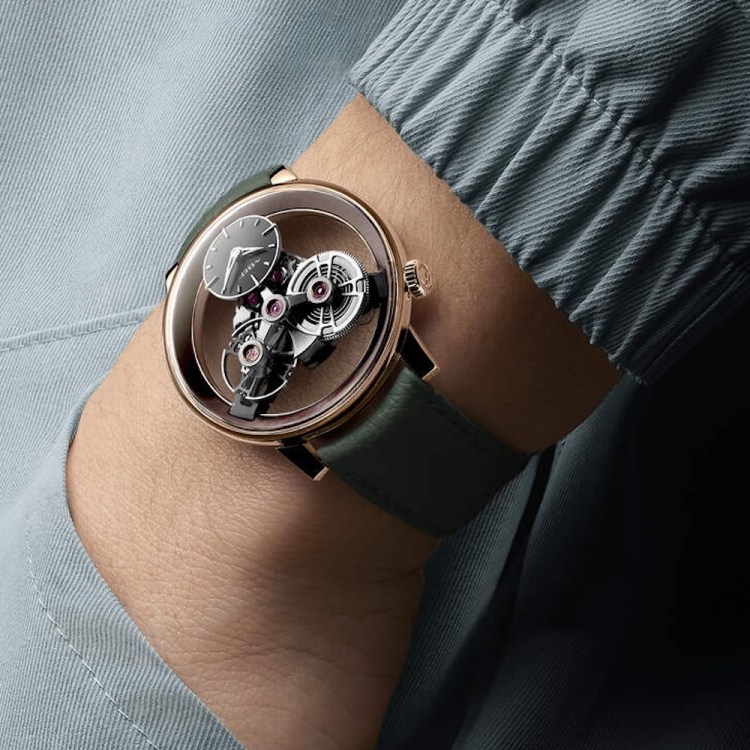
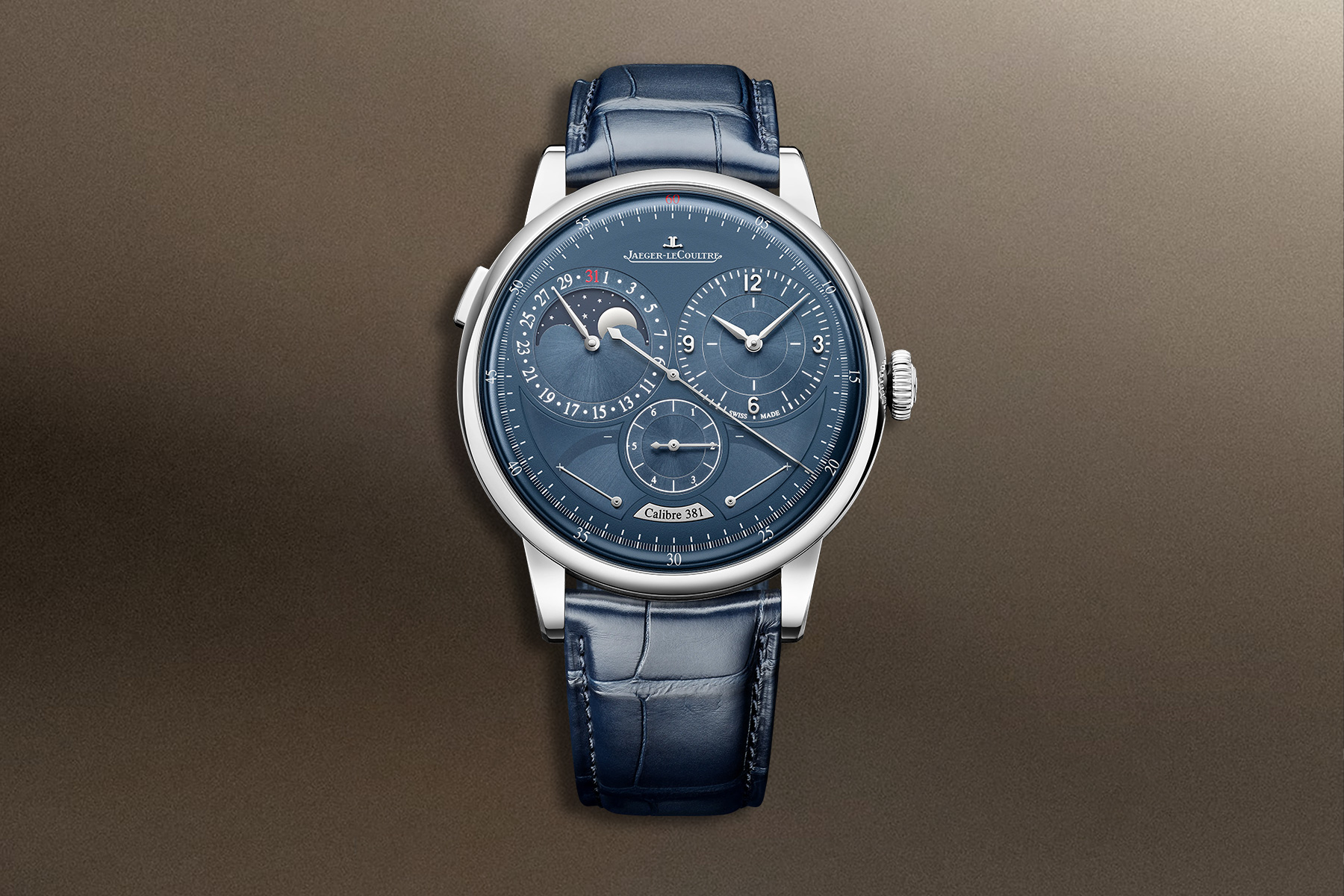
Launched in 2007, the boundary-pushing Duometre collection uses JLC’s “Dual-Wing” concept, where two independent gear trains — powered by two barrels but linked by a single escapement — propel timekeeping and complications separately. Numerous models have come and gone, and the collection currently consists of three watches available in different colorways. While the Duometre Quantieme Lunaire offers timekeeping, a 1/6th-seconds hand, a moonphase display and twin power-reserve indicators, the Duometre Heliotourbillon features a triple-axis tourbillon and a perpetual calendar. The Duometre Chronograph Moon, meanwhile, features a 1/6th-seconds monopusher chronograph, a day/night indicator, a moonphase display and twin 50-hour power-reserve indicators.
Master Grande Tradition
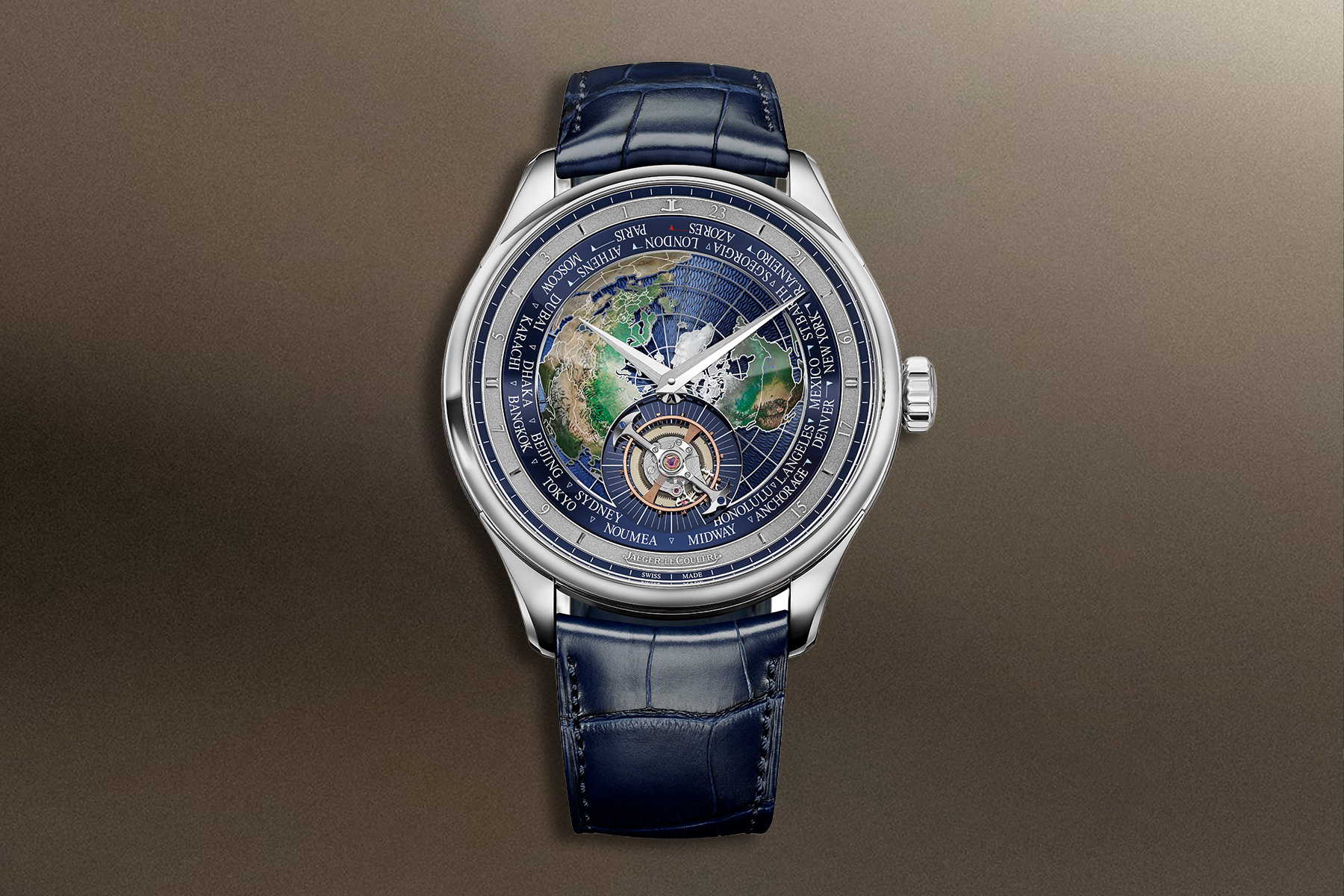
The Master Grande Tradition collection is where JLC parks some of its most mind-bogglingly complicated wares. Each in-house caliber in these 42mm or 43mm models consists of hundreds of components, while the complications on offer range from combinations of tourbillons, world timers, perpetual calendars, celestial displays and more. The dials are similarly exquisite, matching the movement design for artistry and attention to detail. Blue guilloché enamel on the Calibre 950, which features a minute repeater combined with a perpetual calendar, and the gradient blue dial of the Calibre 946 are but two examples of the fine workmanship seen throughout the collection.
Calibre 101
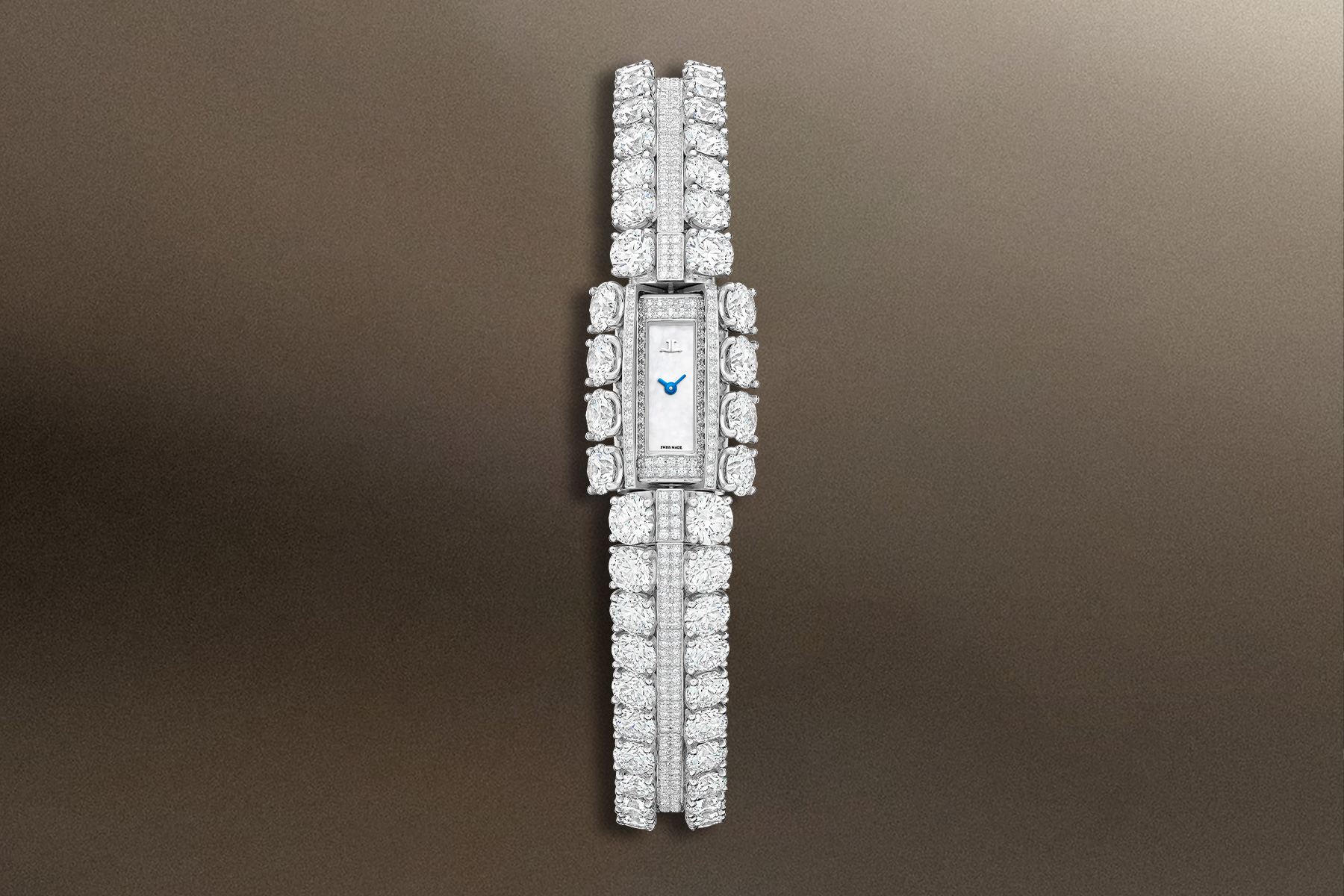
The Calibre 101, which hit the market in 1929, remains the world’s smallest hand-wound mechanical watch movement. Fitted within spectacularly designed cocktail watches, it has adorned wrists for nearly a century — including that of Queen Elizabeth II, who received one as a gift from the French government and wore it at her coronation in 1953. Today, the Calibre 101 is available within the Secrets model, which is shaped like a diamond-set platinum or pink-gold bangle and hinges open to reveal a tiny dial. Fitted with over 1,000 stones, it’s based on similar models that date back to the 1930s, when JLC was already hard at work on some of its finest designs.
Atmos
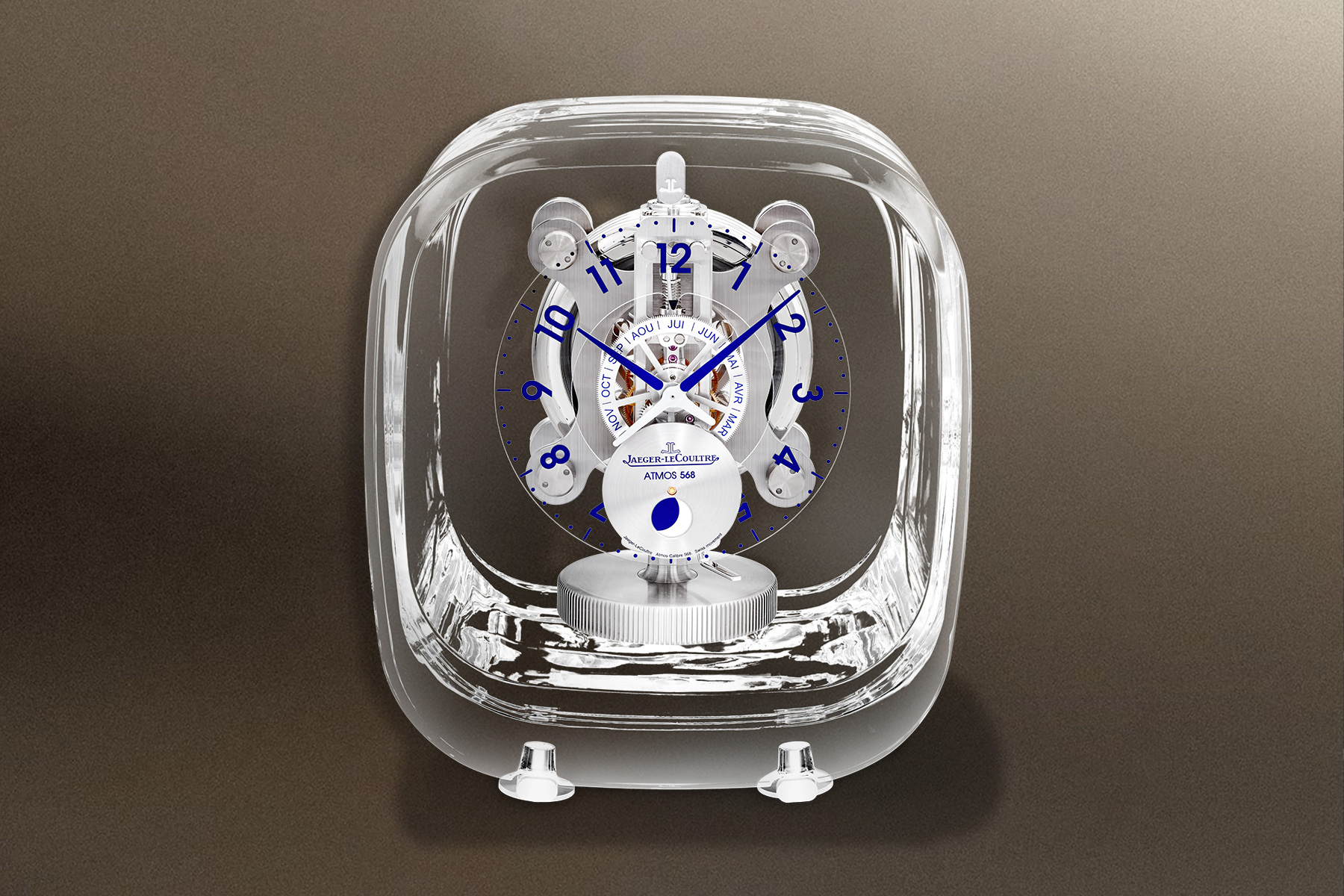
Designed in 1928, the Atmos clock features an ingenious, unconventional mechanism: A sealed capsule containing a special gas mixture expands and contracts as the ambient temperature changes, winding the movement without the need for human intervention. (A change of just one degree is enough to wind the clock for 48 hours.) Part of the JLC catalog for nearly a century, it’s available in numerous guises, from time-only and moonphase versions inspired by classical watchmaking to avant-garde, futurist executions made with renowned designers such as Marc Newson. Inventive and fascinating, the Atmos provides evidence that Jaeger-LeCoultre’s considerable savoir faire spreads far beyond the province of wrist-worn mechanical timekeeping and into the broader realms of design.

More Like This



The world of men’s style, from the streets of NYC to the showrooms of Milan, run down weekly by writer and photographer Christopher Fenimore.