Nota bene: All products in this article are independently selected and vetted by InsideHook editors. If you buy something, we may earn an affiliate commission.
There are a few buzzwords bandied about when discussing summer garb that you’ve certainly heard before, given that you’re reading a 1,000-word analysis of a menswear textile: “breathable,” “lightweight” and, of course, “linen.” The fabric has maintained a place on summer’s sartorial Mount Rushmore for decades alongside madras, seersucker and hemp, championed as it is by Italian nonnos and Brad Pitt alike. (See also: your father in the ’80s…or you in the ’80s?)
For all its history and clout, linen has developed a reputation as a difficult fabric to wear, exacerbated by the fact that technical, sweat-wicking fabrics are now ubiquitous. Linen is inclined to bunching and creasing, demands specific treatment when stained and maintains a unique ability to maybe make you look like a weird old guy who hangs out on the pier in a full sandstone suit.
But we’re not ones to throw in the towel, least of all on the patron textile of sprezzatura. Linen, if purchased, worn and cared for correctly, remains the king of scorching Pitti Uomo mood boards, undefeated in tricking out your summer closet and winning everything from balmy bar crawls to your cousin’s wedding upstate.
Seeing as how nonno may or may not still be with us, we’ve taken it upon ourselves to transcribe the bible of il lino into a digestible handbook. From demystifying the material to detailing the best drying practices to explaining that yes, it really is okay if your linen blazer has a couple of creases, let’s get into it.
What Exactly Is Linen?
Linen has been around for millennia, contradicting the belief that the textile materialized into existence on the back of Alain Delon in Purple Noon. A product of Linum usitatissimum, also known as flax, the textile traces its roots to ancient Egypt.
In contemporary production, Ireland is predominantly cited as the birthplace for the sourcing and weaving practices that denote modern linen. Baird McNutt, a mill founded in 1912, produces linen for brands ranging from J.Crew to Todd Snyder to Buck Mason.
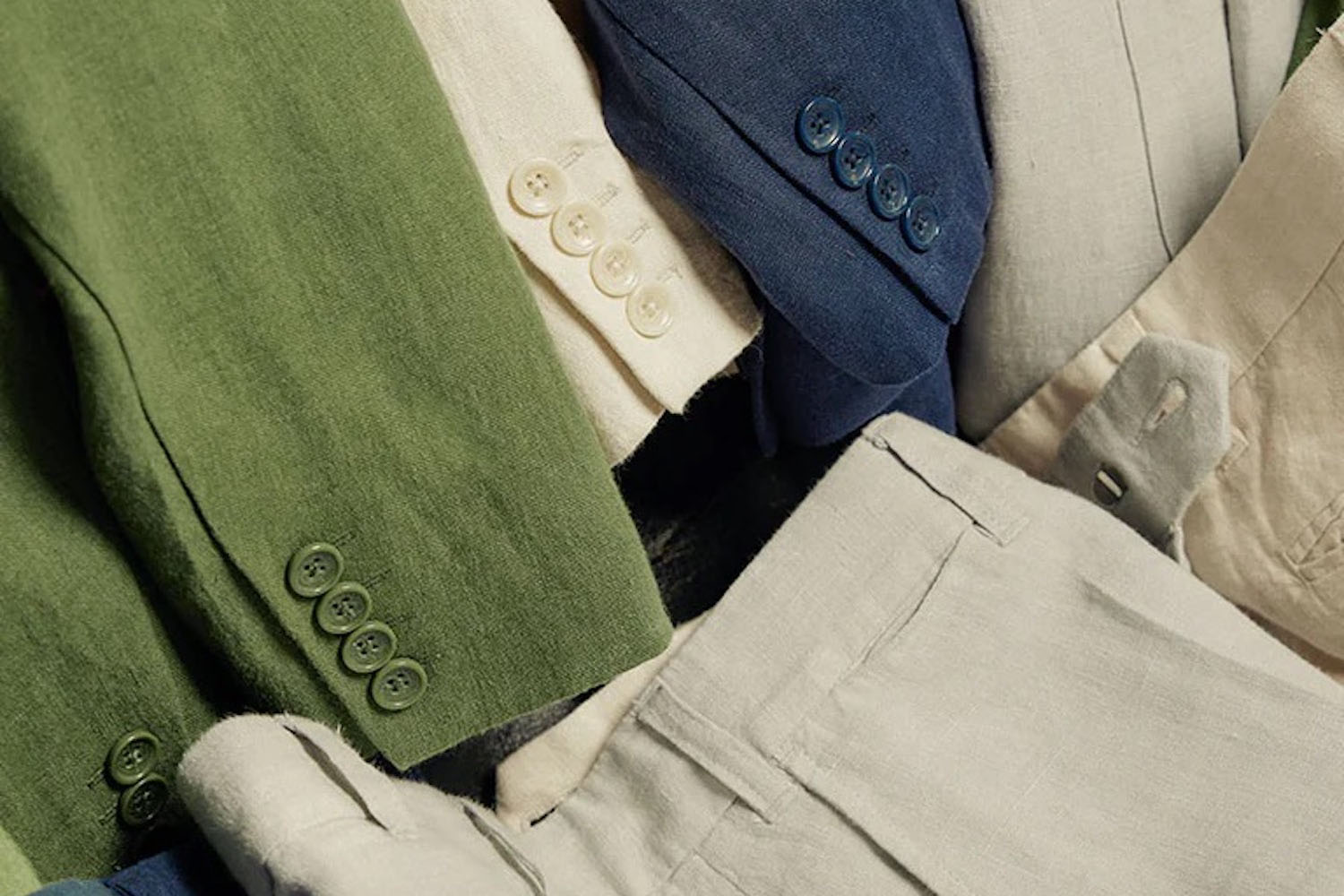
Linen vs. Cotton
Lauded for its natural breathability — anecdotal evidence abounds, please don’t ask us to explain the science — linen’s natural properties make it a natural choice over heavier cotton and wools come summer. If you’re still on team cotton, a few things to note:
- Absorbancy: Linen’s moisture absorbency rate is higher than cotton. And with a thicker fiber and lack of elasticity, linen pulls and draws moisture away from the skin.
- Durability: Another misconception is linen’s fragility. The textile is actually up to 30% stronger than traditional cotton. Thanks to the aforementioned lack of elasticity, linen maintains its shape and structure for years.
What to Wear When It’s Way Too Hot Outside, According to a Style Editor
Foolproof ways to beat the heat and look good doing itA History of Linen in Menswear
Originating as a luxurious alternative to traditional fabrics during the height of the Victorian era, linen worked itself into the tailoring canon via bespoke European houses and eventually American retailers like Brooks Brothers and J.Press, ultimately becoming widely available in the mid-1900s, embraced by high fashion and mall-brand retailers alike as a preferred summertime offering. In modern men’s clothing, the textile is most often available as a blend — a cheaper, more durable option than pure linen — and added to a variety of garments, from sweaters to suits.
Although saddled with a reputation as a dressier fabric, linen often appears in basics like T-shirts and shorts, adding its signature touch of heat-beating class to daily wardrobe staples. Menswear experts, like Tom Saunders of cult sartorialist label John Lewis, indicate that easier-moving linen is the future of summer menswear. “It’s less structured,” Saunders told The Guardian. “The goal is to look smart but to feel comfortable.”
How to Care for Linen
Given its unique properties, linen demands a stricter care practice than a pair of beat-up 501s. (Side note: a linen shirt and beat-up 501s make an excellent combo.) While we suggest you always follow the golden rule of reading the garment care instruction label —like, really reading — there are a few general rules of thumb to abide by.
Washing linen cold, along with being more environmentally friendly, helps avoid any potential shrinkage and fading. Treating with a fiber-safe detergent and softener also helps maintain linen’s integrity. And when in doubt, just take your duds to the dry cleaner.
Legendary designer Eileen Fisher recommends a hang dry rather than a rough tumble dry, which should reduce general rumpling and pinching of the fibers, but her brand does note that even an air dry comes with a stipulation: “Don’t forget to hang your garment in the shade or turn it inside out to prevent fading.” While we recommend you let your linen live (we’ll get to that), if you must remove wrinkles, iron while damp to avoid singeing the fabric.
How to Wear Linen
It’s been said before, but linen should be beat up. We strongly feel that the more wrinkles, creases and life in your clothing, the better, a sentiment echoed by other menswear dudes, too. Also, leaning into the new era of laid-back cuts is essential to nailing the relaxed Talented Mr. Ripley look — that’s what we’re shooting for here, if that wasn’t clear — as much as a Vespa or brunette attached to your hip is.
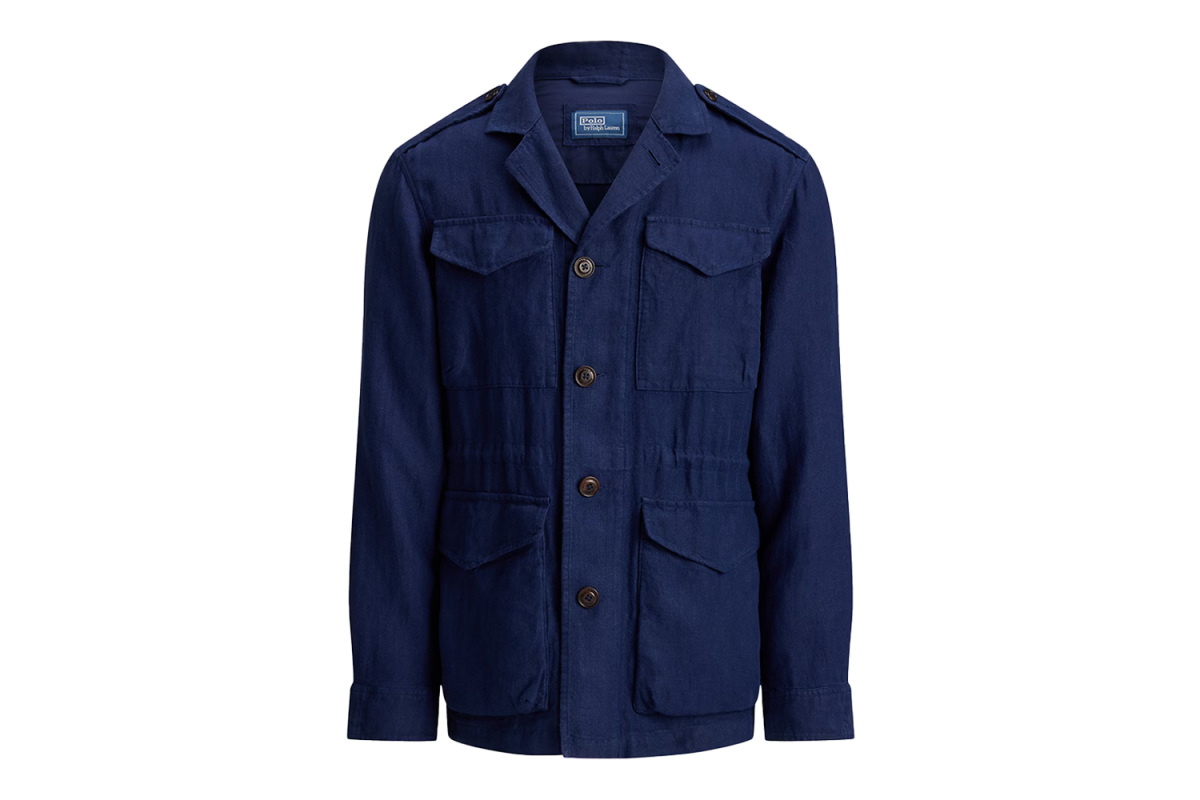
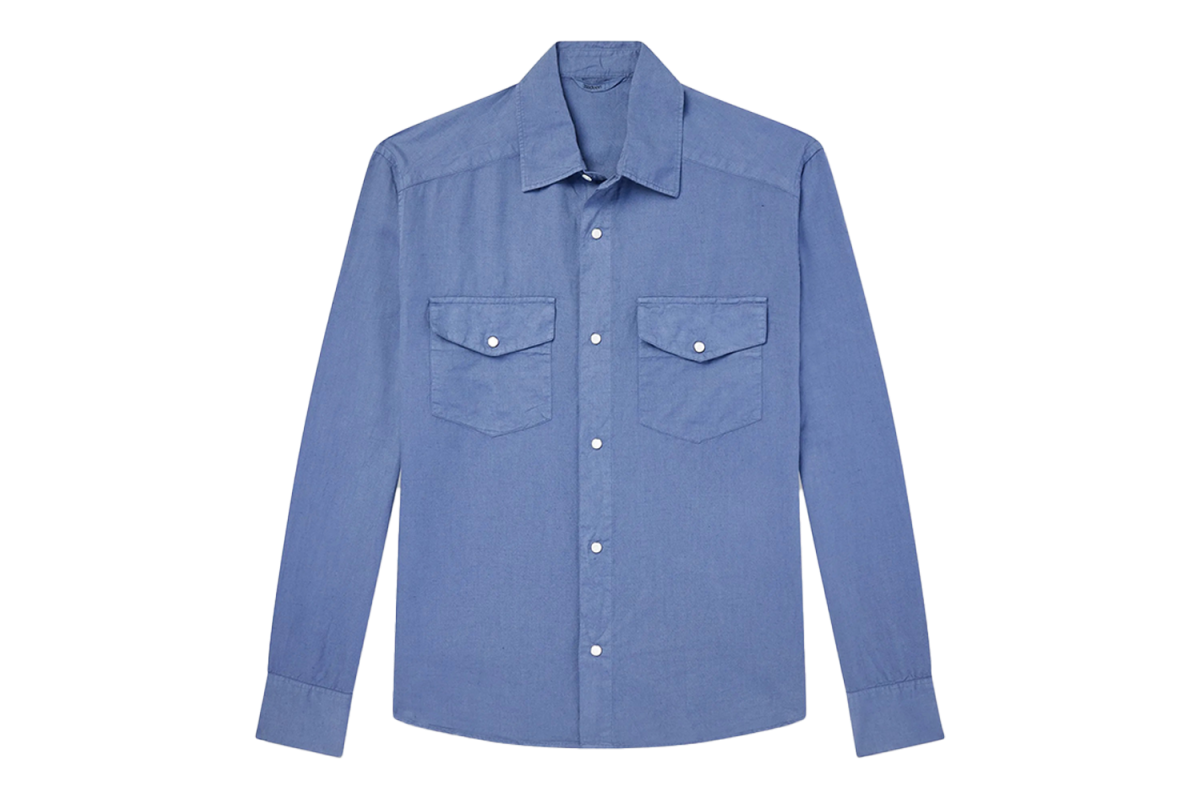
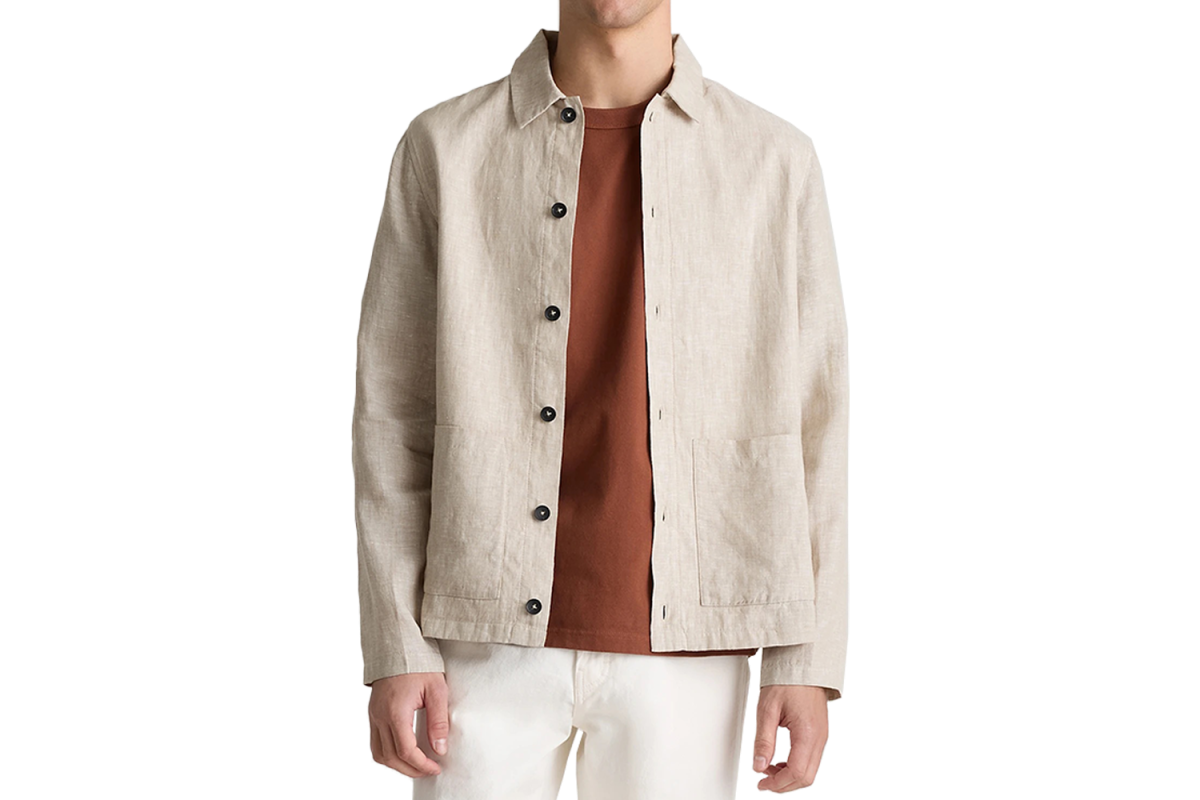
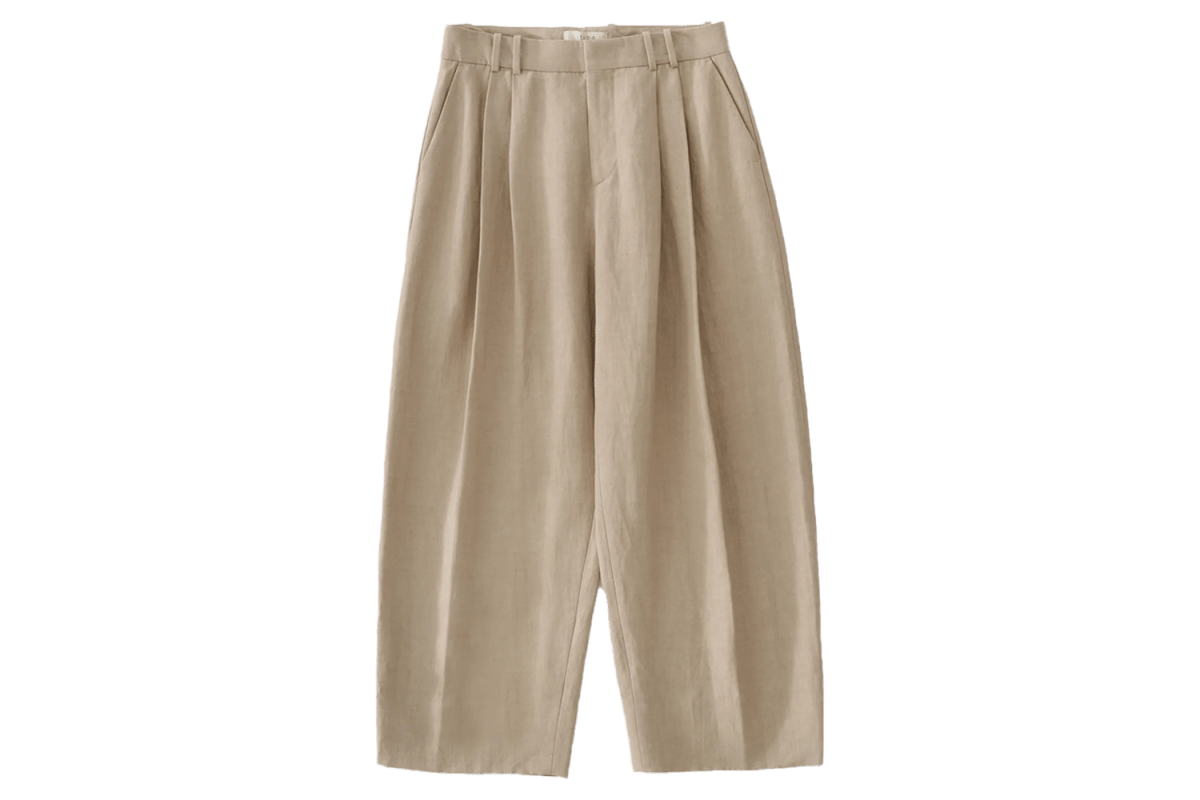
There are many ways to accomplish this. The simplest is by reaching for wider, more relaxed pants or billowy shirts paired with smaller shorts (big pants-little shirt and little shorts-big shirt is the menswear equivalent of the theory of relativity these days). Opting for linen versions of classically sturdier apparel — suiting, or even military-inspired garb — is another efficient option.
Need help finding specific styles? We’ve rounded up some of our favorites below to rock all summer long.