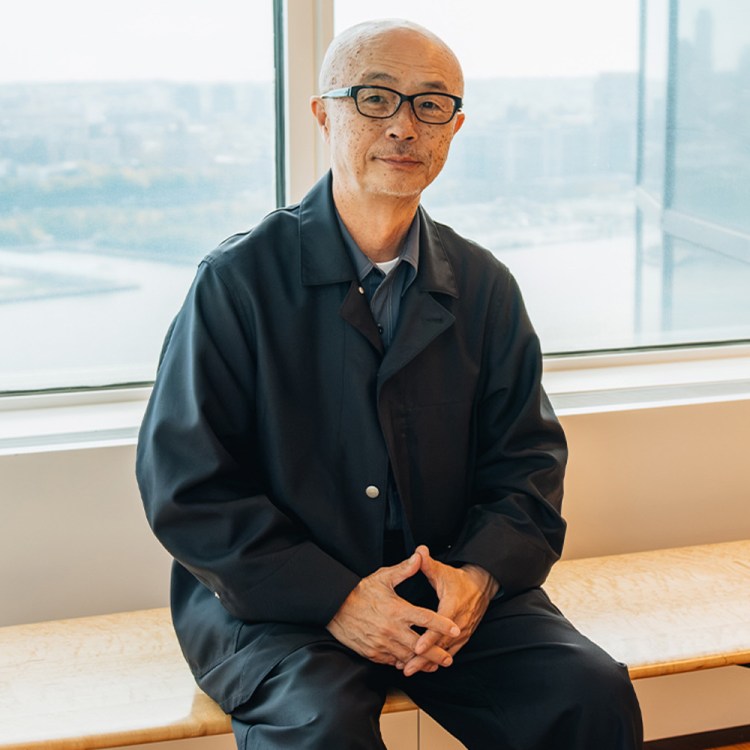
Founded in 2003 by Eiichiro Homma and Takashi Imaki, nanamica is a contemporary Japanese label known for its prowess in adeptly fusing technicality with comfort and sustainability. Homma also leads the design team at The North Face Purple Label, which is — much like nanamica — known for its modern, fashion-forward iterations of The North Face’s legendary silhouettes.
Last month, I was invited to check out the upcoming nanamica spring/summer 2027 collection at the buzzy WSA building down in the Financial District on Water Street. I was told Homma would be there and requested an interview. I’ve long admired The North Face Purple Label — in fact, it is impossible to get outside of Japan. I asked a friend of mine who works for The North Face here in America about securing me some pieces — he laughed in my face. I’ve been a fan of nanamica’s as well. The clothing doesn’t shout for attention. It’s not trendy. The power of the brand lies in its fabric choices and how its silhouettes move with the body. It’s clothing made for living life, not the runway.
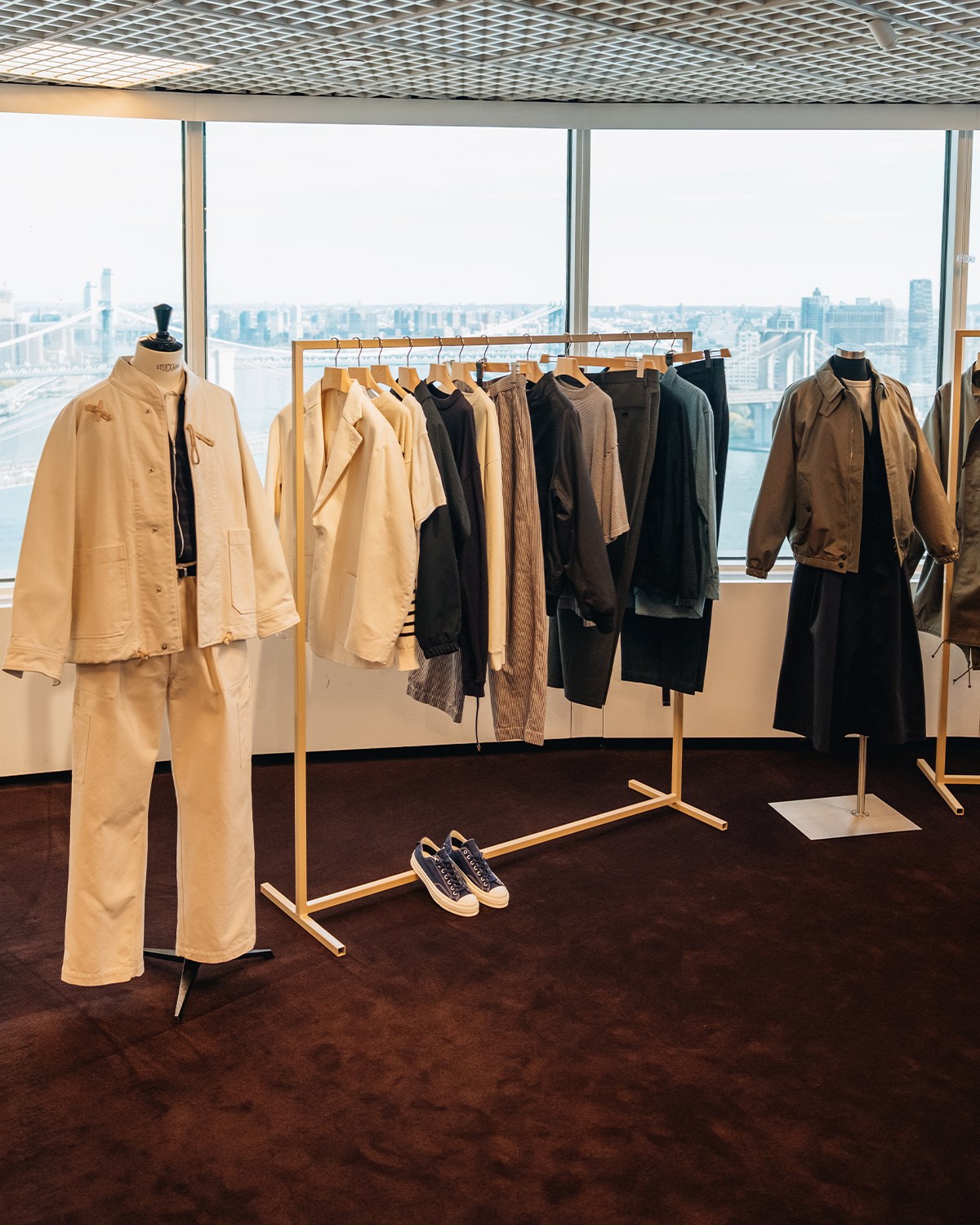
“For spring 2027, we focused on classic tailoring items,” Homma tells me as we browse the racks together. “This is vegan leather. Recycled material. Our first pillar is fashion, second is function, third is sustainability,” he declares as we stand in front of what looks like a leather jacket. “For the past two to three years, we shifted from regular fabrics to more sustainable fabrics, recycled and organic [for example]. Maybe 90% of the total choice of our fabrics right now are sustainable.”
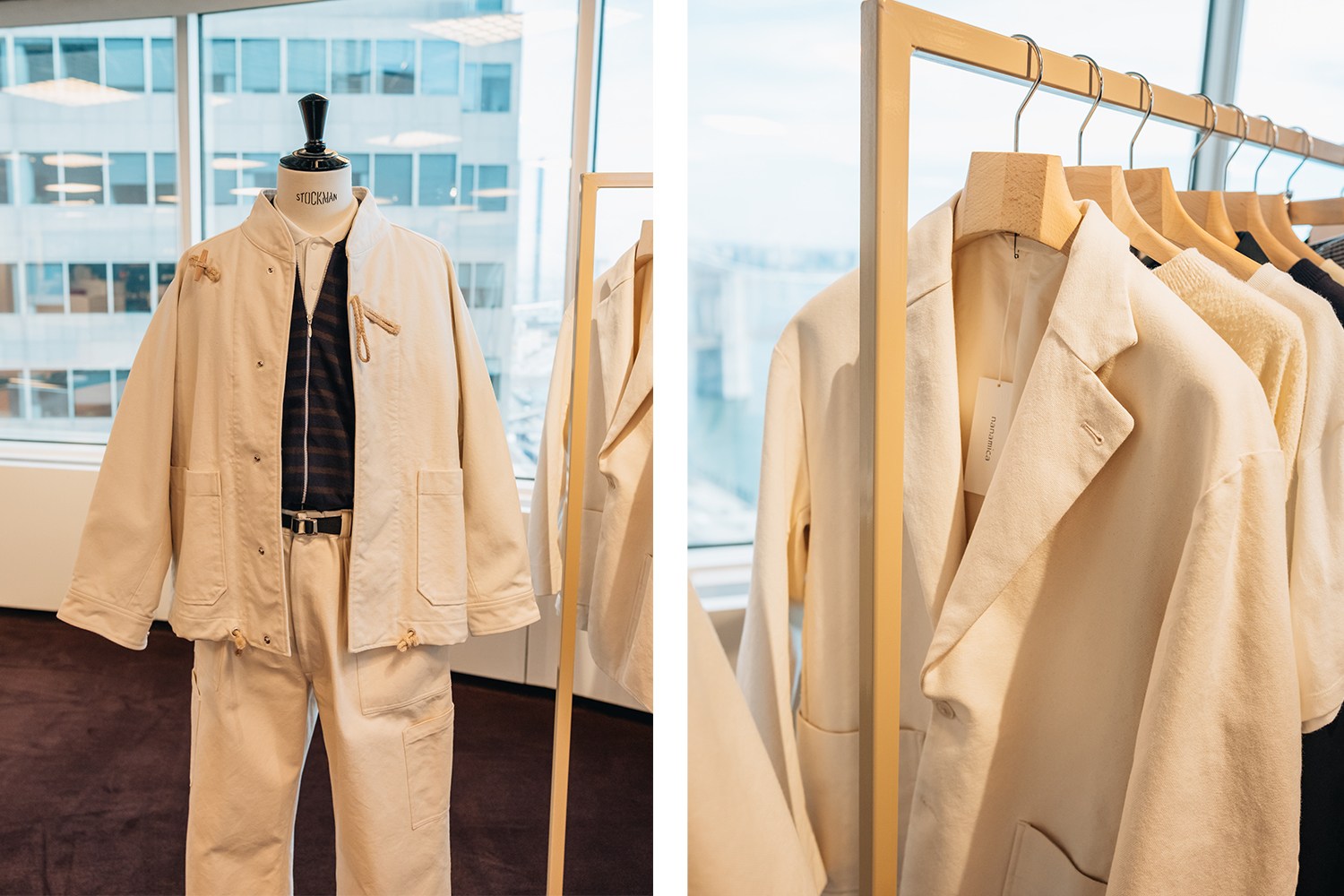
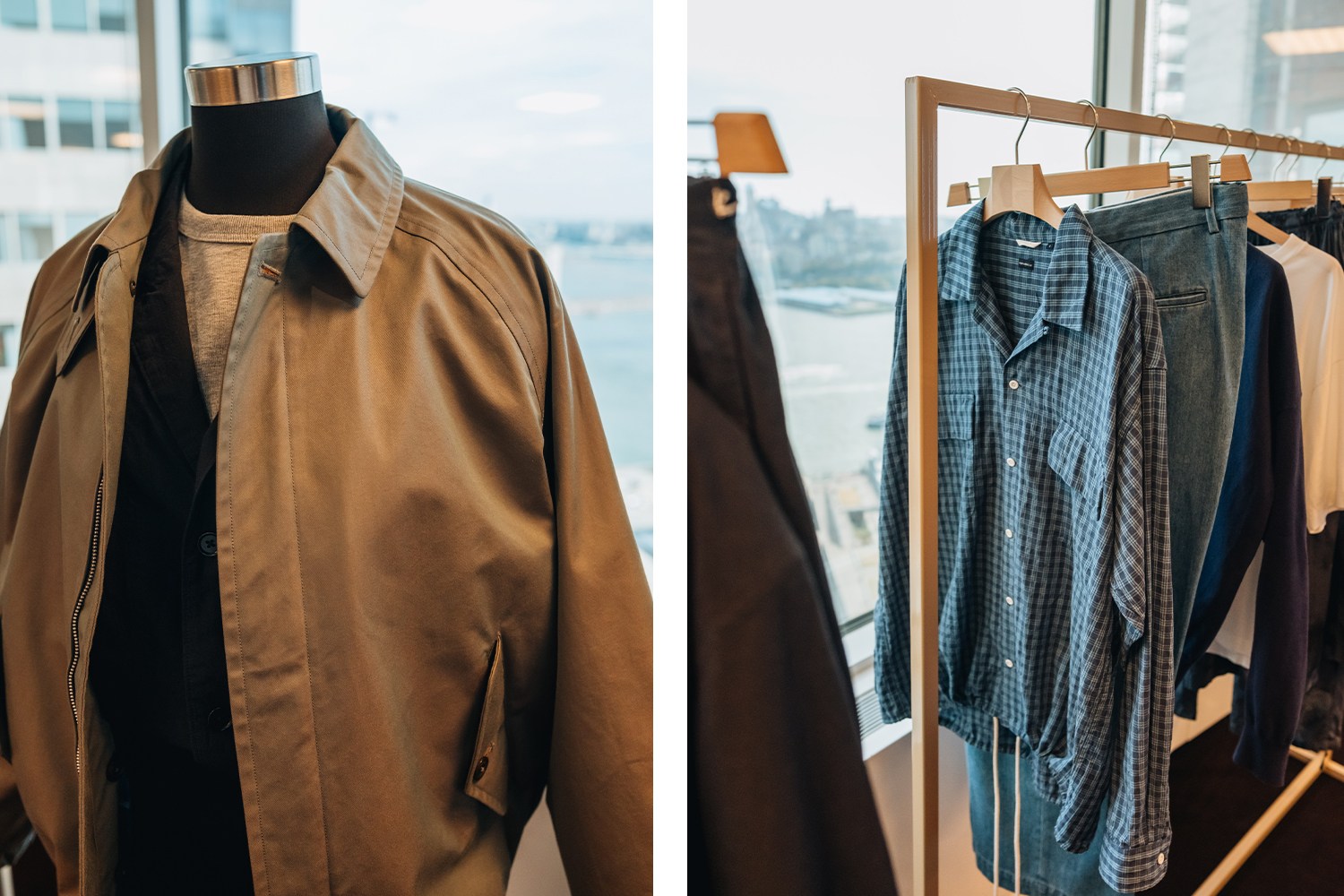
Walking through the rest of the collection, Homma stops at different pieces to tell me more about each fabric. “This is 100% cotton Gore-Tex. This is exclusive for us. These fabrics are yarn-dyed, so you can see the color effect of two yarns,” he says proudly in front of a bomber that is easily my favorite piece in the collection. Toward the end of the rack, a bunch of pieces are emblazoned with the acronym, “OOAA,” which Homma tells me stands for “one ocean all around.” He considers it the line’s tagline. These garments are part of the activewear efforts, for training “or for the weekend,” he says, highlighting how modern life has pushed people to wear activewear… well, everywhere.
Below, I talked with Homma about his career history, how the brand develops proprietary fabrics, the impact his childhood had on his sense of fashion and plenty more.
Checking in With Kentaro Nakagomi, The Armoury’s New Creative Director
The always elegant and forward-thinking menswear head behind Japan’s Cohérence talks film inspo, fabrics and an openness to culture beyond fashionChristopher Fenimore: Tell me a bit about yourself before your career. Just anything that you find relevant about upbringing, background, schooling.
Eiichiro Homma: I joined this industry 44 years ago. Right after university, I joined Goldwin, a technical sportswear company in Japan and current trademark holder of The North Face. I spent 18 years as a designer from 1982, mainly for Helly Hansen marine wear. I became director of the brand and its designers. After those experiences at Goldwin, I decided to [leave] and spent two years preparing. In 2003, I started nanamica. The concept was a high-level mix of function and fashion because at that time, sportswear was designed for a particular purpose like climbing, running and baseball, and all the design solutions had to be very logical and rational for [agility] or protection. That’s why if each brand has high-level computers, the design will be the same, like a Formula 1 car. But somebody prefers a more classic style, while somebody prefers more modern style, and somebody [else] prefers more [fashion-y] designs. That’s why I decided to make classic sportswear refined and updated with a modern silhouette. Technology for comfort. So, it looks classic, but the reality is it must be a high-end material for comfort and for mixed uses.
Has the brand changed much since you started it? It’s been, what, 23 years?
Yeah, 23. At that time, there was no such brand on the market. We were recognized as the pioneer for those kinds of solutions. Since Goldwin is still shareholders, they invest money in me. That’s why we [had access to] proprietary information over fabric development. Fabric mills have close relationships with high-volume brands like The North Face, Arc’teryx or Patagonia. Those brands have priority from fabric mills for testing and marketing up to one or two years prior to other brands. That’s why even when we were very small in the beginning, we had an advantage to, for instance, develop cotton Gore-Tex as well. It didn’t exist. Only nylon polyester. But, we did it in Japan in 100% cotton. Sometimes we had linen Gore-Tex as well.
There’s a growing movement in a smaller sect of menswear — so it’s not the whole market — but they’re obsessed right now with organic fibers or just wearing cotton or just wearing wool. The collection has a lot of blends in it. It has a lot of nylon polyester. Aside from utility, what would be your argument for using those sorts of fabrics?
Before, we had to choose function or fashion. But technology made it [so we can have both]. That’s why [our clothes] look classic but are very comfortable. For instance, if there wasn’t any kind of stretch fabric, we would be without any freedom of movement. But today, it looks like a classic fabric, but it has a stretch. That’s why it’s easy to move. The key point is we don’t want to compromise in terms of fashion and function and sustainability as well. That’s the three pillars to try to mix together on a higher level.
We talked offline before about you wearing your own brand and not any other contemporary ones. Why is that?
For testing. Because reality is sometimes different from simulations. Today, AI and technology gives us a lot of information without any testing. However, reality is sometimes different. I try to wear [something for] one season before [moving forward] with a choice of fabric.
What are some things that you like to do when you’re not working?
I have a boat and I enjoy sailing. When I was young, I enjoyed surfing in the summer and skiing in the winter. But as I mentioned, I was in charge for Helly Hansen in Japan for about 18 years and during those times, I started to have an interest in sailing. Those experiences input inspirations into the collections. Since nanamica means “house of seven seas,” this is also inspired by the loveliness of the sea. My co-founder, Takashi [Imaki], also loves the sea, and he’s living on the seaside. He spends one hour and a half commuting when he comes to the office.
Where do you live?
I’m living in Tokyo.
Where are you from?
I was born in Akita, which is the northwest side of the mainland of Japan. But when I was five years old, my family moved to Tokyo [where I have lived since].
Did you ever want to move?
I enjoy the convenience of the city life, particularly for Monday to Friday. But I don’t want to work in my house. That’s why I always come to the office.
Was there a first moment that you became interested in clothing or style, or when you realized clothing can be transformative?
My consideration and priority is always the human being itself. That’s why products should support [one’s] life. So, my interest is always how we can support and create a better life. That’s why fashion is one of my interests. I’m not an architect or an interior designer but I have an interest in houses. When I take trips, even for business, I try to visit my friend’s houses or I try to find the differences between Japanese, American and European homes.
But was there a first moment that sparked your interest in clothes?
My birthday is in March and the Japanese school year starts April 1st or the end of March. When I was in primary school, [all of] my friends were older than me, which is why I wanted to have a more mature look. I had an elder sister and I’d look at her friends, who were maybe two years older than my friends. I started to have an interest in fashion when I was six or seven years old.
What do you think about style in New York versus style in Tokyo?
Style in Japan is a little [fashion-forward] right now.
As in too weird, too contemporary?
No. Maybe they’re [too informed, paying too much attention to fashion]. Maybe they check [what’s trendy] rather than [their own individuality]. New York is a little more personal. In Italy, Korea, China, everybody looks the same. Everybody follows [trends]. Japan is moving toward a more individual [direction], but New Yorkers, Londoners and the French are more individual.

More Like This

This article appeared in an InsideHook newsletter. Sign up for free to get more on travel, wellness, style, drinking, and culture..