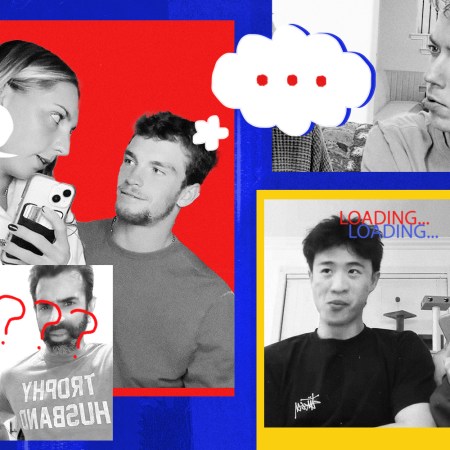
In a 2021 article for Vox, Rebecca Jennings explored a particular corner of social media: TikTok users who were using the social media platform to learn more about mental health. Jennings’s article focused on people using TikTok gain a more in-depth knowledge of ADHD. “Arguably no part of mental health TikTok is as omnipresent or as fraught as ADHD TikTok,” Jennings wrote — and addressed one of the biggest challenges that arose from its prominence, namely: at what point does getting advice from an app overtake getting actual medical advice?
In the four-plus years since Jennings’s article was first published, the issues described in it have become even more pronounced. A recent investigation from a team of journalists at The Washington Post — Jeremy B. Merrill, Tatum Hunter, Joe Fox and Leslie Shapiro — explored both the pros and cons of mental health TikTok and why it can be so difficult for some users to stop seeing mental health-related videos on the platform.
What the Post‘s team learned is that the TikTok algorithm appears to handle different topics differently. Showing a lack of interest in certain subjects might not be enough to remove them from your feed as quickly as certain others. The word the authors use is “stickier” — and subjects like mental health and skincare have a higher level of stickiness than politics or Taylor Swift.
Why is this an issue? For starters, there’s the fact that not all mental health-related videos on TikTok are equally useful. The authors cite a 2022 study of TikTok videos about ADHD, which found that more than half (specifically, 52%) could be classified as “misleading.” Of the remaining videos, 21% were considered “useful” and 27% were considered “personal experience.”

Younger Generations Are Romanticizing the “Millennial Optimism Era” on TikTok
Raise your mustache-tattooed hand if you want to go back to the early 2010sIt’s worth pointing out that TikTok took issue with the Post‘s reporting and told the newspaper that the article does not “reflect the reality of how our recommendation system works.” Given that recommendation algorithms are proprietary technology, though, it’s also unlikely that TikTok is going to share too many details of how it does work — making investigations like this one of the few alternatives out there. Shaking off certain topics you might not want to see in your feed any more does sound like it’s possible — but some will require more work than others.

More Like This



Twice a week, you'll find guinea pig features, personal essays and expert interviews on living better — for however long you’re here. Subscribe to Champ now.