Nota bene: All products in this article are independently selected and vetted by InsideHook editors. If you buy something, we may earn an affiliate commission.
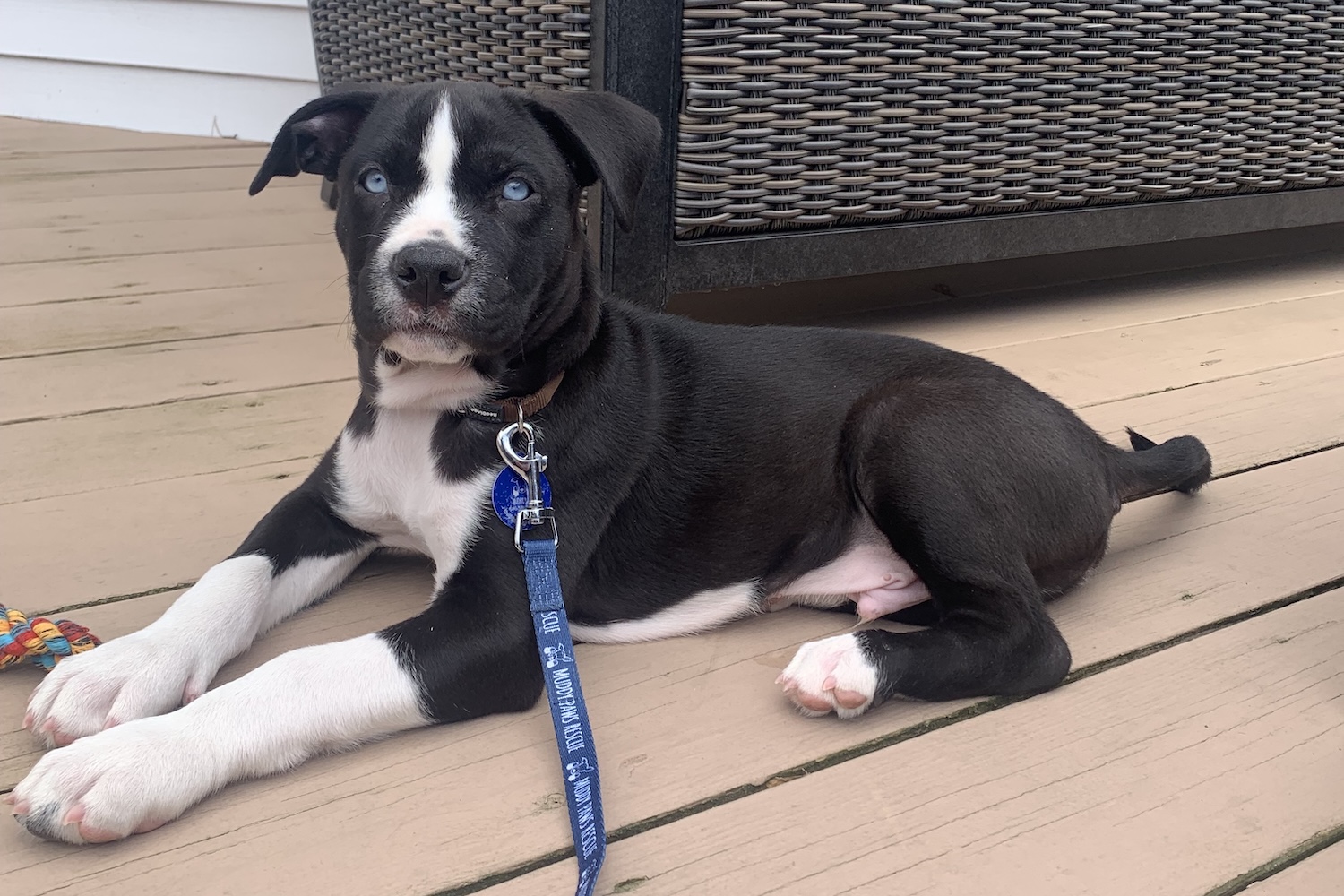
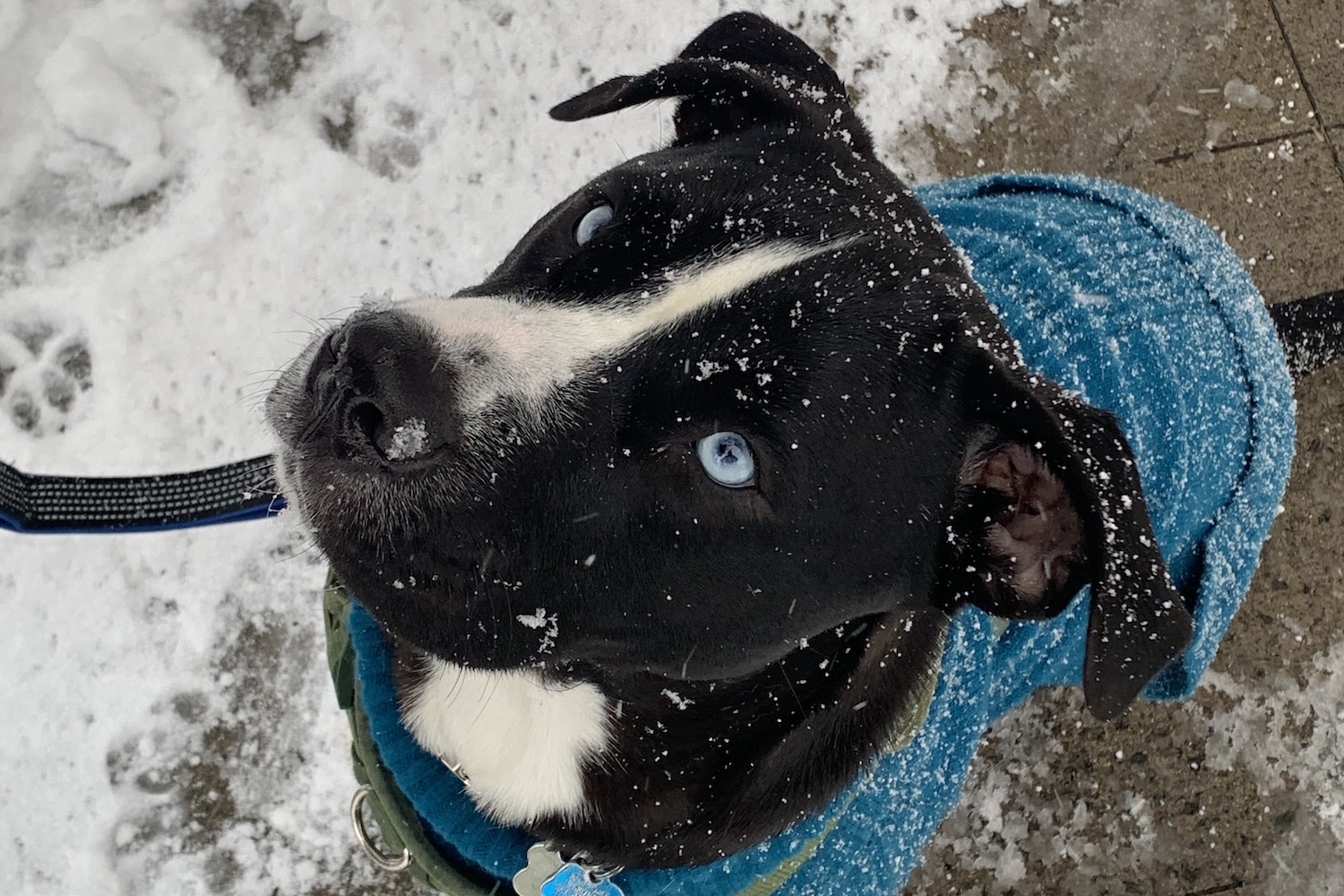
Nearly a year ago, my partner and I rescued a very small nine-week-old puppy from a local animal shelter. Our dog Jumper was born in the shelter after his pregnant mom was rescued from a police raid in a basement in Queens, and we knew nothing more than that about his background.
We knew that he had bright blue eyes and five other puppy siblings and might grow to be as big as 80 pounds (we were really hoping he was closer to the lower range of the scale that had been projected to us, but alas). But for a long time, his breed mix was a mystery.
So we turned to two trusted, reputable tests to see what else we could find out. We chose to use Embark and Wisdom Panel, two tests that claim to have 99% accuracy. While testing Jumper’s DNA to see what mix of dog breeds he is, we found out other information through both tests, like his relatives, behavioral traits and genetic predispositions. I even connected via messages with his dad’s owners, who Jumper never had the chance to meet.
Guessing Jumper’s breeds was always a fun game. Our vets were certain he was some kind of pitbull mix, but they had a few other guesses, like mastiff and Great Dane because of how large his paws were compared to the rest of his body. (Even now, in his one-year-old body, his paws are still large compared to the rest of him). We also suspected husky considering how light blue his eyes are. In taking these tests, we learned a lot about Jumper — probably way more than we even expected to.
How Do You Collect the DNA?
Both tests use similar mechanisms for collecting DNA samples: rolling a swab around in the dog’s mouth, particularly in between their gums, tongue and lips. The swab is essentially a long cotton swab. The trick is to really just get a bunch of spit on it.
Neither of the directions for either test are overly complicated by any means. They’re actually quite similar. Embark provides a swab, and you have to run it along the inner cheeks and tongue for 30-60 seconds, place it in a test tube and shake it 10 times. Then the test gets sent back to the lab via mail (both brands give you a return envelope to send it out in). For the Wisdom Panel test, you have to rotate a similar swab for 15 seconds between the cheeks and gums, repeat the process with a second swab and let it dry for five to 15 minutes to prevent molding before mailing it back.
If your dog is anything like mine — alert at all times, cautious of anything that doesn’t immediately look like food going into his mouth, difficult with handling — you might be worried about how they’ll do with this. Getting my dog comfortable with a toothbrush took far longer than I wish it had, so I figured he would be just as stubborn with this.
I did, however, discover a trick that made the collection process longer but move along far smoother: You can’t put any food on it as that could mess up the test, but the swabs don’t need to be done in consecutive seconds. I could do a quick five-second swab, take a break, do another five seconds, take a break, and after the course of spacing each test out over several days, the tests were all finished.
If for some reason you can’t mail it out right away, that also doesn’t seem to impact the test process. I went two weeks before mailing the swabs out due to being out of town and still received very comprehensive results.
When Do You Get Results?
Embark ensured tests results in two to four weeks, and Wisdom Panel ensured tests results in two to three weeks once the swabs were sent.
When it came to tracking my Embark test’s journey, I received confirmation that my swab was on the way to the lab within a few days after it was sent. About a week later, I received an email confirming the swab arrived at the lab. Six days later, the test was getting processed.
Six days later, I received an email that Jumper’s results were almost ready, and later that same day, they were. The entire process took about 20 days total, and the communication was pretty thorough from the moment the package was sent until the day the results came in.
With the Wisdom Panel test, I received a confirmation email that the DNA sample arrived at their lab a few days after sending the test back. I received another when the results were ready, about 13 days later. It took one less week compared to Embark, but both test results were delivered within the promised time frame.
The Wisdom Panel Results
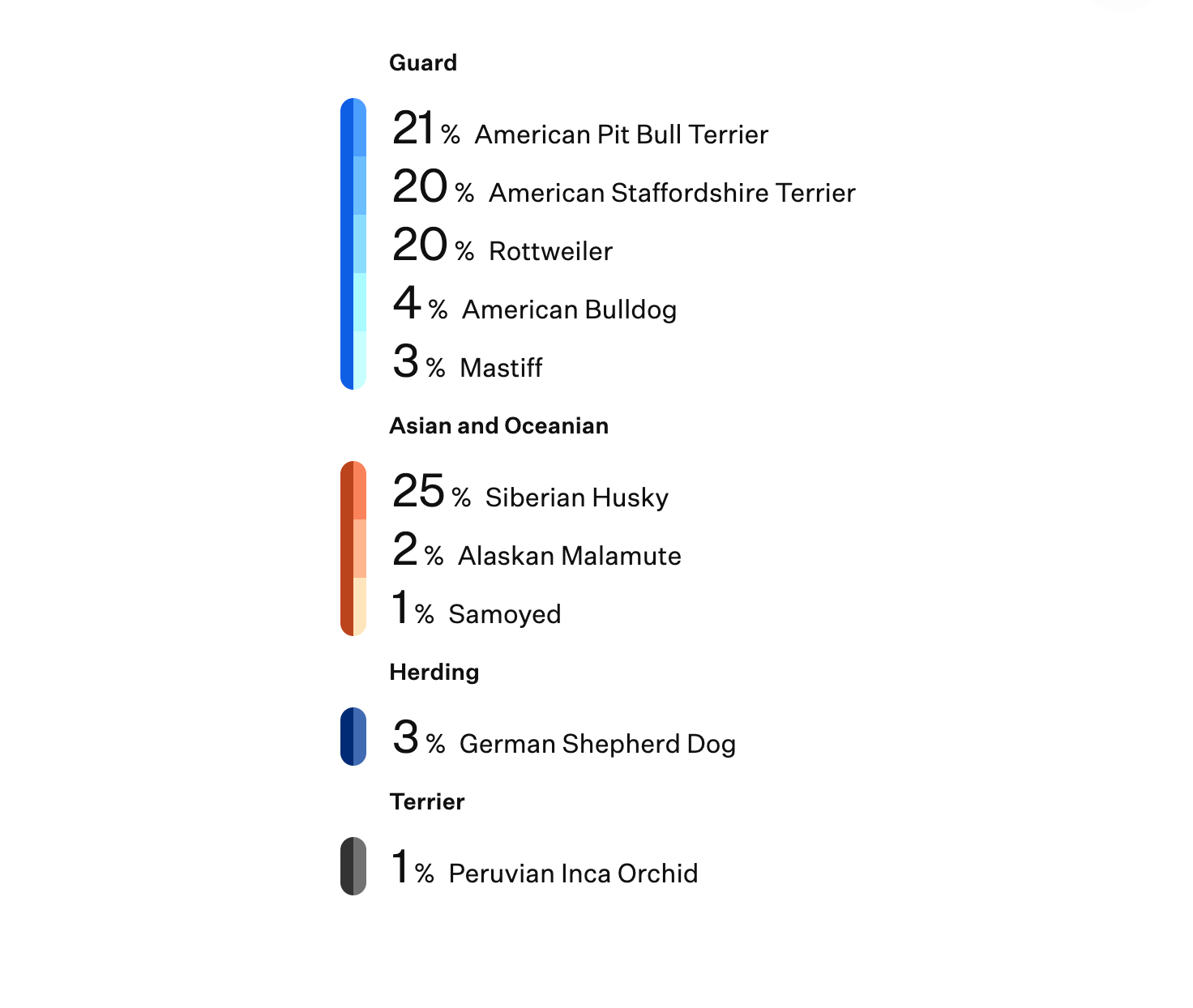
When you log onto the Wisdom Panel website, you’re provided several different sections of information: ancestry, relatives, health and traits and behaviors. Ancestry, the first section, breaks down the breed makeups the test detected. Jumper, according to Wisdom Panel, has DNA from 10 different breeds, and the test showed us all the percentages — all the way down to the single 1% Samoyed and Peruvian Inca Orchid that he apparently is. We found that Jumper is mostly Siberian husky, American pit bull terrier, American Staffordshire terrier and Rottweiler.
Wisdom Panel also clusters each breed into its respective group, which helped us learn even more about Jumper and his temperament. Five of his breeds are guard breeds, and there was no surprise there; he always needs to deeply observe any situation in front of him at all times. Three of his breeds are Asian and Oceanian, and he has one herding and one terrier breed.
His Relatives
In this section, there’s also a breed explorer option, where you can read more about each respective breed that your dog is made up of, including traits, temperament, history of the breed and general care. It offers a fleshed-out potential family tree going all the way back to his great-grandparents, breaking down their possible genetic composition, as well as his parents’ genetic code. It also connected us with several of Jumper’s relatives with an option to email them: two of his brothers (we knew he was in a liter of roughly six other dogs) and 19 combined “extended” and “distant” family members, which are categorized based on a number of variables like comparing genomes and their date of birth.
Other Wisdom Panel Features
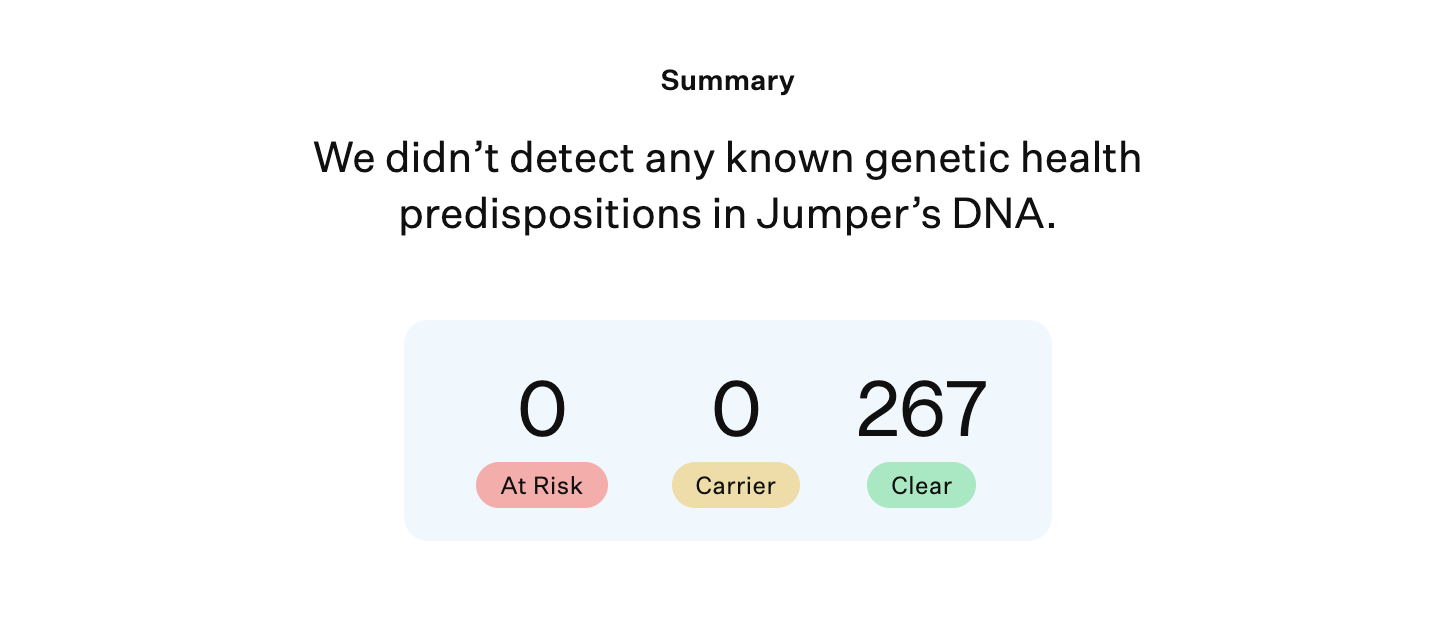
Wisdom Panel also tests if your dog has genetic health predispositions and provides an in-depth report on any if they are detected. He didn’t test positive for any “at risk” or “carrier” conditions, being cleared from 267 total. Wisdom Panel provided a list of conditions that are more common with the breeds in Jumper’s breed composition, and it gives you the option to learn more about the various illnesses and diseases, including how commonly it occurs in dogs and key signs to look out for and the average age of onset.
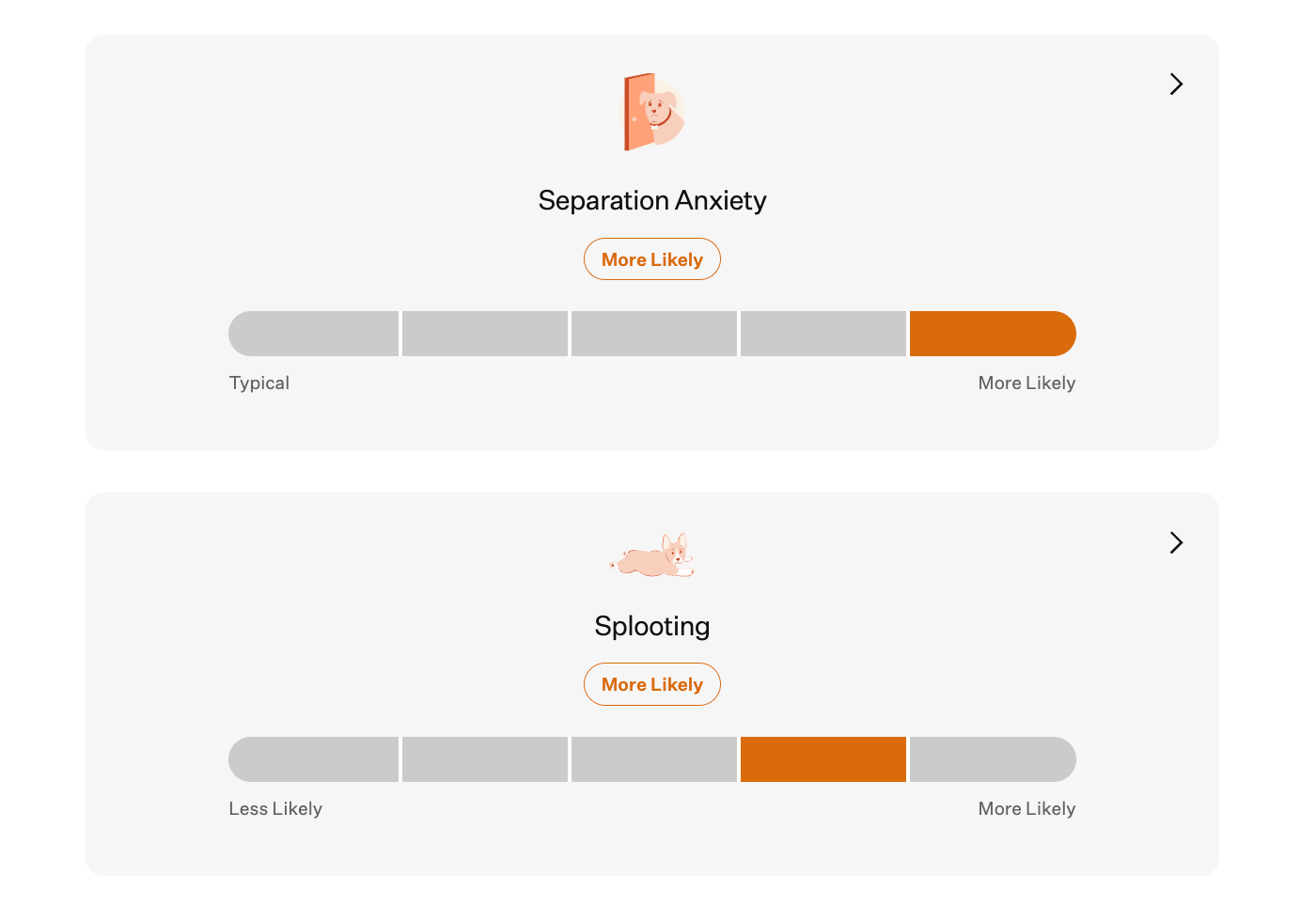
In the test I had, Jumper’s DNA went through 58 genetic trait tests to determine physical and behavioral traits — from coat color variants, patterns and shedding probability to other characteristics. The behavioral trait test showed us how likely Jumper was to have specific personality traits, including having separation anxiety and motion sickness. The traits he tested “most likely” for were all traits that are very prominent in his behavior: generalized anxiety, propensity for weight gain, crossing his paws, separation anxiety and “splooting,” which is when a dog lies on their stomach and has their legs stretched out behind them.
This test has a lot of pros. The information provided about your dog is very thorough and simplified, and for as many detailed genetic, behavioral and health characteristics that there are to learn about, it’s quite easy to navigate the interface and digest all the details. One of my favorite features is how specific the test results are when it comes to your dog’s health and history, providing thoroughness that’s as specific as a few breeds your dog may only have 1% of, which I really enjoyed learning about.
It does overall have a lot in common with Embark — but there’s a few key differences.
The Embark Results
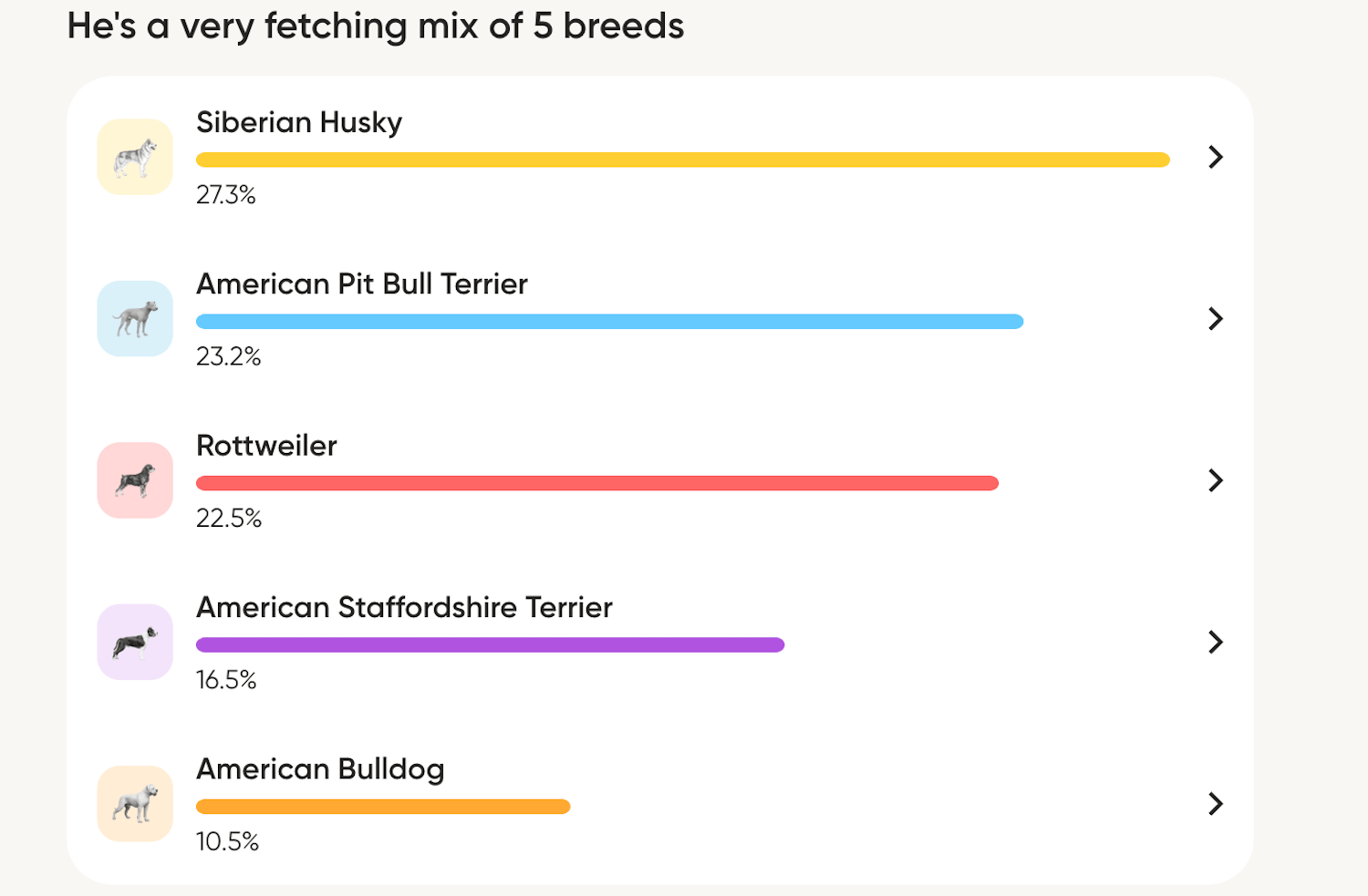
The Embark test features two main sections: an “About” section and a “Relatives” section. Embark showed that Jumper was only a mix of five breeds, but gave precise percentages down to the decimal point. His top five breeds were ultimately the same across both platforms: Siberian husky, American pit bull terrier, Rottweiler, American Staffordshire terrier and American bulldog. It was displayed in a Spotify Wrapped fashion, with a visual several-part replay “revealing” each dog breed with detailed facts about each breed. I truly loved the rollout process for this. There’s also a “guess the breed” game, where you can guess all the breeds in your dog’s makeup.
His Relatives
Embark is where I found the majority of Jumper’s other relatives, including three of Jumper’s other siblings and his mom. I had already been in contact with two of Jumper’s siblings since the day we got him from his shelter — one of the siblings on Embark and one on Wisdom Panel, so it was exciting to see where the rest of his siblings went and what they all looked like now. Like with Wisdom Panel, this section shows the other dog’s profile and provides a percentage of shared DNA and breed similarities and shared extended family profiles as well.
A few months after my test results came in, I received a message from someone who had recently rescued Jumper’s dad, which was really cool. His owner was able to message me directly, and I learned a lot more about the situation his parents had been in before he was born. Now some of the owners who are local to our area are hoping to plan a meet-up soon. This really all feels a lot like Ancestry but for dogs.
Embark Traits
Under the “About” section are several other sections of information, including a personality test and a health, traits, allergy risks and age and lifestage test. The personality test asked eight different questions, and it calculated how much of Jumper’s personality is most influenced by his breed makeup.
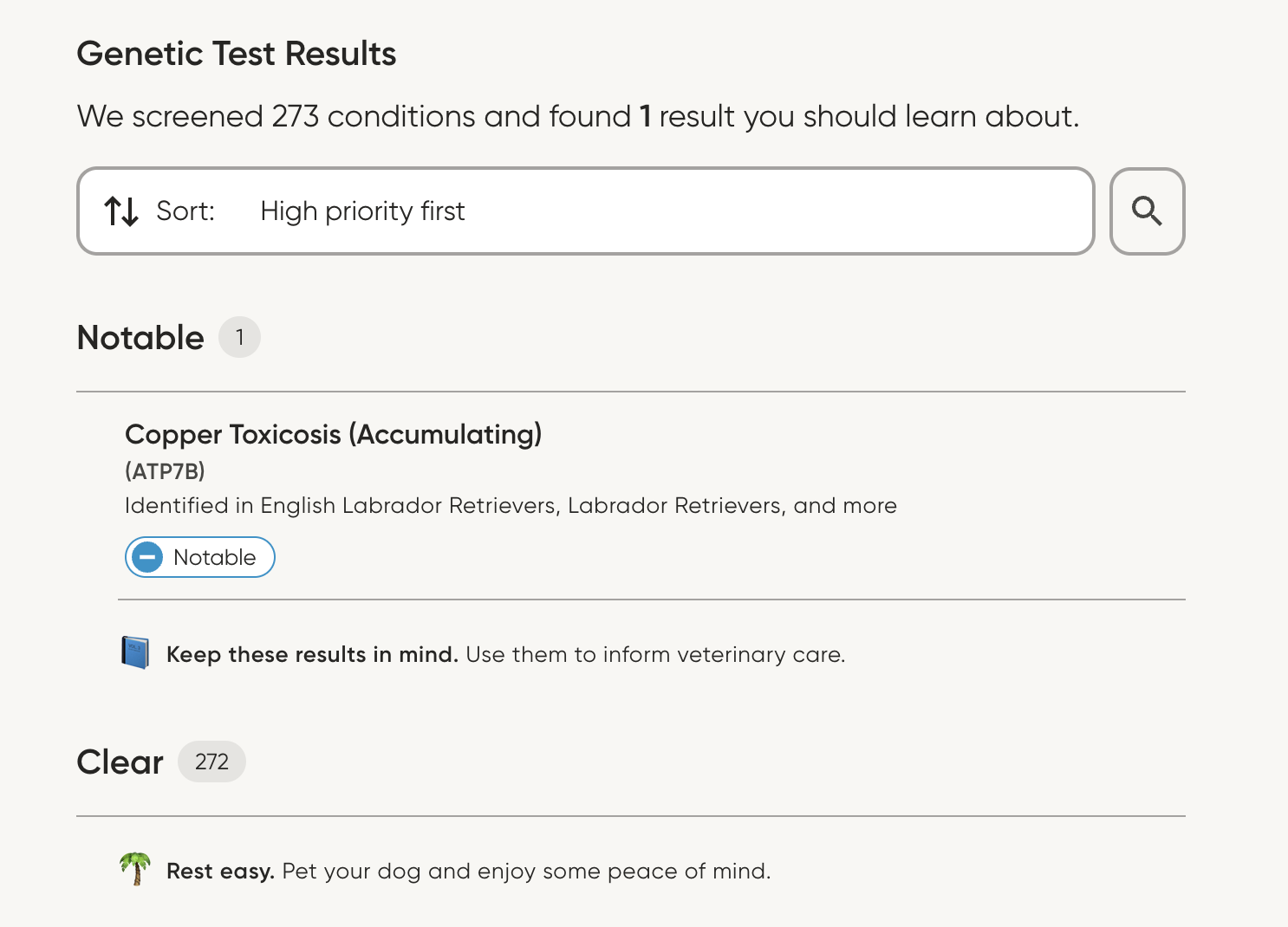
Similarly to the Wisdom Panel test, Embark screened Jumper for 273 health conditions, and he tested positive for two potential conditions and diseases (though both were low risks). This section also gives you a Coefficient of Inbreeding (COI) score to determine how closely related Jumper’s parents are and the option to directly share these results with your veterinarian.
The “Traits” section features information on the genetics behind your dog’s appearance and size, including everything from coat pigmentation and patterns, lengths of body features like muzzle and eye color, and physical performance traits.
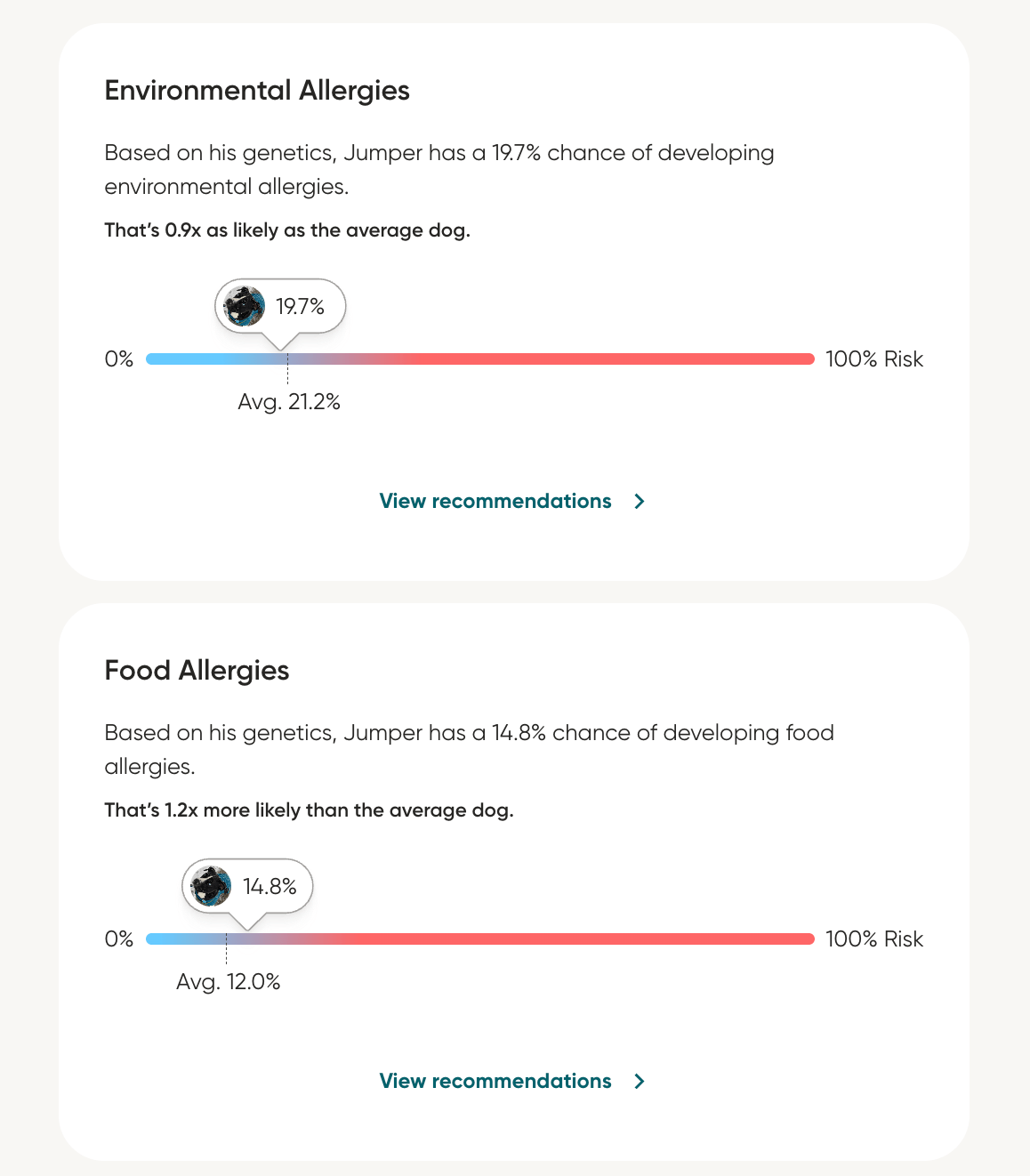
One of the sections I found most helpful in this test specifically was the allergy risk score. In the first few months of having Jumper, we quickly learned he was prone to both seasonal and food allergies. Embark provided test results for four different allergy types, ranking them from highest to lowest: environmental, food, contact and flea allergies. According to the test, Jumper had a 20% and 15% chance of developing environmental and food allergies, respectively, testing right around that of the average dog — though food was slightly higher. Embark also provides recommendations for each allergy type, like learning more about triggers and products that can help.
Embark also provides you with a “wolfiness score” marker, which is a test that “is not a measure of recent dog-wolf hybridization and does not necessarily indicate that [a dog] has some recent wolf ancestors,” according to the company. It’s “based on the number of ancient genetic variants” included in their unique wolfiness marker panel. Jumper scored a 0.9%, which is a medium score — most dogs have scores under 1%, but results can go up to between 5%-10%.
Embark also has an entire “Care” section where you can take a different survey and get advice on the best ways to care for your dog, including activity, nutrition and grooming tips. This is definitely helpful if your dog is a puppy and you’re just starting out.
Is there a winner?
I found that there are many similarities between Wisdom Panel and Embark. While they each have a few minor differences, the main piece of information you’re likely looking for is pretty much the same. I didn’t have a drastically different experience looking at one list of Jumper’s breeds compared to another. My dog is also not your dog, so your experience could certainly be far different than mine. Ultimately, I’d say which test is “better” depends on what you’re looking for.
It’s worth noting that in some tests, Embark will include “Supermutt” as a breed option, which is when “the genetic contributions from some breeds are just too small to detect and recognize as any one particular breed.” This isn’t necessarily a bad or good thing. Embark claims this way of testing is “more accurate than guessing at your dog’s breed ancestry,” and users claim that the “rule of thumb” is to assume anything lower than 5% is merely a guess. That being said, if you suspect your dog may only be a small mix of breeds, there’s an argument that Wisdom Panel is the stronger test option. If there’s suspicion of a stronger mix of breeds, Embark could be the better test.
My colleague Elisabeth actually received quite different results from both Wisdom Panel and Embark for her dog, Sponge.
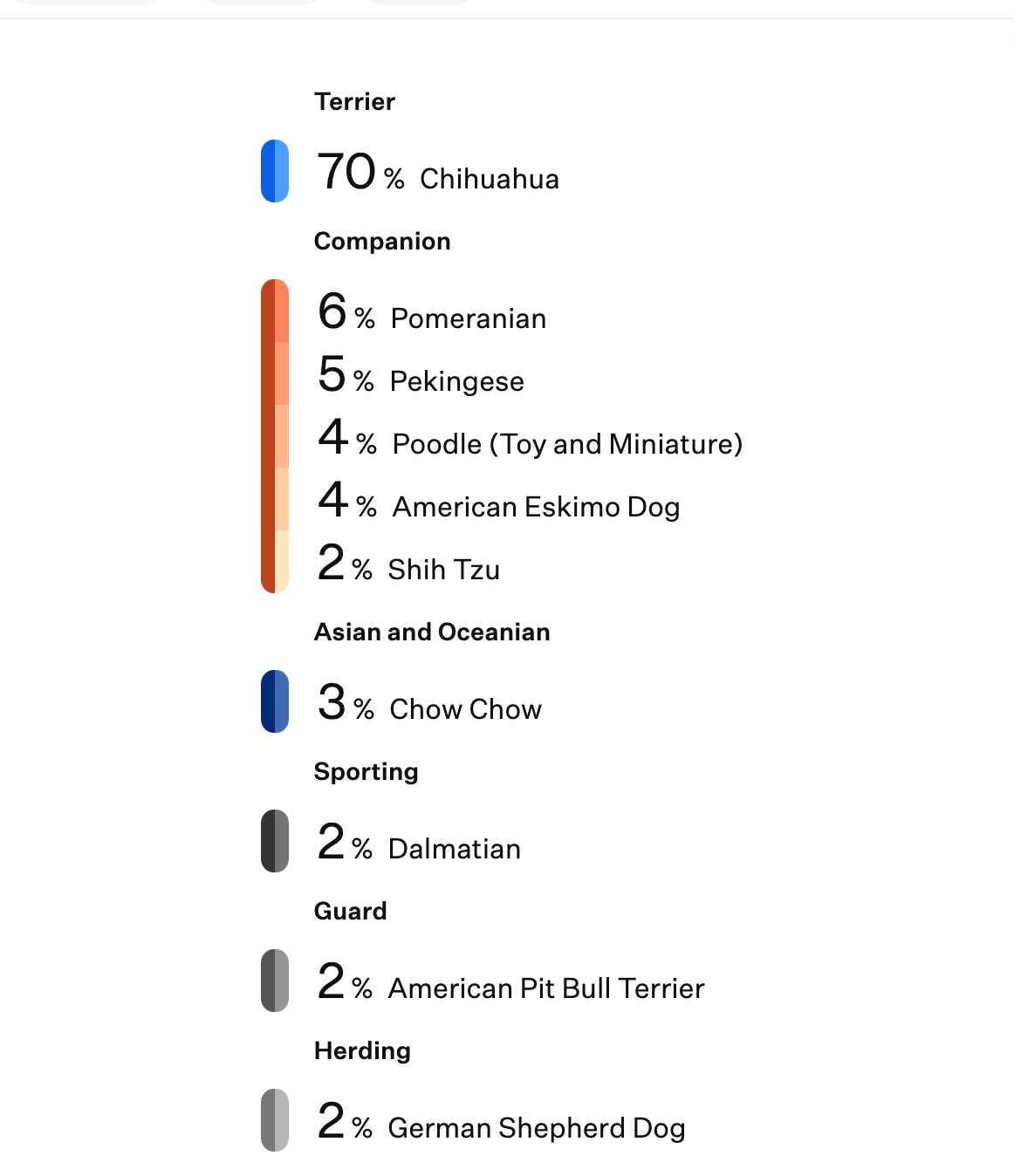
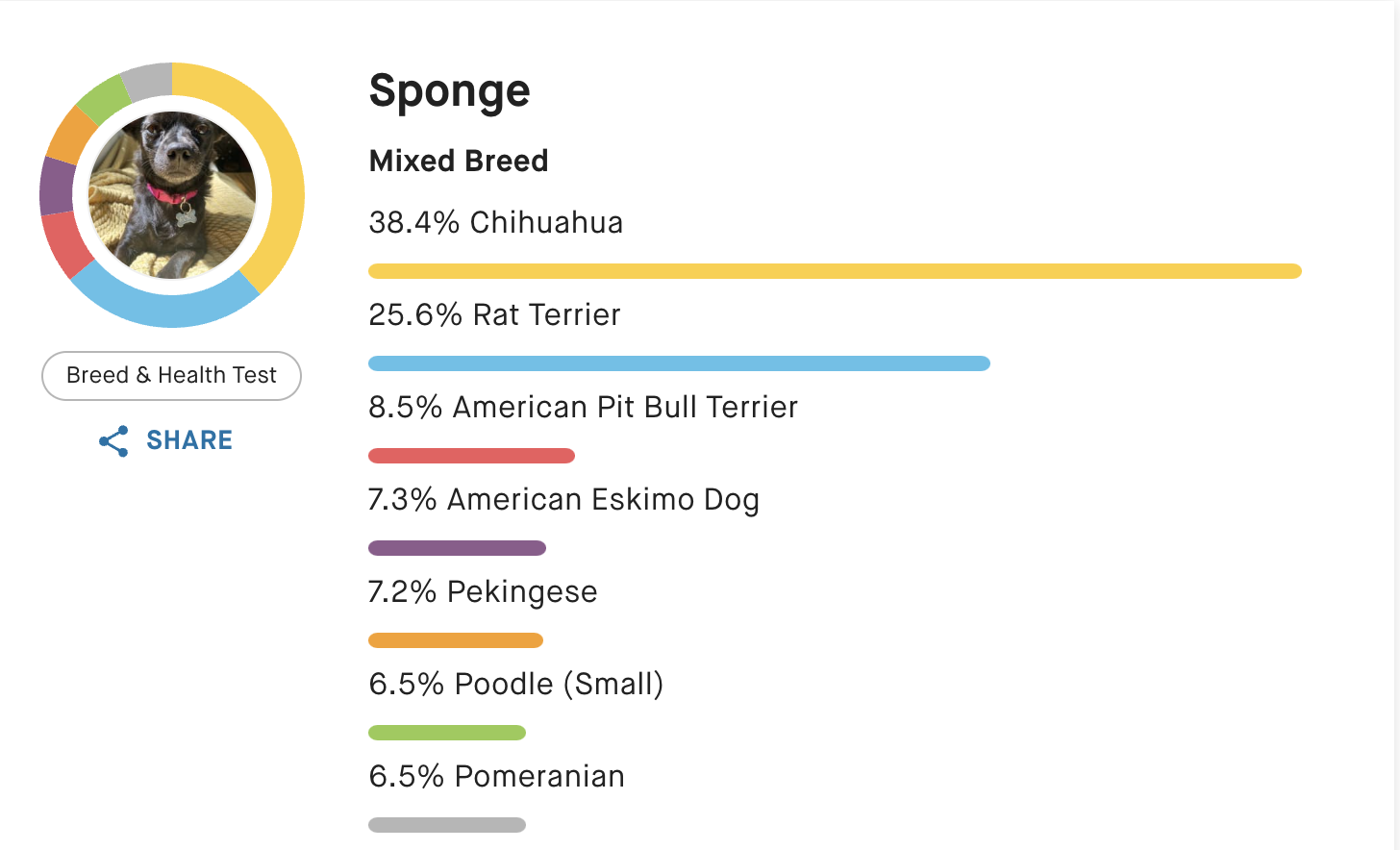
Annette Louviere, an expert from Wisdom Panel, explained to Elisabeth how different results can occur, noting that they can be based on multiple factors like differences in reference panels (a collection of DNA samples for a single breed), ancestry detection systems and the type and number of genetic variants considered that each brand uses.
This is the most notable difference to me: Wisdom Panel is a very informational and data-driven platform, so if you’re looking for something that feels efficient and comprehensive with a simple interface, this might be the right test for you. Embark, while also efficient and comprehensive, also exists like a social media app for dogs. There’s a lot of ways to actually interact with the app beyond the test results, and if you have a dog that may feel like a little bit more of a mystery — not just regarding breed, but also temperament, care or activity level — the app offers more personalization options that help cater to where you are in your dog-owning journey.
Either way, both of these tests offer really helpful information, and you can’t really go wrong either way. At the end of the day, they both have your dog’s best interests at heart, and that’s what matters most.