Craft beer has always been a business of collaboration. But in the past couple of years, a growing number of breweries haven’t just been brewing a quadruple-hopped hazy IPA together. They’re actually marrying their businesses.
In Massachusetts, Jack’s Abby became Hendler Family Brewing Company, buying Wormtown Brewery and Night Shift Brewing. Colorado’s Left Hand Brewing Company and Dry Dock Brewing Company merged under Indian Peaks Brewing Company. Virginia-based Aslin Beer Co. acquired New York City’s Torch & Crown Brewing Company, and together they form Driven Collective. California’s Fort Point Beer Co. and HenHouse Brewing Co. have teamed up, and most recently, Chicago’s Half Acre Beer Company and Maplewood Brewery & Distillery announced their own merger. Is all this a positive sign that craft breweries are getting more efficient or a harbinger of doom?
The answers lie in how the industry got here. Because the beer industry has been down the consolidation road before, and it was never all that pretty a picture. But there’s reason to see this latest wave differently.
History Is Not Quite Repeating Itself
The first famous wave of consolidation in beer came right after Prohibition had hobbled the industry. There were nearly 1,200 breweries in the United States when Prohibition started and 700 after its repeal, but those struggling businesses were easy prey for a few behemoth breweries like Anheuser-Busch, Miller and Coors to buy up in the decades following. By 1978, America had just 89 breweries total, owned by not even 50 brewing companies. And just about all of them made light lager. These were some dark times, but they did inspire home brewers to get creative, which eventually led to the birth of craft beer.
Cut to the next wave of consolidation, when some of those same Big Beer companies started buying craft breweries. This hit a fever pitch in the mid-2010s. MillerCoors bought Terrapin Beer Company and Saint Archer Brewing, Heineken bought Lagunitas, Constellation bought Ballast Point Brewing, and AB InBev bought just about everyone else.
“When these were happening, craft was still a relatively new category,” says Doug Veliky, former CMO at Revolution Brewing and currently the author of the industry-analyzing newsletter Beer Crunchers. “These large alcohol companies had portfolios covering a lot of ground but nothing in the craft category that had 10% of the market. Rather than create it themselves, they bought it.”
But almost as quickly as these acquisitions ramped up, they stalled out. This aligned with craft beer’s soaring popularity finally starting to plateau. For the next few years, consolidation news in craft consisted of M&A’s like Monster Beverage Corp. gobbling up the entire CANarchy Brewery Collective — Oskar Blues, Cigar City, Wasatch, etc. — for $330 million in 2022. Cannabis and wellness mega-brand Tilray has acquired 10 Barrel, Blue Point, Breckenridge, Green Flash, Montauk Brewing Company, SweetWater and, most recently and chaotically, BrewDog, to name a few.
When these acquisitions began, craft beer drinkers were enraged at the thought of their favorite breweries “selling out.” But times have changed. A once rapt audience became fatigued by the sheer volume of options crowding shelves. Suddenly, the big companies that made people mad by buying craft breweries wished those same people cared enough about those craft breweries to even get mad anymore. By 2023 or so, craft beer was in trouble, and the once bullish acquirers were either offloading their craft buys or letting them wither on the vine.
In 2024, more breweries closed than opened. Headlines declared the end of days for craft beer. In reality, we’re seeing an adjustment. The industry is still young. It shot up fast, maybe got a little too big. It’s had to deal with its own market saturation, growing competition from other categories and the moderation boom. Couple this with skyrocketing costs of literally everything and yes, a lot of breweries are closing. But others are finding a way forward in a new reality where craft beer may not be the hot new thing anymore but is still a beverage option a lot of people like. This brings us to beer consolidation’s third wave — fewer macro beer Goliaths and private equity firms, more fellow breweries joining together on their own terms.
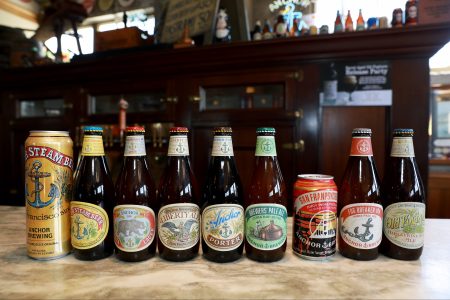
Anchor Brewing’s Demise Isn’t Shocking, But It Is a Sad Sign of the Times for Craft Beer
If a 127-year-old craft brewery can’t make it, who can?Breweries Embrace the Buddy System
In that 2010s era of fast and furious growth, many breweries invested in expansions. “They overbuilt facilities that take more people to operate and more money to afford that,” Veliky says. “Now, they’ve hit a wall as far as growth and increasing volume. At the same time, costs are going up on the labor side and across the board.”
Many of those breweries that expanded now don’t have the resources to brew enough beer to meet those brewhouses’ capacities. They don’t have the demand, either. The Brewers Association’s 2025 report found craft beer production fell by 5% last year. The industry’s middle tier, distributors and wholesalers, is experiencing its own period of shrinkage and consolidation. There are far fewer distributors to sell breweries’ beer and still so many breweries competing for those rare spots.
According to some breweries, the solution is to couple (or maybe triple or quadruple) up. Bringing two or three breweries together into the same production facility means one brewhouse will have two or three times the beer to produce, keeping it steadily operating at capacity. It also means those breweries can significantly cut costs.
“Smaller craft brewers have realized they can find success when they team up to share resources and stretch their dollars,” says Jessica Infante, managing editor at trade publication Brewbound. “Everything has gotten so expensive, and now with tariffs. Your money goes a lot further if you can split your costs.”
Different mergers are shaping up in different ways, but these partnerships generally unite breweries with complementary portfolios while streamlining operations, bolstering efficiency and sharing expenses.
There’s More Than One Way to Merge
San Francisco’s Fort Point Beer and Sonoma County’s HenHouse Brewing officially merged in April 2025 after comparing notes and realizing how much was duplicated between their back-of-house operations, says HenHouse cofounder and CEO Collin McDonnell. Now, both breweries’ beer is produced at HenHouse’s Santa Rosa facility.
“A busy brewery is happier and more efficient with happy yeast and a not-burned-out team,” McDonnell says. That team is one of the places where the merger’s effects are most evident, and not in the negative way typical of mergers. Only one position was cut in the process. Instead, Fort Point and HenHouse have been able to fill gaps in each other’s staff and work together.
Leadership roles have evolved: McDonnell is now chief sales officer of the combined company, and Fort Point cofounder and CEO Justin Catalana is CEO. Other Fort Point cofounders Dina Dobkin and Mike Schnebeck remain, respectively, chief brand officer and chief financial officer, and HenHouse cofounder Shane Goepel is now chief production officer.
“Where there weren’t specific leadership roles, there’s been strong gap-filling,” says Fort Point director of marketing Christina Shatzen. “Now we have a director of retail overseeing everything for both breweries, and Collin overseeing sales for both.”
McDonnell agrees. “Pre-merger, we were thinly staffed,” he says. “It’s just part of a modern brewery — everyone’s lean now, learning to juggle different roles.” Instead of seeing the merger as an opportunity to shed salaries, Fort Point and HenHouse shifted team members to double down on efficiency for the long term.
McDonnell says the breweries have “dramatically improved” their financial standing. That means sustainability, a healthy workplace and, importantly, better beer. “The less profitable a brewery is, the more options get taken away, and one of those options is how much you get to care about your beer,” he adds. “The more stable you are, the more quality control precautions you can take, the more time you have to make decisions ahead of time. That feeling is really awesome.”
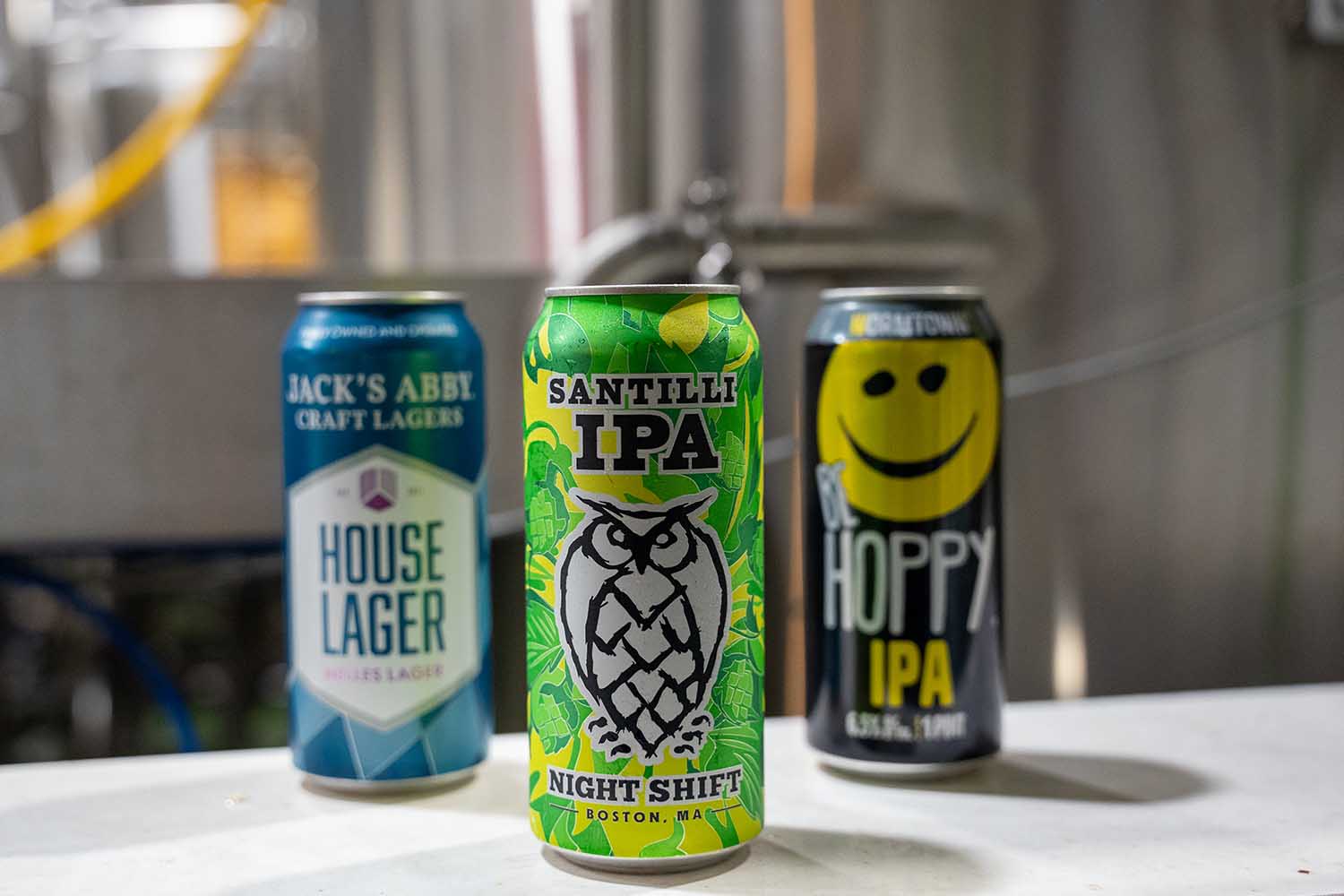
In Massachusetts, Jack’s Abby, Night Shift and Wormtown have taken a different path, with the former buying the latter two. Jack’s Abby cofounder and CEO Sam Hendler says the wheels were set in motion when the pandemic swung their business model toward packaging for retail.
“It forced us in the worst year for our company’s history to purchase a canning line,” Hendler says. Soon, they realized they needed more beer to keep it running efficiently. They began contract brewing and canning for other local breweries hitting similar challenges, and some of those partnerships evolved. Jack’s Abby purchased Wormtown, which had been facing production obstacles, in July 2024, then followed suit in 2025 with Night Shift.
Together, the breweries are the Hendler Family Brewing Company, which brews all three brands’ beer at the Jack’s Abby Framingham facility with a 150,000-barrel capacity and a path toward 200,000 barrels. Night Shift and Wormtown still have their taprooms. Hendler says the two breweries’ ownership teams are no longer involved, but the “vast majority” of their staff are.
The changes have been hard work, Hendler notes, explaining that he and his brothers and father, who own the company, are “not ‘M&A’ folks who do this as a career.” However, he adds, “it’s been rewarding, and the results are really impactful. We have a sustainable business on our hands again.”
In Chicago, a merger between Half Acre and Maplewood is on its way to officially closing. Maplewood had been contract brewing, and the brewery and distillery’s founder Adam Cieslak says they were very happy with their contract brewer. He was reticent to move Maplewood’s operation for anything less than a lasting, mutually beneficial partnership with a like-minded brewery. That’s what Maplewood found in Half Acre, and it meant being able to cut those hefty contract brewing costs. The bulk of their beer is now brewed at Half Acre’s facility, while Maplewood still has its own smaller production facility for small-batch beers and distilling and creating its THC-infused DRO beverage line.
Together, Half Acre and Maplewood represent a diverse lineup: traditional lagers, classic pale ales, hazy IPAs, barrel-aged stouts, THC drinks, non-alcoholic hop water and spirits. Their shared portfolio achieves what Cieslak feels is vital for survival in today’s industry. “You have to almost be a complete beverage company,” he says. “Tastes change so quickly, you always want to be able to reach different people from beer to spirits to THC. Diversification is just good business practice.”
Merging has helped Maplewood and Half Acre be that comprehensive beverage company, and a more efficient one at that.
“The nice thing about this whole process has been that we didn’t have to do this,” Cieslak says. “We’re both profitable breweries, happy with where we’re at. But looking down the road, this solves our contract brewing cost issues, gets their production facility humming at capacity, doubles the economies of scale for ingredient purchases and packaging materials. It’s clear this works in a really great way.”
How Much Do Craft Beer Consumers Need to Care About Consolidation?
These breweries are keeping their taprooms, their brands, their identities, their teams. They’re even keeping control over how their beers are brewed, even if the brewing might be happening at someone else’s brewhouse.
The vibe is different from the corporate buyouts of yore. “None of these moves are to cheapen recipes and save money,” Veliky says. “Nobody should be afraid that quality is going to go down.” Merging breweries have more time for more attention to detail and can share the costs of higher-quality ingredients.
Infante says we can expect to see more of these partnerships. “As long as breweries find they can work well to save some money and share resources, it makes sense,” she says. So far, this seems like a positive trend for the industry, and beer fans can rest assured that brewery-on-brewery mergers equal meaningful stability.
“That’s the bottom line of consolidation in craft beer,” Hendler says. “People are still employed, and the beers are still here to pour.”

More Like This



This article appeared in an InsideHook newsletter. Sign up for free to get more on travel, wellness, style, drinking, and culture..