If you’re a bourbon drinker, you’ve likely been frustrated by scarcity. Whether you’re a Pappy stan or are constantly searching for Michter’s 10 Year, limited production and tight allocations can make certain bottles impossible to find. Unless, of course, you stop chasing in-store availability and start turning to online auctions.
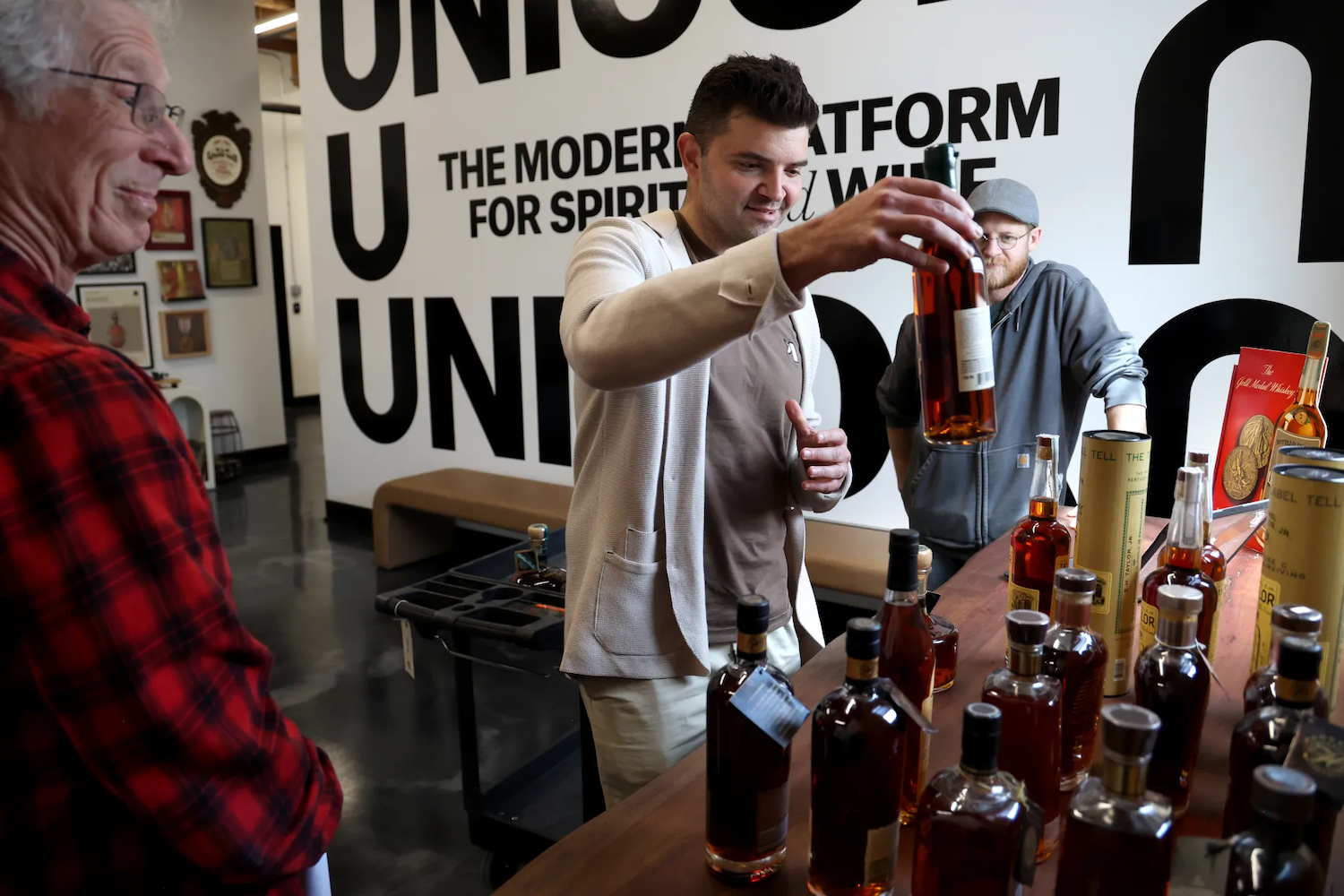
“If you were into sneakers 20 years ago, you would go to Champs or Foot Locker, and what they sold were your only options,” says Phil Mikhaylov, the CEO and co-founder of Unicorn, an online auction platform where thousands of bottles of wine and spirits are bought and sold each week. “Probably 90% of people buy shoes online today. With alcohol, less than 2% globally is sold online. So we’re making it easier for the modern consumer to get exactly what they want.”
Platforms like Unicorn are indeed making it easier for the everyday enthusiast to find and try sought-after bottles. Traditional auction houses like Sotheby’s and Christie’s are obviously big names in the luxury world, but the majority of people aren’t turning to these legacy companies to find what they want. “Sotheby’s, for example, targets an average $3,000 bottle price point,” Mikhaylov says. “So they’re only going after 1% of people versus making it more democratized — maybe a $70 bottle or a $100 bottle is where someone wants to start. In one week, we will sell more bottles than Sotheby’s will sell in an entire year.”
Talk about a staggering statistic. And Unicorn’s success doesn’t stop there. “We’ve grown consistently every single year,” Mikhaylov says. “This year, we’ll do north of $100 million in sales and had our strongest quarter ever in Q1.”
Because Unicorn sees so many bottles exchanged on their platform each week, their sales data truly shows which bourbons are flipped most often on the secondary market. After looking through the numbers and chatting with Mikhaylov, here’s what we found.
7 Bourbons Under $40 That the Pros Keep at Home
These affordable, everyday bottles deserve a spot on your shelfBuffalo Trace Reigns Supreme
Looking at Unicorn’s data from 2025 and 2026 YTD, nearly half of all bottles sold on the secondary market come from Buffalo Trace distillery, effectively making it the market’s closest thing to a blue-chip index. Brands like Eagle Rare, Weller, E.H. Taylor, Stagg and Sazerac accounted for 3,640 bottles sold out of 7,401 total, which comes out to about 49% of all transactions. In 2025, Weller Antique 107 Bourbon (2024) was the number-one bottle sold, followed by Eagle Rare 10 Year Bourbon from 2024 and Eagle Rare 10 Year Bourbon from 2025 in second and third place, respectively.
The Real Resale Action Is in the $50 to $150 Range
I admit that when I first set out to write this story, I assumed the most flipped bourbons on the secondary market would be rare behemoths that pull in $500 to $1,000 a bottle. Turns out, that isn’t the case at all. The secondary market isn’t powered by four-figure sales — it runs on bottles trading between roughly $50 and $150, where demand is high and risk is low.
“The secondary market is becoming more accessible, more transparent and, ultimately, more enjoyable for a wider group of people, not just hardcore collectors,” Mikhaylov says. “It’s becoming a smarter market, not just a louder one. And it’s shifting with intentionality.”
If you take a look at the highest-volume bottles moving on Unicorn, the average sale prices aren’t outrageous: Eagle Rare 10 from 2025 ($57), Weller Special Reserve from 2025 ($54), E.H. Taylor Small Batch from 2025 ($57), Weller Antique 107 from 2025 ($109), Stagg from ($130). And in news that is absolute music to my ears, a big chunk of the demographic enjoying these bottles is Gen Z.
“Last year, 70% of our signups were from a younger demographic, and the biggest surprise is how intentional Gen Z spending is,” Mikhaylov says. “They’re incredibly value-conscious, but they’re also willing to spend heavily on things that express who they are. Instead of drinking less, they’re drinking better or differently. The sweet spot for Gen Z spending is premium enough to feel special but not expensive enough to regret.”
People Are Curious About Brand Deep Dives
Multiple vintages of the same bottles — like Stagg, Weller 12 and Eagle Rare — rank among the most flipped, often at nearly identical prices year over year, suggesting demand isn’t tied to a single release but to the label itself. It indicates that consistency, not rarity, is what keeps these bottles moving. Even though Unicorn’s data doesn’t tell us who bought what, the presence of multiple vintages in heavy circulation may also point to a broader shift toward collecting by label, not just by bottle. Mikhaylov has seen this happen with some of his younger customers.
“For Gen Z, they might want to try a bottle of Wild Turkey 15th year, the 50th anniversary tribute or the [bottle with the] cheesy gold foil,” he says. “They’re willing to have a bourbon night with six friends, all pitch in, have a few pours and then next week try a 1992 or a 1994. It’s a fun experience for them to almost go back in time.”
Revived Brands Are on the Rise
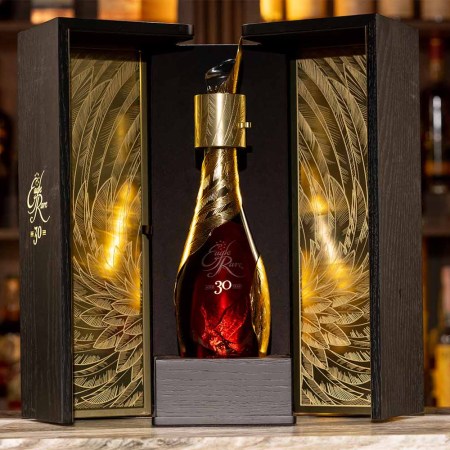
While they only appear a few times on Unicorn’s spreadsheets of top-selling bourbons from 2025 and 2026 to date, Mikhaylov is seeing a lot of interest in Prohibition-era whiskey brands that are being revived — think Rare Character, Brook Hill, Old Commonwealth, Bernal Randolph and Black Maple Hill.
“They are iconic brands from back in the day,” he says. “The distillery was shut down for decades, and now someone’s re-releasing that brand. Obviously, the juice is not from 50 or 60 years ago, but I think it’s the nostalgia of, ‘My grandpa used to love that,’ or ‘my dad used to love that brand.’ Those are always released at a certain price point, and there are limited quantities. So you can almost know with certainty when they come out, we get an influx of those bottles.”

More Like This
This article appeared in an InsideHook newsletter. Sign up for free to get more on travel, wellness, style, drinking, and culture..