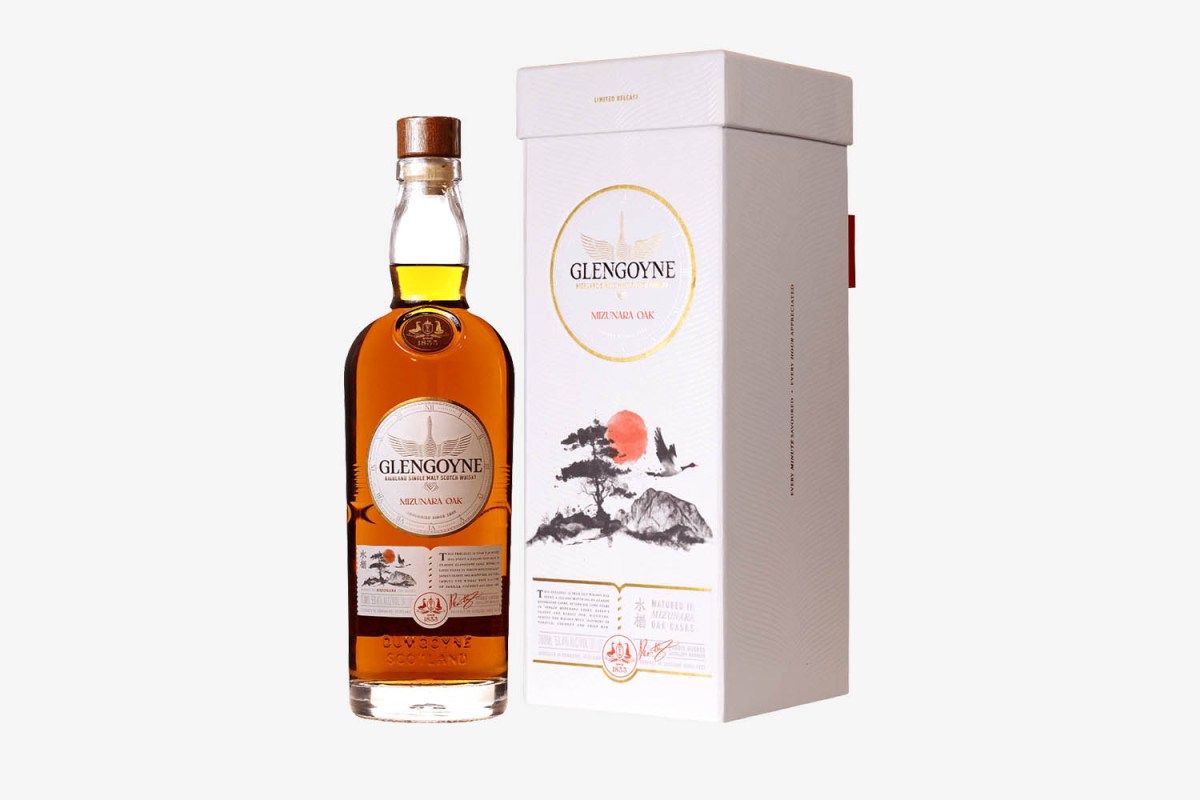
What we’re drinking: Glengoyne Mizunara Oak
Where it’s from: Licensed in 1833, Glengoyne is all about time: They air-dry their barley, brag about having “the slowest stills in Scotland” and note that it takes six years to prepare their casks. They’re also hard to classify via geography, as the property is located essentially on a border — the stills are in the Highlands, while the casks maturing are across the road and technically in the Lowlands. In 2003, the distillery was purchased by Ian Macleod Distillers, which also owns Rosebank, Tamdhu and Edinburgh Gin.
Why we’re drinking this: During our distillery visit last fall, we tried Glengoyne Mizunara Oak and pretty much proclaimed it the best Scotch of the year, but it wasn’t yet available in the United States. That’s now changed, although quantities are extremely limited, as you’ll see below.
Mizunara is the third release in the distillery’s Oak Masters’ Series, which also includes White Oak and White Oak 24-Year-Old expressions. As a reminder, Mizunara is native to Japan’s northern island of Hokkaido. It’s an extremely rare oak and quite difficult to work with because it’s very porous, making it difficult to craft into casks. But the effort is almost always worth it, as the oak brings out sandalwood, incense, floral and even tropical notes.
“When we bought Glengoyne, it was and is renowned for the use of sherry casks,” says Gordon Dundas, brand development and advocacy director. “They’re fabulous. But Glengoyne the spirit is very fruity and unpeated. So we actually know that bourbon casks and other different types of maturation showcase that richness probably better than sherry casks.”
The Best Whiskies From Ian Macleod Distillers
The family-owned spirits makers have revived several classic Scotch brands (and created a few more)The first two Oak Masters Series releases were aged in ex-bourbon barrels (and virgin American oak casks) with a higher ABV than usual. For the latest release, Glengoyne had access to 10 unused Mizunara casks from Japan. From there, they took cask-strength Glengoyne 10-year-old whisky and aged it an additional six years in Japanese oak, a nearly unheard-of amount of time for maturation with that type of wood. “I think there’s no other Scotch that has ever spent that amount of time in Mizunara,” Dundas says.
Let’s test it out.
How it tastes: Bottled at 53.4% ABV, the 16-Year-Old expression begins with 10 years of maturation in first-fill sherry and refill casks before it’s transferred to virgin Mizunara oak casks for an additional six years. It’s memorable with notes of sandalwood, green apple, vanilla, cherry blossom, incense and orange zest. The extra proof gives it body and a lot of complexity. Definitely worth a sip if you can find (and afford) it.
Fun fact: The bottle comes in an elegant gift box, and the packaging pays homage to Japanese aesthetics and Scottish nature with a bespoke Japanese Sumi-e illustration evoking the whisky’s influence, featuring a serene sunset, Mizunara oak tree and Glengoyne geese.
Where to buy: Glengoyne Mizunara Oak is an extremely limited release with only 150 bottles coming to the American market with an SRP of $399. Given the limited quantities, you may want to buy a bottle now. As Dundas says, when the bottle went on sale in the UK last fall, it “sold out in a day and a half.”
Meet your guide

More Like This
This article appeared in an InsideHook newsletter. Sign up for free to get more on travel, wellness, style, drinking, and culture..