The first thing that Pierce Brosnan talks about in “10 Things Pierce Brosnan Can’t Live Without” is a pair of sunglasses. The pair he displays in the GQ video happens to be from Oliver Peoples, but he mentions two other makes. The first is Persol, which he says he used to buy at L.A. Eyeworks on Melrose Ave. in the early ‘80s for $80. The other is Robert Marc.
If you don’t happen to carry a license to kill or drive an Aston Martin, you might be forgiven for a lack of familiarity with the latter company. But if you’re the type of person who enjoys well-made objects and loves beauty for beauty’s sake, then you might want to listen up.
Robert Marc founded his optical boutique in New York City in 1981, helping to usher in the era of high-end designer eyewear. His success in both selling and designing for other brands led him to found his eponymous collection, which he began offering in 1999. Since then, his shades have been worn and recommended not only by Brosnan, but by celebrities as varied as Jamie Foxx, Jay-Z, Adrien Brody and Daniel Radcliffe. Known for their signature trademarked hinge, Robert Marc glasses and sunglasses are easily recognizable, well respected and symbolic of New York’s status as a fashion hub.
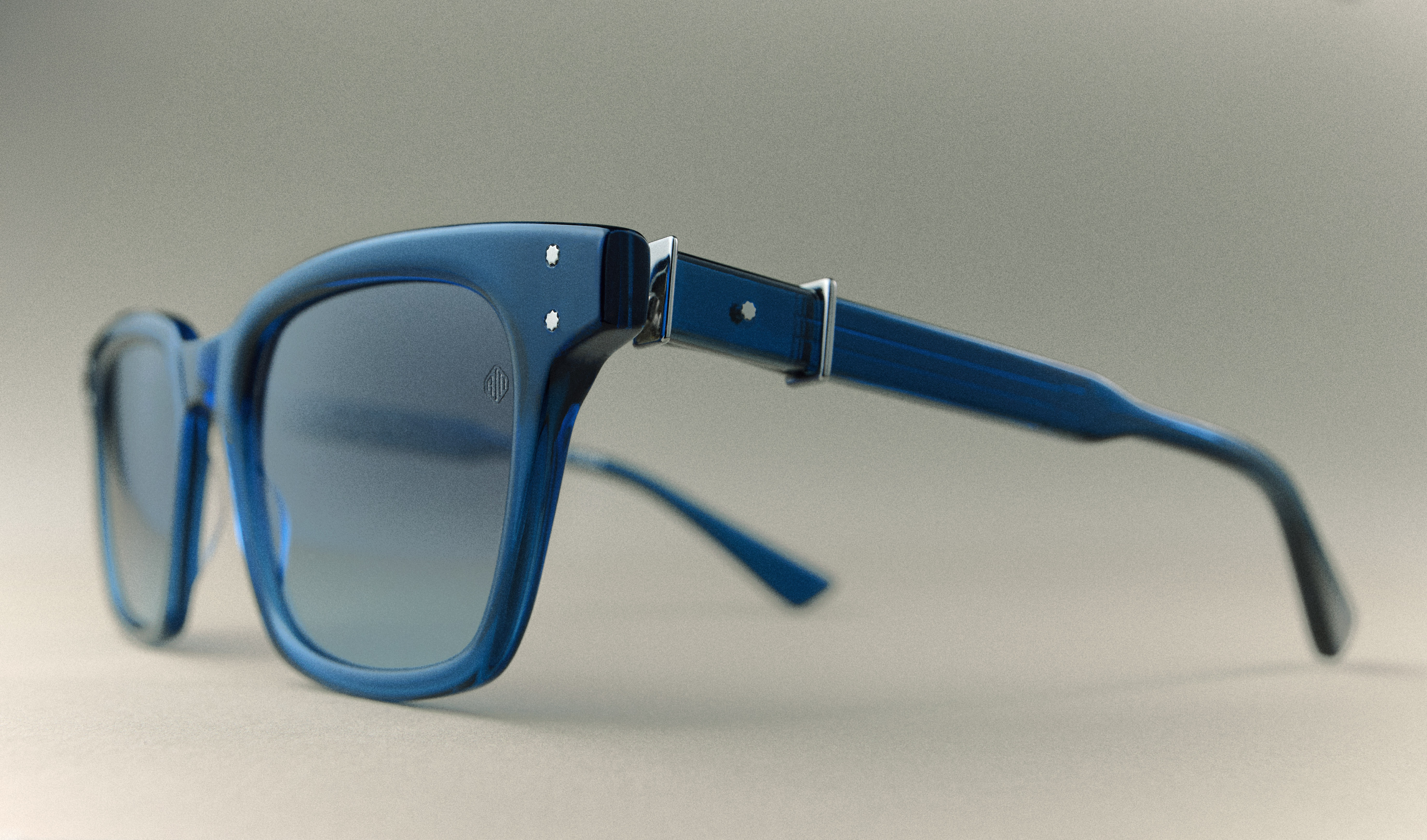
Now, Robert Marc NYC is undergoing a transformation, starting with the appointment of new creative designers John Juniper and Jeff Solorio. Those names will be familiar to eyewear aficionados, as the duo founded famed eyewear brand DITA, for which they designed elegant frames produced by Japanese manufacturers. On the occasion of Robert Marc’s 45th anniversary, the two have been entrusted by the brand’s owner New Look Vision Group to shepherd it into a new chapter, one in which the company will drop “NYC” from its name in order to adopt a more global outlook.
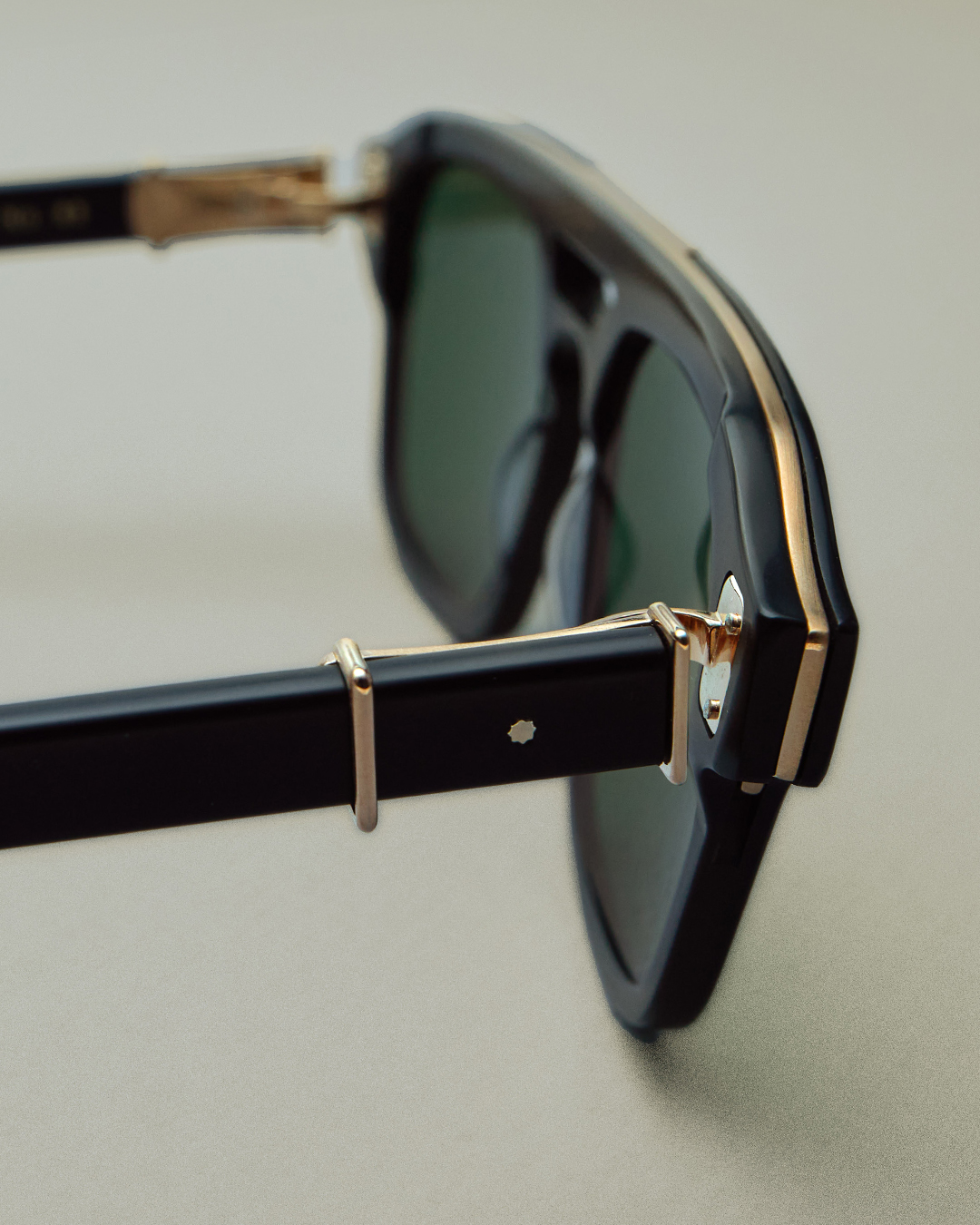
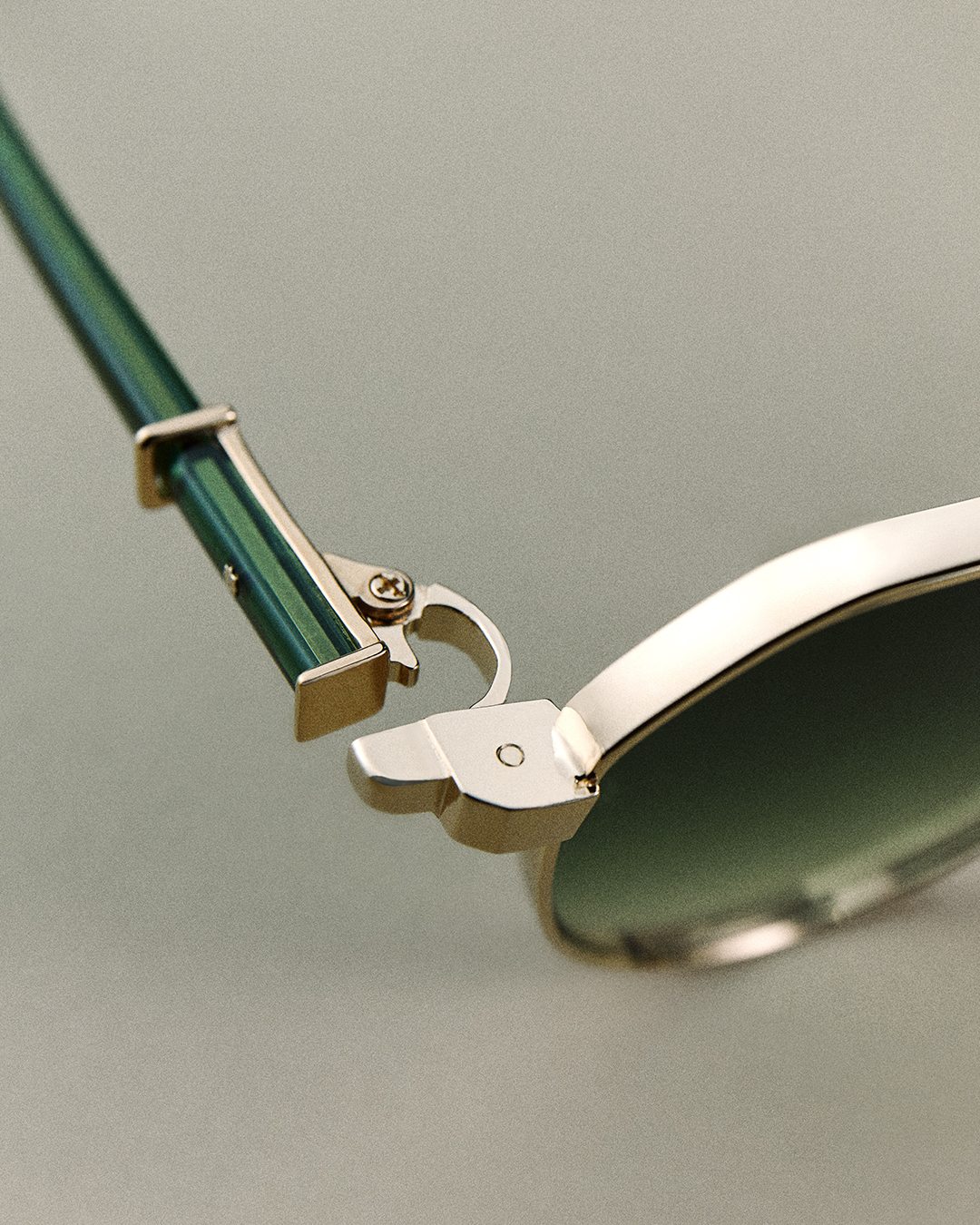
Juniper and Solorio’s first collection of frames, titled Volume One: The Feeling Remains, retains the classic Robert Marc hinge but updates it with a flexible spring mechanism that improves comfort. Meanwhile, new designs in both Japanese titanium and acetate pervade the line across a range of both eyeglasses and sunglasses, including classic mid-century silhouettes, modern takes on aviators and distinctly contemporary shapes. Natural buffalo horn, which is only harvested from an animal that has died of natural causes, is also represented. Painstakingly crafted in Germany, these frames are some of the company’s most desirable and expensive, with a naturally limited supply and a time-consuming production process that yields a beautiful product in unique colors and patterns.
We sat down with Juniper (who is based in L.A.) and Solorio (who is based in Japan) to discuss Robert Marc’s history, its new direction, the inspiration behind their inaugural collection and why the Japanese still manufacture some of the most desirable glasses in the world.
This interview has been edited for length and clarity
InsideHook: What do you feel is the essence of Robert Marc? There’s obviously a big New York connection.
John Juniper: Robert Marc, the brand, has been an authority in New York for many, many years. He was a guy who built the strongest group of stores — you’d go in, the service was amazing, the product was amazing, the customer service was amazing. The stores itself were just a place to go where you could get a quality product and quality service that you couldn’t get anywhere else in New York at the time.
Jeff Solorio: They’re just the pinnacle of the optical business. And New York is one of the toughest cities — if you can make a successful business there, you can bring that worldwide.
How did you both come to Robert Marc?
Solorio: John and I founded the brand DITA about 30 years ago. We were very small in the beginning, but Robert Marc was one of the stores that was responsible for us getting into New York and actually making a name for ourselves in that area. This was the early 2000s or so. Before that, we were relatively unknown in New York.
Juniper: About six years ago, Jeff and I left DITA and started freelancing. The opportunity presented itself a few years ago: Would we be interested to come in and help revitalize Robert Marc? I don’t even know if the word is “revitalize,” but add some new soul, some new spirit to the brand. We were interested because it was sort of a full-circle moment. We started out not knowing anything, and now we’re creative directing a brand that helped us start, and we get to come in and redo it in the way we want to for today’s market.
Was there something missing from previous Robert Marc collections that you wanted to see in your own designs? Was there a particular direction that you knew you wanted to move in?
Solorio: We wanted to respect the design codes. Robert Marc’s design code, especially the little hinge detail area, was very iconic and recognizable around the world, so we didn’t want to stray too far from that. We felt it was better to evolve that and add a little bit of extra detail to that hinge. That’s when we came up with the flex hinge, which would offer a lot of comfort and fit. Being that Robert Marc also has a horn collection, that gives us a good opportunity because horn’s a little bit more rigid than acetate, so you need a little bit more flex in the hinge.
Orlando Bloom Teamed Up With Porsche Design on the Perfect Driving Glasses and Leather Jacket
The collaboration includes three new sets of shades and an awesome reversible coatAre you always beginning with the existing Robert Marc design codes, or are you ever designing completely from scratch?
Juniper: Some days I wake up thinking I should have come at this way differently and just disrupted it completely. And then other days, I know that was the wrong idea — the right idea is what we’re doing. We didn’t come at this to disrupt anything, because we don’t want to distract from the people who are already loyal to the brand in New York City and come at it in a way that’s completely different from what they’re used to. I think what we wanted to do was respect its elements — to add to it and create sub-collections, and just try to add a little bit of newness to what’s been already going on for a long time.
Solorio: There are some things that Robert Marc didn’t really touch on or put in the collection — there weren’t many round frames. As you’ll see in the future, there are rimless ideas that we have. So there are some holes to fill that we’re recognizing, too.

You’ve mentioned the special Robert Marc hinge. What else is a differentiating factor in the brand’s designs? What makes, say, a Robert Marc aviator different from that from another brand?
Solorio: In eyewear design, it’s in the hinges, the brow bar, the nose bridge, the rim thickness. I mean, there are so many ways that you could do it. You could go rimless, you could go half-eye, you could do a full rim, you could add hoods to it. There are a lot of different elements that you can add to, say, metal aviator frames to make them look different.
Juniper: It’s a lot like a watch — there are only so many shapes you can work with. Then it comes down to material, components, how it’s built, and it’s the same with eyewear — maybe in a less technical aspect, but you have, say, titanium vs. steel vs. nickel. You have gold, you have sterling silver, you have mineral-glass lenses, Polaroid-glass lenses, Polaroid-plastic lenses. The game is about changing the same thing over and over, but somehow, there are 6,000 brands doing different stuff most of the time. Sometimes it looks the same, but there are tiny nuances that make [a frame] different, and it’s funny because you can only do so much.
“It really comes down to craftsmanship, and that’s where it’s the best.”
-John Juniper on making Eyewear in Japan
Solorio: With Robert Marc, we do titanium when it comes to our metal frames, and they’re produced in Japan. They’re one of the few countries that can actually produce titanium at this level — they perfected the art of making it in the ‘80s and ‘90s, and the rest of the world never really caught up with what they can do. It’s durable, and just a great material for eyewear. But there are challenges when it comes to manufacturing, and that’s why it hasn’t really spread out throughout the world with other manufacturers. They’re not able to produce it at that level.
Juniper: It’s light, it’s hypoallergenic versus stainless steel or nickel. Japan is where the best eyewear in the world is made. It’s made in little factories — there’ll be maybe 30 people, 20 people — and though the machines sometimes aren’t as high-tech as those in China, you might have an old man who’s been doing it for 45 years and just has the technique down perfectly. It really comes down to craftsmanship, and that’s where it’s the best. Jeff lives only a few hours from the factories, so he can go down there and work with them when he needs to.
Speaking of production, can you briefly outline where your different materials are made?
Solorio: The acetate is made in Japan as well. There’s actually just one acetate material manufacturer here in Japan. The difference with them is that the material is denser than materials from Italy and China and other parts of the world. It’s kind of like a stone: You’re able to polish it and you’re able to get a higher luster, more of a piano finish as opposed to an Italian-made acetate, which is a little bit softer, so it can’t polish. Also, it also retains its shape. With acetate, if it’s a softer material, the heat and other elements will affect the shape and fit of it over time. It’s kind of like wood where it expands and it’ll dry up and shrink on you, which is challenging when it comes to oculars. With Japanese acetate, you have more consistent material. It’s more stable.
Juniper: The horn [frames] are really unique. They’re made in Germany. It’s really difficult to make — talk about watching a craftsman make a frame. It’s such a pain to take actual horn and grind it. It’s all kind of monopolized by one little factory in Germany that does the best job.
I’d say Robert Marc and [fellow New Look Vision Group brand] Morgenthal Frederics have become a staple out there with their horn frames. It takes a certain kind of optician to be able to deal with it and handle it. The Robert Marc stores are really good with it, and you can’t just wholesale it to anybody because you can’t heat it up the same [as other frames], you can’t shape it the same. It’s a very unique material and very expensive. An average frame will be [over] $2,000, but it’s really lightweight.
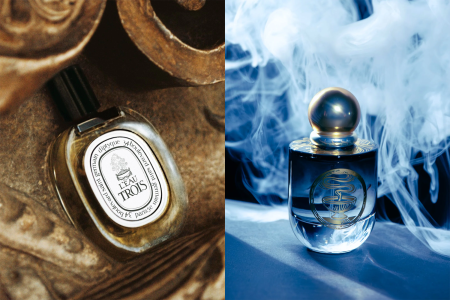
The 8 Best Incense Colognes for a More Meditative Rotation
From a Diptyque classic to a new entry from Sage & Salt, these magnetic fragrances are more accessible than you might thinkBesides the lightness or its aesthetics, is there any other functional advantage to a pair of horn glasses than a pair in acetate or titanium?
Juniper: It’s something very unique and special, and it’s absolutely beautiful. When you see an actual horn frame, it’s almost like a piece of wood. It’s also hypoallergenic.
Solorio: It’s also just rare. I want to say there are fewer than 200 opticians around the world that can handle and understand how to work with this material. With acetate, it’s really easy to adjust into shape for a customer, but you really need to know what you’re doing in order to work with horn. So it has that exclusivity, and it’s not by design. There’s just not that many people who know how to work with it.
John and I have always wanted to work with horn in our past collections, so it’s really cool that with Robert Marc we’re able to work with it. We have a big learning curve, but as things continue, we’re going to expand on what it can do. We’re starting to ask questions: Can you sculpt it more in the back? Can you combine it with real gold? Can you combine it with titanium? As we grow and understand horn in the next four or five years, we’ll come up with some fun stuff.

Who is the Robert Marc customer in 2026? When you’re designing new frames, who are you making them for?
Juniper: We always consider where the brand comes from and the people who are buying — and let’s be honest, it’s an older customer at the moment in New York City. It’s an affluent customer who’s been buying the brand for five or six years, some for probably 20 or 30 years. But the good thing about eyewear is that there’s a big crossover. If you’re 50 or 25 or 35 or 38, we can all wear the same frame.
Solorio: When you think of New York City, it’s a city where a lot of people are walking — you see people all the time. It’s such an eclectic crowd outside, and you definitely see that there’s that New Yorker who wears Robert Marc because it’s kind of understated. You definitely know it’s Robert Marc, but it’s not a logo that’s blasting “Look at me.” It has that sophistication that New York is about, and that’s a look that can go into other cities like Tokyo, Paris, London.
Is the brand expanding its footprint with respect to number of doors or wholesale distribution, or is it existing stores that will carry the new collection?
Juniper: I’d say it’s both. We’re really trying to excite and motivate the stores that we have because New Look Vision Group also owns 85 other high-end stores in the U.S. Let me put it this way: They own the best of the best in the U.S.A. Then the goal in the next couple years is to move it, like Jeff said, to London, to Paris, to Japan, to Korea — wherever we can that would appreciate this type of eyewear.

More Like This
This article appeared in an InsideHook newsletter. Sign up for free to get more on travel, wellness, style, drinking, and culture..