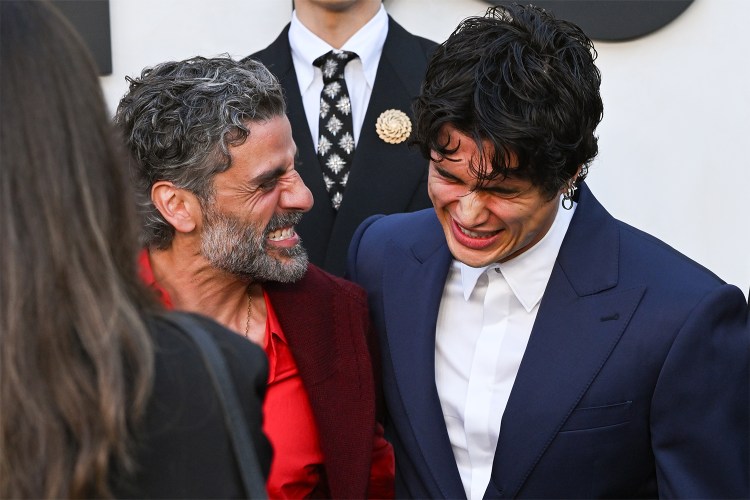
The most unbelievable part of the Olympic hockey firestorm is not that some of the men’s players from Team U.S.A. laughed at a misogynistic joke from President Trump. Nor, regrettably, is it that the president made the remark in the first place. It’s the relative silence from the male athletes that’s followed.
Don’t get me wrong, plenty of the men have responded to the incident, when Trump called the gold medalists after their victory over Canada and said he’d “have to bring” the gold medal-winning women’s team to the White House with them or he’d “probably be impeached.” (The Athletic has a thorough rundown of those who have responded so far.)
Some players have stuck to nonapologies, like how they think the moment was “unfortunate” and a “mistake,” or how they “apologize for the way it looks.” Others, like Jack Hughes, who scored the game-winning goal in overtime in the gold-medal match, have doubled down on diverting any blame or responsibility. When recently asked if he agreed with his teammate Jeremy Swayman that they should have reacted differently, instead of taking the chance to apologize, Hughes said, “We have so much respect for the women’s team, they have so much respect for us, and we’re all just proud Americans.”
So far, only one of the men, defenseman Charlie McAvoy, has specifically said publicly that he’s sorry to the women’s team for how he and the rest of the men’s team responded to the sexist joke made by Trump. How is that possible?
I’m not naive about the nuances of this situation. The men’s hockey players were on top of the world after winning gold for the U.S. for the first time in 46 years. While they were drinking beers and partying with Olympic hardware around their necks, suddenly FBI director Kash Patel showed up and put them on speakerphone with Trump. As others have suggested, the president could have said just about anything in a joking tone, and chances are the athletes — who don’t get phone calls from the president of the United States every day — would have played along.
Yet, in hindsight, there was a crystal-clear outcome of this 15-second clip that’s been seen around the globe: the world-champion U.S. women’s hockey team was demeaned on the basis of their sex. No matter whether the athletes in the room thought Trump’s joke was legitimately funny, or were simply caught up in the moment, the message the world heard was simple: men matter more.
I’m certain this is not a message Team U.S.A. wants to stand behind, so why haven’t more players owned up to their behavior and offered a real apology? Why haven’t the coaches and other Team U.S.A. managers rallied the group and formally said they’re sorry?
The fact that this has not happened on a team-wide scale yet is frankly unthinkable, considering the strict standards youth, high school and collegiate athletics around the country set for their players around codes of conduct, especially when representing their respective teams.
It reminds me of a moment from my high school football days that’s seared into my memory. (I recognize this is a far cry from Olympic athletics, but stay with me.) At the beginning of a practice, our coach chastised us for some news he had heard about a recent varsity football game: some freshman players, who wore their jerseys to these Friday night games, were seen messing around under the bleachers and otherwise making trouble, rather than watching the action on the field. When you wear that jersey, he said, you’re representing our school and our team. Every player who was involved was then asked to stand up, which many of us did. We were then forced to run sprints and, afterward, make a formal apology.
I know this isn’t a singular experience. For all the anecdotes and news stories about male athletes behaving badly, the truth is that American athletes throughout the nation, from the time they first pick up a ball or a stick, are taught about responsibility and respect as much as they’re taught about strength and speed. If we expect millions of young people to abide by these codes of conduct when they’re coming up in their sports, and to make amends when they break them, why can’t the men’s hockey players and coaches of Team U.S.A. do the same?
I actually went and looked up my high school code of conduct, and found this line under “unacceptable behavior subject to disciplinary action,” which I’ve taken the liberty to highlight: “Inappropriate, abusive, threatening, or demeaning actions based on race, color, creed, religion, sex, marital status, status with regard to public assistance, disability, national origin or sexual orientation.”
This is not political. This is about world-class athletes deciding what message they want to send to the world. I hope they can do what any high school team in this country would do.

More Like This

Twice a week, you'll find guinea pig features, personal essays and expert interviews on living better — for however long you’re here. Subscribe to Champ now.