Nostalgia is a powerful force for selling cars. One only has to look at the continued success of the Ford Mustang, and the even greater results of the recently departed Dodge Challenger, to understand how wrapping a model in the flag of heritage can goose it going out the door — especially to the moneyed Boomer buyer base that can afford to spend big on reliving youthful glories.
Still, retro-themed design can be a double-edged sword. For every muscle machine sonorously saluting Detroit as it tears down the boulevard, there’s a final-generation Ford Thunderbird or confusing Chevrolet SSR missing the mark with its intended audience. Compounding the issue for high-profile failures is a fraught path to recovery, as these designs are often impossible to visually evolve without losing sight of their original vibe.
Volkswagen would seem to be among the safest of modern brands to dip into the pool of yesteryear for inspiration, having helped launch the craze with its extremely successful New Beetle three decades previous. With roots deep in the counterculture of the 1960s — the jump-off for so many vehicle designs targeting the deep-pocketed demographic mentioned above — VW is also uniquely positioned to harvest dollars from the misty fields of memory.
This is what makes the Volkswagen ID. Buzz such a puzzler. Featuring a modular EV drivetrain that gave its designers free reign to incorporate as many elements from the past as possible, this new-for-North America take on the fabled VW Microbus should be a slam dunk. Thanks to a shape that the entire world wants to see back on the road, and the pairing of the incredible practicality of a van with the gas-free lifestyle of an electric vehicle, the ID. Buzz should have been a lock to add three commas to the German manufacturer’s bank account.
Despite being conceptually sweet, the head-turning van has so far made almost no headway among the Volkswagen faithful, thanks to a combination of questionable design choices, a fumbled American launch and pricing that feels largely out of step with the rest of the market. After spending a week behind the wheel of the 2025 Volkswagen ID. Buzz, I came away with a better understanding of where this van falls short, and whether it could be saved from its stumbles.
“Micro” No More
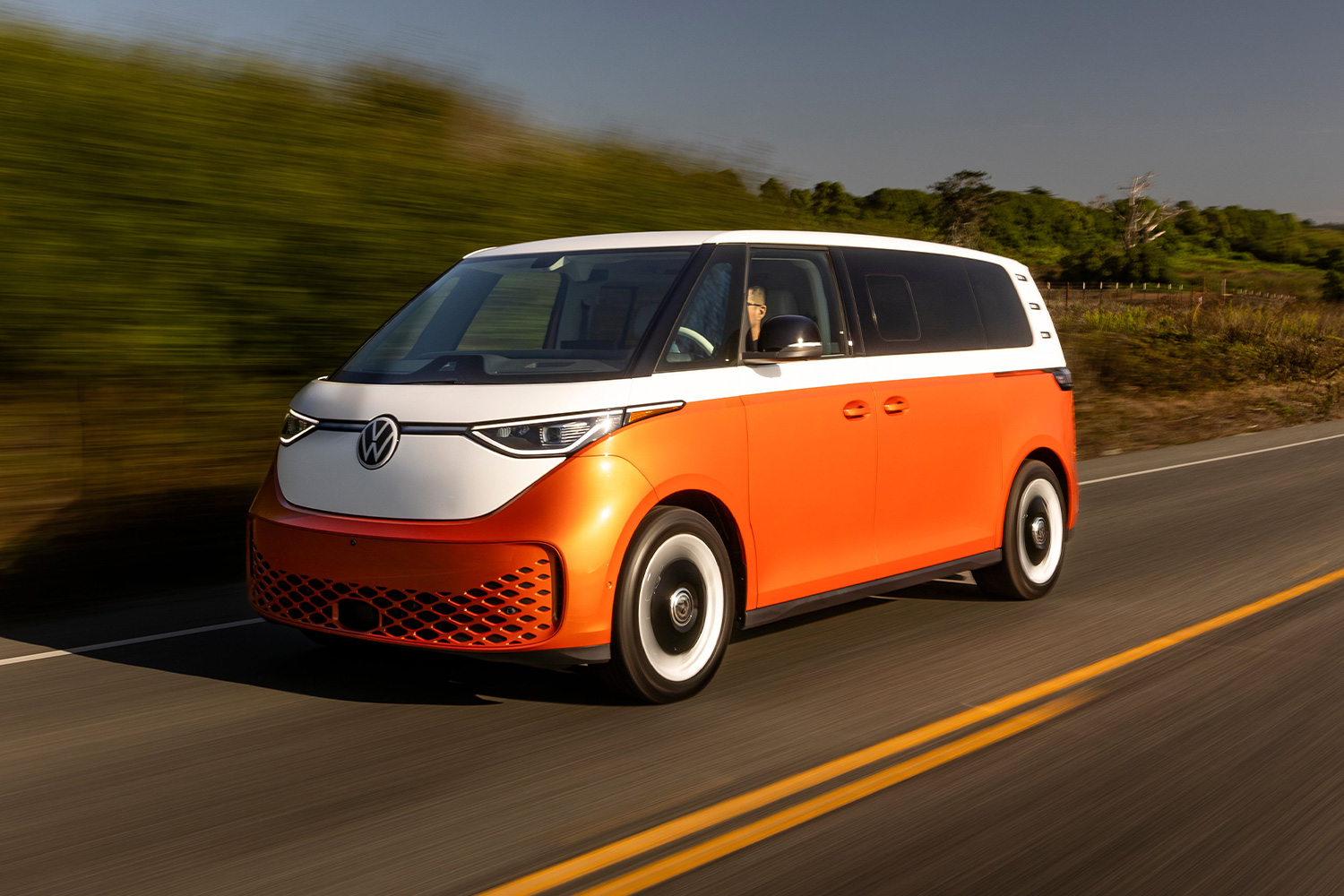
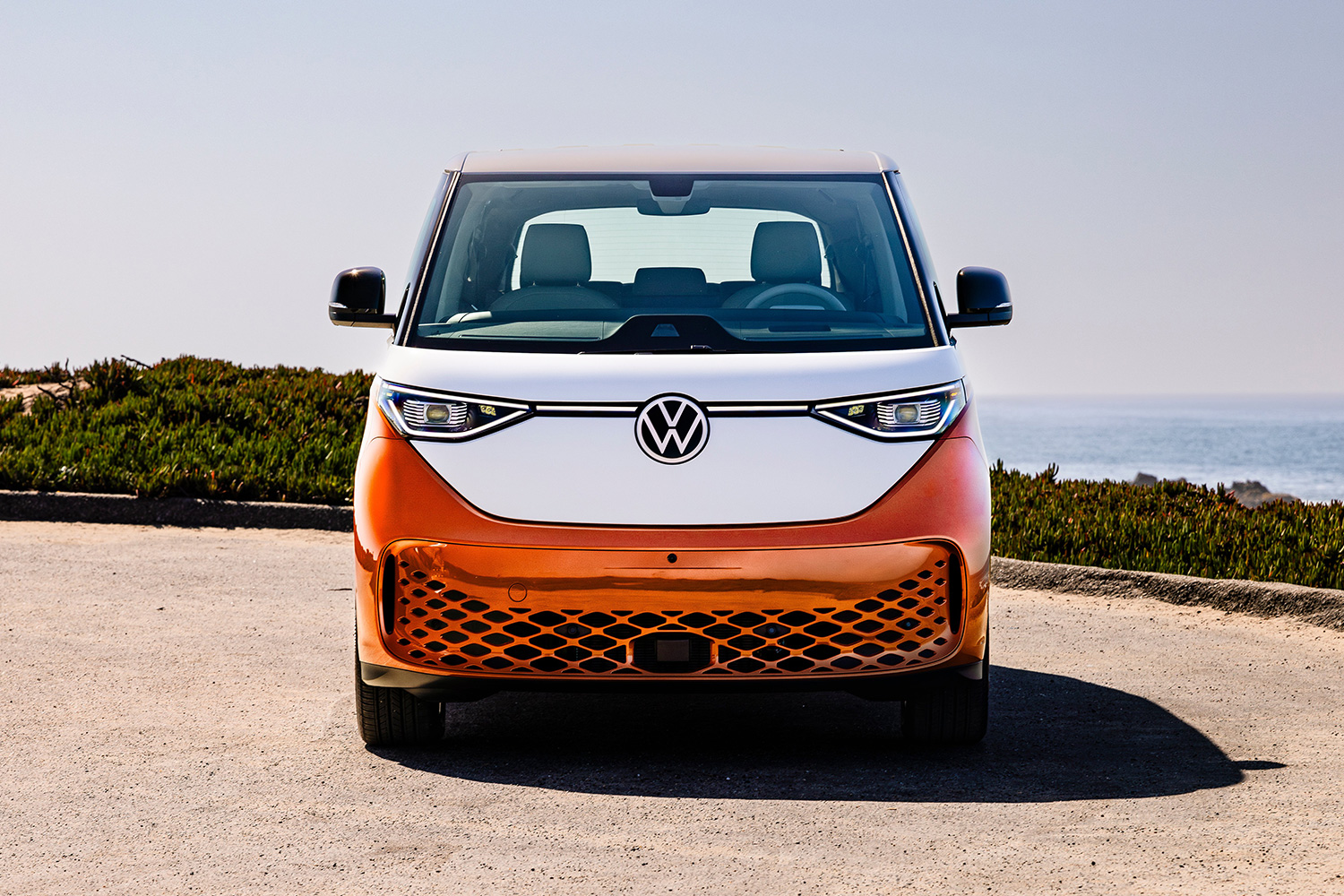
The most striking aspect of the Volkswagen ID. Buzz is its sheer size. More than two feet longer than the Microbus of old, the EV is just a bit shorter and a tiny bit narrower than most current minivans, yet considerably taller (think full-size pickup). Taking into account its slab sides, this effectively transforms the VW into a rolling retro billboard, which in combination with its popular two-tone color schemes (white and blue on my “1st Edition” tester; also available in orange [pictured here], yellow, silver and green on this model), draws the eye like few other modern vehicles.
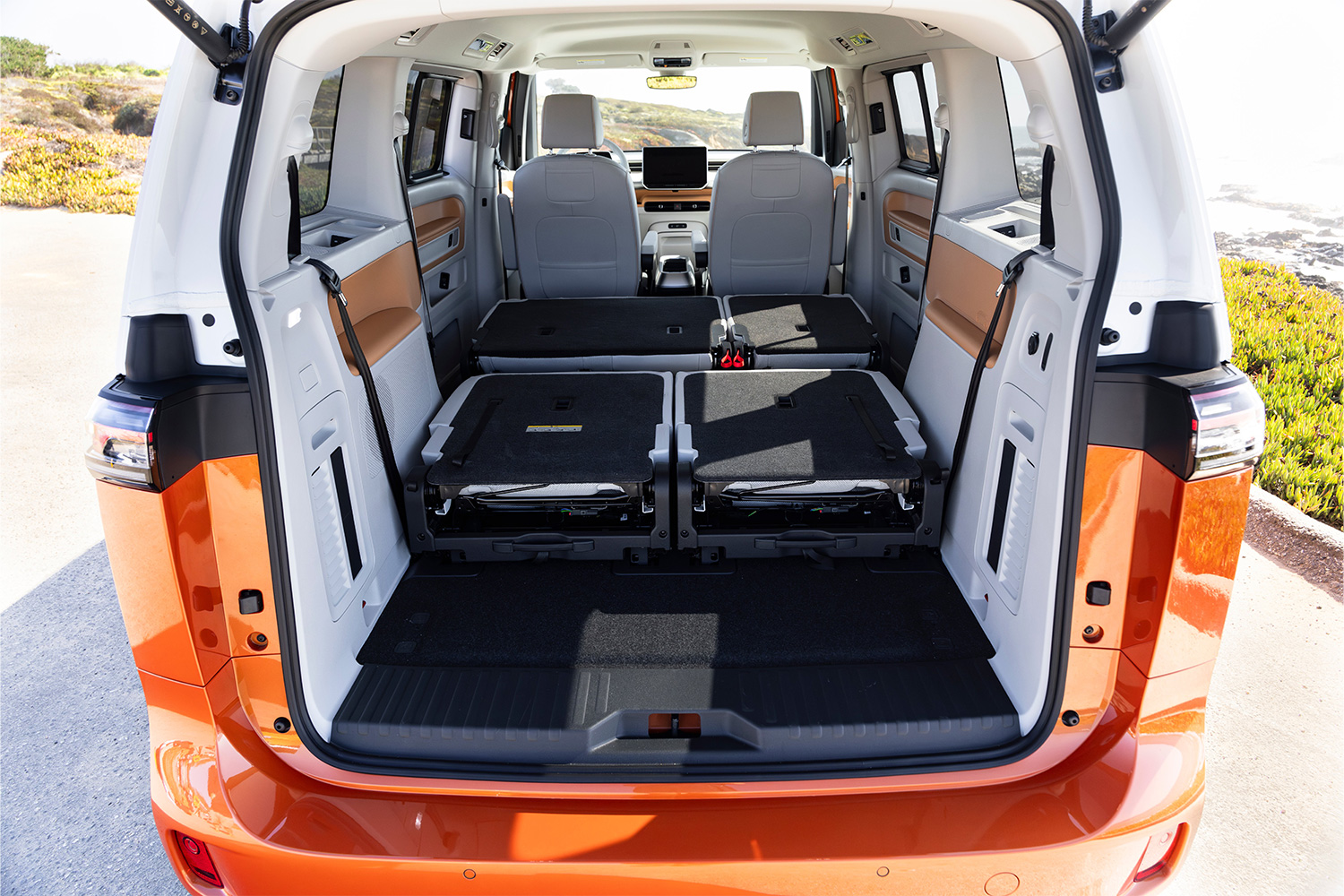
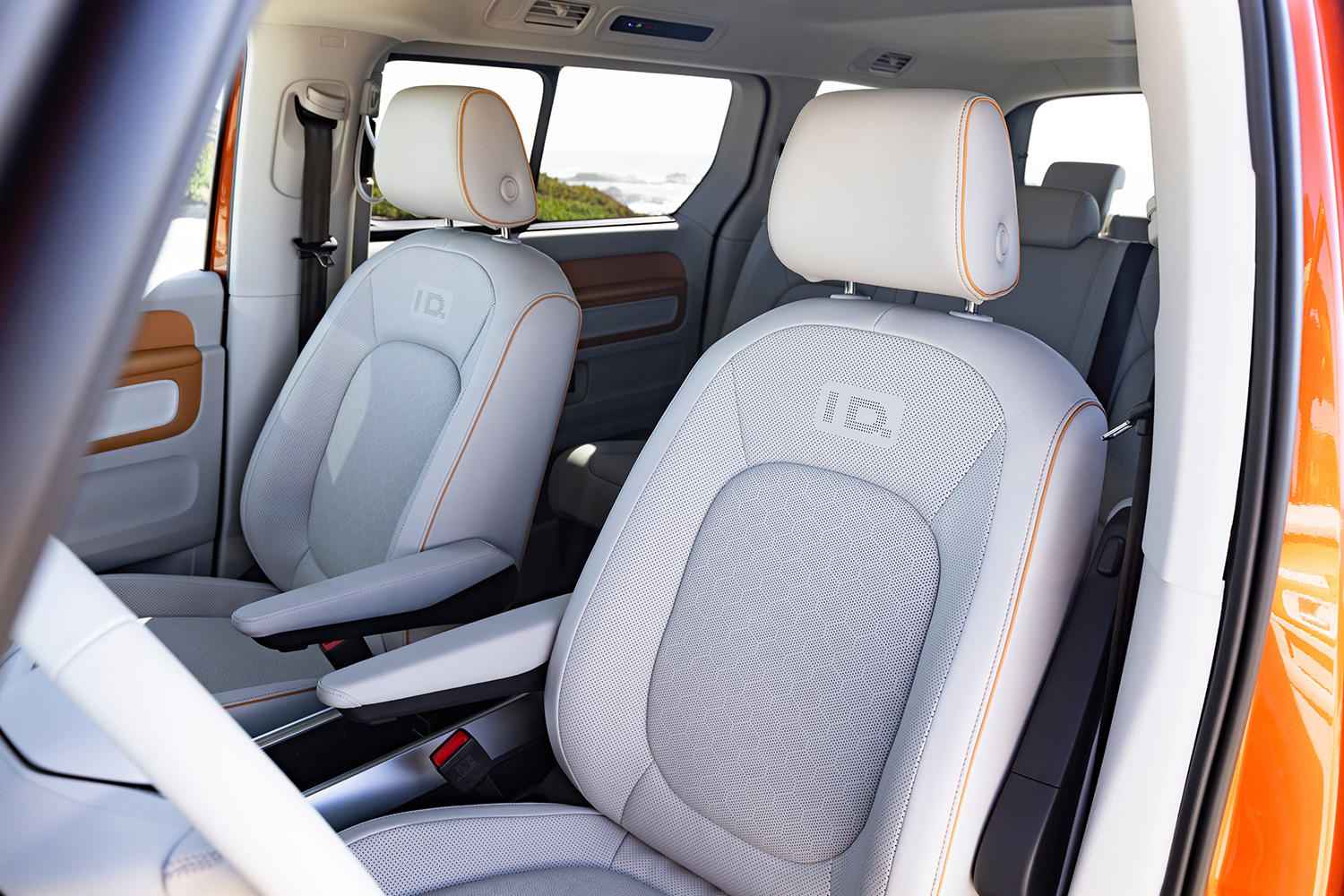
Inside, that sense of size is amplified by the cavernous quarters afforded by its three rows of seating. The cabin is so puffed up that there’s a step cut into the driver’s rocker panel for easier access; the ID. Buzz also projects forward into space via the endless fishbowl that is its jutting windshield. I learned to drive on an early-‘90s Pontiac Trans Sport — affectionately dubbed the “Dustbuster” of vans, thanks to its prominent proboscis — and the Volkswagen’s extended greenhouse took me right back to that simpler time.
The van is in some ways a party on wheels, a vehicle with enormous road presence to match its plus-size dimensions, whose links to its flower-power predecessor put smiles on the faces of nearly everyone I met while out on a drive. That friendly gigantism also serves riders well at nearly every seating position, and with the back rows folded flat I was easily able to haul home five-foot wooden slats from the local hardware store.
A full load of riders won’t tax the dual-motor model’s 335 horsepower and 512 lb-ft of torque, either. The hefty ID. Buzz isn’t a speed demon, but it’s quick enough for its size, and with its battery mass mounted low one has the sensation of sitting on top of a big brick that’s confidently stuck to the road, even on curvier stretches of asphalt.

Short(ish) Trips Only, Please
The flip side of the Volkswagen ID. Buzz’s big bones is its mediocre driving range. Rear-wheel drive models are capable of 234 miles on a single charge, while all-wheel drive trims (like the one I drove) post a slightly lower 231 miles. Compare that to the similarly sized three-row Kia EV9 (between 280 and 304 miles for long-range models) and the difference is damning. In actual driving, a full battery showed me 247 miles or so of available driving distance, but highway speeds reduced that to the more modest factory rating, or about 2.6 miles per kWh.
Unimpressive driving range could potentially be forgivable by VW fans were it not for the fact that the ID. Buzz is surprisingly expensive. At the top end, the all-wheel drive 1st Edition retails for $70,000, with base models checking in around $60,000. That’s $5,000 more expensive than the Kia at the entry level, and while the EV9 is a bit more expensive in its highest trim there’s the enormous caveat of the SUV’s much more impressive range.
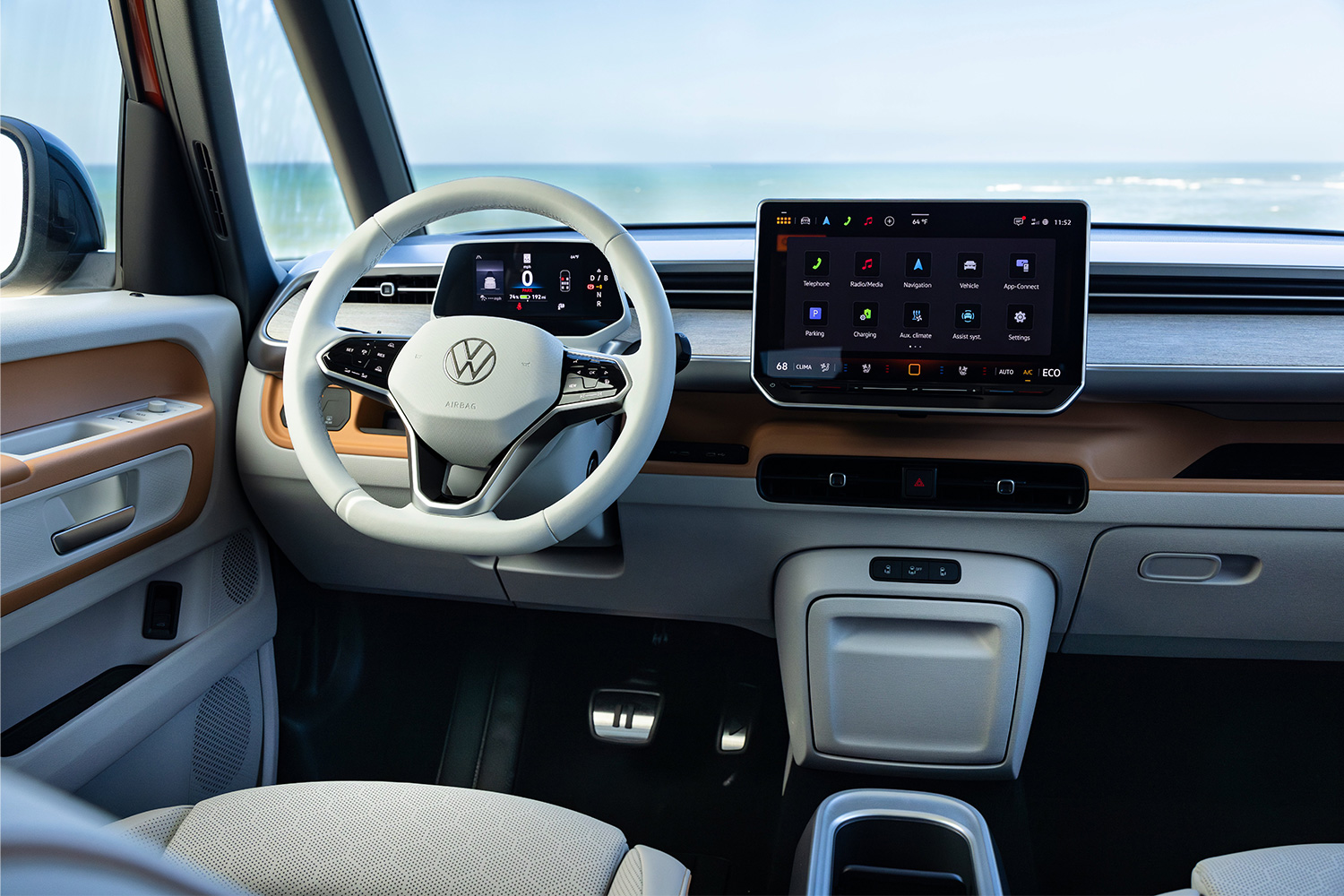
For the money, the 1st Edition presents as exceedingly normal in terms of its cabin. The styling aft of the dashboard is pleasant enough, but the tiny gauge cluster screen and tablet-on-a-stand infotainment setup do not suggest the level of design expected from a $70,000 vehicle. After the tour-de-force exterior, it’s honestly a letdown, and combined with the relatively scarce feature set (basic adaptive cruise control, no massage seats, no extra goodies for rear-seat riders), the overall effect is of an idea half executed. Porthole window openings carved out of the second row’s glass also suggest cost-cutting versus a full roll-down option.
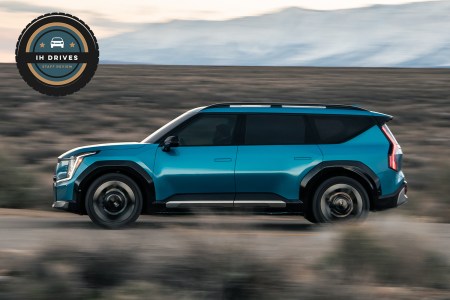
Review: Kia EV9 GT-Line Sets the Borders of the Brand’s Electric Empire
The E-GMP platform continues to impress in this airy SUV, but there’s a price to pay for being the heaviest Kia everThen there’s the fact that the ID. Buzz is not what you’d call new — at least, once you leave North America. Having first been presented as a concept all the way back in 2017, Volkswagen’s electric bus has been on sale in Europe since 2022. That’s plenty of time for the automaker to realize that a bigger battery (the factory unit is 91 kWh) and an interior worthy of its price point would help it connect with customers. Or how about offering the cheaper, short-wheelbase version of the van that isn’t currently exported to the U.S. as a way to build goodwill among long-time buyers burned by Dieselgate?
Finally, Volkswagen has been stepping on its own feet in a bid to get the ID. Buzz out the door. On top of the multi-year delay in coming to America, a combination of tariffs, safety investigations (concerning rear-seat width and the number of available seatbelts in the van’s third row), and a smattering of stop sales that saw vehicles held at the port, only 2,500 or so examples of the ID. Buzz have left the hive in the first half of this year.
Missed Opportunity
A lot of digital ink has been spilled in anguish about how the Volkswagen ID. Buzz’s paltry range sabotages its chances as a road-trip companion, a reality made doubly depressing by its gobs of character and genuinely robust ability to comfortably accommodate a handful of adults.
But that’s only part of the picture when it comes to evaluating why the ID. Buzz has whiffed. It’s smooth-driving, amazingly styled and incredibly practical. It’s also, whether due to its incongruous price, uninspiring driving range or slow trickle into dealerships, almost entirely a mystery to the Volkswagen faithful.
At the end of my time with the van, I had the sad realization that VW had effectively squandered the exceptional cultural cachet of the Microbus in a way that was the polar opposite of its deft handling of the equally old-school New Beetle. The latter was a huge success that met its buyers where they were, and managed to do so on time. The ID. Buzz, on the other hand, fails to find who its customer actually is, and then hopes that they’re willing to overlook all that their big-time spend doesn’t get them compared to rivals.
As a pure nostalgia play, surely a big-battery, six-figure ID. Buzz with outrageous (or at least competitive) range and a luxurious interior would have earned Volkswagen more kudos, and certainly additional profit, compared to its current incarnation. There’s still time to build this model — but it may be too late to claw back the ID. Buzz’s lost momentum with a wider swath of American buyers. What could have been an iconic revival of a flagship like no other is instead limping forward into an uncertain future.

More Like This

We're always on the scene eating, drinking and traveling near and far to bring you the best of what's happening out in the real world. Sign up for IRL now.