We’ve heard a lot from Ford this year about its EV strategy, including CEO Jim Farley announcing in August that the company was on the verge of a “Model T moment.” So it’s disheartening to read reports this week that suggest the company is dramatically reducing its plan for future EVs. Headlines include “Ford Will Take $19.5 Billion Hit as It Rolls Back E.V. Plans” (The New York Times) and “The Ford F-150 Lightning EV Is Officially Dead” (InsideEVs).
But a closer look at Ford’s announcement suggests that this new maneuver is more of an amendment to the automaker’s earlier announcement of a streamlined platform for electric vehicles, as opposed to a repudiation of it.
While Ford did share plans that it was not moving forward with a new electric commercial van to be sold in Europe, the company also stressed its commitment to its Universal EV Platform, and shared that the first vehicle to use that platform would be a midsize truck available for sale in 2027. That’s something that could actually achieve what the company has promised for years: an inexpensive electric truck. As part of the recent announcement, Ford said it has ended production of the increasingly expensive all-electric F-150 Lightning; it will be replaced by an extended-range EV, which runs on electricity but features a gasoline engine that acts as a backup generator.
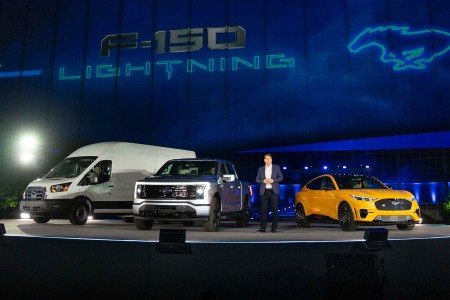
You Should Take Ford’s “Model T Moment” Seriously This Time
CEO Jim Farley’s comments may seem like déjà vu, but plenty has changed for the automaker since the F-150 LightningAnother big takeaway from Ford’s announcement is its plan to launch a business focusing entirely on battery energy storage. That means that some of its battery manufacturing capacity will shift over to this goal, while also continuing to create power sources for upcoming Ford EVs, including the aforementioned inexpensive truck made using the Universal EV Platform.
“The operating reality has changed, and we are redeploying capital into higher-return growth opportunities: Ford Pro, our market-leading trucks and vans, hybrids and high-margin opportunities like our new battery energy storage business,” Farley said in a statement accompanying this latest shift in strategic direction. The upside for car buyers? There are about to be a lot of brand new Ford vehicles hitting the market in the next few years.

More Like This

We're always on the scene eating, drinking and traveling near and far to bring you the best of what's happening out in the real world. Sign up for IRL now.