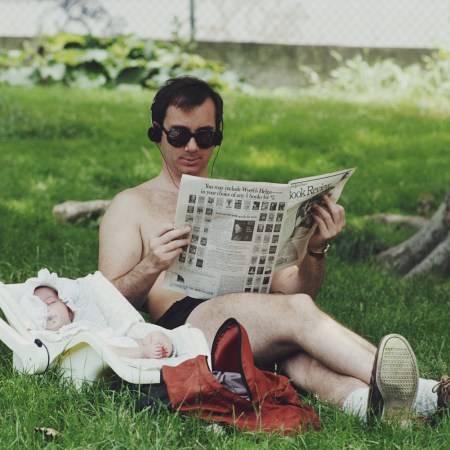
I’m always amazed by the things people will set up in a park, especially in New York, where green space is at a premium. My local is McCarren Park in Williamsburg, and on any given day you might find regulation volleyball courts, bubble-gun birthday parties or, increasingly, those inflatable reading hammocks.
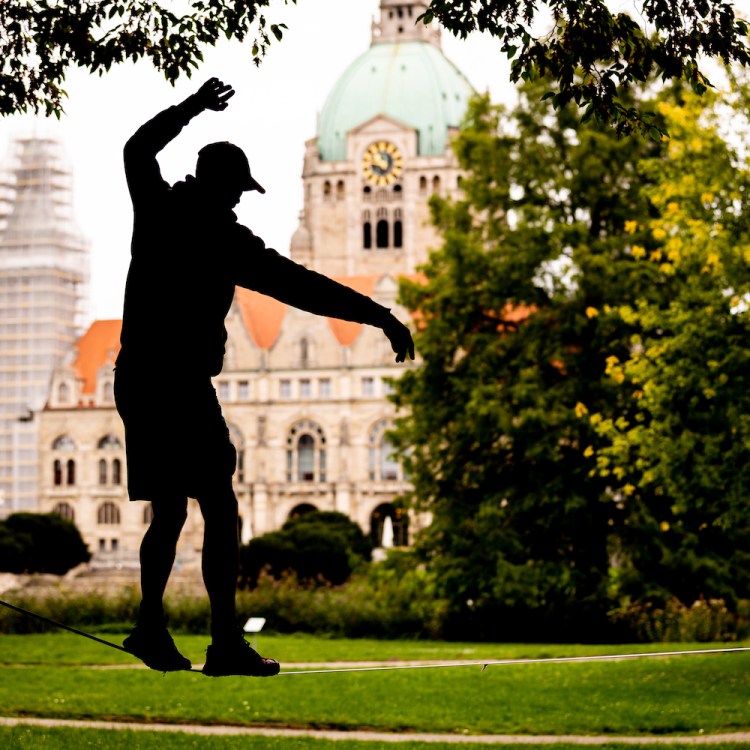
The park is also a frequent host to slackliners, who stretch their orange webbing from a floodlight to a tree and proceed to tiptoe four feet off the ground. For a long time, I rarely gave these gurus a second glance; as a random passerby, I associated them with the malaise of a campus brochure, and sorted their chosen practice alongside the tricky-yet-pointless pursuit of hacky sack.
As a wellness writer, though, I’m interested in the margins. What components of wellness do we tend to overlook? Which skills do we minimize — or actively avoid training — because they don’t come naturally to us? Balance has been a blind spot of mine for a minute.
Slip Sliding Away
Over the last couple years, I’ve had both expensive and everyday tests affirm that my balance could be better.
Expensive: standing on a force plate at a performance longevity facility, which measures the ground your foot covers as it wobbles around. My score was unimpressive enough to trigger an “at risk” verdict. Everyday: all the times I’ve attempted warrior 3, tree pose or half moon at the yoga studio down the street, when there appears to be an earthquake localized to my lonesome ankle.
PSAs on the merits of balance inevitably invoke fall risk among seniors. And it’s true: old folks often have a hard time getting around. Regular falls cause injuries and can be crushing for their independence.
But balance also starts to slip away earlier than you’d think. In one standing-leg study out of Japan, researchers found that eyes-open balance seems to peak at the age of 30, and eyes-closed balance peaks at 28. At 31, does that really mean I’m already on my balance back nine? Fortunately, other research pinpoints tangible decline to age 50, which is a bit more palatable.
Lie Down in the Ammortal Chamber. It’s Time for Your Factory Reset.
I went inside the $170K recovery pod beloved by Shohei Ohtani, Matthew Stafford and tech CEOsBalance Is Body Control
Maybe we don’t need an exact birthday to circle. Clearly, balance goes off a cliff at some point and it’s worth some proactive tinkering.
Maybe it helps to sub in a sexier synonym here, like “body control.” Balance is a full-body enterprise: muscles and joints work with the eyes and inner ears, putting the mysteries of proprioception to good use. Better body control can help you play sports longer, walk faster and strengthen your ankles, all healthy aging markers in their own right. Balance exercises also have a habit of strengthening the core and improving range of motion — two other “margin” wellness components I’m perpetually looking to sharpen.
And not for nothing: the more you pay attention to your balance, the less you take it for granted. On a commute the other day, hurriedly switching trains, I skipped a step and planted my foot on the fly. My body faltered for a second, but righted itself, and I went on with my day. Normally I wouldn’t have given that millisecond a single thought. But in the aftermath I felt grateful. I still got it. What can I do to keep it? I might’ve found the answer with an unexpected fitness toy.
Consider the SlackBoard
Not to toss Canyon Ranch a stray — I had a restorative wellness sabbatical at the New England clinic once — but that’s the last place that taught me how to test for balance. The drills there were super boring and the equipment (cones, taped lines, etc.) was the same stuff you see at your local physical therapy.
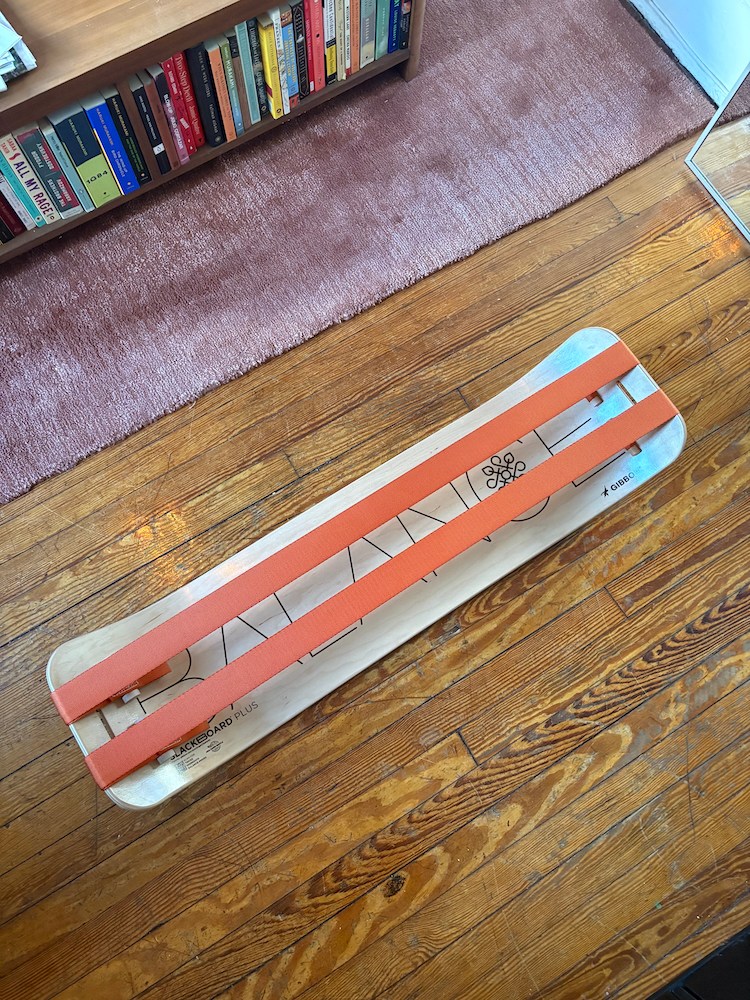
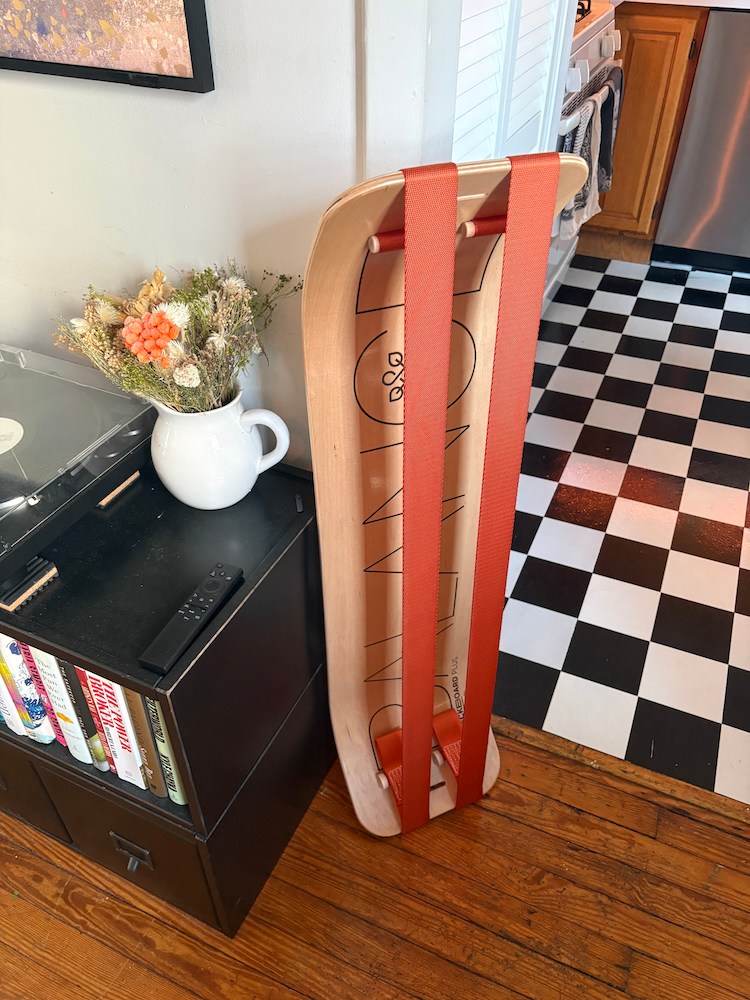
Thank god for the SlackBoard. Gibbon, the godfather of the slacklining industry, now sells a portable slackline. It’s a plank of American maple, hewn like a snowboard, with slots for the slackline to stretch taut a few inches above the surface. Gibbon sells the boards with one or two lines; as you can see in the photos above, I chose a board with two.
As you can also see in that photo, this thing just hangs out in my living room. When it first arrived at the apartment, I promised my confused fiancée that I’d slide it behind the couch or in my closet. I’m yet to put it away. The problem is every time I walk past it I want to hop on for a bit. If you’re on the phone, or have the game on, you can literally forget how you even got up there.
You can do squats on it with both feet. Lunges with one foot. Walk forward on it with both feet. Walk backwards. Kick the prow into the air and balance on the back. Or tiptoe like those slackliners I see in McCarren — minus the setup or fear of a public wipeout.
I’m not going to call this a must-own. (I’m as tired of hyperbolic wellness branding as you are.) It’s also not cheap, at $230. But the SlackBoard is random, effective and wicked fun. I can’t think of a simpler way to get invested in balance training. Gibbon has a whole library of exercise suggestions, but I’ve been going rogue, timing eyes-closed stands. So far, it’s been a fitting way to address a longtime blind spot.

More Like This
Twice a week, you'll find proven advice and tips, expert interviews, deeply reported features and personal essays on living better — for however long you’re here. Subscribe to Champ now.