In partnership with Monster Energy
John Wood burns up to 8,000 calories a day. He’s got two bulging discs in his neck this very minute. He’s in the cage for over 100 sparring sessions a week. But that’s just what it takes to earn the trust of your fighters.
“You earn their trust over time, by being there when they need you, being there in the times when maybe you shouldn’t even be there,” he says. “When you’re willing to put in the work — even more work than they are.”
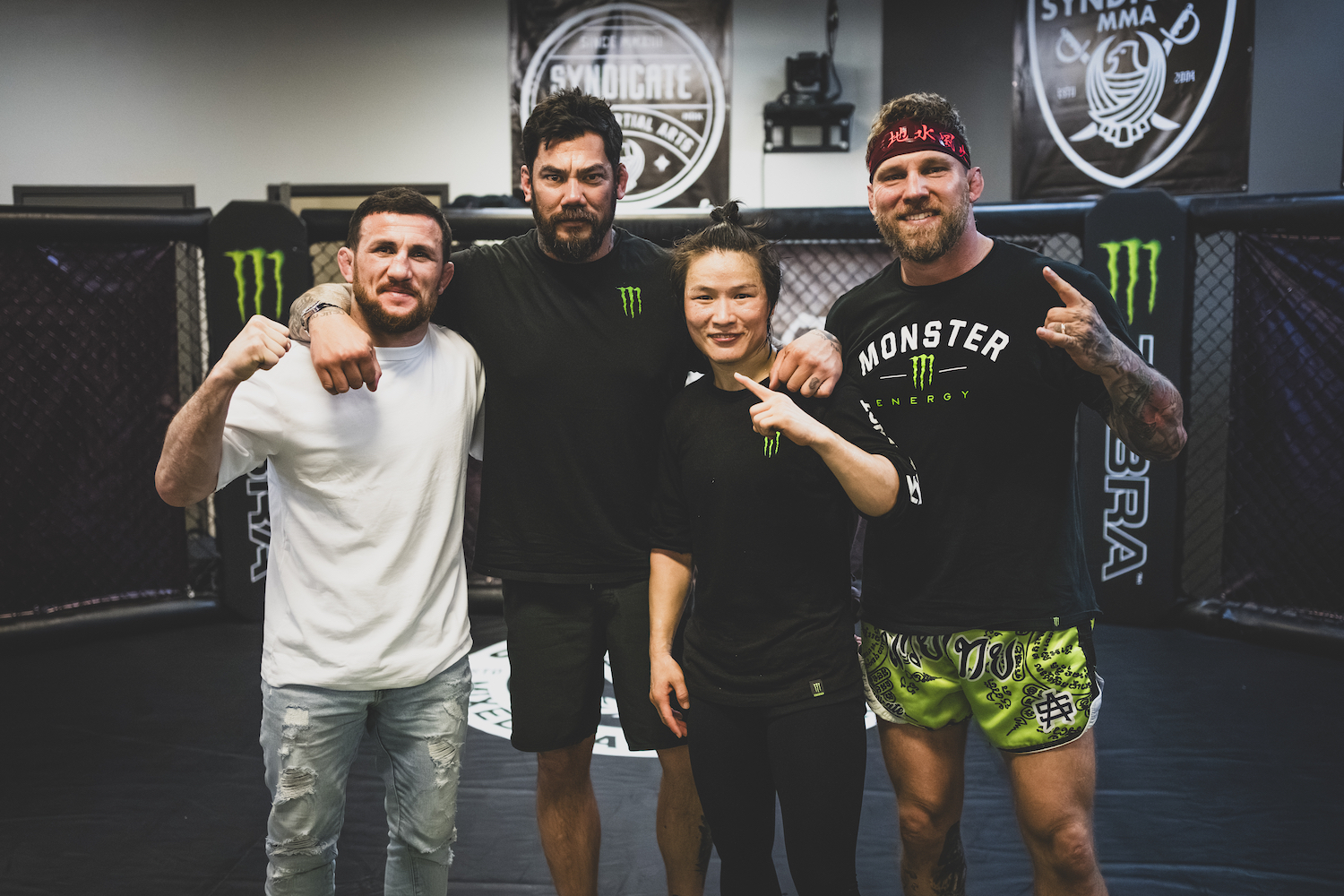
That sense of trust — alongside a lifelong pedigree in the sport and a commitment to evolve every single day — has helped Wood build Syndicate MMA, one of the best combat sports gyms in the country. He’s coached hundreds of UFC fighters, including world champions like Merab Dvalishvili and Weili Zhang.
How does he keep showing up day after day? PT helps. So does Monster Energy. But more than anything else, Wood is fueled by a sense of purpose. “I fucking love what I do,” he says. “There’s nothing I’m better suited to do than this.”
We spoke to the elite coach about his long road to the top, his coaching philosophy and what it really takes to turn raw potential into top-tier performance.
Monster Energy has been a big part of our gym, not just with the athletes but the overall environment. Having that support and presence in my gym goes a long way during the grind of training camp.
– John Wood
InsideHook: How did you get started in the MMA world?
John Wood: For me, I’m kind of a very rare MMA purist. I grew up always loving combat sports, loving fighting and professional wrestling. When I was a kid, I wanted to be a professional wrestler, but then I realized I wasn’t going to be six foot six and 400 pounds of muscle, so that wasn’t even on the books. And then I saw the very first UFC live at my friend’s house on pay-per-view, and it was just jaw-dropping. I was like, “Oh my god, I love this,” and I was hooked from day one. I just fell in love with the sport.
Then, when I was about 16 years old, I started training in martial arts like Muay Thai and jiu-jitsu. And I realized really fast that I want to do this, this is what I want to do for a profession. I found some MMA gyms, and started putting it all together. Jiu-jitsu was my first love. I would go to the tournaments and coach, help my coaches out with training, coaching the other guys at tournaments, and I really discovered there, like, “Holy shit. I think I really like coaching. I’m good at it.”
At about 22 years old, I was training at Las Vegas Combat Club with Frank Mir and Ricardo Perez and all those guys. I came up with Frank Mir, at the same gym, and then Forrest Griffin ended up moving out there when he came off The Ultimate Fighter. I’ve known Forrest for years.
But I got into a car accident, and I received a settlement, and I went to my coach and said, “Hey, can I invest this and start a business? Can we open a gym that’s not in a shitty part of town, that’s easy to get to for kids, and let’s market this to the masses?” This is back in the baby days of MMA. He said okay and that was kind of the start of everything. Once I did that, 22 years later, it’s one of the best gyms in the world, if not the best gym in the world.
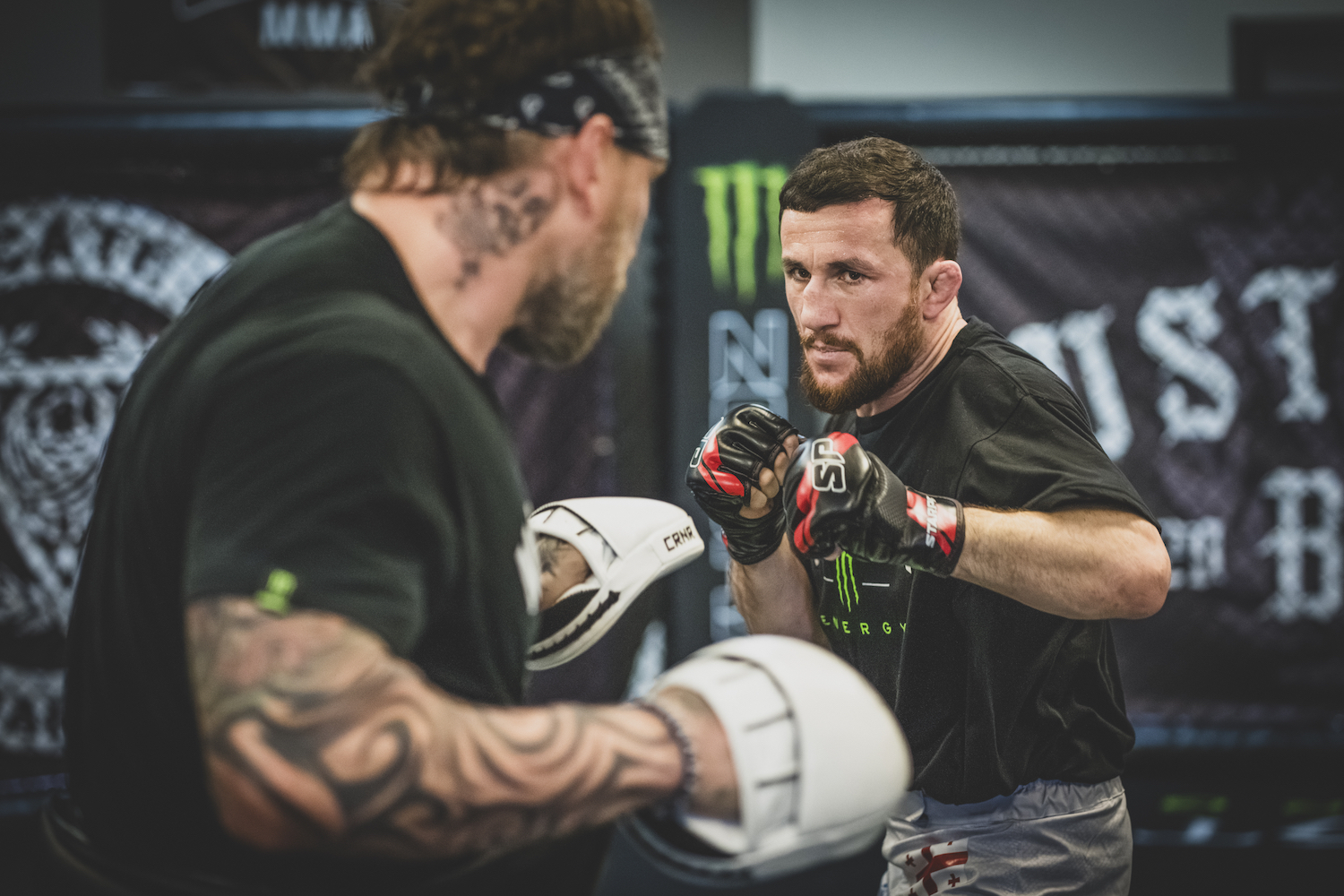
There’s been a lot of fucking hard, crazy work, but I’ve been in the thick of things from day one. I’ve been fortunate to be around some amazing people, and I’ve been with the best of the best, and like I said, a few years ago, I kind of changed the culture in the gym and everything, and that’s where the success of Syndicate has really taken over. We have world champions — like Merab Dvalishvili, who I’ve worked with for the last six years, and Weili Zhang — and then how many other UFC fighters just at the gym now, plus hundreds over the years.
Working with so many fighters over the years, what’s the biggest difference you see between good fighters and great fighters, both mentally and physically?
There are always people who come in that have quality, then there are people who have championship quality. There are people who have potential, then there are people who have championship potential. You have to be very careful on that word usage. How do they learn? How do they grow? Are they willing to put in the work? What’s their work ethic? Are they technically gifted? Are they not? There’s everything on the board that you have to be able to see and decipher.
When Merab first got here, it was pretty clear to me that he was a fucking workhorse, that he was a crazy ass, like, oh my god, this guy puts in the work. When we first started working in the gym, I thought, I don’t think I can work with this guy, because he didn’t seem to be paying attention. It just seemed like he was crazy. It seemed like he was all over the place. But what happened through the years, and when I really started working with him, when I felt like he didn’t pay attention, I was like, “What are you doing, dude?” But then the next day, he would come in, and I would see him do everything that we went over, perfectly. I mean, perfectly — live and sparring. It made me realize, holy shit, this guy’s got a different way of learning.
I eventually picked up on how he learns — I call it the “MMA ADD.” He only needs to see something once and this dude will come in and do it perfectly the next day. Once I learned how to train him and how to work with him and how his mind works, it was off to the races. One of my greatest strengths as a coach, I think, is being able to adapt to my fighters. So once I know what they need and figure it out, if they’re willing to learn and willing to do it, there we go. And that’s a perfect example.
MMA evolves fast. How do you stay ahead as a coach and keep your fighters ready for what’s next?
If I’m not evolving, then my fighters are eventually not going to evolve. If I stop learning, they stop learning. I look across the board: What are other people doing? What are other coaches doing? What are fighters doing? What things are happening? What can we do better? How can we create?
Always, every day. Because my goal is never to stop learning, never to stop creating what the next thing can be. I believe we do something a little bit different here. I believe that we do things special here, and that’s where the success comes from. It’s just constantly having a culture that’s willing to learn, a culture that’s willing to evolve, and coaches that are, too; that’s mandatory for my staff. My striking coaches go to jiu-jitsu. My jiu-jitsu coaches train striking. Everybody’s always learning.
How do you approach building a fighter’s game? Is there a baseline system or do you play to their specific strengths?
Both. I have a baseline system of the things that I have worked that are tried and true. Then you go to each fighter and see what they’re capable of doing. Everybody is different. That’s what has helped me as a coach. I don’t make my fighters mesh to me. I mesh to them. I go with what they need, what they want, how they want to do it. And that’s what makes everything work. But you also have to have that skill set.
We’re in a world of what I call specialty coaches, where everybody thinks their thing is the best. “I’m a boxing coach, so that’s the best thing,” or “I’m a jiu-jitsu coach, so that’s the best thing.” That’s not the best thing for everybody — but if that’s all they know, that’s what they’re going to teach you. So for me, I don’t need to tell people what I know. I need to figure out what they know and what they don’t know, and how to mesh to them to make them better at what they’re bad at, and great at what they’re already good at.
What do you think is the best base to start with in MMA?
I will say this: no matter what, wrestling is always one of the strongest. If you know the ground, if you come from a ground background, it is by far the best, because that’s the hardest thing to learn. It’s the hardest thing to teach. So if a striker comes over and they have no concept of the ground, it’s very difficult to make that transition. That’s why you see mostly really good wrestlers as champions, as the people that are succeeding the most right now.
When you’re cornering a fighter, how do you decide what to say in those high-pressure moments between rounds? Is it strategy? Is it keeping them mentally in there? How do you approach that?
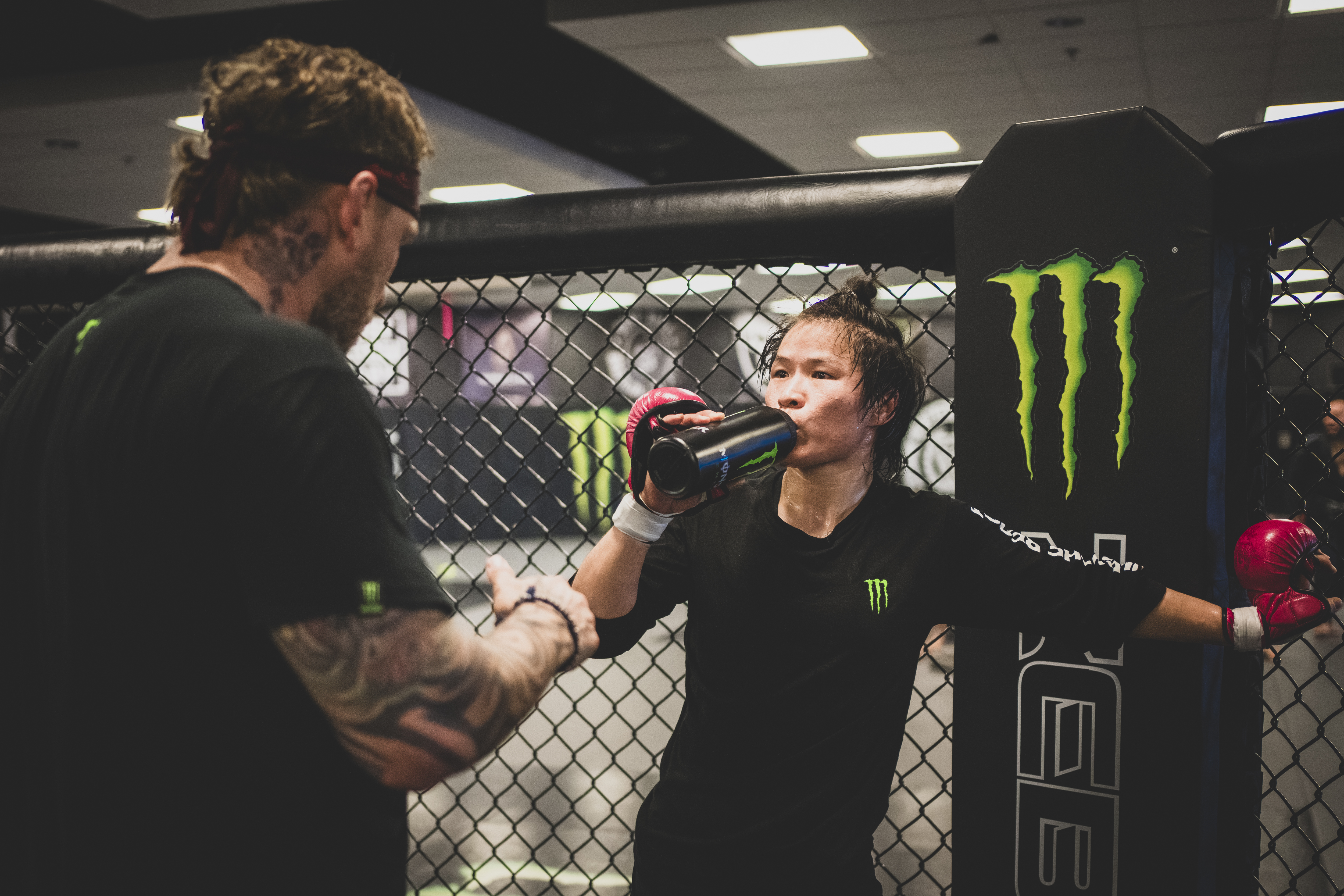
It’s always a little bit of both. We schedule out everybody’s sparring rounds and cage rounds. So when they have camps, we put them in the cage for however many rounds they’re going to fight, and we have coaches set to coach them. So I’ve already done that fight with my fighter 100 times before they even get into that fight — 100 times. Talking to them is just like an everyday thing.
I feel like I coach 100 fights a week, literally every week, hundreds of sparring rounds. My goal is to have them feel like the fight has already been done so many times and then when we get in there, it’s second nature. So whatever needs to be done, we make that adjustment. If they need something motivating, fine, but I think it’s a little bit of both. It’s a little bit more technical, but in a way that they can always understand.
What are you using to keep your fighters fueled in training and competition?
If a fighter needs my advice, I give it, but we have so many good assets out here in Vegas. These guys all have dietitians, they have the [UFC] Performance Institute, they have this, they have that. There’s a diet, there are expectations that the simple stuff is taken care of. You have to get your carbs, get your energy. Make sure you drink a ton of coffee and Monster.
Monster Energy has supported the sport and the athletes for a long time. For the fighters I work with, that support allows them to stay focused on training and competing at the highest level.
Everything I have in my life is from MMA, so I’m willing to give back whatever I can give.
– John Wood
What’s been the toughest moment of your coaching career — and how did you grow from it?
There are ups and downs all the time. MMA itself is the proverbial roller coaster. You’re only as good as your last win and your last loss. People say I’m gonna win Coach of the Year this year, and that’s awesome and great, but that puts pressure on next year. I gotta win next year too, or I’m not the best coach.
For me, there was a time period a couple of years ago, a down period where we had just a terrible month. I had a terrible month — physically, emotionally, personally. Everybody lost their fights that month, big fights, and it really made me grow more than anything. I had to go back, I had to change, I had to be better. What am I not doing? What can I do better? And I really went back and researched, talked to all my coach friends who were doing it. I’m friends with some of the best coaches in the world, and I went back to them to pick their brains. I read every book I could. I went and completely shifted the culture and changed everything I could possibly change inside the gym, and what I was capable of doing. Once I made the shift to that culture of believing in myself and believing here’s what the standards are, then everything shifted. It really did.
What does your day-to-day routine look like? What habits do you rely on to stay locked in?
I try to lift whenever I can, but I’m putting in eight to 10 hours every single day. Every single day. I burn 6,000 to 8,000 calories a day. I’ve had multiple surgeries. I have two bulging discs in my neck right now. I just tore my shoulder again. It’s one of those things though where it just doesn’t matter. It’s about the fighter. It’s about what they need. It’s about what these guys have to do. I’m willing to sacrifice my body if they are, too. I try to stay as healthy as possible. I go to PT, but it’s all about the fighter.
How do you build trust with your fighters, especially when they’re facing setbacks?
When you’re willing to put in the work — even more work than they are. When they know what you are willing to do it all for them, and you just have to prove it. You earn their trust over time, by being there when they need you, being there in the times when maybe you shouldn’t even be there. Showing up when you need to show up and giving them everything you can give them. Through wins and losses, getting better from the losses, getting better from the wins, and just growing together. It takes time. They also need to be able to see the quality of the product. If it’s a good product and they’re winning, they’re gonna be good with it.
After years in the sport, what keeps you passionate and motivated as a coach?
I fucking love what I do. There’s nothing I’m better suited to do than this. There’s nothing better, nothing more that I would want to do. It literally keeps me going. Everything I have in my life is from MMA, so I’m willing to give back whatever I can give. I want to change and create people’s lives. I want to leave a legacy that lives on past me. I want my name, this gym’s name, to live on when I die. You know, I just have a passion for what I do. I fucking love it, and there’s nothing I would rather do.
What’s a lesson MMA has taught you that you carry into life outside the gym?
Never take anything for granted. Don’t get too high on your horse. Don’t have an ego. When you’re good, you’re good. When you’re bad, you’re good. Keep an even keel. MMA does not love you. You can love MMA all you want, but it hates you. It does not give a shit about anything but winning. If you ain’t winning, shit sucks, so you gotta take the bad with the good, and you gotta just keep pushing forward and striving.
I set goals for myself, and I try to break those goals, and when I break those goals, I move on to my next goals. It’s just one of those things where you have to accept the good with the bad. You lost? How do I do it better? What do I do better next time? You’ve got to keep growing, keep building, keep everything going. Just ride the wave.
More Like This



Twice a week, you'll find guinea pig features, personal essays and expert interviews on living better — for however long you’re here. Subscribe to Champ now.