By the time I was 10 years old, I already knew my life as a Philadelphia sports fan would be one of pain and suffering. The Eagles had lost Super Bowl XXXIX three years prior (and wouldn’t claim their first championship until 13 years later). In 2001, the 76ers biffed it in the NBA Finals. As for the Flyers, well, they haven’t held the Stanley Cup since 1975. But that all changed in 2008.
Like many middle-class families, mine was hit by the Great Recession. My father lost his factory job, and financial insecurity would be a catalyst for my parents’ separation a few years later. But for the time, we had baseball. We had the Phillies.
If you’re a diehard sports fan, especially a downtrodden one, you can remember exactly where you were when your team won it all. In my case, I was sitting at my desk in my childhood bedroom finishing my math homework on that night in October. Propped next to me was a small black-and-white television I had swiped from my mom’s old belongings. With a couple of turns of the dials and a bit of antenna straightening, I found Game 5 of the 2008 World Series. I placed 10 bobbleheads I had acquired from many ballpark giveaways around my desk for good luck and moral support, like I was performing a seance.
Based on the delayed reactions from my parents watching in the living room, I deduced that my tiny TV was five seconds ahead. When that final strikeout came, I held my breath until I heard the celebratory screams downstairs. Leaping from my bedroom to join them, I found my parents in a joyous but slightly crazed state: jumping up and down, grinning from ear to ear and yelling at my sister and me to get in the car so we could drive through the neighborhood celebrations. Five minutes later, I was high-fiving drunk strangers from the backseat while my father honked the car horn and my mother cheered out the passenger window. I had never seen my parents so happy.
Eighteen years later, I found myself among the crowd of drunk strangers celebrating in the streets after Game 5 of the NBA Finals. The New York Knicks’ historic playoff run kicked off what many are referring to as a “summer of sports.” Whether or not you are a fan or even live in New York City, coverage of the team’s championship appearance in early June was inescapable. Yes, in part because of the 53-year drought and the fervent nature of the team’s fanbase, but largely because the playoffs brought the city together in an unprecedented fashion.
Watch parties across every borough spilled out from packed bars into the streets. Strangers gathered on sidewalks to watch through bodega windows. The championship run served as a temporary antidote to the city’s loneliness problem, forging connections and ushering in a hopeful sense of community. One fan described the vibes to The New York Times as a “lovefest.”
That lovefest only snowballed during the summer’s main sporting event, the World Cup. Despite concerns that our turbulent political climate would be a disaster for the games, the U.S. turned out to be a fertile breeding ground for wholesome cross-cultural moments (my personal favorite is this video of a Japanese fan splitting the G perfectly on his very first try).
Across the country, watch parties once again served as a much-needed third space, and an excuse to have a few beers on a weekday. For the increasingly weary dating public, they also became the best way for singles to meet.
Sports and singles go hand in hand
As it turns out, sports can have a big impact on your romantic life. A win from your favorite team can boost your libido (while a loss can kill the vibe). An interest in the game — or at the very least, an interest in going to a sports bar — opens the door to conversations and connections with potential partners that may have otherwise never happened.
“The World Cup [gave] millions of people permission to become temporarily obsessed with the same thing, which is really useful when you are trying to talk to strangers,” says Noelle Perdue, digital intimacy historian at Feeld. The dating app for “open-minded individuals” has seen mentions of soccer, FIFA and the World Cup among member interests jump 97% across the U.S. compared to last year.
“Adding football to your interests can mean ‘I care about this,’” she says, “but it can also mean ‘Please come watch this with me.’”
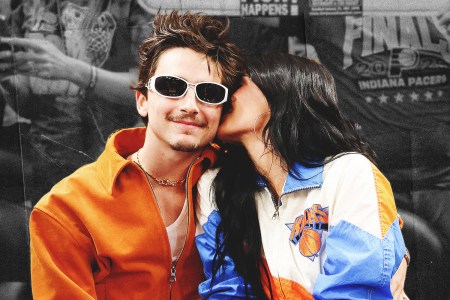
A Knicks Win Could Do Wonders for Your Sex Life
Celebration is “an underrated erotic state,” according to sex therapist Casey Tanner. And Knicks fans have plenty to celebrate.According to a DatingAdvice survey of singles in the 11 U.S. host cities, 68% said their dating or hookup activity increased during the World Cup. Even the down-and-out dating app platforms have discovered success during the tournament; Tinder reported an increase in swipes in host cities, while singles turned out for watch parties hosted by Bumble.
“One of the biggest barriers to meeting someone is the expectation that you have to generate chemistry from scratch. Watch parties outsource some of that work,” says Perdue. “There’s less pressure to keep the conversation going if something is going on that you can both react to in real-time.”
Sports act as a buffer, creating low-stakes opportunities to spend time with a romantic interest without the pressure of calling it a date. Committing to a time and place each week — whether you’re watching Sunday football or playing in a rec league each week — also lays the groundwork for relationship building, something almost foreign now in a world of instant gratification.
“Before apps, many people met through communities they returned to over and over again,” says Perdue. “Technology made dating feel more immediate, but I think we’re seeing a renewed appreciation for relationships that unfold gradually.”
An alternative to the apps
Brittany Keroack and Shank Subramani were kickball teammates for two seasons before they began dating. Keroack tells me that she was new to D.C. at the time and joined Volo Sports to meet new people. The social sports organization runs leagues and games in over 15 cities across the country. From traditional recreational sports like soccer and basketball to more social activities like bocce and cornhole, there’s a league for any player at any skill level.
Subramani tells me that he saw Keroack make an unbelievable play during one of their kickball games, and the rest is history.
“She was playing third base and I saw her make an unassisted double play at third. Someone kicked an absolute screamer down the line and the person on third started running anyway,” he says. “She called the ball, attacked the ball, threw the ball and I was like, I’m gonna go introduce myself to her because that is an impressive woman.” The two dated for seven years before tying the knot last June.
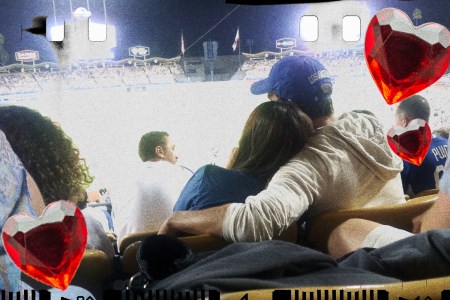
Take It From a Woman: The Most Romantic Date Spot This Season? The Ballpark.
Women want one thing this spring: for you to take them out to the ballgameLike many recent college grads, Subramani was on the dating apps; however, he says he didn’t find them conducive to showcasing his well-rounded personality. “I am definitely a heard-before-seen type of character, and I don’t know if that comes off as well on the apps.”
Keroack never bothered with the apps herself. “I had heard so many stories from my friends about a guy who sounded like he was really great, but actually turned out to be terrible,” she says. “Or ‘he reached out, I was interested and I got ghosted.’”
Kickball, however, gave both Keroack and Subramani a better picture of each other: who they are, how they operate in a group, how they treat their teammates.
“Sports can reveal how someone handles competition, disappointment, excitement, disagreement and being wrong in public,” adds Perdue. “Those are all important relationship skills, and you often learn more from watching someone react to a bad call than from asking them to describe their personality over drinks.”
With the guarantee they’d see each other at least once a week, Keroack and Subramani’s burgeoning relationship felt natural, and one without the stressors and pressures of early dating.
“I know I’m going to see this person at some point this week,” says Keroack. “I don’t have to worry about if they’re texting me back or not. You don’t have to play those games. In the end, the only game you have to play is kickball.”
What happens when our summer of sports is over?
A couple weeks ago, I found myself back in Philadelphia for MLB All-Star Week, my third major sporting event of the summer. The city had finished its World Cup hosting duties a week prior and was already welcoming a new swath of fans from around the country. Despite the city’s reputation for being unwelcoming to outsiders, that feeling of a shared experience — one I had on a rooftop during the Knicks parade in June and at a couple of World Cup games I had the privilege of attending — threaded its way through the city.
The morning of the All-Star Game, I sat in on a Q&A with Ryan Howard and Chase Utley, Phillies legends and notable members of the 2008 World Series team. At Club Magenta, a fan experience put on by T-Mobile, one of the weekend’s biggest sponsors, the pair recalled the excitement for our summer of sports, the sense of community forged through activities like World Cup tailgates and the continuation of those shared experiences through baseball.
“It’s just an extension of the party,” Howard said of All-Star Week.
With the summer’s major sporting events finished, can that party continue? The former Phillies first baseman’s comment reminded me of a post I had seen on X after the Knicks’ championship run — someone asked if we could still hang out at the bar once the playoffs were over. It’s evident people, regardless of relationship status, are yearning for third spaces. Not only are they looking to meet people IRL, but they’re willing to take the time to actually get to know each other.
“I think it’s a reflection of past dating practices coming back around,” says Perdue. “People aren’t necessarily finding success by checking all the predetermined boxes on a dating app, and they’re becoming more interested in real-life relationship building and intimacy. What does it actually feel like to spend time with this person? Do we share community? Do we laugh at the same things? Do we move through the world in similar ways? Whether it’s a watch party, a run club or a local league, people are building relationships through repeated interactions.”
If this summer is a modern test case, sports have proved to be one of the easiest ways for exhausted singles to find hope in dating again.
“Sports create stories very quickly,” Perdue adds. “You celebrate together, lose together, develop inside jokes.”
It wasn’t lost on me that I was face to face with the same two players whose bobbleheads I had placed next to me nearly two decades ago in an attempt to will the Phillies into winning a World Series. That I had these two players to thank for delivering one of the most cherished moments of my life, not because of the gravity of a championship win, but because I had gotten to witness the sheer joy on my parents’ faces, something that, at the time, I had missed seeing.
While their relationship ended a long time ago, I know they are forever bonded by that championship win, and by a shared love of sports.

More Like This
The Charge will help you move better, think clearer and stay in the game longer. Subscribe to our wellness newsletter today.