A hug from Mickey Mouse might not be able to make taxes go away, or keep a divorce from hurting, but for a few brief moments, the cartoonish embrace can provide a sense of escapism — from the IRS, from heartbreak, and from the claustrophobic pressures of adulthood. It’s all part of the magic of Disney, a formula that draws families and kids from across the globe to Walt Disney World and Disneyland Resort, and into fictional worlds like Agrabah, Arendelle and Neverland. The latter, where Peter Pan soars on pixie dust to avoid growing up, is particularly apt. Adulting is not the escape I thought it would be as a kid, but being a Disney Adult helps.
I grew up visiting Disney World with my family. One of the earliest framed photos I have is of my mom holding my little hand on Main Street, U.S.A., in the Magic Kingdom. It’s where I made some of my merriest memories, from scampering around Tom Sawyer Island with my siblings (R.I.P.), to roasting marshmallows with Chip ’n’ Dale at Disney’s Fort Wilderness Resort & Campground. The Most Magical Place on Earth is where my family went on our last vacation together, before my parents divorced, and it’s where I returned amidst my own divorce, years later, when dismantling and reassembling my life was too heavy to bear. To be clear, jetting off to Disney World is by no means an endorsement of tax evasion or burying one’s head in the sand (or Mickey’s arms) while shirking responsibilities and maxing out credit cards. Disney isn’t a viable solution for the woes of adulthood, but it can be that happy place that so many of us are taught to leave behind with our lunchboxes and training wheels.
The term “Disney Adult” is a polarizing moniker, typically applied to Disney-loving — and often childless — adults who frequent the parks, binge the movies, stock up on merch and/or set sail on Disney Cruises. In short, it’s escapism rooted in joy and nostalgia, attached to a place that has made magic its brand. Often, it’s so encompassing that people exclusively vacation at Disney properties, or even use Disney dating apps. Unsurprisingly, the sentiment inspires a fair amount of derision and eye rolls, often rooted in judgement and infantilization. One Reddit user, on the PetPeeves subreddit, describes Disney Adults without kids as frightening, while another calls his sister-in-law “fucking weird” for spending ungodly amounts of money at Disney.
The judgement can range from gentle ribbing to something more craven, like misogyny and homophobia, which is when the mockery of someone else’s passion — and the policing of what society deems worthy as acceptable forms of joy — becomes a real problem.
“There are lots of different fandoms out there, where people spend a lot of money on their hobby, or are super passionate about something where they don’t talk about anything else — these are criticisms of Disney Adults,” explains AJ Wolfe, founder of The Disney Food Blog, and author of Disney Adults Exploring (And Falling In Love With) A Magical Subculture, referring to subconscious prejudices that trigger a lot of the criticisms. “Number one is that people are weirded out that adults like something that’s supposed to be for kids, but there are some undercurrents there, and prejudices that people don’t even know they have.” Because Disney Adults tend to skew female and gay male, misogyny and homophobia are often rampant in this subculture — even subconsciously.
Describing Disney Adults as “any adult who willingly chooses Disney when there’s another choice, whether or not they have kids,” and whether or not that choice is the theme parks or the movies, Wolfe — in her book — explores the notion of “acceptable” sources of joy, as well as the darker sides and valid critiques of Disney mania, such as the potential to become addicted to Disney and rack up credit card debt, or the unchecked escapism of avoiding reality and burying one’s head in the sand with fake fantasy. “I’m in the book as someone who was absolutely addicted to Disney, and ran my credit cards up to $17,000 in debt from going to Disney World,” she shares. “How you know it’s gone too far is when it effects your life in a negative way, it’s effecting your family, your friendships are souring because of your constant need to do something relating to your hobby or addiction.” As with everything, moderating the magic is key. “Disney can be a great escape in moderation, and a great place to go and really explore a difficult situation that maybe you need to work through,” adds Wolfe. “It’s a great place to go and be surrounded by hope.”
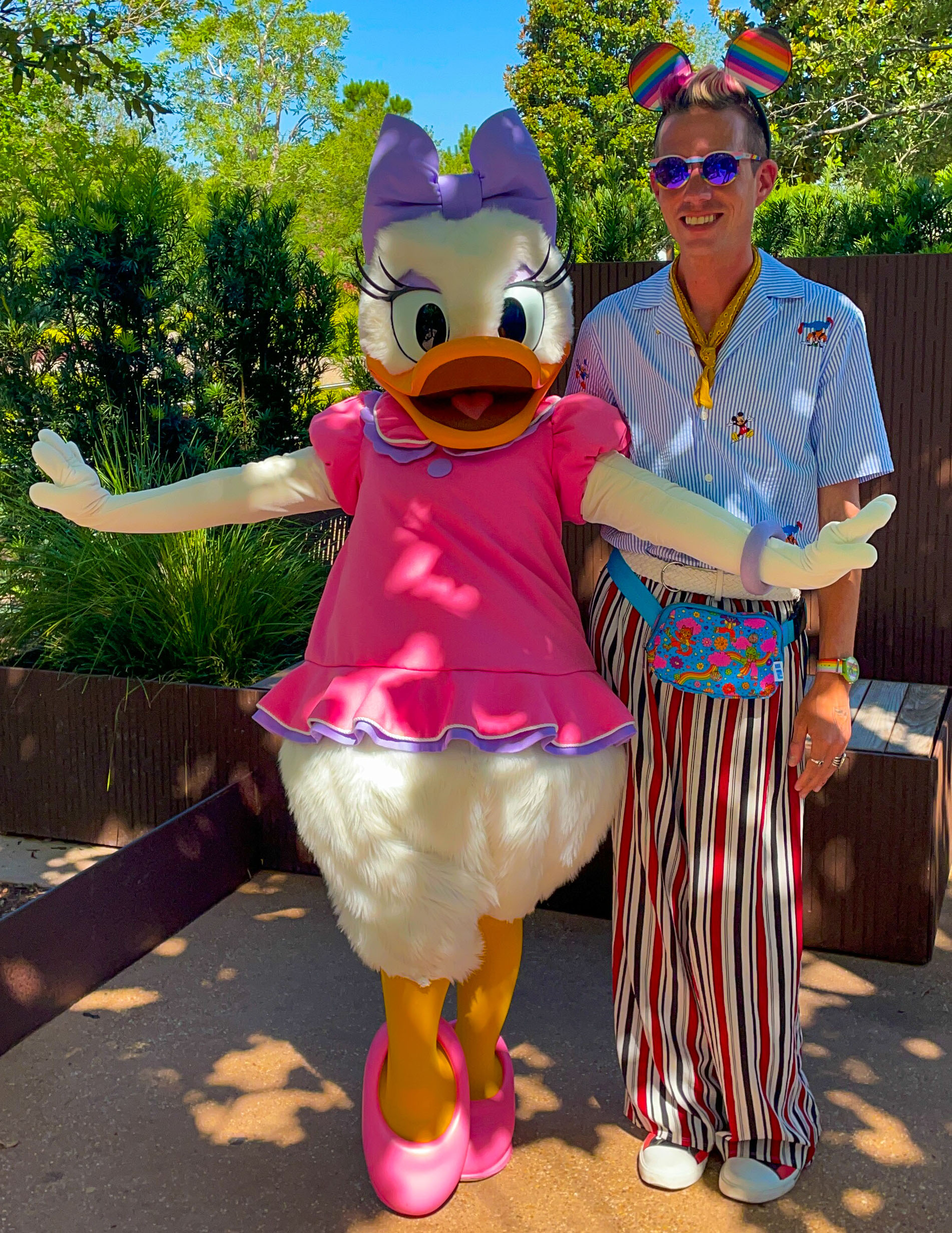
For myself, through the good and the bad, Disney has provided that hope. It’s in the convincingly sincere embrace of a mouse mascot and in the timeless voyage of Peter Pan’s Flight. It’s in the otherworldly environs of Star Wars: Galaxy’s Edge, and in the Pride-themed Mickey Ears — a righteous “fuck you” to Ron DeSantis. I don’t travel exclusively to Disney, though, and I don’t want to exist in a fictionalized echo chamber. Just a sprinkle of that pixie dust, for me, goes a long way.
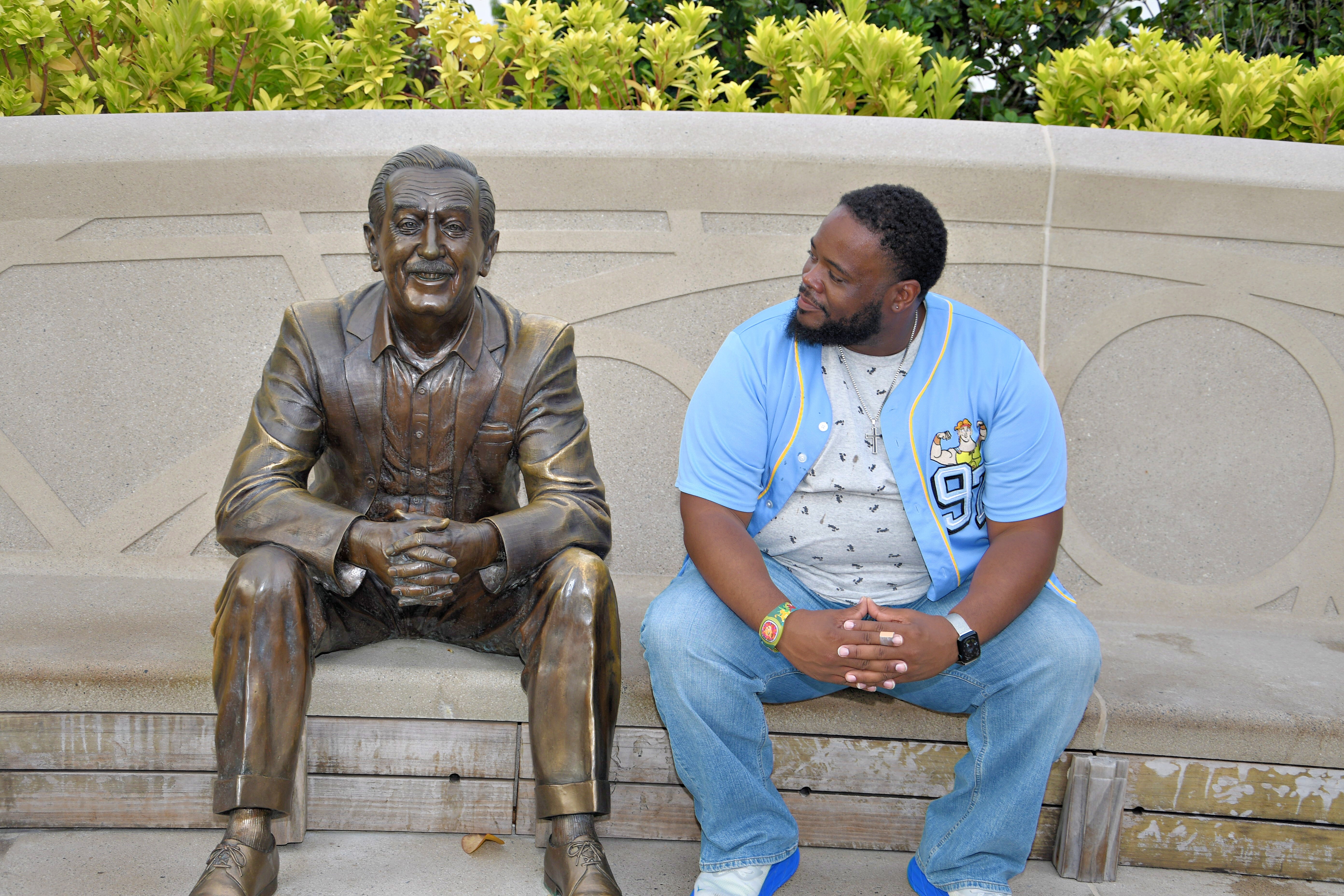
Other Disney Adults agree. Like Charlie Ludden, an Oklahoma City-based multi-hyphenate whose resume includes serving as the Director of Development at the Lyric Theatre of Oklahoma and on the Board of Directors of deadCenter Film. His email footers feature a quote from Walt Disney, “It’s kind of fun to do the impossible,” while his Instagram handle and YouTube channel, @geniesbrother, are a nod to his favorite Disney movie, Aladdin.
“My love for Disney started when I was younger,” he recalls. “My mom raised me and my sister on her own, and we didn’t have a lot of money, but one thing she made sure happened every year was she always bought us a new Disney VHS, and we always watched movies together.” Calling Disney, and the fun and exciting memories it inspired, part of his DNA, he held onto those sentiments into adulthood. His first trip to Disney World was in 2024, at the tail end of Mickey’s Not-So-Scary Halloween Party, in the Magic Kingdom. “I was overwhelmed by the emotion I felt, by actually making it there,” he remembers of his first glimpse of Cinderella Castle. “I was trying not to cry, but it got me. It was magical.”
That magic, be it connecting with the titular protagonist in Aladdin as a kid, or seeing the castle for the first time, is the escapism that keeps Disney Adults coming back for more. “There’s something about walking into that bubble that lets you pause what’s in the outside world, and enjoy the moment,” explains Ludden, referencing the fact that his first Disney World visit was mere days before last year’s contentious presidential election. “Everyone in that same space is doing the same thing — you’re united in that moment, and in our country right now, unification is not something we get to talk about.”
Living just outside of Disney World in Orlando, Breanne DiDomenico, the owner of Horizons Vintage, has her own enduring relationship with the parks. She went to Disney World as often as possible when she visited family in Tampa. “I’m an only child, so there was a lot of focus around Disney, because we went for me and nobody else,” she recalls of her first trip at 12, and subsequent visits during the Disney Renaissance of the early ‘90s, when Aladdin, The Little Mermaid and Beauty and the Beast festooned the parks. “Now I’m an adult and I live here, and I can go whenever I want.”
Everything in moderation, though. Far from daily visits, DiDomenico averages about one trip per month, using her Disney Pixie Dust Pass to go during the week at off-peak times. Seventy percent of the time, she says, she’s at EPCOT, using it as an urban walking center and experiencing it like a city, filled with restaurants and coffee shops. It’s not necessarily about the rides or the characters, but a place of magical escapism. “This is what hooked me as a kid: it’s a world of pure imagination,” she says. “It’s a thing that absolutely does not need to exist, but they built it. And I wish there was more intention and fun in every aspect of the design of our lives.”
That intention and that imagination go hand-in-hand with the nostalgia and hope that keeps Disney Adults connected — regardless of how many times you’ve visited, or who you go with.
“For so long, the phrase ‘Disney Adult’ just seems like here’s a brunch of creepy people who need to grow up, but now it’s a moniker to embrace that the world is tough,” Ludden explains, subverting the narratives of infantilization — or worse — by finding community in this subculture, like a Disney-loving group of Black TikTok creators that he calls one of the most welcoming communities he’s ever been a part of. “Right now, Disney Adults are just choosing happy moments instead of basking in the sadness of our world. Yes, I’m a grown man, but I love going to this park, and I love watching The Lion King. Do I want to cry a little bit? Maybe. But I’m not afraid to admit it.”
Through all of life’s highs and lows, Disney has been a comforting escape for me — a warm embrace, an immersive world and a place of pure imagination. Earlier this year, I let my Disney World Annual Pass lapse, for the first time since 2019. I miss it, but being a Disney Adult doesn’t necessarily mean constant devotion. With all due respect to Peter Pan, being a Disney Adult means growing up and knowing when to sprinkle a little more pixie dust.

More Like This


This article appeared in an InsideHook newsletter. Sign up for free to get more on travel, wellness, style, drinking, and culture..