“Whiskey has gotten boring and lacks real innovation. Blending, on the other hand, brings us to places we’ve never gone before.”
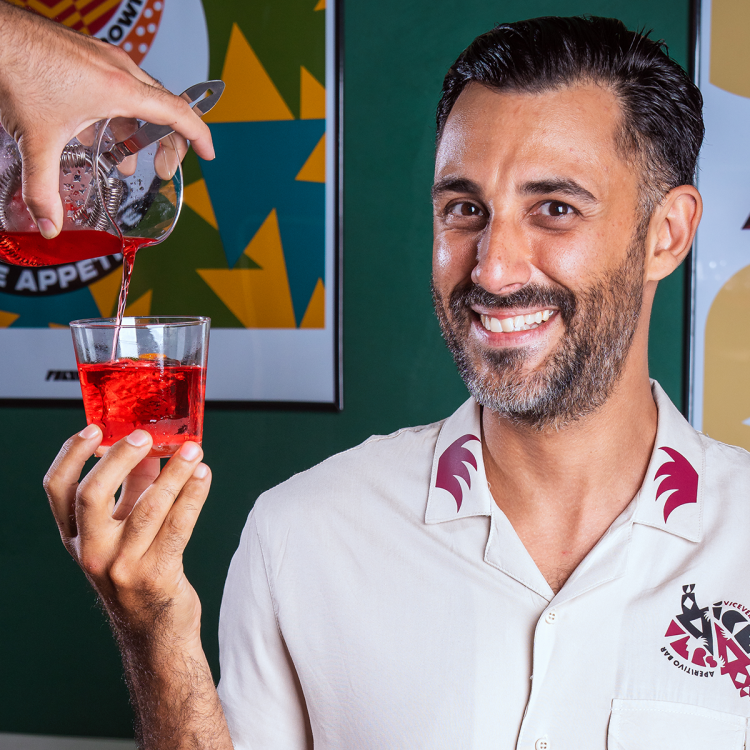
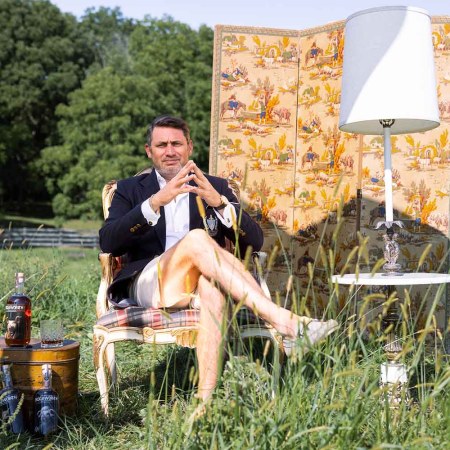
Raj Bhakta, formerly of rye whiskey innovator WhistlePig, has never lacked for a strong opinion. But the founder of BHAKTA Spirits is now one of a small but growing community of blenders and distilleries that have gone far beyond finishing their whiskeys in secondary barrels. Now, these innovators are literally blending two disparate spirits together. Sometimes, that means two wildly different types of whiskey. Other times, it’s whiskey and a completely different spirit, be it rum, Calvados, brandy or Armagnac.
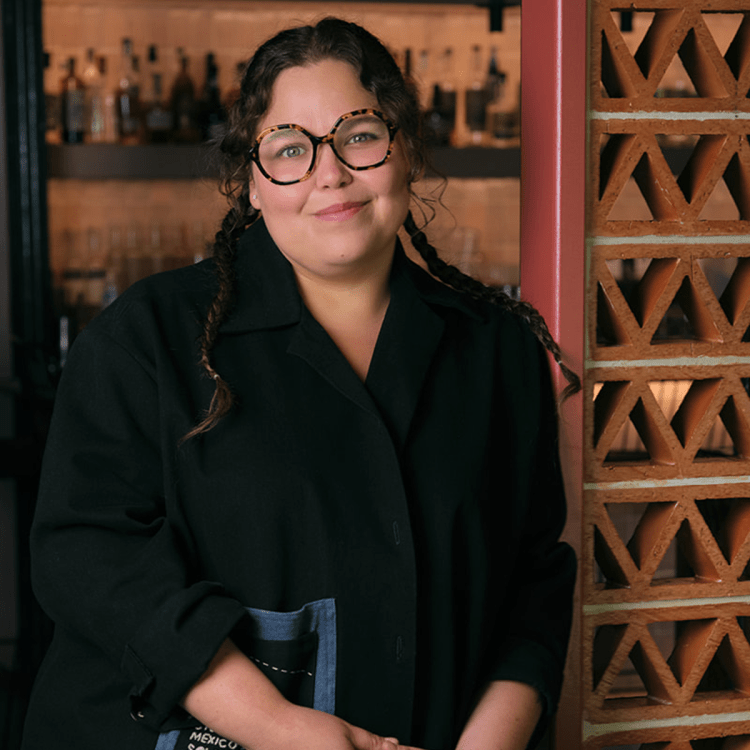
“Finishing can be a wonderful tool for creating quality spirits, but there’s something about the skill that requires [you] to slow down, truly understand the spirits you’re choosing to work with and get back to the stripped-down basics of blending,” says Amanda Beckwith of Virginia Distillery Co., which recently released a novel 50/50 “Split Barrel” of American Single Malt and bourbon. “I also think there are some daunting challenges around pulling projects like this off, especially if you want to do it in a fully transparent manner. A lot of whiskies don’t necessarily play well with each other in blends. It’s very easy to have one style dominate over another.”
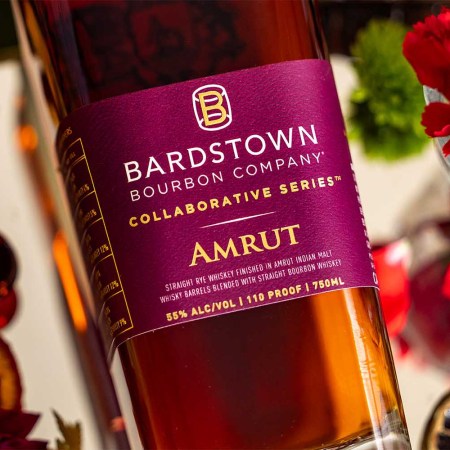
Besides finding the right blend, the Alcohol and Tobacco Tax and Trade Bureau (TTB) doesn’t always know what to do with these hybrid whiskeys. BHAKTA labels theirs as a “distilled spirits specialty.” Others list the exact blend on the label, offering transparency if not a bit of confusion. I asked Dan Callaway of Bardstown Bourbon Company about his distillery’s new Distillery Reserve blend of bourbon and Japanese whisky and how the government treats it (a release, we should note, that was just a Best in Class winner at the recent San Francisco World Spirits Competition, where the expression was categorized there as “Other Whiskey”).
“Great question!” he says. “It’s classified as a blend of Kentucky Straight Bourbon and Japanese whisky. As with a lot of the whiskeys we put out, the TTB doesn’t quite know what to do with them.”
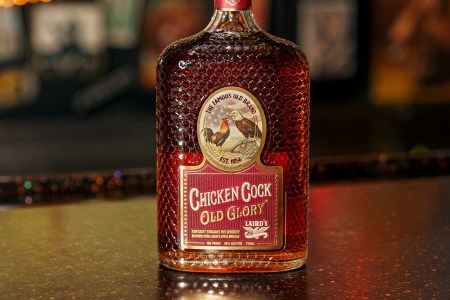
This Whiskey and Apple Brandy Collab Might Be the Most American Drink Ever
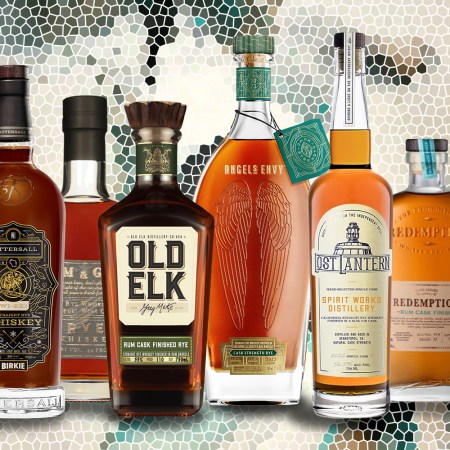
Two of the country’s older distilleries, Chicken Cock and Laird’s, just launched Old Glory BlendBelow, we offer some deeper insights into these unique blends with four whiskey masters. There are two more you should check out: Chicken Cock Old Glory, a rye whiskey and Laird’s Apple Brandy blend (see our story here), and Old Line Swimcall, a mix of whiskey and rum that I haven’t been able to try, though it sounds like it’d make a fantastic split-base Old Fashioned without having to pull out two bottles.
While an early blend from High West that we discuss dates back to 2011, almost all of these split whiskeys arrived this year, suggesting that this is the beginning of a new trend. “We had the vodka phase, the Scotch phase, the craft beer phase and, right now, we’re very much in the tequila phase,” says Johnathan Page, BHAKTA’s chief minister of spirits. “Maybe what comes next is the blended spirits phase. Why not? What else is there left to do? There are so many more unique new niches and subcategories that this approach can build. It’s exciting to see where all of this goes next.”
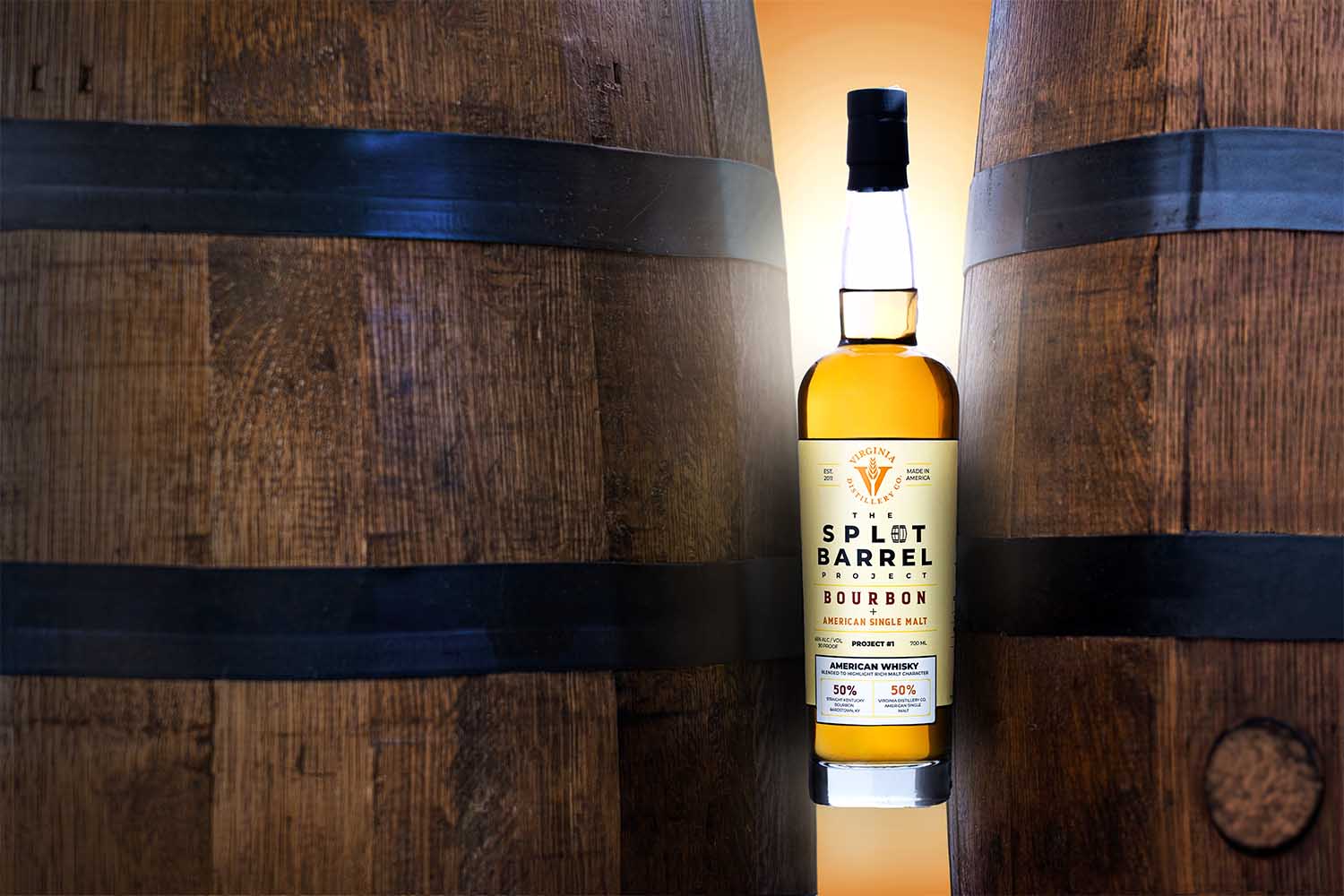
Virginia Distillery Co. The Split Barrel Project #1
The mix: A 50/50 blend of bourbon sourced from Bardstown Bourbon Company and American Single Malt from Virginia Distillery Co.
The taste: Lemon citrus, honey and malt with a butterscotch/caramel undertone. It leans toward an approachable, everyday ASM (read more here).
“With American Single Malt now ratified as an official category of American whisky, we wanted to create a whisky that bridged the gap, welcoming bourbon lovers into ASM land,” says Beckwith, the director of liquid development at the distillery. “The challenge was selecting specific casks that would blend together in a harmonious and complementary manner while still maintaining their own distinctness. For me, this meant a lot of attention had to be paid to both the mash bill and the maturation. I hadn’t intended to go as young as four years for the bourbon, but that was the age that really hit the right notes for the cohesive blend.”
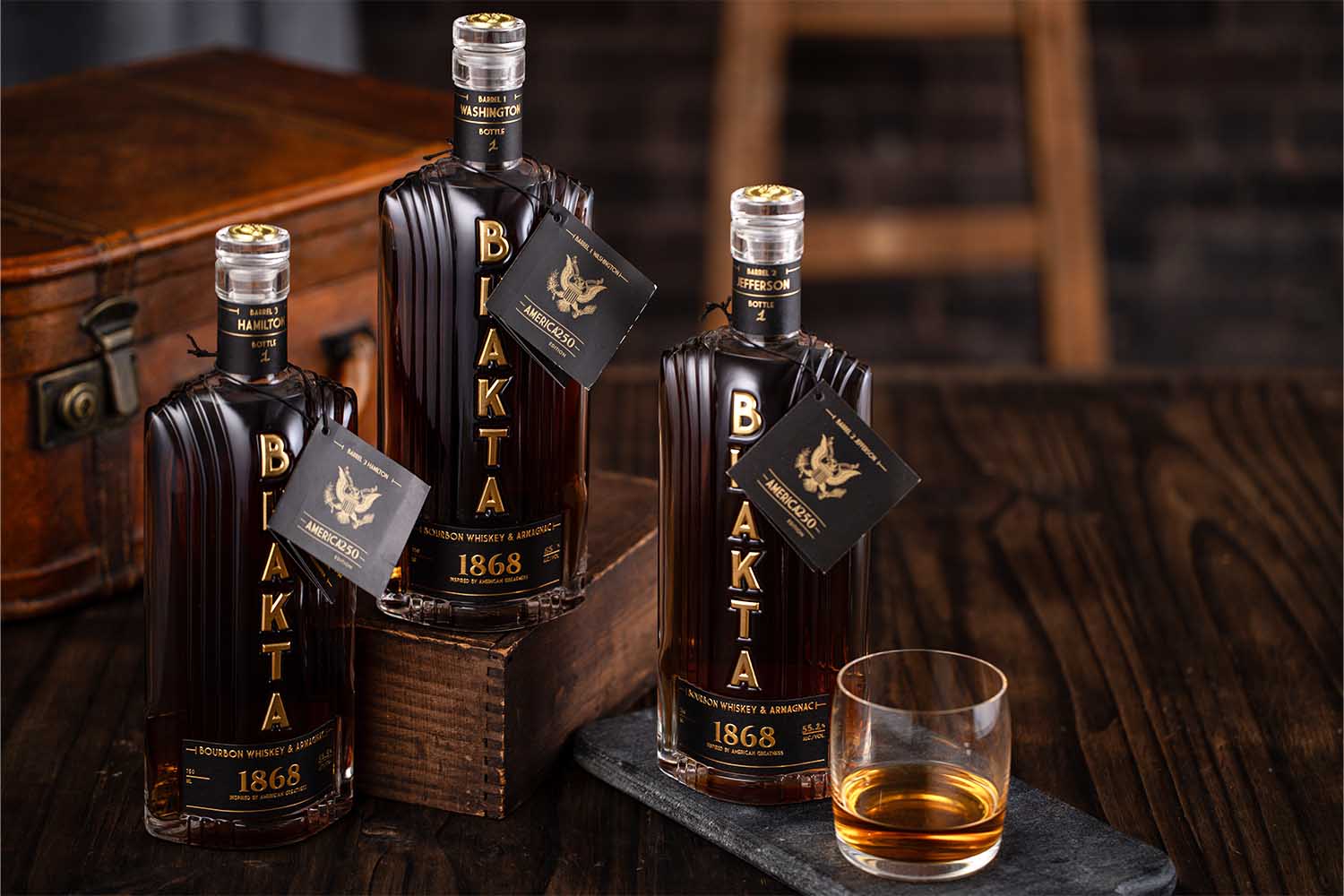
BHAKTA 1868 America250 Edition
The mix: A blend of a 99% corn-based 2014 bourbon with vintage Armagnacs spanning from 1868 to 2014
The taste: Each of the five Semiquintennial-themed barrels created for 1868 uses a different Armagnac vintage, but the general notes here include raisin, chocolate, caramel, anise, walnut, cherry and coffee.
BHAKTA Spirits is no stranger to blends — they’ve done it with their 1928 (rye, Calvados and Armagnac) and Hogsworth (bourbon and Armagnac) releases as well. “We did it because we can, because we wanted to make something actually and truly different,” says founder Raj Bhakta. “Taking these ancient Armagnacs and pairing them with bourbon or rye gives us the best of both old and new, known and unknown, and lets us create flavor combinations that have never really been done before.”
That said, it’s not easy. “Even 1% of a blend can change the entire profile,” Page says. “BHAKTA 1928 took two years to create. BHAKTA 1868 uses multiple whiskeys and nearly every single vintage Armagnac we have, dating back to 1868 — that’s over 100 Armagnacs. That level of work takes true craftsmanship, creativity and more than a little bit of madness. Which is why BHAKTA 1868 America250 Edition Barrel 1 ‘Washington’ was recently able to win Triple Gold and ‘Best Bourbon in The World’ from the American Whiskey Commission.”
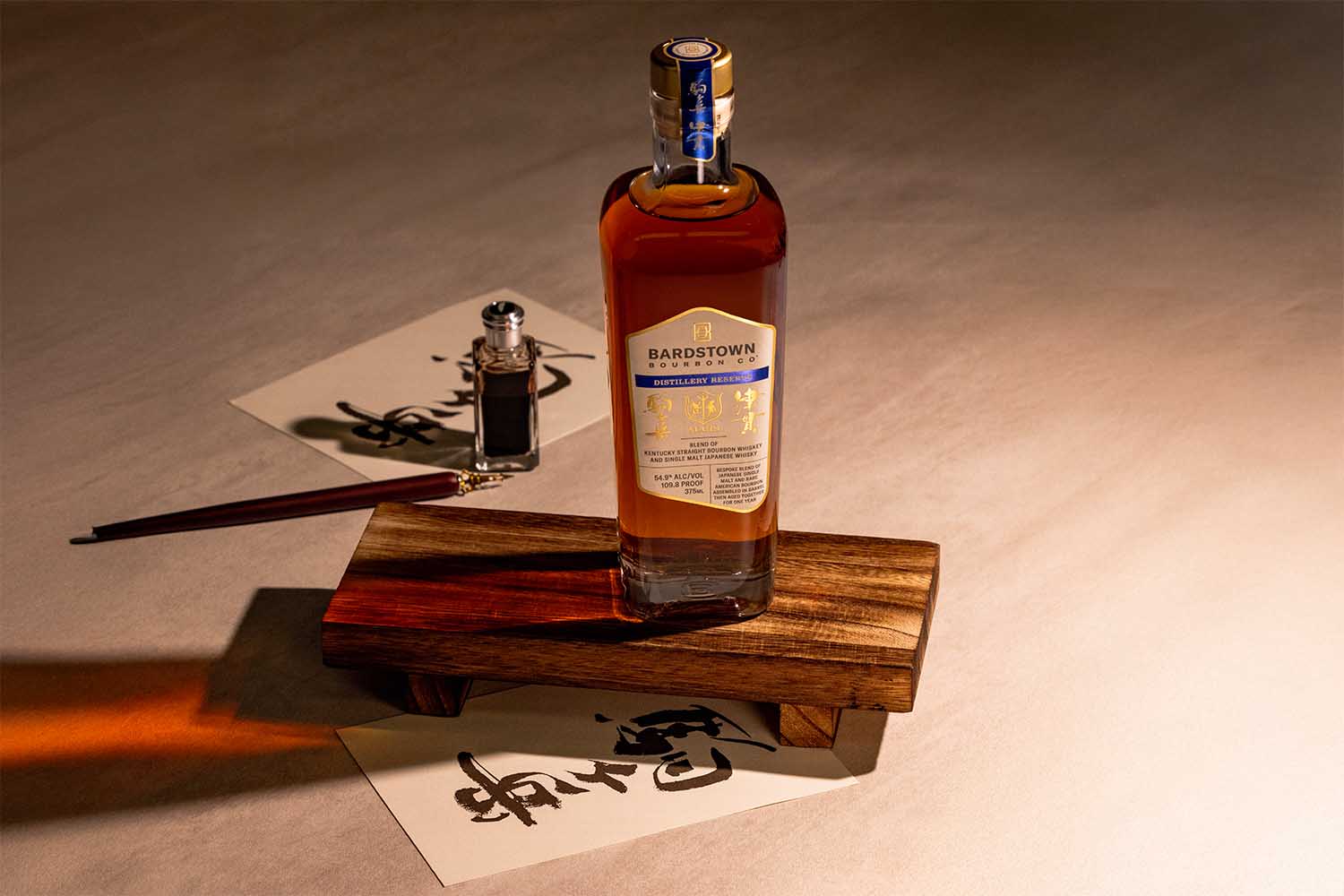
Bardstown Bourbon Company Distillery Reserve Mars Single Malt Japanese Blend
The mix: Japanese single malt whisky from Mars Komagatake and Tsunuki distilleries was shipped to Bardstown, KY, then aged together with matured Kentucky bourbon for a year.
The taste: The fruit and balance of the Japanese whisky takes hold here, with the blend offering notes of cherry, toasted oak and caramel.
“We were inspired by the unique flavors Mars creates through their umeshu [plum wine] and sakura [Japanese cherry blossom] finishes,” says Callaway, the master blender and vice president, product development at Lofted Spirits. “In this case, we wanted to draw out the Japanese whisky, particularly the umeshu. While finished barrels showed promise, filling the barrels’ negative space led to a far more powerful Japanese personality imbued upon the existing bourbon profile. This couldn’t have been achieved through barrel finish alone.”
Given that the Japanese whiskies had undergone additional finishes, there were challenges. “Traditionally, malt notes can overpower bourbon flavor,” Callaway adds. “On top of these already disparate flavors, we’re layering in the impact of plum and cherry finishes. With any finish or blend, our goal always is to highlight what’s there in each part, bring them together in a way that enhances each, while creating balance and depth.”
The good news is that much like the other distilleries and blenders we spoke with, this feels like a nascent category with lots of potential. “We’ve only scratched the surface of the globalization of whisk(e)y,” Callaway says. “Whether through finishing or blending, there are so many international whiskies and spirits that have the potential to play well with the distinct profile of American whiskey.”
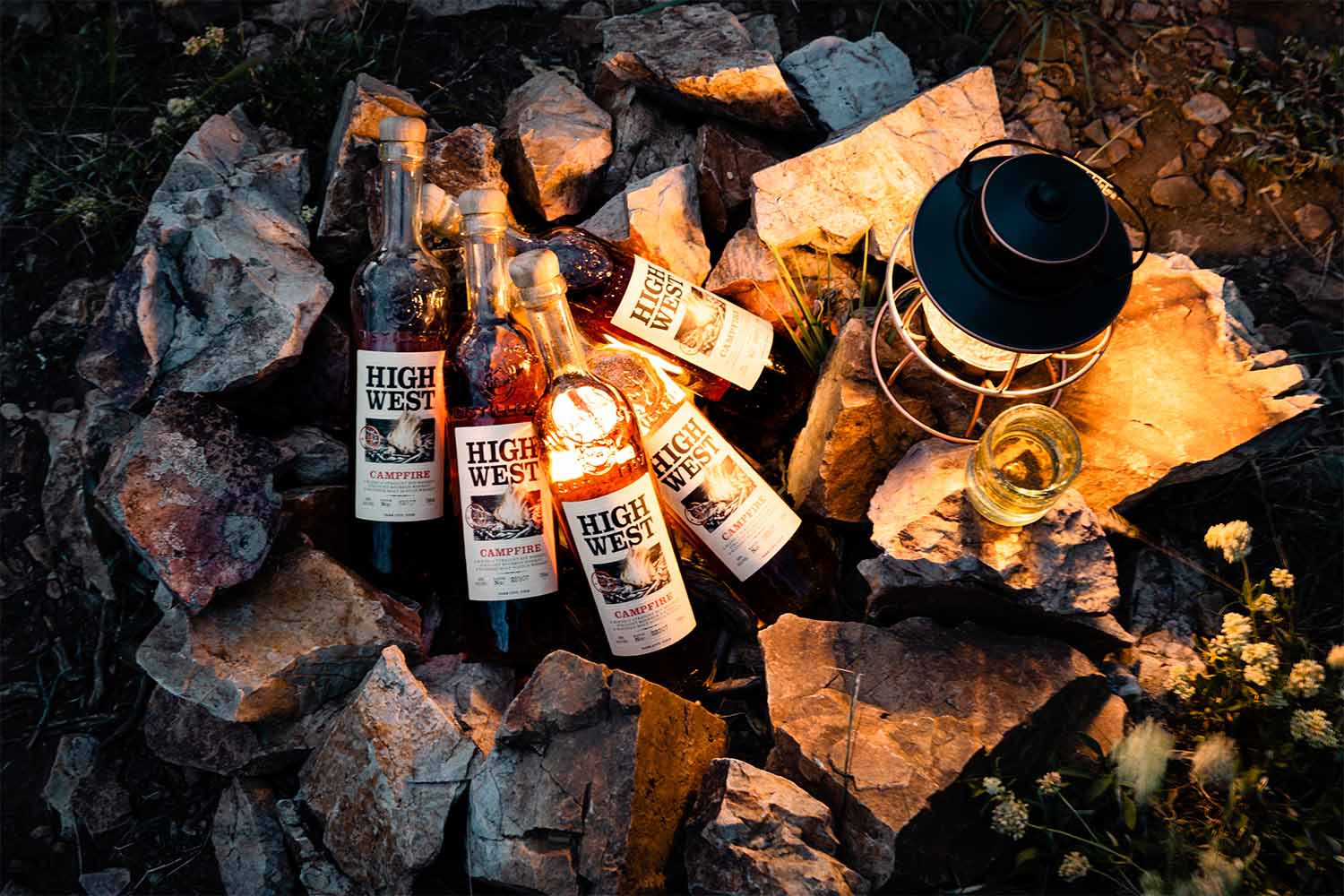
High West Campfire
The mix: A blend of straight rye whiskey and a straight bourbon whiskey from MGP, a rye from High West and a blended malt Scotch whisky
The taste: Peat smoke, chai spice, orange zest, toffee, leather and salted dark chocolate
Campfire dates back to 2012, but it was reconfigured in 2023 to include High West’s own rye distillate. “Campfire was inspired by a dessert that the founders, David and Jane Perkins, enjoyed during a stay in Islay, Scotland,” says Tara Lindley, the director of sensory and new product development for High West. “The dessert was honeydew melon topped with a drizzle of smoky simple syrup made from peated whisky. David found the combination of sweet and smoky elements to be something special and set off to translate that experience into whiskey.”
To create the dessert, the team at High West had to incorporate not just two but now technically four spirits in their blend. “The challenge is to find the balance between the rich butterscotch notes of the bourbon base, the peat phenols from the Scotch and just enough rye spice to complement the other two whiskies without dominating the blend,” Lindley says. “For me, there’s a salted dark chocolate note at the end of the mid-palate that only appears when we have those ratios exactly right.”
While we’ve talked about how all these blends are about actually mixing liquids and not just using a barrel finish, that latter process could actually come back into play, according to Lindley. “We enjoy exploring barrel-finished versions of Campfire through our single barrel program,” she says. “Some of my favorite expressions have been finished in rum or Oloroso sherry casks.”

More Like This
We're always on the scene eating, drinking and traveling near and far to bring you the best of what's happening out in the real world. Sign up for IRL now.